
Hawaii is one of my favorite places in the world for photography. The islands have colorful beaches, volcanic mountains, and lush rainforests ready for my camera.

I love visiting spots like Mauna Kea Summit, Lanai Lookout, and Laniakea Beach to find unique landscapes and amazing wildlife.
Whenever I visit, I always pack my camera because every island offers something new. From the dramatic cliffs on the Big Island to the palm-framed sunsets on Oahu, the beauty seems endless.
I discover so many epic locations for photographing Hawaii that inspiration is never in short supply. Each trip gives me fresh ideas for photos.
Whether I want to snap golden hour beach shots or try astrophotography, these destinations make it easy to get stunning images. I just pick a spot, get my camera ready, and start shooting.
Essential Tips for Capturing Hawaii’s Beauty
When I take photos in Hawaii, I focus on timing, my equipment, the weather, and the natural environment. Small adjustments help me capture vivid and memorable images.
Best Times for Photography
I find that the best times to take pictures in Hawaii are at sunrise and sunset. The softer light during these hours creates beautiful skies and highlights the islands’ colors.
Midday sun is usually too strong, so I avoid that time for landscapes. Astrophotography works well at places like Mauna Kea Summit, where the skies are clear and dark.
Night photography can reveal stars and the Milky Way above the mountains. For underwater shots, I go when the sun is high around noon, as the sunlight makes the ocean’s colors pop.
Timing my outings around golden hour, blue hour, and stargazing adds depth and drama to my images. I plan ahead and arrive early to set up for the best shots.
Weather and Lighting Conditions
Hawaii’s weather changes quickly, so I always check forecasts before heading out. Rain can start suddenly, but cloudy skies often soften the light and boost colors.
On clear days, the light can get harsh, especially at midday. I pay attention to cloud cover, wind, and rainfall in my location.
If I want clear, sharp landscape photos, mornings are usually less hazy. For dramatic sunsets, I look for partial cloud cover to add interest to the sky.
Using a polarizing filter helps me cut glare on water and deepen blue skies. I keep weather protection for my camera in case of sudden rain.
In wet or coastal areas, I wipe off water spots often to keep my lens clean.
Recommended Equipment and Gear
When I pack for a shoot, I bring a sturdy tripod to keep my camera steady for long exposures. For landscapes, I use a wide-angle zoom lens to capture wide scenes.
If I want to photograph distant features or wildlife, a zoom lens is also useful. Filters, especially polarizing and neutral density filters, help me manage reflections and exposure in bright conditions.
For underwater photography, I carry a waterproof housing or a reliable action camera. I keep extra batteries and memory cards in my bag because the humidity and long days can drain power fast.
Lightweight rain covers or dry bags protect my gear from rain and salt spray. A basic photography guide helps me plan ahead and find the best locations on each island.
Photography Etiquette and Respect for Nature
I always respect Hawaii’s landscapes, wildlife, and local customs when I take photos. Many areas are sacred or ecologically sensitive.
I stay on marked paths and never remove rocks, plants, or shells for a picture. If I see wildlife, like sea turtles or monk seals, I keep my distance to avoid disturbing them.
Flash photography around animals is harmful, so I avoid it. When I visit popular sites, I’m careful not to block others’ views or leave any trash behind.
Some locations require permits or ask me not to fly drones. I follow posted rules and leave places better than I found them.
For a detailed guide to locations, I check local resources like the Hawaii Island guide for photographers.
Top O’ahu Photo Spots
O’ahu has some of the most beautiful beaches and unique landscapes for photography in Hawaii. I’ve found vibrant coastlines, dramatic cliffs, and famous landmarks that make every photo stand out.
Waikiki Beach and Diamond Head Crater
I always recommend starting my photography adventure at Waikiki Beach. The palm-lined shore, white sand, and blue water look amazing at sunrise.
Early mornings are less crowded, so I can capture the calm beauty without lots of people in the frame. Diamond Head Crater rises above Waikiki and makes a powerful background.
From the beach, I get iconic shots of surfers with the volcano behind them. For a different angle, I hike up the crater for pictures looking down at Honolulu’s skyline and shoreline.
Quick tips:
- Best light: Sunrise and sunset
- Things to include: Surfboards, canoes, city skyline
- Good spot: Queens Beach for less crowds
You can find more about top places for photographs on O’ahu at this Hawaii Guide page.
Kualoa Ranch and Kualoa Regional Park
Kualoa Ranch is famous for its green mountains and wide valleys. I love photographing the sharp peaks and the open grassy areas seen in movies like Jurassic Park.
The ranch offers guided tours, but I also find great photos from the nearby Kualoa Regional Park. At Kualoa Regional Park, I catch long views of the mountains and take pictures of Mokoliʻi Island, also called Chinaman’s Hat, off the coast.
In the early light or at sunset, the clouds around the mountains turn gold and purple.
Photo highlights:
- Mokoliʻi Island just offshore
- Tall green cliffs with clouds
- Grazing cows add interest to wide landscape shots
Check out more of the best O’ahu photo spots, such as Kualoa Ranch, at this photo location guide.
Hanauma Bay and Eternity Beach
Hanauma Bay is famous for its curved white sand and clear turquoise water. I like shooting from the overlook on the cliff before walking down because the view is wide and dramatic.
Early morning is best since the crowds are lighter, and the sunlight shows off the colors in the water. Nearby, Eternity Beach (Halona Cove) sits between rocky cliffs and feels hidden.
The waves crash against black rocks, and sometimes I spot sea turtles in the shallows. This spot is great for action shots and dramatic seascapes.
What I include:
- The full arc of Hanauma Bay
- Waves hitting the rocks at Eternity Beach
- People snorkeling or looking out over the edge
For more tips on the best photo spots in O’ahu, visit this list of top locations.
Crouching Lion and Kahana Bay
The hike to Crouching Lion gives me bold views of steep mountains and the wide Kahana Bay below. The path is steep, but the photo rewards are worth it.
I often shoot the sharp ridge lines as clouds move by, or the bright green valley meeting the ocean. Kahana Bay has a calm, quiet beach with soft sand and tall ironwood trees.
I like photographing the curve of the shoreline and the mountains in the distance. The light just after sunrise is soft and gentle, giving my photos a peaceful mood.
Best perspectives:
- Overlook from Crouching Lion toward Kahana Bay
- Waves lapping at empty beach
- Green forest and ocean meeting in one frame
For photographers looking for unique coastal and mountain shots, this spot is one of my favorites on O’ahu, as recommended in this Oahu photography guide.
Best Places to Photograph on Maui
Maui is a dream for anyone who loves landscape photography. This island stands out with its lush rainforests, dramatic volcano views, and stunning waterfalls.
Every stop offers something special for my camera.
Road to Hana and Waterfalls
When I drive the Road to Hana, I’m amazed by how much beauty fits into one stretch of highway. With over 600 curves and more than 50 one-lane bridges, this famous route takes me through rainforests, bamboo groves, and hidden beaches.
What really stands out for me are the waterfalls. My favorite stops for photos include Twin Falls, Wailua Falls, and the three-tiered pools at Ohe’o Gulch.
Soft morning light looks best on the flowing water. Early visits also mean fewer crowds.
I bring a tripod and a polarizer filter to capture the movement and color of these scenic spots. Along the way, I get striking shots of jungle landscapes, roadside fruit stands, and old bridges covered in tropical flowers.
For a detailed guide to photo stops, I use maps from this photography spot list.
Haleakala National Park and Sunrise Views
Few places on Maui feel as surreal as Haleakala National Park. Standing above the clouds at the summit, I see a landscape that looks like another planet.
Sunrise here is popular, and the colors change fast from deep red to bright gold. To capture the best shots, I wake up early and pack warm clothes.
The summit is cold, often windy, and the air is very clear. I use a wide-angle lens to catch the whole crater, and sometimes I use panoramic mode for the sweeping views.
The mix of volcanic red rock, cloud layers, and rare silversword plants makes each photo unique. The winding road up the volcano also has plenty of scenic overlooks.
On a clear morning, I even catch views of other Hawaiian islands in the distance. For ideas on more photo spots around the park, I check tips from local guides.
Iao Valley State Park and Iao Valley
Iao Valley State Park feels like stepping into a Jurassic movie. When I explore this historic area, I focus on the towering green peaks and thick forests.
The sharp ridge of the Iao Needle stands out. Mist often hangs over the valley, adding mood to my shots.
I get the best photos on cool, cloudy mornings when the light is soft and the rainforest colors stand out. The paved trails let me set up a tripod and look for angles that show how steep and lush the valley walls are.
I search for water reflections and layers of trees to add depth. For detailed directions and tips, I use local photo guides when planning my visit.
This area is also rich in Hawaiian history, making every shot feel meaningful.
Capturing Big Island’s Dramatic Landscapes
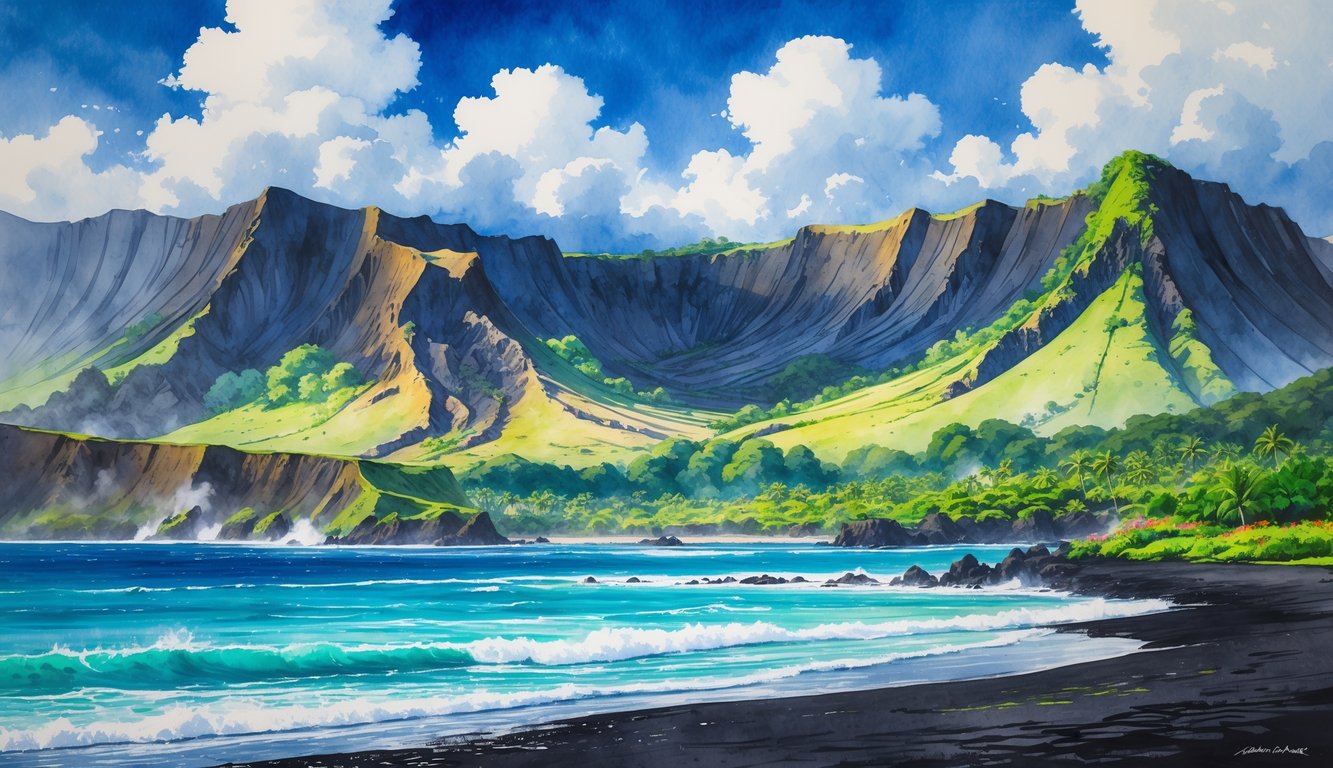
I see the Big Island as a paradise for anyone with a camera. Erupting volcanoes, towering mountains, rare beaches, and unique wildlife offer vivid colors and unforgettable scenes.
Hawaii Volcanoes National Park and Active Volcanoes
When I visit Hawaii Volcanoes National Park, the land feels powerful and alive. The park has Kilauea and Mauna Loa, two of the world’s most active volcanoes.
I capture glowing lava flows, steam vents, and rugged craters. Sunrise or sunset brings dramatic shapes and colors to the lava landscape.
Craters like Halema‘uma‘u offer unique views, while sulfur banks and steam vents create moody photos. I always stay on marked trails and follow park warnings for safety.
At night, I bring a tripod for long exposures of glowing lava. If the lava is not visible, I focus on twisted black formations and dry lava fields for interesting shots.
You can find more tips for photographers in this Big Island photo spots guide.
Mauna Kea and Mauna Loa
My favorite views on the Big Island come from the slopes of Mauna Kea and Mauna Loa. Mauna Kea, Hawaii’s highest point, is famous for clear skies and views above the clouds.
The sunsets and stargazing here are amazing. In winter, the summit sometimes has a dusting of snow, which makes for unique photos in tropical Hawaii.
Mauna Loa is less crowded, but its massive size offers sweeping landscape shots. I get the best photos at dawn or dusk, when the light is soft.
Tips for Photographing Mauna Kea & Mauna Loa:
- Bring warm clothing; it’s cold and windy
- Use a wide angle lens for vast perspectives
- Capture stars or use the telescopes as foreground at night
Read about capturing these mountain landscapes at this comprehensive guide.
Green Sand Beach and Sea Turtle Encounters
Green Sand Beach, or Papakōlea, is one of only a few green sand beaches in the world. Tiny olivine crystals give the sand its color.
The contrast between green sand, blue water, and black lava makes for striking photos. To reach the beach, I hike a bumpy trail, so I bring water and protect my gear from salt and sand.
The cliffs above the beach offer great angles. Early morning light is soft, and there are fewer people.
Sea turtles, or honu, rest on black sand or swim along the shore in different spots on the Big Island. I use a zoom lens and keep my distance to respect wildlife.
You can find turtles at beaches near Kona, Punaluʻu, and some tide pools. For more tips on these locations, visit this Big Island photo destinations article.
Kona and Hilo Coastal Views
Kona offers golden sunsets, palm-fringed beaches, and dramatic lava rock shores. My best shots happen early in the morning or late in the evening when the sky and ocean glow.
Wawaloli Beach Park is a great spot for tide pools and crashing waves with few crowds. On the other side, Hilo feels lush and tropical.
I photograph rainforests, waterfalls like Rainbow Falls, and the historic bayfront in Hilo. The difference between Kona’s dry landscape and Hilo’s green scenery adds variety to my photos.
Some Kona and Hilo highlights for photographers:
- Black and white sand beaches
- Bright sunsets and sunrises
- Waterfalls and lush gardens
- Hidden coves and tide pools
Check this guide to coastal photo spots for more scenic ideas.
Kauai’s Iconic Photo Locations
Kauai has natural wonders, dramatic coastlines, and waterfalls that make perfect backdrops for photos. The island features lush landscapes, rugged cliffs, and secret pools.
Na Pali Coast and Boat Tours
The Na Pali Coast stands out for its tall sea cliffs and bright green valleys. I love how the steep ridges rise straight from the ocean, making every photo look wild.
You can’t reach the coast by car, so I join a boat tour for the best views. On the boat, I capture sweeping views of jagged cliffs, hidden beaches, and sea caves.
Sunrise or sunset offers the best golden light. Photographers may spot dolphins and see waterfalls dropping into the ocean in spring.
If I hike the Kalalau Trail, I get panorama shots from land, but the hike is tough.
| Quick Tips for Na Pali Coast Photos |
|---|
| Use a waterproof case for your camera |
| Wear sunglasses for glare |
| Look for rainbows after a quick rain |
Waimea Canyon and the Grand Canyon of the Pacific
Waimea Canyon is called the “Grand Canyon of the Pacific.” I’m amazed by the deep red, orange, and green layers in the rock walls.
The canyon stretches about 10 miles and is over 3,000 feet deep. There are many lookouts along Waimea Canyon Drive.
Pu’u Hinahina and Waimea Canyon Lookout offer wide views down the valley. Early morning or late afternoon light brings out the colors in the cliffs.
After rain, I often see waterfalls in the distance, which are great for zoomed-in shots.
| Best Lookouts | Feature |
|---|---|
| Waimea Canyon Lookout | Panoramic vista of canyon |
| Pu’u Hinahina Lookout | See waterfalls and side valleys |
Wailua Falls and Rainbow Falls
Wailua Falls is one of Kauai’s most photographed waterfalls. You can reach it by car, and the observation area lets me shoot the twin streams dropping 80 feet.
The morning sun sometimes creates rainbows in the mist. Rainbow Falls, more famous on the Big Island, has a beautiful setting near the Wailua River.
I visit after heavy rain, as the waterfalls are strongest then. Early mornings have fewer people, making it easier to set up a tripod or try long exposures.
- Wailua Falls: Easy access and morning rainbows
- Rainbow Falls: Best after rain for strong water flow and soft light
Queen’s Bath and Ke’e Beach
Queen’s Bath is a natural tide pool surrounded by lava rock. When the water is calm, it’s clear and bright blue.
I always check safety warnings, since waves can get dangerously high. On calm days, the pool’s reflections make for stunning photos.
Ke’e Beach sits at the end of the road on Kauai’s north shore. It has views of the Na Pali Coast and is a top spot for sunset shots.
Palm trees line the beach, and the water is usually calm in summer. I capture silhouettes, golden sunsets, and the first peaks of the rugged coastline.
For landscape shots, I use a wide lens to include both the beach and the cliffs.
| Beach & Pool Features | What I Photograph |
|---|---|
| Queen’s Bath | Reflections, lava rock, tide pool |
| Ke’e Beach | Sunsets, palm trees, Na Pali views |
Lesser-Known Islands and Secret Spots
Quiet moments and unique views make these lesser-known places special. They provide peaceful settings and natural beauty.
Lanikai Beach and Mokulua Islands
When I arrive at Lanikai Beach, the soft white sand stands out. The water is bright turquoise, calm, and perfect for reflection shots.
Early mornings are best, with fewer people and colorful sunrise skies. The Mokulua Islands float just offshore, adding interest to every photo.
Locals sometimes kayak to the islands, but I like the view from the beach. I often frame the islands with palm trees or catch a paddleboarder drifting by.
The beach also has native plants, shoreline rocks, and smooth sand for variety. Lanikai’s peaceful setting and clear water make it one of my favorite hidden gem beaches on Oahu.
Lanai’s Shipwreck Beach
When I visit Lanai, I go to Shipwreck Beach for a rugged and wild shoreline. Strong winds shape the coast, and rusted shipwrecks sit offshore, creating dramatic silhouettes.
Walking along the beach, I find driftwood and lava rocks scattered in the sand. The remote feel makes it easy to take photos without crowds.
Sometimes, crashing waves add energy to my shots. I use the shipwreck as a focal point, with Lana‘i’s green cliffs as a backdrop.
This spot gives a real sense of Hawaii’s untouched side, perfect for anyone looking for an off-the-beaten-path location.
Rainforest and Botanical Wonders

Lush rainforests and colorful botanical gardens offer vibrant scenes for my camera. I find rare trees, waterfalls, and exotic plants all in one trip.
Ho’omaluhia Botanical Gardens
When I want to capture tropical beauty, I head straight to Ho’omaluhia Botanical Gardens on Oahu. The gardens cover over 400 acres and sit against the towering Ko’olau Mountains.
I always notice a calm, peaceful feeling as soon as I step inside. Walking trails lead me past huge fishponds, shady palm groves, and tall trees from Africa, Malaysia, and the Philippines.
I love how morning light cuts through the mist for soft, bright photos. A great lookout spot along the main road lets me see the entire valley and the mountains beyond.
Picnics are allowed in many areas. I usually plan my visit early and take my time exploring.
Birds, flowering plants, and small streams fill these gardens with life. Signs next to many plants help me learn about each one, so I can find cool subjects for my photos.
The gardens are free to enter and open daily except for Christmas and New Year’s.
Rainbow Eucalyptus and Unique Flora
Rainbow eucalyptus trees in Hawaii always draw my camera. Their bark peels back in strips, revealing whirls of green, orange, purple, and red.
I first spotted these trees near Hana on Maui. I also find them growing in other wet, warm parts of Hawaii’s rainforests.
These trees aren’t native to Hawaii, but photographers love their colors and shapes. After rain, the bark’s colors become much brighter, making it the best time to photograph them.
I sometimes use a polarized filter to cut glare and bring out even more color. Hawaii’s rainforests are full of other unique plants, like giant ferns, wild orchids, and towering bamboo stands.
In places such as the Garden of Eden Arboretum on Maui, I photograph both rainbow eucalyptus and tropical waterfalls before the crowds arrive. For more ideas on gardens and rainforests, I check places like the Garden of Eden Arboretum and scenic botanical gardens throughout the islands.
Epic Lookouts and Mountain Vistas

Hawaii’s landscapes offer sweeping views of rugged cliffs, lush valleys, and dramatic peaks. Some of the best photo spots also tell a story of Hawaii’s wild beauty and unique geology.
Pololu Valley Lookout and Waipio Valley
When I visit the Big Island, the Pololu Valley Lookout always amazes me. From the lookout, I see a deep green valley framed by tall cliffs and the blue ocean.
The hike down is steep but worth it for black sand beach photos and morning mist over the valley. A short drive south, Waipio Valley feels like another world.
The lookout here gives wide views of taro fields, a meandering river, and a distant waterfall. Early morning or late afternoon offers the best lighting for pictures, with soft shadows and golden skies.
Haiku Stairs and Koko Head
The Haiku Stairs, or “Stairway to Heaven,” climb a steep ridge on Oahu. I see more than 3,900 steps rising up through misty clouds.
While the hike is closed to the public, many people photograph the stairs from below or from nearby trails for that iconic aerial shot. Not far away, Koko Head’s summit is another Oahu favorite.
The trail follows an abandoned railroad track straight up the side of the crater. The climb is challenging, but at the top, I get a 360-degree view—from Honolulu’s city lights to turquoise bays and lava plains.
The area near Koko Head, including Lanai Lookout, offers unique rock formations and sweeping landscapes. Each spot gives me new perspectives and colors, capturing Oahu’s wild terrain in every shot.
Capturing Hawaiian Culture and Towns

Hawaii’s towns are full of history, colorful art, and special traditions. I find these places give me chances to photograph local life, old landmarks, and unique architecture.
Historic Lahaina
When I visit Lahaina, I feel like I’m stepping back in time. This old whaling town on Maui features preserved wooden storefronts and bright murals.
Front Street stays busy with locals and visitors. Early mornings are my favorite time to shoot.
Shops begin to open as sunlight glows on the historic buildings. The banyan tree in the town square is a must-see.
Its sweeping branches frame wide shots or close-ups with light filtering through the leaves. Local art galleries and boats in the harbor show different sides of Lahaina’s culture.
Small cafés add to the town’s charm. I always ask residents and shop owners before photographing people or private spaces.
For more ideas on where to capture Hawaiian heritage, check out this guide to best Hawaii locations.


