Hawaii is famous for its clear blue waters and beautiful beaches. It’s also home to some of the best swimming competitions in the world.

From scenic open water races to exciting local swim meets, there’s something for every type of swimmer here. You can challenge yourself with a long ocean swim or watch top athletes take on Hawaii’s toughest courses.
These events are both fun and inspiring. Each race has its own special vibe.
Some, like the North Shore Swim Series, let you dive into crystal-clear waves along Oahu’s famous beaches. Others, such as the Triple Crown Swim Series, offer multiple races on the Big Island for swimmers who want to test their endurance over several events.
If you’re planning a swim trip or just curious about local sports, you should check out these competitions. Swimmers of all levels come together to enjoy Hawaii’s natural beauty and friendly racing scene.
Overview of Swimming in Hawaii
Swimming in Hawaii brings unique challenges and experiences. The islands offer scenic open water courses and have an active swimming community.
Many events here combine athletic skill with the beauty of the natural landscape.
Unique Features of Hawaiian Swim Events
Swimming in Hawaii stands out because of the stunning scenery. Swimmers race in clear blue ocean waters, surrounded by volcanic landscapes and tropical marine life.
Races like the Waikiki Roughwater Swim use a point-to-point open water format. Instead of laps in a pool, you race across a bay.
Wind, waves, and currents play a big role, so swimmers need to be ready for changing conditions. Events often start at sunrise to enjoy calm seas and cooler temperatures.
Organizers focus on safety, with kayakers and lifeguards guiding swimmers along the course. These features make Hawaiian swim events both challenging and memorable.
Popularity of Open Water Swimming
Open water swimming is very popular in Hawaii. The warm climate and easy access to beaches allow swimming outside for most of the year.
Swimmers often gather early in the morning at places like Kailua Bay or Waikiki Beach. Local clubs organize group swims, races, and training sessions, creating a strong sense of community.
Many of the most famous open water races in the U.S. happen right here, attracting swimmers from all over. The Hawaii event calendar is full of opportunities for all ages and skill levels.
Whether you are a beginner or an experienced swimmer, you can find an event that matches your abilities.
Historic Growth and Modern Trends
Swimming in Hawaii has grown a lot over the years. Early races started small and local swim clubs organized them.
Now, many events attract hundreds of swimmers, including visitors from around the world. Modern trends focus on safety, environmental protection, and community involvement.
Organizers work to reduce plastic use and protect ocean wildlife during events. Technology has changed things, with GPS timing and online race tracking letting friends and family follow your progress in real time.
Competitive and recreational swimming in Hawaii keeps evolving. The sport is now more accessible to younger swimmers through events and swim clubs.
Iconic Swimming Competitions in Hawaii
Hawaii hosts some of the most recognized open water swimming events in the United States. These races attract swimmers from around the world and give you the chance to experience the state’s warm ocean waters and stunning coastlines.
Kamakahonu Swim
The Kamakahonu Swim is a favorite race in Kailua Kona. It starts at the historic Kamakahonu Beach, next to the famous pier.
Swimmers follow a course lined by tropical views and gentle waves. Both experienced open water athletes and enthusiastic locals join this event.
With distances for all skill levels, you’ll see a mix of casual swimmers and competitive racers. Organizers focus on safety, providing clear directions and lots of support in the water.
Every year, the Kamakahonu Swim feels like a festival, with music, food, and a friendly island spirit. It’s a perfect introduction to Hawaiian open water swimming for anyone new to the sport.
Triple Crown of Open Water Swimming
The Triple Crown combines three of Hawaii’s most famous ocean races. This group includes the Waikiki Roughwater Swim, the Maui Channel Swim, and the Ka’iwi Channel Swim.
Each swim has its own history. The Waikiki Roughwater Swim starts near Diamond Head and often draws over 1,000 contestants.
The Maui Channel Swim is a relay race from Lanai to Maui. The Ka’iwi Channel Swim is one of the most difficult long-distance events in the world.
Swimmers who complete all three earn the unique title of Triple Crown finisher, a respected award in the open water community.
Swim Series Events
Hawaii hosts a collection of open water races called the Swim Series Events. These include multiple events throughout the year, covering different beaches and distances.
The races welcome everyone, from youth to seasoned competitors. Each race often features unique settings, like rocky outcrops or long sandy stretches.
Friendly rivalry in these events helps swimmers improve, and the community cheers from the beach. Besides individual prizes, organizers track points across the season.
Those who join several races can aim for overall Swim Series rankings, making it more than just a one-time competition.
Oahu Beach Races
Oahu is well known for its lively open water community. The Oahu Beach Races happen regularly near popular spots like Ala Moana Beach Park and Waikiki.
These events offer variety, from short sprints to longer distances. Many Oahu Beach Races serve as practice for larger events like the Triple Crown swims.
Registration is easy, and race days are always full of excitement. Friends and families often gather together, so even spectators enjoy the fun atmosphere.
These races are a great way to keep your skills sharp and meet other swimmers.
Major Open Water Swimming Events
Open water swimming in Hawaii is famous for its crystal-clear water, unique race settings, and community spirit. Organizers hold races at some of the world’s best beaches, drawing both local and global athletes.
Distances range from short sprints to challenging long courses.
Signature Open Water Races
The Waikiki Roughwater Swim is a classic race in Oahu known worldwide. Hundreds of swimmers join each year.
The route starts near Diamond Head and crosses the turquoise waters of Waikiki Bay. It ranks among the world’s top open water swims.
Another popular race is the Kukio Blue Water Swim on the Big Island. This event lets swimmers enjoy a beautiful course around Kua Bay.
The North Shore Swim Series is another group of races loved by many. It includes several point-to-point swims over summer months on Oahu’s North Shore.
These races are known for strong ocean currents and exciting beach finishes.
Notable Beach Venues
Several beaches in Hawaii are famous for hosting open water swimming events. Waikiki Beach is the site for the Roughwater Swim.
Its calm, warm waters make it ideal for both new and experienced ocean swimmers. Sunset Beach and Waimea Bay, both on Oahu’s North Shore, are also popular race venues.
Each summer, Sunset Beach is home to the Aloha Salads Summer Sprint. Waimea Bay hosts the exciting Cholo’s Waimea Bay Swim.
These spots offer plenty of space and have good waves, making each race feel unique. More details and dates for races at these beaches are available through the Waikīkī Swim Club.
Kua Bay on the Big Island is a favorite for its clear water and safe swim conditions. Events like the Kukio Blue Water Swim take place here, offering a stunning setting and dependable organization.
Popular Swim Distances
Most open water races in Hawaii offer a range of distances for all skill levels. Short races are often around 1 to 2 kilometers, perfect for beginners or young swimmers.
The Waikiki Roughwater Swim covers about 2.4 miles (about 3.9 kilometers), letting seasoned swimmers push their limits. The North Shore Swim Series features races from about 1 mile up to longer distances, helping people build endurance over the season.
The Kukio Blue Water Swim is a 1.2-mile race, which suits both newcomers and experienced competitors. Many events let swimmers use wetsuits, fins, or other gear, depending on the rules.
This makes it easy for almost anyone to join and enjoy the beautiful open water of Hawaii. For a complete list of events and distances, you can visit websites like Find a Race to see the latest updates.
Planning to Participate in Hawaii’s Top Swim Events
Before swimming in Hawaii’s top events, you should get informed and prepare for the conditions. Make sure to secure your spot, get ready for the ocean, and know what to expect on race day.
Registration and Entry Requirements
Registration for big races like the Waikiki Roughwater Swim usually opens months before the event. For 2025, sign-ups for Waikiki Roughwater Swim registration open on April 2, and the race takes place on September 1.
Entry fees vary; for example, Waikiki’s online registration is $80 before certain deadlines. To register, you often need to enter your personal information and proof of swim ability.
Many events may require you to have completed a similar distance before or show your times from a previous race. It’s important to check which gear is allowed.
Usually, wetsuits aren’t permitted except in rare cases, but goggles and swim caps are standard. Some Hawaii events also have age restrictions, so always read the rules carefully.
Training Tips for Hawaiian Conditions
Prepare for unique ocean conditions in Hawaii. The water is warm, but currents and waves make swimming more challenging than a pool.
Focus on open water skills, like sighting and breathing on both sides, to adapt to wind and surf. Swimming near coral or rocks means you should practice in areas with some chop and waves.
Training with a buddy helps you work on drafting and pacing in a group. Hawaii’s sun is strong, so use waterproof sunscreen and stay hydrated during long practice swims.
Training at different times of day helps you adjust to water temperatures and lighting. This can boost your confidence for race day.
What to Expect on Race Day
On race day, I arrive early to pick up my race packet. I put on my number and check out the start and finish areas.
The atmosphere feels busy but friendly. Athletes of all ages warm up while volunteers give directions.
An official usually gives a safety talk about ocean conditions, currents, and signals. I find out which color swim cap to wear and listen for announcements.
Ocean swims in Hawaii start from the water or the beach. When the horn sounds, I begin swimming at my own pace with others around me.
Locals and visitors cheer for me at the finish. I grab some refreshments and celebrate my achievement in paradise.
Spectator Information and Media Coverage
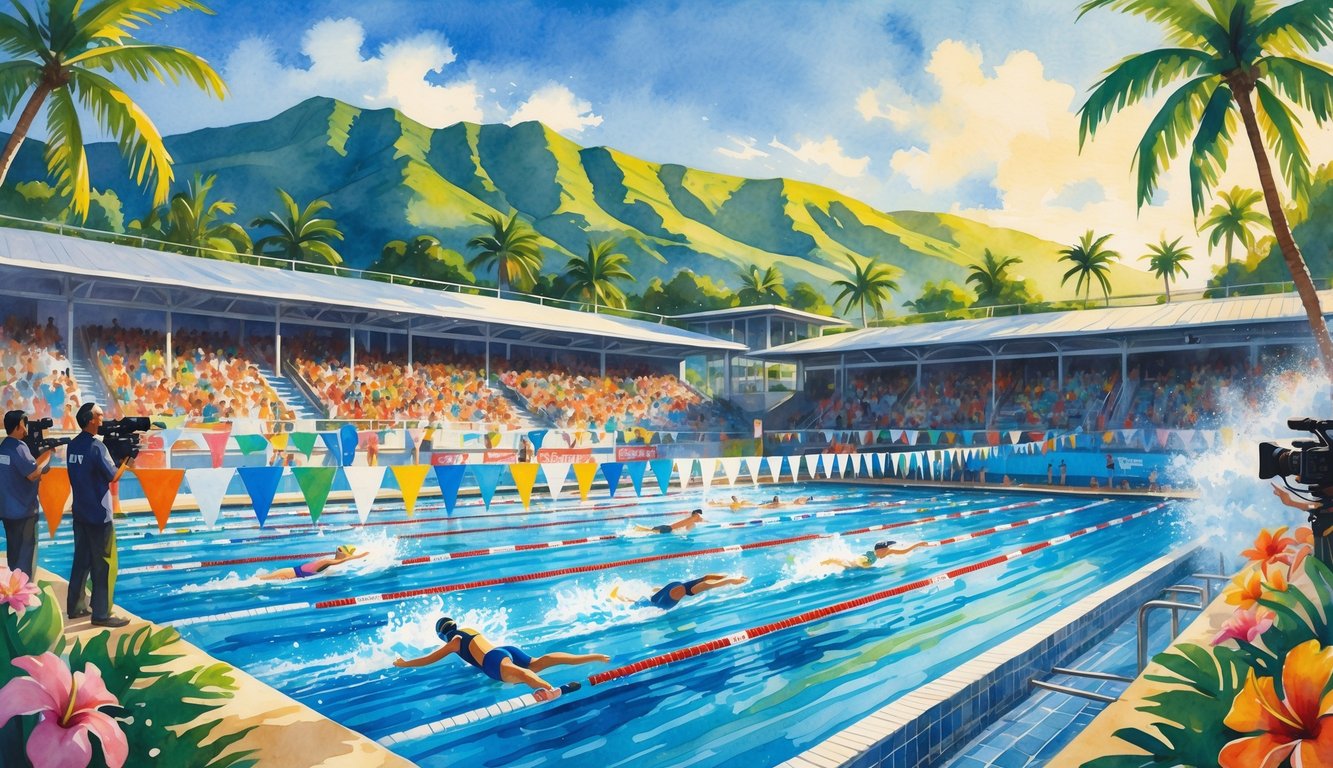
Watching swimming competitions in Hawaii feels exciting. I cheer from the shore or watch highlights online.
There are great places to watch races up close. I can also find event videos if I can’t attend in person.
Best Viewing Spots for Major Events
I get to the beach early to grab a good spot for open water swim races. The Triple Crown Swim Series holds events at scenic places like Anaehoʻomalu Bay and Waikoloa.
These beaches offer wide views of the water and the finish line. Families enjoy shaded picnic areas and food stands.
If I want to be near the action, I stay close to the start and finish areas. Most of the excitement happens there.
For indoor or pool events, I choose bleacher seats near the center lanes for the best view. Volunteers and staff help guide fans to good spots at big events.
Some events allow me to walk along the shore and follow swimmers, especially during long-distance races. I always bring sunscreen, water, and a camera to capture the beautiful scenery.
How to Find Swim Event Videos
When I can’t attend in person, I look for race videos online.
Many competitions post video highlights on their official websites and social media pages.
For example, the Triple Crown Swim Series and Hawaiian Swimming organization share race results, images, and sometimes full race videos.
Local news stations and sports blogs often cover big events with interviews and behind-the-scenes features.
I search for videos on YouTube and Facebook by using event names, locations, and dates.
This helps me find live streams or replays more easily.
Some websites offer photo galleries and recaps so I can catch moments I missed.
For major swims like the Hawaiian Open, I look for media coverage listed under Hawaii spectator sports events.
This way, I don’t miss any highlights.