
When I started looking into the best colleges in Hawaii, I found many great choices for students. From Honolulu’s big universities to smaller community colleges on other islands, the state offers schools that stand out for academics, campus life, and beautiful natural surroundings.

The top universities in Hawaii give students a chance to study in some of the most unique and vibrant environments in the country.

I noticed that schools like the University of Hawaii at Manoa, Hawaii Pacific University, and Chaminade University often rank among the most respected institutions for both local and out-of-state students. These universities combine strong academic programs with close-knit communities, making studying here a great experience for many.
If you want to see rankings and details about these schools, you can read more about the best colleges in Hawaii and their different strengths.
What interests me isn’t just the education, but also how much students enjoy the campus culture and the natural beauty of the islands. If you’re thinking about where to study next, I’m excited to share what makes these top universities in Hawaii special.
Overview of Higher Education in Hawaii
Hawaii has a unique higher education system with both public and private institutions. Each school gives students different experiences, degree paths, and campus environments.
Types of Colleges and Universities
I can choose from a mix of public and private institutions in Hawaii. The state’s higher education includes four-year universities, community colleges, and specialty schools.
Public schools usually cost less for residents. Private colleges tend to be smaller and offer a more personalized feel.
Community colleges in Hawaii focus on associate degrees and short-term certificates. They help many students transfer to four-year universities or start working right away.
Four-year institutions like the University of Hawaii at Mānoa offer many bachelor’s, master’s, and doctoral programs.
Key categories:
- Four-year Universities: Offer a wide range of undergraduate and graduate programs.
- Community Colleges: Emphasize two-year degrees and workforce training.
- Private Colleges: Usually smaller and may focus on specialized fields or liberal arts.
The University of Hawaii System
The University of Hawaii System leads public higher education in the state. It operates ten campuses across different islands.
This includes three universities: University of Hawaii at Mānoa, Hilo, and West O’ahu, as well as seven community colleges. University of Hawaii at Mānoa stands out as the flagship campus, with strong programs in oceanography, Asian studies, and astronomy.
UH Mānoa is in Honolulu on the island of Oahu. Other campuses, such as UH Hilo and UH West O’ahu, offer their own unique programs and community-based experiences.
The system lets students move between campuses easily, and credits transfer smoothly. This makes it easier for me to start at a community college and later finish a bachelor’s at a university campus.
Importance of Accreditation
Accreditation is important in Hawaii’s higher education system. It shows that a college or university meets key standards for quality and academic rigor.
Most schools in Hawaii, including those in the University of Hawaii system, have accreditation from the WASC Senior College and University Commission or the Accrediting Commission for Community and Junior Colleges.
Accredited schools make it easier to transfer credits, qualify for federal financial aid, and ensure that degrees are recognized by employers and other universities. Non-accredited schools may not offer the same benefits or credibility.
Before choosing a college, I always check its accreditation status. This helps make sure my work will count, whether I continue my studies or look for a job after graduation.
University of Hawaii at Mānoa
I see the University of Hawaii at Mānoa as a leading research school in Hawaii. It is known for its highly ranked Earth and environmental science programs, vibrant campus community, and central location in Honolulu.
Academic Programs and Degrees
UH Mānoa offers many degree programs. I noticed it is strong in fields like oceanography and atmospheric sciences.
Recent rankings put oceanography at #7 and atmospheric sciences at #13 worldwide. The university’s unique access to the Pacific Ocean and local climate supports these programs.
I can choose from over 90 undergraduate majors and 85 graduate programs. Notable areas include hospitality management, earth sciences, and medicine.
The John A. Burns School of Medicine is a top-tier medical school. The school has R1 research university status, which means it is recognized for high research activity.
Admission to UH Mānoa is selective. The acceptance rate usually ranges from about 80% to 85%.
For fall 2025, in-state tuition and fees are $12,186. Out-of-state tuition and fees are $34,218.
Test scores like the SAT and ACT are considered but not always required for every program.
Campus Life in Honolulu
Living in Honolulu puts me close to beaches, city life, and many cultural sites. The campus is full of green spaces and sits near downtown.
I find the area lively, multicultural, and welcoming. Students come from many states and countries.
There are many student groups and events I can join, including clubs for sports, arts, culture, and academics. Athletics are a big part of the school spirit, especially with the Rainbow Warriors teams.
The school hosts campus activities such as music performances and food festivals, giving me a chance to relax and make friends.
Housing options include on-campus dorms and nearby apartments. Many students live in residence halls, especially during their first year.
Dining halls and cafes across campus serve local and international foods. I get to enjoy Hawaii’s diverse food culture.
Research and Innovation
UH Mānoa focuses on research. I can work with faculty on projects related to marine biology, volcanology, and renewable energy.
The school often receives national and international recognition for its work in Earth and environmental sciences. It ranks in the top 15 globally for these subjects, according to Top Universities.
Many research centers and labs are on campus. Projects often study local problems and opportunities, like coral reefs or volcanic activity.
There are also research partnerships with organizations in Hawaii, the United States, and internationally.
UH Mānoa supports student research through scholarships and special programs. I have the chance to present at conferences and contribute to published studies as early as my undergraduate years.
Students working in research often get hands-on experience that helps when applying for jobs or graduate school.
University of Hawaii at Hilo
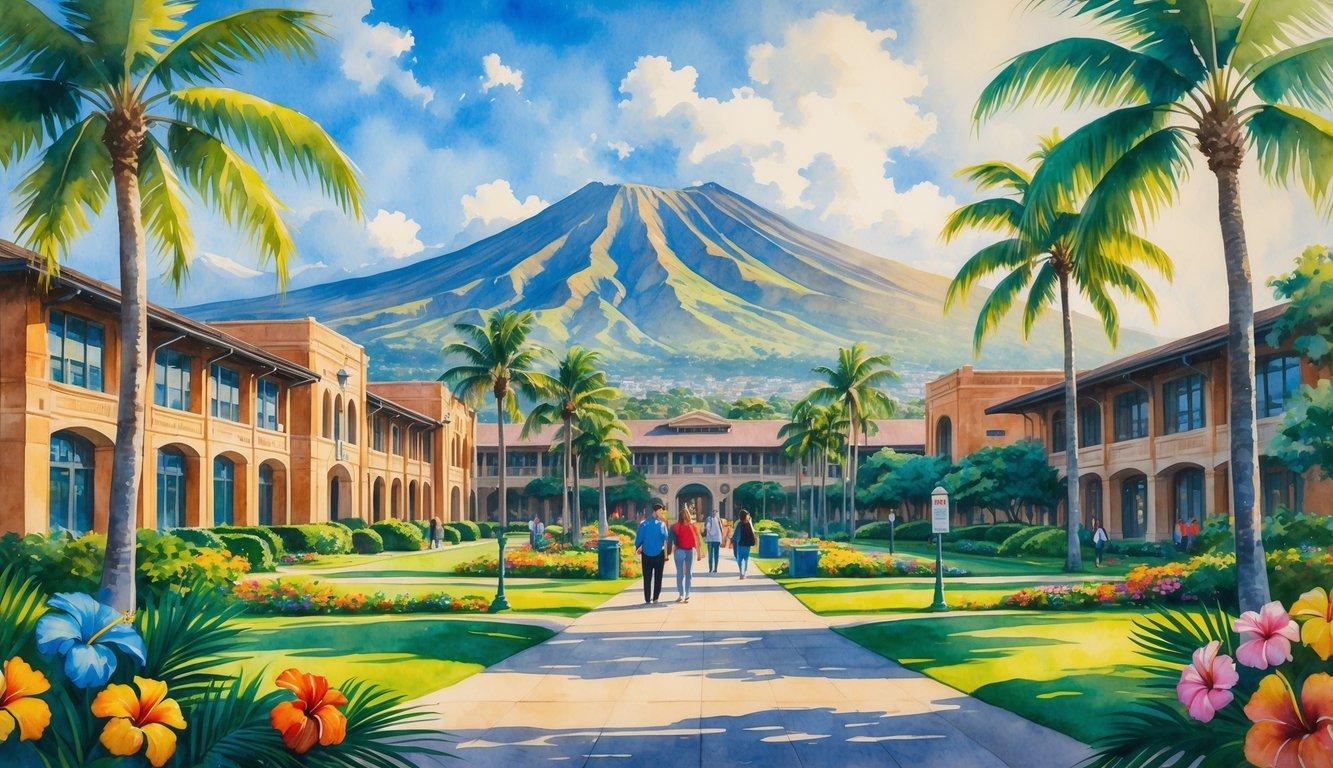
I see the University of Hawaii at Hilo as a unique school with strong programs in science and the environment. It’s also known for its diverse student community and its location on the scenic Big Island of Hawaii.
Specialized Fields of Study
When I look at the academic strengths at the University of Hawaii at Hilo, I see a focus on conservation, marine biology, and environmental science. The campus sits among rainforests, volcanoes, and the Pacific Ocean.
These programs use Hawaii’s natural environment as a living classroom.
Top areas of study include:
- Marine Science: Students research ocean life, coral reefs, and climate change.
- Conservation Biology: The school teaches students how to protect native Hawaiian species and ecosystems.
- Environmental Science: Students work on projects about volcanoes, local plants, and resource management.
The campus works with local organizations. Many students join internships or research with groups focused on sustainability and the environment.
If you care about the planet, this school offers many ways to get involved in research and fieldwork. For more information on program rankings, visit the 2025 University of Hawaii at Hilo Rankings.
Student Experience on the Big Island
Living and studying in Hilo means being close to both nature and local Hawaiian culture. The campus is smaller than some other universities, so students often form strong friendships.
Hilo’s community feels welcoming and close-knit.
Campus life includes:
- Outdoor activities like hiking, surfing, and snorkeling
- Student clubs that focus on Hawaiian traditions and cultural events
- Easy access to unique landscapes like Hawaii Volcanoes National Park
I think being in Hilo means you’ll work with teachers and researchers who know Hawaii’s environment well. You can study local traditions and the island’s history as part of the curriculum.
The school’s setting on the Big Island shapes much of what students do and learn every day. To learn more about the campus and programs, visit the University of Hawaii at Hilo’s official website.
University of Hawaii – West Oʻahu

I find that the University of Hawaii–West Oʻahu stands out for its modern academic programs and close ties with the local community. It offers flexible degrees, real-world learning, and a welcoming campus atmosphere.
Academic Offerings
When I look at what the University of Hawaiʻi-West Oʻahu provides, I see a strong focus on practical, career-based majors. Some of the most popular programs are in Business Administration, Public Administration, Creative Media, and Cybersecurity.
The university offers Bachelor of Arts, Bachelor of Science, and select certificate programs. Many classes are available both online and on campus, which makes studying more manageable if I have a busy schedule.
Class sizes are small, and most professors are approachable and supportive. The curriculum prepares me for jobs in high-demand fields, especially in Hawaii’s labor market.
The school is ranked #10 among Regional Colleges West by U.S. News & World Report.
Campus and Community Engagement
At UH West Oʻahu, I see a strong spirit of community. The campus is in Kapolei and has beautiful new facilities.
There are frequent events, clubs, and activities that encourage me to get involved. The university partners with local businesses, government agencies, and non-profits.
This helps me connect my studies to internships and real-world projects. The campus culture emphasizes Hawaiian values and hosts cultural activities year-round.
Student support services are easy to access, and the staff is friendly. Being part of this community, I feel the university cares about my success in school and my future career.
For more details about student life and rankings, see UH West Oʻahu’s position among top public universities.
Private Universities in Hawaii
Hawaii has several well-known private universities. Each school has its own academic focus and welcoming campus culture.
These schools offer smaller class sizes and different areas of study. I have plenty of choices for my education.
Chaminade University of Honolulu
Chaminade University of Honolulu is a small Catholic university in the heart of Honolulu. The campus sits close to Waikiki Beach and downtown, so I can enjoy the city and island life while studying.
The university offers strong programs in nursing, forensic sciences, and criminal justice. Chaminade uses a student-centered approach and keeps class sizes small.
Most professors know students by name, making classes feel personal and interactive. Volunteer opportunities and internships connect me with the local community.
The university focuses on service and leadership. Its Marianist values encourage social justice and helping others.
Hawaii Pacific University
Hawaii Pacific University is the largest private university in the state. Its main campus is in downtown Honolulu, and another campus is at Hawaii Loa in Kaneohe.
Students from all over the world attend HPU, creating a diverse international community. Top programs include business, nursing, and marine biology.
The university offers flexible schedules, with in-person and online classes. This flexibility makes it easier for me to balance work, school, and other commitments.
Campus life is active, with clubs, student activities, and athletics. HPU emphasizes global learning experiences and study abroad programs.
Brigham Young University–Hawaii
Brigham Young University–Hawaii is on the North Shore of Oahu in Laie. The Church of Jesus Christ of Latter-day Saints owns the university, but students from all backgrounds can attend.
I study alongside people from more than 70 countries, creating a diverse campus. BYU–Hawaii offers degrees in business, education, computer science, and hospitality management.
The school keeps tuition low, especially for church members, and many students live on campus. The peaceful setting offers quick access to beaches and quiet study spaces.
Faith and values matter here, and students follow an honor code focused on honesty and respect. I find many opportunities for service and leadership, both on campus and in the community.
For more information on top private colleges in the state, visit this best private universities in Hawaii overview.
Community Colleges Across the Islands
Community colleges in Hawaii make college more affordable and accessible. Many people choose these schools for two-year degrees, job training, or as a first step before moving to a four-year university.
Kapiolani Community College
Kapiolani Community College is in Honolulu and is known for strong health sciences and culinary programs. The culinary program stands out because it focuses on local flavors and gives students hands-on training.
Many graduates work in Hawaii’s hotels and restaurants. Class sizes are small, so I get more personal attention from teachers.
The campus overlooks Diamond Head and is close to Waikiki, so students enjoy city life and the beach. Academic support services like tutoring and counseling help students stay on track.
Tuition costs much less than four-year schools in Hawaii. Kapiolani is a solid choice for health careers, culinary arts, or saving money before transferring.
Read more about Kapiolani on the list of top community colleges in Hawaii.
Leeward Community College
Leeward Community College is in Pearl City, Oahu. The college offers many associate degree programs and technical certificates.
Classes cover subjects from business and education to information technology. I can easily find a path that matches my interests.
Leeward offers flexible scheduling and many online options. Working students can balance classes with jobs or family.
Clubs, events, and tutoring centers help students connect and get support. Transfer agreements with the University of Hawaii system make it easy to continue at a four-year school.
Leeward’s affordable tuition and broad programs attract many local students.
Windward Community College
Windward Community College is in Kaneohe, on the windward side of Oahu. The campus has views of the Ko’olau mountains.
The natural setting creates a calming space to study and enjoy outdoor activities. Windward focuses on arts, Hawaiian studies, and environmental sciences.
Its Hawaiian studies program teaches about local culture and language. The college also offers courses in marine science and agriculture.
Facilities include a modern library, an Imaginarium for space science, and a small theater. Faculty and staff are welcoming, and small classes create close-knit learning.
Windward’s support services help students succeed, no matter their academic background. Get more details about Windward and other community colleges across the islands.
Other Notable Institutions

Several colleges in Hawaii focus on practical skills and career training. These schools help people earn degrees, certificates, or job-specific training for new or better careers.
Hawaii Community College
Hawaii Community College is in Hilo on the Big Island. The college offers a wide range of associate degrees and certificates, especially in technical and trade programs.
Students often choose programs in culinary arts, nursing, and carpentry. The campus feels friendly and supportive, with small class sizes and caring teachers.
The school also runs HawCC—Pālamanui in Kailua-Kona. This helps people in the area attend college without traveling far.
They focus on Hawaiian culture and serving the local community. You can find more details and a full list of programs through the official university listings.
Honolulu Community College
Honolulu Community College is in the city and uses a hands-on learning style. The college is known for applied technology programs like aeronautics maintenance, auto mechanics, and fire science.
Modern labs and workshops help students learn real-world skills. Many graduates find jobs in their field right after finishing school.
The public transit system makes it easy to reach campus. For those interested in technical careers or transferring to a four-year university, Honolulu Community College is a solid choice.
You can learn more about this college on education ranking websites like EduRank.
Kauai Community College
Kauai Community College is the only college on Kauai. The campus feels close-knit, and students often know each other.
The school offers degrees in business, hospitality, early childhood education, and sustainable sciences. The culinary arts program is popular, and students practice in a college-run restaurant.
Support services like tutoring and counseling are available for students. Kauai Community College is a good choice for practical training in a beautiful island setting.
More information is available at Wikipedia’s college and university list.
University of Phoenix-Hawaii
The University of Phoenix-Hawaii mostly serves working adults finishing bachelor’s and master’s degrees. Most classes are online or held in the evenings, so people with jobs or family commitments can attend.
Popular programs include business, education, information technology, and healthcare administration. Academic advising helps adults earn credits for work and life experience.
This support makes returning to college less stressful for busy adults. You can find school details and rankings on sites like U.S. News Best Colleges.
Campus Life and Student Experience
When I think about going to college in Hawaii, I picture learning in a place filled with natural beauty and a strong sense of community. Campuses blend modern student life with the traditions and culture that make Hawaii unique.
Cultural Opportunities and Hawaiian Identity
Hawaii’s universities celebrate Hawaiian culture every day. On campus, I can join clubs focused on hula, language, or local traditions.
Events like makahiki (harvest festivals) and cultural fairs let me experience what makes Hawaii special. Visiting places like Waikiki Beach with friends or taking weekend trips to Maui or Kauai lets me enjoy the islands’ famous landscapes.
These trips help me learn about Hawaiian history and respect for nature. Universities also partner with local organizations for cultural workshops.
By getting involved, I discover the meaning behind traditional Hawaiian practices. The campus communities are tight-knit and diverse, making everyone feel welcome.
Student Housing and Facilities
Hawaii’s universities offer a range of housing, from on-campus dorms to off-campus apartments near beaches or city centers. I can live by the ocean or in the heart of Honolulu, waking up close to iconic spots like Waikiki Beach.
Many schools have modern student centers, recreation areas, and dining halls. Study spaces feature the latest technology, and athletic centers often include pools, fitness rooms, and courts.
Some campuses offer surfboard rentals or group trips to local resorts. Living and learning here means I enjoy safe, comfortable housing and Hawaii’s beautiful scenery.
Being close to nature and cultural landmarks makes college years exciting and memorable. I can always find a supportive environment and unique facilities at Hawaii’s schools.
Academic Excellence and Research
Hawaii’s universities stand out for education in business fields and the natural sciences. Programs connect what I learn in class to real opportunities on the islands.
Business and Tourism Management
When I explored business education in Hawaii, I noticed that top universities design their programs for the local economy. Tourism is Hawaii’s main industry, so many courses focus on hospitality, customer service, and sustainable tourism.
The Shidler College of Business at the University of Hawai‘i at Mānoa offers strong international business and hospitality management programs. They partner with tourism companies, which gives students like me opportunities for internships and hands-on experience.
BYU-Hawaii provides affordable business programs that help students connect faith, leadership, and entrepreneurship.
Employers value graduates from these schools. The combination of classroom learning and real-world tourism projects prepares students well.
I can find more information about the best universities in Hawaii for business and tourism to choose the right program.
Oceanography and Marine Sciences
Living on islands in the Pacific Ocean, I see why Hawaii is a center for oceanography and marine science research. UH Mānoa’s School of Ocean and Earth Science and Technology ranks among the nation’s best.
Their research covers coral reefs, climate change, and marine biodiversity. These areas directly affect life in Hawaii.
Students and faculty work with groups like the National Oceanic and Atmospheric Administration (NOAA). They spend time on research boats and do fieldwork in labs and underwater.
My friends who study here say hands-on learning is a big part of their education.
Research from these programs reaches people around the world. I visit Hawaii university rankings and research strengths for more details.
Admissions and Costs
When I look at universities in Hawaii, I pay close attention to how hard it is to get in and the costs. Each school has its own admissions process with different requirements and fees.
Acceptance Rates and Test Scores
Acceptance rates in Hawaii differ by school. The University of Hawaiʻi at Mānoa is the largest public university and is moderately selective, with an acceptance rate of about 80-85%.
Some smaller private schools, like Chaminade University of Honolulu and Hawaiʻi Pacific University, have slightly higher acceptance rates.
Most schools in Hawaii ask for SAT or ACT scores, but some are now test-optional. This means I can choose not to submit scores.
When scores are required, admitted students usually have SAT scores between 1050-1250 or ACT scores between 20-26.
I also check for extra requirements like essays, recommendation letters, or interviews. Meeting the minimum requirements does not always guarantee admission, as some programs are more competitive.
Key Facts:
| University | Avg. Acceptance Rate | Typical SAT Range | Test-Optional |
|---|---|---|---|
| University of Hawaiʻi at Mānoa | 80-85% | 1050-1250 | Yes |
| Hawaiʻi Pacific University | 80-90% | 1000-1220 | Yes |
| Chaminade University of Honolulu | 85-90% | 980-1190 | Yes |
Tuition and Financial Aid Options
Tuition is a big factor for me. Public schools like the University of Hawaiʻi system charge lower tuition for Hawaiʻi residents.
Average in-state tuition and fees are about $7,700, while out-of-state students pay around $21,000 per year. Private colleges in Hawaii usually charge around $17,000 per year.
Books and supplies cost about $1,200 each year. Some schools add fees for housing, meals, and student services.
Most universities offer scholarships, grants, and work-study programs to help cover costs. I can apply for federal aid through FAFSA, and some schools provide need-based or merit-based aid.
I always check deadlines because applying early can help me get more financial aid.
Graduation and Student Outcomes

Graduation rates at top universities in Hawaii show how many students finish their degrees on time. Student jobs and further studies after graduation also reveal the value of these schools.
Graduation Rates
The graduation rate is an important number when I look at universities. It tells me what percent of students complete their studies and earn degrees.
Chaminade University of Honolulu and Brigham Young University-Hawaii both have a 66% graduation rate. The University of Hawaii at Manoa follows with a graduation rate of about 62%.
These numbers are based on students finishing within 150% of the expected time, such as graduating in six years from a four-year program.
A higher graduation rate can mean students get good support and are satisfied with their learning environment.
Career Opportunities for Graduates
After graduation, many students in Hawaii work in education, business, health care, or tourism. Some schools offer resources like job fairs, internships, and career counseling to help students find work.
The University of Hawaii at Manoa has career centers that connect students with employers across the United States and Hawaii. Top degrees like MBA, Marine Science, and Communication open doors to growing job fields, especially those linked to Hawaii’s unique environment and culture.
College students gain practical experience through internships and networking programs. These opportunities help students build professional connections before graduation.


