
When I think about Hawaiian weddings, I picture beautiful beaches, colorful flowers, and the joyful sound of music and laughter.

Hawaiian wedding traditions combine ancient rituals, respect for nature, and a strong sense of family and community. Over time, native Hawaiian beliefs and outside influences have shaped these customs.
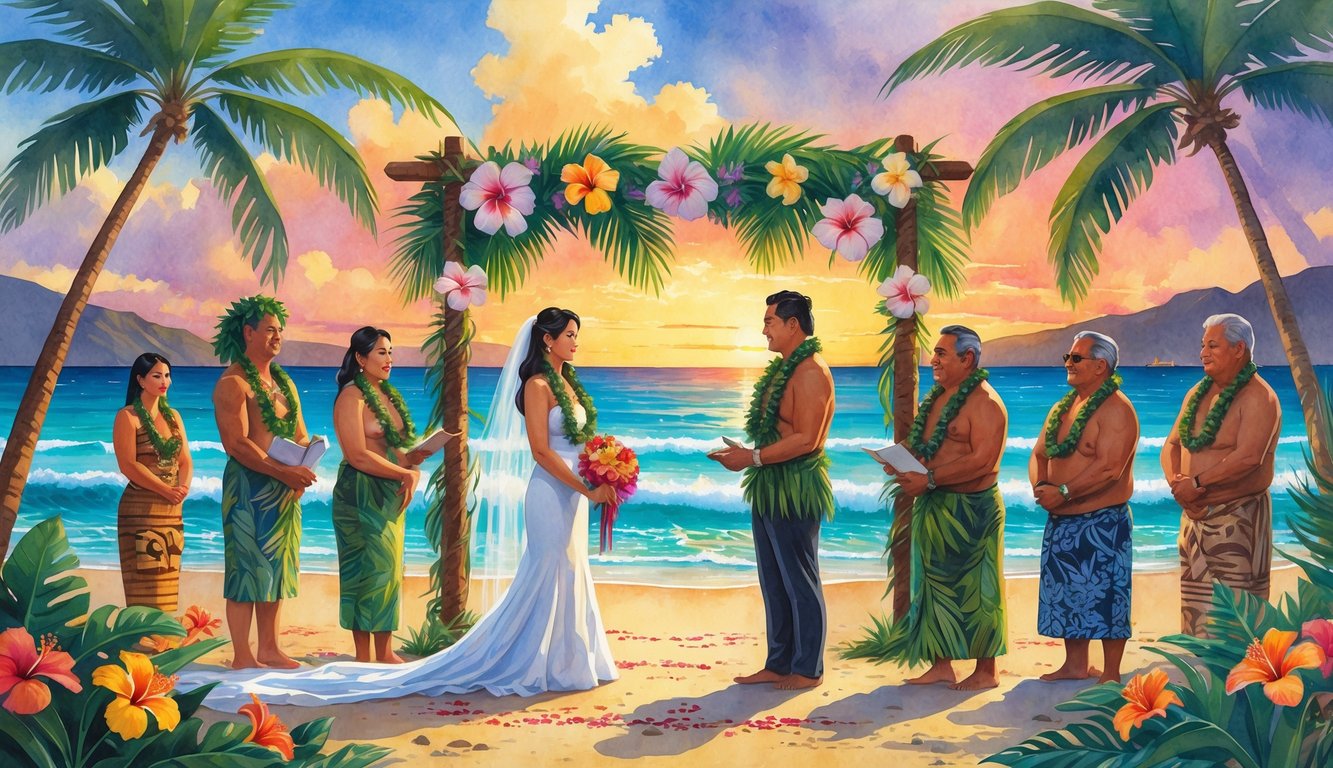
Each tradition in a Hawaiian wedding tells a special story.
Chants like the “Oli Aloha” and the exchange of leis connect the ceremony to the islands’ spiritual roots.
Many of these rituals still play a role in Hawaiian weddings, making them unique and memorable.
Origins of Hawaiian Wedding Traditions
Ancient customs, Polynesian voyages, and later historical events shaped Hawaiian wedding traditions.
Each stage influenced how couples honored their bond, family, and nature.
Ancient Hawaiian Marriage Customs
Early Hawaiian weddings treated marriage as a sacred agreement.
Marriage joined two families, not just two people.
Ancient ceremonies included sharing food or exchanging gifts to show respect between families.
Chants, called oli, offered blessings and guidance.
Couples often married near the ocean, at sunrise, or under favorite trees.
This connection to the land reflects the aloha spirit—love, peace, and compassion.
Family and friends gave advice, helped with preparations, and joined in the celebrations.
Ancient Hawaiian marriage customs stressed unity and a lasting connection to each other and the world.
The Influence of Polynesian Culture
The first settlers from Polynesia brought beliefs about marriage, family, and spirituality.
Chanting, ceremonial dress, and the use of flowers in weddings trace back to these Polynesian roots.
Ancient Polynesians valued harmony with nature, so Hawaiian ceremonies often include lei exchanges and outdoor settings.
Flowers carried spiritual meaning and brought good luck to couples.
The practice of exchanging leis remains central to Hawaiian weddings today.
Polynesian cultural values blended into Hawaiian wedding rituals, language, and customs.
This blend created the special identity found in Hawaiian marriage traditions.
Changes Over Time
Hawaiian wedding customs changed when Western settlers and missionaries arrived in the 1800s.
New laws, religious beliefs, and formal wedding attire became common.
Couples adopted traditions like the white wedding dress and the use of rings, but some old customs remained.
Modern Hawaiian weddings often mix old and new elements.
Couples might wear traditional flower leis and hold their ceremony in a church or on a beach.
Some families write their own vows, while others keep classic Hawaiian chants and blessings.
Many couples honor the aloha spirit by including symbolic acts like the unity sand ceremony or reciting the Oli Aloha chant.
These choices show how Hawaiian weddings continue to evolve, blending new ideas with time-honored customs from ancient and modern practices.
Ceremonial Elements and Their Meanings
Hawaiian wedding ceremonies include special rituals that are full of meaning.
Chants, flowers, and unique instruments honor love, family, and nature.
Oli Aloha: The Sacred Wedding Chant
At many Hawaiian weddings, the Oli Aloha chant begins the event.
A Hawaiian officiant or chanter welcomes the couple and guests with this chant.
The sing-song voice connects people to their ancestors and the spirit of aloha.
The chant sets the mood and helps everyone feel at peace and united.
The words ask for unity, love, and harmony.
Many couples use the Oli Aloha to honor the sacredness of marriage and island traditions.
Read more about the Oli Aloha in Hawaiian weddings.
Exchange Leis and Their Symbolism
The exchange of leis is a favorite Hawaiian wedding tradition.
The bride and groom give each other flower leis made from native blooms like plumeria, orchids, or ti leaves.
These garlands symbolize love, respect, and the circle of life.
This ritual brings families together and shows mutual admiration.
The lei exchange takes place early in the ceremony.
Family members or close friends sometimes present the leis.
This step is a promise of devotion and a blessing for the couple’s new life together.
Lei exchange is central to many traditional Hawaiian wedding ceremonies.
Lei colors and flowers can carry extra meanings:
| Flower Type | Meaning |
|---|---|
| Plumeria | New beginnings, love |
| Orchid | Beauty and luxury |
| Ti Leaf | Prosperity, luck |
Conch Shell Ritual
The blowing of the conch shell, called “pu,” creates an unforgettable moment.
The officiant blows the shell to signal the ceremonial beginning or highlight important parts of the wedding.
The conch shell’s sound is sacred for Hawaiians and summons blessings from the gods.
It announces important events and connects everyone to the ocean and islands.
The conch shell ceremony still carries deep spiritual meaning.
Signature Hawaiian Wedding Traditions
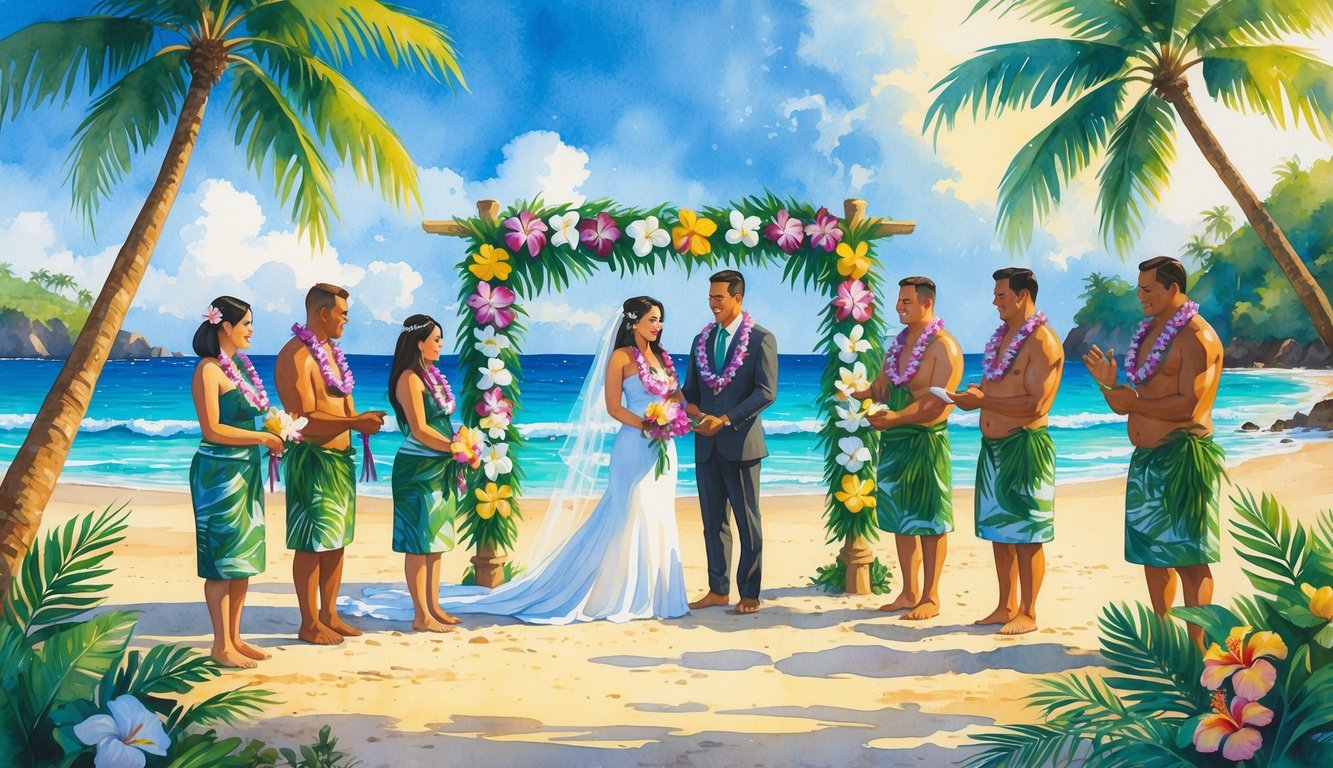
Hawaiian weddings include rituals that show the connection between the couple, their families, and the natural world.
Each ceremony highlights important values like love, unity, and respect for the land.
Sand Ceremony Practices
At many Hawaiian weddings, couples perform the sand ceremony.
Each person pours colored sand into a single container, mixing their lives together.
The different sands represent their separate lives before marriage.
Once mixed, the sands become almost impossible to separate.
The blended sands create a lasting symbol of unity.
Some couples use sand from their home beaches or special places.
Families or children may also join in, showing how marriage connects everyone.
The couple keeps the sealed vase or jar as a keepsake.
It serves as a daily reminder of their linked lives and families.
Sand ceremonies are popular for their beauty and meaning.
They blend Hawaiian tradition and modern unity.
Lava Rock Ceremony Explanation
The lava rock ceremony is another powerful ritual.
A black lava rock, called pōhaku, represents strength and a lasting relationship.
The officiant blesses the rock during the ceremony.
Couples place the lava rock at the marriage site or a sacred place to honor the land and their union.
They sometimes wrap ti leaves around the stone for protection and spiritual connection.
The rock acts as a symbol of commitment and serves as an offering to the earth.
Lava rocks connect people to ancestors and the island.
This tradition reminds couples to ground their love in respect and belonging, which are vital in Hawaiian wedding rituals.
Pili ā nai kealoha Unity Ritual
The Pili ā nai kealoha ritual is a unity ceremony with deep meaning.
The name means “the bond that love knits together.”
In this tradition, the couple’s hands are tied together with a long, braided lei or rope, usually made of maile leaves or other native plants.
Binding hands is a visual promise to stay together through life’s challenges.
As the officiant chants or recites prayers, the joined hands show trust and a shared journey.
Sometimes, parents or elders wrap the hands to offer blessings and guidance.
After the binding is removed, the couple keeps the lei as a sign of their union.
Rooted in ancient Hawaiian customs, the Pili ā nai kealoha ritual marks the strength and unity of the couple’s new path.
Learn more in Hawaiian wedding ceremonies and customs.
Music and Dance in Hawaiian Weddings
Music and dance bring special energy to Hawaiian weddings.
These traditions honor the couple and share the spirit of aloha with everyone.
Role of the Ukulele
The ukulele is small but fills a room with joy.
Its bright, gentle notes are common at local weddings.
Couples often include ukulele performances during their ceremony or reception.
The instrument’s four nylon strings create a soft, welcoming sound.
It pairs well with singing and dancing.
The ukulele sets the tone for the wedding, adding ease and warmth.
It encourages guests to relax and join the celebration.
At many Hawaiian weddings, loved ones perform classic love songs or traditional Hawaiian tunes.
Sometimes, a group sings together, turning the event into a true community gathering.
Couples who want an authentic island touch choose live ukulele music instead of recorded tracks.
Traditional Hawaiian Music
Traditional Hawaiian music does more than provide background sound. Chanting, or oli, usually starts the ceremony.
A respected elder or a family member who knows the traditions leads the chant. This chant calls blessings and invites positive energy to the event.
Musicians play instruments like the slack key guitar, steel guitar, and ipu (gourd drum) to add layers to the music. The melodies are slow and flowing to match the gentle mood of the islands.
Many songs tell stories about love, nature, or family roots. These songs connect the wedding to local culture.
Hula dancers often perform alongside the music. They use hand and body movements to illustrate the lyrics.
This mix of dance and music celebrates the couple and adds meaning to the ceremony. Hawaiian weddings honor these musical traditions to help make the day unforgettable.
Attire and Symbolic Adornments
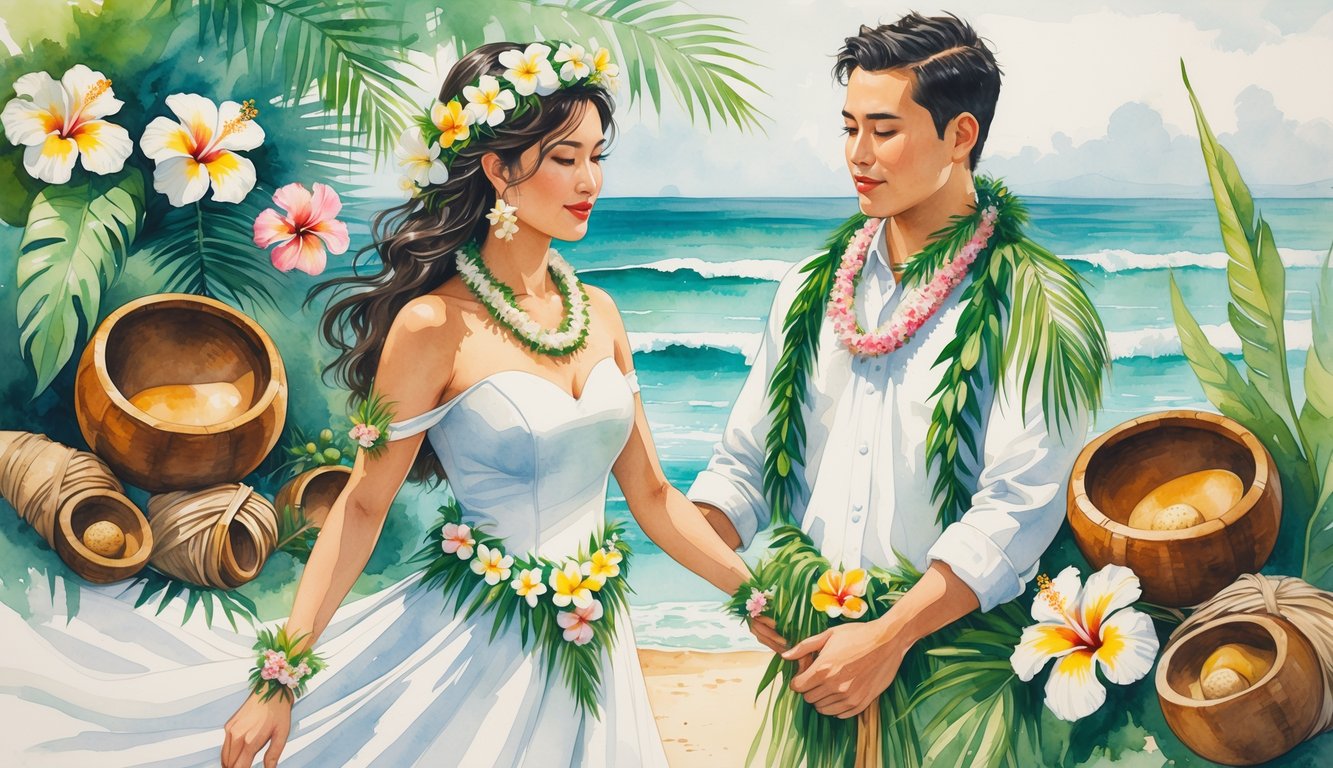
Hawaiian wedding attire blends natural beauty with cultural meaning. Each item, from flower crowns to traditional dresses, holds deep symbolism and shows respect for Hawaiian customs and nature.
Haku Lei and Floral Accessories
The haku lei stands out at Hawaiian weddings. This handmade flower crown is woven with fresh blossoms, leaves, and ferns.
Brides, and sometimes grooms, wear the haku lei to show beauty, honor, and connection to the earth. The lei exchange is also a cherished part of many ceremonies.
Couples give each other garlands to symbolize love, unity, and respect. These leis can be made from orchids, plumeria, or kukui nuts.
Popular Floral Accessories:
- Haku Lei: Worn on the head, often by the bride.
- Neck Leis: Worn by both partners, guests, or wedding officials.
- Wrist and Ankle Leis: Sometimes used for extra adornment.
The flowers chosen often have specific meanings, such as love, peace, or good luck. You can read more about the importance of lei exchange in Hawaiian weddings.
Use of Ti Leaves
Ti leaves appear often at weddings in Hawaii. People use them to make leis, sashes, and braid them into decor.
In Hawaiian tradition, ti leaves stand for blessing, protection, and prosperity. Couples sometimes choose ti leaf leis instead of flower ones.
The deep green leaves are tough and long-lasting, making them both practical and spiritual. Some ceremonies start by sweeping the path with ti leaves to clear away bad spirits or negative energy.
Ways Ti Leaves Are Used:
- Leis: As a necklace or headpiece for both the bride and groom.
- Decor: Braided as part of arches, table runners, or floor garlands.
- Ceremonial Cleansing: Used in rituals to bring good fortune.
You can learn how ti leaves form a meaningful part of Hawaiian wedding traditions.
Meaning of the Muumuu
The muumuu, or muʻumuʻu, is a loose-fitting dress often worn by the bride or female relatives at Hawaiian weddings. People designed it in the 1820s, and it became popular for its comfort and flowy style.
Muumuu feature bright colors and floral prints. They honor the spirit of aloha and local fashion.
Sometimes brides wear white muumuu dresses, which look elegant but still feel relaxed and in tune with nature.
Key Facts About the Muumuu:
- Fabric: Usually cotton, often decorated with island flowers.
- Style: Loose and flowing for comfort and ease.
- Symbolism: Represents Hawaiian heritage and wedding attire tradition.
For more details on the history and use of the muumuu in Hawaiian wedding attire, you can explore further online.
Culinary Traditions of the Wedding Feast
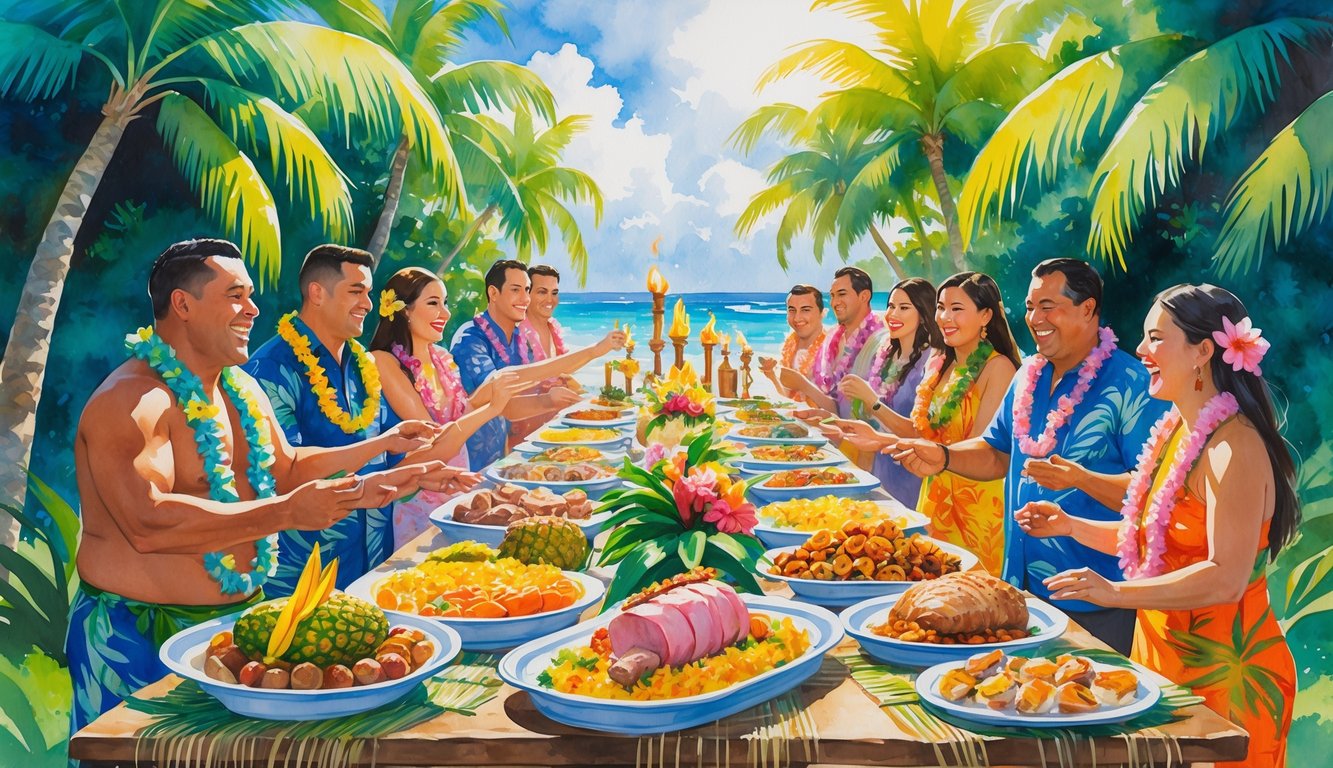
Food is central to Hawaiian weddings. The wedding feast brings people together to share favorite dishes and honor local culinary traditions.
Hawaiian Luau Celebrations
The luau is a big celebration at Hawaiian weddings. Luaus focus on food, family, and music.
At weddings, couples host luaus to express aloha and make guests feel welcome. The traditional luau feast features large tables with Hawaiian dishes.
Tropical decorations, leis, and live entertainment like hula dancing and music create a festive mood. Luaus emphasize togetherness, with everyone gathering to enjoy food and celebrate the couple’s union.
If the wedding is outside, luaus might take place under tents or by the ocean. This helps connect the celebration with nature.
Tables at a luau are filled with a mix of sweet and savory flavors. The centerpiece dish is often kalua pig, cooked underground in an imu.
Taro-based dishes and a range of tropical fruits are also popular. More about the history and significance of these celebrations is explained by The Knot.
Traditional Wedding Foods
Traditional Hawaiian wedding feasts include classic island foods. Staples include poke (marinated raw fish), laulau (pork or fish wrapped in taro leaves), and poi (taro root paste).
These dishes are closely tied to local agriculture and the land. You’ll also find fresh seafood, rice, and sweet desserts like haupia (coconut pudding).
Modern Hawaiian wedding feasts sometimes add foods from Japanese, Filipino, or Chinese traditions. This reflects Hawaii’s multi-ethnic heritage.
Roasted vegetables and salads made from tropical fruits like pineapple and mango add color and flavor. For more insight on modern Hawaiian wedding cuisine, check out WeddingDetails.com.
Important Symbols and Objects
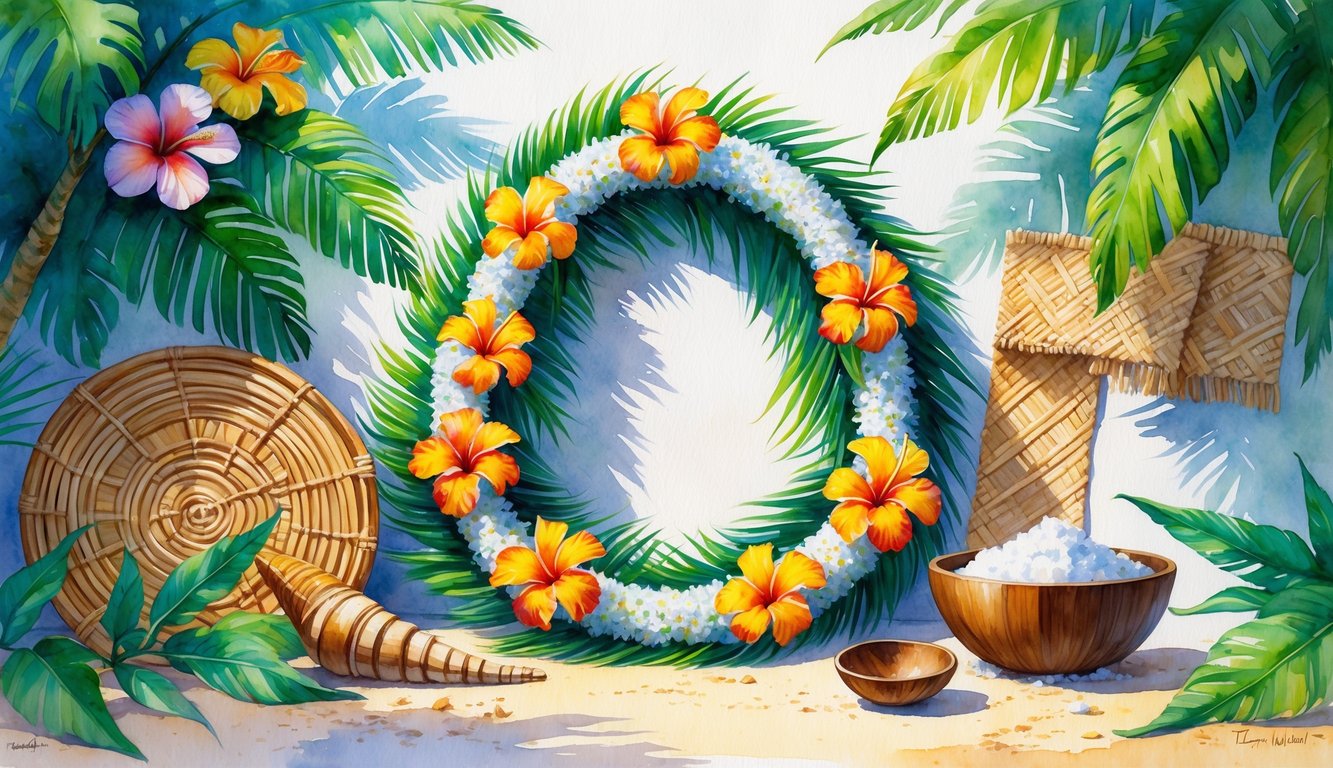
Symbols play a big role in Hawaiian wedding ceremonies. Special objects like koa wood carry deep meanings and connect to the culture.
Koa Wood Significance
Koa wood stands out as one of the most cherished materials in Hawaiian weddings. Koa is a native Hawaiian hardwood, valued for its strength and beauty.
People have used koa wood to create important ceremonial objects, like bowls and family heirlooms. Many modern couples choose rings made from koa wood or use a koa wood bowl to hold their wedding rings during the ceremony.
This wood symbolizes courage, strength, and unity in marriage. The tradition shows respect for each other, the land, and ancestors.
For more information about its cultural meaning and ceremonial uses, check out this guide on the significance of koa wood in Hawaiian weddings.
Evolution of Modern Hawaiian Weddings
Many Hawaiian weddings today mix old and new customs. The aloha spirit and deep cultural roots remain important, but couples often add fresh ideas from around the world.
Blending Tradition and Contemporary Elements
Leis made of fresh flowers, traditional oli (chants), and important family blessings keep the spirit of ancient Hawaii alive. Today, many couples add personal touches to their ceremonies.
They might wear modern wedding clothes but still exchange flower leis or include Hawaiian music and hula dancing. Even the wedding cake sometimes features tropical flavors, such as passion fruit or guava.
Some people write their own vows while still honoring the kahu (officiant), who guides the ceremony with Hawaiian prayers. A mix of English and Hawaiian languages during the service reflects both heritage and modern life.
For couples who want to combine cultures, Hawaiian traditions blend well with outside customs to make a wedding unique and meaningful. You can see more about this creative mix in weddings described at The Knot.
Global Influence on Hawaiian Wedding Customs
Hawaii welcomes couples from around the world. This global reach shapes the island’s wedding traditions.
Destination weddings bring in ideas like Western bridal gowns and multi-tiered wedding cakes. Themed parties have also become popular.
Many families living in Hawaii have roots from different places. Ceremony details often draw inspiration from Japanese, Filipino, or mainland U.S. customs.
Unity sand ceremonies and Western-style rings are now popular. Many venues offer packages that include both traditional Hawaiian rituals and trends from abroad.
Couples can celebrate the aloha spirit while making their wedding special for friends and family from many backgrounds. For more details about the influence of other cultures, read about Hawaiian wedding traditions and their modern twists.


