
Every year on June 11, I look forward to King Kamehameha Day, one of Hawaii’s most important celebrations.

This holiday honors King Kamehameha I, the leader who unified the Hawaiian Islands in 1795 and set the path for modern Hawaii.
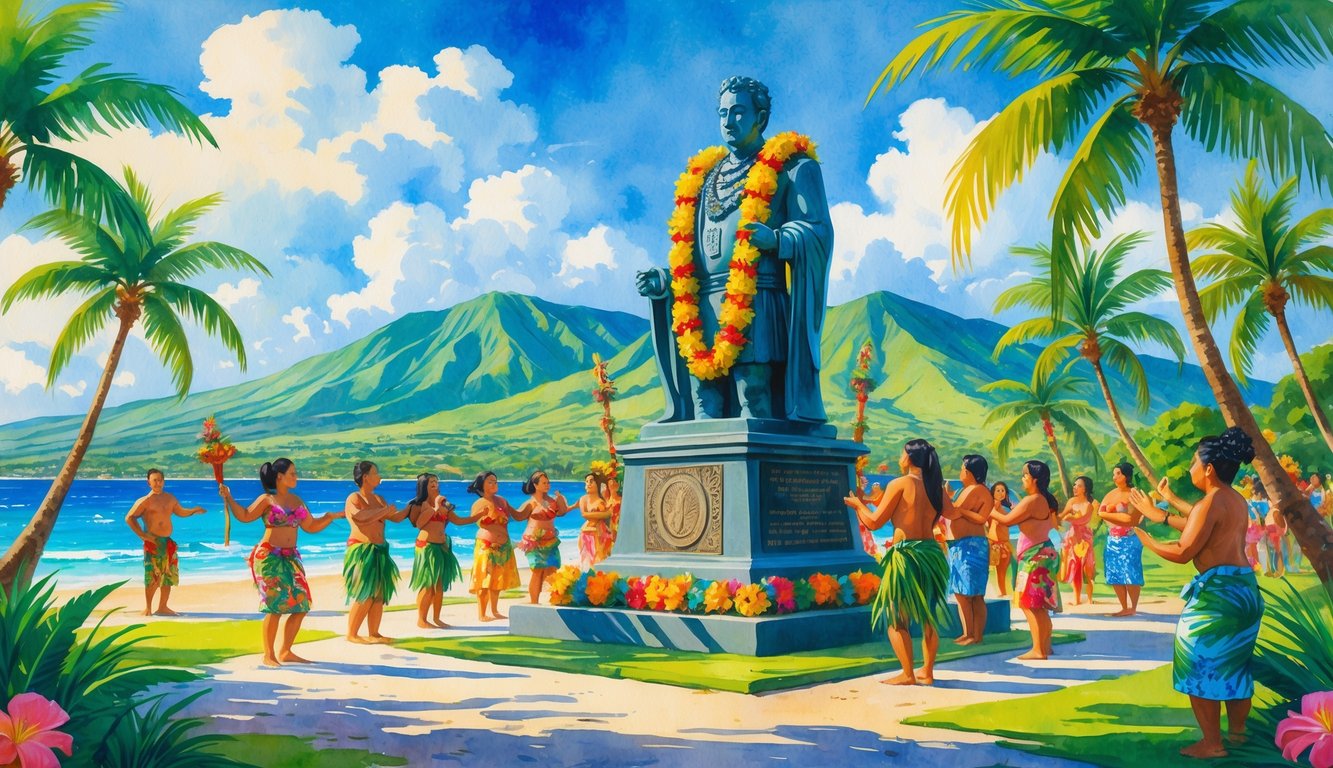
People all across the islands join in unique traditions. We drape leis on Kamehameha statues, watch cheerful parades, and attend cultural festivals.
Growing up in Hawaii, I’ve always loved the special sense of pride that comes out during these festivities.
The 2025 celebration promises colorful flower displays, traditional Hawaiian music, and gatherings that bring families and friends together.
It’s not only a day off work or school, but a chance to remember the achievements of King Kamehameha I and experience the true spirit of aloha.
Whether you live here or are just visiting, King Kamehameha Day is an exciting time to learn about Hawaii’s rich history and culture.
If you’re hoping to join the fun, you can find more about parades and events in 2025 across the islands.
History and Significance of King Kamehameha Day
King Kamehameha Day honors the achievements of King Kamehameha I, the monarch who united the Hawaiian Islands.
The holiday reflects the importance of Hawaiian heritage and the unique role the kingdom played in shaping Hawaii’s identity.
The Legacy of King Kamehameha I
People remember King Kamehameha I, often called Kamehameha the Great, for uniting the Hawaiian Islands under one rule in 1810.
Before his leadership, the islands had separate chiefs and frequent conflicts.
He brought together Niʻihau, Kauaʻi, Oʻahu, Molokaʻi, Lānaʻi, Kahoʻolawe, Maui, and Hawaiʻi through both diplomacy and battle.
His rule marked the beginning of the Hawaiian Kingdom.
Kamehameha I helped protect Hawaiian traditions and laws.
His unification allowed the islands to have a single system of government, which strengthened the region’s safety and economy.
Establishment of the Holiday
Kamehameha V, the grandson of Kamehameha I, made King Kamehameha Day an official holiday in 1872.
He wanted everyone in the Kingdom of Hawaii to remember the unity Kamehameha I brought to the islands.
The first celebrations included horse races, fairs, and parades.
These events gave families and friends a special way to gather and show respect for Hawaiian culture.
By 1877, thousands joined the festivities in places like where Kapiʻolani Park sits today.
After Hawaii became a state, King Kamehameha Day remained important.
People still celebrate the holiday every June 11 with floral parades, music, and ceremonies.
You can find more details on the day’s history on the Kamehameha Schools website.
Role of the Hawaiian Kingdom
During the era of the Hawaiian Kingdom, holidays like King Kamehameha Day highlighted how the monarchy supported culture and unity.
The kingdom’s leaders made sure this day brought people together to celebrate shared traditions and values.
The public holiday helped build pride in a unique Hawaiian heritage.
It also showed respect for the monarchy and the accomplishments of Kamehameha I.
Later, people built statues in his honor, and in 1883, they dedicated a famous one in Honolulu, as noted by Wikipedia.
Date and Official Observance
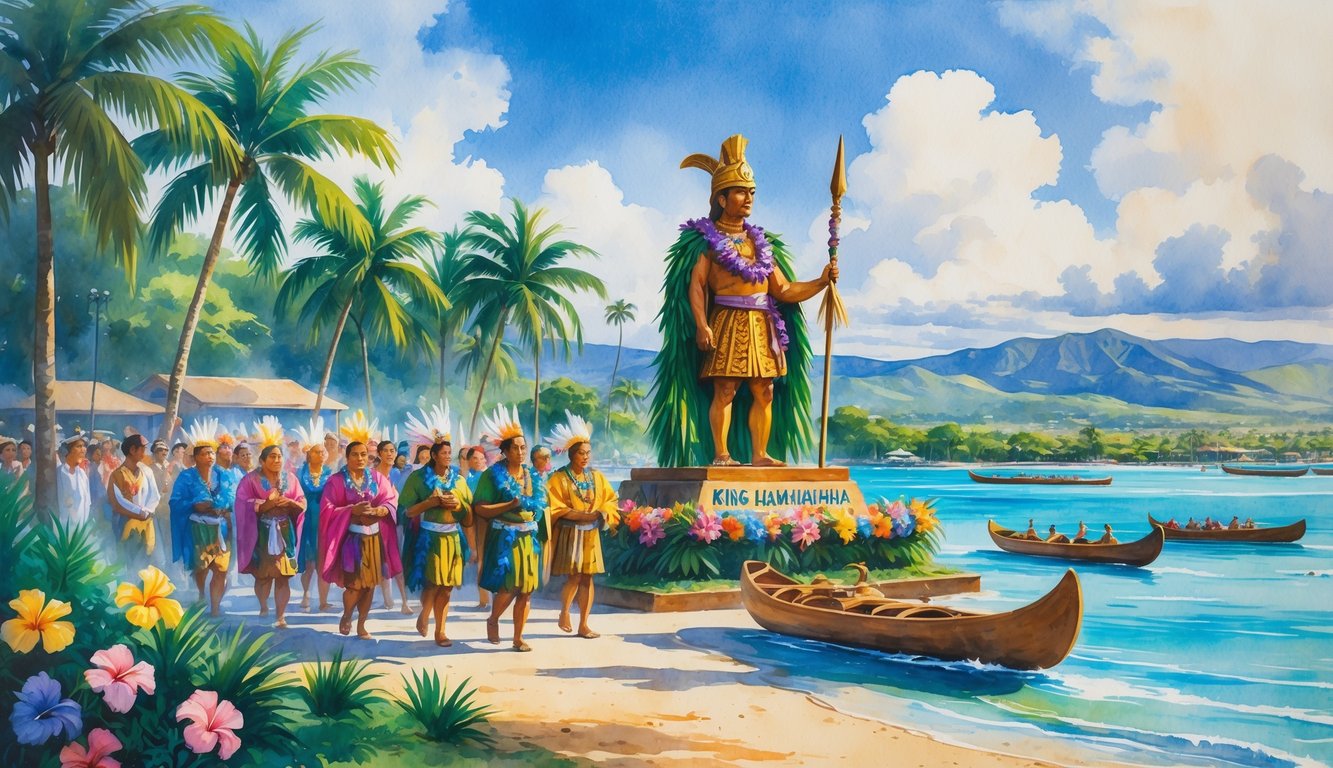
Kamehameha Day is special across Hawaii, with deep traditions and a yearly set date.
The day stands out as a moment to remember King Kamehameha I and the history he shaped.
When is King Kamehameha Day Celebrated?
I always mark my calendar for June 11 each year, as this is when Hawaii celebrates King Kamehameha I Day.
This holiday honors King Kamehameha the Great, who brought all the major Hawaiian Islands together into one kingdom for the first time.
Kamehameha V made King Kamehameha Day an official holiday over 150 years ago.
After Hawaii joined the United States in 1959, it became one of the first state holidays.
People across the state recognize the holiday, and all state and county offices close on this day.
If you are in Hawaii on June 11, you might find some places closed, including government offices and certain businesses.
Public transportation sometimes runs on a modified schedule too.
This shows how seriously the state treats the Kamehameha Day holiday each year.
For more details, you can check about the holiday date and official closures at Office Holidays and Wikipedia.
Public Holiday Traditions in Hawaii
I love how Hawaiʻi comes alive with traditions on Kamehameha Day.
The biggest event is the lei draping ceremony.
People place long strands of fresh flower lei on statues of King Kamehameha in places like Honolulu and Hilo.
This ceremony is a bright, colorful show of respect and happens every year.
Parades and gatherings fill the downtown areas.
Floats, hula dancers, and marching bands fill the streets.
The mood is festive, but also respectful, honoring the king’s legacy.
Many people take the day off to spend time with their families, attend local events, or just relax.
Schools and government buildings stay closed so that communities can join in these traditions together.
The annual tribute at the King Kamehameha statue in Honolulu is a highlight, drawing visitors and locals alike.
For a schedule of major events, I’ve found the State Foundation on Culture and the Arts page very helpful.
Cultural and Community Traditions
Hawaiian traditions on King Kamehameha Day highlight the deep unity of the islands.
Locals honor their cultural heritage through ceremonies, festivals, and community gatherings.
I see how these events reflect both pride and the aloha spirit that connects everyone—kamaʻāina (locals) and visitors alike.
Symbolism of the Lei
For me, the lei is one of the first images that comes to mind when I think about King Kamehameha Day.
These flower garlands are more than decorations—they are powerful symbols of love, respect, and celebration in Hawaiian culture.
The lei represents unity.
It connects everyone at the event and honors the memory of King Kamehameha I.
During the celebrations, especially at the famous Kamehameha statue lei draping ceremonies, I watch as huge, hand-made leis are carefully placed over the statue.
People use native flowers and plants to weave each lei.
This tradition invites people of all ages to help make and display the leis, so the whole process is a true community effort.
Every time I help make or lay a lei, I feel like I am adding my own respect and aloha to the long line of Hawaiians before me.
Leis are given to participants and parade performers, letting them carry a piece of the celebration and its meaning with them.
Role of the Royal Court
The Royal Court brings history to life at every parade and public event on this day.
I always look forward to seeing the members of the court dressed in bright, traditional Hawaiian regalia.
They represent former monarchs, chiefs, and their families, which roots each celebration in the legacy of Hawaiian royalty.
Most years, the Royal Societies organize the selection of court members.
Their flowing capes (ahu‘ula), feathered hats, and lei symbolize the dignity of ancient Hawaii.
Someone playing King Kamehameha himself leads the court, riding on a decorated horse or in a float.
The Queen, princesses, and stewards follow behind.
Their presence teaches us about our past and reminds me of the power and pride embedded in Hawaiian leadership.
Even the language spoken during their procession includes Hawaiian chants (oli) that honor the ancestors and tell the story of unity brought by King Kamehameha.
Connection to Aloha Spirit
When I go to King Kamehameha Day events, I feel the aloha spirit all around me.
It is shared in friendly greetings, food, music, and laughter that fills the parks and streets during parades and festivals.
This spirit is about showing love, kindness, and respect for each other, whether you are kamaʻāina or a visitor.
Volunteers work side by side, families gather under tents, and strangers become friends.
Everyone, regardless of their background, celebrates together.
The sense of community and togetherness is strong.
On this day, I think about unity—the same value that inspired King Kamehameha I to bring the Hawaiian Islands together under one rule in 1795.
The aloha spirit is what truly makes this day special.
It reminds me that the heart of Hawaiian culture is not just found in ceremonies, but in the way everyone treats each other with warmth and respect.
Lei Draping Ceremonies
The King Kamehameha Day lei draping ceremonies stand out as heartfelt tributes featuring beautiful flower garlands, special music, and deep respect for King Kamehameha I.
I love how these ceremonies blend culture, history, and community all in one event.
Historic Sites for Lei Draping
Every year, I see locals and visitors gather at important places across Oʻahu and the other islands to honor King Kamehameha. The most well-known spot for the lei draping ceremony is the King Kamehameha statue in front of Aliʻiōlani Hale in downtown Honolulu.
This famous statue stands tall near ʻIolani Palace and Kawaiahaʻo Church. It is easy to visit several sites in one trip.
Kapaʻau on the Big Island also hosts lei draping events. The original statue of Kamehameha stands there.
People bring fresh lei, flowers, and ho‘okupu (offerings) to take part in these traditions. Each spot has its own schedule and way of honoring the king.
For a detailed schedule, you can check the King Kamehameha Celebration Commission page.
Process and Meaning of the Ceremony
The lei draping ceremony usually starts with a sunrise protocol, which is a traditional Hawaiian blessing. The event continues with speeches, music, and dancing.
Volunteers and cultural groups carefully place long strands of flower lei over the outstretched arms of the Kamehameha statue. I feel the deep meaning every time I watch the ceremony.
Draping the statue with lei publicly honors the king’s leadership and lasting legacy. Each lei is handmade from local flowers.
The act of draping the lei honors not just King Kamehameha I but also the spirit of unity across Hawaiʻi. For more about the ceremony and how people celebrate it in Honolulu, see the Go Hawaii lei draping event page.
Parades and Public Festivities
King Kamehameha Day is filled with family activities, bright flowers, and lively streets. I look forward to seeing the community show respect for King Kamehameha I with music, traditions, and colorful parades.
King Kamehameha Celebration Floral Parade
Every June, I get excited to watch the King Kamehameha Celebration Floral Parade. This tradition brings together people from all over Hawaii.
Horses, riders, and floats are decorated with fresh island flowers. I love seeing the bright lei and traditional costumes.
The parade features marching bands, hula dancers, and groups representing each island. Riders, called pāʻū riders, wear beautiful dresses and long lei while riding horseback.
The scent of flowers fills the air. If you want to learn more about the event, check the official parade schedule.
Parade Route and Highlights
The parade usually starts in the morning and moves along a main street in downtown Honolulu. Many families find a good spot early to watch the floats and bands go by.
The parade begins near the statue of King Kamehameha I at Aliʻiōlani Hale and ends at Kapi‘olani Park. Along the way, the street fills with music, cheers, and celebration.
My favorite part is seeing the colorful floats decorated in patterns of plumeria, orchids, and other local flowers. Many performers wave and hand out small gifts, making the event feel welcoming.
The parade often pauses at certain spots for performances or speeches. This lets me experience not just the sights but also the songs, dances, and stories shared by local groups.
You can find more information about the parade route and details online.
Ho‘olaule‘a Street Festivals
After the parade, the celebration continues with ho‘olaule‘a, which are street festivals full of food, crafts, and entertainment. My favorite thing is sampling different Hawaiian foods and listening to live music.
There are dance performances, craft booths, and activities for kids. At these festivals, everyone can join in.
Some stages have hula dancers, while artisans sell handmade jewelry, leis, and art. The spirit of aloha is strong, making everyone feel welcome.
The ho‘olaule‘a gives me a chance to meet new people and enjoy local traditions in the heart of the city. Events often happen on streets near major parade routes or on open lawns.
If you’re interested in going, check the latest festival schedule to see what’s planned this year.
Signature Events Across the Hawaiian Islands
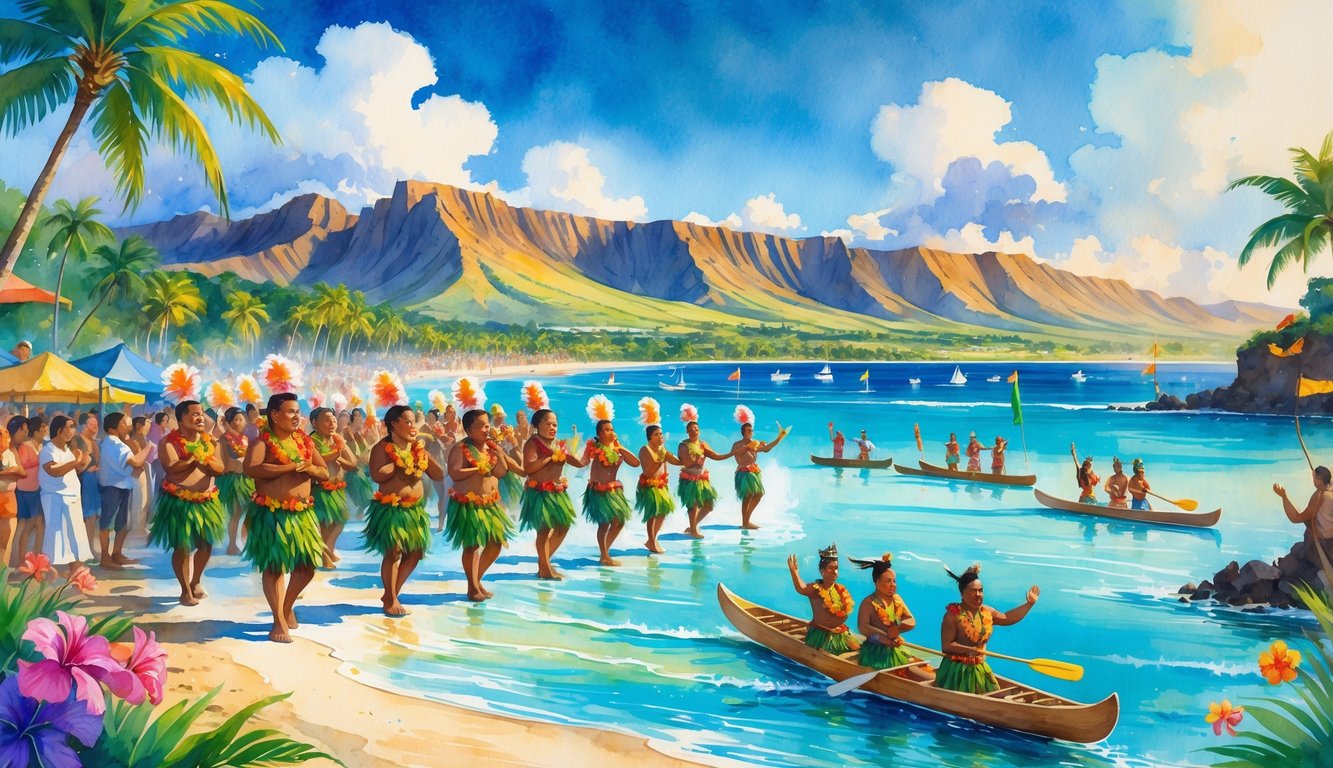
Each King Kamehameha Day brings unique and colorful celebrations to every major island in Hawaii. These events blend traditions, community, and Hawaiian pride.
Locals and visitors connect with the islands’ history through these special celebrations.
Festivities in Honolulu and Oʻahu
Honolulu and Oʻahu host some of the largest Kamehameha Day events in Hawaii. One of my favorite traditions is the lei draping at the King Kamehameha Statue in front of Aliʻiōlani Hale.
People hang massive flower garlands, often 30 feet long, on the statue during a ceremony filled with music, hula dancers, and Hawaiian chants. The fragrance of blossoms fills the air.
Oʻahu also puts on the King Kamehameha Celebration Floral Parade, which travels from downtown Honolulu to Queen Kapiʻolani Park in Waikīkī. I love watching the pāʻū riders dressed in colorful attire representing each island, along with floats, marching bands, and cultural groups.
The parade ends with a celebration and music at Kapiʻolani Park, where I enjoy traditional foods and crafts. Learn more about Oʻahu’s events at sfca.hawaii.gov/resources/king-kamehameha-celebration-commission/.
Big Island and Kohala Celebrations
The Big Island’s connection to King Kamehameha runs deep, especially in Kohala, his birthplace. Every year, I look forward to the parade in North Kohala, which features horses, historic re-enactors, and a strong community spirit.
Locals and visitors gather for ceremonies at Kamehameha Park, where speeches and hula honor the king’s memory. Kona also celebrates with a separate parade along Aliʻi Drive by the coast.
I always spot paddlers, musicians, and children wearing bright leis. Kohala holds a traditional ho‘olaule‘a (celebration) at Kamehameha Park with crafts, games, and live music.
Some gatherings date back over a century and keep the island’s history alive. See the Big Island schedule at hawaiionthecheap.com/event/king-kamehameha-the-great/.
Maui, Molokaʻi, and Kauaʻi Highlights
Each of these islands adds its own touch to King Kamehameha Day. On Maui, I always get excited for the Nā King Kamehameha Commemorative Pāʻū Parade in Lahaina.
This event features elegant horse riders in flowing gowns, floats covered in tropical blooms, and local halau hula troupes. Molokaʻi’s celebration is smaller but heartfelt.
There are usually ceremonies at community gathering places and traditional dance performances. Kauaʻi often hosts its Kamehameha Day event at the Historic County Building in Līhuʻe.
I can join locals to watch music performances, visit craft booths, and taste island foods. These events capture each island’s special flavor.
Historic Venues and Parks
Many King Kamehameha Day celebrations happen at historic venues and scenic parks. In Honolulu, I visit the events at Aliʻiōlani Hale and Queen Kapiʻolani Park.
The Honolulu parade’s final stop is always marked by food, entertainment, and cultural exhibits at Kapiʻolani Park, shaded by royal palms and looking out to Diamond Head. On the Big Island, Kamehameha Park in Kohala is the heart of the festivities.
This park is home to a large bronze statue of the king, standing watch over lush grounds where ceremonies and hula take place. On Kauaʻi, the Historic County Building in Līhuʻe becomes a lively meeting place for music and history during the holiday.
These venues help preserve both the spirit and the stories of King Kamehameha’s time. For more about where these events happen, check out hawaiiparentmedia.com/things-to-do-june-2025.
Performances and Arts
I love seeing how King Kamehameha Day fills neighborhoods with music, dancing, and hands-on art. These events capture the heart of Hawaiian culture and invite everyone to celebrate in their own way.
Traditional Hula and Hawaiian Music
When I visit a King Kamehameha Day celebration, live hula is always a main event. Dancers wear colorful costumes and perform ancient and modern hula, telling stories with every hand movement and step.
These dance groups, or hālau, practice year-round to perfect their routines. Hawaiian music flows through the air.
I hear slack key guitar, ‘ukulele, and even pahu drums. Local musicians sing songs in English and Hawaiian, sharing stories about the islands’ past and heroes like King Kamehameha.
Here are some common elements I notice during performances:
- Ancient chants (oli) to honor ancestors.
- Group hula kahiko with handmade costumes and traditional instruments.
- Energetic hula ‘auana with modern melodies.
- Audience participation, like singing along or dancing.
Seeing these performances reminds me how important music and dance are for passing on history and cultural pride. In places like Hilo and Honolulu, these shows can last for hours and always draw big, excited crowds.
To learn more about these celebrations, I check the official event schedule for specific performance times.
Arts and Crafts Exhibitions
Arts and crafts are a highlight I look forward to each June. Local artists set up booths filled with handmade items like lei, carved wooden bowls, and quilts with Hawaiian patterns.
I often watch live demonstrations, such as feather lei making or kapa (bark cloth) printing. These exhibitions give me a chance to talk with artists and learn about the hard work and tradition behind each piece.
Many crafts are made using skills passed down through generations. I see:
- Woven lauhala hats and baskets
- Ni‘ihau shell jewelry
- Paintings of Hawaiian landscapes
Buying a craft at a festival feels special because I know the story behind it. It’s also a way to support local families and keep traditional arts alive.
Some of the largest and most vibrant arts exhibits are found at events listed on sites like Hawaii Magazine’s festival guide, where I find tips on where to go for the best art experience.
Participation and Ways to Celebrate
I can experience King Kamehameha Day in many ways. I join community events and follow helpful tips as a visitor or resident.
I look for public activities, parades, and local traditions that make this day unique.
Joining Local Activities
Every year, I join the vibrant King Kamehameha Day celebrations across Hawaii. The King Kamehameha Celebration Floral Parade features colorful floats, marching bands, and horseback riders called pāʻū riders.
The parade runs through downtown Honolulu and draws a big crowd. This event honors King Kamehameha I, who united the Hawaiian Islands.
If I want a more traditional experience, I attend the lei draping ceremony at Aliʻiōlani Hale. Officials and members of the King Kamehameha Celebration Commission honor the iconic statue by placing long strands of flowers over it.
This event lets me appreciate Hawaiian culture and pay respects to the king in a respectful setting. I also find fairs, music performances, and cultural displays in several towns on each island.
Tips for Visitors and Kamaʻāina
Whether I’m a visitor or kamaʻāina (local resident), I find that planning ahead helps me enjoy the festivities.
Parking can be tough on parade days, so I use public transportation or arrive early.
The weather in June is usually warm. I bring sunscreen, water, and wear light clothing.
Many events are free and family-friendly. I can bring my children or friends.
If I want to join in respectfully, I follow event guidelines.
Taking photos is usually allowed, but I make sure not to block participants, especially during cultural ceremonies.
The King Kamehameha Celebration Commission often shares a schedule of events. This makes it easier for me to decide what to see.
I enjoy visiting local craft booths and trying traditional Hawaiian food. These are often set up near major events or parade routes.
For more details or event dates, I check the official schedule on the King Kamehameha Celebration Commission’s website.


