
Whenever I visit Hawaii, I always look forward to the desserts. Hawaiian desserts like haupia and malasadas highlight the unique flavors and culture of the islands.

Coconut milk, tropical fruits, and simple dough come together to create something truly special.
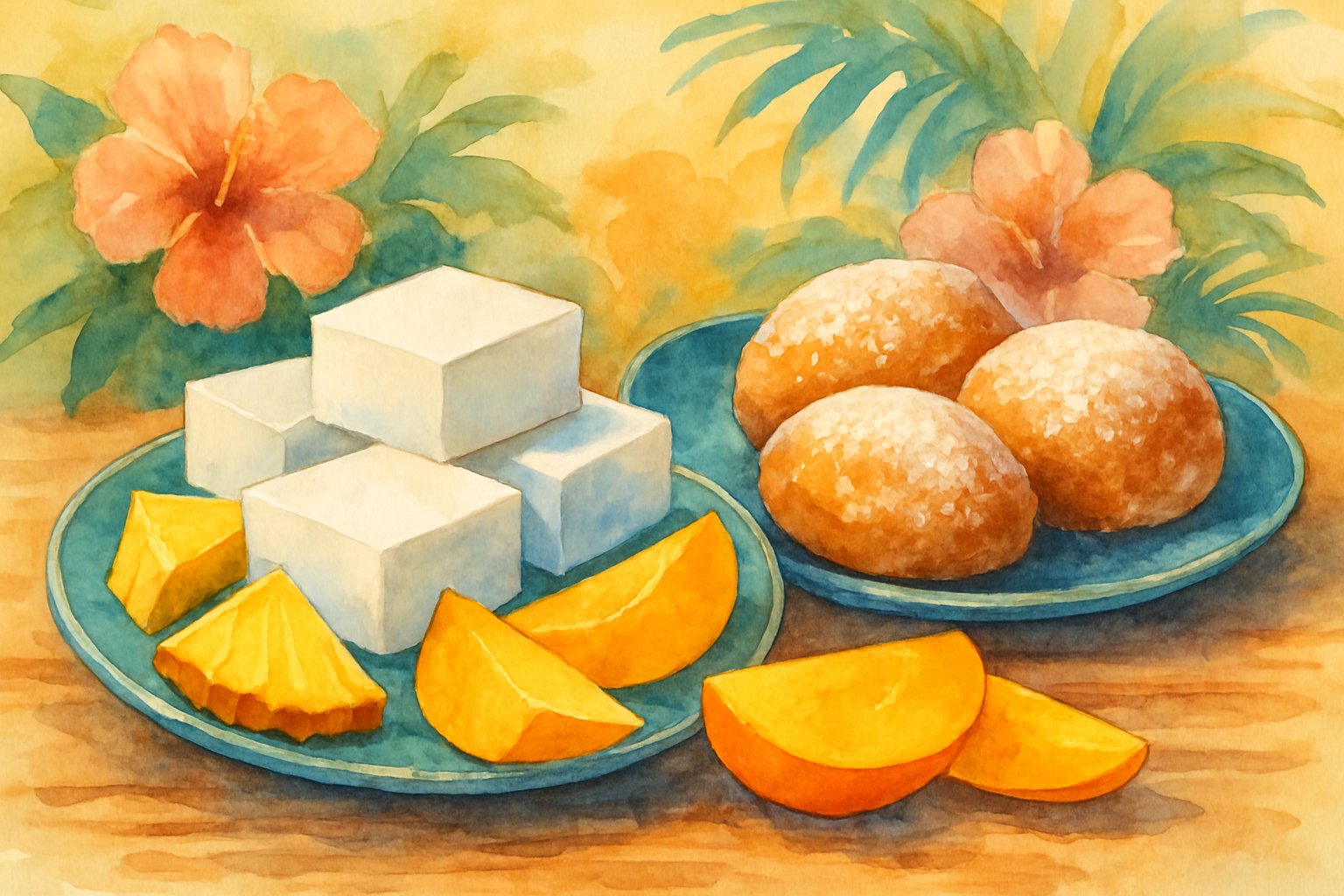
Haupia is a creamy coconut pudding that tastes smooth and refreshing. People often serve it at luaus and family gatherings.
Malasadas are fluffy, deep-fried doughnuts found almost everywhere in Hawaii. Sometimes, bakers fill them with tropical flavors like coconut or guava.
If you want to know what makes these desserts different or where to try the best malasadas in Hawaii, you’re in the right place. Get ready to discover some of my favorite Hawaiian desserts.
The Sweet Heritage of Hawaiian Desserts
Hawaiian desserts tell a story shaped by history, people, and nature. These treats blend cultures and local tropical fruits, making them unique.
Cultural Influences
When I think of Hawaiian desserts, I see how different cultures have influenced them. Immigrants brought many classic sweets, like malasadas and custards, to Hawaii.
Portuguese families introduced malasadas, a type of yeast doughnut. These doughnuts remain popular today.
Bakers sometimes fill malasadas with haupia, combining local and imported flavors. Japanese and Chinese settlers also brought mochi and shared their skills with custards and puddings.
At luaus and family gatherings, I often see a mix of traditional Hawaiian style and these cultural influences. This blend has made Hawaii’s dessert scene more exciting and welcoming.
Tropical Ingredients
Tropical ingredients make Hawaiian desserts special. Coconut appears in many recipes, especially in haupia, a smooth pudding made from coconut milk.
Haupia’s creamy texture and mild flavor set it apart. Other local ingredients include guava, pineapple, and passion fruit.
I often enjoy desserts like guava cake or pineapple bars at local bakeries. These fruits taste delicious and are easy to find in Hawaii.
Using local ingredients means the desserts taste fresh and natural. This lets the true flavor of Hawaii shine through.
Haupia: Traditional Hawaiian Coconut Pudding
Haupia is a silky coconut pudding that is popular across Hawaii. It’s a simple dessert that uses local flavors and has a long history on the islands.
Origins and Cultural Significance
Early Hawaiian feasts, or lūʻaus, featured haupia as a sweet contrast to savory foods. People serve it at celebrations like birthdays, graduations, and weddings.
Coconut, the main ingredient in haupia, holds a special place in Hawaiian culture. Islanders used every part of the coconut tree for food, oil, fibers, and building materials.
Haupia became a symbol of resourcefulness and tradition. Today, I see haupia at lūʻaus and on dessert tables at many family gatherings.
Classic Haupia Recipe
The classic haupia recipe uses just a few simple ingredients:
- 1 can coconut milk (about 13.5 oz)
- 1 cup water
- 1/2 cup sugar
- 1/3 cup cornstarch
I mix the coconut milk, water, and sugar in a pot. Next, I dissolve cornstarch in a little extra water and stir it into the mixture.
I heat everything over medium heat, stirring until it thickens and looks glossy. Once thick, I pour the pudding into a square pan and smooth the top.
The pudding chills in the fridge until set. Then I cut it into squares.
You can find detailed instructions and tips for getting the perfect texture in recipes like this Hawaiian coconut pudding guide.
Modern Twists on Haupia
Recently, haupia has inspired new desserts in Hawaii. I love it as a filling in malasadas, where the coconut pudding cream adds a sweet touch.
Some bakeries blend haupia with flavors like chocolate, coffee, or lilikoi. Chefs might add vanilla for warmth or top haupia with fresh tropical fruits.
You can even find vegan and gluten-free versions that keep the creamy coconut flavor. If you want to try these creative treats, check out modern haupia recipes and ideas that experiment with texture and taste.
Malasadas: Hawaii’s Beloved Portuguese Donuts
I always look forward to malasadas when I visit Hawaii. These golden, sugar-coated donuts blend Portuguese baking traditions with island flavors.
Malasadas are sweet, fluffy, and fried. They have become a favorite treat on Oahu and beyond.
The Story of Malasadas in Hawaii
Portuguese immigrants from Madeira and the Azores brought malasadas to Hawaii in the late 1800s. These families worked on sugar plantations and shared their recipes.
Malasadas are round balls of yeasty dough fried until golden and rolled in sugar. They do not have holes in the middle.
The texture sets malasadas apart—they are light, soft, and slightly chewy inside. While they started as plain doughnuts, today you’ll find them filled with custard, chocolate, or coconut-flavored haupia.
Bakeries, fairs, and food trucks across the islands offer malasadas. For more background, check out this page on Malasadas (Portuguese Donuts).
Leonard’s Bakery and Malasada Fame
Leonard’s Bakery in Honolulu is famous for malasadas. Leonard Rego opened the bakery in 1952, drawing from his Portuguese family’s roots.
People line up outside Leonard’s for hot, fresh malasadas. The menu features malasadas rolled in plain sugar, cinnamon sugar, or li hing powder.
Some malasadas are filled with flavors like haupia, custard, or chocolate. Leonard’s pink boxes have become a familiar sight on Oahu.
Their malasadas are soft, warm, and just sweet enough. One bite and I’m hooked.
Learn more about Leonard’s from this feature on Hawaiian Donuts and Leonard’s Bakery.
How to Make Authentic Malasadas
Making authentic malasadas at home depends on using the right ingredients and letting the yeast dough rise. Careful preparation, patience, and proper frying help create light and fluffy malasadas.
Ingredients and Equipment
To make malasadas, I gather these ingredients:
- 4 cups all-purpose flour
- 2 1/4 teaspoons active dry yeast
- 3/4 cup whole milk (warmed)
- 1/2 cup unsalted butter (softened)
- 1/2 cup sugar
- 3 large eggs
- 1/2 teaspoon salt
- 1/2 teaspoon freshly grated nutmeg
- Vegetable oil (for frying)
- Extra sugar for coating
Essential equipment includes:
- A large mixing bowl
- Stand mixer (optional, but helpful for kneading)
- Deep fryer or large heavy pot
- Slotted spoon
- Deep-fry thermometer
I always check that my thermometer works to keep the oil at the right temperature. For golden results, I use a neutral oil like canola.
Preparing the Yeast Dough
First, I activate the yeast by mixing it with the warm milk and a pinch of sugar. I let it sit for about 5-10 minutes, until it’s foamy.
In another bowl, I combine the flour, salt, and nutmeg. I blend in the softened butter and sugar until crumbly.
Next, I add the eggs and yeast mixture, mixing everything into a sticky dough. I knead the dough for about 8 to 10 minutes with a stand mixer or by hand.
When the dough feels smooth and slightly elastic, I place it in a greased bowl, cover it, and let it rise in a warm spot until it doubles in size. This usually takes 1 to 2 hours.
Once the dough has risen, I cut, shape, and fry it. This careful process results in classic malasadas that taste like they came from a Hawaiian bakery.
Filling and Flavors: Malasadas in Hawaii
Malasadas in Hawaii stand out because of their soft, pillowy dough and variety of fillings. Bakers use a wide range of flavors that reflect the islands’ love for sweetness and tropical tastes.
Popular Sweet Fillings
When I buy malasadas on the islands, I always see classic sweet fillings on display. Custard and haupia are some of the most loved.
Haupia filling uses coconut milk, sugar, and cornstarch to create a smooth and creamy texture. This filling has a gentle coconut flavor.
You can learn more about the filling at this malasadas recipe site. Vanilla custard is another staple.
Its rich, eggy flavor and silky texture make every bite comforting. Chocolate pudding is also popular, especially among kids who want something extra sweet inside their malasada.
Here’s a quick list of favorite fillings:
- Haupia (coconut)
- Vanilla custard
- Chocolate pudding
- Bavarian cream
Some bakeries mix the fillings to create fun flavors like chocolate-haupia. Each type adds a unique touch to the traditional malasada.
Infused and Tropical Variations
I love malasadas filled with tropical fruit flavors. In Hawaii, you can find fillings like lilikoi (passion fruit) cream, guava jelly, and strawberry or mango jams.
These fillings give malasadas a tangy and fruity twist. Many shops use local fruits to make special, limited-time flavors.
For example, pineapple or papaya cream fillings highlight the island’s lush flavors. You can read about these tropical twists at this Hawaiian malasadas recipe page.
Some cooks add flavor to the dough or sugar coating. Lihing (a salty dried plum powder) or cinnamon can be sprinkled on the outside for extra taste.
Thanks to these bold and bright flavors, malasadas in Hawaii are always exciting.
Other Hawaiian Desserts to Savor
Hawaii offers more than just classic desserts. Many sweets highlight tropical flavors and creative recipes found only in the islands.
Some desserts use fresh fruit. Others blend local and global influences for something special.
Tropical Fruit-Based Treats
When I’m in Hawaii, I always look for desserts with tropical fruit. A favorite is shave ice with syrup made from real fruit like mango, guava, or passion fruit.
This treat is cool, colorful, and refreshing on a hot day. Another beloved option is pineapple upside-down cake.
Fresh Hawaiian pineapple adds juicy sweetness. Every bite tastes bright and tangy.
Sometimes I find coconut rice pudding, often topped with slices of banana or fresh papaya.
Here’s a quick list of popular fruit desserts:
- Shave ice with tropical syrups
- Pineapple upside-down cake
- Coconut rice pudding
- Lilikoi (passion fruit) bars
- Banana lumpia (fried banana rolls)
Many Hawaiian fruit desserts use ingredients picked at peak ripeness. These treats are perfect for anyone who loves fruity sweets.
Fusion and Modern Sweets
Hawaiian desserts often blend different cultures. For example, butter mochi combines Japanese rice flour with sweet, buttery flavors.
The texture is chewy like mochi, but you bake it like a cake for an easy treat. People enjoy butter mochi at potlucks and parties.
I also like to try guava cake, a soft pink cake with creamy frosting and guava jelly. Malasadas, a Portuguese-style doughnut, often come filled with tropical creams or chocolate.
You can find special treats like haupia tarts and lilikoi cheesecake that mix local fruits with familiar desserts. For more ideas, check this list of Hawaiian desserts.


