
Hawaiian myths and legends offer fascinating stories that reveal the native culture, gods, and natural wonders of the islands.

Hawaiian folklore introduces powerful volcano goddesses like Pele, ancient heroes, and magical creatures who shaped the land and the people.
These tales explain how the islands formed and why certain places are sacred.
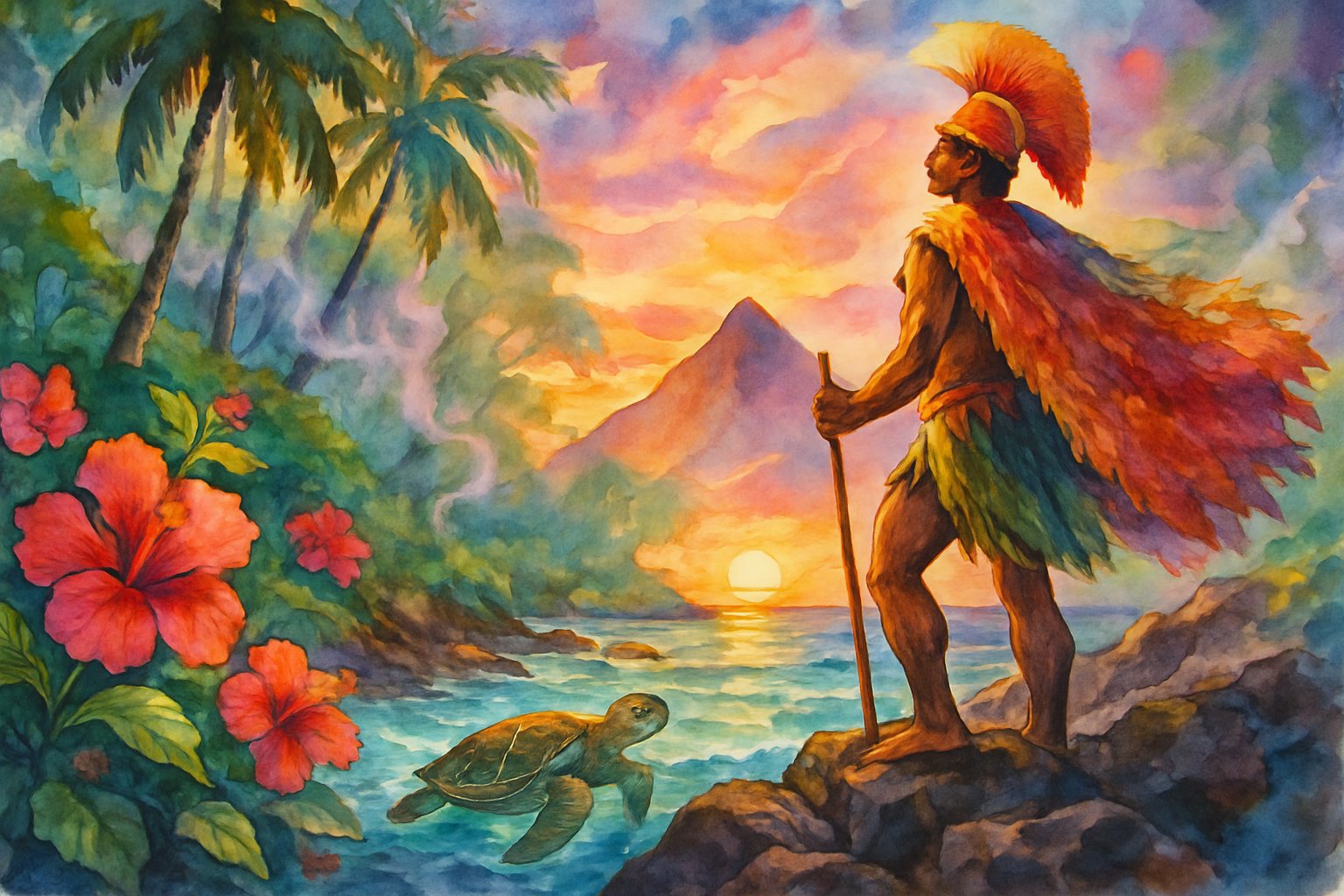
When I read these stories, I learn about Hawaiian mythology and the values that guide life in Hawaii.
Stories about mo’o, the giant lizard creatures tied to freshwater, and the adventures of gods and goddesses continue to inspire people.
If you’re curious about the legends that live on in Hawaiian culture, you’ll find much to uncover, from the legend of Pele to other unforgettable myths and superstitions.
Origins of Hawaiian Myths and Legends
Polynesian people shaped Hawaiian myths and legends over centuries through their journeys and beliefs.
These stories help me understand where the Hawaiian Islands’ unique traditions and ideas about gods, nature, and people began.
Polynesian Roots
Hawaiian myths trace back to the broader Polynesian race.
Polynesians navigated the Pacific Ocean by canoe, traveling thousands of miles.
Polynesian legends passed down through generations by chanting and storytelling.
These tales explained natural events, the creation of land and sea, and the relationships between gods and humans.
For example, legends describe the goddess Pele and her lava flows, the god Kanaloa and the sea, and Maui, a trickster who slowed the sun.
Key elements from Polynesian myths:
- Gods controlling the elements
- Creation stories of islands and people
- Lessons about nature and respect
Early Polynesians carried these stories and teachings to new islands.
Many Pacific islands, such as Samoa and Tonga, share similar mythological themes.
You can read more about this deep connection in this collection of native legends.
Arrival in the Hawaiian Islands
The first settlers reached the Hawaiian Islands around 1,500 years ago.
These voyagers used stars, ocean currents, and wildlife patterns to find their way.
They brought their oral traditions with them.
After arriving, they adapted their stories to fit the Hawaiian landscape.
Volcanic mountains became the home of Pele.
Forests, valleys, and oceans gained their own gods and spirits.
Storytelling taught everyone about the land and respect for nature.
Hawaiian myths grew into a rich set of beliefs about gods, ancestors, and the spiritual world.
Chant and hula kept these stories alive, as described in works like Hawaiian Folk Tales: A Collection of Native Legends.
Influence of Tahiti and New Zealand
Many Hawaiian myths connect to stories and traditions from Tahiti and New Zealand.
Both places share legends about powerful gods, the spirit world, and famous heroes like Maui.
Tahiti influenced Hawaiian religion and social structure.
Some words, names of gods, and creation legends in Hawai‘i come from Tahitian stories.
New Zealand’s Maori myths show how legends changed as people moved across the Pacific.
Similarities between these cultures:
- Shared heroes (like Maui)
- Stories about creation and the underworld
- Traditions of oral storytelling and chant
These links show how myths helped unite the Polynesian people across thousands of miles.
For more background, check out information on the myths and legends of Hawaii.
Major Hawaiian Deities and Spirits
Hawaiian myths feature powerful gods, goddesses, and spirits who shaped the islands’ traditions and stories.
Each deity has unique roles, symbols, and stories linked to different parts of life in Hawaii.
Kane: The Creator
Kane stands as one of the most important gods in Hawaiian religion.
People honor him as the creator of the world and all living things.
Kane connects to sunlight, fresh water, and life itself.
He is often called “Kane of the Waters,” showing his link to natural springs and rivers.
Many stories show Kane working with other gods to create the islands, plants, and humans.
People use his name in prayers and blessings for safe travels and health.
Ancient Hawaiians believed Kane gave people the gift of life.
His role as a creator made him central in many rituals.
People built temples, called heiau, for Kane, where they offered gifts of food and flowers.
Many families today still speak of Kane when talking about family roots and the land.
You can read more about Kane’s significance and other Hawaiian gods.
Kanaloa: God of the Ocean
Kanaloa rules as the god of the ocean and deep sea.
He often appears with an octopus or squid, and his symbols connect to marine life and the mysteries of the sea.
Kanaloa works as a companion to Kane, and together they bring balance.
While Kane rules over land and fresh water, Kanaloa commands salt water and its creatures.
Sailors and fishermen pray to Kanaloa for protection at sea.
Legends say Kanaloa guides spirits to the afterlife.
He represents the unknown and sometimes brings challenges that teach important lessons.
In stories, Kanaloa is wise but strict.
He encourages respect for the ocean and its power.
People often ask for his blessing when entering or leaving the water.
Ku and Lono: Gods of War and Peace
Ku and Lono balance each other’s powers.
Ku is the god of war, strength, and resourcefulness.
He protects warriors and leaders during battle.
People pray to Ku for courage and success.
Offerings made to Ku are serious and often involve rituals to show respect and ask for victory.
Lono is the god of peace, agriculture, and rainfall.
Festival times, like Makahiki, are dedicated to Lono.
During these months, people celebrate with games and feasts, and fighting stops.
Lono’s blessings help crops grow and bring happiness to the people.
Ku and Lono together show how important both strength and peace are in Hawaiian life.
Learn about Ku and Lono’s stories and roles.
| God | Domain | Symbols |
|---|---|---|
| Ku | War, strength | tall headdress, tools |
| Lono | Peace, farming | rain clouds, gourds |
Hina and Laka: Goddesses of Moon and Hula
Hina is the goddess of the moon, known for her wisdom and courage.
Many stories describe how she controls lunar cycles and guides women.
Hina is also the mother of the hero Māui in some myths.
She connects to tapa making, a type of cloth important in Hawaiian life.
People believe Hina protects families and helps with important decisions.
Laka is the goddess of hula, the Hawaiian dance.
She brings inspiration, beauty, and joy.
People offer flowers and ferns to Laka at hula performances.
Laka is also honored as a guardian of forests.
Dancers and teachers ask her for guidance before special dances.
Hina and Laka both show how Hawaiian culture values art, nature, and wisdom.
For a list of these and other Hawaiian goddesses, you can look here.
Legendary Heroes and Mythical Figures
Hawaiian myths introduce gods, heroes, and magical animals who explain the origins of volcanoes, ocean waves, and even the islands.
These myths teach respect for nature and give a glimpse into daily life, fears, and values of ancient Hawaii.
Pele: Goddess of Fire and Volcanoes
I always find Pele’s story fascinating.
She is the powerful goddess of fire and volcanoes, known for creating new land as she moves across the Hawaiian Islands.
Legend says Pele lives in the Halemaʻumaʻu Crater at Kīlauea volcano on the Big Island.
Pele is passionate and temperamental.
Some stories show her as a loving creator, while others describe her fiery anger that destroys everything in her path.
People often leave offerings of fruit or flowers near volcanic craters to honor her and ask for protection.
Her myth shows how forces of nature can create beauty but also cause destruction.
You can read more about Pele and her influence at Hawaiian Mythical Gods and Creatures.
Maui: The Demigod
Maui is another legendary figure I grew up hearing about.
He is a demigod and a clever trickster who uses his magic and brains to help people.
One of Maui’s most famous feats is slowing down the sun by catching it with a lasso, making days longer for everyone to work and grow food.
He is also credited with fishing the Hawaiian Islands out of the sea using a magical hook.
In many stories, Maui’s adventures teach lessons about problem-solving and courage.
He sometimes gets into trouble but always tries to help his family and community.
Maui appears in stories from other Polynesian cultures, but in Hawaii, his role is unique.
Read about Maui’s adventures and more legendary figures at this in-depth Hawaiian mythology guide.
Kauila: The Sacred Turtle
Kauila is a special figure that always captures my imagination.
She is a mythical turtle who could change into a human girl.
Kauila protected children and provided fresh water at Punaluʻu, a beach on the Big Island.
According to tradition, Kauila was gentle and loving.
Parents would tell children to listen for her stories in the ocean breeze or look for her among the waves.
People saw her as a symbol of safe passage and a guardian who cared for her community.
This legend shows the close bond between the Hawaiian people and sea turtles.
Stories of Kauila remind us to care for each other and the environment.
Wailua and Kaua‘i Legends
Wailua on Kaua‘i holds a rich collection of myths. For centuries, chiefs and priests gathered there because it was a royal and sacred place.
Many legends center on the Wailua River, which people believed was a pathway for spirits. Sacred stones called heiau and old temples still stand in the area today.
Gods and heroes appear near Wailua Falls or travel the ancient trails along the river in many myths. These stories help explain why people call Wailua one of Hawaii’s most spiritual places.
You can find more stories from this region in this collection of native legends.
Traditional Hawaiian Mythology Themes
Hawaiian myths often focus on the origins of the world, strong family ties, and spiritual power. These stories feature gods, powerful chiefs, and the energy that flows through the islands.
Creation and the Heavens
Many Hawaiian legends start with tales of creation. These stories describe how the world, sky, stars, and islands formed.
One common theme is the belief in several layers of the heavens, each with its own role. The gods, called akua, live in these heavenly realms.
These myths show how order came from chaos. For example, the story of Papa and Wākea tells how the earth (Papa) and sky (Wākea) joined to create the Hawaiian Islands.
Some legends say the first humans descended from the gods, connecting people directly to the heavens. Sometimes, special beings travel between the heavens and earth.
Nature and the divine always stay connected in these stories. You can find more details in collections of Hawaiian folk tales.
Genealogy and Royal Lineage
Genealogy is central in Hawaii’s traditional stories. Many legends follow the ali‘i, or ruling chiefs, who claim direct ancestry from gods and mythical ancestors.
Reciting genealogy proves a person’s right to rule or their connection to important families. These stories show respect for family and community.
Oral traditions sometimes include long lists of ancestors, called mo‘okū‘auhau. Learning these chants helps Hawaiians remember family lines.
These beliefs help people understand their role in society and their relation to others.
Mana: Spiritual Power
Mana, or spiritual power, is another key idea in Hawaiian mythology. Mana lives in people, objects, and places, but not everyone has the same amount.
Chiefs (ali‘i) and priests (kahuna) usually have the most mana. People can gain or lose mana through actions, battles, and the respect they receive.
Protecting mana is very serious. Following taboos (kapu) helps someone keep or increase their mana.
Mana shapes who gets power and who can make important decisions. This idea connects daily life with the world of spirits and gods.
For more on these themes, visit this overview of key themes in Hawaiian mythology.
Popular Hawaiian Folk Tales

Hawaiian folk tales give a close look at the islands’ past and beliefs. Different islands and places connect to unique legends about sacred sites, heroic figures, and powerful spirits.
Legend of the Ahu and Heiau
Ahu are stone altars, while heiau are large temples used for worship and offerings. People built ahu and heiau to honor gods, mark sacred ground, or seek protection for their communities.
Each heiau served a different purpose. Some were for healing, others for war, and some for harvests.
Priests known as kahuna led ceremonies there. Ordinary people followed strict rules when visiting.
Some heiau still stand today, showing how important these places remain. Visiting an ahu or heiau connects people to a long history of tradition and belief.
For more on these legends, explore collections like Hawaiian Folk Tales: A Collection of Native Legends.
Hilo and Ka‘u Legends
Hilo, on the Big Island, is rich with tales about gods and nature spirits. Pele, the volcano goddess, plays a key role in Hilo myths.
People say she created new land and shaped the island with her fiery temper. Ka‘u, a district in the south, has stories about bravery and love.
Many tales from Ka‘u focus on chiefs or common people who face challenges, escape danger, or help neighbors through disasters. The land’s wild nature and volcanic history add drama to these legends.
One famous Ka‘u story tells of a chief who sacrifices himself to save his people from a lava flow. These stories honor courage and kindness.
For a list of well-known legends from Hilo and Ka‘u, check out 10 Amazing Hawaiian Folk Tales To Experience On Your Vacation.
Moloka‘i and Molokai Stories
Moloka‘i, also called Molokai, is famous for legends about magic and spirits. One story describes the island as a place where priests gained special knowledge.
Kahuna from Moloka‘i could heal, predict the future, or even change the weather. Many tales mention night marches of spirit warriors or battles between powerful chiefs.
The island’s remote setting made it a place of refuge and mystery. Stories tell of the mo‘o, a shapeshifting lizard spirit who protects waterways and punishes those who break taboos.
These stories remind people that the supernatural was a normal part of life. For more in-depth reading, see Hawaiian Legends – Bishop Museum.
Practices and Traditions in Hawaiian Legends
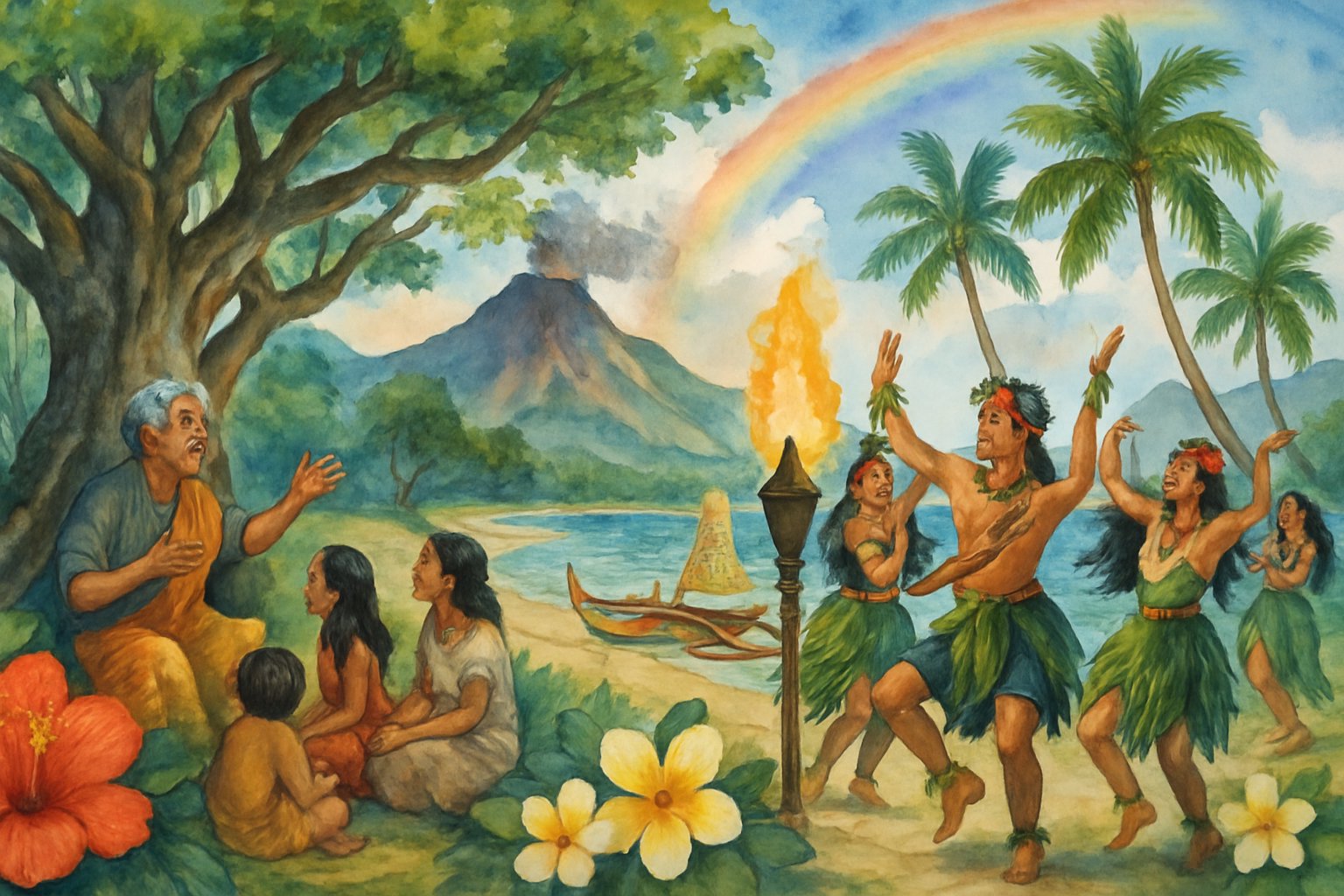
Unique cultural practices shape many Hawaiian myths and legends. These traditions help preserve stories, guide spiritual leaders, and connect people to their history.
Chant and Oral Storytelling
Chant, or “oli,” is a key part of Hawaiian legends. Chants are more than songs—they are stories passed down by voice and memorized by generations.
People use chants to tell about gods, ancestors, or important events. The sound of each chant matters.
The words use repetition, rhythm, and a strong voice. Listening closely, you can hear the story of Pele, the volcano goddess, or the journey of Māui, a shapeshifting hero.
These chants teach about Hawaiian beliefs, history, and even laws. Oral storytelling goes along with chanting.
Elders tell stories at gatherings or around a fire. Some stories are long and detailed, teaching right from wrong or explaining natural events.
Keeping stories alive through voice brings families and communities together. Learn more about myths and storytelling traditions in guides like Fodors’ section on Hawaiian culture.
Role of the Kahuna
The kahuna is a respected leader and spiritual expert in Hawaiian tradition. “Kahuna” can mean priest, healer, or wise person.
Kahuna lead important ceremonies, guide the community, and protect sacred knowledge. These leaders learn many chants and legends by heart, often starting their training in childhood.
Kahuna use sacred objects and prayers to call upon gods or seek answers. They also help people in need by using traditional medicine or conducting rituals for healing and blessing.
Because they know so many legends and chants, kahuna are trusted to pass down lessons. More details can be found in articles about the role of spiritual leaders in Hawaiian legends.
Tapa Cloth and Symbolic Objects
Tapa cloth, or kapa, plays a special role in stories and ceremonies. People make tapa cloth from tree bark, pounding it until it’s soft and strong.
They often decorate the cloth with symbols or patterns that tell a story or honor a chief or god. Tapa cloth serves as clothing, wrappings, or offerings during rituals.
If someone is honored or a chant is performed, tapa cloth might be present as a symbol of respect. The patterns can show family history, lands owned, or dreams from the past.
Other sacred objects include stones, feathers, or wooden carvings. Kahuna use these items in ceremonies or while telling stories.
Touching or seeing these objects helps people feel connected to Hawaiian traditions. Many landmarks and symbols have stories tied to them, as seen in stories linked to Hawaiian objects and places.
Supernatural Elements and Spirits
In Hawaiian traditions, people believe in powerful gods, helpful spirits, and dangerous beings. Many customs help keep people safe and show respect for these supernatural elements.
Akua and Evil Spirits
Akua are the gods and goddesses in Hawaiian belief. Some akua, like Pele, have strong powers and fiery personalities.
Others, like Lono and Ku, connect with farming or war. People often give offerings to akua for protection, good harvests, or luck in battle.
Many stories describe spirits, both good and bad. Some spirits are ancestors who watch over people.
Others, like the Night Marchers, can cause harm. Ancient warriors called Night Marchers travel at night in certain areas of Hawaii.
Meeting these spirits is very dangerous. People show respect by being quiet or leaving if they appear.
You can read more about spirits like the Night Marchers and other Hawaiian supernatural stories here.
People call evil spirits “lapu” or “akua ino.” These spirits bring sickness or bad luck.
Stories about haunted places and mysterious events pass through generations.
Protection Rituals with Ti Leaves
People in Hawaii use ti leaves, called “ki,” for protection. Ti plants often grow outside homes and businesses.
Local tradition says the plant keeps away evil spirits and misfortune. People weave ti leaves into leis or hang them outside doors.
During ceremonies, people wave or place fresh ti leaves around an area for safety. When visiting dangerous places or new areas, some carry ti leaves as a charm.
Old beliefs say evil spirits dislike the smell or presence of the ti leaf. Many families in Hawaii still plant ti for beauty and spiritual safety.
You can learn more about these customs and other Hawaiian superstitions here.
Legends Surrounding Nature, Food, and Daily Life
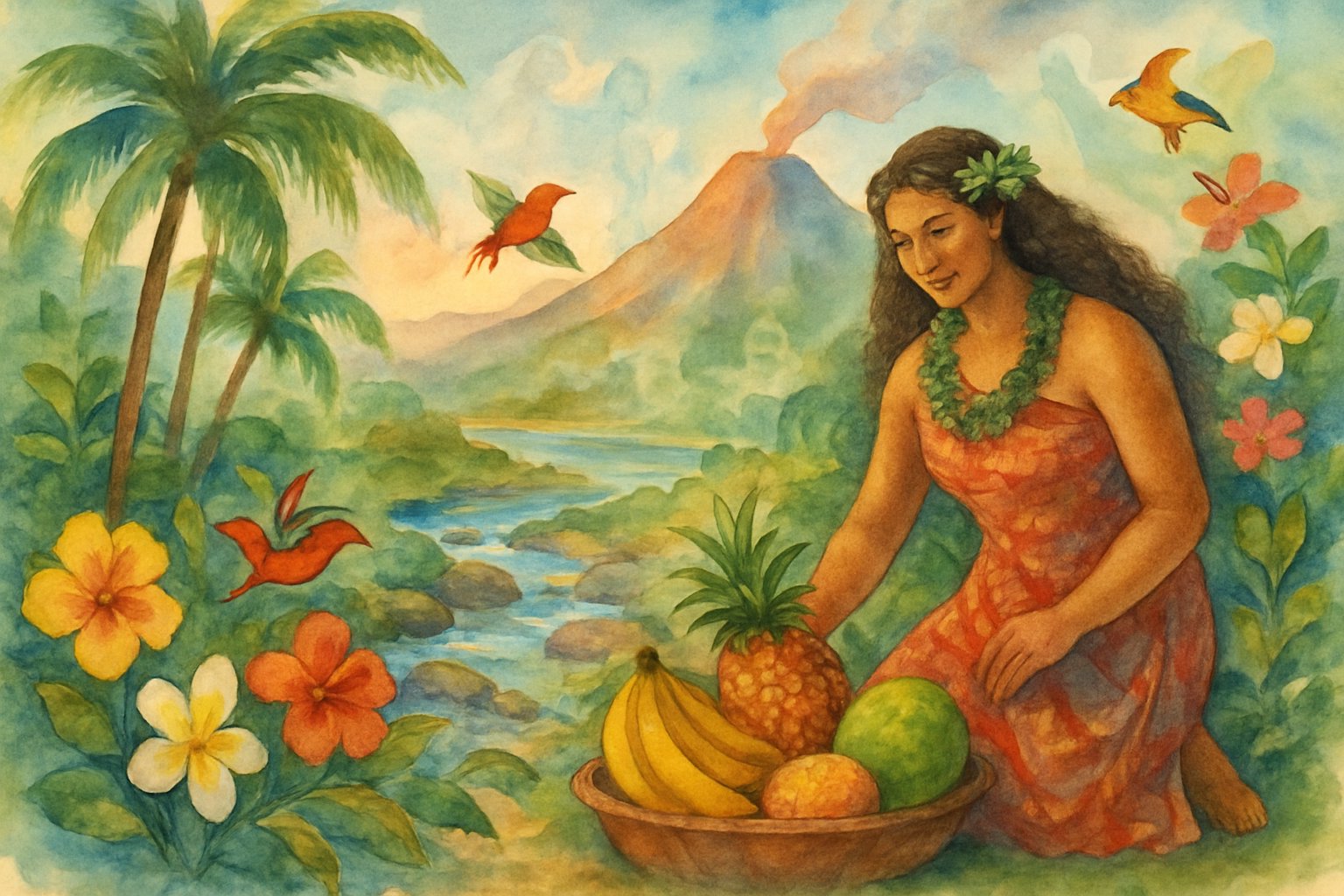
Nature and daily life play a big role in Hawaiian stories. These legends help explain how Hawaiians viewed fishing, food, change, and disasters.
Fishing and Fishpond Myths
Fishing has always been important to Hawaiians. Many legends talk about the creation and use of fishponds, called loko iʻa.
Families built these fishponds for farming fish. Some stories say gods like Ku-ula taught people how to fish and build ponds, and protected them from harm.
Other tales describe people catching magical fish, or fish that could talk. Breaking fishing rules, like overfishing or disrespecting sacred areas, often led to bad luck or punishment.
Old fishponds still exist today. These stories remain important in local culture.
You can find more stories in collections of Hawaiian folk tales.
Imu, Famine, and Gathering Tales
The imu, or underground oven, is central in stories about food and sharing. Legends teach that using the imu was not only for cooking, but also for feeding the whole village.
Sometimes, people said special prayers or performed rituals to make sure there was enough food. During famines, stories highlight the need to work together.
Gathering food like taro, breadfruit, or fish was a group effort. Selfishness could bring hunger or misfortune to everyone.
Sharing and following tradition during hard times kept peace in the community.
Destruction and Transformation Stories
Destruction and change are big themes in Hawaiian legends. Many stories describe how gods or goddesses, like Pele the volcano goddess, cause destruction with lava or fire.
These stories explain why volcanoes erupt or why some lands are barren. Some lands formed or changed shape because of these events.
Transformation is also important. People or animals might change form, such as humans becoming stone or plants.
These tales teach lessons about respect or humility. They help explain the natural world and why people must live in harmony with nature.
For more about these legends, see this guide to Hawaiian myths.
Continuing Legacy and Modern Influence
Hawaiian legends and folklore are still alive in daily life. These ancient stories help keep Hawaiian tradition vibrant and shape what it means to live in Hawaii.
Preservation of Hawaiian Legends
Many groups and schools work to keep Hawaiian legends alive. Families and elders use oral storytelling to pass down tales of gods, heroes, and spirits like Pele or Maui.
Libraries and museums across the islands collect and display old chants, stories, and pieces of folklore. Books and digital projects make these legends available to people everywhere.
Festivals and hula performances retell famous tales through dance, song, and dramatic reenactments. This keeps the tradition active and lets younger generations connect with their past.
Some schools offer classes in Hawaiian language and storytelling. This helps the island’s folklore live on for many years to come.
Influence on Hawaiian Culture Today
Hawaiian myths shape the culture and identity of the islands. I see their influence in art, tattoos, place names, music, and local customs.
The legends of Pele guide how many islanders show respect to volcanoes and the land. Folklore influences how families celebrate holidays and gather for luaus.
Families cook traditional foods and share stories passed down by elders. These stories explain natural events or teach lessons about respect, kindness, and courage.
The tourism industry shares myths and legends with visitors. This sharing helps preserve cultural values.
You can visit festivals or read about Hawaiian mythology’s influence on modern Hawaii to learn more. Hawaiian tradition remains an important part of island life.


