Hiking Diamond Head in Hawaii is a must-do if you love views and a little adventure. The trail is doable for most people, and you don’t have to be a superstar athlete to reach the top.

The hike usually takes about 45 minutes to an hour. At the summit, you get some of the most stunning panoramic views of Honolulu and the Pacific Ocean.
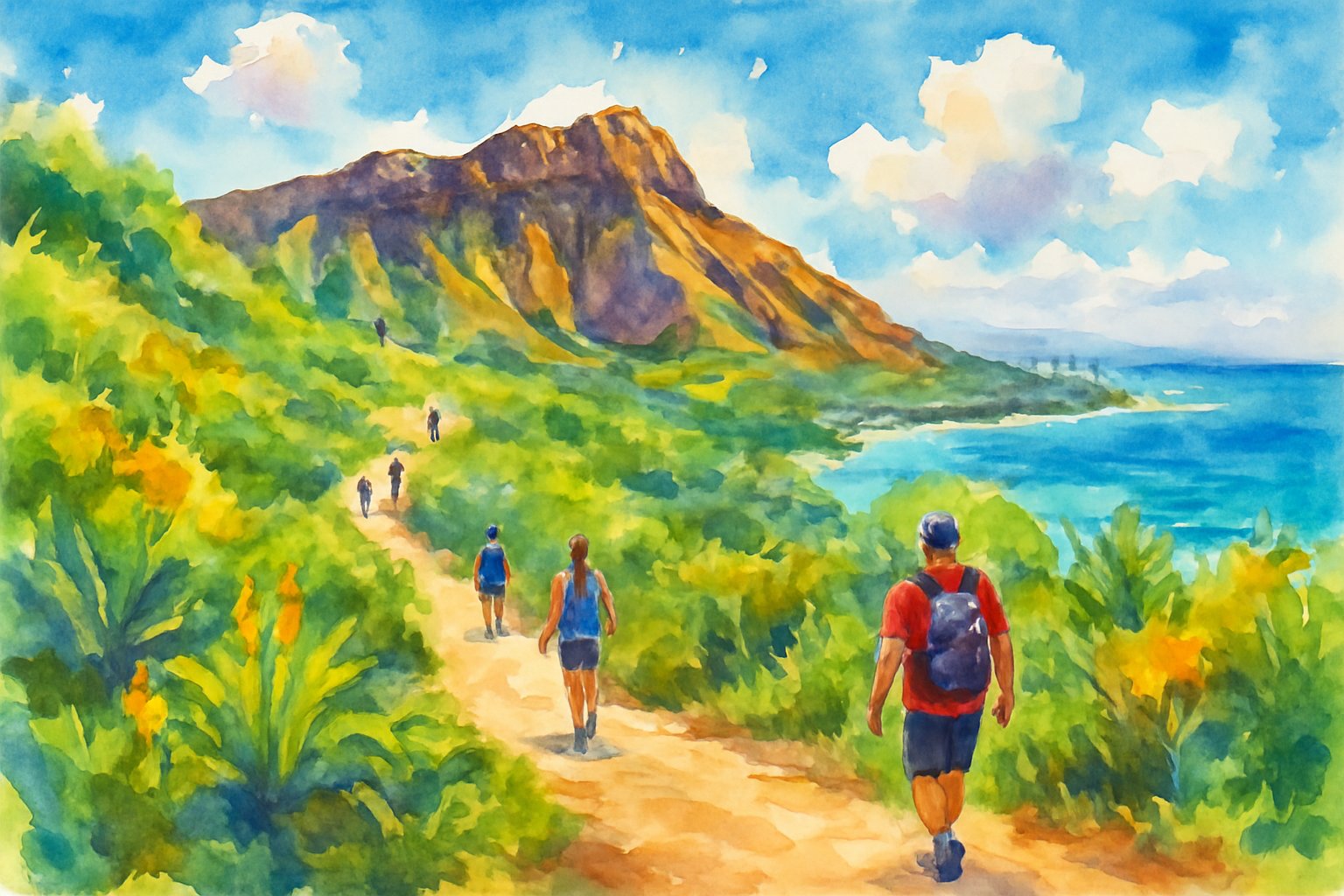
The trail starts easy on a paved walkway, but it gets steeper with switchbacks as you climb. Wear good walking shoes, bring water, and go early or later in the day to avoid crowds.
Out-of-state visitors need reservations. The trail is open from 6 a.m. to 4 p.m., and the gates close at 6 p.m. (You can check more details about visiting Diamond Head or read tips from others’ hiking experiences.)
If you want a fun hiking experience while staying in Oahu, I recommend Diamond Head. You don’t have to drive there, since buses and shuttles are available.
Bring your camera—the views at the top are unforgettable!
Overview of Diamond Head
Diamond Head is a famous landmark on the Hawaiian island of Oahu. The crater has deep cultural roots and offers a unique hiking experience.
I want to help you understand how this volcano formed, why it is called Le’ahi, and what you can expect from the crater itself.
History and Formation
More than 300,000 years ago, Diamond Head formed as a volcanic tuff cone. A brief but powerful eruption shot ash and fine debris into the air.
When the material settled, it made the large, bowl-shaped crater seen today. The peak stands about 760 feet above sea level.
Early settlers used the high point as a lookout for its clear sea views. The U.S. military later built bunkers and tunnels for defense, especially in the early 1900s.
Le’ahi: The Hawaiian Name
Locals call Diamond Head “Le’ahi.” In Hawaiian, “le” means “brow” and “ahi” means “tuna.”
The ridgeline looks like a tuna’s fin sticking out of the ocean. The name reflects how Hawaiians describe the natural world.
The mountain is important in Hawaiian culture. Legends and stories talk about Le’ahi as a place of spiritual power.
Diamond Head Crater
The Diamond Head Crater covers about 350 acres. Its inside is much larger than it looks from the beach.
The trail winds through paved and rocky paths, long staircases, and a lighted tunnel. You’ll see old military bunkers and a lighthouse at the rim.
This area is a mix of nature, history, and engineering. The state manages it as a monument, and it is one of Hawaii’s most visited hikes.
Planning Your Visit
When I decided to hike Diamond Head, I wanted clear info to help me prepare. Knowing how to get there and understanding the entrance process made my experience smoother.
Location and Directions
Diamond Head State Monument sits on the southeastern edge of Honolulu. It’s about a 10-minute drive from Waikiki, so it’s convenient if you’re staying in the city.
Driving is simple, but the parking lot at the crater entrance fills up fast during busy times. If you don’t want to drive, public buses and shuttles from Waikiki drop you off near the entrance.
Some people walk, but taking a short ride is easier, especially when it’s hot. Signs around Honolulu and Waikiki make finding the monument easy.
Once I got close, I followed the signs toward Diamond Head State Monument. Maps and GPS directions are accurate for this area.
Best Time to Hike
Early morning is the best time to start this hike. The trail opens at 6 a.m., and arriving early means cooler temperatures and fewer visitors.
Late afternoon works too, but you must watch the gate closing times. Midday is hot and busy, so I avoid these hours.
Morning hikes let you enjoy views before haze sets in. I always bring water and wear sunscreen.
Saturdays and Sundays are busier, since locals and tourists visit then. Weekdays are quieter.
I check the weather forecast before going, since rain can make the path slippery.
Entrance Fee and Hours
All non-resident visitors must pay an entrance fee. When I visited, I paid $5 per person, and there is a parking fee if you bring a car.
Non-residents must book a time online in advance on the state park’s reservation site. This controls crowds and saves time on arrival.
You can learn more about the reservation process and fees at Diamond Head’s official information page.
Diamond Head is open daily from 6 a.m. to 4 p.m., and the gates close at 6 p.m. The last entry is at 4 p.m., and everyone must leave before closing.
I always plan my hike so I have plenty of time to go up and down the trail. The staff enforces closing times, so check your watch before heading up.
Trail Overview
When I hike the Diamond Head trail, I get both adventure and exercise. The path is popular for its great views, short length, and well-marked route inside the crater.
Hiking Distance and Duration
The Diamond Head hiking trail is about 1.6 miles round trip. I walk 0.8 miles to the summit and the same distance back down.
Most people, including myself, can finish the trail in 1.5 to 2 hours, depending on breaks. There’s a steady climb that gains around 560 feet from the crater floor to the overlook.
If I walk at a slow, steady pace, I get time to rest and enjoy the scenery.
Trail Conditions
The trail begins with a paved walkway, making the first section easy. Soon after, the path turns into dirt and loose rock, with a few switchbacks.
I suggest wearing good shoes since it can get slippery in places. There are fun features like short tunnels and a staircase with about 99 steps.
Bathrooms and water fountains are at the base, so I fill my water bottle before heading up.
Suitability for Different Skill Levels
I describe the trail as a moderate hike. Beginners and families can usually complete it, though the stairs and steady climb can be tough for some.
If I’m not used to uphill hiking, I go slow and stop for rests. For anyone with moderate fitness, the trail offers a satisfying workout without being overwhelming.
Children and older adults often make it to the top too, as long as they take their time. I’ve seen experienced hikers jog up, but most people walk and enjoy the views.
For more details about the route and tips, I check sites like Love Oahu’s Diamond Head visitor guide or Tripadvisor’s Diamond Head reviews.
What to Expect on the Hike
On the Diamond Head hike, I faced a mix of smooth and rugged paths, steep stairways, and a tight tunnel. The trail has unique features like an old spiral staircase and the historic Fire Control Station at the summit.
The Stairways and Tunnel
After the paved walkway, the trail becomes steeper and more uneven. I climbed a set of 74 concrete stairs, which was one of the toughest parts.
The steps are narrow and steep, so I took my time and used the handrails. Not long after the first stairs, I reached a tunnel about 225 feet long.
This tunnel is dark, and only one or two people can pass at a time. It feels cool inside but can get crowded, especially with people going both ways.
I watched my step since it was hard to see the ground clearly.
Key points:
- Stairs: 74 steep steps
- Tunnel: about 225 feet, dimly lit, narrow
- Tip: Bring a small flashlight to help see better
For a detailed look at the stairways and tunnel, see more info here.
Spiral Staircase and Fire Control Station
After the tunnel, I climbed a spiral staircase of 99 steps. The space is tight, so I was careful not to bump into anyone coming down.
The metal steps are sturdy, but my legs felt tired by the time I reached the top. The spiral staircase leads straight to the historic Fire Control Station.
This old military lookout sits at the summit of Diamond Head. From the observation windows, I saw wide views of Honolulu, the crater, and the Pacific Ocean.
Inside, I found old equipment and signs telling the history of the landmark. There isn’t much space, so I waited my turn to take photos.
For more about this part of the hike, check the Diamond Head Summit Trail.
Scenic Highlights
When I hiked Diamond Head, the views made every step worth it.
The summit gave me sights I can’t experience anywhere else in Honolulu.
Lookout Point and 360-Degree Views
At the 760-foot summit, I reach a special lookout point.
After climbing the final stairs, I step onto a large viewing platform.
From here, I see 360-degree views of the island, the sparkling city, and mountains in the distance.
I always take a moment to look around.
The panoramic views stretch from the green Koʻolau Range to the edge of the Pacific Ocean.
Early in the morning or on clear days, I notice colors in the sky and ocean that are especially brilliant.
It’s a great spot to take photos or just soak in the breeze.
The viewpoint lets me see how unique Diamond Head’s crater shape is.
It shows why this spot is one of Oahu’s most famous landmarks.
Views of Waikiki and the Pacific Ocean
As I scan the scenery, I always spot Waikiki.
The beach is easy to see below, lined with sandy shores and tall hotels.
Blue waves crash along the shore, and surfers ride the breaks.
On a sunny day, Waikiki’s white sand almost seems to glow.
The Pacific Ocean stretches out forever.
I often see boats moving across the deep blue water.
Some days, if I’m lucky, the water looks extra clear, and I can spot different shades of blue mixing together.
I like looking for landmarks in the city and along the coast.
This view reminds me how close Diamond Head sits to downtown Honolulu and how the crater rises high above the city.
Sight of Diamond Head Lighthouse
While I’m at the top, another favorite sight is the Diamond Head Lighthouse.
It’s a small white lighthouse on the edge of the coast.
The red-roofed tower stands out against the greenery and blue ocean.
Workers built the lighthouse in the early 1900s.
Today, it still helps ships safely find their way.
I enjoy spotting the lighthouse from above because it looks tiny compared to the vast ocean beside it.
Sometimes I use binoculars or zoom in with my camera for a closer look.
The lighthouse is an important piece of Hawaii’s history.
From Diamond Head’s summit, it almost feels like a secret find on the coastline.
For more information on scenic highlights at Diamond Head, check this detailed visitor guide.
What to Bring
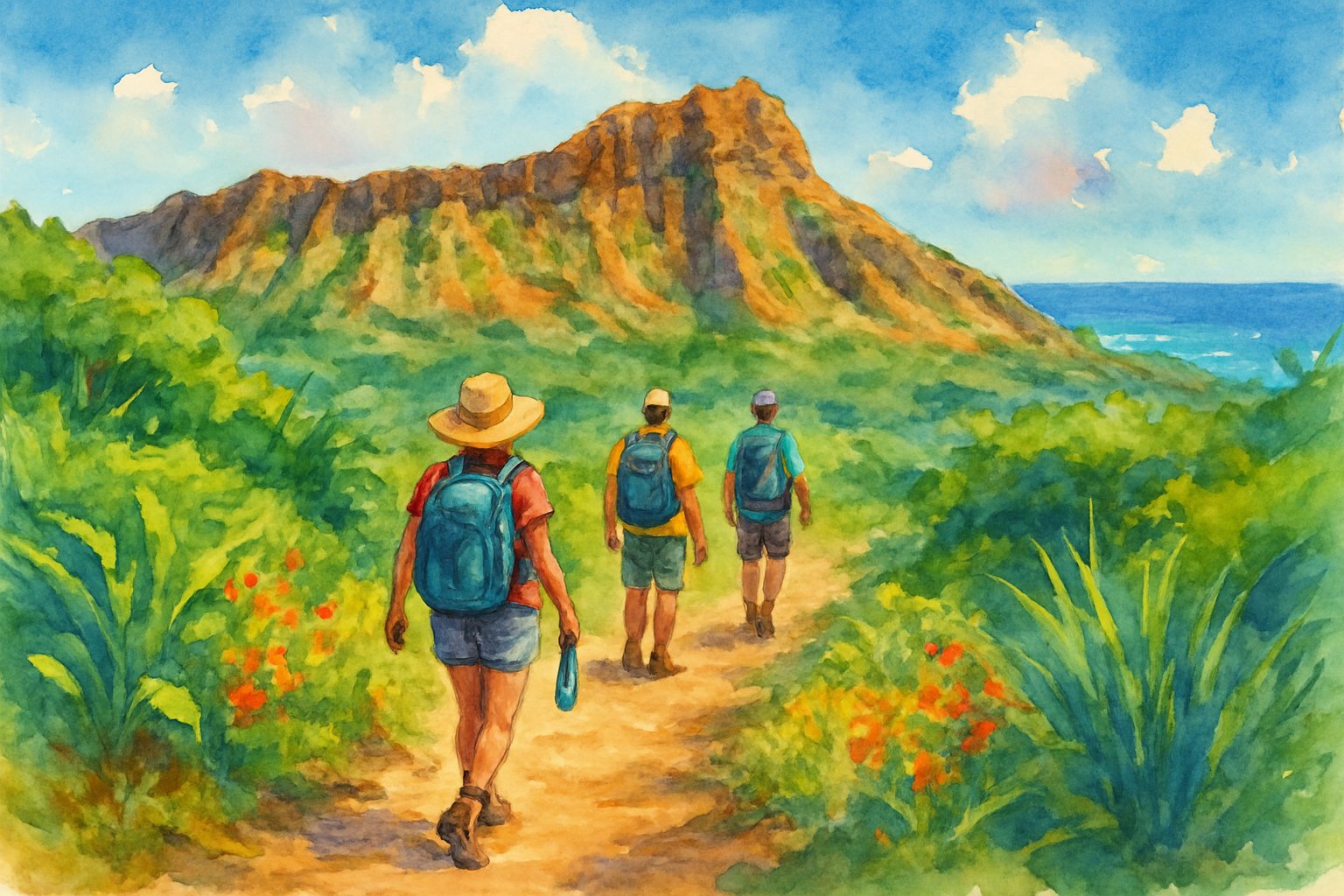
Packing the right items makes hiking Diamond Head safer and more comfortable.
The trail has little shade, and the path can be rocky and steep.
Water, Hat, and Sunscreen
I always bring at least one full water bottle for this trail.
There isn’t much vegetation to keep the sun off me, and it gets hot even early in the day.
Dehydration can sneak up fast, so I drink water regularly as I go.
A brimmed hat is another must for me.
The lack of trees means the sun hits hard most of the way up.
A wide hat or a cap with a neck flap helps keep my face and neck from burning.
Sunglasses are also helpful to protect my eyes from the bright glare.
I use a strong, sweat-proof sunscreen and reapply it if I start sweating a lot.
UV rays are strong even on cloudy days.
Since the trail is exposed, skipping sunscreen isn’t an option.
I also pack lip balm with SPF to avoid chapped lips.
Here’s a quick list I follow:
- Refillable water bottle (at least 16–32 ounces)
- Brimmed hat
- Sunglasses
- SPF 30 or higher sunscreen
- Lip balm with sunblock
Recommended Footwear and Apparel
Footwear with grip is key for Diamond Head.
The path has dusty and rocky spots, plus some stairs.
I never wear sandals or flip-flops.
Lightweight hiking shoes or sturdy sneakers with good soles keep me steady on uneven ground.
Some people suggest shoes with ankle support, especially if you have weak ankles or plan to hike early when the trail might be slippery from dew.
For clothes, I pick light, breathable fabrics that wick away sweat.
Even when it’s cool at the parking lot, it heats up fast as I climb.
I avoid denim or heavy cotton because they get uncomfortable.
Instead, I wear moisture-wicking shirts and shorts.
I also bring a small sling pack or a backpack to carry my things.
A soft towel or bandana can help wipe away sweat.
Checking out some personal experiences and tips can help you plan your outfit for the day.
If you’re looking for more information on shoe suggestions, there is plenty of advice from fellow hikers online.
Tips for a Great Hiking Experience
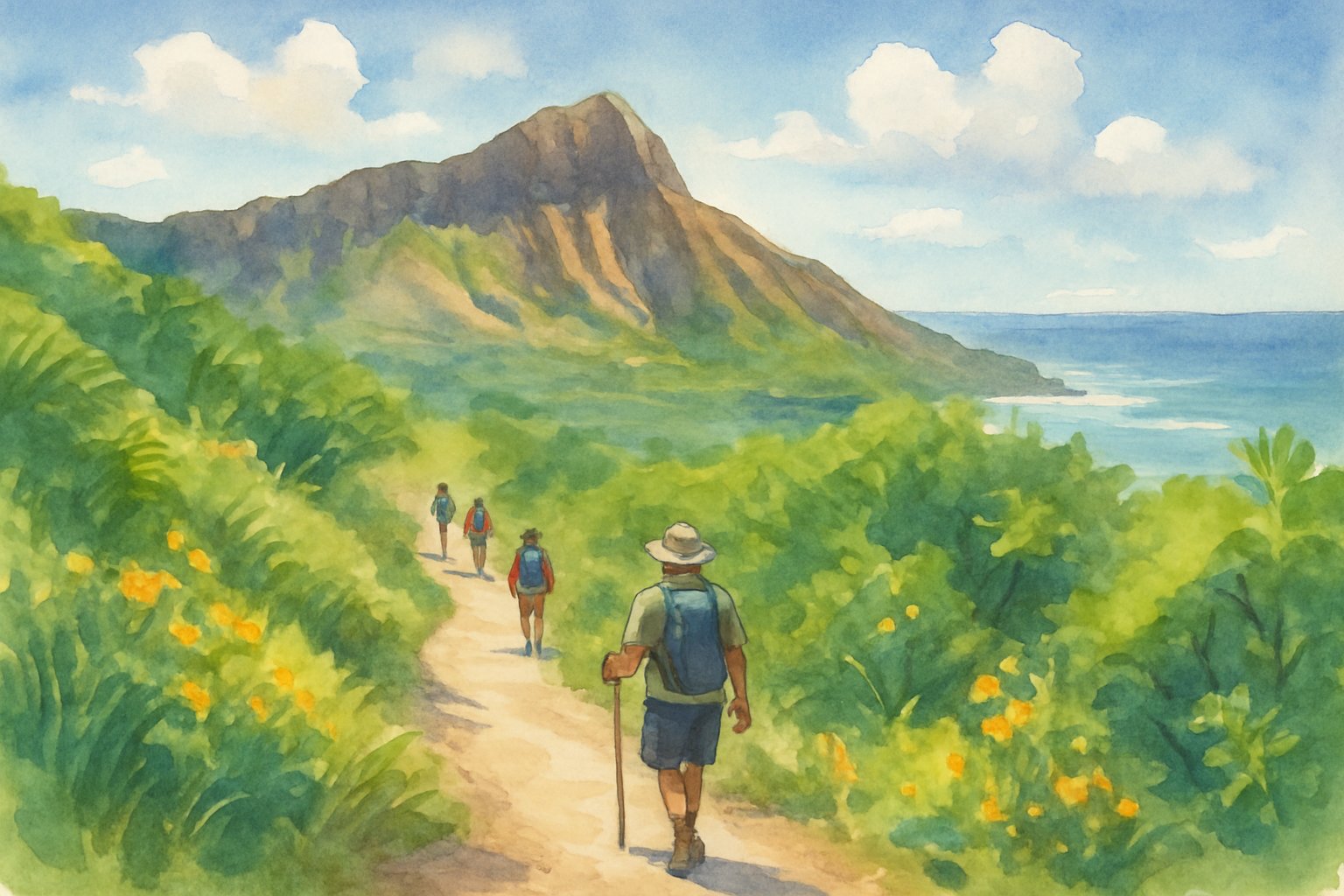
When I hike Diamond Head in Hawaii, a few things always help make my adventure more enjoyable and safe.
Simple choices like arriving early and knowing the best spots for photos can really improve my hiking experience.
Crowd Management and Safety
I try to avoid crowds.
I usually start my hike as early as possible in the morning, often before 8 a.m.
The trail gets crowded quickly, especially on weekends and holidays.
By arriving early, I find better parking and can hike at my own pace.
I always bring plenty of water.
There’s no water on the hiking trail itself, and the sun can get intense, so staying hydrated is important.
I make sure to put on sunscreen and wear a hat, since most of the path is exposed and shade is limited.
Wearing sturdy shoes makes a big difference.
Parts of the trail are paved, but there are also steep stairs and rocky sections.
Good footwear keeps me steady and helps prevent slips.
There are some narrow spots, so I’m careful to step aside for people coming down or going up to keep everyone safe.
If it’s already midday, I consider going later in the afternoon instead, when the crowd starts to thin out.
Planning my visit around these times lets me avoid the hottest part of the day and enjoy a bit more space on the path.
For other practical tips, I often check guides like this Diamond Head advice before I go.
Photography and Nature Appreciation
Diamond Head has some of my favorite views on Oahu.
I always bring a camera or use my phone for photos because the lookout offers a full view of Waikiki, the ocean, and distant mountains.
The light is usually best in the morning or late afternoon, when the sun isn’t too harsh and the colors stand out.
When I take pictures, I look for angles with fewer people in the frame.
Early morning gives me that chance, and sometimes a friendly hiker offers to take my photo at the summit.
The top also has old bunkers and historic sites that make great backgrounds for photos.
The trail is lined with native plants and flowers.
I like taking a moment to enjoy the birds and little details along the path.
There are interesting rock formations and volcanic features if I slow down and look.
Sometimes, I sit for a few minutes at the top to watch the waves or spot boats in the distance before heading back.
To get the best shots, I keep my camera ready and use a wrist strap for safety, especially on the stairs.
For more inspiration and details on finding good photo spots, I check out guides such as this Diamond Head hiking photo guide.
After the Hike
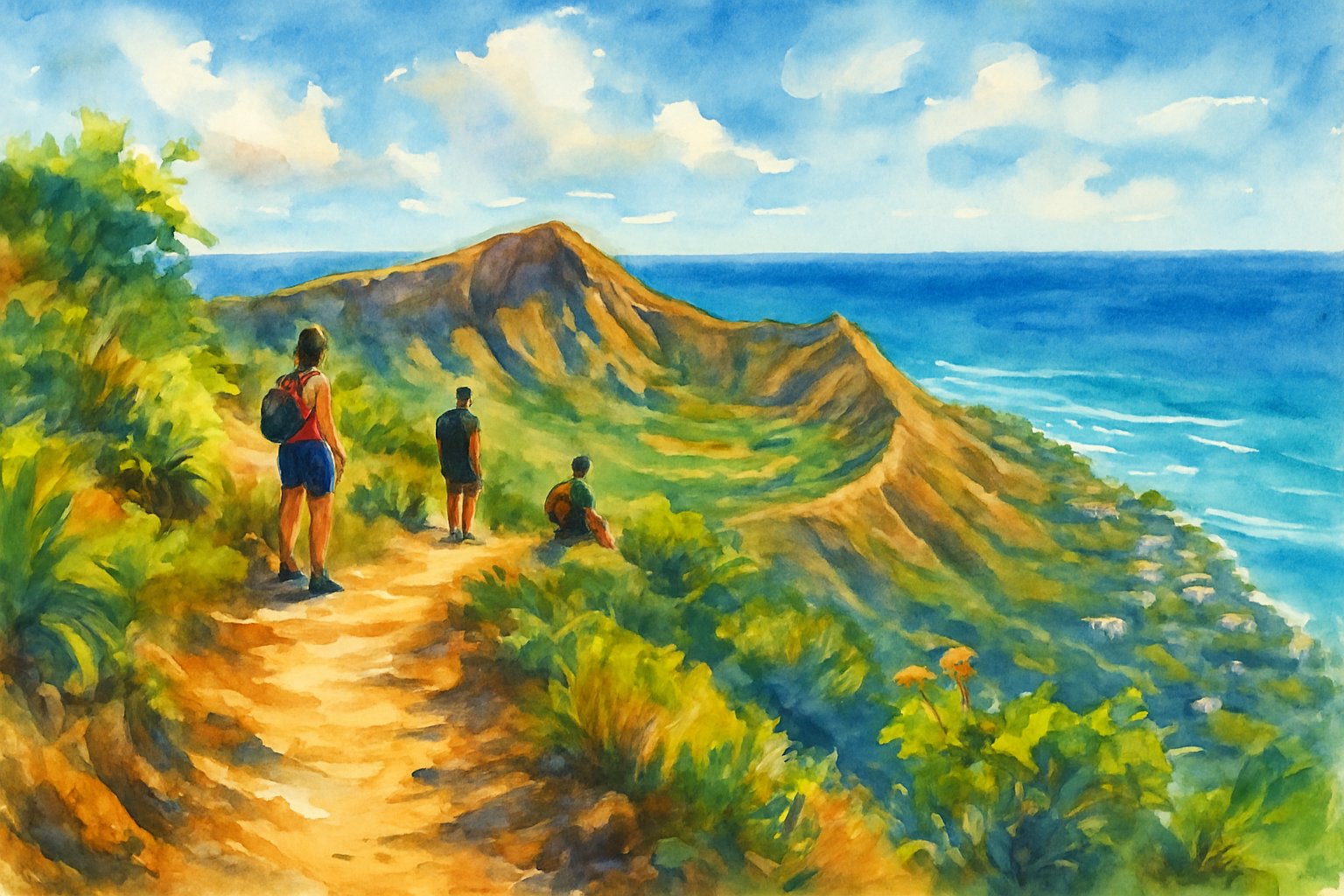
When I finish my trek at Diamond Head State Monument, there are some fun and relaxing things I look forward to.
I like to make a memory of my accomplishment and also grab something tasty or explore around Waikiki.
Certificate of Achievement
After hiking to the top, I enjoy picking up a Certificate of Achievement.
You can purchase these certificates at the gift shop near the base of Diamond Head.
They make a great keepsake to show friends and family that I completed the hike.
Each certificate usually includes my name, the date, and a note honoring my climb.
If I want to personalize it, I can ask the staff at the counter.
The certificates often have a colorful design with Diamond Head in the background.
For me, it’s a fun and affordable way to remember the day and celebrate my achievement.
Nearby Attractions and Refreshments
Once I leave the trail, I’m usually ready for a break. I like to check out Diamond Head Grill for a fresh meal, since it’s close and gets good reviews for local food, as suggested by travelers.
If I bring extra cash, I can also find snack stands at the monument’s entrance. These stands offer cold drinks or shaved ice.
If I still have energy, I sometimes explore the nearby area. Waikiki Beach is just a short drive or bus ride away, so I can easily relax by the ocean.
The scenic neighborhood around Diamond Head State Monument is good for a peaceful walk. I like to combine my hike with these nearby adventures.