Nothing compares to practicing yoga on the soft sand with the gentle sound of waves in the background.

The fresh ocean air and peaceful views make each stretch and pose feel refreshing and meaningful.
To practice yoga on Hawaiian beaches, I bring a comfortable towel or mat, some water, and an open mind to connect with the natural surroundings.
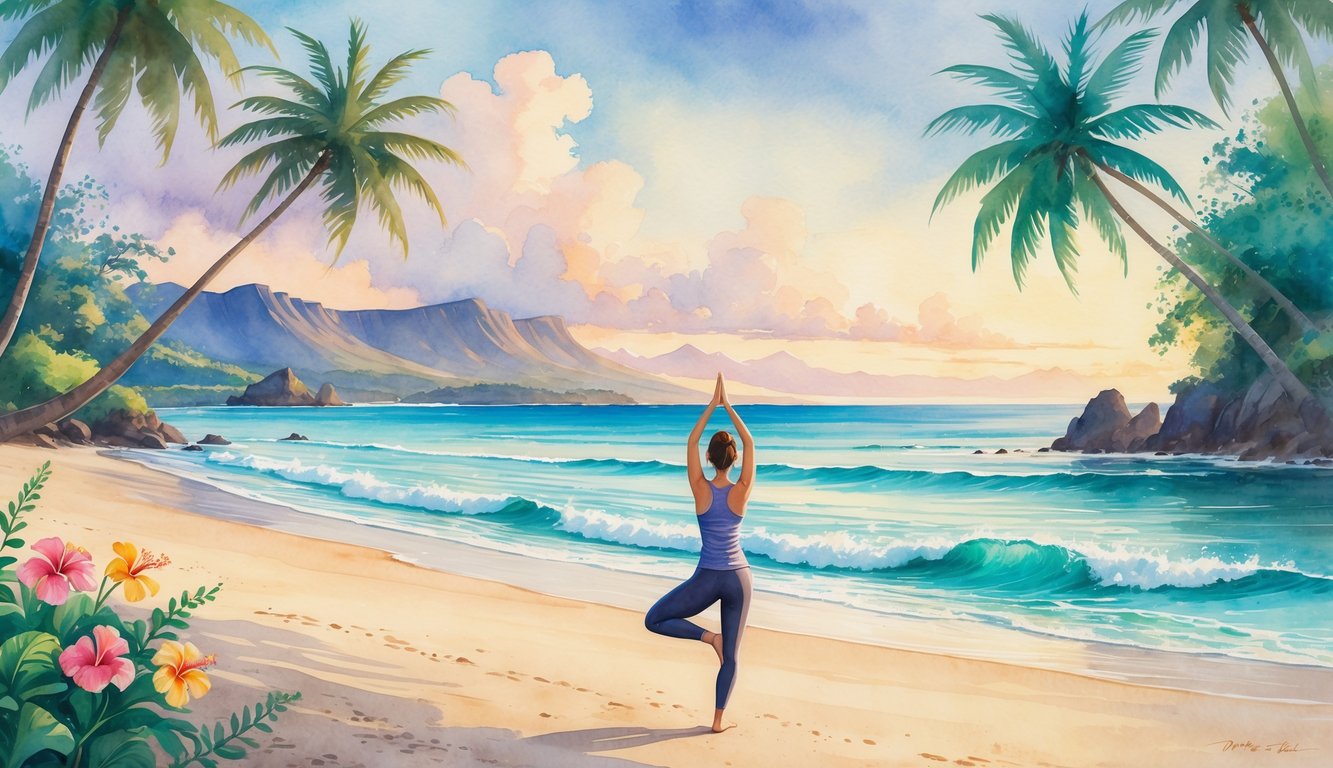
Whether I join a group class or move through my own routine, I can easily find a spot along the shore for yoga.
Many beaches, like those around Kona and Waikiki, offer sunrise and sunset sessions for all skill levels, so I can join in or practice alone if I prefer.
Some local instructors hold classes right next to the ocean, often by-donation, which makes it accessible no matter my experience or budget.
The beauty of beach yoga in Hawaii is the freedom of wide-open spaces, soft grass, and warm sand under my feet.
Knowing a few simple steps helps me feel confident and relaxed, ready to enjoy these beautiful islands.
Why Practice Yoga on Hawaiian Beaches
Yoga on the beaches of Hawaii helps me reconnect with nature and find a deeper sense of peace.
The gentle sounds, stunning scenery, and spirit of aloha create an experience unlike anywhere else.
Benefits of Beach Yoga
Doing yoga on the sand gives my body a new challenge.
The uneven surface helps me use different muscles and improve my balance.
The fresh ocean air and sound of the waves help me clear my mind and focus on my breath.
Being outside lets me soak up sunlight, which boosts my energy and mood.
Practicing yoga outdoors feels less confined because I’m not limited by walls or a ceiling.
I feel refreshed and recharged, especially when I listen to the ocean and birds during yoga.
One of the biggest benefits is how relaxed I feel after a session.
The sound of nature can help reset my mind and body in a way that’s hard to match indoors.
Connection with Tropical Paradise
Hawaii feels magical for yoga, surrounded by palm trees, turquoise water, and soft sand.
Every session becomes an experience for my senses, from the ocean breeze on my skin to the bright colors of sunrise or sunset.
Each moment on the beach helps me feel part of the natural world.
Practicing yoga in such a beautiful place makes it easier to let go of stress.
My worries seem smaller when I look at the ocean or watch a gentle rain.
Taking yoga outside adds a sense of freedom and space.
Being on the beach in Hawaii brings a deep sense of peace.
This connection with nature helps me be more mindful during every class.
Experiencing Aloha Spirit
Practicing yoga in Hawaii lets me feel the aloha spirit all around me.
This way of life is about kindness, respect, and gratitude.
When I join a beach yoga class, everyone welcomes each other with warmth and positive energy.
Instructors encourage us to embrace the spirit of aloha in our yoga poses and in how we treat ourselves and others.
That makes every practice feel more meaningful.
I find myself letting go of expectations and being more present in the moment.
Many local classes blend traditional Hawaiian ideas with yoga, encouraging more love and compassion in my practice.
For me, the aloha spirit is one of the main reasons I keep coming back to yoga on Hawaiian beaches.
Preparing for Your Beach Yoga Session
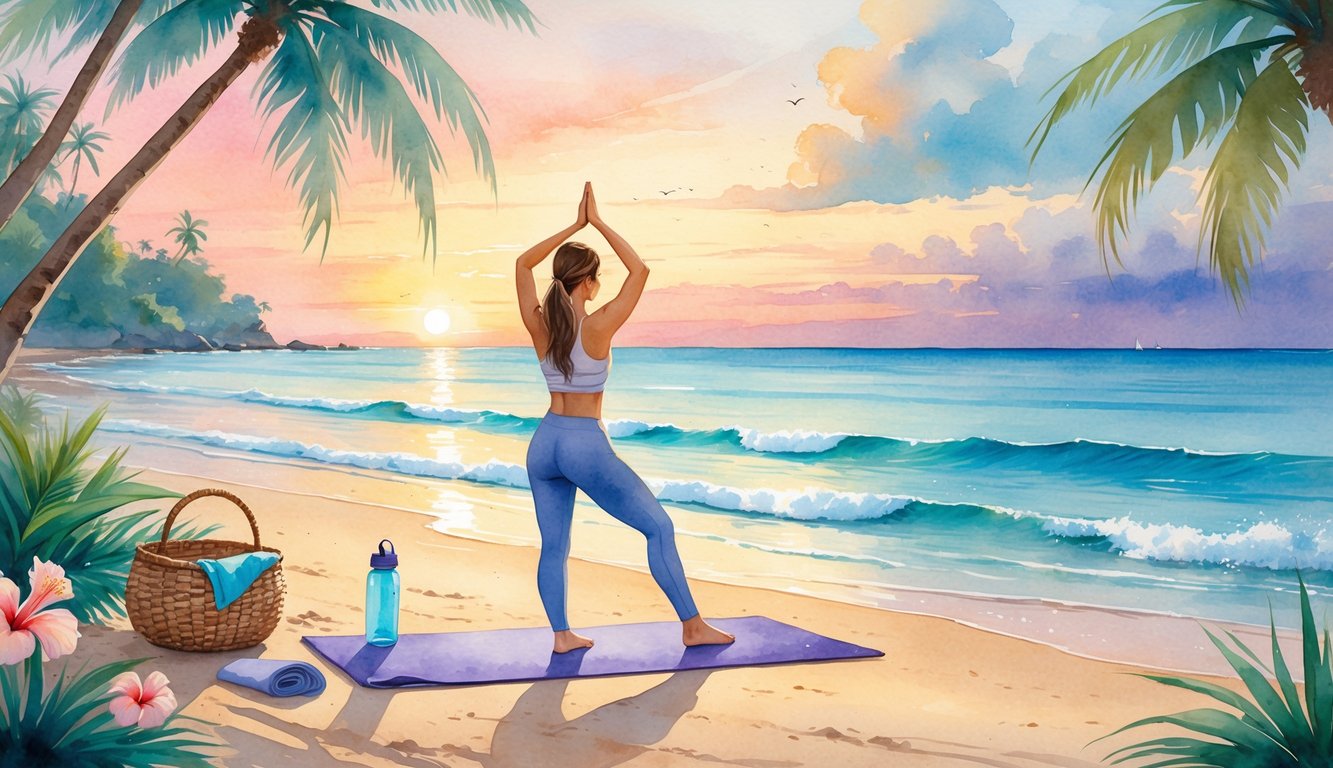
I always plan ahead when I want a relaxing yoga session by the ocean in Hawaii.
Picking a good spot, packing the right items, and being sun smart help my practice feel safe and comfortable.
Choosing the Right Hawaiian Beach
When I look for a beach to practice yoga, I make sure it’s clean, calm, and not crowded.
Early mornings or evenings are best since beaches in Hawaii are quieter and the sun is gentler.
I look for soft, flat sand, since it’s easier on my wrists and ankles than rocky or sloped areas.
Some beaches have shaded spots from trees or cliffs, which help with comfort during longer sessions.
I avoid busy tourist areas like Waikiki mid-day and seek local favorites or hidden gems.
Noise from crowds or traffic can break my focus, so peaceful beaches help me connect with nature and my breath.
Tide schedules matter.
Low tide often reveals more space and reduces the chances of getting splashed by a wave.
Local beach websites or apps help me check conditions before I head out.
Essentials to Bring
A few essentials always go in my bag for beach yoga in Hawaii:
- Lightweight towel or heavy woven blanket: A sticky yoga mat gets sandy and slippery. A towel or blanket gives me grip and keeps sand off.
- Reusable water bottle: Hydration is key, especially when it’s warm or sunny.
- Sunscreen: I use a reef-safe sunscreen and apply it at least 15 minutes before I begin.
- Sunglasses and a wide-brimmed hat: Protecting my eyes and face helps me stay comfortable.
- Bug spray: Some beaches have bugs, especially at sunrise or sunset.
- Loose, breathable clothing: Moisture-wicking fabrics keep me cool, dry, and focused.
Packing these basics helps me avoid discomfort and distractions.
Staying Safe in the Sun
Practicing yoga in the Hawaiian sun can be wonderful but also risky if I’m not careful.
I avoid the hottest part of the day, usually from 10:00 am to 4:00 pm.
Early mornings or late afternoons are safer and cooler.
I always use broad-spectrum, reef-safe sunscreen on all exposed skin, and I remember to reapply after swimming or sweating.
Wearing a lightweight long-sleeved shirt and a hat adds more protection.
I try to find shaded spots or create my own using an umbrella if shade isn’t available.
Taking breaks to drink water prevents overheating.
If I start to feel dizzy or tired, I pause and rest in the shade.
These steps help me enjoy yoga outside without risking sunburn or dehydration.
For more tips on sun safety and timing, I found helpful guidance from Karin Eisen Yoga.
Essential Yoga Practices by the Ocean
Yoga by the ocean in Hawaii changes how I move, breathe, and stay present.
The sandy surface, sea air, and natural sounds help me connect to my yoga experience in unique ways.
Adapting Yoga Postures for Sand
When I practice yoga on the beach, postures feel different on sand compared to a solid floor.
Sand adds extra challenge to balancing poses like Tree or Warrior, making my stabilizing muscles work harder.
To avoid sinking, I use a thick towel or beach mat.
I pick simple postures that focus on strength rather than complex balances.
Downward Dog, Cobra, and Child’s Pose work well because I can distribute my weight evenly.
I avoid sharp or quick movements that might cause me to slip.
Practicing slower transitions helps me feel stable.
I pay close attention to my hands and feet, spreading my fingers and toes to grip the sand.
This keeps my yoga practice safe, effective, and fun.
For more tips on equipment and posture adjustments, I sometimes refer to advice on preparing for beach yoga.
Harnessing Prana with Breathwork
Breathing by the ocean feels clean and refreshing.
I use this to deepen my breath and fill myself with new energy, or prana.
I like to try slow, controlled breathing such as deep belly breathing or three-part breath while listening to the waves.
The sound of the sea acts like a natural guide, making it easier for me to focus and time my inhales and exhales.
This keeps my mind clear and helps reduce stress.
My breath matches the rhythm of the waves, which adds a soothing effect.
Breathwork increases oxygen flow and supports my physical movement during yoga postures.
When the sun is strong, I stay hydrated and take breaks as needed.
Practicing mindful breath by the water helps me feel recharged and present.
To see how ocean waves support this, I sometimes review tips on using ocean sounds for meditation.
Cultivating Mindfulness Outdoors
The sights, sounds, and smells of the beach make it the perfect place for mindfulness.
I listen to the sound of waves, feel the breeze, and watch clouds move overhead.
These sensory details help me stay anchored in the present moment.
When distractions come up, I refocus by tuning in to my breath or the feeling of sand under my hands.
Practicing yoga outside, I notice changes in light and temperature.
This awareness adds depth to my yoga practice.
Mindfulness improves my yoga experience by helping me relax and appreciate each movement.
Sometimes I sit quietly and simply breathe, letting nature’s sounds and colors clear my mind.
These moments on the Hawaiian beach remind me to be grateful for the beauty around me.
For more ways to bring mindfulness into beach yoga, I check out simple guides on enjoying yoga by the ocean.
Popular Beach Yoga Styles in Hawaii
Yoga on Hawaiian beaches offers a relaxing and unique experience.
Some yoga styles are especially popular here because they match the setting and suit many levels.
Sunset Yoga Flow
Sunset yoga brings people together in a calm setting.
Many classes happen in the late afternoon, so we get to practice surrounded by golden sunlight and cool breezes.
The flow often blends gentle hatha movements with deep breathing to match the slow shift from day to night.
Teachers begin with light stretching, guide us through relaxing poses like Warrior II or Tree, and end with simple meditation.
Doing these postures with the sound of waves in the background makes each pose feel peaceful.
Some classes also include mindful walking along the beach or light kundalini breathwork for extra relaxation.
If you want to try a class, look for options at Kapiolani Park Beach or Honl’s Beach.
Group sessions often welcome visitors and drop-ins for a small fee.
Practicing with others during sunset feels both social and calming.
See some beach yoga class options here at Waikiki Resort Hotel.
Vinyasa and Vinyasa Flow
I love practicing vinyasa when I want more energy. In this style, I move smoothly between poses and sync each movement with my breath.
The warm weather in Hawaii helps my muscles warm up, making it easier to move through sequences like Sun Salutations. Many beach yoga instructors add ashtanga positions or balance moves to build strength.
I see classes for all levels, so beginners can join vinyasa sessions too. I often practice on the sand, flowing through plank, chaturanga, and downward dog while enjoying ocean views and a gentle breeze.
Some classes mix vinyasa and vinyasa flow, keeping the pace lively and welcoming. If you want a dynamic session with ocean views, check out beach yoga styles and schedules in Hawaii that include vinyasa and more.
Restorative and Yin Yoga
When I need to slow down, I choose restorative or yin yoga on the beach. Both styles focus on holding gentle positions for several minutes.
The aim is to stretch deeper, release tension, and stay still. The beach’s sounds and sights help me unwind and focus on my breath.
Restorative yoga often uses props like blankets or bolsters, but I use my towel for support on the sand. Yin yoga targets my connective tissues and joints, giving me a deep, slow stretch.
Instructors encourage slow, mindful breathing and remind us to let go of muscle effort. These beach classes are perfect when I feel tired, jet-lagged, or need quiet time to relax.
Studios like Yoga Hale in Hawaii offer gentle and donation-based classes, making it easy for anyone to join. Learn more about restorative and yin classes at Paradise in Hawaii.
Deepening Your Practice in Hawaii
Hawaii’s natural surroundings help me find calm during yoga sessions. I use ancient meditation techniques and sound healing with crystal bowls to experience more harmony and relaxation on the beach.
Meditation Techniques for the Beach
When I meditate at the beach, I focus on the sound of the waves. This helps me let go of distractions and center my breathing.
I practice mindfulness meditation by paying attention to each inhale and exhale while watching the ocean. Guided meditation sessions are popular, and many instructors lead them during beach yoga classes.
I can join these classes or meditate on my own. Simple breathing exercises, like box breathing or 4-7-8 breathing, help me relax even more.
I like to sit in the sand or on my mat. Sometimes I close my eyes to block out distractions, or I watch the sunset and let its colors guide my meditation.
Some beach yoga retreats in Hawaii offer morning or evening meditation by the shore. These quiet times help me build a regular practice and bring more peace to my mind.
Sound Healing and Crystal Bowls
Sound healing with crystal bowls happens more often on Hawaiian beaches now. During these sessions, I listen to the soothing tones made by striking or circling the rim of quartz crystal bowls.
The sound vibrations fill the air and create harmony in my body and mind. I notice the sound helps me focus and deepens my meditation.
Some sessions take place at sunset or sunrise for extra calm. Many beach yoga retreats and workshops include sound healing in their programs.
The peaceful beach setting and the sound of crystal bowls help me let go of stress. This blend of sound healing and nature makes my yoga experience in Hawaii special.
For more on special offerings like sound healing, some yoga workshops in Hawaii include these sessions with guided meditation for full relaxation.
Joining Yoga Classes and Retreats
Hawaii offers many yoga experiences on its beaches. I can join group sessions, attend retreats, or learn from local instructors who share unique perspectives.
Finding Group Yoga Sessions
When I want to practice yoga with others, I look for group classes on Hawaiian beaches. Many classes welcome beginners, and I only need a mat, water, and sunscreen.
Some sessions meet early in the morning, while others happen at sunset for a relaxing end to the day. Beachfront hotels and resorts often offer daily yoga for both guests and drop-ins.
Community parks and public beaches like Waikiki and Kailua have instructors who set up classes a few times each week. I can search online or check nearby bulletin boards for schedules.
Tips for joining group sessions:
- Check for classes on social media
- Arrive 10-15 minutes early
- Ask about equipment provided
When I join a group class, I meet travelers and locals and practice yoga in a beautiful setting.
Wellness Retreats and Surf & Yoga Experiences
If I want a deeper experience, I explore yoga retreats in Hawaii. Retreats can last a few days to a week or more.
Many retreats include daily yoga, workshops, plant-based meals, meditation, and time to relax on the beach. Some retreats focus on women, while others welcome all skill levels.
There are also surf and yoga retreat options where I can learn to surf in the morning and join restorative yoga in the afternoon. These retreats let me unplug, reset, and enjoy Hawaii’s beauty.
I appreciate that everything is organized for me—meals, classes, and activities—so I can relax and focus on my wellness.
Benefits of Local Instructors
Practicing with Hawaiian-based yoga teachers feels unique. Local instructors know the island’s rhythms, weather, and traditions.
Many include Hawaiian culture, like chanting or mindfulness exercises, in their yoga sessions. I notice that local teachers adapt classes to the outdoor beach setting.
They find the best spots for shade, sea breeze, or quiet sand. Some instructors offer private or small group classes, so I get personal attention and can learn at my own pace.
By learning from local instructors, I discover new perspectives and feel connected to Hawaii’s spirit.
Blending Yoga with Hawaiian Culture
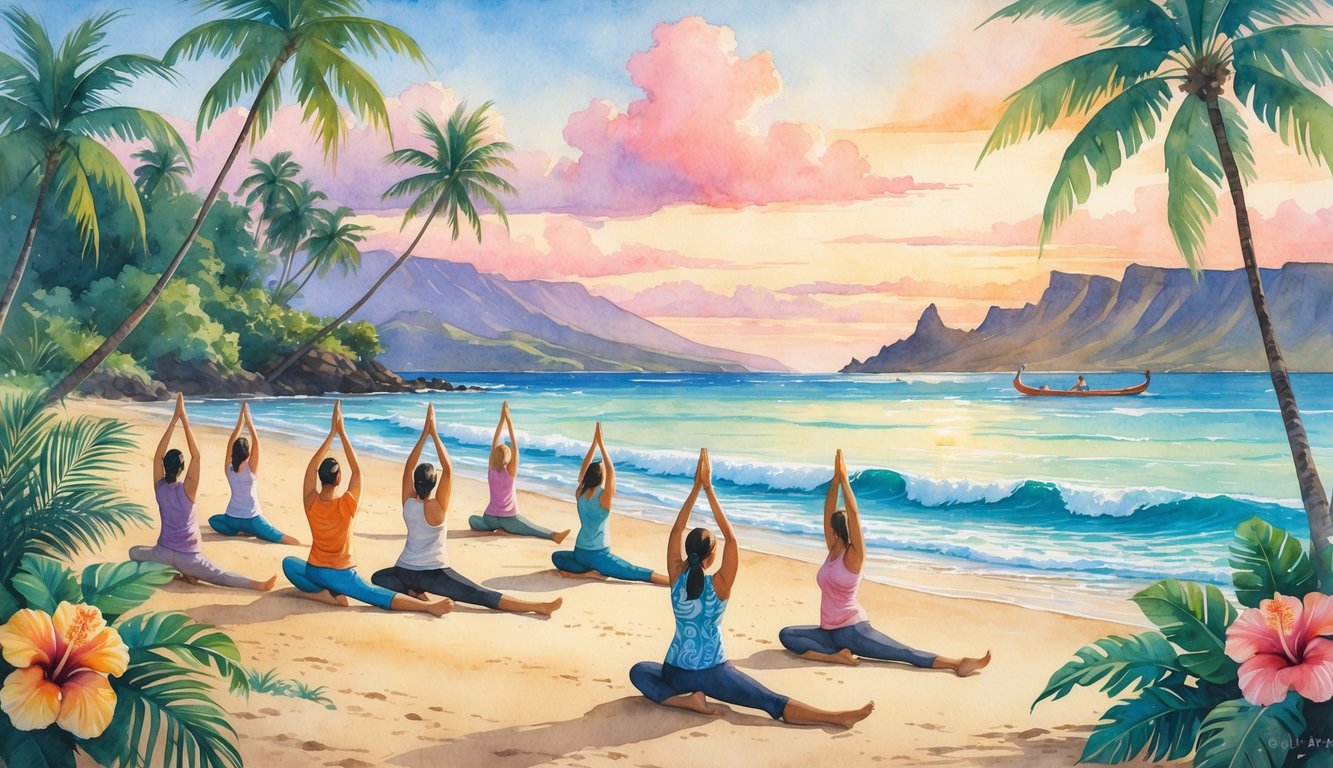
When I practice yoga on Hawaiian beaches, I aim for an authentic and calming experience. Respecting the local culture and joining in unique traditions makes it more meaningful.
Incorporating the Aloha Spirit
The Aloha Spirit is more than a greeting—it’s a way of life in Hawaii. When I step onto the beach, I fill my mind with kindness, love, and respect for nature and others.
Before starting yoga, I take a moment to appreciate the land (ʻāina) and give thanks for being there. This helps me stay grounded and focus on positive energy.
During my practice, I use slow, mindful breathing and gentle movements. Embracing the Aloha Spirit means staying present, showing gratitude, and letting go of stress.
If I attend a class, instructors often remind everyone to act with kindness and help create a peaceful environment. These values bring my yoga to a deeper level.
You can read more about blending Aloha with yoga in Hawaii in this wellness guide.
Learning from Local Traditions
When I practice yoga in Hawaii, I look for ways to honor traditional Hawaiian customs. Sometimes I learn about local chants or movements that connect me to the island’s stories and history.
Some beach yoga classes begin with a Hawaiian chant to set intentions and show respect. I have seen instructors use fresh flowers or shells in rituals that highlight nature’s beauty.
Local teachers often share Hawaiian values, like mālama (to take care of) the land and people. I keep these lessons in mind during practice.
By combining yoga with Hawaiian practices, I feel a stronger connection to the land and people. Attending sunrise or sunset sessions adds to the experience, and I sometimes try Hawaiian superfoods like acai or taro after practice for a full local experience.
Tips for Enhancing Your Beach Yoga Experience
When I practice yoga on Hawaii’s beaches, I focus on movements and habits that boost my strength, flexibility, balance, and calm. Beach yoga has unique challenges, so I use special techniques to get the most from every session.
Building Strength and Flexibility
The soft, uneven sand makes my muscles work harder than a studio floor. When I do poses like Downward Dog, Warrior, or Plank, I need extra effort to stay stable, which builds strength faster.
I start with slow stretches such as Cat-Cow and gentle lunges to warm up my joints. For flexibility, I add deeper stretches at the end, like Pigeon Pose or Seated Forward Fold.
I hold each stretch longer, letting the sun’s warmth loosen my muscles. By listening to my body and avoiding overdoing it, I stay safe and keep my practice steady.
Practicing barefoot also strengthens my feet and calves. The sand shapes around my feet, making each pose a gentle workout.
Improving Balance and Stability
Beach yoga is great for improving balance because the sand shifts under me. Poses like Tree, Dancer, or Triangle become more challenging, so I engage my core muscles.
To help with balance, I pick a spot on the horizon or a seashell as a visual target. This keeps me focused and reduces wobbling.
Sometimes I use a folded towel or a beach mat if the sand feels too hot or rough. Even when I lose my balance, I know it’s part of the process.
Each time I regain balance, my body learns to be steadier. This practice improves stability in my ankles, knees, and hips.
For more advice on staying steady, I follow simple tips for yoga on the beach.
Maximizing Relaxation and Grace
I check the weather and choose a quiet spot away from crowds. The gentle sound of the waves and the fresh ocean air help me unwind faster than at home.
After my practice, I like to lie back for Savasana and focus on my breath. I let each muscle relax deeply.
Sometimes I try floating in shallow water for Savasana. This gives a special feeling of calm and weightlessness, as many experienced yogis suggest.
I use slow, flowing movements between poses. This helps my practice feel more graceful and connected.
I always bring water, sunscreen, and a hat to stay comfortable. At the end of my session, I take a mindful moment of gratitude for the beach.
You can read other ideas for making beach yoga more restorative and pleasant at this guide to yoga by the beach.