
A trip to Maui feels incomplete without experiencing a luau. These lively gatherings blend Hawaiian food, music, and hula into one memorable evening.

The best luaus in Maui serve fresh island flavors, feature skilled performances, and offer a warm welcome that shows the spirit of aloha.
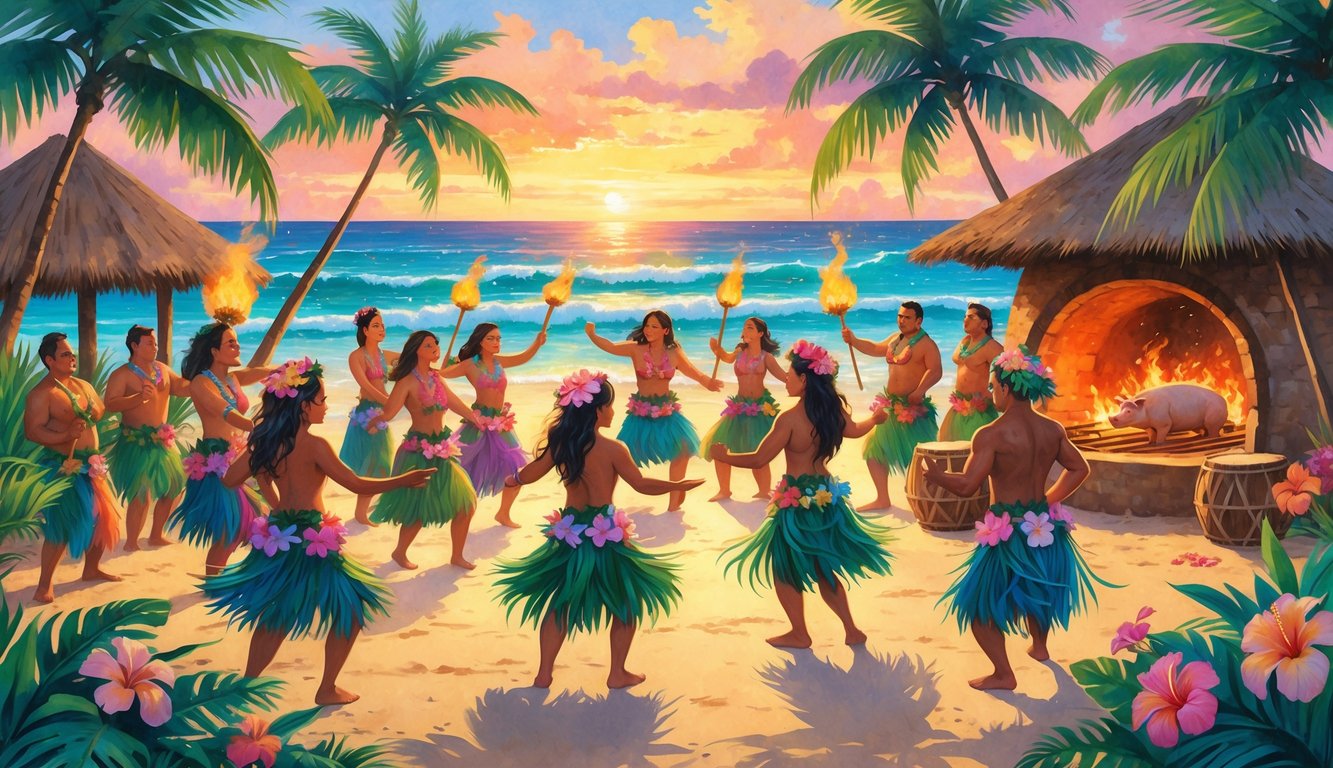
Luaus in Maui take place at oceanfront stages in Kaanapali and in intimate settings in Kihei. Each luau brings its own style and traditions.
Some focus on authentic cultural storytelling. Others add modern touches like fire knife dancing.
Choosing the right luau can turn your night into one of the best parts of your trip.
This guide highlights top-rated luaus, the traditions behind them, and the dishes that make the experience unique. You’ll also find tips to help you plan ahead for a relaxed and enjoyable evening.
Top-Rated Luaus in Maui
Maui hosts authentic Hawaiian feasts with live music, hula, and traditional dishes like kalua pig and poi. Many shows happen at beachfront resorts, offering sunset views and performances rooted in Polynesian traditions.
Old Lahaina Luau
The Old Lahaina Luau stands out for its dedication to traditional Hawaiian storytelling and dance. You’ll find it on the waterfront in Lahaina, with open-air seating and ocean views.
Staff greet guests with a fresh flower lei and a drink. The evening features an imu ceremony, where they unearth the roasted pig from an underground oven.
They serve food buffet-style, offering poke, lomi salmon, poi, and tropical desserts. The show focuses on Hawaiian hula, skipping dances from other Polynesian islands.
Travelers seeking an authentic Lahaina luau often choose this experience.
More details are available on the Old Lahaina Luau page.
Maui Nui Luau at Black Rock
The Maui Nui Luau at Black Rock takes place at the Sheraton Maui Resort & Spa on Ka’anapali Beach. The location is known for its sunset cliff diving ceremony, which is part of the show.
Dinner comes buffet-style, with seafood, grilled meats, and local vegetables. Guests sip tropical cocktails and listen to live Hawaiian music.
The performance shares Hawaiian history, legends, and dances from other Polynesian cultures. Because it’s right on the beach, this Ka’anapali luau offers great sunset photo opportunities.
Find schedules and pricing on the Maui Nui Luau at Black Rock page.
Te Au Moana Luau
The Te Au Moana Luau takes place at the Wailea Beach Resort on Maui’s south shore. The name means “The Ocean Tide,” and the show celebrates the connection between Polynesian people and the sea.
Guests receive shell leis and can explore cultural displays like coconut husking and kapa cloth making before dinner. The buffet features traditional Hawaiian dishes and island-inspired desserts.
Performers showcase hula, fire knife dancing, and storytelling. Its Wailea location is convenient for guests staying in South Maui resorts.
See Te Au Moana Luau event details for more information.
Feast at Mokapu
The Feast at Mokapu happens at the Andaz Maui at Wailea Resort. This Wailea luau offers a farm-to-table menu, served plated at your table instead of buffet-style.
Chefs highlight locally sourced seafood, meats, and produce. Guests enjoy craft cocktails and wines paired with each course.
The show blends Hawaiian storytelling, live music, and dance. With limited seating, it provides a more intimate atmosphere than larger luaus.
Learn about menus and booking options for the Feast at Mokapu.
Authentic Hawaiian Luau Traditions
Hawaiian luaus include customs that connect guests to the islands’ history and culture. These traditions include slow-cooked feasts, warm welcomes, traditional dances, and performances passed down through generations.
Imu Ceremony and Kalua Pig
Cooks use an imu ceremony to prepare a whole pig, called pua’a kalua in Hawaiian. They dig an underground oven lined with hot stones.
They season the pig, wrap it in banana leaves, and cover it with cloth and earth. This method locks in heat and cooks the meat slowly for hours.
When they open the pit, they shred and serve the tender kalua pig. Guests often gather to watch this event, which is both a cooking process and a cultural ritual.
Many luaus, such as the Old Lahaina Luau, include this ceremony to give visitors a taste of authentic Hawaiian traditions.
Lei Greeting and Mai Tai Welcome
Hosts greet guests with a lei greeting. They offer fresh flower leis or shell leis as a sign of aloha and respect.
Receiving a lei helps visitors feel part of the celebration. The leis are chosen for their beauty and symbolism.
Many luaus also serve a Mai Tai greeting. This tropical cocktail, made with rum, orange curaçao, and lime, sets a relaxed mood.
Non-alcoholic versions are available so everyone can join the welcome toast. The combination of lei and drink creates a festive start to the evening.
Hula Dancing and Polynesian Dance Shows
Hula dancing tells stories with graceful hand, hip, and foot movements. Each gesture has meaning, often relating to nature, love, or Hawaiian history.
Live music with ukulele and drums accompanies the dancers. Costumes may include grass skirts, ti leaf skirts, or colorful dresses.
Many luaus also feature Polynesian dance shows beyond hula. These may include Tahitian drum dances, Maori poi ball performances, and other Polynesian dances with roots across the Pacific.
Some groups, such as Tihati Productions, blend several island traditions into one show. This approach gives guests a broader view of Pacific cultures.
Fire-Knife Dance and Siva Afi
Performers from Samoa present the fire-knife dance, or siva afi, at many Polynesian luaus. They spin and toss a knife with flames at both ends.
This skill takes years to master and requires strength and precision. Fast-paced drumming adds excitement to the performance.
In Samoan culture, the fire-knife dance once showed a warrior’s agility and courage. Today, performers use it to honor tradition and thrill audiences.
Some Maui luaus, like the Myths of Maui, feature this act as the grand finale.
Traditional Hawaiian Luau Food and Drinks
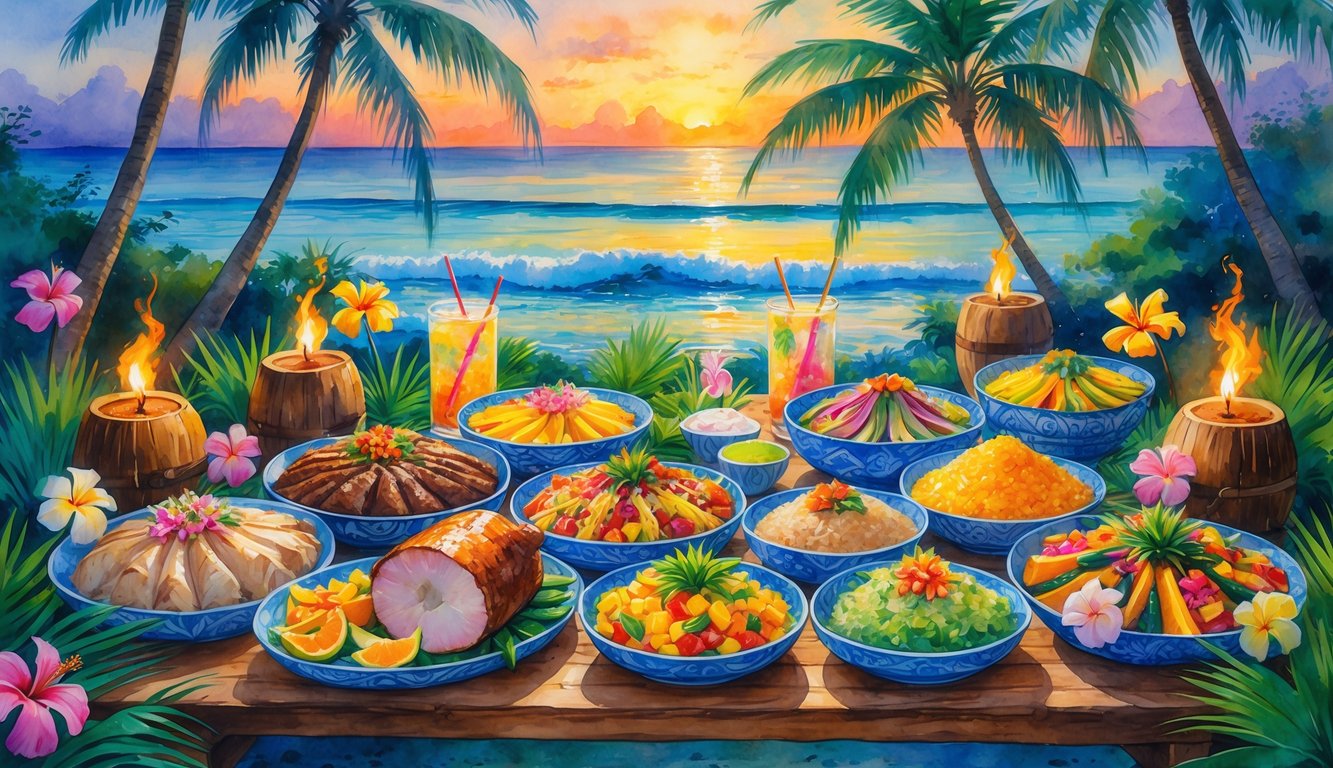
At a Maui luau, guests enjoy a variety of Hawaiian dishes made with fresh island ingredients. Meals often include slow-cooked meats, local seafood, and sides made from traditional staples like taro root.
Drinks and desserts highlight tropical fruits and flavors found across Hawaii.
Classic Dishes: Poi, Lomi Lomi Salmon, and Ahi Poke
Poi is a smooth, tangy paste made from steamed and pounded taro root. Locals serve it at Hawaiian gatherings, often alongside savory meats.
Lomi Lomi salmon is a chilled salad of salted salmon, tomatoes, and onions. Cooks massage the ingredients together, giving the dish its name, “lomi lomi,” which means “to massage” in Hawaiian.
Ahi poke features fresh, raw tuna chunks seasoned with soy sauce, sesame oil, and green onions. Some recipes add chili flakes or seaweed for extra flavor.
Guests usually receive small portions, allowing them to sample many flavors. These dishes show the influence of native Hawaiian and Polynesian culinary traditions.
Kalua Pork, Huli Huli Chicken, and Mahi Mahi
Cooks prepare kalua pork, or kalua pig, in an underground oven called an imu. They wrap the meat in banana leaves and slow-roast it for hours, then serve it shredded with a smoky, tender texture.
Huli Huli chicken is marinated in a sweet and savory sauce with soy, ginger, and pineapple juice. Chefs grill it over open flames for a caramelized glaze.
Mahi mahi is a mild, flaky white fish, often grilled or baked with tropical seasonings. Some luaus also offer beef short ribs or teriyaki chicken.
Many plates include sides like Molokai sweet potatoes or steamed rice. These proteins are often the main feature of the luau buffet.
Handcrafted Cocktails and Tropical Desserts
Luau bars mix handcrafted cocktails with rum, fresh juices, and tropical garnishes. Popular choices include Mai Tais, Blue Hawaiis, and Piña Coladas. They also offer non-alcoholic options for younger guests.
Desserts often use coconut, pineapple, or sweet potato. Coconut haupia, a firm pudding made with coconut milk, is a classic.
Other sweets may include pineapple upside-down cake or banana bread. These desserts offer a light, refreshing finish after a hearty luau meal.
Planning Your Maui Luau Experience
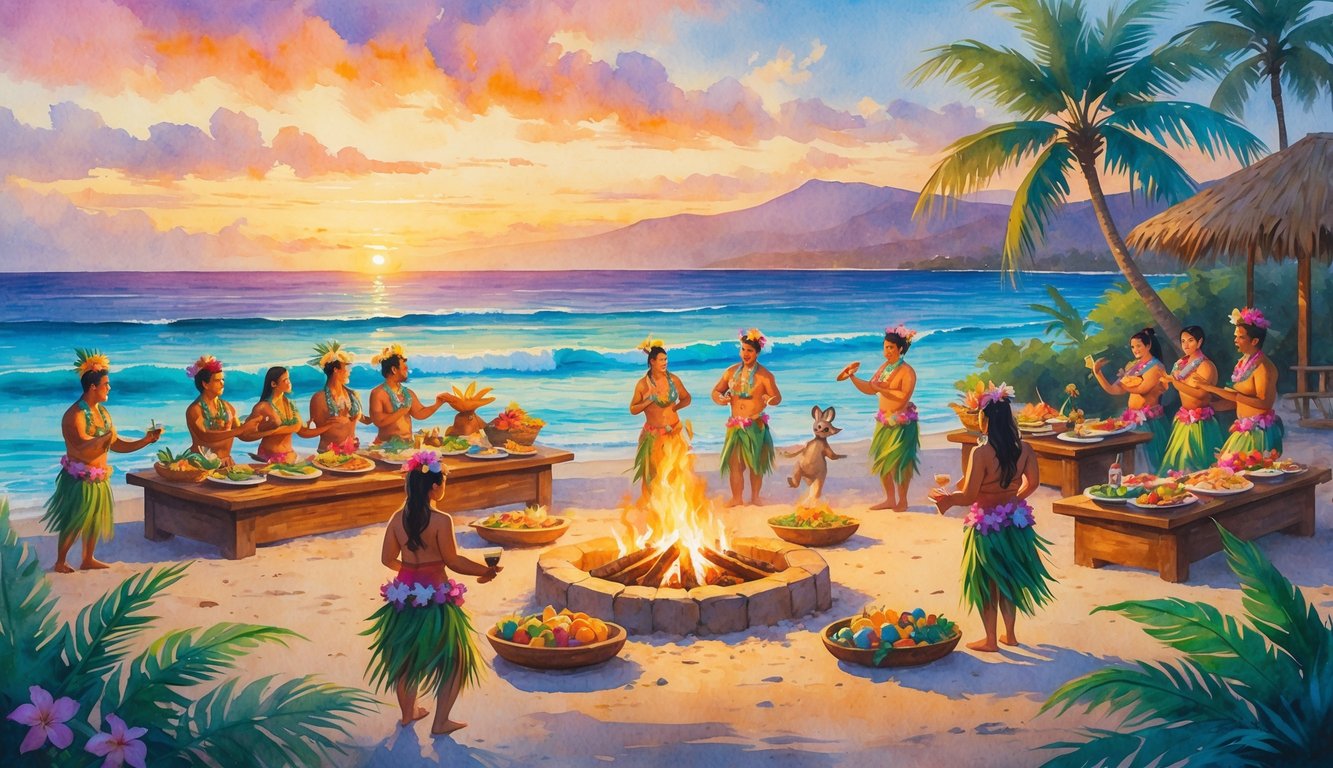
Visitors can make the most of a luau by picking a location that fits their travel style. Choose an event that suits your group, and consider adding nearby activities to your schedule.
The right choices help make the luau a smooth and memorable part of your Maui trip.
Choosing the Perfect Location
The location of a luau shapes the scenery, atmosphere, and convenience. Many guests choose Kāʻanapali Beach for its sunset views and its closeness to major Maui resorts.
Some people pick Lahaina because of its historic charm and walkable streets. Several luaus take place on resort grounds, so guests staying onsite have easy access.
For example, the Old Lāhainā Lūʻau offers a beachfront setting and focuses on Hawaiian culture. Those who want a quieter experience often look for luaus in Wailea or Kihei.
The beaches in Wailea and Kihei are less crowded. These areas also provide quick access to snorkeling spots like Molokini Crater.
Travelers can pair a luau with snorkeling for a full day of activities. When booking, travelers should check if parking is included and if seating is assigned.
It is also important to consider how far the venue is from their lodging.
Family-Friendly and Romantic Options
Families often choose luaus with interactive elements like hula lessons, storytelling, or craft stations. These activities keep children engaged and introduce them to Hawaiian culture in a hands-on way.
Many resorts offer kid-friendly menus along with traditional dishes. This way, younger guests can enjoy the meal.
Shows with upbeat Hawaiian music and lively ukulele performances appeal to all ages. Couples may want a more intimate luau with smaller crowds and candlelit tables.
The Feast at Mokapu in Wailea blends fine dining with cultural presentations in a quiet setting. Romantic luaus often feature slower hula dances and soft lighting.
These events also offer settings where guests can watch the sun dip below the horizon.
Pre-Luau Activities and Entertainment
A luau can be the highlight of the day. The hours before it offer chances for extra experiences.
Guests who stay near Kāʻanapali Beach might spend the afternoon swimming or paddleboarding. Afterward, they head to the show.
Many people enjoy snorkeling trips to Molokini Crater in the morning. This leaves plenty of time to freshen up before an evening luau.
Some venues offer pre-luau entertainment such as cultural displays or lei-making. Staff may also give a short talk on the history of Hawaii.
These activities help guests understand the traditions they will see later. Arriving early gives time to explore the grounds or take photos.
Guests can also enjoy welcome drinks before the main festivities begin.


