
If you love taking pictures, Hawaii is one of the best places to visit. From volcanoes to waterfalls and colorful sunsets, inspiration is everywhere.

You don’t have to explore alone. Many workshops help you learn new skills and show you the most beautiful spots on the islands.
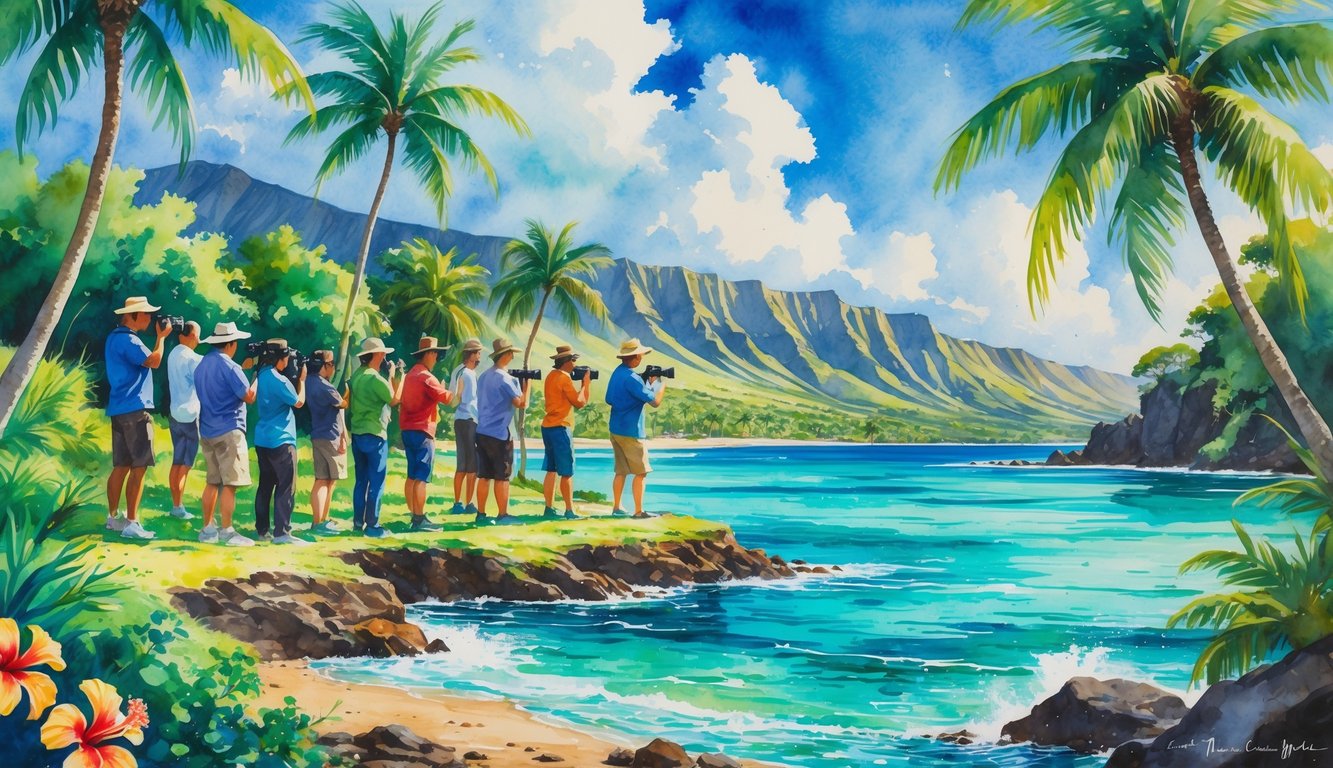
The best photography workshops in Hawaii give you hands-on lessons with expert photographers. They guide you to amazing landscapes and unique wildlife.
There are options for every experience level, whether you use a phone camera or a DSLR. Activities include early morning sunrise shoots and night photography under the stars.
If you want to find these workshops, you can look into popular options like Hawaii Photography Tours and local clubs. These experiences help you build a stronger photo portfolio while enjoying the beauty of Hawaii.
Why Choose Hawaii for Photography Workshops
Hawaii is a dream location for photographers and nature lovers. With volcanoes, rainforests, and mild weather, photo opportunities are everywhere.
Unique Landscapes and Natural Wonders
When I visit Hawaii for a photography workshop, I notice the variety of landscapes. I can photograph volcanoes, waterfalls, and rugged coastlines all in one day.
The volcanic features look especially striking during sunrise or sunset. The light highlights the textures and colors of the rocks.
Hawaii also has rare black sand beaches, green valleys, and cliffs with dramatic ocean views. Places like the Na Pali Coast and Hawaii Volcanoes National Park offer scenes I can’t find anywhere else.
Every direction provides a new and interesting background for photos. Some workshops lead groups to rainforests with hidden waterfalls or out to lava fields that look like another planet.
Many Hawaii photography workshops make these locations easy to reach. This gives me the chance to capture images that really stand out.
Year-Round Ideal Weather Conditions
Hawaii’s weather makes planning a photography trip simple. There are no freezing winters or scorching summers.
The mild, tropical climate means I can join a workshop any time of the year. This flexibility makes it easy to schedule a trip.
Even during the rainy season, showers are usually brief. They often lead to rainbows or dramatic skies.
Long days and pleasant temperatures give me plenty of time outside with my camera. Golden hour here feels magical, with warm light that brings out the landscape’s colors.
When I join photo tours on Hawaii Island, I can focus on creativity. The comfortable environment means I don’t have to worry about bad weather.
Diversity of Photography Opportunities
Hawaii offers endless subjects beyond landscapes. Wildlife like sea turtles, tropical birds, and humpback whales give me chances to practice different skills.
I also enjoy taking pictures at luaus and local street markets. These events let me capture Hawaiian culture in action.
Many photography workshops in Hawaii help me practice portrait, macro, and night photography. Workshops often include editing sessions to help turn my photos into impressive images.
The mix of city scenes, beaches, mountains, and cultural activities keeps my photo sessions interesting. There is always something new to try.
Types of Photography Workshops Available in Hawaii
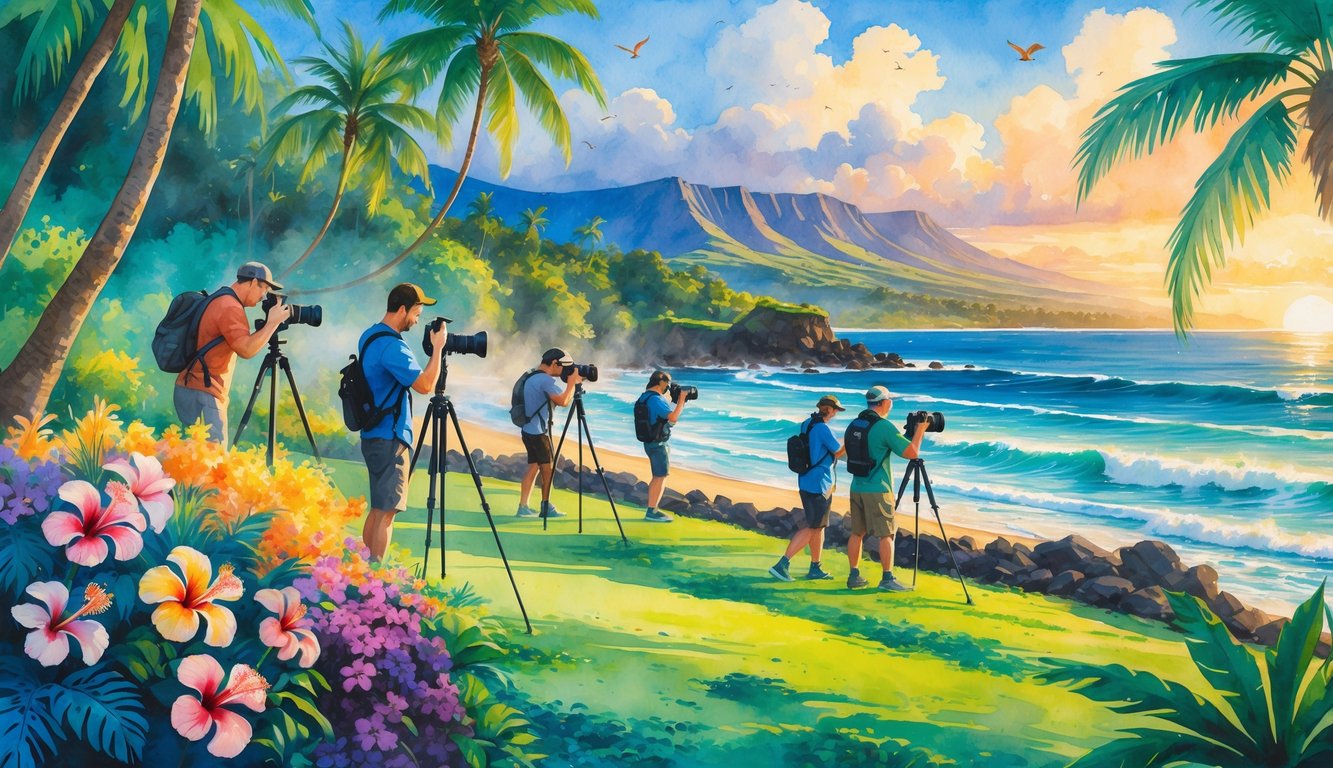
In Hawaii, I can find workshops for every skill level and style. Some focus on adventure and exploration, while others offer hands-on teaching or guided tours to beautiful spots.
Guided Photography Tours
When I join a guided photography tour, an expert photographer leads me to Hawaii’s top photo locations. These tours include sunrise, sunset, and night outings, so I can capture the islands in the best light.
The guides help me frame each shot and give advice on composition and settings. I travel with a small group, which makes it easy to ask questions and get personal tips.
Most tours include transportation and cover several locations in one day or over multiple days. I like that these tours are often organized for Oahu, Maui, Kauai, and the Big Island.
Some tours offer private or custom itineraries. You can find more information through Hawaii Photography Tours and Honolulu area workshops.
Hands-On Technical Workshops
If I want to improve my technical skills, hands-on workshops in Hawaii are a great choice. These workshops focus on camera settings, lighting, and editing.
The groups are usually small, so I get direct help from the instructor. I practice with my own equipment and receive instant feedback.
Some sessions include post-processing techniques like Lightroom or Photoshop. I appreciate workshops run by professionals who know local shooting conditions.
Gary Hart Photography, for example, provides small group workshops with private lodging. This allows for more personal attention during lessons.
Adventure and Hiking Photography Retreats
Adventure and hiking photography retreats let me explore Hawaii’s natural beauty while learning photography. These retreats often include guided hikes to volcanoes, black-sand beaches, rainforests, and waterfalls.
The format is action-packed and always keeps photography at the center. On these trips, I need to be ready for physical activity, but the effort pays off with amazing images.
The guides are skilled at both outdoor adventure and photography instruction. I also learn how to protect my gear and capture moving subjects or dramatic landscapes.
For photographers who love exploring Hawaii’s wildest corners, specialized photo adventure workshops offer a memorable format.
Top Locations for Photography Workshops in Hawaii
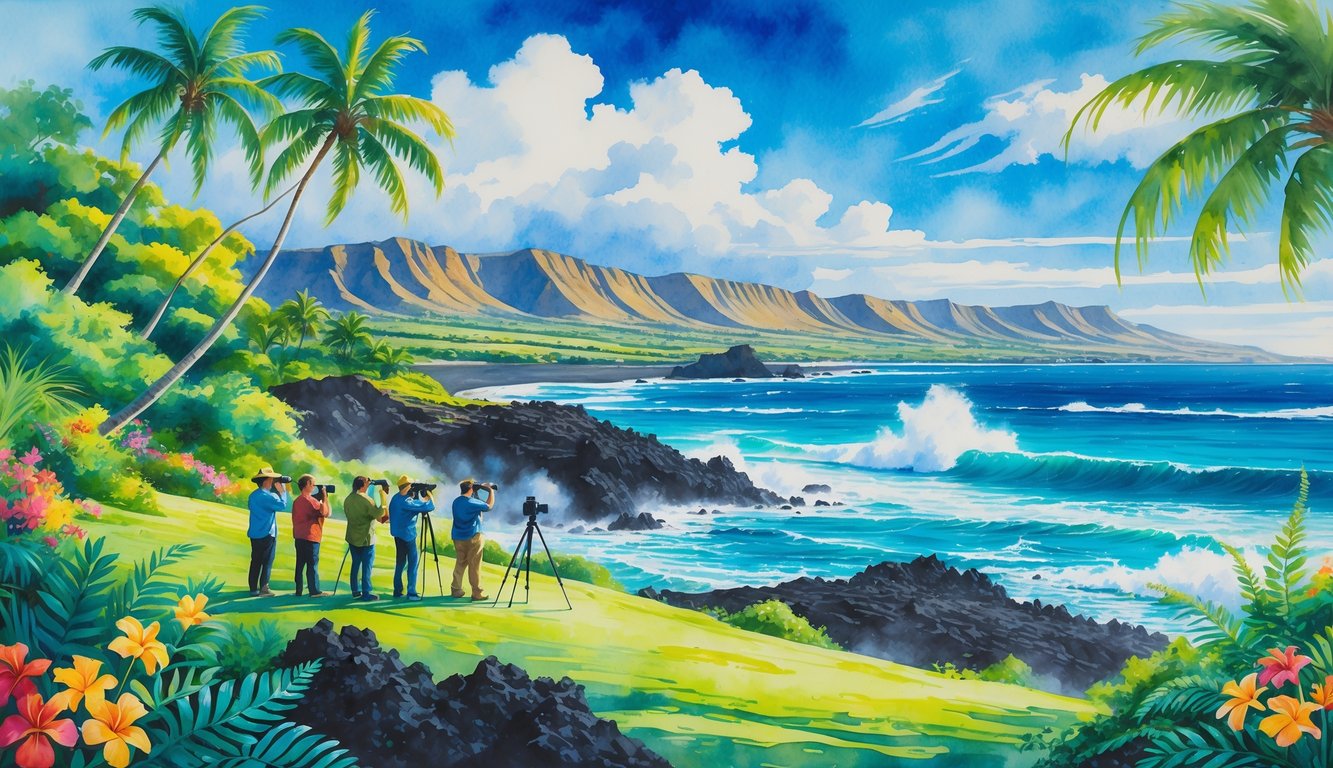
I love finding great spots for taking photos in Hawaii. Some places offer unique scenes like steaming volcanoes, lush bamboo, and dramatic beaches.
Hawaii Volcanoes National Park
Hawaii Volcanoes National Park is a must for landscape photographers. The park is home to Kilauea and Mauna Loa, two of the world’s most active volcanoes.
I enjoy capturing lava flows, volcanic craters, and steam vents, especially at sunrise or sunset. When I visit, I bring extra batteries since shooting in the wild uses power quickly.
The park’s trails lead to viewpoints where I can set up my tripod safely. Workshops help me handle different lighting and shoot rugged terrain.
I also get tips on photographing glowing lava without overexposing the image. Some workshops, like those by Backcountry Journeys, focus on capturing the contrasts of lava against green rainforests.
There’s even a chance to try night photography under clear Hawaiian skies.
Black Sand Beaches
Black sand beaches make Hawaii stand out from other tropical places. These beaches, like Punaluʻu, form when volcanic lava breaks down into fine grains.
The dark sand makes colors pop in my photos, especially against blue water and green palm trees. When I take photos here, I look for patterns in the sand and reflections in the waves.
Workshops teach me to adjust camera settings for bright sunlight and deep blacks. I also learn how to frame shots to include sea turtles that sometimes rest on the sand.
Many photography tours take me to black sand beaches at the perfect time of day, usually early morning or late afternoon. The unique textures and bold colors make these beaches a favorite spot for creative photos.
Bamboo Forest
The bamboo forests of Hawaii are peaceful and beautiful. Walking through them, I see how sunlight filters through tall green stalks, creating interesting patterns of light and shadow.
I like using wide-angle lenses to show the height and density of the bamboo. During workshops, I learn to focus on details like the shapes and lines made by the stalks.
Adjusting settings for dim light is important, since the forest can be darker than expected. Sometimes I find small waterfalls or streams that add another layer to my photos.
Guides show me the best trails where the bamboo is thickest. They also teach me how to capture movement if there’s a breeze, creating a dreamy effect with long exposures.
Tips on protecting gear from humidity are always helpful in this environment.
Waterfalls
Hawaii has many breathtaking waterfalls surrounded by lush plants. Waterfalls like Akaka Falls and Rainbow Falls are easy to reach and perfect for learning new photography techniques.
Capturing the motion of water with long exposures adds a silky effect to pictures. Workshops teach me about using tripods and neutral density filters to control light and slow down the shutter speed.
I also learn to watch the weather and time my visits, since rain or sun changes how the waterfall looks. Some tours stop at multiple falls in a single day, letting me practice different angles and settings.
Getting close to the base of a waterfall helps me focus on details like water droplets and rainbows, making each shot unique.
Specialized Techniques Taught in Hawaiian Workshops
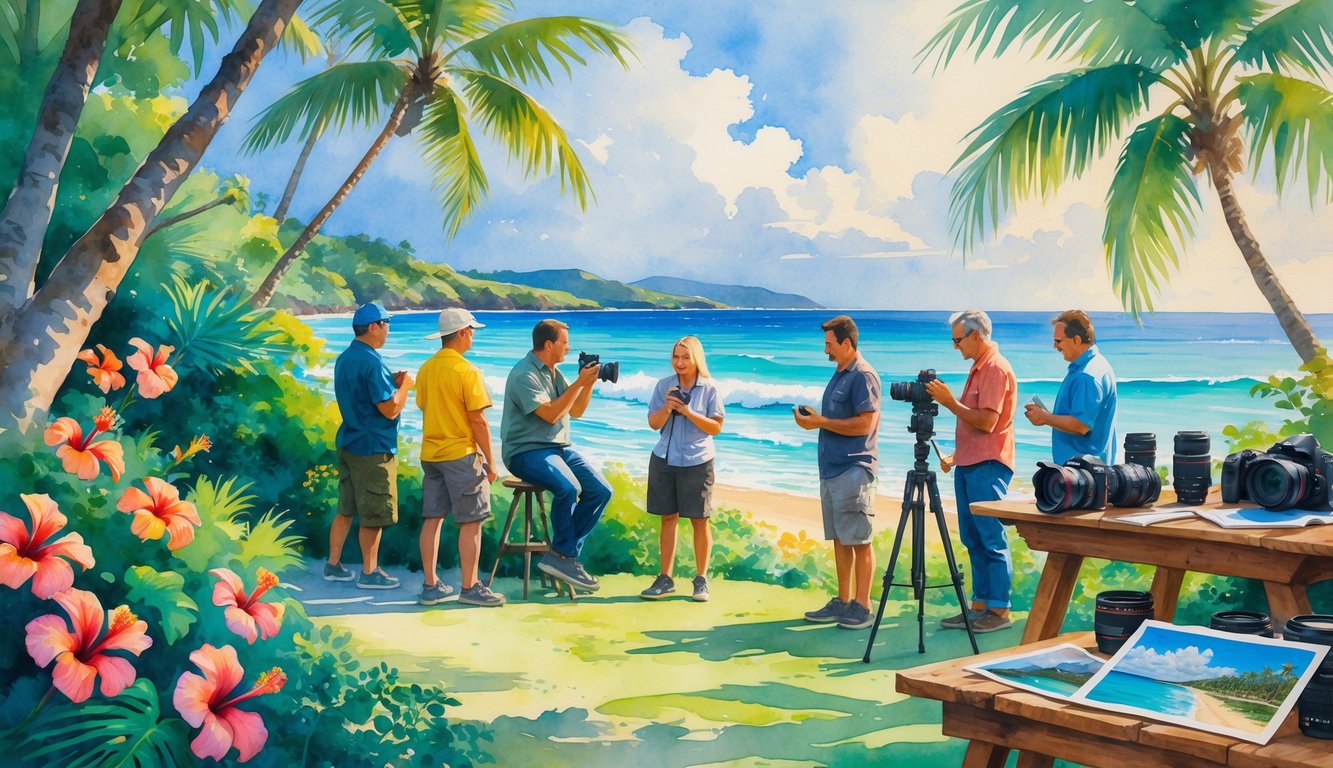
Hawaiian photography workshops often offer hands-on lessons in camera settings and methods unique to Hawaii’s scenery. I get to see how professionals capture movement, color, and detail in challenging light.
Long Exposures
When I practice long exposures in Hawaii, I learn to set my camera for several seconds or even minutes. This helps me create smooth water and dramatic clouds, giving my photos a magical look.
I use a tripod to keep my camera steady and neutral density filters to block extra light. Workshops guide me in adjusting ISO, aperture, and shutter speed for the best results.
I often work at sunrise or sunset, when light changes quickly. Instructors show me step by step—from choosing the right gear to using remote shutters or timers.
Sometimes, we try city scenes at night and learn to handle bright lights and dark backgrounds. These skills help my photos look more professional and polished.
Landscape and Nature Photography
During these sessions, I focus on Hawaii’s mountains, volcanoes, and lush forests. Instructors show me how to find a strong composition by using elements like foreground flowers, rock formations, or tree lines.
I learn to frame shots for depth and balance. These techniques help create photos that guide the viewer’s eye through the scene.
Lighting plays a big role. I shoot during the “golden hour,” when sunlight is warm and soft.
I practice using different lenses. Wide-angle lenses capture sweeping views, while telephoto lenses focus on details.
Workshops teach me techniques like bracketed exposures to handle contrast between bright skies and dark land. I also learn how to spot the best weather, clouds, or natural light for each location.
Many classes include field trips to places like Haleakalā, rainforests, or scenic coastlines. These spots let me capture Hawaii’s vibrant colors and dramatic landscapes.
Waterfall Photography
Shooting waterfalls in Hawaii is both a challenge and a highlight. Instructors give me tips on safety and show me how to protect my gear from spray and moisture.
They teach me how to use long exposures to blur water, making the falls look soft and silky. We experiment with shutter speeds, usually between 1/4 second and several seconds, depending on the falls.
I learn to use a polarizing filter to cut glare and deepen green and blue tones. Tripods help me keep shots sharp when using slow shutter speeds.
I practice framing by shooting wide to include forest and rocks, or zooming in for close-up shots of water over stones. Timing matters, so I watch for changes in sunlight or shadows to add contrast and interest.
How to Select the Best Photography Workshop in Hawaii
Finding the right photography workshop in Hawaii means matching my needs with what each format offers. My skill level, learning style, and the instructor’s fit all play a big role.
Identifying Your Skill Level and Goals
When I choose a workshop, I start by figuring out my current skill level. I ask myself if I’m just learning camera settings or if I want to refine composition and editing.
Some workshops are for beginners, while others target more advanced photographers. I think about what I want to achieve, like learning landscape techniques, improving wildlife photography, or mastering post-processing.
Knowing my goals helps me pick the right workshop. I check for clear prerequisites and see if I need certain gear or knowledge before joining.
Comparing Workshop Formats and Schedules
Workshops in Hawaii come in different formats. Some are one-day lessons, while others last several days and focus on different islands like Maui, Kauai, or the Big Island.
I look for options that fit my travel dates and interests. I prefer small group workshops for more personalized feedback.
Some people enjoy larger groups for the social experience. A good format mixes classroom instruction and outdoor shooting.
Some workshops include sunrise or sunset sessions to catch the island’s best light. I always check what’s included in the schedule, like lodging, meals, and local travel.
A checklist helps me compare workshops side by side.
What to Look for in an Instructor
The instructor is important for a helpful workshop experience. I look for professional photographers with experience in the locations I want to shoot.
I read reviews from past students to see if the instructor explains ideas well and gives useful feedback. I also check their portfolio for styles I like.
Some workshops offer one-on-one coaching. Personal time with the instructor adds a lot of value, especially if I want to focus on my own style.
I ask if the instructor leads every session or if assistants are involved.
What to Expect During Your Hawaii Photography Workshop
When I join a photography workshop in Hawaii, I look forward to full days of shooting, small group support, and learning from experienced photographers. Workshops balance planned activities, personal growth, and time to experience the islands.
Typical Daily Itinerary
Most days start early, often before sunrise, to catch soft morning light by the ocean or in the mountains. My group meets at a set location where the instructor shares the plan and any weather updates.
After the morning session, we break for breakfast or review our shots on location. During the day, we visit scenic spots like waterfalls, rainforests, or volcanic landscapes.
Field instruction gives me a chance to ask questions and get hands-on help. Afternoon sessions focus on editing, composition, or one-on-one coaching.
At sunset, we set up in a new location to capture golden hour light. Each day includes image reviews or group critique, which helps me improve as a photographer.
Essential Gear to Bring
Packing the right gear is important. I bring my main camera body, a sturdy tripod, wide-angle and zoom lenses, extra batteries, memory cards, and a cleaning kit.
Polarizing filters help cut glare and deepen sky colors. I use a lightweight backpack for water, snacks, and weather protection.
Comfortable shoes and quick-dry clothes are a must for hikes or getting close to waterfalls. A laptop or tablet is useful for quick edits during breaks or nightly reviews.
If drones are allowed, I check the workshop’s policy first. Being prepared helps me focus on shooting instead of worrying about missing gear.
Small Group Experiences
Most Hawaii photography workshops keep groups small, usually about 6-10 people. This makes it easy to get direct help from the instructor and share ideas in a relaxed setting.
Sometimes there’s a second guide for extra support. Smaller groups move faster and can reach more remote spots, avoiding crowds.
There’s a team atmosphere, and I never feel rushed. Image critiques and feedback sessions are personal and detailed, and I learn from my fellow participants.
Tips for Maximizing Your Experience
A great photography workshop gets even better when I prepare for local conditions and use the expertise of guides. Careful planning makes shooting easier and adventures safer.
Preparing for Weather and Terrain
Hawaii’s weather changes quickly. I pack lightweight rain gear, moisture-wicking clothes, and sturdy waterproof shoes for hiking.
If my gear needs extra protection, I bring lens wipes and plastic covers. On a typical tour, we might go from sandy beaches to rocky trails.
I keep a small backpack ready with sunscreen, bug spray, water, and quick snacks. I double-check my camera batteries and memory cards before leaving.
For steep hikes or muddy paths, I use shoes with good traction. I pay attention to sunrise and sunset times because golden hour light makes a big difference.
Extra layers help during cooler mountain shoots, and I always pack a hat and sunglasses for midday sun. A travel tripod is also useful for sharp photos when the wind picks up.
Making the Most of Guided Tours
During guided photography tours, I ask plenty of questions. I learn by getting feedback from professionals and watching how they frame shots.
I share my work for tips on improving composition, focus, and exposure. Workshops often bring small groups to less crowded spots, so I practice both wide landscape shots and close-up details.
Guides know trails and timing that help me avoid crowds and get better views. I use a notepad or my phone to jot down tips from the instructor.
If I’m new to my camera, I review settings in advance or sign up for beginner-focused classes. When I focus on learning instead of just snapping photos, my skills improve faster and I enjoy my time more.
Conclusion
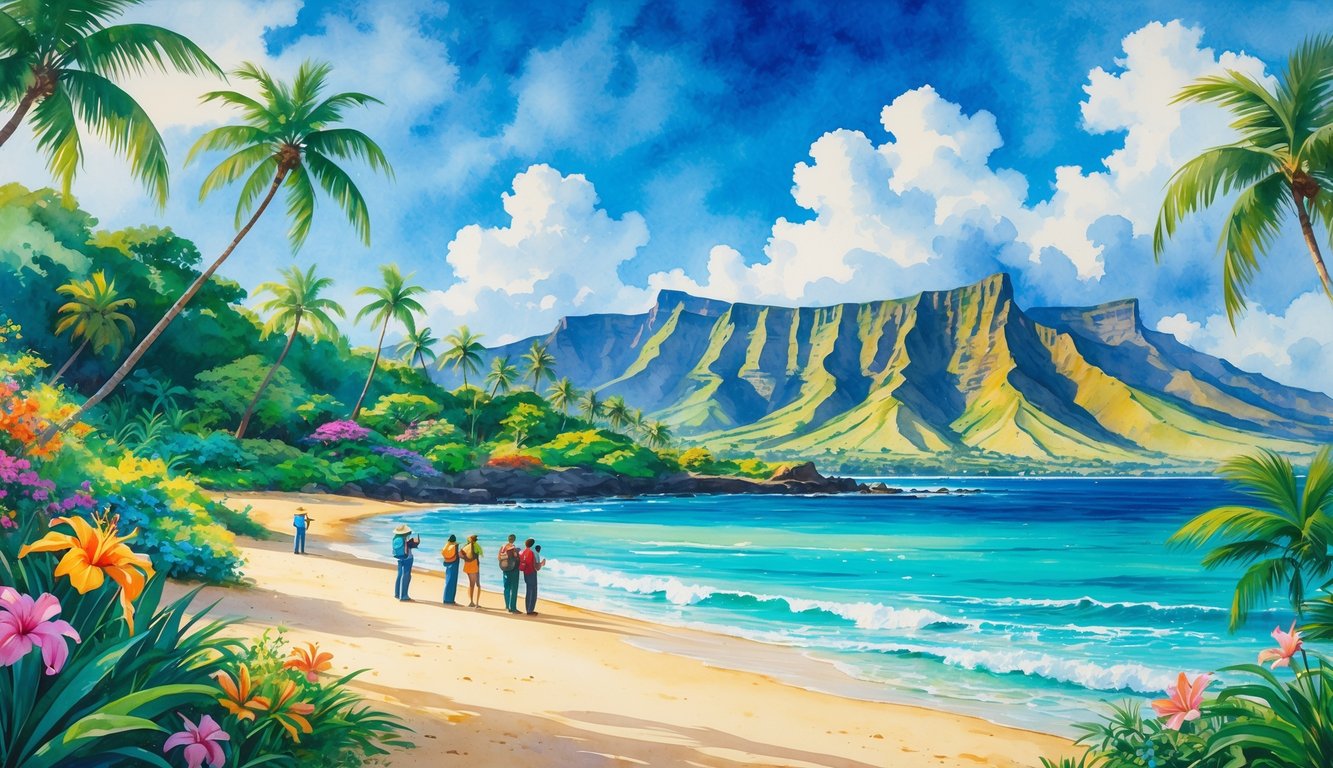
I enjoy taking photography workshops in Hawaii. These workshops make learning fun and memorable.
The islands have colorful sunsets, lush forests, and beautiful beaches. I often see small group sizes, so teachers can give more personal attention.
Some workshops take me to places like Kauai or the Hawaii Tropical Botanical Garden. I get to practice hands-on photography in these locations.
Things I value most in a workshop:
- Expert instructors
- Beautiful outdoor settings
- Simple, clear lessons
- Time for editing tips
- Chances to ask questions
I noticed that winter brings fewer crowds and lower flight prices. Some workshops include private lodging, which makes planning easier.
Trying a Kauai photography workshop or a small group lesson in Honolulu can open new creative doors.
Exploring Hawaii with my camera helps me grow as a photographer. I see the islands in new ways each time I visit.


