Choosing the right school for my child is one of the biggest decisions I face as a parent living in Hawaii. With so many options, it can feel overwhelming to find a school that offers strong academics, caring teachers, and a safe environment.
The best schools in Hawaii for kids have high test scores, great reviews, and a real focus on helping every student succeed.
I have looked at top-rated schools across the islands, including public, charter, and private campuses. Schools like Momilani Elementary and Hokulani Elementary show real commitment to student growth and top academic results.
Sites such as Niche and Public School Review make it easy for families to compare ratings and see what other parents and students think about schools in the area. I hope what I’ve learned will help other families feel more confident in finding the best fit for their kids.
Understanding Hawaii’s K-12 Education System
Hawaii’s approach to K-12 education is unique compared to other states. The entire state has only one public school district, and both public and private schools shape children’s learning.
Hawaii Department of Education Overview
The Hawaii Department of Education (HIDOE) manages all public schools in the state. Unlike most states, Hawaii operates with a single, statewide district.
This system runs about 297 public schools and serves over 169,000 students. HIDOE sets rules, funding, and curriculum for every public school, so students get a consistent experience.
HIDOE also operates charter schools, which have more independence but still follow state standards. The department supports student needs, such as services for English language learners and special education.
HIDOE works to improve learning opportunities in both urban and rural areas, making sure students across the islands get equal support. Students and families can learn more about rankings and performance at Niche’s Hawaii school ratings.
Types of Schools: Public vs. Private
Kids in Hawaii can attend public, private, or charter schools. Public schools are free and open to all children who live in the state.
They follow the HIDOE’s curriculum and rules. Private schools charge tuition and can create their own curriculum and teaching style.
Well-known private schools in Hawaii include Punahou School and Iolani School. Enrollment is selective, and many private schools have religious or special academic focuses.
Charter schools are public schools with more freedom to design unique programs or teaching approaches. Many families consider location, school performance, and special programs when choosing between public and private options.
You can read about the differences in more detail at Real Hawaii’s guide to K-12 schools.
School District Structure
Hawaii’s single-district school structure is unusual. The Hawaii Department of Education oversees every public school in the state as one unified system.
The state divides schools into complexes and complex areas based on geography. Each complex has a high school and the elementary and middle schools that feed into it.
This structure allows central management of resources, staffing, and curriculum. Families are assigned schools based on their address within the statewide system.
This centralized approach helps all areas receive fair resources and consistent standards, no matter which island they’re on. More details about Hawaii’s public school structure can be found here.
Top Public Elementary Schools in Hawaii
Hawaii has several elementary schools known for strong academics, caring teachers, and a supportive community. Each of these schools provides a safe space for kids to learn and grow.
Waikiki Elementary School
Waikiki Elementary School stands out for its focus on creative learning and social responsibility. The school uses the Habits of Mind philosophy, which teaches students important thinking skills and good problem-solving habits.
The teachers at Waikiki encourage every child to participate in class. Parents often mention the friendly campus and small class sizes that help kids feel at home.
In addition to good test scores, the school offers art, music, and enrichment activities. Waikiki Elementary sits in a convenient neighborhood near the beach.
Families who value both academics and extra programs often choose this school. For more details about its reputation, check out the best public elementary schools in Hawaii.
Noelani Elementary School
Noelani Elementary School is known for high academic achievement and a welcoming campus culture. Teachers here focus on reading, math, and science, while also helping students learn about teamwork and respect.
A strong parent group helps with school events, field trips, and classroom activities. The school holds science fairs, book drives, and after-school programs that keep kids interested in learning.
Noelani’s campus is clean and safe, with well-kept playgrounds. The staff values open communication with families.
Many parents choose Noelani for its consistent results and caring staff. Teachers work hard to help each child succeed.
Momilani Elementary School
Momilani Elementary School is a top choice in Pearl City for its safe setting and high test scores. Teachers create a nurturing atmosphere and encourage students to do their best in class.
The school offers programs like robotics, art, and physical education. Students participate in science projects, music classes, and reading competitions.
Classrooms use computers and digital tools to support lessons. Parents say the school’s small size helps foster close friendships and family involvement.
Kids feel connected, and teachers know each student by name. Momilani’s steady performance puts it among the top public schools in Hawaii.
Kaelepulu Elementary School
Kaelepulu Elementary School is a smaller school in Kailua, where students receive lots of support from both teachers and staff. The tight-knit community helps children feel comfortable and eager to learn.
The school is known for hands-on projects, including gardening, cultural studies, and special science lessons. The campus features open spaces and shaded areas for kids to play and relax.
The teaching team at Kaelepulu values communication with families. Parents often praise the friendly atmosphere and strong focus on each child’s strengths.
The school’s programs make it a solid option for families looking for a well-rounded elementary education in Hawaii.
Other Notable Public Elementary Schools
Some elementary schools in Hawaii stand out for their community support, unique programs, and positive learning environments. Each has a strong reputation and different strengths that help students thrive.
Palisades Elementary School
Palisades Elementary School focuses on both academics and character building. The staff gives each child personal attention, and lessons match students’ strengths and interests.
The campus feels safe, and teachers encourage students to ask questions and try their best. Palisades offers after-school activities and clubs in art, sports, and science.
Parent involvement is high, and there are regular family events. Many families praise the diversity and the sense of community here.
Test scores are solid, and children often feel prepared for the next grade.
Quick Facts Table:
| Feature | Details |
|---|---|
| Student Enrollment | About 500 |
| Notable Programs | STEM clubs, Music, Sports |
| Parent Involvement | Strong |
Pauoa Elementary School
Pauoa Elementary School stands out for its small class sizes and caring teachers. Parents like how each child is known by name, making it a welcoming place to learn.
The school focuses on reading, math, and social skills, helping students build a strong foundation early on. Arts and technology are also a priority at Pauoa.
The school has a library with updated resources and computers. Students enjoy music classes and take part in community service projects.
Staff keep parents updated with regular newsletters and meetings.
Key Highlights:
- Updated library and tech resources
- Music and arts included in curriculum
- Close-knit, supportive community
Laie Elementary School
Laie Elementary School sits north of Oahu and emphasizes Hawaiian culture and traditions. Teachers respect local heritage and include lessons in hula, Hawaiian language, and community stories.
The school partners with nearby organizations for field trips and cultural days. Students take part in science projects, sports, and after-school tutoring.
Families often mention the welcoming staff and the school’s focus on kindness and respect.
Student Life at Laie:
- Cultural events like May Day and Hula
- Hands-on science and outdoor learning
- Strong support for students of all backgrounds
Best Public High Schools in Hawaii
Some public high schools in Hawaii stand out for their academics, activities, and student opportunities. These top schools have strong graduation rates and a range of extracurriculars.
Mililani High School
Mililani High School is in central Oahu and often ranks in the top 1% to top 5% of public high schools in Hawaii. The campus serves grades 9 through 12 and usually has more than 2,000 students each year.
Mililani High focuses on academics and involvement. Many students join clubs, sports, and music programs.
The school offers strong AP courses and college-prep options. Athletics are a big part of school life, and Mililani’s teams often compete at state championships.
Families looking for a public school with both academic strength and many activities may want to learn more about Mililani High School.
President William McKinley High School
President William McKinley High School has a long history in Honolulu and a diverse student body. The school often appears in the top 10% in state rankings.
Students can take honors and AP courses and join various clubs, sports, and arts activities. McKinley is known for its strong leadership and mentorship programs.
Teachers and staff help students plan for college or careers. Many students participate in science fairs, academic contests, and community service.
Its high reputation comes from a balance of academics, athletics, and community programs.
Characteristics of Top Public High Schools
Top public high schools in Hawaii share certain key features. They usually offer a wide range of AP classes, college counseling, and leadership programs.
These schools have high graduation rates. Many students go on to college.
Strong extracurricular options are common, including sports, robotics, and art clubs. Family engagement and a respectful school culture also play a big role.
Here’s a quick list of typical benefits at the best public high schools:
- Honors and advanced classes
- Student government and leadership activities
- Competitive athletics
- Academic teams and STEM clubs
- Guidance for college and career planning
Schools in the top 1% or top 5% often match these features. Families across Hawaii often choose these schools.
Outstanding Private Schools in Hawaii
Hawaii offers a range of private schools that focus on academics, character, and personal growth. Some well-known schools have strong traditions, large student bodies, and modern programs that help kids succeed in and outside the classroom.
Punahou School
Punahou School in Honolulu is one of the largest private schools on the islands. It serves students from kindergarten through twelfth grade, giving families one place for a full education.
The campus covers over 70 acres, providing lots of space for learning and activities. The school stands out for its rigorous academics and diverse programs.
Students can take honors and Advanced Placement (AP) classes in many subjects. They also get a chance to explore arts, athletics, and hands-on science projects.
Punahou has a strong sense of community. Students often join volunteering and school events.
Many graduates attend well-known colleges across the country. It’s listed among the top private schools in Hawaii.
Iolani School
Iolani School is also in Honolulu and is famous for high academic standards. Iolani accepts students from kindergarten through twelfth grade.
The campus is modern and welcoming, with plenty of resources to support students. The academic program is challenging but flexible, with a mix of core subjects and electives.
Iolani offers AP classes and encourages students to try research, robotics, athletics, and the arts. They focus on both character and learning.
The teachers are supportive, and many students join clubs, community service, and sports. College prep is strong, helping students plan their futures.
More details are available on best private K-12 schools in Hawaii.
Private School Academic Programs
Academic programs in Hawaii’s private schools help kids develop in many ways. Students can pick from a range of subjects.
Most schools offer AP, honors, and college-prep courses. Kids can learn at a pace that fits them.
Some schools also have special programs for music, art, language, and technology. Teachers encourage students to be curious and active in their learning.
Many private schools offer smaller class sizes. Kids get more help and support.
There are also after-school clubs, sports teams, and community service projects. These programs help students grow both personally and academically.
Middle School Options for Kids
Choosing a middle school shapes my learning and social growth. I want a school that helps me adjust, offers strong subjects, and supports my interests.
Transition from Elementary to Middle School
Moving from elementary to middle school can feel like a big step. I get to meet new classmates and switch classrooms between subjects.
I work with different teachers. Many Hawaii middle schools help with this transition through special orientation days and programs for new students.
Some schools, such as Kailua Intermediate School and Hawai’i Technology Academy, create supportive environments. They assign guidance counselors to help me if I struggle or need advice.
Middle schools also explain new rules and expectations. This helps me understand what to do when I start.
The school helps me build confidence and independence. With lockers, schedules, and club sign-ups, I learn to manage my own time and choices.
Buddy systems and welcome events help me feel included in the school community.
Academic and Extracurricular Offerings
Academic programs are a big part of what makes a middle school stand out to me. Schools like Kaimuki Middle School and Alaka‘i O Kaua‘i Charter School offer classes in math, science, reading, social studies, and sometimes foreign languages.
In Hawaii, the average math proficiency is 38%. Reading proficiency is 52%.
Many middle schools provide enrichment classes such as art, music, and technology. Extracurricular activities like sports, robotics, debate, and leadership clubs give me a chance to try new things and build friendships.
Here are some examples:
- STEM clubs
- Band or orchestra
- Student government
Some schools offer after-school tutoring or special programs to help if I need extra support with homework or understanding a subject. This mix of academics and activities helps me grow both in the classroom and out.
Evaluating School Performance in Hawaii
When I look at schools in Hawaii, I pay close attention to things like how many students each teacher has and how well students are doing in subjects like math and reading. These details help me figure out which schools help kids learn and grow the most.
Student-Teacher Ratio
The number of students in each class can make a real difference in how much attention each child gets. A lower student-teacher ratio means teachers are more likely to know every student’s strengths and where they need help.
This can lead to better lesson plans and more time for questions. Some of the top schools in Hawaii often keep a student-teacher ratio close to 16:1 or even lower.
That kind of environment feels less crowded and more supportive for learning. Schools like Mililani High School earn praise for keeping class sizes small and giving students more direct support.
Parents looking for a strong school check for these numbers on rating sites such as Niche or SchoolDigger.
Student Proficiency Rates
Student proficiency rates show how many students meet or beat state standards in math and reading. These scores help me see if students are learning what they need for the next grade.
I pay close attention to how well students perform on state tests because it’s a good way to compare schools. Top-rated schools in Hawaii often have higher proficiency rates, especially in math and reading.
At some leading schools, math and reading proficiency can reach 70% or above. Reviews and reports on sites like Public School Review make it easy to see which schools help kids succeed across these subjects.
If I see high proficiency rates, I know students are learning at a strong pace and are more likely to do well in the future.
How to Find the Right School for Your Child
Choosing a school is a big decision for me as a parent. I look at neighborhoods, academic opportunities, and activities to help my child do their best.
Using School Boundary Maps
When I look for a school in Hawaii, I start with school boundary maps. These maps show which schools my address is zoned for, so I know my options.
Each school district in Hawaii has its own boundaries. These maps are usually available on district websites.
By checking my address on a boundary map, I avoid surprises during enrollment. Some highly rated schools in places like Mililani or Honolulu only accept students from specific areas.
It is important to confirm my eligibility before planning a move or switching schools. If I want a public charter school, Hawaii offers school choice options that are not always tied to my address.
Tools on government websites let me search schools by location and grade. For more details, I visit the Hawaii State Public Charter School Commission site to see a full list of choices.
Considering Academic Programs and Extracurriculars
I compare academic programs to see what best matches my child’s needs. Some schools in Hawaii focus on STEM, arts, or Hawaiian language and culture.
Unique programs can help my child learn more about what interests them. I also look for after-school and enrichment activities.
This can include clubs, sports, and music programs. Many top-rated schools like Mililani Mauka Elementary or Mililani Ike Elementary offer a mix of academics and extracurriculars.
Before making a choice, I read reviews from other parents and check scores on sites like GreatSchools. I make a list of what matters most to my family.
Visiting the school and talking to teachers helps me understand the programs and activities offered.
Diversity and Culture in Hawaii’s Schools
Hawaii’s schools stand out for their high level of cultural and ethnic diversity. Students from many backgrounds come together, making daily life at school interesting and rewarding.
Minority Enrollment Trends
Hawaii has some of the most diverse public schools in the country. The average diversity score is about 0.80, which is ranked very high compared to other states.
A diversity score this high means students from many racial and ethnic groups go to school together. Schools like Hookele Elementary and Aliamanu Middle lead the state in diversity.
At these schools, large groups of Asian, Pacific Islander, Hispanic, Black, and White students all learn side by side. Some schools even track gender diversity and economic diversity as part of their inclusion efforts.
For a more detailed look at which schools top the list for diverse student bodies, you can check the most diverse Hawaii public schools.
Native Hawaiian Representation
Native Hawaiian students make up a key part of the local school community. Many schools offer programs just for Native Hawaiian students, such as Hawaiian language and culture classes.
These programs honor and preserve Native Hawaiian identity while helping all students learn respect for local traditions and values. The amount of Native Hawaiian enrollment can vary by school.
Some have higher percentages, especially in areas with more local families. A few schools highlight Hawaiian studies as part of their core curriculum.
This gives me and other students a chance to connect with our roots through history, language, and community events. Such focus helps everyone understand why Native Hawaiian culture is so important in Hawaii’s schools today.
Education in Hawaii’s Urban and Rural Settings
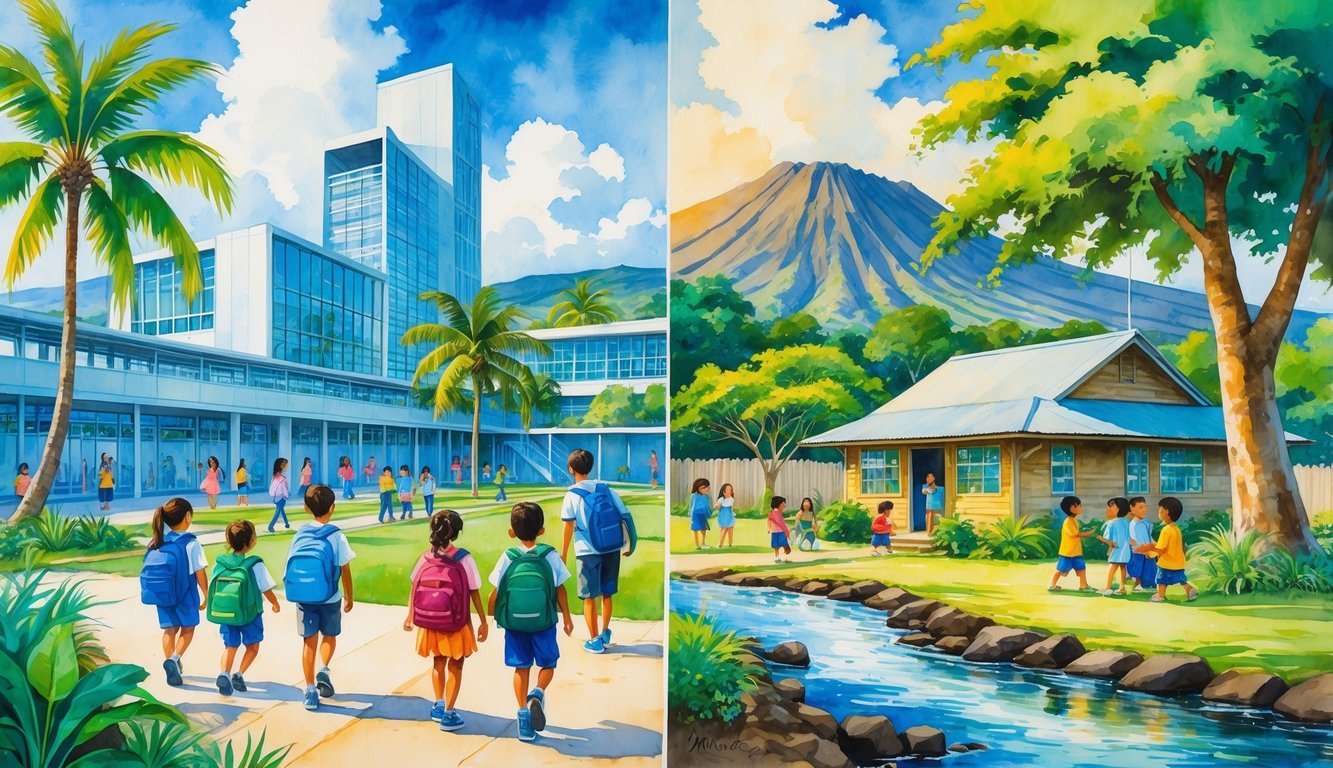
Hawaii’s schools can look very different depending on whether they are in a large city or a more rural area. Each setting has unique features that shape the school experience for kids and families.
Schools in Large City Settings
When I look at schools in big cities like Honolulu, I notice that these schools usually have more students. They also offer a wider range of programs.
Many urban schools use advanced technology and have larger libraries. They provide more extracurricular activities, such as robotics clubs and music programs.
Class sizes in these city schools are often bigger, which can make it harder for students to get one-on-one attention. However, schools hire more teachers and specialists, so students can get help with language learning and special education.
Many top-rated schools in Hawaii are in city areas. For example, Momilani Elementary School in Pearl City and Hokulani Elementary in Honolulu have high test scores and strong community involvement.
City schools are often very diverse. Students from different cultures and backgrounds learn together, which helps kids learn about new traditions and build friendships.