Kauai features some of the most diverse bird habitats in Hawaii, from lush mountain forests to quiet coastal wetlands.

Top birdwatching spots in Kauai include Kōkeʻe State Park, Kīlauea Point National Wildlife Refuge, and the Wailua River Valley.
These areas let nature lovers see both rare endemic species and migratory birds in their natural surroundings.
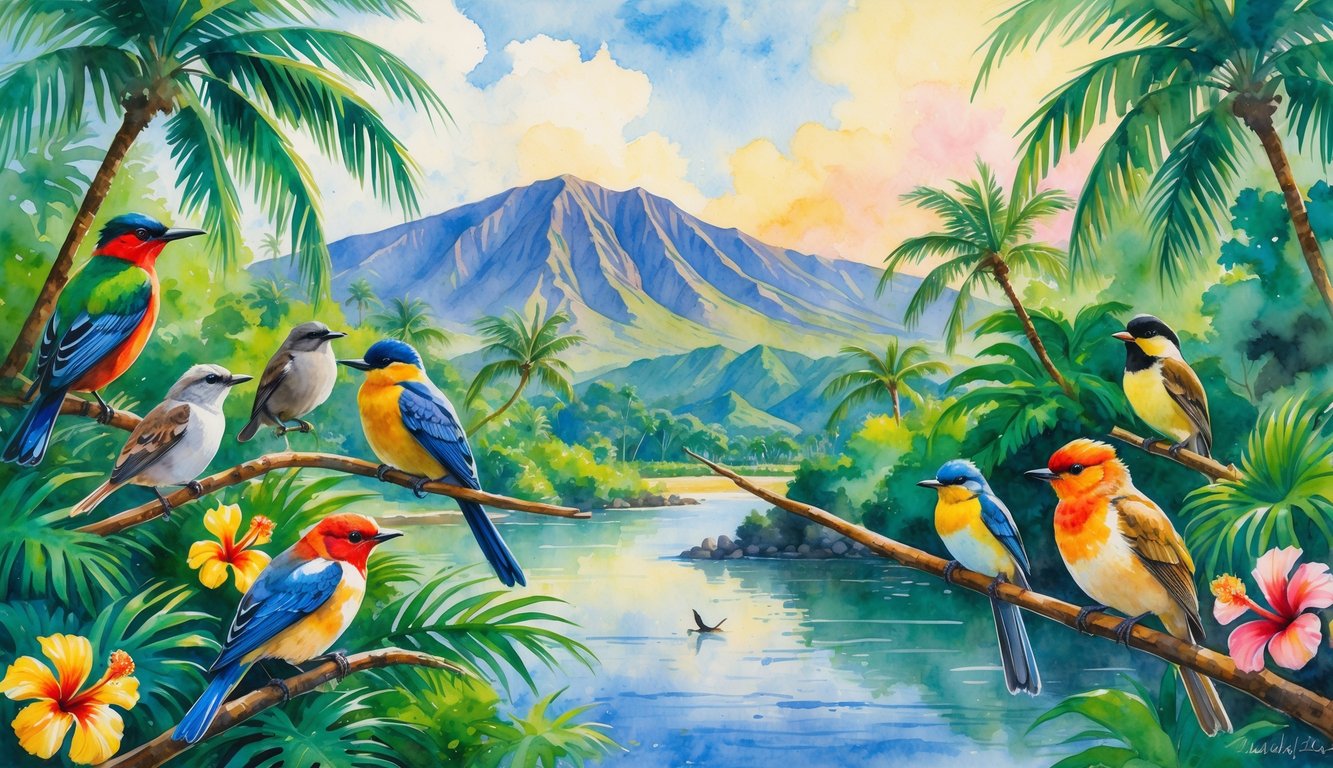
Kauai’s tropical climate, varied landscapes, and protected reserves attract species found nowhere else on Earth.
Visitors can walk scenic trails, watch seabirds soar over cliffs, and listen to the calls of forest honeycreepers.
Each location offers a unique birding experience, so travelers can plan a trip to match any interest or skill level.
From the high ridges of the Alaka‘i Swamp to the coastal viewpoints of Kīlauea National Wildlife Refuge, birdwatching here combines beautiful scenery with rewarding sightings.
Spotting a bright red ‘I‘iwi or watching a Laysan albatross glide over the ocean creates lasting memories for visitors.
Why Kauai Is a Birdwatching Paradise
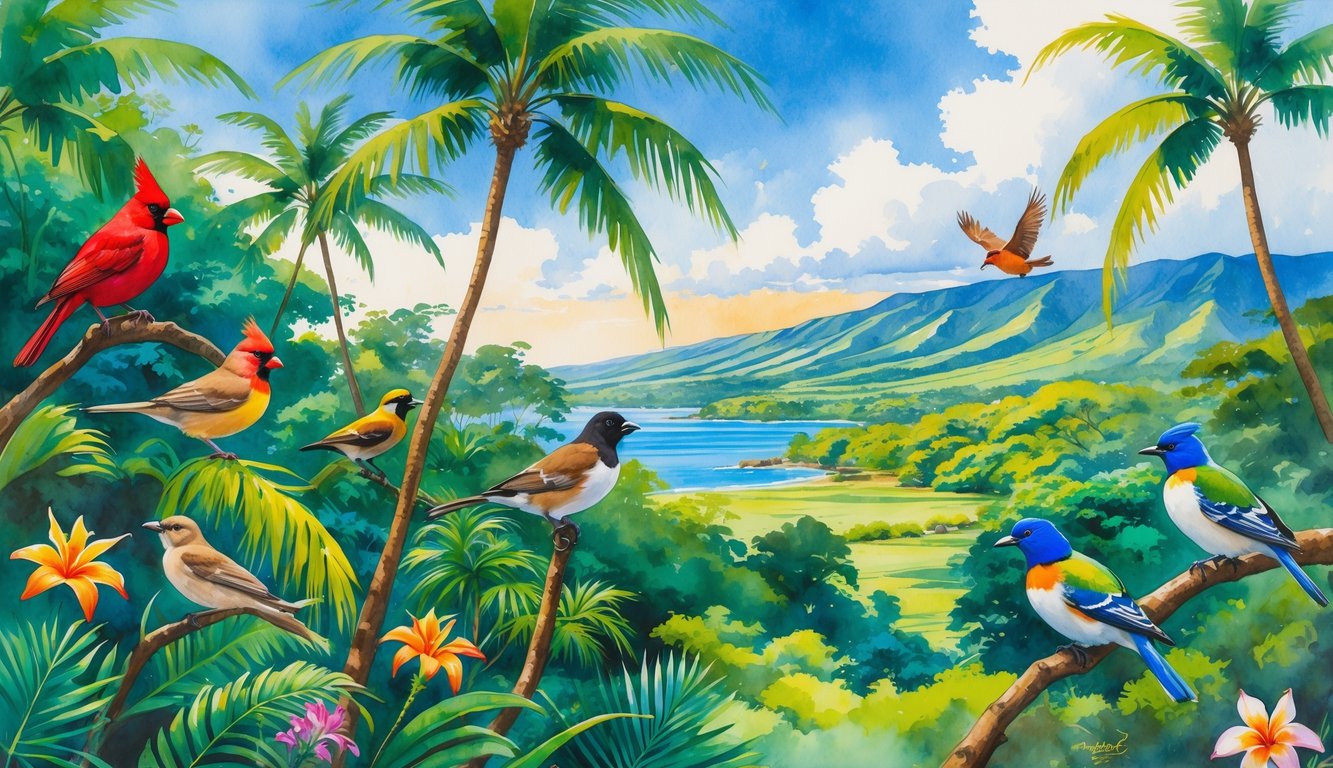
Kauai’s rare mix of habitats supports both native Hawaiian birds and visiting migratory species.
From mountain forests to coastal cliffs, birdwatchers find species unique to Hawaii and observe large seabird colonies.
Unique Ecosystems and Habitats
Kauai’s landscapes include high-elevation rainforests, wetlands, and coastal cliffs.
Each habitat attracts different bird groups.
In the native forests of Kōkeʻe State Park and the Alaka‘i Swamp, birders spot rare Hawaiian honeycreepers.
These forests offer dense cover and food sources like nectar and insects.
The island’s wetlands, such as the Hanalei National Wildlife Refuge, shelter waterbirds like the Hawaiian coot, Hawaiian duck, and Hawaiian gallinule.
These wetlands also support the black-necked stilt.
Along the coastline, sites like Kīlauea Point National Wildlife Refuge host nesting seabirds on steep cliffs.
Offshore waters serve as feeding grounds for species like the wedge-tailed shearwater and red-footed booby.
This range of habitats lets birders see forest specialists, wetland dwellers, and seabirds without traveling far.
Endemic and Native Birds of Kauai
Kauai is home to species found only in Hawaii and some found only on this island.
The nēnē (Hawaiian goose), Hawaii’s state bird, often grazes in parks and open fields.
The Kauai amakihi, anianiau, and ‘apapane are Hawaiian honeycreepers found in upland forests.
These small birds feed on nectar and insects.
Other forest birds include the elepaio, Kauai thrush, and the critically endangered akikiki.
These species depend on intact native forest for survival.
Wetland areas reveal the Hawaiian gallinule, a secretive waterbird with a red shield on its forehead.
The Hawaiian duck often appears in pairs or small groups.
Migratory and Seabird Highlights
In fall and winter, Pacific golden-plovers arrive from Alaska, along with wandering tattlers and ruddy turnstones.
These shorebirds feed along beaches, mudflats, and grassy areas.
Kauai’s cliffs and offshore waters support large seabird colonies.
The Laysan albatross nests on the island’s northern coast.
Red-tailed and white-tailed tropicbirds glide over the ocean.
Birders also spot great frigatebirds, brown boobies, and wedge-tailed shearwaters, especially at protected coastal lookouts.
Some seabirds nest in burrows or cliff ledges, so places like Kīlauea Point are ideal for viewing.
With resident and migratory species, birdwatchers find something new in every season.
Top Birdwatching Locations in Kauai
Kauai features coastal cliffs, wetlands, forests, and river valleys that support both native and migratory birds.
Visitors see rare Hawaiian species alongside seabirds and waterfowl in easily accessible habitats rich in biodiversity.
Kīlauea Point National Wildlife Refuge
The Kīlauea Point National Wildlife Refuge sits on a rugged peninsula on Kauai’s north shore.
High sea cliffs and sweeping ocean views define this spot.
Birdwatchers often see Laysan albatross, red-footed boobies, and great frigatebirds soaring overhead.
The refuge also protects the endangered Hawaiian goose (nēnē), which grazes near the visitor area.
The historic Kīlauea Lighthouse gives visitors a good vantage point for scanning the cliffs and offshore waters.
During winter, migrating humpback whales sometimes appear offshore.
A small entry fee helps maintain the refuge, and parking is limited, so visitors should arrive early.
Find more details on the Kīlauea Point National Wildlife Refuge website.
Hanalei National Wildlife Refuge
The Hanalei National Wildlife Refuge covers taro fields, ponds, and riverbanks in the Hanalei Valley.
This wetland habitat supports native waterbirds such as the Hawaiian coot, Hawaiian duck, and Hawaiian stilt.
The valley’s open layout makes it easy to spot birds from roadside pullouts.
Visitors should bring binoculars for distant views, since much of the refuge is closed to foot traffic to protect nesting areas.
The surrounding mountains and waterfalls create a beautiful backdrop.
Morning is often the best time for bird activity before the midday heat.
Kōkeʻe State Park and Pihea Trail
Kōkeʻe State Park sits at about 4,000 feet in elevation and offers cooler temperatures for upland forest birds.
Species like the ʻapapane and ʻamakihi feed on native flowers here.
The Pihea Trail starts near the Kalalau Lookout and follows the rim of Waimea Canyon before heading toward the Alaka‘i Swamp.
This route passes through native forest and bog habitats, ideal for spotting rare species such as the ʻanianiau.
Trail conditions can be muddy, especially near the swamp, so sturdy footwear is important.
Visitors should allow several hours for a round trip and bring water and snacks.
Wailua River Valley and Surrounding Wetlands
The Wailua River Valley combines riverbanks, estuaries, and wetlands that attract herons, egrets, and migratory shorebirds.
Kayaking along the river lets visitors approach birds quietly without disturbing them.
Nearby areas, such as the Hanapepe Salt Ponds, offer additional sightings of wading birds.
The wetlands around the valley host seasonal species that stop over during migration.
The Limahuli Garden on the north shore, mainly a botanical site, is also good for seeing forest birds in a managed native habitat.
Pairing a visit here with the river valley gives birders a varied day.
What Birds Can You Spot in Kauai?
Kauai’s varied habitats support a mix of rare native species and more common birds found across Hawaii.
Visitors see forest songbirds unique to Kauai, large seabirds nesting on coastal cliffs, and wetland species wading in shallow ponds.
Even towns and gardens host colorful introduced birds.
Endemic Forest Birds
Kauai’s forests shelter several species found only on the island.
The ‘apapane is a bright red honeycreeper that feeds on nectar from ʻōhiʻa blossoms.
The Kauai amakihi has olive-green feathers and adapts to different elevations.
The small, yellow anianiau is another nectar feeder, often seen in higher elevation forests.
The Kauai thrush is shy and prefers dense understory areas.
The endangered akikiki and ʻelepaio live in remote native forests.
These birds are easiest to see in protected areas like Kōke‘e State Park and the Alaka‘i Swamp.
Many feed on flowers, insects, or both, and are most active in the early morning.
Seabirds and Coastal Species
Kauai’s cliffs and offshore islets host large seabird colonies.
The Laysan albatross nests on the island in winter and is known for its wide wingspan and graceful flight.
Red-footed boobies and brown boobies often glide over the ocean.
The wedge-tailed shearwater nests in burrows along sandy coasts.
Great frigatebirds soar high with forked tails and long wings.
Red-tailed tropicbirds and white-tailed tropicbirds add bright color as they circle above cliffs.
Breeding sites like the Kīlauea National Wildlife Refuge let visitors see nesting adults and chicks up close.
Many seabirds are most active in the morning and late afternoon when they return from feeding at sea.
Wetland and Water Birds
Kauai’s wetlands shelter endangered Hawaiian waterbirds.
The nene (Hawaiian goose), Hawaii’s state bird, grazes near ponds and grassy fields.
The Hawaiian duck often swims in pairs in quiet waterways.
The Hawaiian coot and Hawaiian gallinule have red shields on their foreheads.
The black-necked stilt stands out with long pink legs.
Migratory shorebirds like the wandering tattler and ruddy turnstone visit in winter.
Hanalei National Wildlife Refuge is a prime place to see these species.
Many feed on aquatic plants, insects, and small fish, so they are often active throughout the day.
Urban and Introduced Birds
In Kauai’s towns, gardens, and resorts, visitors spot a mix of introduced species.
The zebra dove is common, with soft gray and brown stripes.
The java sparrow has a pink beak and black head and often appears in small flocks.
Cattle egrets follow livestock to catch insects.
Mynas and cardinals are frequent in parks.
These birds adapt well to human presence and can be seen year-round.
Urban areas may not have rare species, but they offer easy opportunities for close-up birdwatching without special equipment or long hikes.
Tips for a Memorable Birdwatching Experience

Kauai’s coastal wetlands, tropical forests, and mountain trails let birdwatchers see both native and migratory species in one trip. If you prepare with the right timing, guidance, and equipment, you can enjoy more sightings and a smoother outing.
Best Times and Seasons to Visit
Birding on Kauai is rewarding year-round. Your timing affects which species you will see.
In winter, migratory shorebirds visit the island. Spring and summer bring nesting seabirds and endemic forest birds.
Early mornings work best because birds are more active and the light is better for photography.
Some places, like the Kilauea Point National Wildlife Refuge, close during certain seasons to protect nesting colonies. Check schedules before your visit to avoid disappointment.
Weather patterns also matter. The island’s north shore gets more rain in winter, which can make some trails muddy. However, rain often increases bird activity in lush areas.
Guided Tours and Birding Resources
Guided tours, such as Kauai North Shore Customized Birding Tours, help you find species that are hard to spot alone. These tours often give you access to private lands and share local knowledge about bird behavior.
Specialty trips like the Kauai Endemic Birding Adventure focus on rare native species such as the ‘Akikiki and the ‘Akeke‘e.
If you prefer independent travel, you can connect with locals through BirdingPal, an international network that pairs travelers with resident birders.
Many Hawaii bird tours provide spotting scopes, field guides, and transportation. This service reduces the need to carry heavy equipment.
Essential Gear and Birding Etiquette
Bring a lightweight pair of binoculars to identify distant birds. Use a spotting scope to view seabirds.
Wear a birding vest to keep your gear organized and easy to reach. Choose comfortable, waterproof shoes for wet or uneven trails.
Carry a small notebook or use a birding app to track your sightings.
Respect birding etiquette by keeping a safe distance from nests. Avoid making loud noises.
Stay on marked paths to protect the habitat and the birds. Follow local guidelines at protected sites, such as limiting flash photography or staying out of certain areas during breeding season.