
Fishing has shaped the history of Hawaii’s economy, influencing daily life and the islands’ global connections. Long before statehood, Hawaiians relied on fishing as a main food source and as a center of community life.

Over time, Hawaiians blended traditional fishing methods with new tools and markets introduced by visitors and settlers.
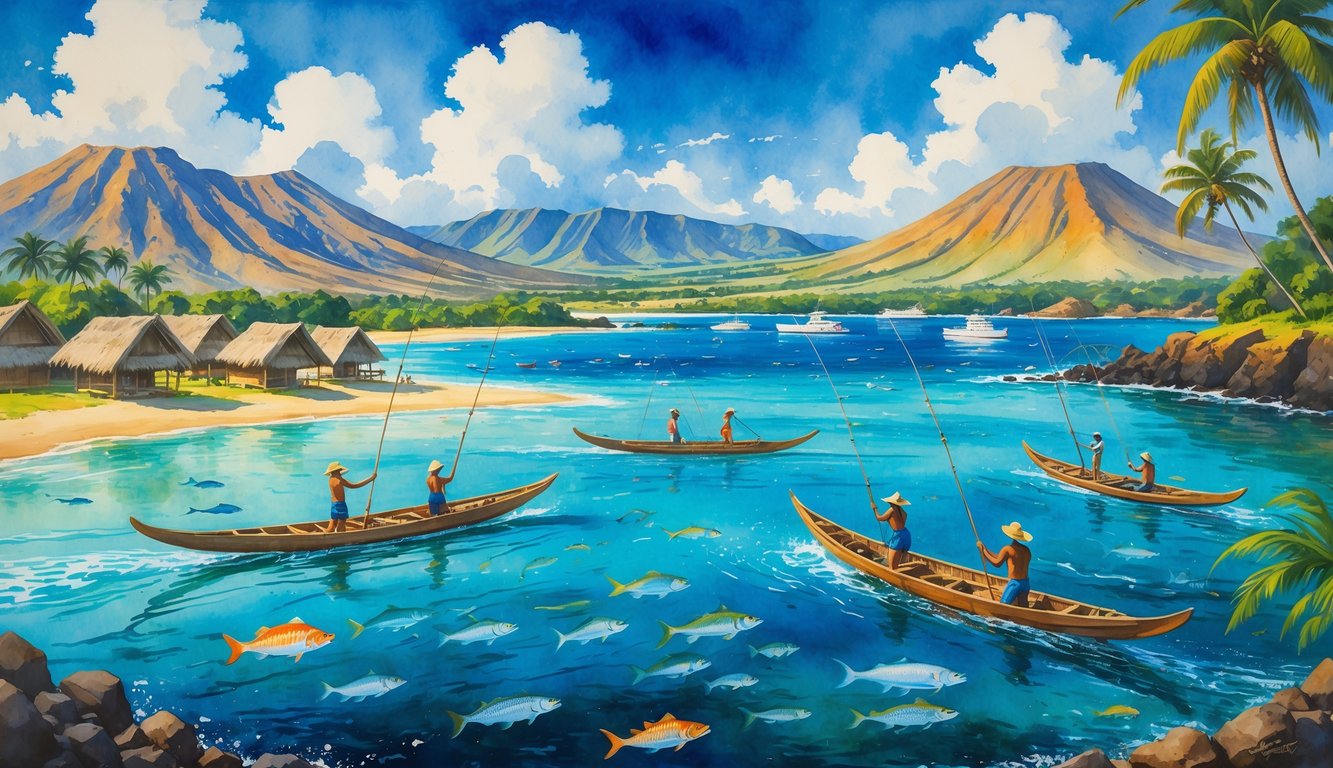
The Hawaiian fishing industry grew from these early roots into a complex system. In the 1800s, foreign fleets and new businesses arrived, turning fishing into a major part of Hawaii’s economy.
Canneries and charter fishing created jobs and brought income, supporting families across the islands. Fishing in Hawaii today still provides work for many people and remains important in island culture.
Hawaii’s fishing history is about more than catching fish—it connects tradition, business, and the identity of the islands. Key moments include the start of commercial companies and the growth of the charter fishing industry, which shapes jobs and tourism today.
Early Fishing Traditions in Hawaii
Native Hawaiians made fishing central to their way of life. Fishing guided daily routines, food sources, social rules, and spiritual beliefs across the islands.
Pre-Contact Fishing Techniques
When Polynesians first settled the Hawaiian Islands, they brought practical fishing skills and new ways to use the ocean’s resources. Traditional fishers made tools from bone, stone, wood, and shell.
They crafted hooks called makau, nets from plant fibers like olonā, and traps for catching fish. Native Hawaiians also built fishponds—known as loko iʻa—along the shores.
These ponds had rock walls and wooden gates to trap fish as tides changed. People fished from canoes and along the coast, working together to catch species like ahi (tuna), aku, and uhu (parrotfish).
Communities used local plants and valleys to supply bait and nets, with planters and fishers helping each other. Shared techniques like net fishing provided food and structured how the community worked together, as shown in ancient fishing practices.
The Role of Fishing in Ancient Hawaiian Society
Fishing shaped the culture of ancient Hawaii. Chiefs, or aliʻi, managed aquatic resources and set property rights for fishing areas and ponds.
Families owned rights to certain parts of the sea or shore, and fishers paid tributes of their catch to the chiefs. Fish served as a main source of protein, supporting livelihoods and gatherings.
Certain fish species were tributes or held spiritual meaning. Hawaiian culture, from chants to daily rules, focused on sustainable use of food plants, fish, and land for both planters and fishing families.
Local leaders helped keep fish stocks healthy, showing respect for the ocean and its bounty, as described in Hawaii’s ancient fishing traditions.
Western Contact and Its Impact on Hawaiian Fisheries

Western contact changed Hawaii’s natural resources, especially fishing. New arrivals affected local fish stocks and transformed the economy.
Arrival of European and American Vessels
European and American ships arrived in Hawaii in the late 1700s, bringing new fishing tools like long lines and metal hooks. They sought whale oil, turtles, and sea cucumbers, not just reef fish.
Foreigners fished on a large scale, unlike Hawaiians who took only what they needed. Sailing ships stopped in the Northwestern Hawaiian Islands to catch seals, turtles, sharks, and harvest bird feathers and pearl oysters.
These crews put heavy pressure on local species by taking much more from the ocean than islanders had before. Western sailing ships exploited many local species.
Traditional Hawaiian laws and resource management could not keep up with outsiders’ demand. Cash-based trading sped up the use of natural resources for profit, not just family needs.
Population Decline and Economic Shifts
After western contact, diseases brought by outsiders caused the Native Hawaiian population to drop sharply. Fewer people remained to manage fishponds and enforce traditional fishing rules.
As the population fell, some fishing areas were abandoned, and local resource management broke down. The islands joined a global economy, and people began fishing for goods to sell to the Mainland U.S. and beyond.
Honolulu’s growing economy, built around ports and trade, created new demand for fish and seafood. Fishing shifted from local and communal to more commercial and profit-based operations.
Urban growth and mainland markets pulled labor away from traditional work, spreading effects to other natural resources. This weakened the long-standing relationships between Hawaiians and the ocean.
Development of Commercial Fishing in Hawaii
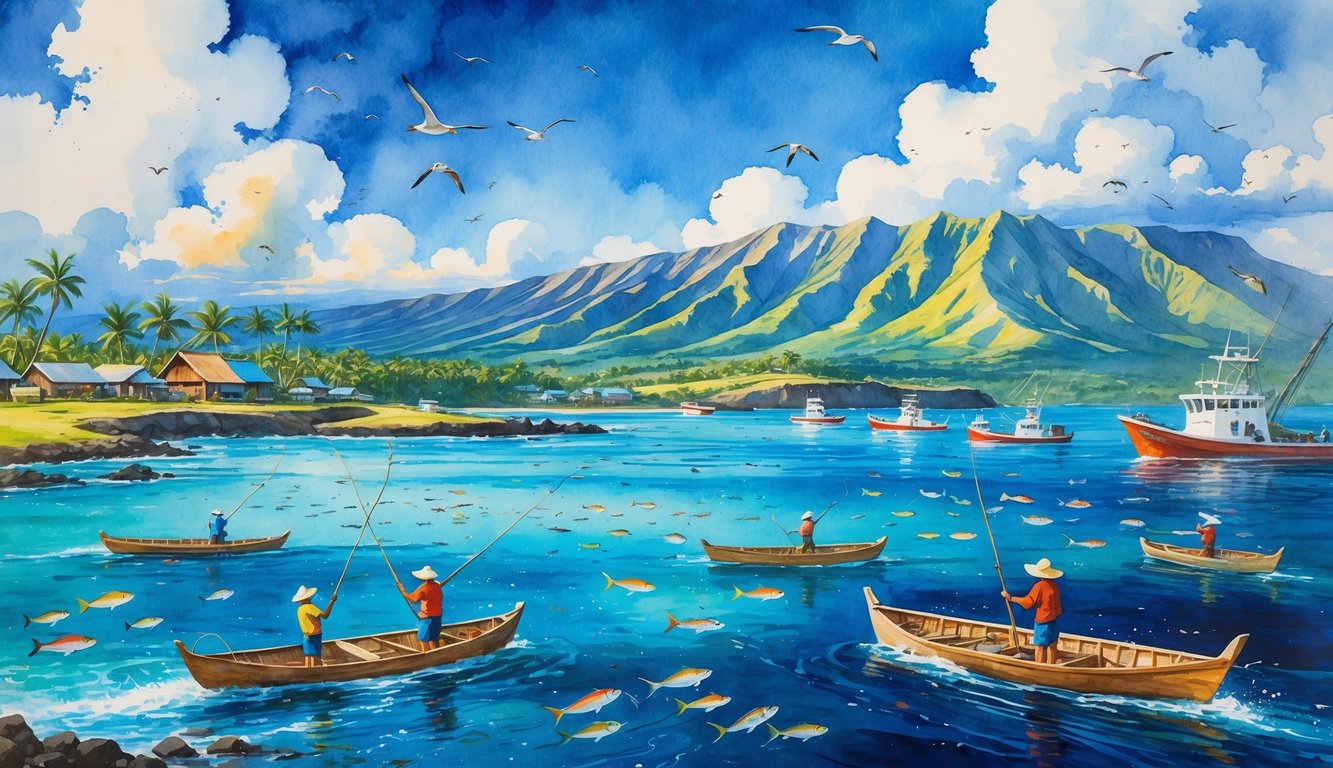
Commercial fishing in Hawaii has shaped local jobs and the state’s economy. Changes in fishing methods and the arrival of new groups of fishermen led to steady growth and new markets.
Growth of the Fishing Industry
In the early 1800s, local Hawaiian fishermen sold fish and other foods at waterfront markets. The arrival of whaling ships increased the need for food and supplies.
This demand pushed commercial fisheries to grow, shifting from small-scale fishing to larger economic activity. Hawaii’s fishing industry thrived as trade centers formed near the docks.
By the late 1800s, selling fish became more organized. Boats brought in large catches, including tuna and swordfish, which became key products.
A charter fishing fleet later emerged, allowing tourists and residents to fish for sport. This added income and helped fishing become central to Hawaii’s market economy.
Table: Key Contributors to Hawaii’s Fishing Growth
| Contributor | Role in Growth |
|---|---|
| Local Fishermen | Supplied local markets |
| Whaling Industry | Increased demand for food |
| Charter Fleet | Brought tourism income |
| Commercial Fisheries | Provided jobs and exports |
The Sampan Fleet and Japanese Immigrants
In the early 1900s, Japanese immigrants shaped modern commercial fishing in Hawaii. Many arrived to work on plantations but moved into fishing as new opportunities appeared.
They brought advanced techniques and expanded the types of fish caught. The sampan fleet was a major innovation.
Sampans are small boats that could travel farther from shore. With better gear and skills, these fishermen caught more tuna and swordfish.
Japanese fishermen soon became leaders in the industry. Their efforts helped local commercial fishing expand, bringing jobs and more fish to the markets.
By the 1930s, Japanese fishing fleets drove Hawaii’s economic contributions from fishing.
Key Industries and Economic Contributions
Fishing in Hawaiʻi has shaped the state’s economy. Key industries like tuna canning and charter fishing connect local workers, businesses, and the U.S. market, affecting jobs and income across the islands.
Tuna Canning and Exports
Tuna canning grew quickly in Hawaiʻi during the early 1900s. In 1917, the Hawaiian Tuna Packing Company started operations in Honolulu.
By 1922, Hawaiian Tuna Packers expanded output and provided stable jobs for workers. The tuna canning industry let more fish be processed locally and shipped to global markets.
This brought steady work for fishers, factory workers, and transportation crews. Tuna became one of Hawaiʻi’s most important exports, linking the islands to buyers across the Pacific.
The industry also helped local businesses that supplied packaging, boat repairs, and other materials. These connections supported growth in other sectors.
The expansion of tuna canning created a network of economic activity that lasted for decades. More details are in the history of Hawaiʻi’s commercial fishing industry.
Role of Fishing in Local and Regional Economies
Fishing provides thousands of jobs in both commercial and recreational sectors. Charter fishing is a major part of the industry, generating nearly $50 million in sales and supporting almost 900 jobs in 2011.
The Big Island leads in employment within this sector. Many fishing-related businesses depend on the U.S. west coast for boat parts and equipment.
This link helps local companies get what they need and connects Hawaiʻi’s economy to the mainland. Fishers, guides, transport workers, and service staff all benefit from these connections.
Recreational fishing brings in millions of dollars each year and supports over 5,000 jobs statewide. Anglers spend money on licenses, boat rentals, and gear, which adds to local income.
The economic impact covers personal income and supports conservation through fees and taxes. You can read more about the economic impact of Hawaiʻi’s fishing industry and its ties to the mainland at this study.
Interconnection with Agriculture and Other Sectors
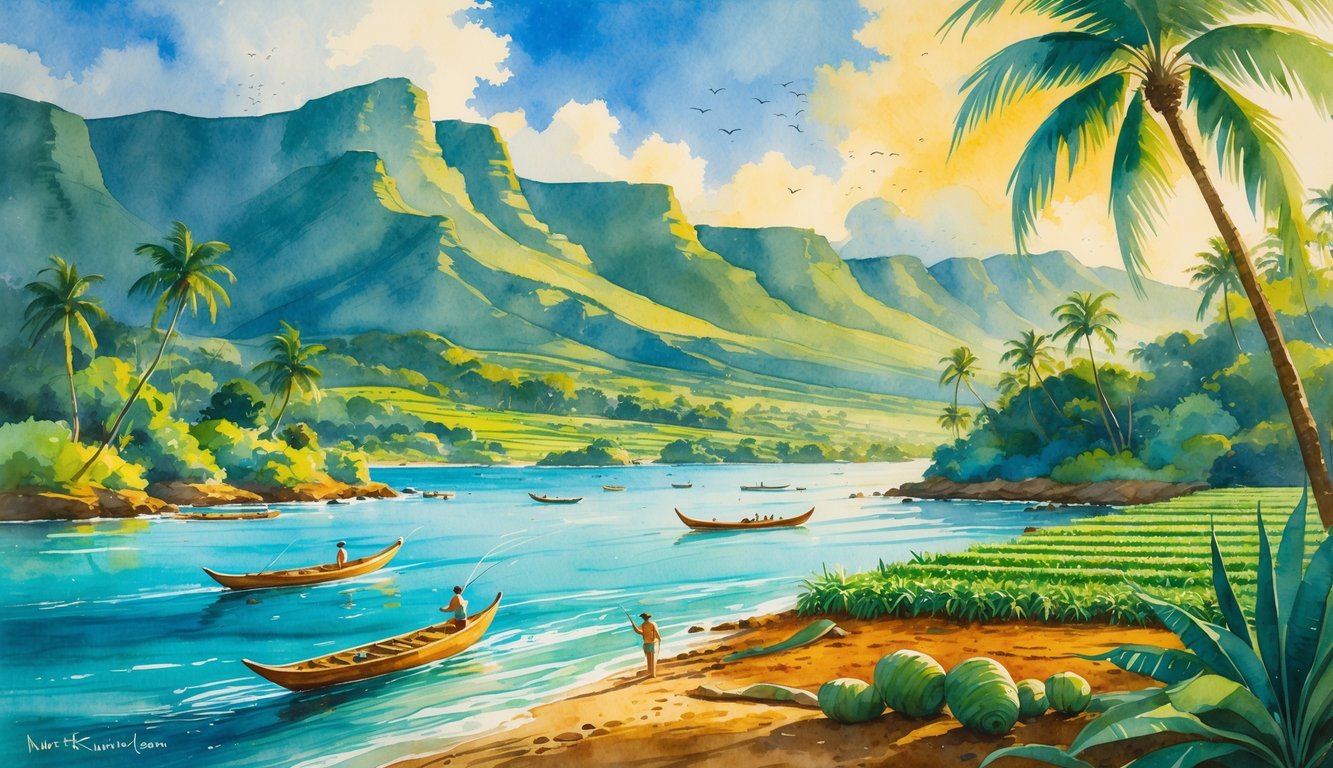
Fishing and agriculture in Hawaii have long supported each other and the local economy. Their relationship extends to industries like transportation and trade, shaping the island’s economic activity in many ways.
Farming and Food Production in Hawaii
I often see how deeply connected farmers and fishers are in Hawaii. Local crops such as taro, pineapple, sugarcane, breadfruit, and coffee grow side by side with fishing businesses.
Together, these industries support markets and restaurants across Hawaii. Fish is a valued ingredient in many island dishes, often served with local farm products like poi from taro or fresh pineapple.
Many farms use fish waste as fertilizer. This boosts their crops and reduces waste.
Fishing and farming help each other in a cycle. Both sectors provide employment and income to many families.
They also strengthen food security by supplying fresh products grown or caught in Hawaii’s own waters and fields.
Transportation and Trade
Transporting seafood and crops around the islands and to the mainland U.S. relies heavily on transportation systems. Ships and planes carry fresh fish, sugarcane, pineapple, and coffee to markets far beyond the islands.
Transport companies depend on these goods for business. Healthy agriculture and fishing sectors keep the whole supply chain active.
Quick shipping keeps fish fresh for restaurants in Hawaii and on the mainland. Trade brings income to Hawaii from raw materials like seafood and crops.
For example, Hawaii raises shrimp broodstock, which has become a top export shipped mostly to Asia. This shows how closely fish production and trade connect in the state.
Sustainable Practices and Cultural Preservation
Sustainable fishing in Hawaii supports local livelihoods and protects aquatic resources. It helps keep native traditions alive.
These efforts make sure future generations can fish, support their families, and celebrate Hawaiian culture.
Modern Sustainable Fisheries Management
Today’s fishing rules in Hawaii use both science and tradition. Sustainable fisheries management sets catch limits, seasonal restrictions, and protected marine zones.
These measures keep fish populations stable and healthy for all fishers—commercial, recreational, and subsistence. Groups like the Western Pacific Regional Fishery Management Council bring together federal agencies, scientists, fishers, and Native Hawaiians.
They create guidelines to reduce overfishing and protect aquatic resources. Some areas ban fishing during breeding seasons, and others use gear restrictions to reduce harm to non-target species.
Local organizations and the state also promote sustainable practices. They educate the public, support responsible recreational fishing, and work with fishermen to track fish stocks.
By combining traditional knowledge and modern science, Hawaii’s fisheries aim to stay sustainable. To learn more, see this guide on sustainable fishing practices in Hawaii.
Preservation of Hawaiian Fishing Culture
Fishing in Hawaii means more than catching food—it is about heritage and community. Native Hawaiians have long used smart fishing methods, like building stone fishponds and respecting local seasons.
Ancient loko i‘a fishponds provide year-round food, support tourism, and pass down knowledge. Community-led efforts help revive these traditional practices.
Teaching youth about fishing, native species, and respect for nature is a big part of Hawaiian culture. Local festivals and gatherings often feature fishing traditions, bringing people together and strengthening social ties.
Tourism benefits from a strong Hawaiian fishing culture. Visitors learn the role of fishing in daily life and the economy, making sustainable practices even more valuable.
If you want deeper insight on cultural and physical sustenance, visit this page about Hawaiian fishponds.
Current Trends and Challenges in Hawaii’s Fishing Economy

Hawaii’s fishing industry faces challenges from rising costs, environmental changes, and new regulations. These issues affect economic activity, jobs, and even local news coverage.
Economic Pressures on Fisheries
Fishing in Hawaii is expensive. Gas prices, equipment, and boat upkeep take up a big part of profits for fishers.
There is strong competition from imported seafood, which is often cheaper than local catch. Charter fishing brings in almost $50 million in sales and supports about 900 jobs statewide.
On the Big Island, charter fishing creates nearly half of all fishing jobs. However, the industry is less stable than before.
Fluctuations in fish populations and new rules to protect fish mean some people are making less money now. You can read more details about these economic contributions and regional differences.
Adaptation and Future Outlook
Many in the fishing community are adapting. People are switching to different fishing methods.
They work with scientists and support sustainable fishing rules. This helps ensure fish stocks remain for future generations.
More people are calling for research and better science to guide decisions. They want to rely less on opinions or traditions.
The industry is finding new ways to stay relevant. For example, they market local catch more actively and promote eco-friendly tourism trips.
Balancing tradition, business, and conservation is challenging. Hawaii’s fishing community continues to find ways to respond to shifting markets and environmental changes.


