
When I started learning about Hawaiian funeral customs, I realized how much these traditions are woven into the fabric of Hawaiian culture. Hawaiian funerals show deep respect for ancestry, the land, and the spirit, making them unique among the world’s many customs.
From the importance of bones to the traditional rituals, every detail holds special meaning for Native Hawaiians.
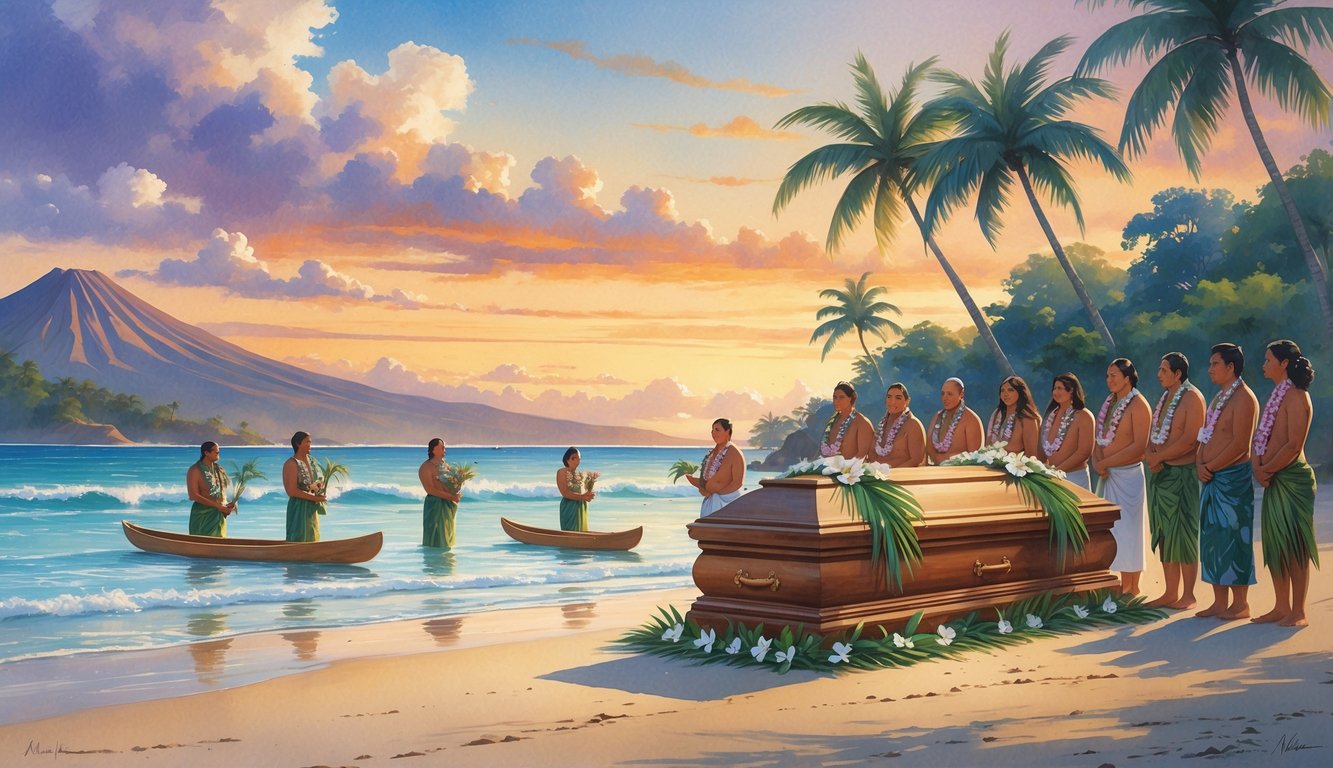
Many people might imagine beautiful beaches and hula when they think of Hawaii. Funeral traditions reveal a more personal side of life in the islands.
Hawaiian families blend ancient customs with modern practices. They focus on honoring loved ones and connecting with their heritage.
These customs, such as the careful burial of bones or the popular paddle-out ceremonies, have deep roots in the islands’ past. They still play a key role today.
Origins of Hawaiian Funeral Customs
Hawaiian funeral customs come from a blend of spiritual beliefs, strong community ties, and ancient traditions passed down through families. Respect for the land, ancestors, and each other shapes how Native Hawaiians honor loved ones at the end of life.
Indigenous Beliefs and Practices
Native Hawaiian funeral customs started with a deep sense of mana, or spiritual power, believed to be present in everyone. The spirit and the body, especially the bones (known as iwi), received great care because the iwi were thought to carry a person’s spiritual energy.
Families would sometimes wash, wrap, and hide the bones, especially of chiefs, in secret caves. They protected the iwi from disturbance and honored the deceased’s spirit.
Old customs taught that burning bones was disrespectful, so early Hawaiians rarely practiced cremation. Family involvement mattered, and death often brought loved ones together for chanting, song, and sharing stories.
Traditions like these helped keep a strong connection between the living and those who passed on. Read more about these traditional beliefs in this overview of Native Hawaiian burial customs.
Role of Kapu in Death Rituals
When someone died in early Hawai’i, the law of kapu (sacred restriction or taboo) played a big part in funeral customs. Kapu could make entire homes and families “off-limits” for a time after death.
The length of this period depended on the person’s status. Regular families might observe kapu for a few days, but chiefs could be honored much longer.
No one outside the family could interact with anything touched by the deceased during the kapu period. This practice protected both the living and the spirit of the dead from negative forces.
Rituals tied to kapu included bathing, prayers, and sometimes keeping silence as a mark of respect. This system guided behavior and helped maintain order.
For more insights, this article has details on the role of kapu in ancient Hawaiian burial practices.
Influence of Aloha and Unity
Aloha stands for compassion, understanding, and spiritual presence. During funerals, families express aloha by caring for each other and treating the deceased with dignity.
Unity also guides these traditions. Extended families and the wider community often come together to support the grieving, share food, and offer music or chants.
Groups might work together to prepare the body, plan ceremonies, and comfort the bereaved. This sense of belonging and care makes the process of loss less lonely and shows the value placed on interconnectedness.
You can find details about these shared values in Hawaiian funeral traditions at Aloha Mortuary’s guide.
Traditional Hawaiian Funeral Rituals
Traditional Hawaiian funerals honor the life of the person who has died and focus on respect for both body and spirit. Each ritual includes sacred traditions, from chants and prayers to dances that express love and remembrance.
Chant and Prayers
Chanting, called oli, plays a central role at a Hawaiian funeral. Family members and elders begin with a chant to welcome spiritual energy and guide the spirit of the deceased.
These chants share stories, ask for protection, and show honor. Prayers often blend native Hawaiian beliefs and Christian elements, reflecting how traditions have adapted over time.
Elders sometimes lead the prayers, using Hawaiian language to speak directly to the spirit. The respectful tone of both oli and prayers brings comfort and a sense of unity to all who attend.
Each word matters, as people believe the mana, or spiritual power, carries on through the ritual.
Cultural Funeral Etiquette
Funeral etiquette in Hawaii follows deep respect for tradition. As a guest, I always wear modest, dark clothing.
For many, wearing a lei is a meaningful way to show love and respect for the deceased. The lei is often placed on the casket or given to family members.
People keep quiet and attentive during the service. They greet each other softly and sometimes embrace to offer comfort.
Food may be shared afterward, with a focus on simple local dishes. Traditional customs such as the care and burial of bones (iwi) show how seriously Hawaiians take funeral rituals.
The bones are treated as sacred, as they are believed to hold the mana of the loved one. For more on specific customs, see this overview of Hawaiian funeral traditions.
Hula Dance for the Departed
The hula dance is a moving part of Hawaiian funeral traditions. Dancers use gentle movements and flowing motions to share stories or express grief and gratitude.
The hula is often performed near the end of the service or during a special memorial. Costumes are usually simple, sometimes just a dress or a traditional wrap, keeping the focus on the meaning behind the dance.
Each hand gesture in the hula has significance, sometimes describing the person’s life or the family’s feelings. Music for the hula can include chanting or singing, along with soft drumming or ukulele.
The experience is personal and heartfelt, offering comfort to those mourning and helping the spirit find peace. To read more about how hula is part of funeral customs, you can visit this guide to Hawaiian funerals and ceremony traditions.
Burial Customs and Methods
Many old Hawaiian funeral traditions focused on respect for iwi, or bones, as well as using the natural environment for burials. Different groups and families had unique ways of handling death and honoring iwi kupuna, or ancestors.
Iwi and Burial of Bones
In ancient Hawaii, iwi—or the bones—were believed to hold a person’s mana, or spiritual energy. After death, families prepared bodies with care and separated bones from flesh.
People sometimes removed flesh through a process involving heat, then buried or stored the skeleton. Bones were not always placed deep in the ground.
Sometimes, families buried iwi kupuna in rock crevices, lava tubes, or caves. They kept the bones safe to protect the mana from harm and from being misused by enemies.
For more details on sacred burial of bones, see this guide to Hawaiian burials.
Ocean Burial Traditions
Besides land burials, ocean burial also played a special role in Hawaiian customs. In many cases, families took the body or the remains—especially after cleaning the bones—out to sea by canoe.
Family members sometimes scattered the remains or let them sink, believing the ocean helped return the loved one to nature. Ceremonies often involved chants and offerings, led by family elders or kahuna.
The scattering of ashes or remains connected people with both their ancestors and the powerful ocean. I learned more about this from an article on Hawaiian spiritual beliefs on death and ash scattering.
Preservation and Sand Dunes
Hawaiians sometimes used sand dunes and other natural landscapes to help preserve remains. In certain places, families chose burial sites in coastal sand dunes because the sand helped protect and hide the iwi from erosion, animals, and weather.
These locations could be marked with stones or left unmarked for secrecy. Preservation mattered, especially because the bones were seen as sacred.
Over time, wind, waves, or even construction have sometimes disturbed these sites. Today, people take protecting these burial areas seriously, and they recognize them as an important part of Hawaii’s history and cultural identity.
For further information, visit the State Historic Preservation page on Hawaiian Burials.
Symbolism of the Lei in Hawaiian Funerals
When I attend a Hawaiian funeral, I often see leis used in many ways. Leis honor the memory of a loved one and show deep respect through their beauty and meaning.
Funeral Leis and Respect
At funerals, laying or wearing a lei is more than tradition—it is a gesture that shows respect, love, and sympathy for the person who has passed away. The lei brings families and friends together, helping everyone express feelings that can be hard to put into words.
The act of giving or receiving a funeral lei means offering comfort, support, and a connection to the spirit of aloha. Each flower or leaf in the lei can represent a memory, a wish, or a bond with the person being honored.
This practice is not only about decoration; it creates a sense of unity among those who are grieving. The lei serves as a silent but meaningful symbol that the loved one will not be forgotten.
Leis are found at funerals, memorials, and gatherings, sometimes placed gently on caskets or photographs as a way to say a final farewell. For many, the use of a lei in this setting is seen as a sign of deep empathy and kindness.
Funeral leis are common at services all over Hawaii. Wearing or displaying one helps everyone share in their respect and sorrow.
To learn more about the culture and customs of Hawaiian leis in funerals, I recommend looking at this guide on funeral leis and their meaning.
Maile Lei, Ti-Leaf Lei, and Lei Wreaths
Some types of leis hold special meaning at funerals. The maile lei, with its open-ended vine and fragrant green leaves, is a traditional choice.
People use the maile lei to represent respect, honor, and a never-ending bond because it is often left untied. Family members drape the maile lei over the casket or wear it during the ceremony.
The ti-leaf lei is another meaningful option. This lei, made from ti plant leaves, stands for protection, healing, and guidance.
People often weave ti-leaf leis with white orchids or other flowers to add beauty and meaning. Lei wreaths, which are circular and placed on tables or altars, symbolize the cycle of life and the idea that love never ends.
Both fragrant flower leis and foliage leis add color and scent to the ceremony. Each type reflects what the family wants to express or how they want to remember their loved one.
For more information on funeral leis and their meanings, see this Hawaiian lei funeral guide.
Lei Throwing Ceremony
One unique custom at funerals and memorials is the lei throwing ceremony. After the main service, family and friends gather near the ocean, a special place for many in Hawai‘i.
They throw their leis into the water to say goodbye and send their prayers. The act of casting a lei into the sea is symbolic.
The flowers floating on the waves represent a final message of love and respect. As the leis drift away, people feel a sense of letting go and believe the spirit returns to nature.
Some families use only leis made from natural materials that are safe for the ocean. The lei throwing ceremony is quiet, personal, and filled with emotion.
This ceremony connects people with nature, the spirit of the islands, and the memory of their loved one.
Transformation Through Western and Christian Influence
The history of Hawaiian funerals changed greatly after the arrival of Westerners and Christian missionaries. Local beliefs mixed with new customs, shaping today’s Hawaiian funeral services.
Integration of Christian Funeral Rites
Christianity arrived in Hawaii in the early 1800s. The first Christian funeral in Hawaii honored a crew member of Captain Cook.
This ceremony combined Christian prayers and local traditions. It set a pattern for future ceremonies.
As more Hawaiians converted to Christianity, church funerals and memorial services became common. Families sometimes blended traditional chants and rituals with hymns and prayers.
Some families still buried bones according to old customs to respect their ancestors’ beliefs. Over time, this mix of customs changed the way many Hawaiian funerals happened.
You can learn more about the impact of Christianity on Hawaiian beliefs at this resource.
Multicultural Perspective in Modern Funerals
Modern Hawaiian funerals reflect many traditions. Christian elements often join with practices from Japanese, Filipino, Chinese, and Native Hawaiian backgrounds.
A funeral may include a priest’s blessing, hymns, and Hawaiian chants or hula dances. People often wear aloha shirts or muumuus instead of black clothing, making the service feel welcoming and true to the islands’ spirit.
On Memorial Day, families gather to honor loved ones by bringing flowers and food to gravesites. Modern Hawaiian funeral services offer space for everyone’s beliefs, blending old and new with respect and warmth.
For more about customs old and new, visit this page on Hawaiian funeral traditions.
Roles and Responsibilities in Hawaiian Funerals
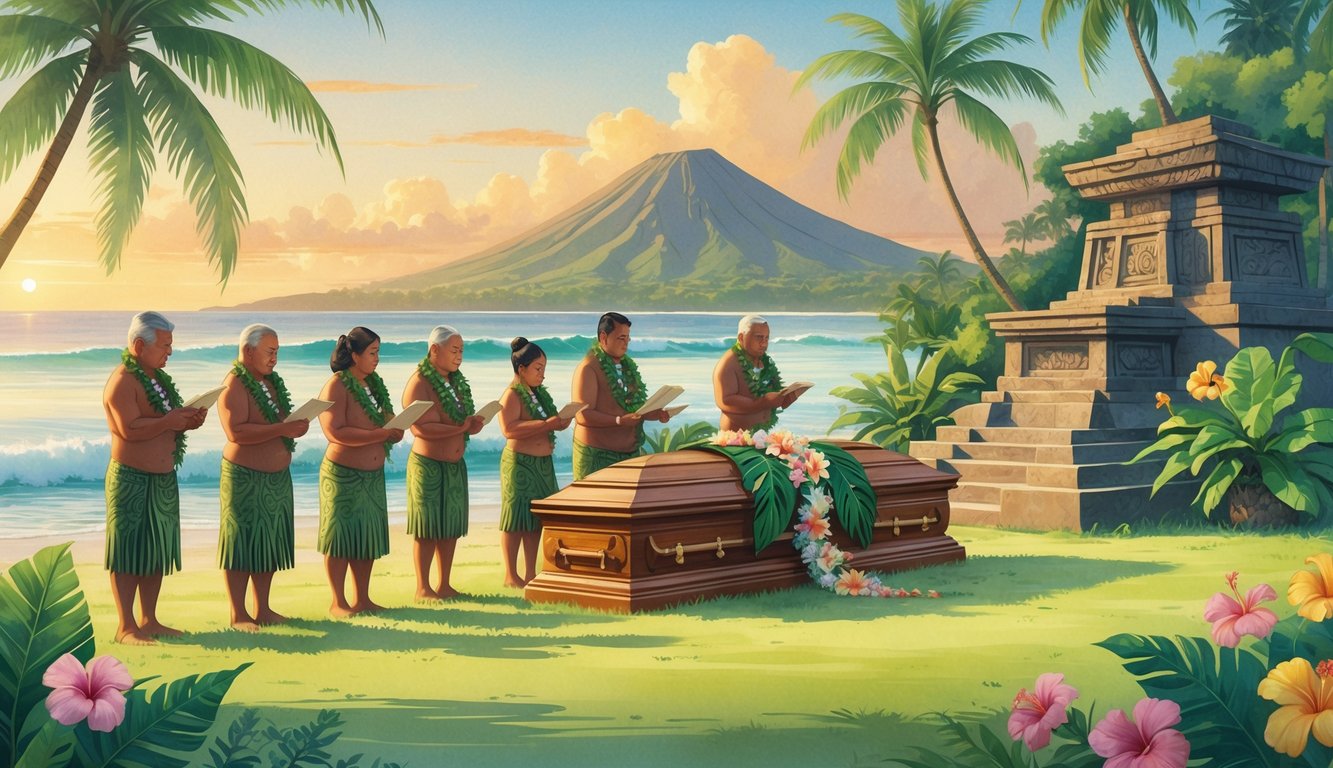
In Hawaiian funerals, each person and element has a unique role. Family members, the wider community, and spiritual beliefs shape the ceremonies.
Family Members and Community Involvement
When a loved one passes, the family takes on many duties. Family members care for the body and prepare it for ceremonies.
This care may include cleaning the body or dressing it in special clothing. The family also plans the gathering, invites people, and decides on the order of events.
The community often helps as well. Friends bring food or offer support.
Funeral gatherings often become a celebration of life. People sing, tell stories, and share memories.
Family and friends decorate with flowers or leis. These acts help everyone feel close, even in sadness.
The role of each family member can differ. Elders may lead prayers or chants, while younger people help with arrangements.
These moments allow everyone to show love and respect for the person who has passed. For more on family and community roles, visit this page on Hawaiian funeral traditions and customs.
Household Gods and Spiritual Essence
Traditional Hawaiian beliefs say that the spirit, or mana, is strong and lives on after death. This belief shapes how people treat the body and the funeral place.
Many families believe the home is watched over by aumakua, or household gods. Caring for the remains, especially the bones (iwi), means caring for the person’s mana.
Bones are thought to hold spiritual power. Sometimes families bury or hide them in special places.
Rituals may include prayers to the aumakua for guidance and protection. People may offer food or gifts as thanks.
These acts connect the family to their ancestors and the spiritual world. To learn more about beliefs about the spirit and bones, read about the importance of spiritual essence in the bones.
Modern Hawaiian Funeral Traditions and Adaptations
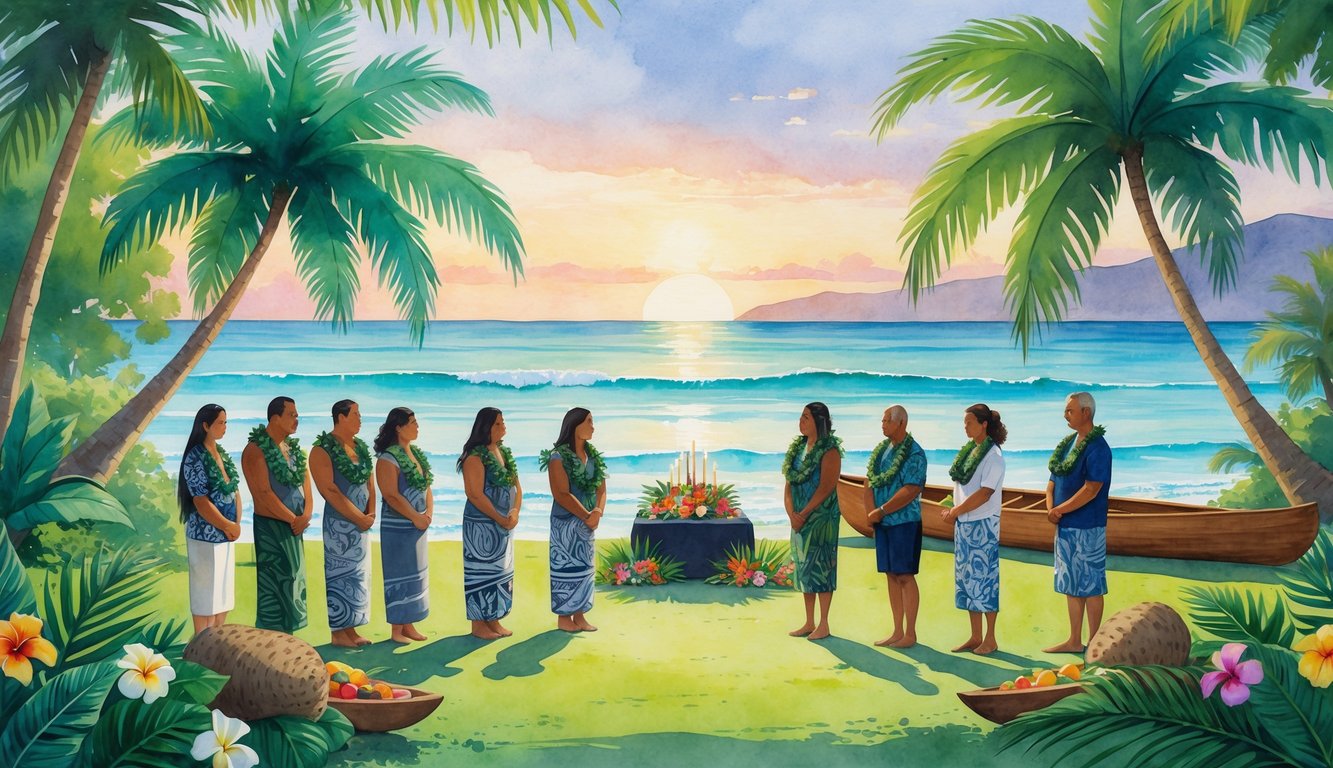
Today, Hawaiian funeral customs blend old traditions with newer practices. Families honor ancestors while meeting modern needs, and choices often reflect personal beliefs and culture.
Casket and Urn Selection
At modern Hawaiian funerals, families may choose a traditional casket or a cremation urn. Some caskets have native Hawaiian designs, like kapa patterns or native woods, to honor heritage.
Urns might be crafted from koa wood or decorated with lei. Families often display photos and meaningful objects on or around the casket or urn.
People place personal belongings, such as leis, shells, or favorite items, to bring comfort and highlight the loved one’s story. Some families still bury belongings with the deceased, while others choose a simple approach.
You can read more about these choices at the Aloha Mortuary’s guide on Hawaiian funeral traditions.
Cremation Practices
Cremation has become more common in Hawaii. Many families choose it for cultural or practical reasons.
Sometimes ashes are kept at home, but often families scatter them in the ocean, which holds deep meaning in Hawaiian beliefs. Some families hold a paddle-out ceremony at the beach, using canoes or surfboards to honor the departed.
They release flower petals and leis into the water with the ashes. Ceremonies can be private or public.
Families choose the ocean, mountains, or favorite places of the loved one thoughtfully. This blending of tradition and new customs keeps connections strong.
Funeral Service Structure
A modern Hawaiian funeral service often mixes Christian, traditional Hawaiian, and other faith elements. Prayers or hymns are shared alongside Hawaiian chanting or oli.
Services may take place at a church, beach, or home. Family and friends give speeches, sing songs, and share stories about the person’s life.
Lei giving is a special part of the service, as flowers represent love and respect. The Aloha Mortuary website explains how these rituals can be both old and new.
After the service, people gather with ʻohana to share food. This gathering creates space for connection and healing.
Expressions of Sympathy and Remembrance

Honoring loved ones in Hawaii is deeply connected to nature and family. Traditional memorials and gestures like flowers and cards are key ways people show sympathy and keep memories alive.
Memorials and Paddle-Out Ceremonies
For many families in Hawaii, memorials celebrate the life of the person who has passed away. Some memorials happen at home or in a church, while others take place outdoors.
On the beach or by the ocean, families gather to share stories, songs, and prayers. The paddle-out ceremony is a unique tradition, especially among surfers and those who loved the sea.
Friends and family paddle out on surfboards or canoes, form a circle on the water, and toss flowers into the waves. Some scatter ashes into the ocean, letting the current carry them away.
This ceremony brings comfort and a strong sense of togetherness, blending spiritual and cultural meaning.
Sympathy Cards and Funeral Flower Practices
Sending sympathy cards is a simple but powerful gesture in Hawaii. These cards usually contain personal words of comfort or memories of the person who has died.
People value handwritten notes because they show care and effort. Flowers are also a big part of Hawaiian funerals.
Instead of just any bouquet, many people use leis made of orchids, plumeria, or ti leaves. These leis are draped over the casket or given to the grieving family.
Some families choose native Hawaiian flowers to honor their heritage. Using flowers expresses respect, love, and farewell, as explained in Hawaiian Funeral Traditions, Customs & Beliefs.
These traditions help people feel supported and remembered.
Beliefs About Death and the Afterlife
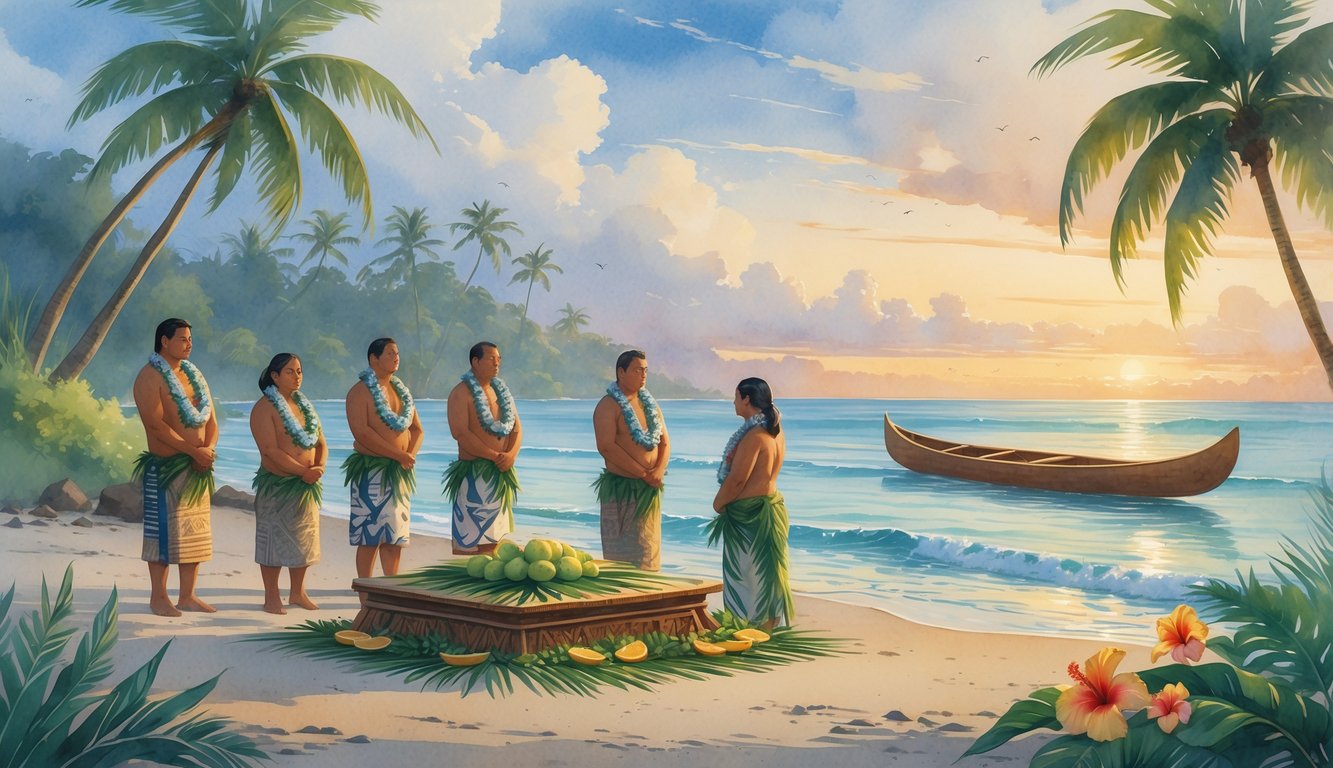
Hawaiian customs around death are based on respect, beliefs about the soul, and ideas about the afterlife. These views influence how traditions developed and how people today honor their ancestors.
Native Hawaiian Beliefs on the Soul
Native Hawaiians believe each person has a living spirit or ‘uhane. This soul connects deeply with both family and the land.
When someone dies, their spirit stays close to loved ones as they grieve. Ceremonies help guide the spirit after death and show respect for both the person and their ancestors.
Some traditions say the soul can return to visit or watch over family for a time. This ongoing connection with the spirit world shapes funerals and memorials in Hawaii.
People honor the spirit’s journey through chants, song, prayers, and sharing stories. Traditional Hawaiian beliefs teach that the afterlife is not just a destination—it is a continued bond between generations.
Wandering Souls and Afterlife Journey
Many elders talk about the idea of ‘uhane hele or wandering souls. In Hawaiian customs, death starts a spiritual journey.
The soul may stay near the family if they do not perform proper rituals. If a soul feels restless, it wanders until prayer and ceremony give it closure.
Families pay careful attention to washing, wrapping, and burying remains. Sometimes, families scatter ashes in meaningful places to help guide the soul.
The journey after death is both physical and spiritual. Hawaiian funeral traditions encourage families to care for bones or ashes so the soul finds peace.
This respect for the wandering soul keeps families close. It also helps preserve traditions.
Funeral Expectations and Cultural Continuity
When I attend a funeral in Hawaii, I notice how tradition and respect shape the event. The community honors both past generations and present-day values in these important gatherings.
Here are some key ways I see these expectations and customs continue over time.
Evolving Customs and Future Trends
At Hawaiian funerals, I’ve learned that people commonly give or wear a lei. Mourners place these leis on caskets or around photos.
Sometimes, families take leis to the ocean as a sign of love and remembrance. Wearing a lei shows respect and brings comfort to families, as explained in this guide to funeral leis.
Dress is usually modest. Many people wear aloha attire or dark, respectful colors.
Each family may have unique wishes. I always check with them if I’m unsure about what to wear or bring.
These customs help keep Hawaiian culture alive. Community members combine traditional practices with personal touches.
For example, families might include Christian prayers along with native chants or hula dances. Recently, more people choose eco-friendly services or ash scattering at sea.
These choices connect closely to Hawaiian views about the land and ocean. As new generations contribute, these customs continue to adapt.
For more details on how spiritual beliefs shape modern funerals, I recommend reading about Hawaiian funeral practices.


