Hawaiian culture is much more than beautiful beaches and stunning scenery.

I’ve found that the best way to truly experience Hawaii is by taking part in hands-on workshops that share the traditions, history, and daily practices of native Hawaiians.
These workshops let me connect with authentic Hawaiian music, hula, arts, and food in a way that is both fun and meaningful.
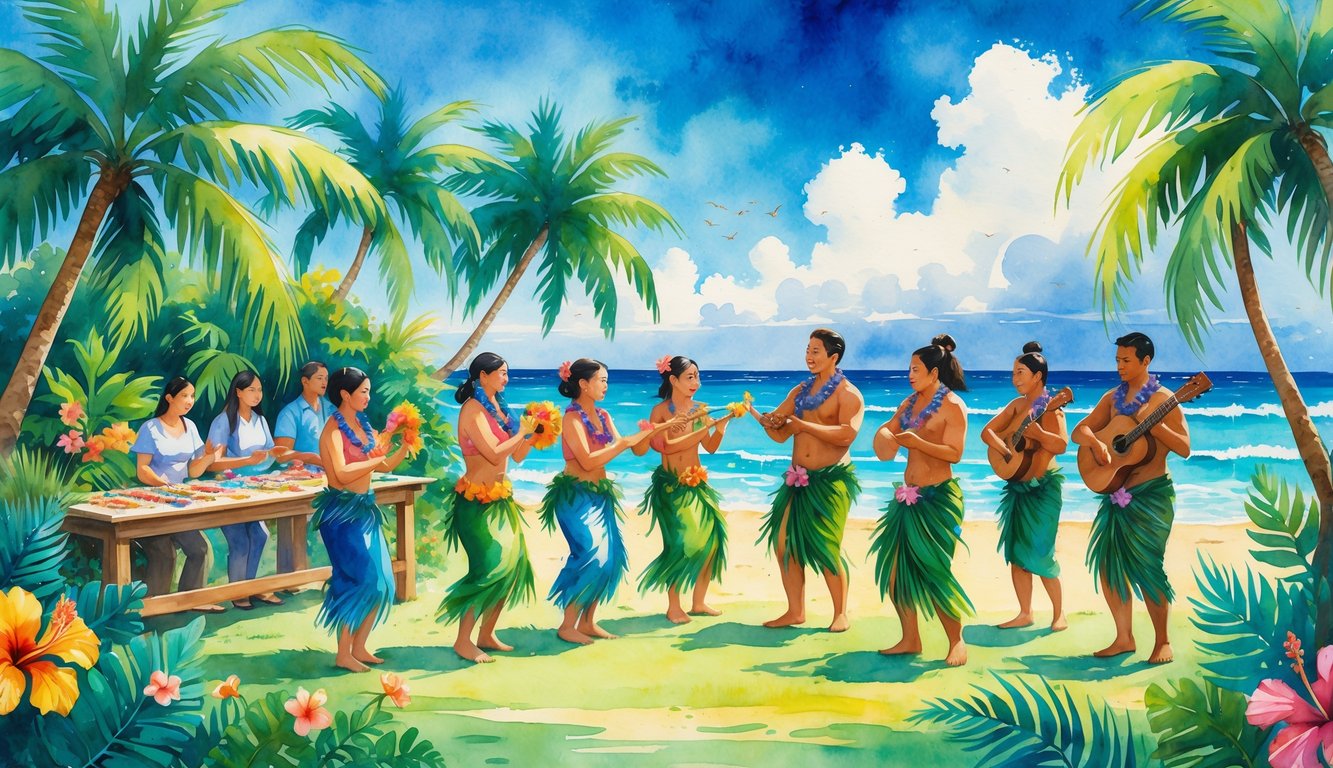
When I learn to make a fresh flower lei, create a tapa cloth, or play the ukulele, I can better understand the deep values of aloha and respect for the land.
There are many unique Hawaiian cultural workshops to try, each offering new skills and insight into local life.
Overview of Hawaiian Cultural Workshops
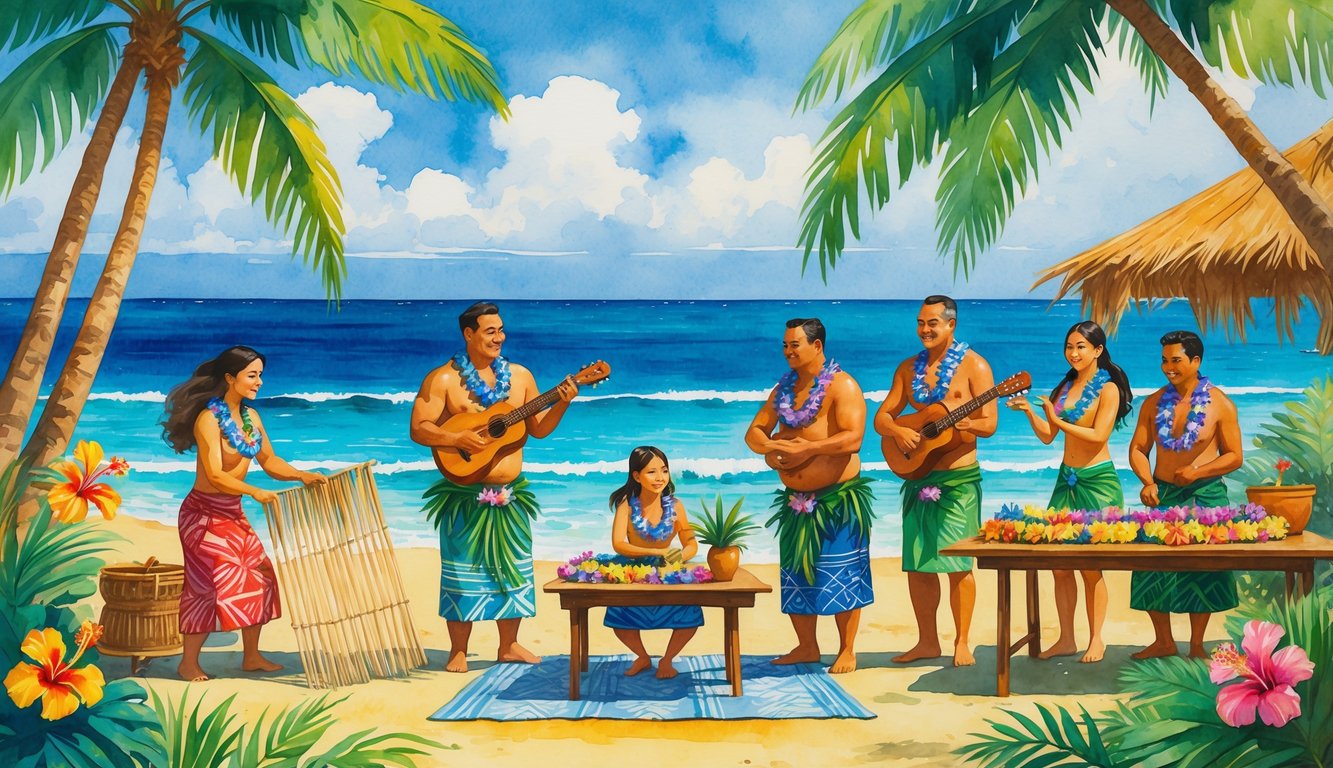
Hawaiian cultural workshops give me hands-on ways to learn about traditions like hula, lei making, and ancient crafts.
Skilled teachers and kūpuna share their deep knowledge and keep these important practices alive for future generations.
What Are Hawaiian Cultural Workshops?
Hawaiian cultural workshops are events where I can learn about different parts of Hawaiian culture.
The classes are interactive, letting me try things like haku mele (song composing), ulana lauhala (weaving), kapa making, or even Hawaiian history.
Experts who have practiced for decades often lead these workshops.
Some workshops last an hour, while others stretch across several weeks.
Organizations such as Aloha ʻĀina O Hawaiʻi offer lessons in old-time Hawaiian arts, including featherwork, traditional medicine, tattooing, and making musical instruments.
Others, like 4 Days of Aloha, focus on traditions such as hula and music.
People of all ages join these workshops.
Some focus on kūpuna (elders), while others welcome youth, families, or the whole community.
This inclusive approach means anyone interested can join and learn.
Importance of Cultural Practices
Cultural workshops help me connect to the roots of Hawaiian life and values.
Through them, I see why practices like dance, music, or weaving matter.
Workshops are more than classes; they build community and strengthen my sense of belonging.
When I join a workshop, I help keep knowledge alive.
Hawaiian customs have passed down for hundreds of years.
By taking part, I become a link in that chain, gaining skills and stories to share with friends and family.
Some organizations, like Ke Ola Mamo, mix traditional healing with modern wellness.
This gives me a fuller view of health and culture.
Learning in a group also lets me meet others who value these traditions.
Role of Master Practitioners and Kūpuna
Master practitioners and kūpuna make many workshops possible.
Master practitioners spend years learning from their elders and become experts.
They bring authenticity and care to every lesson.
Kūpuna, or respected elders, play a vital part in teaching both skills and values.
At programs like ʻIke Kuʻuna Workshops, kūpuna guide me in understanding not only how to make things but why.
They often share personal stories and cultural perspectives that I can’t find in books or online.
This helps me see the real meaning behind every practice.
When master practitioners or kūpuna teach me, I learn the correct ways and reasons for each cultural activity.
Their guidance honors Hawaiian heritage and keeps traditions strong in my community.
Traditional Arts and Crafts Workshops
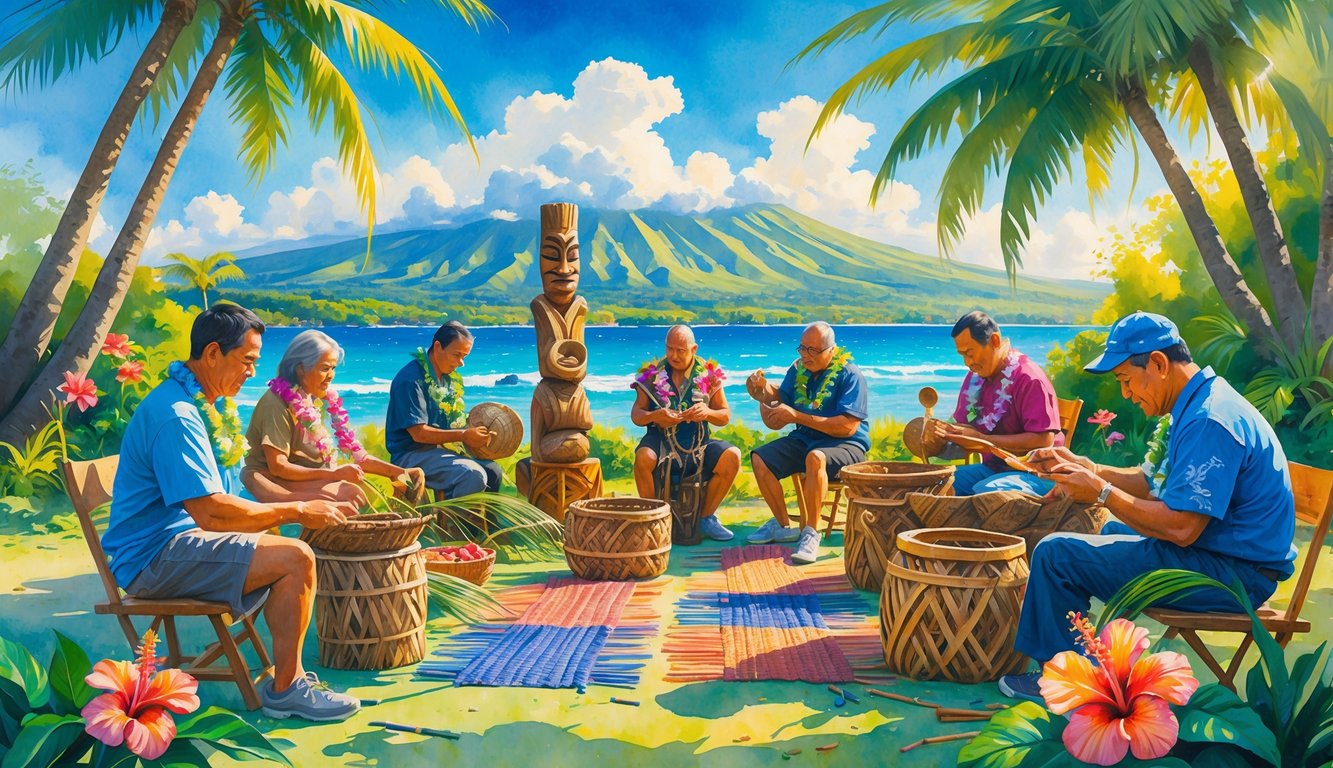
Many Hawaiian cultural workshops focus on hands-on learning.
I enjoy exploring these classes because I get to use traditional tools and learn from skilled teachers.
Lei Making Techniques
Making a lei is more than just stringing flowers together.
I learn about the history and meaning behind different lei styles.
Skilled teachers guide me through techniques like kui (threading), haku (braiding), and wili (twisting).
Each method creates a distinct type of lei using materials such as fresh flowers, leaves, shells, or seeds.
I remember working alongside others and sharing stories.
These lei making workshops teach me which plants are best, when to pick them, and why each material matters.
Local groups like Ulu Aʻe Learning Center offer classes that highlight the cultural importance of lei in Hawaiian celebrations, greetings, and memories.
Weaving and Kapa Creation
Weaving is a skill that families have passed down for generations.
I use lauhala, or pandanus leaves, to make mats, hats, and baskets.
These classes show me how to harvest, prepare, and weave the leaves.
The process takes patience, but the final product is always unique.
Kapa is another traditional art.
I learn how kapa, or barkcloth, is made by beating inner tree bark until it’s soft and flat.
I add patterns with natural dyes and bamboo stamps.
Workshops like those from Puʻuhonua Society offer step-by-step lessons.
I get to feel the kapa and make designs that reflect Hawaiian identity.
A table like the one below helps to compare the materials used:
| Craft | Common Materials |
|---|---|
| Lauhala | Pandanus leaves |
| Kapa | Wauke (paper mulberry) |
Tattooing and Ohe KāPala
Hawaiian tattooing connects me to ancestors.
Artists use traditional tools and natural inks to create bold geometric patterns.
Each tattoo, or “kakau,” can mark personal achievements or family heritage.
Ohe kāpala are carved bamboo stamps used to print designs on kapa.
In workshops, I carve my own ohe kāpala and use them on fabric or paper.
I learn how shapes and patterns tell a story or symbolize traits like strength and protection.
These hands-on experiences show me the importance of keeping Hawaiian traditions alive.
Knowledgeable instructors ensure everyone understands the deep meaning behind each art.
Music, Dance, and Chant in Hawaiian Workshops
I have found that Hawaiian cultural workshops are a great way to learn directly from experts.
These workshops often focus on practices such as hula, oli (chant), mele (song), and Hawaiian music.
Each practice brings its own traditions and role in Hawaiian culture.
Hula and Its Significance
When I joined my first hula class, I realized that hula is more than dance.
It’s a way to tell stories and share history.
Every movement means something—like ocean waves or the wind.
Hula teaches respect for nature, ancestors, and traditions.
Hula is closely tied to Hawaiian music.
Most dances use live instruments, like the ukulele or ipu (gourd drum).
The songs and movements often honor places, chiefs, gods, or important events.
At places like the 4 Days of Aloha workshops, I learned hula basics and understood its deeper meaning.
Both newcomers and experienced dancers can take part.
The focus isn’t just on steps but also on the meaning behind each gesture.
Learning the Oli and Mele
Learning oli (chant) and mele (song) is another part of Hawaiian workshops I enjoy.
Oli are spoken or sung chants that can celebrate, honor, or tell a story.
Mele are songs, which sometimes include dance.
Both are powerful and connect people with the past.
At some workshops, we practiced chanting together as a group.
The kumu (teacher) explained how each type of chant or song has a purpose, such as welcoming guests or telling a myth.
Some classes even teach how to create your own chant.
Instructors often play traditional instruments, like the ukulele, and show us how music fits with the chants.
Live music and group singing make it easy to feel connected.
I felt proud when I learned to say a chant with the right tone and feeling.
Some places, like the Kāpili Polynesian Dance and Music Workshops, offer lessons that include both chanting and singing.
Role of Kumu Hula
The kumu hula, or hula teacher, leads every Hawaiian workshop I’ve attended.
A kumu hula does much more than teach dance or song.
They keep tradition alive and pass down stories, language, and spiritual lessons.
I appreciate how kumu hula lead with care and respect.
They explain the background of each hula, chant, or song.
For example, they share why a certain dance honors a place or how to show respect before chanting.
Good kumu make sure we understand both the movements and their meanings.
Many kumu hula have studied for years with their own teachers.
Some, like those featured in the Still & Moving Center classes, know how to teach everything from hula steps to history and language.
Learning from a kumu hula helps me see how each part of the workshop fits in Hawaiian culture.
Hands-On Culinary and Agricultural Experiences
I love getting to know Hawaii through its food and farming traditions.
These experiences teach me about Hawaiian ingredients and connect me with the deep meaning behind each dish and practice.
Poi Making Workshops
Poi is a classic Hawaiian staple made from taro root.
During a poi workshop, I clean, peel, and pound taro using traditional tools.
The process is slow and steady, and instructors guide me through each step.
Poi is more than just food—it is a link to ancient Hawaiian life, culture, and community.
I often join others in the workshop, which makes it more fun and helps me understand the importance of working together.
At some workshops, instructors explain the history of taro and let me taste fresh poi alongside dishes like kalua pork or laulau.
Some poi making experiences are part of larger classes that teach about traditional Hawaiian cooking and agriculture.
These workshops often happen on local farms, so I can see taro growing and meet farmers who keep this tradition alive.
Exploring Traditional Hawaiian Foods
After poi, I want to try other authentic dishes that make Hawaiian food special.
In hands-on cooking classes, I learn to prepare foods like poke, lomi salmon, and haupia.
The chefs use local, fresh ingredients and show me how to cook these traditional dishes.
Many classes start with a tour of the farm or garden.
I pick vegetables, learn about ancient farming, and sometimes harvest fruits or taro myself.
These tours show me how native plants and old techniques still matter today.
Workshops often end with a shared meal.
I taste what I made and talk with others about food and culture.
Popular experiences on the Big Island let me enjoy the real flavors and spirit of Hawaii.
Hawaiian History and Ancestral Knowledge
When I join Hawaiian cultural workshops, I explore the islands’ past.
I learn how traditions developed, how stories passed down, and why leaders called ali’i mattered to Hawaiian people.
Lessons on Hawaiian History
In these workshops, I discover how ancient Hawaiians traveled across the Pacific and settled on the islands.
I hear about daily life, from farming to fishing, and how families worked together as a community.
Workshops include hands-on activities, like kapa making or song composition, so I experience Hawaiian culture directly.
Storytelling is a key teaching method.
Through mo’olelo (stories), I learn about battles, migrations, and peace agreements that shaped Hawaiʻi.
A timeline of key events or artifacts helps me picture life in the past.
Some workshops offer Hawaiian history lectures that cover important moments, places, and cultural practices.
Learning About the Ali’i
The ali’i were the chiefs and rulers in old Hawaii.
Learning about their role helps me understand Hawaiian social structure and respect for tradition.
Workshops talk about how ali’i guided the community, set laws, and protected sacred places.
Some sessions highlight famous ali’i like King Kamehameha and Queen Lili’uokalani.
Interactive lessons let me examine replicas of objects like feather cloaks or discuss ceremonies for the ali’i.
Sometimes, workshops share stories about leadership styles and the responsibilities handed down through generations.
Table: Key Roles of Ali’i
| Title | Main Duty | Famous Example |
|---|---|---|
| Mo’i (King) | Lead all islands | Kamehameha I |
| Ali’i Nui | Rule major districts | Kaumuali’i |
| Ali’i ‘Aikane | Advise and support royals | Queen Lili’uokalani |
Nature-Integrated Cultural Activities
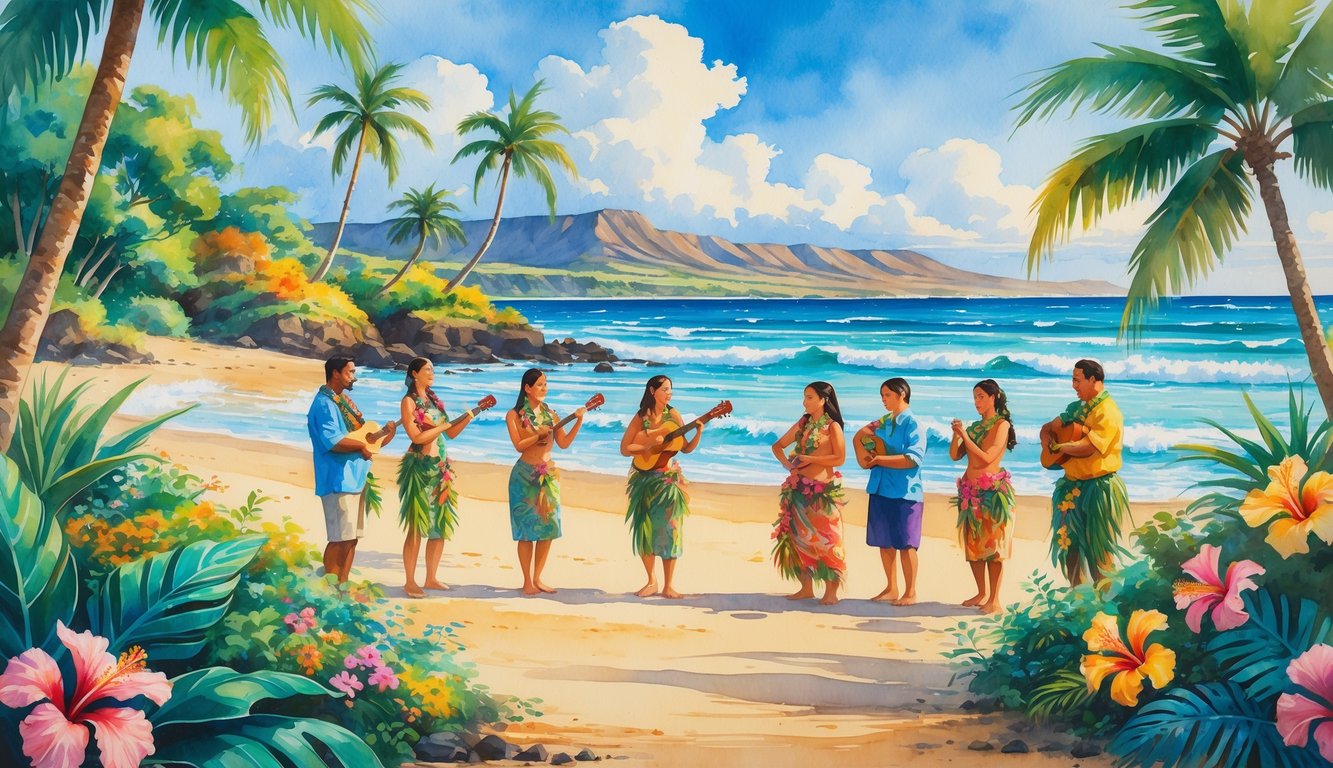
Nature shapes many Hawaiian cultural workshops.
I find that many experiences blend hands-on activities with the natural beauty of the islands.
Ocean-Centered Workshops
The ocean stands at the heart of many Hawaiian practices.
When I join workshops focused on the sea, I learn to paddle an outrigger canoe, throw a traditional fishing net, and make fishhooks from shells and bone.
Workshops also include hula on the beach, navigation by the stars, and stories about Polynesian voyaging.
Key activities include:
- Outrigger canoe paddling
- Traditional fishing net weaving
- Beachside hula dancing
- Wayfinding with the night sky
These activities connect me to how Hawaiian people lived with the ocean.
Many workshops let me use native plants or shells found on the beach.
Programs explain the importance of tides and marine life.
Local experts often lead these classes, sharing stories and practical skills.
To learn more, I check out engaging Hawaiian culture workshops.
Environmental Stewardship and Hawaiian Practices
Learning about mālama ʻāina, or caring for the land, is central to many local workshops.
I take part in activities like replanting native species, clearing invasive plants, and managing taro fields (lo‘i).
These workshops include lessons about natural resources and Hawaiian respect for land and water.
Key points that stand out to me:
- Reforesting with native trees
- Clearing waterways of debris
- Building and maintaining traditional taro patches
- Sustainable gathering of wild plants
Workshops teach both techniques and the reasons behind them, showing how Hawaiians lived in balance with nature.
Programs at Aloha ʻĀina O Hawaiʻi highlight these deep traditions.
Whether I help care for a lo‘i or learn why certain plants matter, these activities bring me closer to Hawaiian values of stewardship and respect.
Choosing the Right Workshop in Hawaii
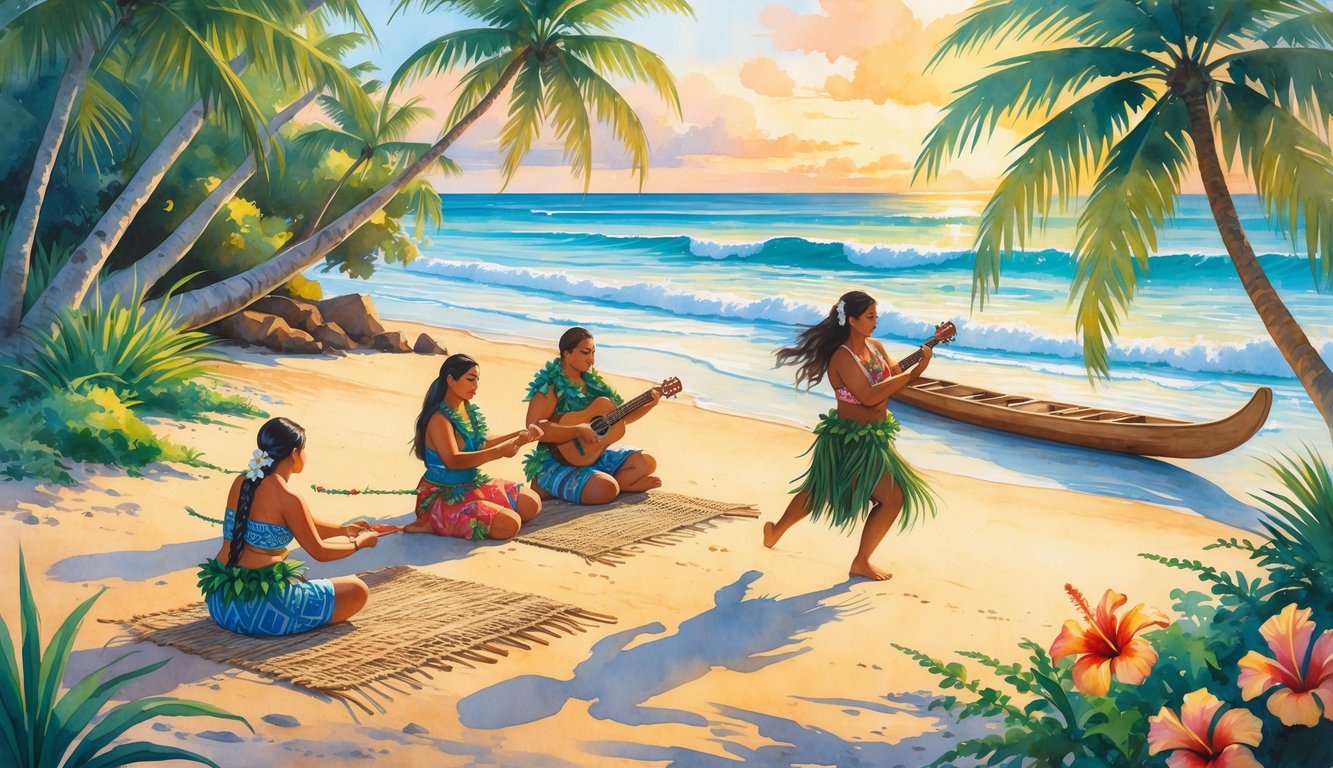
Visiting Hawaii gives me the chance to learn about real Hawaiian traditions.
I explore hands-on cultural experiences and focus on workshops and teachers that value Hawaiian culture and community.
Finding Authentic Cultural Experiences
When I look for Hawaiian cultural workshops, I check how authentic the experience will be.
Workshops led by recognized cultural practitioners or Kumu Hula, like those at 4 Days of Aloha, offer genuine activities such as hula, lei making, and music.
These classes connect me to the roots of the culture.
I check what is included in the classes.
Some offer hands-on options like carving or tapa making, while others focus on storytelling or history.
Feedback from past participants helps me decide if a workshop fits what I want to learn.
I find it helpful to join small group classes or workshops that go deeper into specific Hawaiian skills.
Intensive workshops, like those on Aloha ʻĀina O Hawaiʻi, often teach things I can’t pick up from a quick demo or show.
Connecting With Local Instructors
Connecting with local Hawaiian instructors is important for me. Local teachers know the traditions and can answer questions about history, family stories, and the meanings behind what we do.
They often share the values and perspectives that shape authentic Hawaiian cultural experiences. When possible, I look up instructors’ backgrounds before I sign up.
Some instructors, like master carvers or long-time educators, list their experience online or offer introductory videos. Feedback from other learners shows how open and helpful the instructor is.
I like talking with the teacher before the class starts, sometimes through email or social media, so I know what to expect. Many workshops, such as those on Learn Cultural Pathways, create a welcoming environment where my questions are encouraged.