
Nothing compares to the calm beauty of a sunset. As someone who loves sunset photography, I’m always searching for the perfect place to catch those golden colors.

The best sunset photography locations offer open views, stunning natural backdrops, and unique features that make every shot feel special. Whether I’m at a peaceful beach, a rugged mountain peak, or a bustling city skyline, each sunset feels different depending on where I stand.
As I explore new places and try different shots, I learn that timing and location matter most. Some of my favorite moments come from spots like a ferry ride on the Hudson River or the wide-open skies of the Serengeti.
If you want inspiration, some of the most scenic spots in the United States include Calcite Springs in Wyoming and Skagit Valley in Washington. Many lists highlight these as top sunset viewing locations.
Capturing sunsets means more than snapping a photo. I look for those memorable places that keep me coming back.
Why Sunset Photography Captivates
When I capture sunsets, I see the world in a new light and appreciate breathtaking views that appear only once a day. The mix of colors, soft glow, and tranquil beauty always draw my eye.
The Allure of Sunsets
Sunsets attract me because they bring a calm and peaceful feeling. Watching the sun dip below the horizon turns an ordinary landscape into something magical.
No matter where I am, seeing a beautiful sunset makes me feel connected to others around the world. Places like the Norwegian Fjords or Ibiza, Spain, are famous for their breathtaking sunset views.
For many people, sunsets symbolize hope and new beginnings. Photographing these moments lets me save the feeling.
Golden Hour Magic
The golden hour is a short time after sunrise or before sunset when the light turns soft and golden. I like taking photos during this time because everything glows and looks warmer.
During golden hour, sunlight feels gentle and shadows are softer. This lighting makes landscapes and faces stand out without being too bright.
Many photographers prefer golden hour because colors look richer and scenes appear more inviting. I visit the same spot at different times to see how the golden hour changes my photos.
Breathtaking Sunset Colors
I love sunset photography because of the beautiful range of colors in the sky. Yellows, oranges, reds, pinks, and purples can blend together to create almost unreal scenes.
These vibrant colors appear when sunlight passes through more of the atmosphere, scattering blue light and leaving behind longer red wavelengths. Clouds, weather, and location all play a role in the colors I see.
Photographing different sunsets lets me see how color combinations and cloud shapes create new views every day. Nature paints the sky in a new way each evening.
Essential Tips for Photographing Sunsets
Getting great sunset photos takes more than just showing up with a camera. The right tools, creative choices, and knowing how to handle tricky lighting make a big difference.
Choosing the Right Equipment
Before I leave home for a sunset shoot, I double-check my gear. My DSLR camera gives me better quality and color accuracy, but modern smartphones or mirrorless cameras also work well.
A sturdy tripod keeps my camera steady during longer exposures, which I often need in low light. I pack extra memory cards and batteries because sunsets can drain power quickly.
Filters help balance the bright sky with the darker foreground. I sometimes use a graduated neutral density filter to capture the full range of colors and details. For more packing tips, the Wandering Sunsets article lists helpful tools.
Mastering Composition
Composition matters in every photo, but especially for sunsets. I look for strong foreground elements like rocks, trees, or water to add interest and depth.
Placing these elements in the lower third of the frame using the rule of thirds makes the scene more appealing. I often include reflections on water or interesting silhouettes to avoid an empty sky.
Scouting different locations or angles helps me capture the best light and features. Moving around lets me find the perfect spot where the sun lines up with my chosen foreground.
I return to favorite locations at different times since changing conditions create new photo opportunities. Observing how the light interacts with the area, like suggested at Photography Life, helps me improve over time.
Capturing Backlit Scenes
When the sun is low, backlit scenes can be tricky. I expose for the brighter part of the sky to keep those beautiful sunset colors.
Sometimes the foreground turns very dark, so I let it become a silhouette for added drama. I avoid pointing my lens directly at the sun without proper settings or filters, since glare can wash out the image.
Using a lens hood or shading the lens with my hand reduces unwanted lens flare. If I want to keep some detail in the foreground, I use HDR (High Dynamic Range) or brighten shadows during editing.
This way, I capture both the warm tones in the sky and important details below. For more ideas, check out these sunset photography tricks from experienced photographers.
Best Iconic Sunset Photography Destinations
Bright colors and unique landscapes make certain places stand out for sunset photography. Each location offers something special, from dramatic rock formations to wide-open skies filled with wildlife.
Serengeti National Park
I watch the wide plains of Serengeti National Park turn golden as the sun drops toward the horizon. The vast landscape feels even bigger when I see silhouettes of giraffes and elephants in the distance.
Wildlife photographers call this hour prime time, as animals become more active and the low light creates dramatic shadows. The sky glows with orange, red, and pink, while acacia trees make perfect shapes against the sun’s final rays.
To capture animal silhouettes, I use a telephoto lens and set up near watering holes in the late afternoon. Patience pays off with stunning results.
The open space and wild animals make this place unforgettable.
Grand Canyon
The Grand Canyon is famous for its sunsets. The canyon’s layered cliffs light up in different colors as the sun sets.
I visit the South Rim for wide views, but the North Rim feels quieter and just as beautiful. Mather Point and Hopi Point are popular lookouts and easy for beginners to reach.
I arrive early and watch how shadows move through the canyon. Sometimes, clouds catch the last light and glow pink and gold.
A sturdy tripod helps when the light gets low. The Grand Canyon offers both wide landscapes and close-up details for sunset photography.
Sedona
Sedona is known for its bright red rock buttes and artistic vibe. As the sun goes down, the rocks glow with deep reds and oranges, creating bursts of color unique to Arizona.
I head to places like Airport Mesa or Cathedral Rock for wide views over the valley and stone formations. The short hikes are manageable, and there’s enough space for a tripod.
Light changes quickly in Sedona, especially with clear skies like these. I use wide-angle lenses to capture the sweeping landscape and foreground details.
Arriving early helps me avoid crowds during busy times. The dramatic scenery and soft evening light always draw me back.
Arches National Park
Arches National Park in Utah features over 2,000 natural stone arches set in desert landscapes. At sunset, the red sandstone glows brighter, and the sky often fills with purple and orange.
Delicate Arch is the most famous spot. I plan a short hike in the late afternoon to catch the sun behind the arch.
Spring and fall bring pleasant temperatures, making photography easier. Some of my favorite shots come from windows and pinnacles in the park, where I use unique rock shapes to frame the sun.
After sunset, the sky sometimes glows even more, so I stay to watch the changing colors. A tripod and enough water help with longer sunset sessions.
The natural beauty of these arches makes every shot feel special.
Top Coastal Sunset Locations
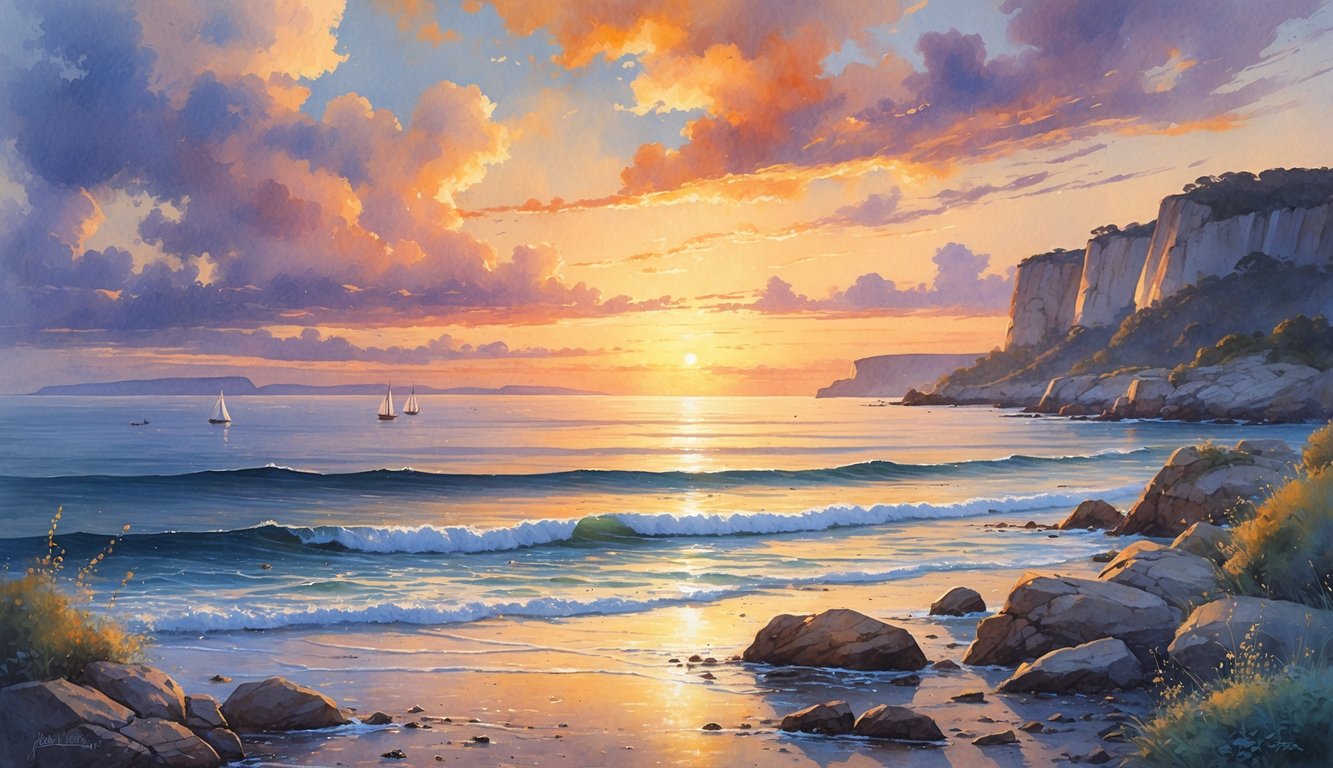
Some of the best places to capture a beautiful sunset by the ocean are along the West Coast. Each spot stands out for its unique scenery, easy access, and perfect views of the sun dipping below the horizon.
Cannon Beach and Haystack Rock
Cannon Beach in Oregon is one of the most photogenic places for sunsets on the Pacific. The wide sandy shore and dramatic Haystack Rock make perfect subjects as the sky turns orange and pink.
From the main beach, I get an unobstructed view of the massive sea stack. Tidal pools around Haystack Rock add extra reflections, especially at low tide.
For fewer crowds, I visit early in the week or outside of summer. The best compositions include driftwood, rock formations, or silhouettes of seagulls.
Pro tip: After sunset, the lingering colors can be even more vivid, so I always stay a bit longer.
Santa Monica
In Santa Monica, I love how the famous pier adds character to every photo.
The Ferris wheel lights, the historic pier, and palm trees make sunset here feel lively and iconic.
The beach is wide and easy to reach.
There’s plenty of open space for setting up my tripod.
Sometimes, I go to the top of the bluffs near Palisades Park for a higher view.
From there, I can include the coastline and city in a single shot.
Santa Monica offers both soft, pastel skies and bold orange sunsets.
Evening light often reflects off the water and creates shimmering colors.
I always check the weather because clear skies usually bring the most colorful shows.
Malibu
Malibu has a rugged coastline, sea cliffs, and hidden coves.
I often drive along the Pacific Coast Highway to find quiet stretches of sand, like El Matador Beach.
Sea caves and rock arches here naturally frame the setting sun.
At low tide, I explore the tidal pools and take close-ups with the sunset glow in the background.
Golden hour in Malibu feels calm and peaceful.
Surfers ride waves and pelicans fly by.
Sometimes, I spot dolphins offshore, which makes the scene even more special.
The variety of locations along this coast means I can always find new sunset photos.
Unforgettable Sunset Spots in the US
I love capturing sunsets in places where the colors look unique and the views stand out.
A wide-open ocean, a historic lighthouse, or soft sand make the last light of the day extra beautiful.
Key West
When I first visited Key West, Florida, I quickly saw why it’s famous for sunsets.
Every evening, people gather at Mallory Square for the Sunset Celebration.
Street performers, artists, and visitors all wait for the sun to dip below the horizon.
The sky fills with streaks of orange, pink, and purple, often reflecting off the Gulf of Mexico.
If I want a quieter scene, I go to Fort Zachary Taylor Historic State Park.
Here, I find less crowded views and more natural beauty.
The open water creates a huge, colorful sky that’s hard to miss.
You can read more about the best places to see a sunset in Key West on the Fodor’s list of top sunset spots in the U.S..
Outer Banks
I took some of my favorite sunset photos in the Outer Banks of North Carolina.
This area has long stretches of barrier islands, soft beaches, and quiet harbor towns.
Cape Hatteras and Corolla Beach offer wide skies, a steady breeze, and calm waters that look golden at sunset.
If I get lucky, I can include a lighthouse or a fishing pier in my photo.
The colors here tend to be softer and very peaceful.
I like how the dunes and grasses add texture to each shot.
Boat rides in the sound at dusk give me a different angle with nice reflections.
Many people bring a picnic and relax while they wait for sunset.
For more tips on beautiful sunset locations like the Outer Banks, check out this guide to U.S. sunsets.
Clearwater Beach
Clearwater Beach in Florida has a special sunset vibe with soft white sand and clear water.
I often set up my camera near Pier 60.
There’s a nightly sunset festival with local vendors, musicians, and street performers.
The best view faces west, where I can catch the sun sinking into the Gulf of Mexico.
The beach glows with deep golds and reds as the day ends.
Sometimes, dolphins swim past and add extra magic to the scene.
I like to shoot just as the sun touches the edge of the water for the brightest color.
Families, couples, and photographers gather to watch, making it feel festive but never chaotic.
You can see why Clearwater is known for sunsets by visiting one of the top sunset lists in the U.S..
Urban and Desert Sunset Experiences
Some of the best sunset photography spots are in both busy city skylines and quiet desert landscapes.
Each one offers lighting, colors, and views that stand out in photos.
New York City Skylines
When I want to capture city lights and sunset colors together, I go to New York City.
The best views are from rooftop bars or parks along the East River, like Brooklyn Bridge Park or Gantry Plaza State Park.
Tall buildings reflect sunlight and create glowing windows and long shadows.
During summer, “Manhattanhenge” lines up the setting sun with the city’s grid and creates rare photo moments.
I go early to secure a spot and use wide-angle shots to fit skyscrapers and the sky in one frame.
After sunset, city lights add extra sparkle, so I keep my camera ready even as the sun disappears.
White Sands National Park
When I photograph the sunset at White Sands National Park, I get a totally different feeling.
The white gypsum dunes glow in warm colors as the sun drops, shifting from gold to soft pinks and purples.
Since the sand is so bright, I adjust my camera settings carefully.
I use a polarizing filter to cut glare and bring out the sky’s colors.
I also get low and focus on patterns in the sand, which change as the light fades.
The open space lets me use silhouettes for a dramatic effect.
It can get windy, so I keep my gear covered and look for footprints in the sand to show the scale of the dunes.
You can find more about amazing desert sunset spots at this list of top 10 sunset locations in the world.
Joshua Tree National Park
Joshua Tree National Park features sharp shadows and twisted trees beneath glowing skies.
The rocky landscape and unique Joshua trees give me strong shapes for my photos.
Golden hour brings out oranges, reds, and deep shadows that add drama to every shot.
I like climbing up the rocks for a wider view or zooming in on the trees for detail.
I stay after sunset because the sky often lights up with pink and purple hues before fading to night.
I always check the weather so clouds don’t block the sun.
For variety, I switch lenses to capture both wide landscapes and close-ups of cactus and boulders against the sky.
Using a tripod helps me work with low light as dusk falls.
Discovering Hidden Gems for Sunset Photography
When I want to capture a beautiful sunset, I skip the crowded places and search for hidden gems. These quiet spots give me the best photos and a peaceful experience.
I often discover remote coastlines and small mountain valleys. In places like the volcanic craters of Hawaii and the valleys in Yellowstone, the sky fills with color as the sun goes down.
Watching the day end in a quiet spot feels magical. Smaller river canyons and calm lakesides also work well for sunset shots.
Here’s a quick list of features I look for in a hidden spot:
- Open horizon: Nothing blocks the view of the sky
- Water reflection: Lakes or rivers make colors stand out
- Unique landscape: Mountains or cliffs add interest
- Low foot traffic: Fewer people create more peace
If you want more ideas, check out guides to under-the-radar places for sunset photography across the U.S.
You can also explore less crowded mountain vistas for amazing views.


