Capturing a volcano through your camera lens feels truly special. The powerful landscapes, flowing lava, and smoky skies make these places a must for any photographer.

The best photography spots for volcanoes let you safely see dramatic eruptions, colorful craters, and glowing lava flows up close.
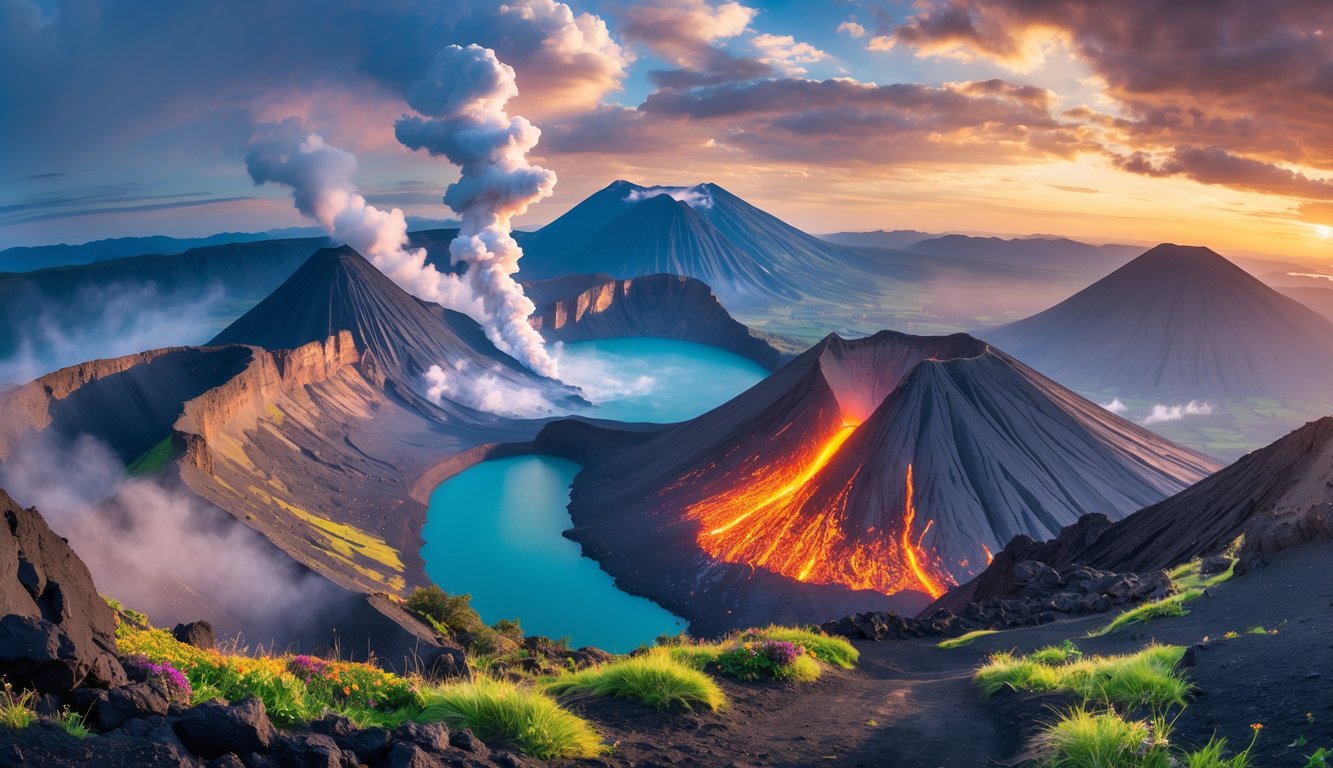
I’m excited to share some of the best locations I’ve found for photographing these amazing natural wonders. From the breathtaking craters in Hawaii Volcanoes National Park to the famous view of Arenal Volcano in Costa Rica, these places promise incredible shots for your collection.
Let’s explore locations that will fill your camera with unforgettable images.
Top Volcano Photography Destinations
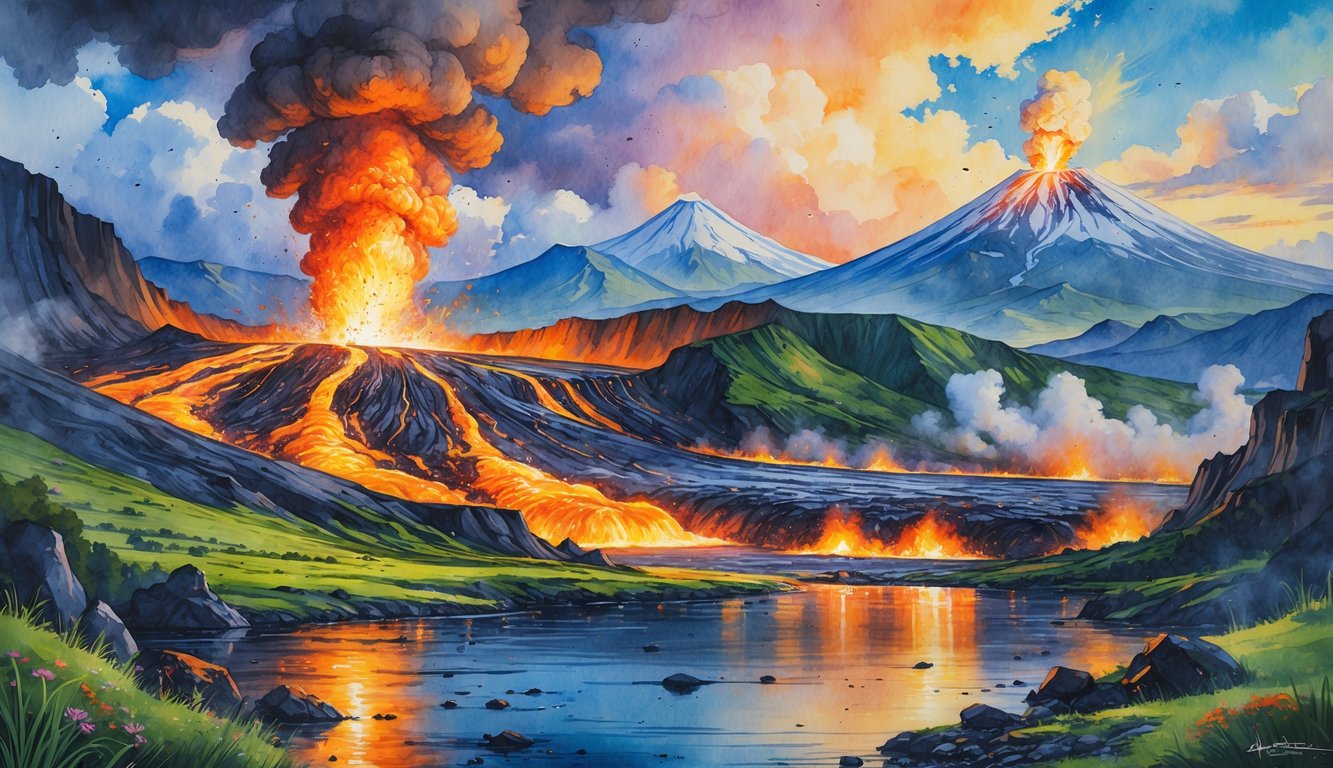
Hawaii gives photographers some of the best opportunities for volcano photography. Its unique landscapes, frequent volcanic activity, and visitor-friendly parks make it a dream for my camera.
Hawaii Volcanoes National Park
Whenever I visit Hawaii Volcanoes National Park, I find something new to photograph. The park covers two major active volcanoes: Kīlauea and Mauna Loa.
Both volcanoes impress with their eruptions and attract photographers and scientists. Early morning and late afternoon light highlight the park’s rugged features.
The park has many lookout points, hiking trails, and safe spots to observe craters and steaming vents. I check current eruption updates and trail conditions before heading out.
Photography here includes glowing lava, smoking craters, hardened lava fields, and rare plants growing on volcanic soil. I keep extra batteries and memory cards handy because the scenery changes constantly.
Big Island’s Most Scenic Volcanoes
The Big Island has more than just Hawaii Volcanoes National Park. Mauna Kea and Hualālai are two other impressive volcanoes I love to photograph.
Mauna Kea stands tall and hosts observatories, making it a great place for sunrise and sunset shots above the clouds. Hualālai is quieter but offers scenic forest trails and old lava flows.
Many spots around the Big Island let me capture the contrast between black lava rock, green forests, and blue ocean.
Best Scenic Spots:
- Kīlauea Overlook
- Mauna Loa Lookout
- Chain of Craters Road
- Mauna Kea summit
- Kona coffee region (old lava flows)
The mix of ancient and recent volcanic features keeps my photos interesting. For more inspiration, check out photo tips from lava hunters at How to Photograph Volcanoes: Tips from a Professional Lava Hunter (https://www.shutterbug.com/content/life-lava-hunter-dodging-natural-fireworks-cinder-bombs-professional-volcano-photographer).
Famous Lava Flow Locations
Capturing active lava flows is always a highlight. Kīlauea is famous for its surface lava flows, often visible near the coast or flowing into the ocean.
These scenes show incredible color contrasts, especially at dusk or during the “blue hour.” Some years, lava pours down the slopes and creates huge steam plumes when it reaches the sea.
Other times, it moves slowly across fields of old black lava, forming glowing rivers of orange and red. The Fagradalsfjall volcano eruption in Iceland offers a similar experience, with smooth pahoehoe flows that many find visually stunning.
Details on these types of flows are available at How To Photograph Volcanoes – Outdoor Photographer (https://www.outdoorphotographer.com/tips-techniques/nature-landscapes/how-to-photograph-volcanos/).
Important Tips:
- Check safety updates before getting close to active lava
- Carry protective gear for yourself and your camera
- Use a tripod for long exposures, especially at night
With planning and a bit of luck, I can capture some of the most beautiful and powerful natural scenes in the world.
Best Vantage Points for Capturing Volcanic Landscapes
When I photograph volcanoes, I search for places with easy access and dramatic views. Some of my favorite spots also let me safely capture broad scenes and impressive details.
Chain of Craters Road
Chain of Craters Road is my top pick for seeing a variety of volcanic landscapes up close. This scenic drive winds through Hawai‘i Volcanoes National Park and passes old lava flows, craters, and dramatic cliffs.
At many stops along this road, I can pull over and set up my camera with space to work. Early in the morning or near sunset, the light glows on the black lava fields and rocky terrain.
A wide-angle lens helps me include sweeping views and the scale of the volcanic features. If I want shots of fresh lava (when it is visible and safe), I check for updates from park rangers since conditions can change quickly.
Safety gear is important. I wear sturdy shoes and stay on marked paths to avoid unstable ground.
On this road, these things matter most:
- Stopping at viewpoints: Dedicated pullouts offer some of the best sights.
- Changing conditions: Clouds, steam, and sunlight keep the scenes interesting.
- Diverse subjects: From massive craters to twisted lava tubes, there’s a lot to shoot.
Overlooks with Panoramic Views
Good overlooks help me capture panoramic views of volcanic landscapes. High vantage points show wide stretches of land—sometimes all the way to the ocean.
Popular overlooks in Hawai‘i and Guatemala give me a safe distance for photographing both active and dormant volcanoes. Before I set up my tripod, I look for clear lines of sight and try to avoid areas with too much steam or haze.
Shooting during the blue hour at dawn or dusk brings out the glowing colors of lava and highlights textures in the cooled lava rock. Cloudy skies during the day also help because direct sunlight can create glare and hide important details, as explained by this volcano photography guide.
At these overlooks, using panorama mode or stitching multiple photos together helps me capture the wide scale of the scene. I bring both wide and telephoto lenses so I can zoom in on details while still showing the context around each volcano.
Essential Photography Gear for Volcanoes
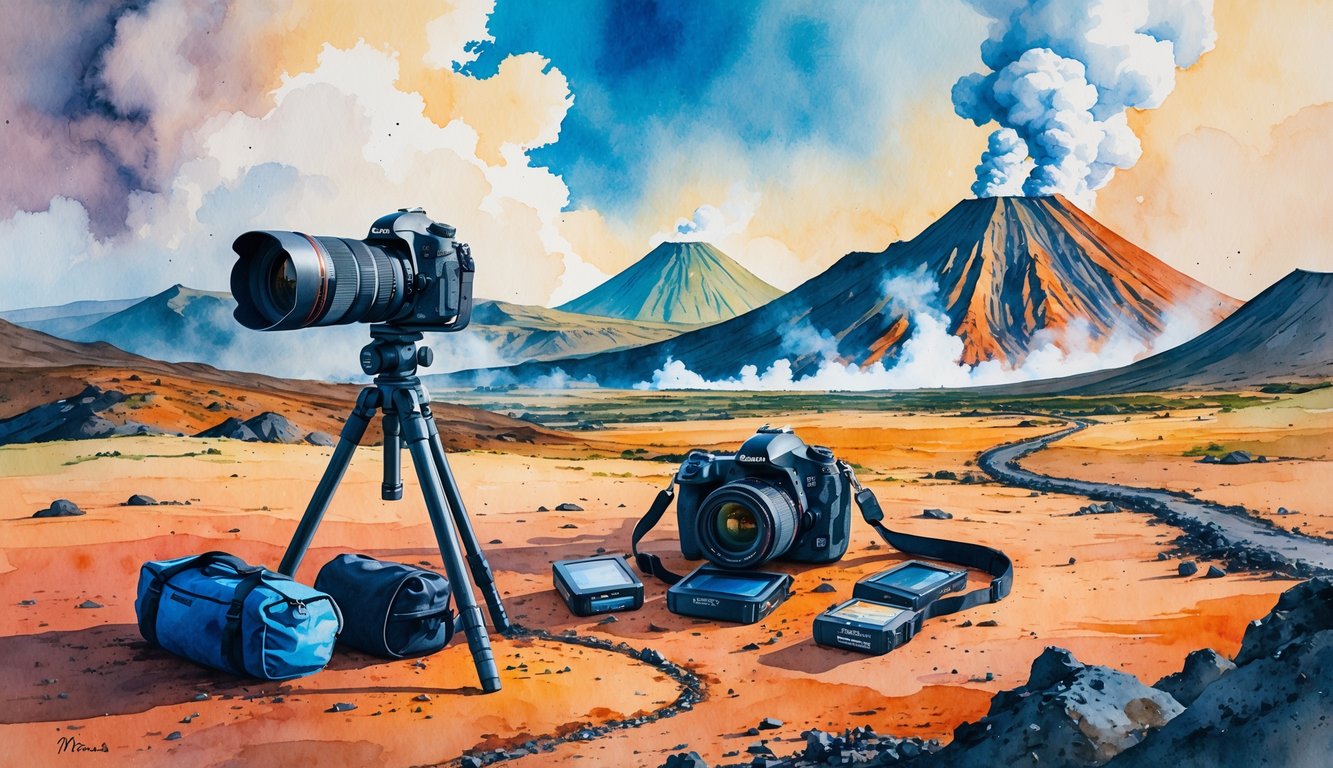
When I pack for volcano photography, I choose gear that can handle tough outdoor conditions and still help me capture clear, detailed shots. Lightweight equipment, stability, and weather protection make a big difference during hikes and in volcanic environments.
Choosing Between DSLR and Mirrorless Cameras
For shooting volcanoes, both DSLR and mirrorless cameras work well. DSLRs are durable and often easier to grip when I wear gloves.
They also have reliable battery life, which matters in remote locations. Mirrorless cameras are lighter and more compact, which helps reduce fatigue on long hikes.
Mirrorless models provide a live histogram and electronic viewfinder, letting me judge exposure and change settings quickly. Weather sealing is key for any camera body.
Volcanic ash and dust can clog up buttons and sensors, so I look for cameras that can handle these conditions. For lenses, I bring a wide-angle for landscapes and a zoom lens for close-ups without getting too close to dangerous spots.
For more tips on the best camera gear, check out this guide for volcano photography equipment.
Tripods and Stability Essentials
I always bring a sturdy tripod when photographing volcanoes. The ground on volcanoes can be rocky, uneven, or covered in loose ash.
I choose a tripod with adjustable, spiked feet to keep my camera steady in different conditions. Carbon fiber tripods are ideal since they are strong but lightweight.
For long exposures or low-light scenes like lava at night, stability is a must. I use a remote shutter release or my camera’s timer to reduce vibration.
I also pack a lens cleaning kit since ash and dust can settle on the lens quickly. More safety and gear tips are available in this volcano photo safety article.
Tripod checklist:
- Adjustable, sturdy legs
- Spiked feet for loose ground
- Lightweight material
- Remote shutter or timer
- Lens cleaning kit
Trekking Poles and Outdoor Equipment
When I hike in rugged volcanic landscapes, I rely on trekking poles for balance and to reduce fatigue. Trails can be steep, with loose rocks and uneven surfaces.
Good trekking poles give me stability and help prevent slips, especially when I carry my camera equipment. I wear sturdy hiking boots and use a weatherproof backpack to protect my gear from ash, rain, or mud.
A padded camera bag shields my lenses and cameras from bumps and dust. For extra safety, I sometimes wear a helmet if I’m near areas where falling rocks or cinders are possible.
Outdoor essentials:
- Trekking poles with good grips
- Sturdy, waterproof boots
- Weatherproof, padded camera bag
- Helmet (for active volcano areas)
- Protective clothing to guard against heat and sharp rocks
Tips for Safely Photographing Volcanic Activity
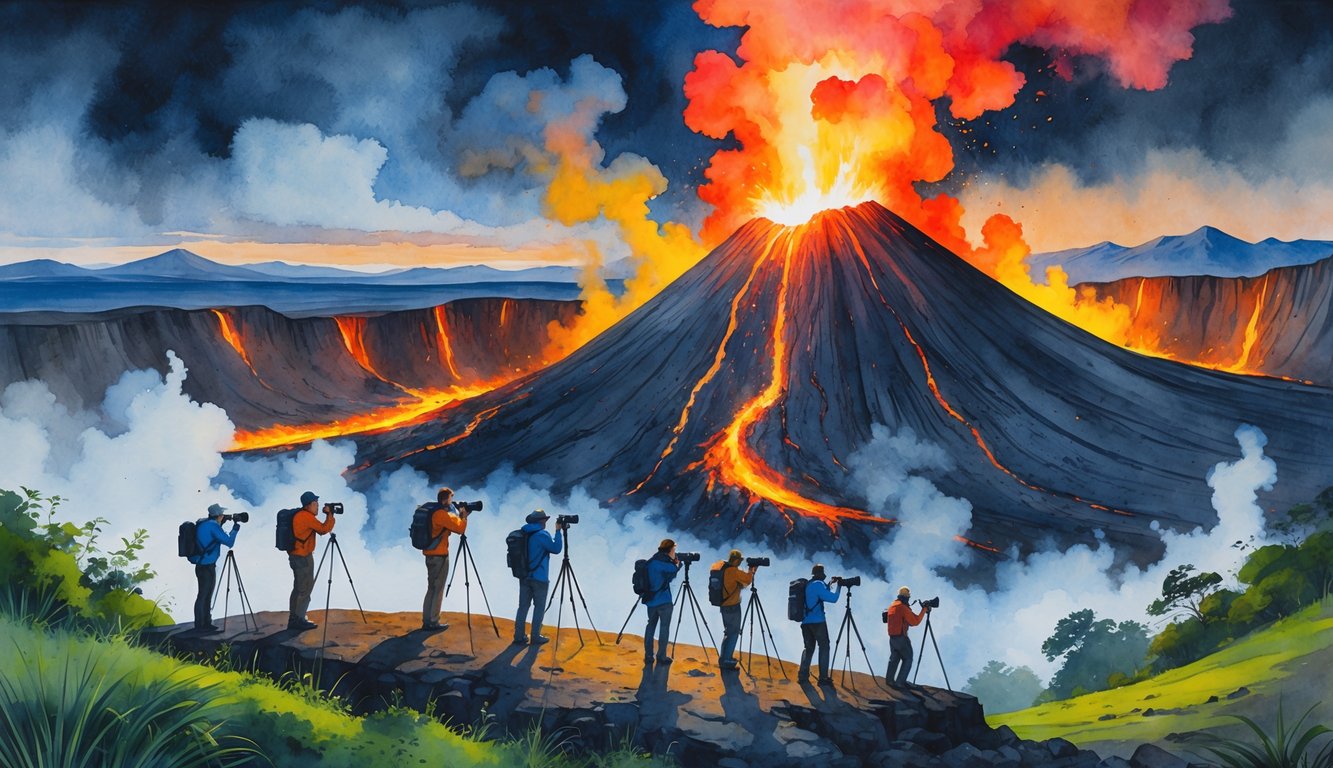
Safety comes first when I photograph volcanoes. Planning ahead and paying attention to my surroundings make the experience much safer and more enjoyable.
Timing Your Visit for Volcanic Activity
I research current volcanic activity before I go out. Some volcanoes erupt with no warning, while others stay quiet for years.
I use online resources and local experts to get the latest information. This helps me pick the best time for my visit.
Many photographers say the “blue hour” at dawn or dusk creates the best light for lava and landscapes. If the volcano is active, I keep my distance and follow official warnings.
I avoid closed areas and respect all safety signs. Some paths and viewing spots may close suddenly due to new eruptions or gas hazards.
Being flexible is important when working in these changing environments.
Weather and Environmental Considerations
Weather changes quickly around volcanoes. Clouds, rain, and volcanic gases can appear with little warning.
I pack rain gear for myself and my camera to protect against ash and moisture. I choose a sturdy, weather-sealed camera body and a wide-angle lens for landscapes.
When I photograph active volcanoes, I use mid and long focal length lenses to shoot from a safer distance.
Bright sunshine makes escaping gases look like a white veil in photos. I look for cloudy skies or shoot during early morning or late afternoon so the lava’s glow shows up better.
You can find more details about how light and weather affect volcano images at Outdoor Photographer’s volcano tips and Shutterbug’s advice.
Creative Techniques for Capturing Volcanic Landscapes
To get the most out of volcanic landscapes, I use special photography techniques. I experiment with exposure, angles, and light to highlight the drama, shape, and energy of each volcano.
Long Exposure Lava Flow Shots
When I want to show the smooth movement of lava, I use long exposure photography. I set my camera on a tripod and use a slow shutter speed—sometimes several seconds—to turn moving lava into glowing streams.
The slow shutter makes the bright, hot lava look like rivers of light against the darker ground. I use a low ISO to avoid too much grain.
Using a remote shutter or timer helps keep the shot steady and sharp. For safety, I always watch my distance and pay attention to sudden changes in the lava’s path.
Early evening or dusk gives me the best colors and contrast. The faint light lets the glow of the lava stand out without losing the surrounding volcanic landscape.
For more tips on photographing this kind of scene, I check guides like How to Photograph Volcanoes.
Panoramic and Wide-Angle Photography
Volcanic sites are perfect for sweeping panoramic photos. I use a wide-angle lens or set my camera to capture multiple images for a panoramic shot.
This way, I can fit the entire volcanic crater, lava flow, and landscape into one frame. A tripod helps keep each shot level when I stitch them together later.
I include some foreground details—like rocks or plants—to give the scene depth. It helps viewers feel like they are standing right there with me.
Clouds, smoke, and light from the eruption can add to the dramatic effect. By planning my shot from a good viewpoint, I get the best panoramic views of the volcano and the surrounding land.
Nighttime Volcano Photography
Shooting volcanoes at night is a challenge, but it’s also very rewarding. I use a higher ISO setting—sometimes up to 800—to catch the glow of the lava and the stars above.
A sturdy tripod keeps the shot clear during longer exposures. To photograph volcanic “fireworks” or glowing lava bombs, I set my shutter to freeze fast movement, like 1/1000th of a second or faster.
Sometimes, I combine long exposures for the lava and short exposures for eruptions to show both steady glow and quick bursts. Safety is even more important at night because it’s harder to see hazards.
Having a guide is a good idea if I’m not familiar with the volcano. For more professional tips, I read guides like How to Photograph Volcanoes: Tips from a Professional Lava Hunter.
Packing and Preparing for a Volcano Photo Adventure
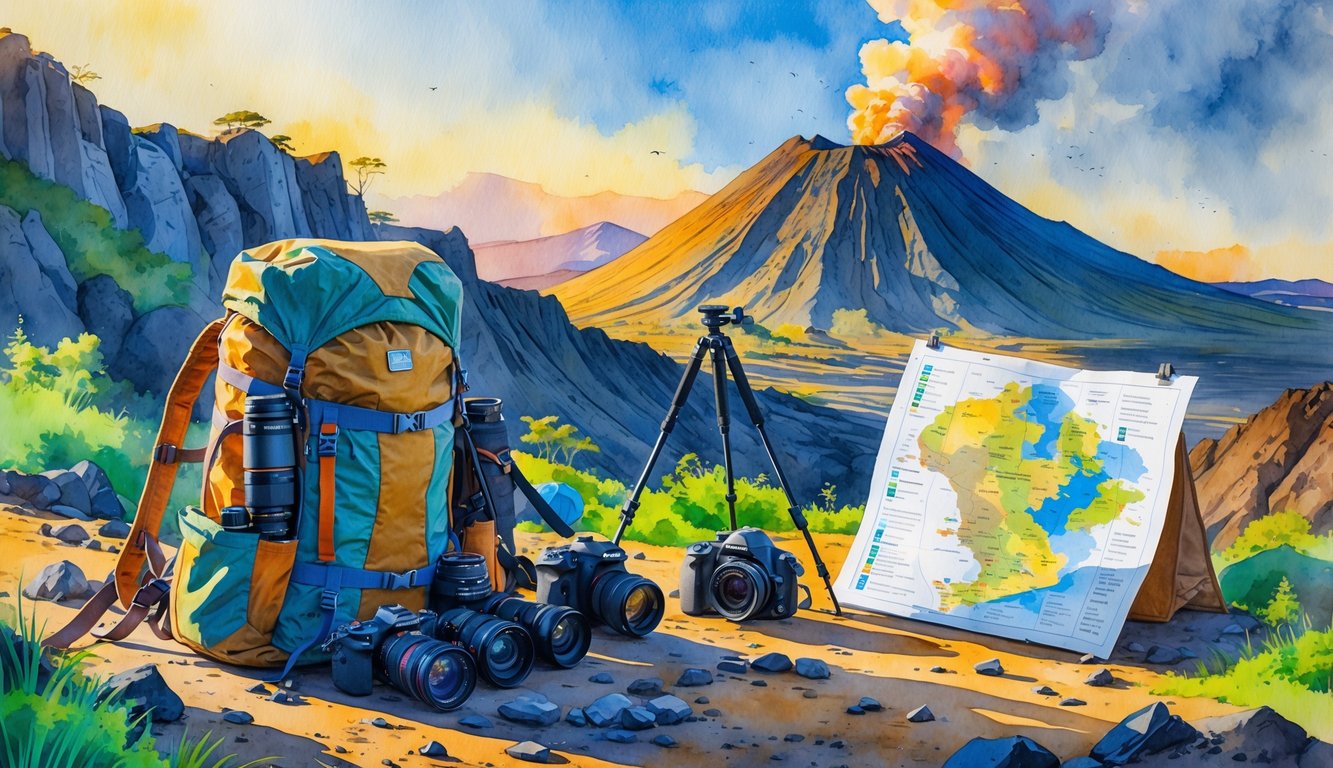
Packing for a volcano photo trip means thinking ahead about safety, gear, and travel rules. Careful choices now help me focus on capturing dramatic sights later.
Safety Gear and Travel Essentials
When I pack for a volcano, safety comes first. I bring a sturdy pair of hiking boots with good grip, since the ground is usually rocky or slippery.
A helmet is a must if I’m close to any active flows. I also carry a basic first aid kit.
Dust and ash can cause breathing problems, so I pack an N95 or P100 mask. Sunglasses and sunscreen protect my eyes and skin.
I always bring several liters of water, high-energy snacks, and a flashlight or headlamp for early morning or night photography. I pack my camera gear last, after making sure I have space for all my safety items.
A weather-sealed camera and a wide-angle lens help me handle ash or unexpected rain. Extra batteries and memory cards are a lifesaver on long hikes, as suggested by these helpful volcano photography tips.
Planning Your Route and Permits
Before heading out, I check the latest volcano activity alerts and weather forecasts. Some trails may close suddenly due to eruptions or earthquakes.
I check park websites, local news, and talk to guides to get current details. For some volcanoes, I need special permits or reservations, especially in popular or protected areas.
I find out the rules ahead of time so I’m not turned away at the entrance. Timing matters too, because lighting changes quickly and some active volcanoes only allow visitors during certain hours.
I use online maps and official hiking guides to plan my route. I mark important safety stops and exit options.
I make sure someone at home knows my plan, route, and expected return time. This way, I feel prepared but also flexible in case something changes.
Respecting Nature and Local Regulations
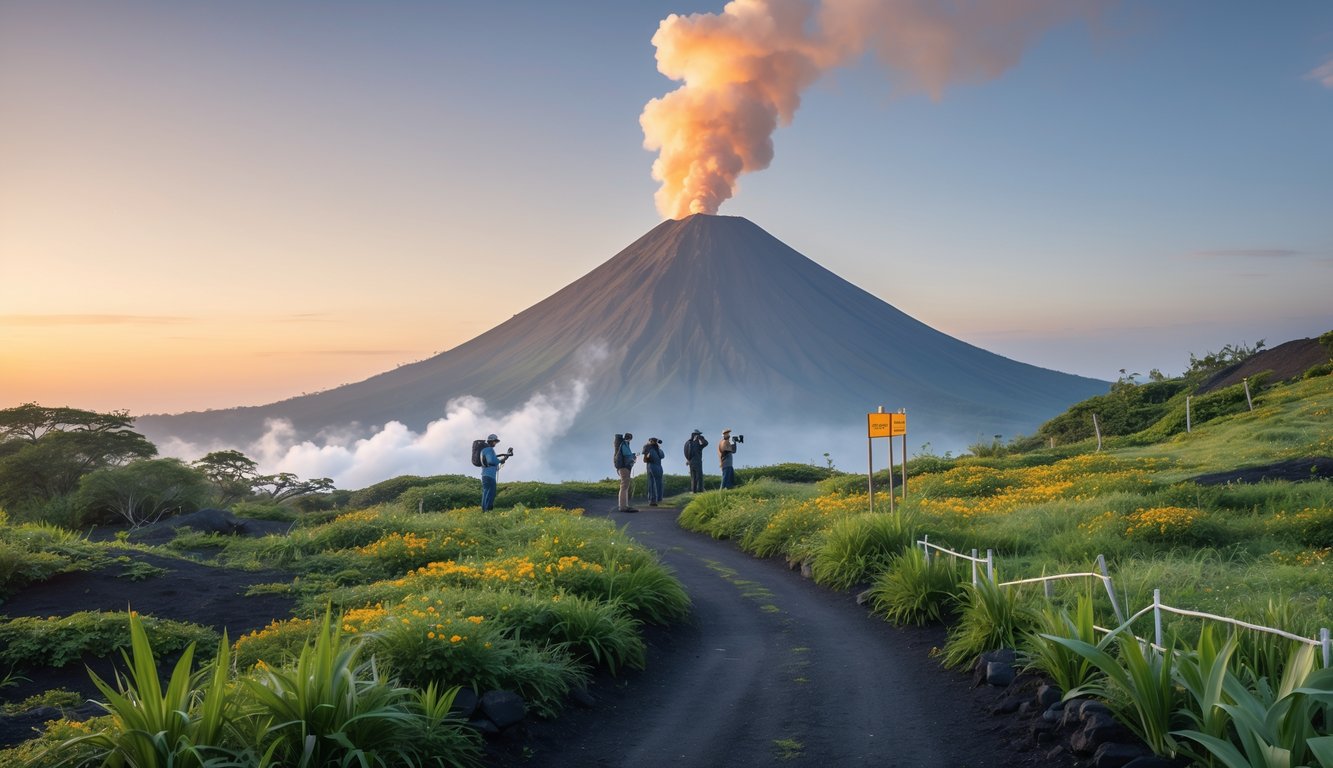
Keeping volcano sites clean and following all local rules protects the land and visitors. I try to leave no trace and always listen to guides or signs near active areas.
Minimizing Environmental Impact
When I visit volcanoes, I avoid disturbing plants or wildlife. Staying on marked trails protects fragile ground and keeps me safe from unstable spots.
In some places, rare plants grow right along the edges of lava flows. Even a few steps off a path can do real harm.
I pack out any trash, including snack wrappers or water bottles. I avoid picking up rocks or flowers, no matter how tempting it may be.
Using a zoom lens instead of walking closer helps me get great photos without stepping where I shouldn’t be. Local guides often share tips on the best ways to respect nature and suggest the safest spots for photos.
By following their advice, I help preserve these sites for everyone. For more helpful ideas, there are practical tips for safely photographing volcanoes that stress this same point.
Staying Informed About Park Rules
Before heading out, I check the official website or ask a ranger about current rules.
Some volcano areas close with little notice because of eruptions or gas, so I find out where I can go.
If I break the rules, I might face fines or have to leave the area.
I look for closure signs, warnings, or guided routes.
Some places need special permits, especially near active vents.
If I’m unsure, I hire a local guide who knows the rules and the safest viewing spots.
Guided tours help me stay safe and follow important local guidelines.
Local advice changes often because volcanoes are unpredictable.
Even small earthquakes or new lava flows can affect safety.
Some guides explain how often the area changes and help me stay up to date with volcano activity alerts.