Oahu gives beginners some of the best conditions in the world for learning to surf. Warm water, consistent waves, and skilled instructors help make it easy to get started.

The best way to start surfing in Oahu is to book a beginner-friendly lesson at a calm beach like Waikiki. Here, gentle waves help build confidence.
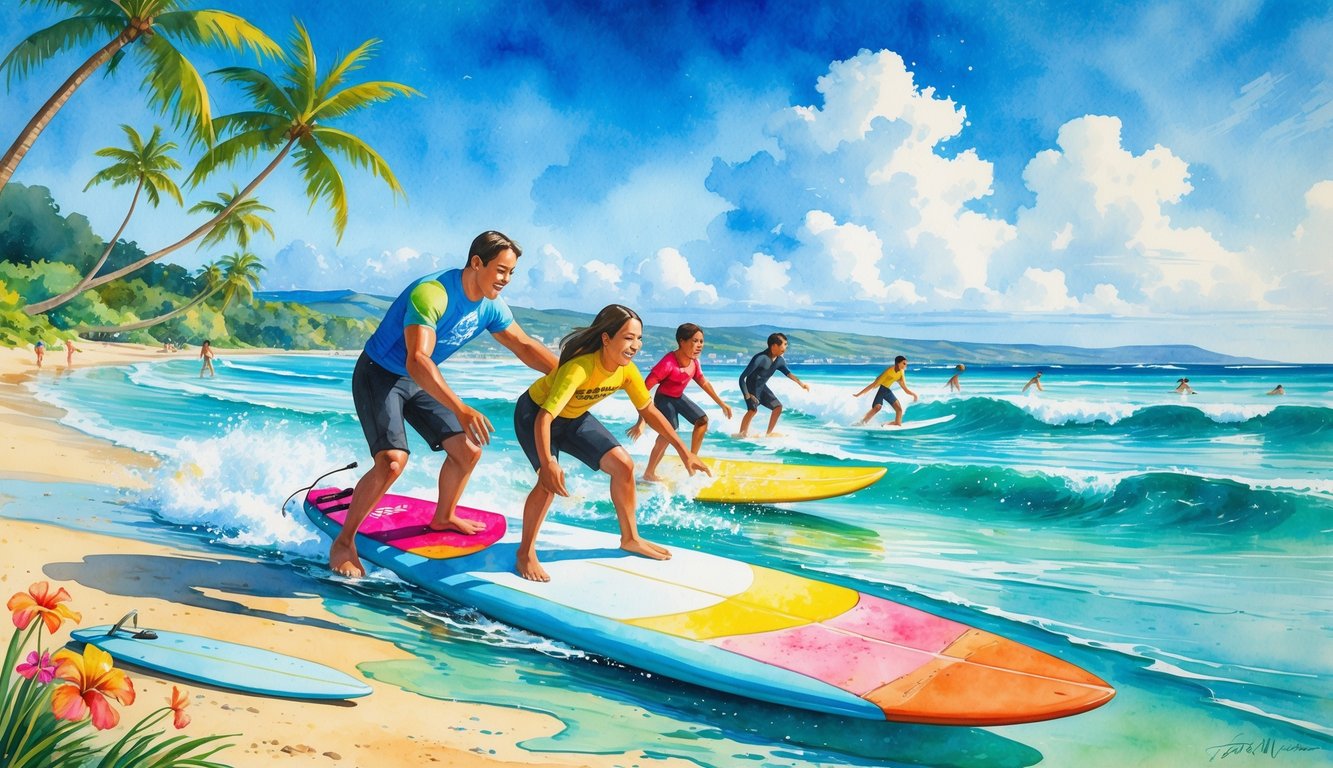
Many surf schools on the island give step-by-step instruction, safety guidance, and equipment. You only need to bring swimwear and sunscreen.
Popular spots such as Waikiki Beach, Ala Moana, and the North Shore’s Chun’s Reef offer safe environments for beginners. These spots also allow you to enjoy the island’s beauty.
With many options, you can find the right lesson by matching your skill level, budget, and location. Some schools teach in small groups, while others give private coaching for quicker progress.
Why Oahu Is the Perfect Place for Surfing Lessons
Oahu has steady surf conditions, warm ocean temperatures, and a long tradition of teaching beginners. Many beaches have gentle breaks that make it easier for new surfers to practice safely.
Consistent Waves and Warm Waters
Oahu’s beaches, especially Waikiki, have waves that break in a predictable way. This helps beginner surfers learn timing and balance without facing rough swells.
The island’s south shore often has small to medium waves year-round. Even in winter, when the North Shore gets big surf, spots like Ala Moana and White Plains stay beginner-friendly.
Water temperatures stay around 77–82°F (25–28°C). Surfers rarely need wetsuits, so lessons last longer and feel more comfortable.
Gentle waves at spots like Waikiki Beach give learners more time to stand up and ride. These conditions help students progress and lower the risk of injury.
Welcoming Surf Culture
Surfing in Oahu connects closely to Hawaiian history. Locals enjoy sharing the sport with newcomers, and many instructors see teaching as a way to keep traditions alive.
Surf schools focus on safety, respect for the ocean, and proper etiquette in the lineup. Beginners learn how to surf and how to interact respectfully with others.
Many instructors grew up surfing on the island. Their local knowledge helps students pick the right spots and understand changing conditions.
Some schools, like those in the Top 10 Oahu Surfing Schools, offer both group and private lessons. This gives flexibility for different learning styles.
Overview of Surfing in Hawaii
Hawaii is the birthplace of surfing. Ancient Hawaiians rode wooden boards long before modern surfboards existed, and the sport is still an important cultural practice.
Oahu is often called the surfing capital of the world because it has waves for every skill level. From calm beginner breaks in Waikiki to the powerful winter swells of the North Shore, the island offers unmatched variety.
For beginners, Beginner Surf Spots in Oahu like Canoes and Pops provide safe, shallow areas with slow-breaking waves. These spots give learners space to practice without heavy crowds or strong currents.
How to Choose the Right Surf Lessons in Oahu
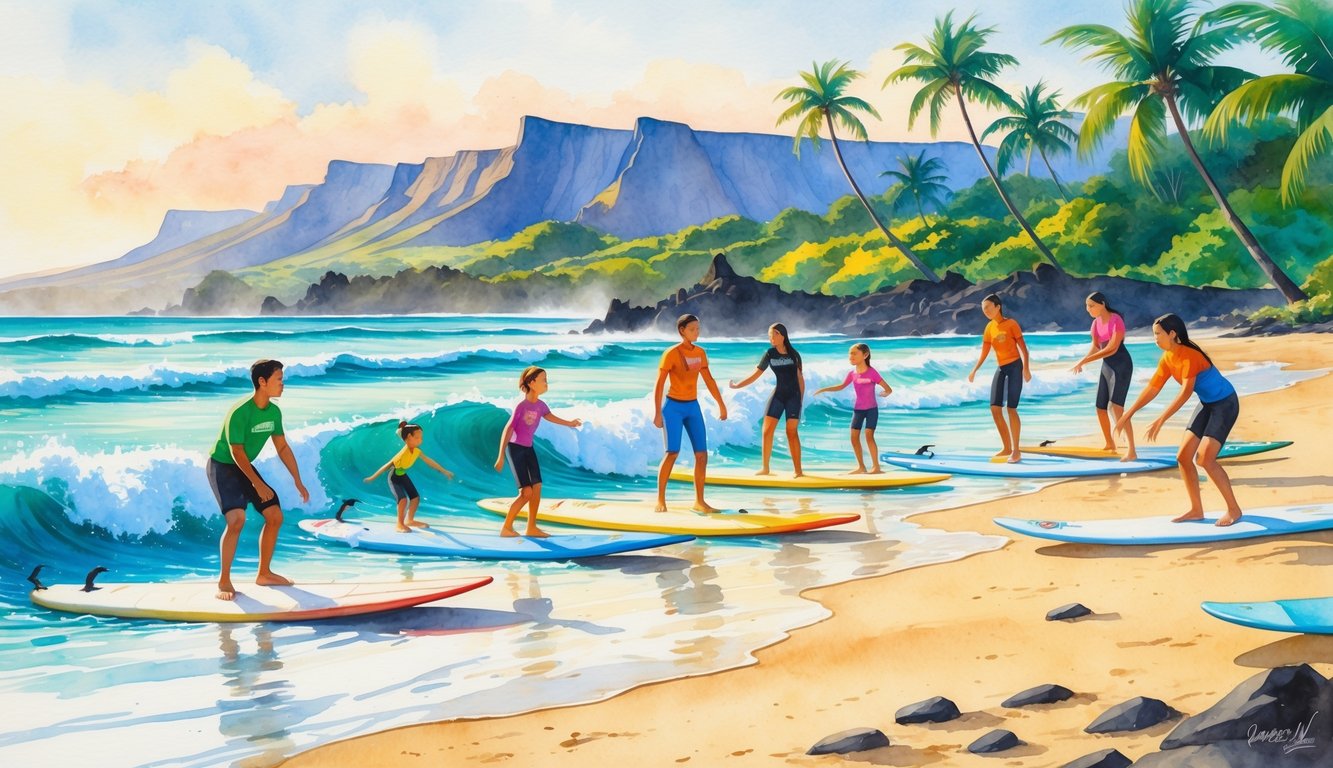
The best surf lessons match your skill level, comfort in the water, and learning style. Lesson format, instructor experience, and the right gear can make learning safer and more enjoyable.
Group vs. Private Surf Lessons
Group surf lessons are usually more affordable and create a social atmosphere. They often have 4–6 students per instructor, which works well for beginners who like learning with others.
Beaches like Waikiki Beach offer many group options with gentle waves.
Private surf lessons give one-on-one attention. The instructor can focus on your specific skills and correct mistakes quickly.
Private lessons are a good choice if you want faster progress or have limited time.
When choosing, consider:
| Lesson Type | Best For | Average Cost | Attention Level |
|---|---|---|---|
| Group | Social learners, budget-conscious | Lower | Shared |
| Private | Focused learners, short visits | Higher | Individual |
Some surf schools also offer semi-private lessons for 2–3 people. This is ideal for friends or families.
Instructor Qualifications and Safety
A qualified instructor has surf coaching experience and water safety training. Many reputable schools in Oahu hire instructors certified in CPR and first aid.
Students should ask about the instructor’s local knowledge. Instructors who know Oahu’s surf spots, like Ala Moana Beach Park or Chun’s Reef, can hold lessons in safe, beginner-friendly conditions.
Safety steps often include:
- Checking wave size and weather before lessons
- Teaching how to fall safely
- Explaining surf etiquette to avoid collisions
Choosing a school with a strong safety record helps reduce the risk of accidents.
Surf Equipment: Rash Guard, Wetsuit, and Boards
Most surfing lessons in Oahu provide the needed equipment. A rash guard protects your skin from board friction and sunburn.
In Oahu’s warm water, you usually don’t need a wetsuit, but some people prefer a thin one for comfort. Beginners often use longboards, which are more stable and easier to paddle.
Many schools use soft-top boards to lower the chance of injury. Students can ask if gear is included in the lesson price.
For example, Kahu Surfing School provides boards and rash guards for all students. You can bring your own gear, but school equipment usually fits local conditions well.
Top Surf Schools and Lesson Spots in Oahu
Oahu has calm, beginner-friendly waves in some areas and more challenging surf in others. Many schools offer both group and private lessons, so visitors can choose based on skill level, budget, and location.
Waikiki Beach and Waikiki Surf Lessons
Waikiki Beach is one of the most popular places to learn to surf in Hawaii. The waves here are long and gentle, giving beginners more time to stand up and balance.
Lessons run year-round, with summer often bringing the smoothest conditions. Many instructors teach in shallow areas, so students can practice without drifting far from shore.
Several local companies offer Waikiki surf lessons that include surfboard rental, rash guards, and safety instructions. Group lessons usually cost less, while private lessons give more one-on-one coaching.
North Shore and Other Beginner-Friendly Beaches
The North Shore is famous for big winter waves, but it also has calmer spots during certain seasons. Chun’s Reef, for example, offers smaller waves that are good for first-timers when conditions are right.
Ala Moana Bowls, closer to Honolulu, can also be beginner-friendly when the surf is small. These areas may be less crowded than Waikiki, giving learners more space to practice.
Beginners should check surf reports before heading to the North Shore. Winter swells can make the water unsafe for new surfers, so many visit in summer when waves are smaller.
Popular Surf Schools: Ohana Surf Project and More
The Ohana Surf Project is known for personalized instruction and flexible lesson options. They teach at several locations, including Waikiki, and adjust sessions to fit each student’s pace.
Other well-rated schools include Hans Hedemann Surf School and Kahu Surfing School. Many of these offer packages that combine surf lessons with stand-up paddleboarding or snorkeling.
Most surf schools in Oahu charge between $70 and $100 for a two-hour group lesson. Private instruction usually costs $150 to $250.
Booking early is a good idea, especially during busy travel seasons.
Essential Tips for Beginner Surfers in Oahu
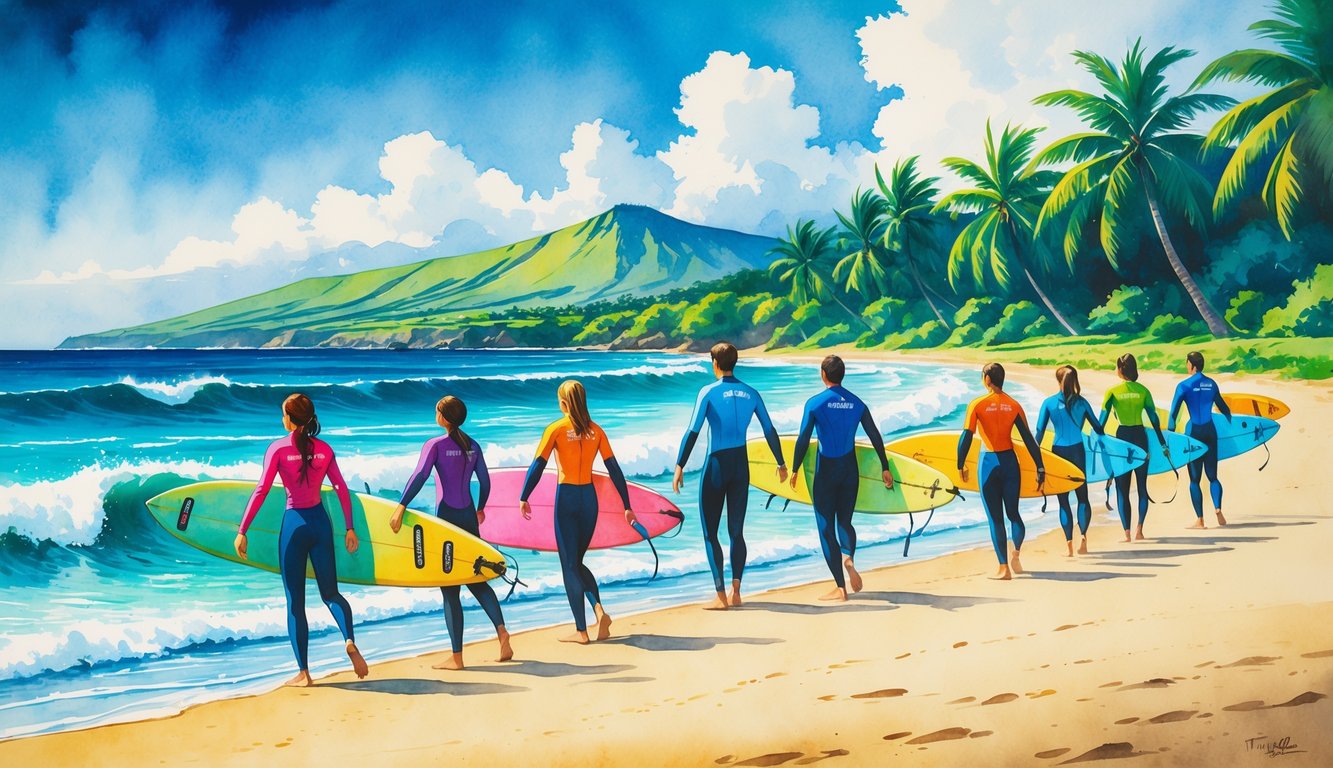
Beginner surfers in Oahu can progress faster by learning local surf etiquette, coming prepared for lessons, and practicing skills that build confidence. Knowing how to respect the lineup, handle equipment, and adapt to different wave conditions helps create a safe and positive experience.
Surf Etiquette and Local Customs
Oahu’s surf community values respect. Surfers should wait their turn in the lineup, avoid “dropping in” on another surfer’s wave, and always paddle around—not through—the main break.
Locals appreciate respect for the ocean and each other. Beginners should greet instructors and other surfers with a friendly attitude and avoid crowding areas where advanced surfers are riding.
It’s important to learn the right of way:
- The surfer closest to the peak of the wave has priority.
- Communicate clearly with others when paddling for a wave.
- Exit the wave early if someone else has priority.
Following these customs helps prevent accidents and makes beginners feel welcome at popular spots like Waikiki Beach and Ala Moana Beach Park.
Preparing for Your First Lesson
Before going to the beach, beginners should choose a location with gentle, consistent waves. Spots such as White Plains Beach or Puaena Point are ideal for learning.
Wear a rash guard to prevent board rash and bring reef-safe sunscreen to protect your skin. Stay hydrated and stretch before paddling out to improve performance.
Many surf schools provide boards, but check board size and type. A soft-top board between 8–9 feet offers more stability for first-timers.
Arrive early to meet the instructor, get fitted for gear, and review safety basics before entering the water.
Progressing Beyond the Basics
Once beginners can stand and ride small waves, they should focus on improving paddling strength, balance, and timing.
Practicing in waist- to chest-high waves helps build confidence and keeps the risk lower than in larger surf.
They should work on turning the board by shifting their weight and looking in the direction they want to go.
Learning to read waves and spotting which ones will break cleanly is another valuable skill.
Joining group lessons or surfing with more experienced friends gives helpful feedback and encouragement.
Beginners can gradually visit new spots, such as Chun’s Reef, to adapt to different conditions while staying within a safe skill range.