The Big Island offers more than stunning beaches and volcano views. It’s also home to vibrant farmers’ markets where locals and visitors connect over fresh produce, handmade goods, and island flavors.

The best farmers’ markets on the Big Island let you access locally grown fruits, vegetables, and unique foods that reflect Hawaii’s diverse culture.
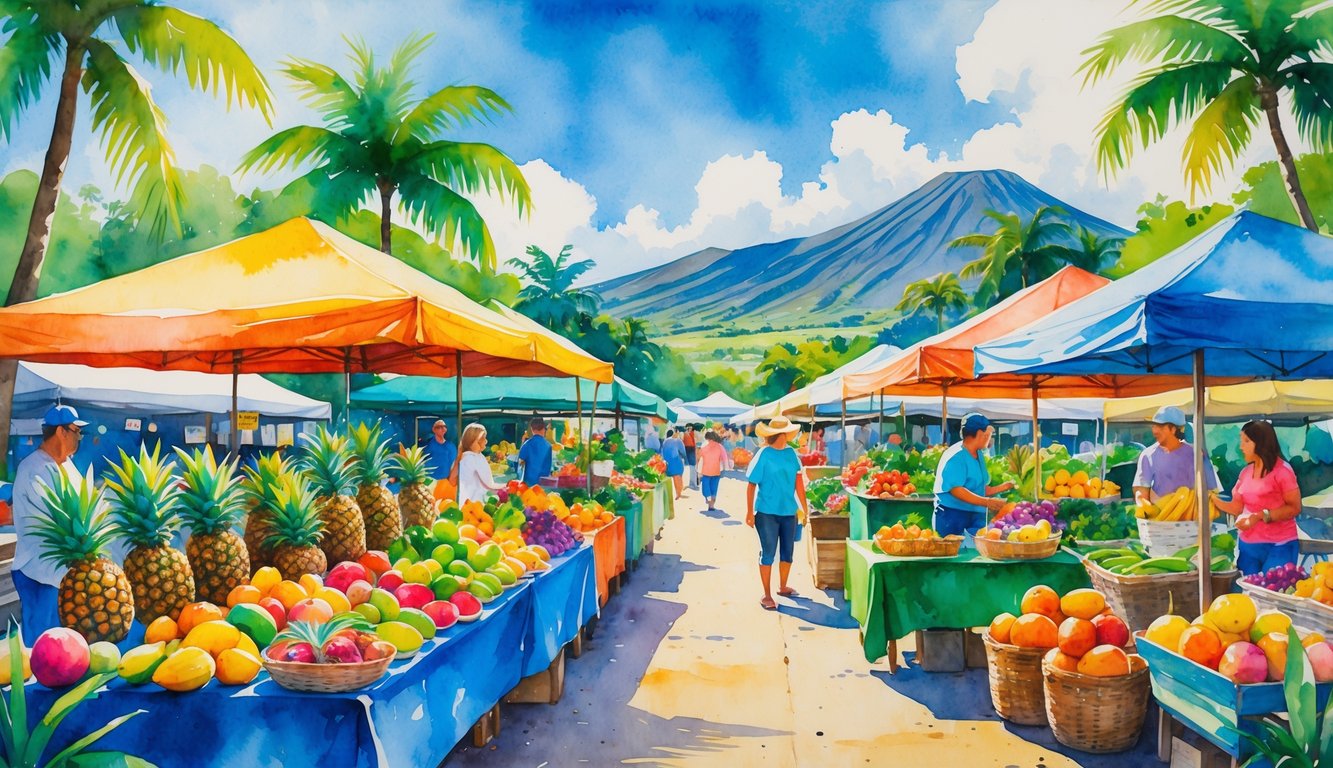
From the bustling Hilo Farmers Market to the relaxed charm of Waimea’s market days, each spot has its own personality. Some markets focus on tropical fruits and vegetables, while others highlight artisan crafts, fresh flowers, and prepared island dishes.
Exploring these markets gives you a taste of daily life on Hawaii’s largest island. You can sample locally grown coffee, pick up sweet papayas, or chat with farmers for new discoveries each visit.
What Makes Big Island’s Farmers’ Markets Unique
The Big Island blends fresh island-grown produce, handmade goods, and ready-to-eat foods that reflect its unique climate and cultures. You can meet growers, taste seasonal fruits, and see how farming and food traditions shape everyday life.
Local Community and Island Culture
Farmers’ markets on the Big Island serve as community gatherings, not just shopping spots. Local farmers, fishers, and artisans set up stalls side by side, creating a friendly, open-air space.
Shoppers often find Hawaiian staples like taro, breadfruit, and tropical flowers alongside handmade crafts, leis, and wood carvings. These items showcase skills and traditions passed down through families.
Live music, hula performances, and food vendors serving plate lunches or poke bowls make the atmosphere lively. Markets such as the Hilo Farmers Market attract both residents and visitors with their variety and cultural mix.
Sustainable and Organic Farming Practices
Many Big Island farmers use organic or low-impact methods to protect the land and ocean. The island’s different climates—from wet tropical areas to dry coastal plains—let them grow a wide range of crops without heavy chemical use.
You can find certified organic produce such as papayas, avocados, and leafy greens. Some growers offer pesticide-free coffee, cacao, and herbs.
Buying directly from local farms cuts transportation emissions and keeps money in the community. Farmers often explain their growing methods, so buyers learn how their food is grown.
Markets in Waimea and Kailua-Kona often highlight these sustainable practices, appealing to eco-conscious visitors.
Farm-to-Table Experiences
The Big Island’s farmers’ markets connect closely with the island’s farm-to-table dining scene. Many local chefs shop early at these markets to source ingredients for same-day menus.
Visitors can enjoy fresh fruit smoothies, poke made with locally caught fish, or baked goods using island-grown macadamia nuts. Some markets host pop-up kitchens that prepare meals on-site.
This direct link from local farms to the plate ensures fresher flavors and supports small-scale producers. At markets like Hawi Farmers Market, you can taste dishes inspired by the island’s mix of cultures, from Japanese to Polynesian influences.
Top Farmers’ Markets to Visit on the Big Island
The Big Island has markets where you can find fresh produce, locally made goods, and authentic island flavors. Many markets also feature prepared foods, live music, and handmade crafts, offering a place to shop and connect with the community.
Hilo Farmers Market
The Hilo Farmers Market stands as one of the largest and most well-known in Hawaii. You’ll find it in downtown Hilo, open daily, with Wednesdays and Saturdays bringing the most vendors.
You can buy tropical fruits like rambutan, papaya, and apple bananas, plus fresh vegetables, orchids, and locally made crafts. Many stalls offer ready-to-eat foods such as poke bowls, baked goods, and smoothies.
Prices are often lower than in resort areas, and the variety is wide. You can explore both the main covered market and the surrounding street vendors. Find more details on the Hilo Farmers Market listing.
Waimea Town Market
The Waimea Town Market takes place every Saturday morning at Parker School in the cooler upcountry region. The climate here supports crops like lettuce, strawberries, and root vegetables that don’t grow as well in coastal areas.
Many vendors sell fresh bread, honey, jams, and locally raised beef. Prepared food options often include breakfast plates, coffee, and pastries.
The market has a relaxed, small-town feel. Shoppers can enjoy views of the nearby mountains while they shop.
It’s a good stop for travelers heading between Kona and Hilo. Learn more about the Waimea Town Market.
Keauhou Farmers Market
The Keauhou Farmers Market happens on Saturday mornings in the Keauhou Shopping Center parking lot, just south of Kailua-Kona. This market focuses on products grown or made on the Big Island, supporting local farmers and small food producers.
You’ll see Kona coffee, macadamia nuts, tropical fruit, and fresh seafood for sale. Many vendors offer samples so you can try before buying.
The market is smaller than Hilo’s but emphasizes quality and freshness. It’s a convenient stop for visitors staying in the Kona area. More information is available on the Keauhou Farmers Market guide.
Kona Village Farmers Market
The Kona Village Farmers Market, sometimes called the Kona Farmers Market, operates Thursday through Sunday in downtown Kailua-Kona near Ali‘i Drive. Its central location makes it easy to visit while exploring local shops and restaurants.
Vendors sell tropical flowers, handmade jewelry, clothing, and fresh produce. Seasonal fruits like mango, pineapple, and lychee are common, along with vegetables and herbs.
Some stalls offer souvenirs and crafts that make practical gifts. The market’s variety and location make it popular with both residents and tourists. Visit the Kona Village Farmers Market for details.
Fresh Local Produce and Island Specialties
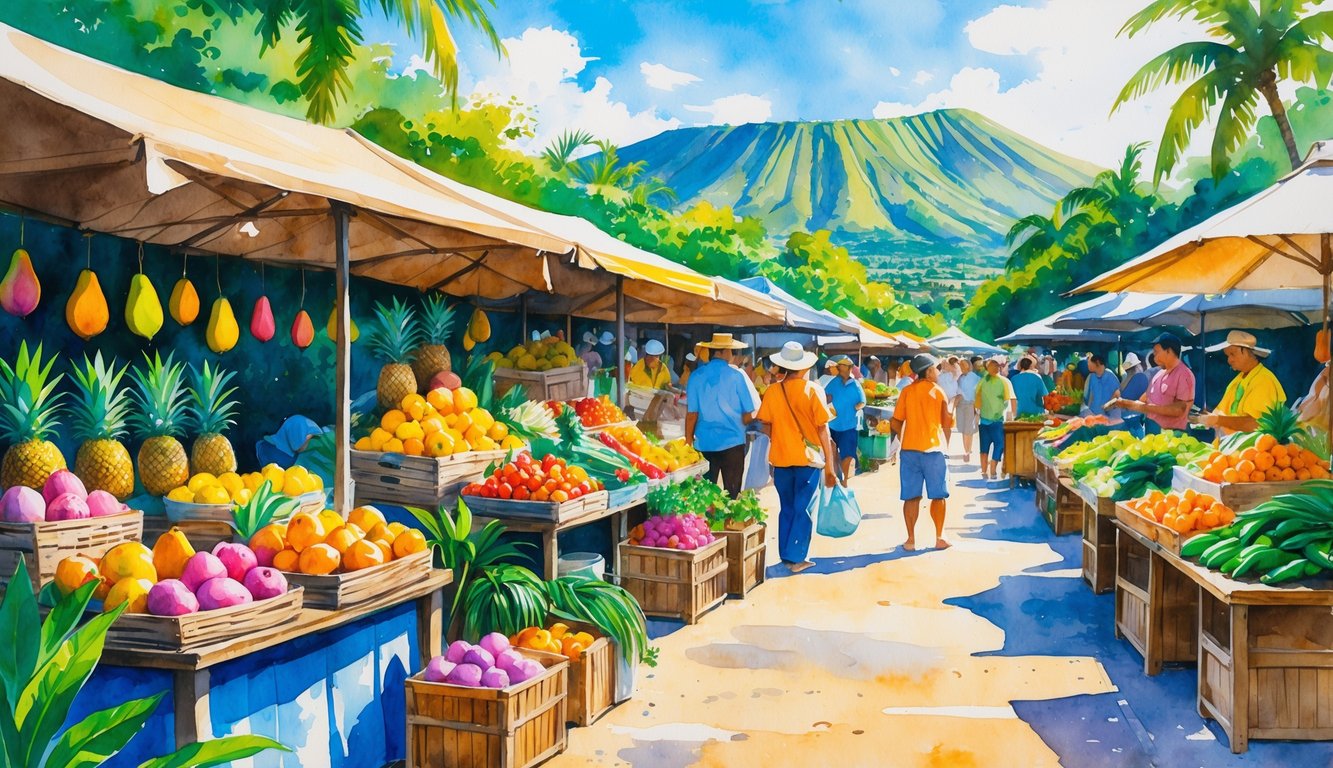
You’ll find a mix of fresh tropical fruits, locally prepared foods, and handmade goods at Big Island farmers’ markets. Many items come straight from nearby farms or small family businesses, making them fresher and more unique than store-bought options.
Tropical Fruits and Seasonal Offerings
Big Island’s climate supports many tropical fruits year-round. Shoppers often see mango, papaya, lychee, rambutan, and lilikoi (passion fruit) in colorful displays. In cooler months, rarer fruits like soursop may appear.
Vendors usually sell apple bananas—smaller and sweeter than common bananas—and creamy avocados grown in local orchards. Many stands offer samples so you can taste before buying.
Some markets, like the Hilo Farmers Market, also feature seasonal produce such as taro, used in traditional Hawaiian dishes. Farmers often share tips on how to prepare less familiar fruits, helping shoppers try something new.
Buying directly from growers supports the local agricultural community and ensures produce is picked at peak ripeness.
Locally Sourced Foods and Artisanal Products
Many stalls feature prepared foods made with island ingredients. Shoppers can enjoy homemade jams from tropical fruit, fresh-baked mochi, and locally made Big Island chocolate.
Coffee lovers often stop for a cup of Kona coffee or buy beans to take home. Some vendors sell local coffee from other regions of the island, each with its own flavor profile.
Tables often display macadamia nuts in roasted, salted, or flavored varieties. Vendors may also offer honey, hot sauces, and pickled vegetables.
Markets like the Waimea Town Market highlight small-batch products made in nearby kitchens. These items make easy gifts or travel snacks.
Handmade Crafts and Local Art
Many farmers’ markets also serve as craft fairs. Visitors can browse local crafts such as woven hats, wood carvings, and jewelry made from shells or volcanic stone.
Flower stalls often sell orchids and protea, either as cut stems or potted plants. These blooms are popular with locals and tourists.
Some artists display paintings, photographs, or hand-printed fabrics inspired by Big Island landscapes. Buying directly from the maker lets shoppers learn the story behind each piece and support local talent.
Markets like the Kona Farmers Market combine fresh produce with a strong selection of artisan goods, making them a one-stop spot for food and gifts.
Tips for Enjoying Big Island’s Best Farmers’ Markets
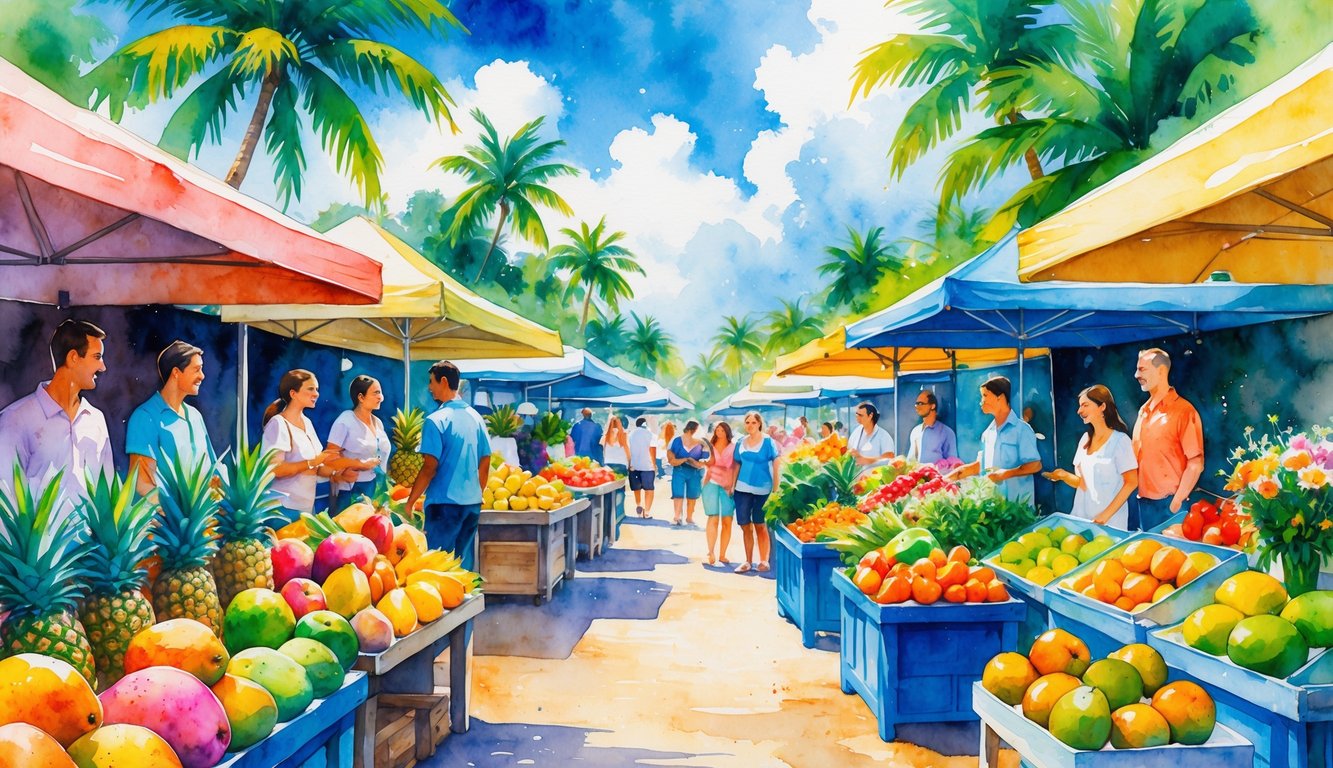
You can enjoy fresh food, meet friendly local vendors, and discover unique, locally sourced products. Many markets also offer prepared meals, live music, and a chance to explore the island’s culture while supporting small businesses.
Getting the Most Out of Your Visit
Arrive early to find the best selection of produce and baked goods before they sell out. Popular markets like those at the Keauhou Shopping Center see the busiest crowds mid-morning, so early arrivals can browse more comfortably.
Bring reusable shopping bags to carry purchases and reduce waste. Some vendors offer discounts if you bring your own containers for prepared foods.
Walk through the market once before buying anything. This helps you compare prices, check quality, and spot unique items you might otherwise miss.
Carry small bills to speed up transactions and help local vendors who may not accept cards.
Supporting Local Vendors and Sustainability
Buying from local vendors keeps money in the community. This choice supports family farms.
Many stalls offer locally sourced products like honey, coffee, tropical fruits, and handmade crafts.
Choosing seasonal produce lowers the environmental impact of food transport. It also ensures fresher flavors.
For example, mangoes, lychee, and papayas reach their peak during certain months.
Some markets, such as the one at Keauhou Shopping Center, feature farmers who use organic or low-impact growing methods. Shoppers can ask about their practices to make informed choices.
Shoppers help the environment by reusing bags and avoiding single-use plastics. Buying from nearby farms also supports sustainable shopping while enjoying the best of the Big Island’s fresh food scene.