Kalaupapa National Historical Park in Hawaii is one of the most unique and moving places I’ve ever visited. The park sits on the island of Molokai and holds powerful stories about people who came here because they had Hansen’s Disease, known as leprosy.

Walking through Kalaupapa, I see beautiful landscapes and historic buildings. The deep history surrounds me everywhere I go.
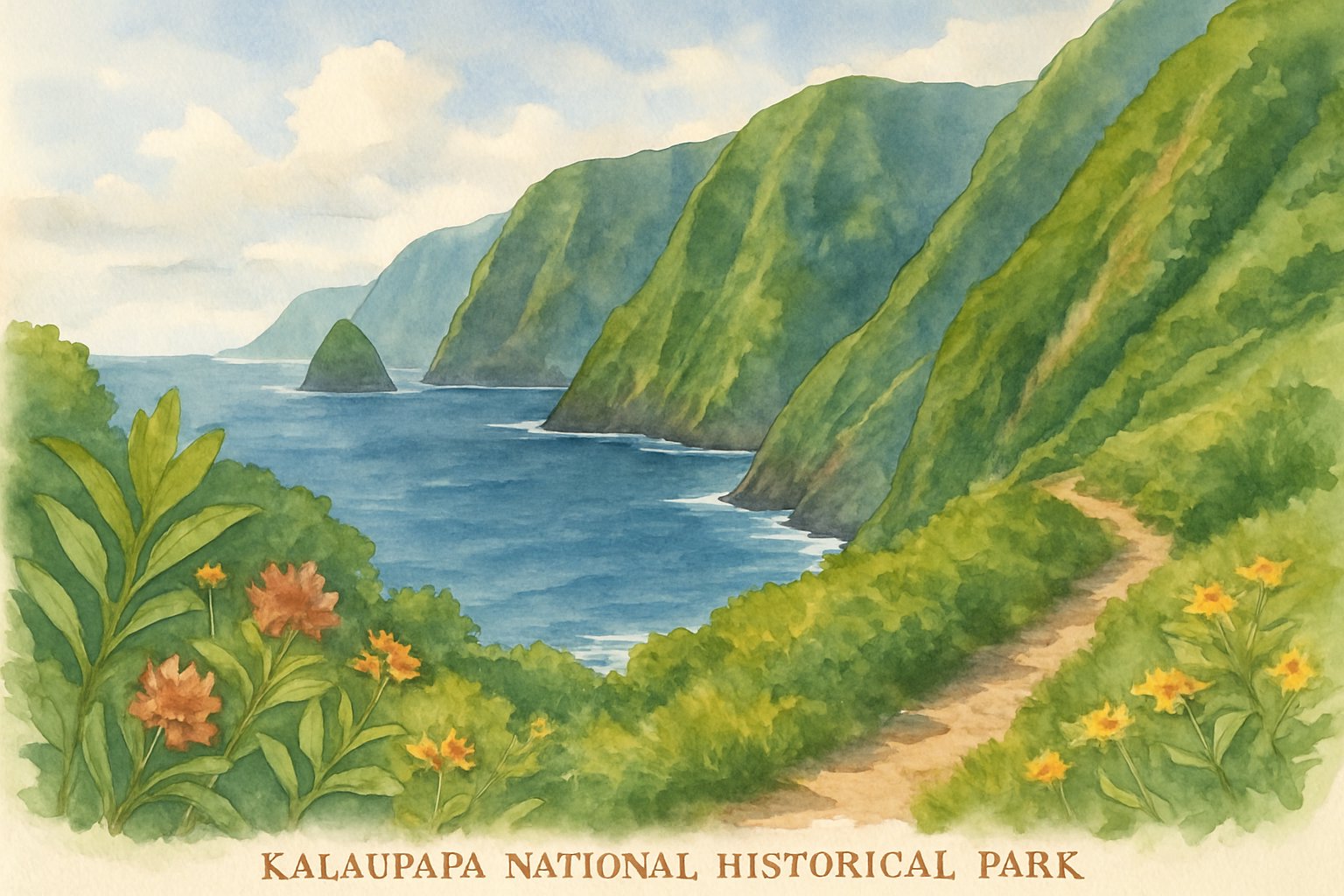
You can reach the park by hiking a steep trail, riding a mule, or flying in by small plane. The journey feels like an adventure and shows how isolated Kalaupapa has always been.
When I visit, I learn about its past while enjoying unforgettable views. If you want to explore a place where history and nature come together, Kalaupapa National Historical Park deserves your attention.
You can find more information about what to see and do at the official park website.
History of Kalaupapa National Historical Park
Kalaupapa National Historical Park sits on the northern shore of Molokai, Hawaii. The park is known for its history as a leper colony and its ties to Hawaiian royalty.
Today, the National Park Service preserves Kalaupapa so visitors like me can learn from its past.
Founding as a Leper Colony
In the 1800s, leprosy (now called Hansen’s disease) spread across Hawaii. People felt afraid because there was no cure.
In 1866, the Hawaiian government decided to remove patients with leprosy from the general population. They chose the remote Kalaupapa peninsula because it was hard to reach, surrounded by ocean and steep cliffs.
Over 8,000 men, women, and children came here throughout the years. Many lost contact with their families forever.
Life at the colony started out very hard, with little help or supplies. Over time, dedicated people like Father Damien brought support and improved conditions for those living there.
If you want to know more, the National Park Service shares a brief overview of Kalaupapa’s history.
Role of King Kamehameha
King Kamehameha V ruled during the time leprosy became a crisis in Hawaii. He signed the law in 1865 that forced people with leprosy to move to Kalaupapa.
His aim was to protect the greater population from what they thought was a dangerous disease. This decision changed Hawaii’s history and caused many families to be separated.
The law stayed in place for over one hundred years, ending only in 1969. King Kamehameha’s actions were meant to safeguard his people, but they also brought great hardship.
People still talk about his choices today as they think about the best ways to care for individuals and communities.
Legacy and Preservation
Today, the National Park Service cares for Kalaupapa as a living park. The park honors the people who suffered there and shares their stories with visitors from around the world.
Buildings, graves, and artifacts help remind us of the struggles and strength of the residents. Some patients still live there by choice because it is the only home they have ever known.
The area also holds spiritual and cultural meaning for native Hawaiians. Visitors can experience Kalaupapa’s history through guided tours and educational resources.
For more about visiting, the park’s official page has up-to-date information.
Geography and Natural Wonders
Kalaupapa National Historical Park sits in one of the most remote locations in Hawaii. The landscape features high sea cliffs, lush coastal plains, and vibrant coral reefs.
Molokai’s Dramatic Cliffs
When I first saw the sea cliffs of Molokai, I could hardly believe their size and beauty. These cliffs are among the tallest in the world, rising about 1,700 feet above the Pacific Ocean.
They create a striking backdrop for Kalaupapa National Historical Park. The peninsula juts out from these cliffs and is separated from the rest of Molokai by rugged land and towering heights.
Quick Facts:
- About 3 miles long and 1 mile wide
- Only accessible by foot, mule, or small aircraft
- Offers breathtaking panoramic views
Many visitors come to witness these vertical walls and see the waves crashing at their base. The cliffs shelter the park from strong winds and help keep it isolated.
Learn more about Molokai’s dramatic cliffs.
Coastal Ecosystems and Coral Reefs
The coastline of Kalaupapa is home to clear turquoise waters and beautiful coral reefs. I enjoy watching colorful fish swim among the corals just offshore.
These reefs are some of the healthiest in Hawaii and support local sea life.
Notable Marine Life:
- Green sea turtles
- Hawaiian monk seals
- Schools of tangs and butterflyfish
Tide pools hold small creatures like crabs and sea urchins. The coastal wetlands nearby shelter rare native birds.
Swimming and snorkeling are only allowed in certain areas to protect these ecosystems. Visitors are asked to avoid disturbing the wildlife.
Read more about Kalaupapa’s unique coastal ecosystems.
Unique Flora and Fauna
Walking through Kalaupapa, I often spot rare plants that only grow in Hawaii. The park protects many native species, some of which can’t be found anywhere else.
Dry lowland forests and lush grasslands fill the peninsula.
Common Native Plants:
ʻIlima(Hibiscus-like flower)Naupaka kahakai(Beach shrub)ʻAkiʻaki(Seaside grass)
Native birds, like the Hawaiian stilt and the ʻapapane, live here too. Even though some plants and animals have declined, I see that efforts to restore these habitats are helping.
You can spot both land and sea animals, making every visit feel special.
See what flora and fauna you can find at Kalaupapa.
Visitor Experience
Visiting Kalaupapa National Historical Park is unique because of its remote location and strict visitor limits. Planning ahead helps me enjoy my visit and show respect for the place and its people.
Guided Tours and Accessibility
Access to Kalaupapa National Historical Park is highly controlled. I must have a permit to enter, and right now, all guided tours are suspended until further notice.
In the past, guides led visitors like me through the community’s history and landmarks. Reaching the park isn’t simple.
You can hike the steep trail, ride a mule, or fly in by small plane. Each method has strict capacity limits, and only about 100 people per day can visit.
Independent exploration is not allowed. I have to follow all entry rules to step onto park grounds.
For up-to-date rules, the Kalaupapa National Historical Park site is helpful.
Cultural and Educational Programs
Learning about Kalaupapa connects me with Hawaii’s complex past. The park was once a place of isolation for people with Hansen’s Disease, so many experiences focus on the stories of patients who lived there.
When programs are running, rangers or educators lead talks and share the voices and traditions that shaped the community. Cultural experiences can include storytelling, native Hawaiian arts, and visits to important sites like historic churches and patient homes.
These activities help me appreciate the resilience and history of those who made Kalaupapa their home. Educational signs and displays around the park give background about the national park’s mission.
Respectful Exploration Guidelines
My visit to Kalaupapa comes with responsibility. This is a sacred site where people still live and where many families return.
Visitors must be at least 16 years old. I stay on marked paths, follow all posted rules, and never disturb graves or private residences.
I dress modestly, speak quietly, and avoid taking photos where it’s not allowed. Showing respect means honoring the culture, the struggles faced by patients, and the meaning this place holds for Hawaii.
Reading the park’s guidelines, such as those on Go Hawaii, prepares me to be a thoughtful guest.
Cultural Significance
Kalaupapa National Historical Park shows the power of community and culture even in times of hardship. The history connects to personal stories, local traditions, and the strength found in Hawaiian ways of life.
Stories of Residents and Community
When I visit Kalaupapa, I think about the more than 8,000 people, mostly Native Hawaiians, who came to live there because of Hansen’s Disease. Many residents had to leave their families and homes behind.
Even in isolation, they built strong friendships and supported one another every day. I am touched by stories of residents forming close ties by sharing meals, music, and faith.
Kalaupapa became more than just a place of exile—it became a true community. Some residents became leaders and helped care for others who were sick or needed comfort.
Their memories are honored today at Kalaupapa National Historical Park. Many of the old buildings, churches, and grave markers still stand.
These places remind me of the people who lived here, faced challenges, and created a home out of adversity.
Hawaiian Traditions and Influence
The cultural legacy of Kalaupapa is rooted deeply in Hawaiian values. These include kokua (helping others), ‘ohana (family), and aloha (love and compassion).
Even while separated from the world, residents of Kalaupapa kept their traditions alive. They celebrated Hawaiian holidays, music, and hula.
I see these traditions in the way people planted gardens and prepared food. They held gatherings that honored their heritage.
People used Hawaiian language and prayers in daily life. This helped everyone feel connected to their roots.
Today, the park protects these traditions. Visitors can learn about cultural experiences in Hawaii.
Kalaupapa stands as a symbol of perseverance. The place honors both the land and the memory of those who came before.
Nearby Parks and Historical Sites
When I explore Kalaupapa National Historical Park, I also discover unique natural and historic places on the Hawaiian Islands. Many of these sites share important cultural backgrounds, rare wildlife, and beautiful scenery.
Kaloko-Honokōhau National Historical Park
I love visiting Kaloko-Honokōhau National Historical Park on the Big Island of Hawaii. This park lets me see ancient Hawaiian fishponds, petroglyphs, and coastal wetlands.
The historic fishponds, Kaloko and ‘Aimakapa, show me how Native Hawaiians farmed fish. I also find salt pans and old stone walls built long ago.
Walking along Honokōhau Beach, I sometimes spot Hawaiian green sea turtles on the sand. Native plants and birds thrive in the dry, coastal habitat.
Park rangers and displays help me learn about ancient Hawaiian life. The information is easy to understand.
Hawaii Volcanoes National Park
When I’m on the Big Island, I always plan a full day at Hawaii Volcanoes National Park. The park features two of the world’s most active volcanoes: Kīlauea and Mauna Loa.
Standing near the Kīlauea crater, I see steam vents. Sometimes, I even spot red lava glowing at night.
The park has hiking trails and scenic drives. Visitor centers offer more information.
I can walk through the Thurston Lava Tube, a cave made by flowing lava.
A list of highlights:
- Kīlauea Visitor Center: Offers maps, exhibits, and ranger talks
- Steam Vents and Sulfur Banks: Show natural fumaroles and mineral deposits
- Chain of Craters Road: A scenic drive with dramatic lava landscapes
The mix of volcanic activity and lush forests creates a unique experience.
State Parks and Local Attractions
Besides national parks, I enjoy exploring Hawaii’s state parks and local attractions. Pala’au State Park offers a lookout over the sharp sea cliffs of Kalaupapa.
Other parks on Molokai and nearby islands give me chances for hiking, birdwatching, and quiet beaches. Some sites have old Hawaiian temples and archaeological spots I like to visit.
A quick table of nearby places:
| Name | Main Feature |
|---|---|
| Pala’au State Park | Kalaupapa overlook |
| Molokai Forest Reserve | Native trees, hiking |
| Halawa Valley | Waterfalls, cultural tours |
These areas offer recreation and education. They help me appreciate Hawaii’s history and nature.
Planning Your Trip to Kalaupapa

Visiting Kalaupapa National Historical Park requires planning because of access rules and its remote location. I check how to get there, the best time to visit, and nearby places to stay.
Travel Logistics and Permits
Access to Kalaupapa is limited. Every visitor needs a permit before entering the park.
No walk-in visitors can enter, and all tours are currently suspended. I always check the latest updates on the official park website.
To reach the park, I can hike the steep 3.5-mile trail, ride a mule (if available), or fly with Makani Air. Only 100 visitors can enter per day, and I must be at least 16 years old.
Kalaupapa sits on a peninsula with no road access from the rest of Molokai. If tours remain unavailable, I focus on nearby viewpoints or adjust my plans as needed.
Seasonal Highlights
The best time to visit depends on weather and daylight. Kalaupapa has warm temperatures year-round, usually between 65–85°F (18–29°C).
The rainy season lasts from November through March and can make the trail slippery. From April to October, I enjoy sunnier days, but I always bring water, sunblock, and a hat.
Spring brings blooming flowers, while winter sometimes brings large ocean waves. These waves add to the peninsula’s dramatic scenery.
I book early, especially during busy seasons, because spaces are limited and fill up fast. If tours resume, I check the schedule for special programs or ranger talks.
Where to Stay on Molokai
You will not find hotels or places to stay inside the Kalaupapa settlement. The park does not allow overnight stays, except for approved caretakers or residents.
Look for lodging in other parts of Molokai. Good options include small hotels, vacation rentals, and bed & breakfasts in Kaunakakai or nearby villages.
Most of these places are about a 30–40-minute drive from the park’s trailhead. Choose a spot with kitchen facilities or nearby food options.
Molokai is quite rural, and restaurants can be limited, especially at night. Plan your meals and make reservations ahead of time to make your trip smoother.
For accommodation ideas, check out Molokai lodging options.