Hiking Diamond Head in Oahu offers a short but rewarding climb with sweeping views of Honolulu and the Pacific Ocean.

The trail is about 1.6 miles round-trip and takes most people 1 to 2 hours to complete. This makes it manageable for many skill levels.
Along the way, you will find paved walkways, switchbacks, steep stairs, and a historic military tunnel.
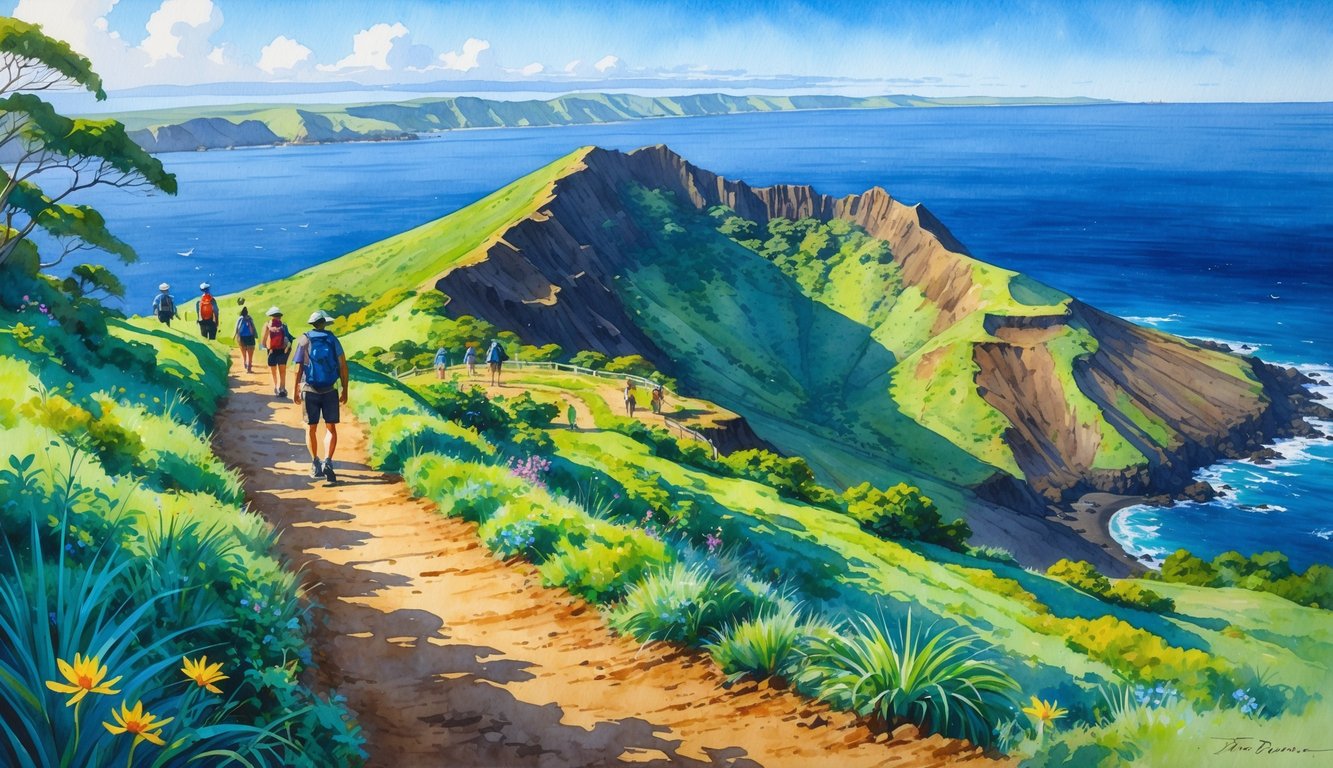
Many hikers start early in the morning to avoid the heat and enjoy cooler conditions.
The trail sits within the Diamond Head State Monument, so you will need to pay a small entry fee and sometimes make a reservation.
Water, sunscreen, and comfortable shoes help make the hike more enjoyable.
Diamond Head has cultural and geological significance.
The crater formed over 300,000 years ago, and its Hawaiian name, Lēʻahi, connects to local legends.
From the summit, you can see panoramic views across Waikiki, the coastline, and the ocean.
Essential Information for Hiking Diamond Head
The Diamond Head hike in Honolulu offers a steady climb with views of the Pacific Ocean and Waikiki.
Before you arrive, check the trail’s length, cost, and entry rules. Prepare with the right clothing, shoes, and supplies for a safe experience.
Trail Overview and Difficulty
The Diamond Head Trail is inside the Diamond Head State Monument.
The path is about 1.6 miles round trip and usually takes 1–2 hours to complete.
The hike begins on a paved path, then moves to dirt and rock surfaces.
You will climb stairs, go through narrow tunnels, and tackle steep sections.
While the trail is not long, it can be tiring because of the 560-foot elevation gain.
Most healthy visitors can complete it, but be ready for uneven terrain and limited shade.
The trail is rated moderate.
People with knee or mobility issues may find the stairs difficult.
Early morning is the most comfortable time to hike because the midday heat can make the climb harder.
Reservations, Fees, and Hours
The Hawai‘i State Parks system requires advance reservations for non-residents who want to hike Diamond Head.
You can book tickets online, but they often sell out during peak seasons.
As of 2025, visitors pay $5 per person for entry and $10 per vehicle for parking.
Hawai‘i residents can enter for free with valid ID.
The park is open daily from 6:00 a.m. to 6:00 p.m., with the last entry at 4:00 p.m.
Gates close promptly, so plan your start time carefully.
Arriving early helps you avoid crowds and enjoy cooler temperatures.
What to Bring and Wear
Wear good hiking shoes or sturdy sneakers, as the trail is rocky and uneven.
Sandals and flip-flops are not recommended.
Bring:
- Water (at least 1–2 bottles per person)
- Hat and sunscreen for sun protection
- Light snacks if needed
- Camera or phone for photos
Restrooms and water fountains are at the trailhead, but not along the trail.
Lightweight, breathable clothing works best for the warm climate.
A small backpack helps carry essentials without adding bulk.
How to Get to Diamond Head
Diamond Head sits on the southeastern edge of Oahu, close to Waikiki Beach and downtown Honolulu.
You can reach the trailhead by car, shuttle, or public bus. Each option has different costs and travel times.
Directions from Waikiki and Honolulu
From Waikiki, the drive to Diamond Head State Monument takes about 10 minutes in light traffic.
Head east along Kalākaua Avenue, pass Kapiolani Park, and follow Diamond Head Road to the park entrance.
If you are coming from downtown Honolulu, take H-1 East and exit at 25B for 6th Avenue, then follow signs for Diamond Head.
Nearby landmarks like Kaimana Beach and the Waikiki Aquarium make it easy to find your way.
Street signs clearly mark the route, and GPS directions are reliable.
Parking and Shuttle Options
Diamond Head has a small parking lot inside the state monument grounds.
Non-residents pay $10 per vehicle for parking, plus the park entry fee.
Parking spots fill up by mid-morning, especially on weekends and holidays.
If the lot is full, look for metered street parking near Kapiolani Park and walk about 10–15 minutes to the entrance.
Shuttle services from Waikiki hotels are available.
They often include round-trip transportation and sometimes the park entry fee.
While shuttles cost more than driving, they save you the trouble of finding a parking spot.
Public Transportation Tips
Honolulu’s TheBus system offers an affordable way to reach Diamond Head.
Routes 2 and 23 both stop near the park entrance.
From Waikiki, the ride usually takes 15–20 minutes depending on traffic.
Bring exact change for the fare or use a HOLO card.
The bus stop is just outside the crater tunnel entrance, so you will walk a short distance to the ticket booth.
If you stay near Waikiki Beach or Kaimana Beach, you can also walk or bike to the park.
The route along the coastline past Kapiolani Park gives you scenic views and avoids parking issues.
For more details on reaching the trailhead from Waikiki, see this guide on how to get to the Diamond Head Summit Trail.
History, Culture, and Natural Wonders
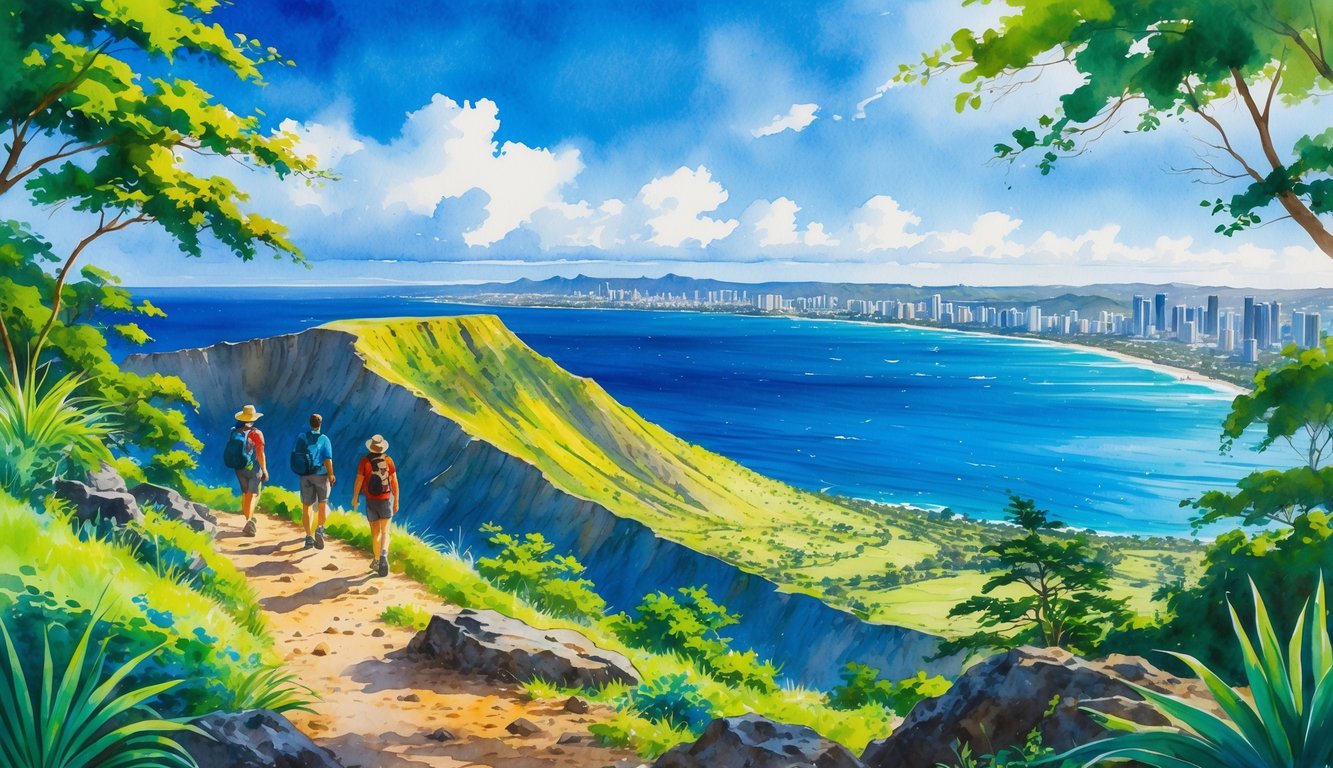
Diamond Head on Oʻahu combines volcanic geology, Hawaiian culture, and military history.
You can see evidence of its explosive origins, learn the meaning behind its Hawaiian name, and explore old military structures.
Geology and Formation of Diamond Head Crater
Diamond Head, or Lēʻahi, is a volcanic tuff cone formed about 300,000 years ago.
A single, brief eruption happened when magma met groundwater, creating steam-driven explosions.
The blast sent ash and fine particles into the air, which settled and hardened into tuff rock.
Over time, erosion and weather shaped the crater’s rim.
The crater covers about 350 acres and rises 762 feet above sea level.
Its interior is mostly dry, with sparse vegetation adapted to the arid environment.
You can see the steep inner walls and layers of compacted ash, which reveal how the crater formed.
These geological features make Diamond Head one of Hawaii’s most studied volcanic landmarks.
Hawaiian Cultural Significance
In Hawaiian culture, Diamond Head is called Lēʻahi, meaning “brow of the tuna.”
The name comes from the crater’s shape, which looks like the forehead of a tuna fish from the sea.
Ancient Hawaiians used the slopes for religious and practical purposes.
High points served as lookouts for spotting canoes, and some areas had spiritual importance.
Legends say ceremonial fires once burned at the summit to guide travelers.
The crater area was valued for its wide view over the ocean and land.
Today, visitors can learn about these traditions through signs along the trail and at the summit.
This helps preserve the cultural heritage tied to Hawaiian culture.
Military History and Landmarks
In the early 1900s, the U.S. military saw Diamond Head’s strategic position over Honolulu.
They built Fort Ruger, the first military reservation in Hawaii.
Concrete bunkers, observation stations, and a 225-foot tunnel were constructed in the crater wall.
These structures helped detect and defend against possible naval threats.
During World War II, the site held coastal artillery and communication posts.
Many of these installations remain, though they are no longer used.
Hikers can pass by old military tunnels and lookout points on the trail.
These landmarks add interest to the hike beyond the natural scenery.
Summit Experience and Nearby Attractions
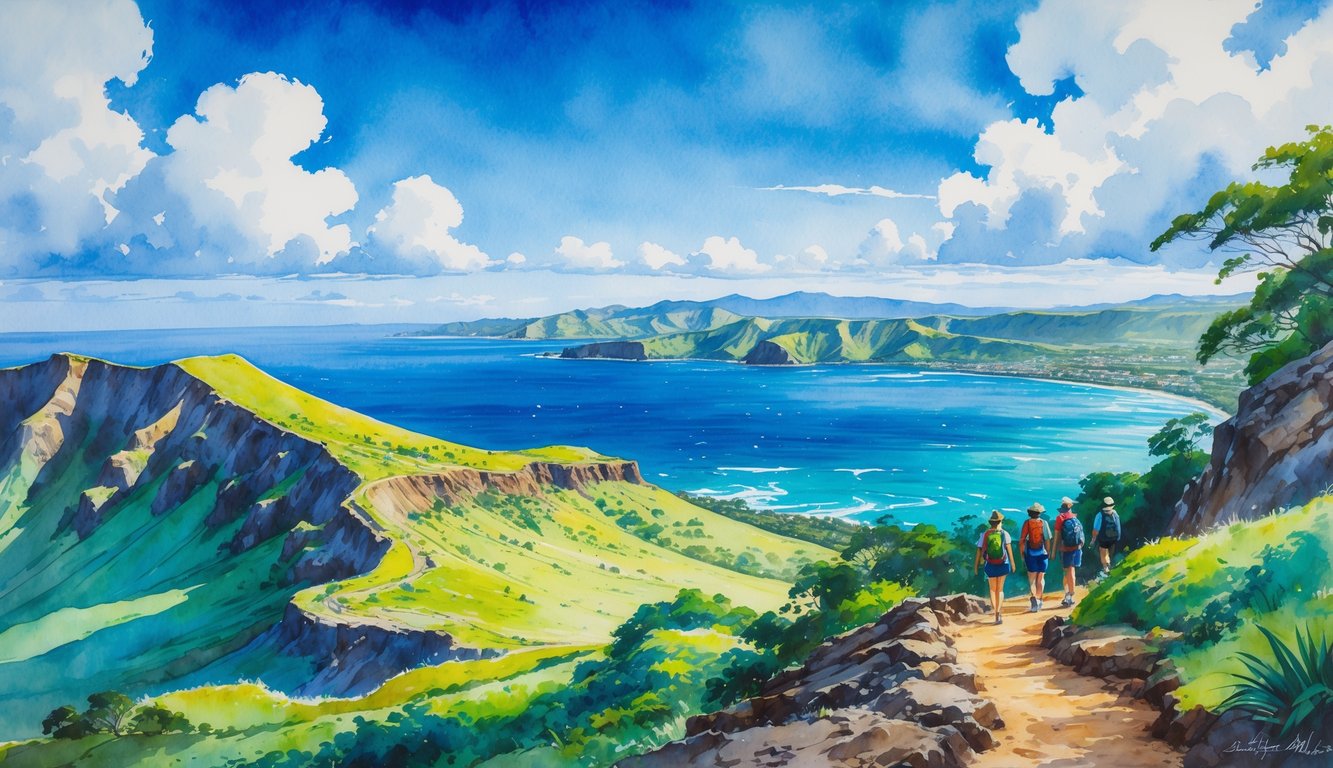
At the summit, you can enjoy open-air viewpoints, historic military structures, and clear views of the coastline.
The area also offers easy access to local food spots and beaches, so you can keep exploring after the hike.
Diamond Head Lookout and Panoramic Views
The Diamond Head Lookout is at the highest point of the trail.
From here, you can see Waikiki Beach, the blue Pacific Ocean, and the green ridges of Oahu.
On clear days, you might even spot other islands, though Maui is not always visible.
The summit has a historic military bunker built in 1910.
You can step inside to see narrow observation windows once used for defense.
The concrete structure adds a unique historical element to the natural setting.
Benches and railings let you pause and take in the scenery.
Early morning light often gives softer colors, while midday brings brighter, sharper views.
The lookout area can get crowded, so be patient when looking for a good spot.
Photo Opportunities and Landmarks
The panoramic views of Waikiki are some of the most photographed scenes on Oahu.
Many hikers use the edge of the crater rim for wide landscape shots.
The deep blue water, white sand, and city skyline make a great backdrop.
Inside the summit bunker, small openings frame the ocean for interesting, postcard-like photos.
The steep staircase leading to the final platform is another popular photo spot.
For a quick reference:
| Photo Spot | Best Time | Features |
|---|---|---|
| Crater Rim Edge | Morning | Soft light, fewer crowds |
| Summit Bunker Windows | Midday | Framed ocean views |
| Staircase to Platform | Anytime | Action shots of hikers |
Where to Eat and Relax After the Hike
After you descend, many visitors head toward Waikiki for a meal or snack. Local stands near the park entrance serve shave ice, a cool treat after the warm climb.
If you want a sit-down meal, Waikiki has casual cafes and beachfront restaurants nearby. You can easily find fresh seafood, poke bowls, and tropical fruit smoothies.
You can walk to Waikiki Beach and cool off in the ocean. Shaded parks in the area also offer a comfortable place to rest.
Nearby shops sell souvenirs and cold drinks for a quick refresh.
For more ideas on where to go after your hike, see this guide to nearby attractions after hiking Diamond Head.