I’ve always been fascinated by how the Hawaiian Islands support such a rich variety of crops, from sweet potatoes to sugarcane.
The secret behind this lush landscape isn’t just the warm climate—it’s the volcanic soil that covers much of Hawaii.
Volcanic soil contains many minerals and has special qualities that make it very good for farming. These qualities have helped Hawaiian agriculture thrive for centuries.
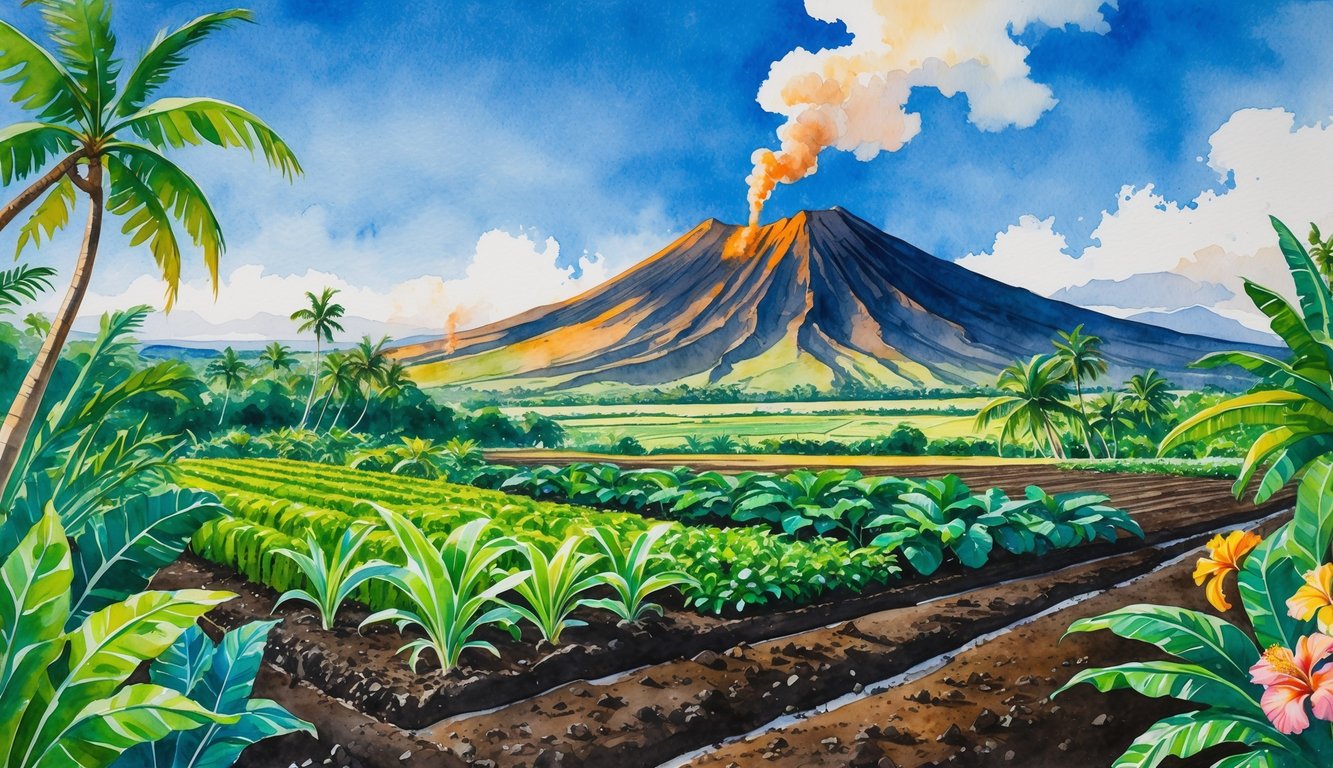
When I walk through Hawaii’s green fields, I see how volcanoes have shaped both the land and the way people farm.
This unique soil, called andisol, provides nutrients and holds water well. Plants like taro and coffee thrive even when conditions change.
If you’re curious about why so many crops do well here, you might want to learn more about how volcanic soil creates some of the most fertile farmland in the world.
Many Hawaiian farmers have learned to work with the land by building stone walls and using smart techniques to get the most from their fields.
It’s amazing how a landscape formed by eruptions and ash has become the backbone of Hawaii’s agricultural success.
Formation and Composition of Volcanic Soil
Volcanoes in Hawaiʻi erupt and lay down ash, lava, and other materials over time. These materials break down and form volcanic soil, known as andisols, which are key for local agriculture.
Volcanic Eruptions and Soil Development
When volcanoes like Mauna Loa and Kīlauea erupt, they release lava, ash, and rock fragments.
These materials cool, break down, and, with help from rain and plant roots, turn into soil.
Sometimes, volcanic eruptions cover the land with fresh ash, sometimes several centimeters or even meters thick.
As ash and lava break down, they add nutrients and minerals directly into the forming soil.
These nutrients feed Hawaiʻi’s unique ecosystems.
This process can take years or centuries.
Frequent volcanic activity keeps the land “renewed,” so volcanic soil stays important for farmers.
Mineral Content and Nutrient Availability
Volcanic soil contains minerals like iron, magnesium, calcium, and potassium.
These minerals come from the lava and ash and become available for plants as they break down.
This makes volcanic soil especially fertile.
The soil looks dark and crumbly because of its high mineral content.
Crops like sugarcane, coffee, macadamia nuts, and tropical fruits grow well here.
Volcanic soil also holds water well, which helps farming.
Over time, volcanic soils can lose some nutrients if they are not replenished.
New ash from eruptions helps restore missing nutrients, so agriculture continues near active volcanoes.
Some farmers add fertilizers if natural nutrient cycling is too slow.
You can read more about volcanic soil mineral content and agricultural value.
Andisols and Volcanic Ash Characteristics
Most volcanic soil in Hawaiʻi is called andisols.
Andisols form when volcanic ash weathers and mixes with organic matter.
These soils are deep, soft, and have good structure for holding water.
This is ideal for farming.
Andisols are common around active volcanoes like Kīlauea.
Volcanic ash in these soils contains glassy particles and minerals.
As ash breaks down, it forms tiny clay minerals that help the soil retain nutrients and water.
Andisols do not become compacted easily, so roots grow well.
Their high porosity lets them drain well but also hold enough moisture for crops.
You can find more details about volcanic soil properties and processes.
Soil Fertility and Nutrient Dynamics
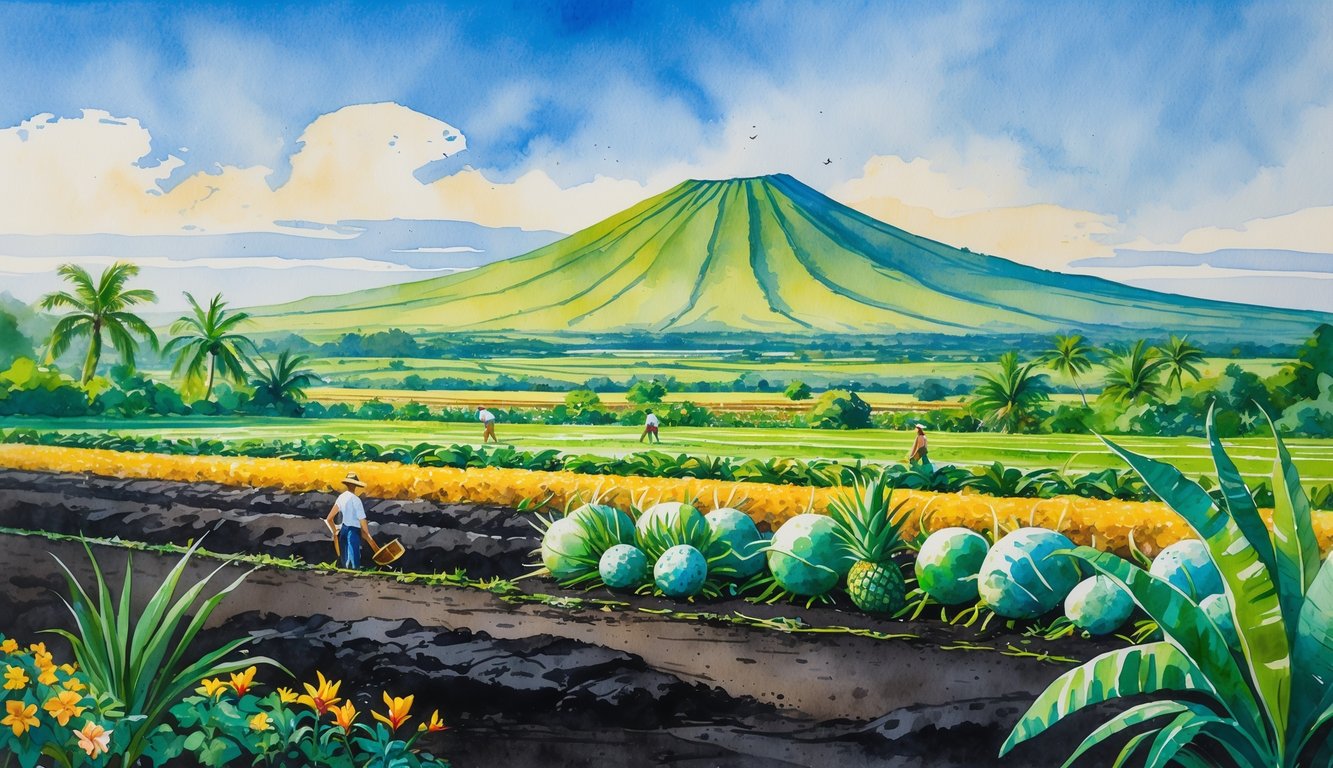
I pay close attention to the unique chemistry of volcanic soil in Hawaii.
Different nutrients, especially phosphorus and calcium, play key roles in creating rich agricultural land across the islands.
Phosphorus and Essential Minerals
Phosphorus is a key nutrient for plant growth.
In volcanic soils, phosphorus often binds with iron and aluminum, making it less available to crops.
This can limit plant growth unless I use fertilizers or plant crops that can get phosphorus from the soil.
Besides phosphorus, volcanic soil is naturally rich in minerals like potassium and magnesium.
These minerals come from the breakdown of volcanic rock, such as basalt.
Because volcanic ash weathers quickly, it releases nutrients that help crops grow well.
You can read more about mineral content in volcanic soils at this article.
Calcium and Soil Chemical Properties
Calcium plays an important role in volcanic soils.
In young volcanic areas, calcium comes from fresh volcanic ash and rocks as they break down.
This helps balance soil acidity and helps plants build strong cell walls.
The chemical makeup of volcanic soils can change over time as minerals weather.
Soil management helps crops get the calcium they need.
More details on volcanic soil’s chemistry are covered in this volcanic soil overview.
Soil Samples and Fertility Studies
Collecting soil samples helps me learn which nutrients are available and which are missing.
Researchers in Hawaii use soil sampling to test for nutrients like nitrogen, phosphorus, potassium, boron, and zinc.
Each island, and even different parts of the same island, can have different soil conditions because volcanic activity shapes the landscape.
Fertility studies guide how I grow crops.
These studies show where the soil is best for farming and where I need to add nutrients.
On Ta‘ū island, for example, soil fertility research looks at how economic crops respond to different nutrient levels.
More on this research is available in soil nutrient studies on volcanic soils.
Key benefits of soil sampling:
- Identifies nutrient gaps
- Guides fertilizer choices
- Helps rotate crops efficiently
Rainfall Patterns and Their Influence on Agriculture
Rainfall shapes how farmers like me manage crops in the volcanic soils of Hawaii.
The amounts and timing of rain directly affect soil moisture and the soil’s nutrient levels.
Seasonal Rainfall and Soil Moisture
In Hawaii, rainfall varies by season and area.
Wet seasons bring strong rains for months, leading to lush growth and full water tables.
Dry seasons often mean less soil moisture and the need for irrigation.
My crops depend on these cycles.
When there’s regular rain, the volcanic soil keeps enough moisture for roots to grow well.
But if rain is late or unpredictable, plants can wilt or grow slower.
Irrigation and water-saving strategies help me during dry times.
A table can show how much different crops need water during different seasons:
| Crop | High Rainfall Season Needs | Dry Season Needs |
|---|---|---|
| Taro | Lots of water | Needs irrigation |
| Sweet Potato | Moderate water | Less, but regular |
| Coffee | Well-timed, steady rain | Supplemental water |
Poor rainfall patterns can stress crops and hurt yields.
I plan planting schedules around weather patterns when I can.
High Rainfall Zones and Soil Leaching
Some parts of Hawaii get over 100 inches of rain a year.
In these high rainfall zones, volcanic soil soaks up water fast, but too much rain can wash away important nutrients.
This is called soil leaching.
I sometimes need to add extra fertilizer to replace what rain removes.
Volcanic soils are rich at first but can lose calcium, potassium, and magnesium as rain pushes these minerals deeper into the ground.
Even traditional Hawaiian farmers built stone field boundaries called kuaiwi to help slow erosion.
I use contour planting and cover crops to prevent too many nutrients from leaving the soil.
If nutrient loss is not managed, rain can make volcanic soils less fertile.
Keeping soil healthy in high-rain areas is a balance between using what nature gives and stopping nutrient washout.
Major Crops Grown in Hawaiian Volcanic Soils
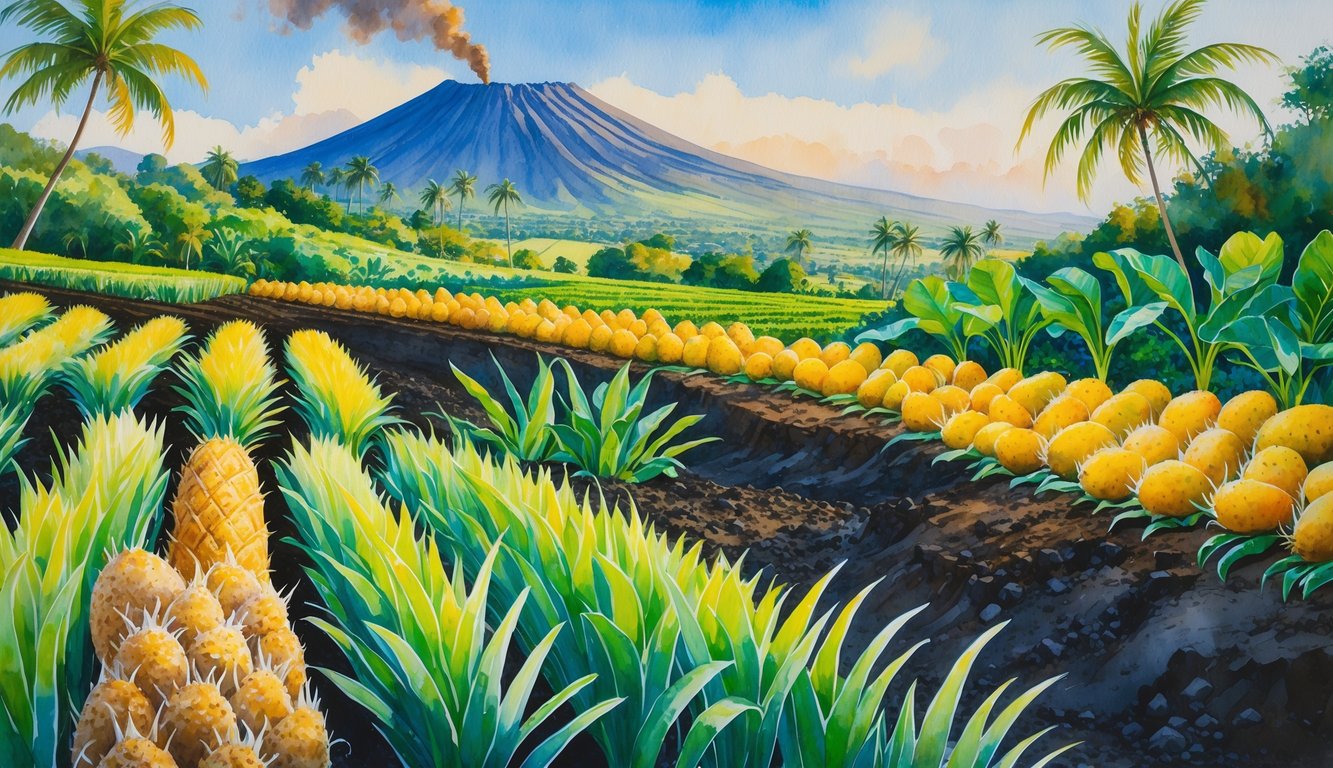
Hawaiian agriculture depends on the nutrient-rich volcanic soils that cover much of the islands.
These soils have made it possible to grow staple crops like taro, sweet potatoes, sugar cane, and breadfruit.
Taro Cultivation and Taro Paddies
Taro, or kalo in Hawaiian, is one of the oldest and most important crops grown in Hawaii.
I often see taro grown in wetland terraces called taro paddies.
These paddies use water from streams or springs, which keeps the soil moist and rich in minerals from volcanic ash.
The volcanic soil lets taro roots grow deep and strong.
Its fine texture and high mineral content support healthy leaves and tubers.
Traditional Hawaiian farmers built stone walls to manage water flow and prevent erosion in taro patches.
These structures are still visible today and are a key part of taro farming.
Taro is mostly used to make poi, a staple food in Hawaiian diets.
Because taro needs steady water, it grows best in lowland valleys where volcanic soils meet natural springs.
This crop is more than food—it’s a symbol of Hawaiian history and connection to the land.
Sweet Potatoes and Dryland Systems
Hawaiian farmers also grow sweet potatoes, called ʻuala, in dry places where taro can’t thrive.
Dryland systems depend on rainfall and the volcanic soils’ ability to retain moisture and nutrients.
Sweet potatoes do well on rocky slopes and uplands where the soil drains well but still holds enough water.
Farmers often plant sweet potatoes on mounds to protect them from weeds and pests.
The volcanic soil’s minerals, like potassium and phosphorus, help the plants produce large, healthy roots.
Certain places, like the leeward side of the Kohala mountains, became famous for their sweet potato fields because the volcanic soil is especially fertile there (see more about dryland agriculture in Kohala).
Sweet potatoes provide both food and animal feed.
They’re an important backup crop in case heavy rain or drought damages taro paddies.
Sugar Cane and Plantation Agriculture
Sugar cane became a major crop in Hawaii during the 1800s. The islands turned into a world leader in sugar production.
Sugar cane thrives in volcanic soils because of their natural nutrients. The deep, loose soil lets sugar cane roots grow down and absorb water, even during dry periods.
Plantation agriculture introduced irrigation systems to use these soils on a large scale. Volcanic soils help sugar cane grow faster and produce higher yields than poorer soils.
Sugar cane transformed the Hawaiian economy and landscape. It also changed local communities and farming traditions.
Workers process harvested cane into sugar, molasses, and rum. Plantation fields often included other crops, such as pineapple and ki (a plant important for food and ceremonies).
Breadfruit (Ulu) and Other Staple Plants
Breadfruit, or ulu, has served as a staple plant in island diets for centuries. Ulu trees need well-drained soil and cannot grow in soggy ground, making volcanic soils especially useful.
Breadfruit orchards grow strong in upland and coastal areas where the soil stays loose and airy. The mineral-rich volcanic soil gives ulu nutrients to bear large, starchy fruit.
People use breadfruit for baking, boiling, and making flour. Families and farmers plant other crops alongside ulu, such as bananas, yams, and ti or ki plants, which have many uses from food to medicine and ceremonies.
The mix of crops planted together supports local food security. Volcanic soil helps preserve ancient Hawaiian farming practices.
You can learn more about how volcanic soils help many kinds of plants grow strongly.
Traditional and Modern Farming Systems
Both old and new Hawaiian farms face the challenges and benefits of volcanic soil. Farming methods have changed over time, but controlling water and dividing land into zones remain important.
Irrigation Techniques in Wet and Dry Areas
Hawaiian farmers use different irrigation techniques in wet and dry places. In wetter regions, farmers grow taro in flooded patches called loʻi.
They move water from higher ground using natural streams or diverted channels to irrigate the fields. This keeps soil moist and crops healthy.
In drier areas, farmers depend more on rainfall. To solve this, they build stone walls called kuaiwi.
These walls help keep soil from washing away and hold in moisture, making farming possible even where rain is scarce. Some farmers today still use old channels and build small barriers to manage water.
Irrigation remains a key part of farming in rural and developed zones. New farms may use drip hoses or sprinklers, but the goal stays the same: to make sure crops get the water they need.
Dryland Agriculture and Agricultural Zones
Dryland agriculture is common where volcanic rock keeps streams from running above ground. On the leeward side of the Kohala mountains, farmers set up fields without permanent water.
Farmers here grow crops like sweet potatoes, which do well in drier, rocky earth. Dryland fields are grouped into agricultural zones based on soil nutrients and rainfall.
Volcanic soil is rich in minerals but drains fast, so only certain crops can thrive. Hawaiian farmers match each crop to the best zone.
Field systems often include rows and kuaiwi walls to divide crops and manage erosion. Modern farms still use these zones to decide what and where to plant.
Research shows that these ancient zones supported large communities by using limited resources carefully, as seen in areas like Kohala’s dryland system in this study of volcanic soils and agriculture.
Human Adaptation and Social Organization
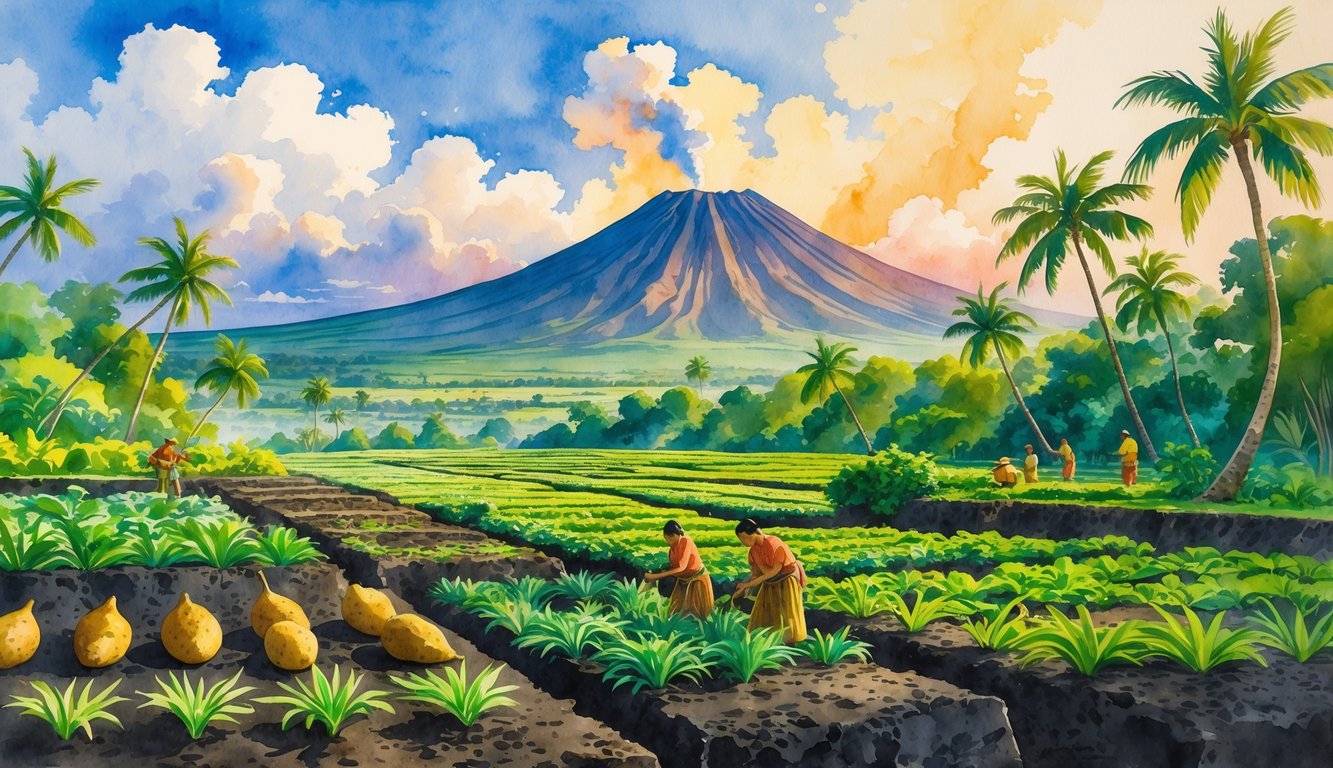
Volcanic soils shaped more than just plant growth in Hawaii. These soils played a key role in how people organized themselves and survived on the islands.
Chiefdoms and Class Structure
Volcanic soil in Hawaii does not spread evenly. Some areas have rich, deep dirt useful for growing taro, sweet potato, and other staple crops, while others are rocky or less fertile.
People set up farming systems based on where the best land was located. Fertile land attracted larger populations and led to the rise of powerful chiefs.
These leaders—called aliʻi—took charge of food production and land use. Chiefs sometimes controlled large territories, leading to a clear class system with aliʻi at the top and commoners farming the fields.
Society’s organization made it possible to build irrigation systems and manage wetland fields for taro. Teamwork played an important role in farming success and kept power in the hands of the elite.
Ecosystem science studies show that dry and wet farming created different kinds of communities and shaped political relations across the islands.
Food System and Food Security
Fertile volcanic soil made some places very good for raising food, especially with the right crops and farming techniques. Farmers used both dryland and wetland systems.
For wetland taro, they built terraces and ditches to control water. In drier places, sweet potatoes became the main crop.
People planned their food systems around what the land could offer. They grew plants that fit each environment to protect against crop failures.
Chiefs and their helpers managed shared resources, responded to shortages, and organized labor to build and repair farms. Teamwork and planning helped Hawaiians stay fed during hard times.
Historical Perspectives and European Contact
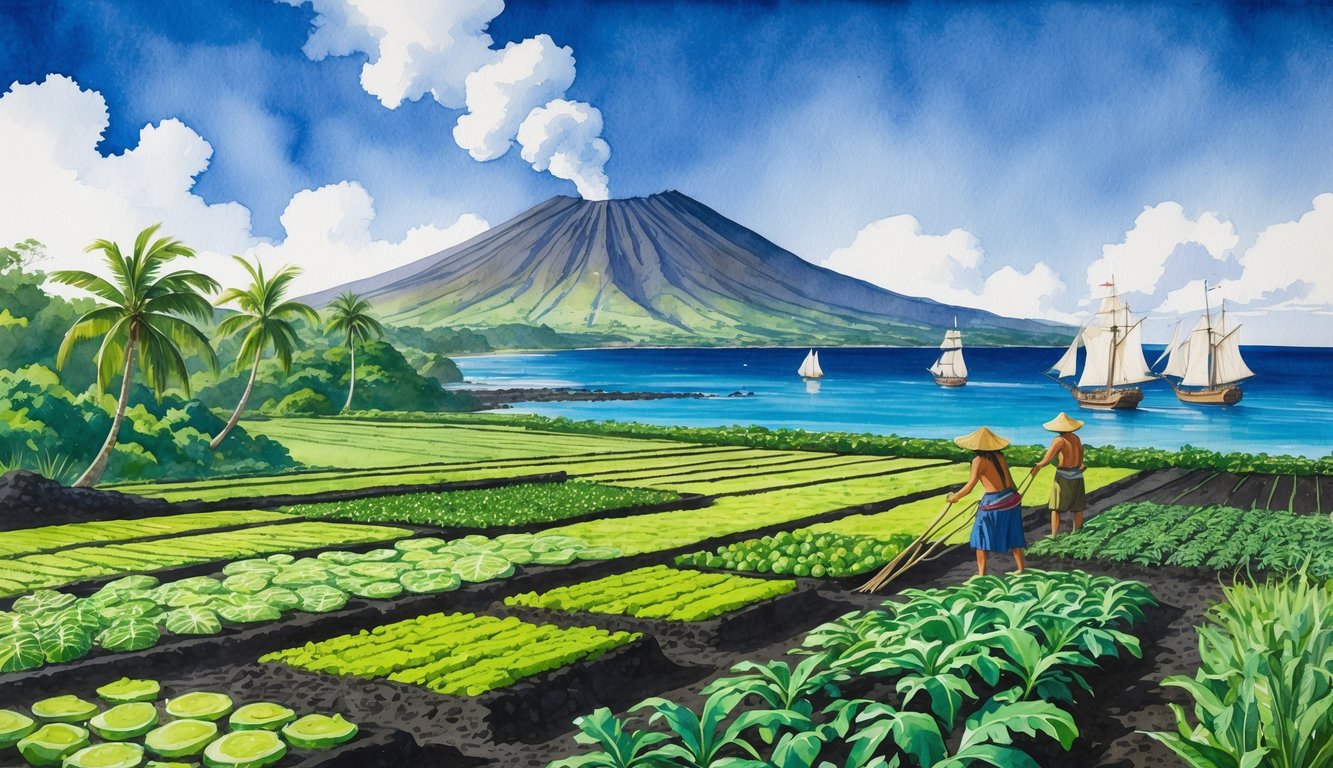
Volcanic soil shaped how people grew food in places like Kohala and Pāhala. When Europeans arrived, agriculture and daily life changed in important ways.
Changes After European Arrival
European contact brought major shifts to native farming systems in Hawaii. Before 1778, Hawaiian agriculture used complex divisions of land, called ahupua‘a, that matched local soils and rainfall.
After Europeans arrived, diseases and new animals damaged these systems. Crops like taro and sweet potato, which thrived in volcanic soils, became less common.
New cash crops such as sugarcane and pineapple appeared, changing what people planted and where. European technologies and tools made farming more productive but sometimes harmed the land.
Disrupted water systems and soil use led to changes in both society and the environment. You can see more about these impacts on Hawaiian agricultural systems.
Case Studies: Kohala and Pāhala
In Kohala, people abandoned old dryland fields once used for sweet potato and other native crops or converted them to pasture. Local soil management techniques developed over centuries faded as ranching spread across the region.
Pāhala, on the Big Island, became known for sugarcane. Large plantations needed lots of water and labor, which changed how volcanic soils were used.
Farming shifted from feeding local families to focusing on export. Historians study these places to show how European contact shifted the balance between people, soil, and crops.
Learning from Kohala and Pāhala helps us understand the lasting effects of these changes.
Sustainability and Environmental Challenges
Volcanic soil in Hawaii is both productive and fragile. Farmers must balance sustainable methods, protect the land from erosion, and prepare for natural disasters that can quickly change the landscape.
Sustainable Agriculture Practices
Many Hawaiian farmers focus on keeping the soil healthy. They use crop rotation, cover crops, and reduced chemical input to keep the soil active and fertile.
These practices increase soil health and help the land absorb and store more carbon. Organic farming is also common.
Farmers often limit the use of synthetic fertilizers and pesticides. This protects the environment and improves long-term soil quality.
Programs like Healthy Soils Hawaii work with local farmers to test and share ways to improve soil sustainably.
By using sustainable agriculture practices, Hawaiian farms produce food while keeping the land healthy for the future. Supporting local farmers and sustainable choices is a big part of this approach.
Erosion and Soil Management
Loose and thin volcanic soils face a constant threat from erosion. Heavy Hawaiian rains quickly wash away topsoil if farmers do not take care.
Farmers use stone walls, ground cover, and carefully placed windbreaks to keep soil in place. Building kuaiwi (stone walls) helps stop erosion and creates natural boundaries.
These structures support healthy crops and protect fields from runoff. Areas with steep slopes often get extra attention, with native plants or grass barriers to stabilize the ground.
Regular monitoring helps farmers adjust their methods as needed. By combining traditional knowledge with modern science, farmers in Hawaii work hard to avoid losing valuable volcanic soil to erosion.
Natural Disasters and Resilience
Living in Hawaii means facing natural disasters like volcanic eruptions, earthquakes, and hurricanes. Volcanic eruptions can bury crops in ash or create new farmland, but they also disrupt farming for years.
Floods and storms can cause major soil loss and damage fields. Many farms create buffer zones with native plants and invest in emergency water management systems to build resilience.
These steps protect the soil and allow farming to continue after disasters. Researchers offer tools and early warnings that help farmers plan for severe events.
By understanding local risks and adapting land use, Hawaiian agriculture becomes more prepared for unexpected changes. This resilience is important for long-term sustainability and food security on the islands.
Scientific and Cultural Studies
Volcanic soil in Hawaii has a story that goes beyond chemistry and farming. Researchers from different backgrounds work together to understand both the scientific and human sides of the land.
Anthropological and Ecological Research
Anthropologists and ecologists have explored how ancient Hawaiians built their lives around volcanic soils.
They studied farming areas on the leeward side of Kohala, where dryland agriculture appeared wherever volcanic soil had the right nutrients.
These studies show a strong link between healthy soils and the location of past farms.
Volcanic ash, rich in minerals, changed how Hawaiians grew food.
Soil nutrients like phosphorus and nitrogen shaped which crops succeeded.
Scientific research shows that the best crops grew where soil conditions were just right.
Farmers overcame erosion, dryness, and hard volcanic layers by building rock walls.
They planted in patterns that stopped soil from washing away.
This work created a landscape of small, unique fields well suited for survival and growth.
Tropical Forest Management and Polynesian Societies
Polynesian societies relied on tropical forest management for their traditions.
Hawaiians balanced farming and forest conservation by choosing which areas to clear and which to protect.
They managed soil and water by planting trees to protect fields or letting some land rest.
This planning kept volcanic soil healthy year after year.
Rotating crops and managing forest edges helped ancient societies thrive in tough, volcanic environments.
This creative land use built a strong connection between people, soil, and forest.
Hawaiians shaped agriculture for generations through these practices.
Regional Variations Across the Hawaiian Islands
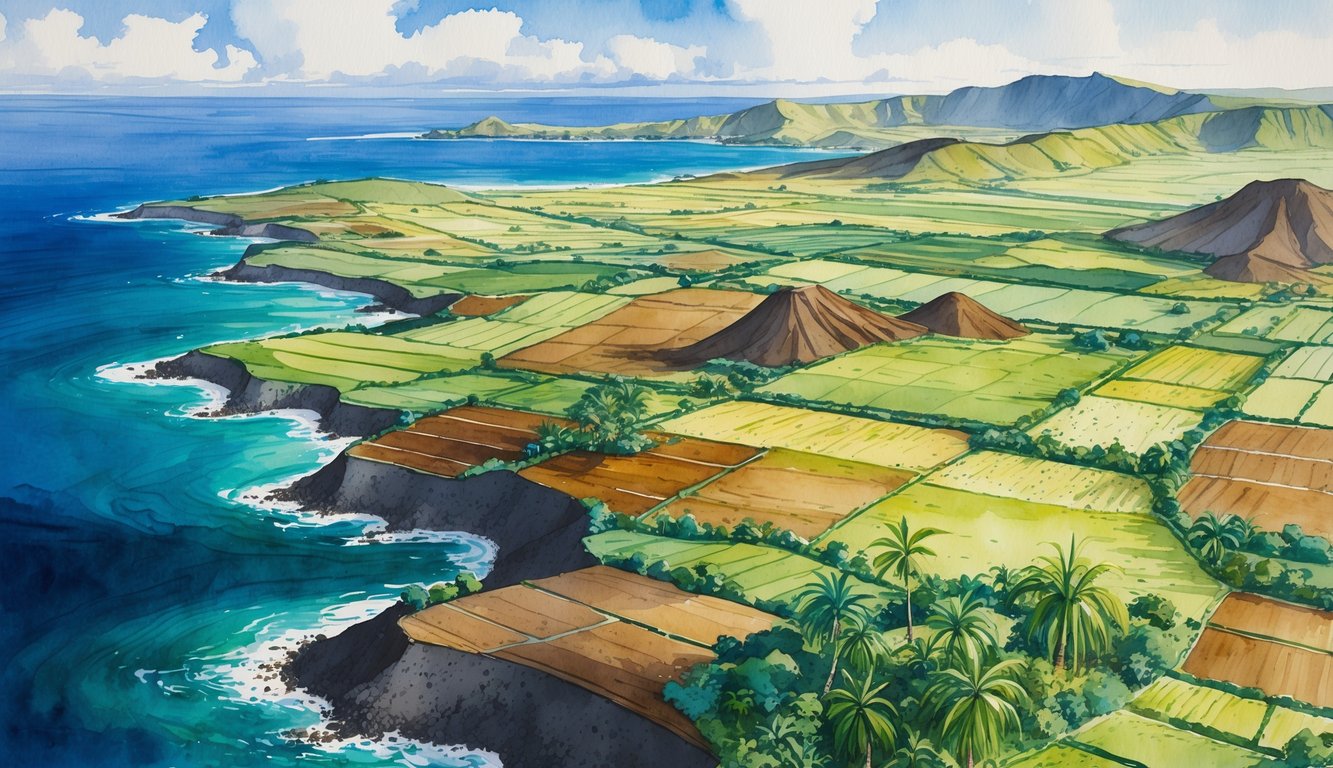
The volcanic soils of Hawaii are not all the same.
Each island has its own soil make-up, which shapes what crops people can grow and how farmers manage the land.
Soil and Agriculture in Honolulu
Honolulu sits on Oʻahu, where old volcanic soils have weathered over time.
The rainfall in this part of the island is higher, which increases soil moisture but can also wash away nutrients.
Farmers rely on irrigation channels to bring water to drier zones.
Parts of Honolulu have rich, reddish soils called laterites, formed from long weathering.
These soils are good for growing crops like taro, sweet potatoes, and vegetables.
Some areas need fertilizers to replace nutrients lost through heavy rain and years of farming.
Arable land in Honolulu is limited because of urban growth.
Farmers maximize what’s left by rotating crops and adding compost.
This keeps the soil healthy for new plantings.
Comparison of Major Islands
Each Hawaiian island has distinct soil features based on the age of the lava and rainfall.
The younger soils on Hawaiʻi Island (the Big Island) are rich in minerals but can be rocky and less developed.
Maui has both older, weathered soils and younger volcanic soils in its highlands.
Kauaʻi, the oldest main island, has deep, weathered soils but can be low in some nutrients after many years of rain.
Farmers watch soil fertility carefully.
Recent studies show that dryland agriculture in places like Kohala matches the abundance of volcanic soil nutrients.
Rainfall also affects soil fertility.
Some areas, especially on the Big Island, have few streams and depend on rainfall for irrigation.
Wetland and dryland systems appear unevenly, reflecting the unique environmental mix across these islands.
Here’s a table comparing key differences:
| Island | Soil Age | Main Crops | Challenges |
|---|---|---|---|
| Hawaiʻi | Youngest | Coffee, papaya | Rocky, thin soils |
| Oʻahu | Middle aged | Taro, vegetables | Urbanization, leaching |
| Maui | Mixed | Sugarcane, pineapple | Varying fertility |
| Kauaʻi | Oldest | Taro, bananas | Low nutrients, erosion |
Health and Disease Considerations
Volcanic soils in Hawaii bring both benefits and risks for agriculture.
These soils affect not only plant growth but also health issues for people who live and work in farming areas.
Impact on Human Diseases
Volcanoes in Hawaii, especially Kīlauea, release gases like sulfur dioxide (SO₂) into the air. When SO₂ mixes with air and water, it forms vog, or volcanic smog.
Vog makes the air hazy and can harm people’s lungs. People who breathe vog for long periods may get sore throats, headaches, or breathing problems.
Kids, elderly people, and those with asthma can have worse health problems. Since 2008, researchers have noticed that high levels of SO₂ raise health concerns in areas downwind from active vents.
Farmers, workers, and their families need to watch for increased asthma attacks and breathing issues during heavy vog days. Checking air quality updates and wearing masks or staying indoors can help protect health.