
When I think about Hawaii’s past, sugar stands out as one of the biggest forces that shaped these islands. Sugar changed Hawaii’s economy, society, and landscape for over a century.

The sugar industry brought new people, jobs, and technology. Small towns turned into busy centers full of different cultures.
Long before hotels and tourists, sugar became the main business here. By the late 1800s, large plantations covered many islands and brought workers from China, Japan, Portugal, and the Philippines.
If you want to understand how Hawaii changed, look at the rise and fall of the sugar industry. Places like Koloa on Kauai, known as Hawaii’s first sugar town, played a big part in this transformation.
What fascinates me most is how much everyday life in Hawaii changed because of sugar. The crops and plantations shaped local food, music, traditions, and even the land itself.
Following sugar’s journey helps me see how Hawaii grew into the unique place it is today.
Origins of Sugar in Hawaii
Sugar’s early history in Hawaii began with native cultivation. Later, outside influence turned it into a booming industry.
The story connects the careful work of early islanders, the arrival of new sugarcane types, and big changes brought by missionary families.
Early Sugar Cane Cultivation
Hawaii’s first settlers brought sugarcane plants with them as early as 600 AD. Native Hawaiians called sugarcane “kō” and made it part of daily life.
People chewed the raw stalks as a sweet treat, used the juice as medicine, and included it in religious rituals. Families grew different varieties for specific uses.
Traditions around sugarcane grew strong over time. Families shared farming techniques across generations.
Kō became a symbol of hospitality and sweetness in Hawaii. At this stage, people grew sugarcane mostly for local use and not for big business.
Arrival of Sugar to the Hawaiian Islands
European explorers changed things when they arrived in Hawaii. Captain Cook’s arrival in 1778 marked the first outside record of sugarcane in Hawaii.
After foreign contact, people brought new sugarcane varieties to the islands. Some types were sweeter or easier to grow.
By the early 1800s, entrepreneurs saw Hawaii’s climate as perfect for growing large fields of sugarcane. Soon, commercial sugar plantations appeared across the islands.
People from around the world came to work on these plantations. The shift from small plots to major farms set the stage for sugar to play a key role in Hawaii’s history.
Influence of Missionary Families
Missionary families arrived in the early 1800s and got involved with farming and business. They used their resources and connections to build sugar plantations.
Many missionary descendants formed partnerships with foreign investors. Together, they created companies that controlled the sugar trade for decades.
People called this group the “Big Five.” They held much of the power in Hawaii’s economy.
Their involvement changed local communities. New business and labor systems replaced traditional ways.
Growth of the Sugar Industry
Sugar changed Hawaiʻi through a few major shifts. The rapid spread of plantations, the power of the Big Five, and new ways of farming shaped the islands and daily life.
Expansion of Sugar Plantations
Sugar plantations expanded quickly after 1875, when the United States allowed Hawaiian sugar to enter without tax. Many new investors arrived.
In only five years, the number of plantations jumped from 20 to 63. Sugar soon became the main crop and business in Hawaiʻi.
Koloa Plantation was the first major site, starting large-scale farming. New plantations opened across the islands.
The increase brought people from all over the world to work in the fields, including Chinese, Japanese, Portuguese, Filipino, and Korean laborers.
By 1900, after Hawaiʻi became a U.S. territory, even more land was used for sugar. The local economy shifted to focus on sugar exports.
Role of the Big Five
Five companies—C. Brewer & Co., Alexander & Baldwin, Castle & Cooke, American Factors, and Theo H. Davies & Co.—ran almost all the sugar plantations in Hawaiʻi. People called them the Big Five.
These companies controlled the sugar industry, shipping, banking, and much of island life. The Big Five made key decisions about land, prices, and even politics.
They bought huge areas of land and managed thousands of workers. Their influence stretched everywhere, from jobs and homes to laws and roads.
Because they worked closely together, new businesses struggled to compete. Many families and small landowners lost control of their property during this time.
The Big Five’s reach changed Hawaiʻi’s economy and society for generations. People still remember their power in island history.
Industrial Agriculture Transformation
Sugar plantations in Hawaiʻi became early examples of industrial agriculture. Farmers used new machines, irrigation systems, and modern tools to increase sugar production.
Large steam-powered mills processed cane quickly. Railways and trucks moved sugar from the fields to the docks.
The focus on efficiency and export led to new farming styles and ways of managing water and soil. Traditional Hawaiian farming methods disappeared in many areas.
Plantations cleared forests and drained wetlands to make more space for sugar. This had big effects on native plants and animals.
The new industrial approach made Hawaiʻi a leader in sugar production for many years.
Labor and Social Impact
Sugar shaped Hawaii in ways that go far beyond agriculture. The industry changed population patterns, daily life, and culture.
Recruitment and Labor Migration
When sugar plantations needed more workers, managers recruited from outside Hawaii. They brought in people from China, Japan, the Philippines, Korea, Portugal, and Puerto Rico.
This migration created a mix of cultures and languages that makes Hawaii unique today. Plantations used contracts, and workers often had to stay for years.
Many sent money home to help their families. The arrival of new groups brought both conflict and cooperation.
Plantation leaders hoped different groups would compete rather than unite. Over time, shared struggles led workers to join forces and form unions.
Strikes, such as the 1946 Sugar Strike, led to better conditions and helped end the old plantation system.
Major immigrant groups:
- Chinese
- Japanese
- Filipinos
- Portuguese
- Puerto Ricans
Daily Life on Plantations
Plantation life was hard. People worked long hours, often in hot and muddy fields.
Rows of small houses called “camps” became home to families. These camps were split into sections by ethnicity.
Most workers woke up early. The day involved cutting cane, hauling loads, and running loud machinery.
Meals were simple, usually rice and vegetables, sometimes meat or fish. Homes were crowded, and many families grew their own food to get by.
Despite the hard work, people built strong communities. They formed clubs, churches, and sports teams.
Holidays, dances, and shared meals brought some joy, even on tough days. Over time, these customs blended and helped build Hawaii’s multicultural identity.
Native Hawaiians and Cultural Shifts
The rise of sugar plantations pushed many Native Hawaiians off their land. The Great Mahele, a land division in the 1800s, allowed outsiders and plantation owners to buy huge areas.
As Native Hawaiians lost land and jobs, many struggled. Some ended up working low-wage plantation jobs themselves.
Hawaiian language, customs, and traditions became less common in daily life as plantation society grew. Still, Native Hawaiians played a key part in shaping workers’ rights movements.
They helped unite different groups and keep Hawaiian spirit alive. Many people today work to preserve Hawaiian culture, knowing how much has changed since the sugar era.
Economic and Political Influence
Sugar changed Hawaii in many ways. It shaped how wealth was built and who held power.
Plantation Economy and Wealth
When sugar plantations started to grow in Hawaii, the islands’ economy changed quickly. Plantation companies cleared large tracts of land across different islands to grow sugarcane.
Large plantation companies became some of the wealthiest businesses in the region. These plantations needed many workers, so people from China, Japan, the Philippines, Portugal, and other countries came to Hawaii for jobs.
The work was hard and the pay was low. Most wealth went to a few plantation owners and businesses.
The plantation economy also changed how people owned and managed land. Private ownership linked to sugar companies replaced Native Hawaiian practices for sharing land.
Money from sugar exports paid for roads, railways, and towns. This helped Hawaii connect with markets around the world.
Political Power of Plantation Owners
As the sugar industry grew richer, plantation owners became some of the most powerful people in Hawaii. Many owners and business leaders came from America or Europe.
They used their money and influence to shape laws and government decisions. Groups of wealthy plantation owners, called Hawaii’s “Big Five,” controlled much of the land and business.
These families and companies worked together to protect their interests. They often pushed for policies that would lower their costs and raise profits.
Plantation leaders often sat on powerful councils that advised the Hawaiian monarchy. They influenced who became important government officials.
This concentration of power weakened the voices of many Native Hawaiians in the government. As business interests rose, Native Hawaiians lost influence.
The political power of plantation owners deepened the divide between those who benefited from sugar and those who did not. Learn more about the power held by plantation leaders at ilind.net/2014/11/02/a-corporate-biography-of-hawaiis-big-five.
Transition from Hawaiian Kingdom to U.S. Territory
Sugar’s influence played a major role in ending the Hawaiian Kingdom and bringing U.S. control. Plantation owners wanted Hawaii to join the United States to end tariffs and make sugar exports cheaper.
In the late 1800s, business leaders worked with U.S. officials to remove Queen Liliʻuokalani, the last monarch of Hawaii. With strong business backing, they overthrew the Hawaiian monarchy.
Hawaii became a U.S. territory and later a state. Economic power from sugar exports helped American business interests push for annexation.
This ended the Hawaiian Kingdom’s independence, with sugar at the center of these changes. More about this transition can be found at contra-tiempo.org/blog/2023/3/22/the-sugar-trade-and-colonization-of-hawaii.
Regional Sugar Production in Hawaii
Sugar shaped Hawaii’s regions in unique ways. Each island had its own sugar story, marked by big plantations, new technology, and different challenges.
Sugar on Maui
Maui’s sugar history is full of change. Large plantations set the pace, and the Hawaiian Commercial & Sugar Company (HC&S) became the biggest.
HC&S built the famous Puunene mill. This mill became the largest in Hawaii and handled huge amounts of sugarcane every season.
Maui’s dry fields made irrigation systems necessary. Water from streams and ditches turned wide stretches of land into sugar fields.
Many workers from China, Japan, Portugal, and the Philippines came to work here. HC&S was the last sugar operation on the islands before it closed in 2016.
Today, the old mill stands as a symbol of Maui’s sugar era. It shows how sugar shaped jobs, land, and communities.
You can read more about Maui’s sugar production at the Wikipedia article about Sugar plantations in Hawaii.
Key facts about Maui sugar:
| Fact | Detail |
|---|---|
| Largest plantation | Hawaiian Commercial & Sugar Company |
| Main crop | Sugarcane |
| Last mill closed | 2016 |
| Main workforce | Immigrants from Asia, Europe |
Kauai’s Sugar Legacy
On Kauai, sugar began with the Old Sugar Mill of Koloa, which opened in 1835. Koloa became the starting point of commercial sugar in Hawaii.
Soon after, more plantations grew across the island. Kauai’s sugar companies invested in new methods and steam-powered mills.
These changes sped up the process and made it easier to send sugar to the mainland. Kauai’s wetter climate gave cane fields a natural advantage.
Plantations on Kauai depended on skilled labor from around the world. The demand for more workers brought waves of immigrants, making Kauai’s towns very diverse.
Sugar helped build roads, schools, and more on the island. Learn more at The History of Sugar Plantations in Hawaii.
Main Kauai sugar highlights:
- First commercial mill: Koloa, 1835
- Innovations in steam power
- Diverse communities
- Supported growth of small towns
Molokai and its Sugar History
Molokai’s sugar story was different from Maui and Kauai. Efforts to grow sugar began later and on a smaller scale.
The dry land and fewer water sources made farming tough. Sugar mills opened, but most did not last long.
Weather, geography, and competition from larger islands held back big expansion. A few small plantations started and stopped over the years.
Even though sugar did not become as big on Molokai, these attempts still shaped land and jobs for some local families. Today, old fields and abandoned mills mark where sugar once grew on the island.
Molokai sugar facts:
- Smaller, short-lived plantations
- Faced problems with water supply
- Sugar never dominated the economy
Environmental and Social Effects
Sugar production in Hawaii changed the islands’ land, water, and people. The sugar industry shaped land laws, changed natural resources, and left social and environmental challenges that can still be seen today.
Water Rights and Plantation Development
When sugar plantations arrived in Hawaii, they needed huge amounts of fresh water for irrigation. Early plantation owners changed the flow of streams and rivers to move water to their fields.
This often meant native Hawaiians had less water for their farms and fishing areas. By building large ditch systems, plantations took control of important water sources.
They pushed aside traditional water rights, helping plantations expand but making it harder for small farmers to grow food. This shift led to disputes over water that lasted for generations.
As resorts and suburbs now grow in the same areas, water allocation is still a problem today. The history of sugar’s use of water helps explain why water rights in Hawaii remain controversial.
Pollution and Ecological Change
Growing sugar cane for decades changed the land and water in many ways. Sugar fields used large amounts of chemicals, like herbicides and pesticides, which sometimes polluted local streams and soils.
Clearing forests for plantations reduced native habitat and allowed invasive species to spread. Many native plants and animals struggled as their homes disappeared.
Sugar mills also created waste that sometimes ended up in waterways and near towns. When the last sugar mill closed in 2016, some pollution stopped, but environmental issues remain.
Impact on Natural Resource Policies
Hawaii’s current resource management policies have roots in the sugar era. Plantation owners influenced laws about land use and water, favoring large agricultural operations over small farmers or conservation.
Today, urban growth and resort development often happen on old sugar lands. As cities and suburbs expand, debates continue about how to balance farming, conservation, and development.
The use of herbicides, the spread of invasive species, and the shape of modern water law all reflect choices made during the time sugar dominated Hawaii. These patterns continue to shape Hawaii’s land, water, and environment.
Notable Figures and Research
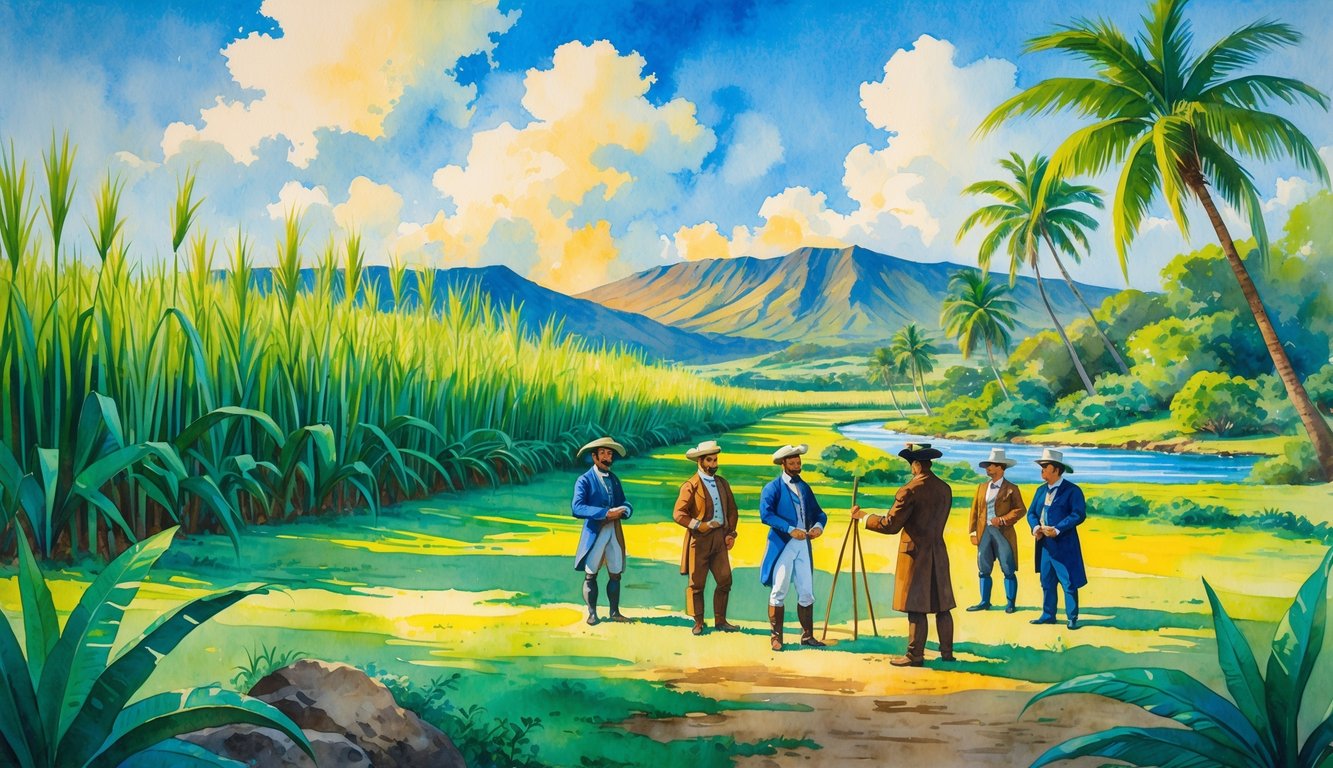
Experts have written detailed studies about sugar’s history in Hawaii. Their work helps explain how sugar shaped Hawaii’s economy, society, and environment.
Contributions by Carol A. MacLennan
Carol A. MacLennan is a leading researcher who wrote Sovereign Sugar: Industry and Environment in Hawaiʻi. Her book discusses the relationship between sugar plantations, the environment, and the people of Hawaii.
She uses historical documents and first-person accounts to explain how plantation owners and workers interacted. MacLennan’s research shows that sugar planters had a big influence on Hawaiian land and politics.
She explains how the industry connected to environmental changes and social shifts. Her work details how the sugar industry affected both Native Hawaiians and immigrant workers.
You can read more about her research in her book, described at environment-hawaii.org.
Role of Anthropologists
Anthropologists have played a key role in recording stories from Hawaii’s plantation era. They interviewed former workers and studied the daily lives of people on sugar plantations.
These researchers looked at how groups like Japanese, Filipino, Chinese, Portuguese, and Native Hawaiians worked and lived together. Their work helps explain how the mix of laborers created Hawaii’s unique “melting pot” culture.
Their findings show the effects of labor systems, plantation rules, and multicultural living on generations of local families. Anthropology has helped keep these stories alive.
Michigan Technological University’s Involvement
Michigan Technological University has supported research on sugar’s legacy in Hawaii. Scholars from the university, including Dr. MacLennan, study records and oral histories to document changes in land use, working conditions, and community life.
Michigan Tech faculty often work with Hawaiian organizations and local historians. Their projects help create more accurate and respectful research.
This partnership brings more voices into the conversation. As a result, the histories become richer and more balanced.
Transition and Decline of Sugar in Modern Hawaii
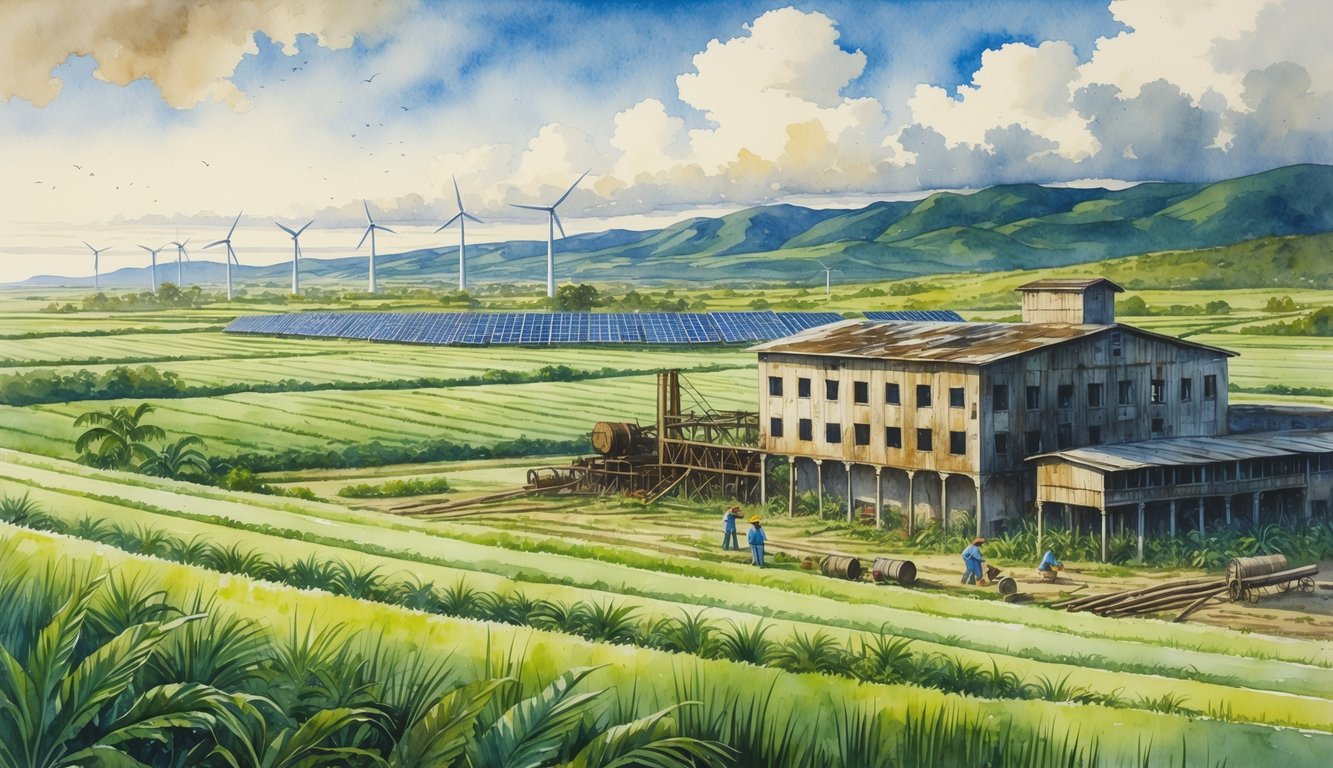
Hawaii’s sugar industry changed a lot in the late 1900s. Plantations closed, jobs disappeared, and the sugar economy faded away.
Factors Leading to the Industry’s Decline
Several main problems caused sugar’s downturn. Sugar prices dropped worldwide, making it harder for Hawaii to compete with cheaper cane from countries like Brazil and Thailand.
At the same time, growing sugar in Hawaii cost much more. Workers’ wages rose, land prices jumped, and old equipment needed expensive repairs.
Environmental rules changed. Water use became strictly controlled, and old irrigation systems did not meet new standards.
Land used by sugar companies became more valuable for homes, shopping centers, and tourism. Many companies decided to sell their land.
Profits shrank, and plantations merged or closed. By the 1980s, fewer fields and mills operated, and thousands of acres turned to other uses.
You can read more about these turning points at Nani Hawaii.
End of Commercial Sugar Plantations
By the late 1900s, the sugar industry in Hawaii almost disappeared. In 1980, about 14 plantations still operated, but that number dropped quickly.
More farms closed each year. In 2016, the last major sugar plantation shut down.
These closures hit local communities hard. Many workers lost their jobs, and towns that once relied on sugar struggled.
Some families had worked on plantations for generations. Now they had to find new ways to make a living.
Tourism and other industries replaced sugar as main sources of jobs and money.
For more details on this turning point, visit Sugar Chronicles.
Legacy and Lasting Effects
Sugar’s history in Hawaii still shapes how I see the islands today. People from many countries came to work in the sugar fields.
Because of this, Hawaii became one of the most diverse places in the U.S.
Plantation towns, irrigation ditches, and old mills still remind us of sugar’s big role in the past. Some farmers now grow crops like coffee or macadamia nuts on land once filled with cane.
The legacy of sugar continues as a part of Hawaii’s local culture, food, and even festivals.
The sugar economy changed Hawaii forever. It helped build roads, schools, and towns, leaving a mark many still feel in daily life.
Sugar’s Lasting Cultural Significance
Sugar shaped much more than just the land and economy in Hawaii. I still see its influence in how people connect with traditions and remember history.
People often talk about important moments like Pearl Harbor.
Sugar’s Role in Hawaiian Identity
Growing up, I saw how sugar shaped my ancestors’ choices. People from many countries came to work in sugar plantations, making Hawaii a true melting pot.
These immigrants brought food, languages, and celebrations that still fill my community today.
My neighbors often share stories about their grandparents’ plantation days. These stories help me understand how sugar affected everyday life, from what families ate to how they gathered for special events.
Foods like malasadas and shave ice, popular at celebrations, come directly from this blend of sweet traditions.
Sugar also influenced where people lived. Many plantation camps are still part of local towns, reminding us how sugar mixed our lives and cultures.
This shared past gives Hawaii a unique identity I’m proud to be part of. You can learn more about sugar’s impact at places like Koloa, where Hawaii’s sugar era began.
Modern Remembrance and Preservation
Today, I see efforts to keep sugar’s memory alive. Local schools teach about plantation history.
Museums have hands-on exhibits for visitors and residents. Community events, like plantation festivals, bring people together to share food, music, and stories.
These events help honor the labor and spirit of workers who built the industry. Art and music often reference sugar days.
For instance, hula dances at cultural festivals often celebrate the mix of backgrounds that came from plantation life.
Some groups work to preserve old mill sites and plantation buildings. New generations can see what life was like because of these efforts.
You can explore more about this preservation at Big Island Pulse’s article on the topic.
Connections to Pearl Harbor and Broader History
Sugar’s influence went beyond farming. Sugar companies shaped Hawaii before and after events like Pearl Harbor.
For example, sugar interests had strong ties with U.S. business and military leaders. Before World War II, these ties helped Hawaii become a U.S. territory.
After the attack on Pearl Harbor, many plantation workers joined defense efforts. Plantations sometimes supplied resources for the military.
Sugar’s presence links local families, land use, and national policy in deep ways. Recognizing this helps me see why sugar is more than just a crop here.
The events at Pearl Harbor are a big part of history, but sugar’s story remains deeply connected to Hawaii’s past and present.
North American Mining and Industry Parallels
When I look at the history of Hawaii’s sugar industry, I notice it shares some surprising similarities with North American mining.
Both industries used large-scale operations and required heavy investments to grow.
Labor was key in both sugar plantations and mining.
Many workers traveled from far away, bringing different cultures and traditions.
This mix shaped local communities and changed the workforce.
Here’s a simple comparison:
| Sugar Plantations in Hawaii | North American Mining | |
|---|---|---|
| Main Product | Sugar | Metals and minerals |
| Labor Force | Immigrants (Asia, Europe) | Immigrants (Europe, Asia, Americas) |
| Environmental Impact | Changed landscapes, water use | Soil disruption, water/air pollution |
| Need for Technology | Steam engines, mills, irrigation | Drills, dynamite, processing plants |
Large companies controlled both industries.
Big business owned land, set wages, and influenced local governments.
Patterns of land ownership were also similar.
In mining towns and sugar regions, a few people or companies owned most of the land, while many worked for them with few rights.
Development depended on outside markets.
Sugar producers shipped their product to the US and beyond.
Mining companies also sent minerals far from where they extracted them.
For more about Hawaii’s sugar industry, you can read this overview at Panda Travel.


