
Waimea Canyon sits on Kauai’s west side and offers sweeping views of deep red cliffs, green valleys, and waterfalls.

People call it the Grand Canyon of the Pacific because it stretches about 14 miles long, a mile wide, and drops over 3,600 feet deep.
This canyon stands out as one of Hawaii’s most striking natural landmarks and attracts anyone exploring the island.
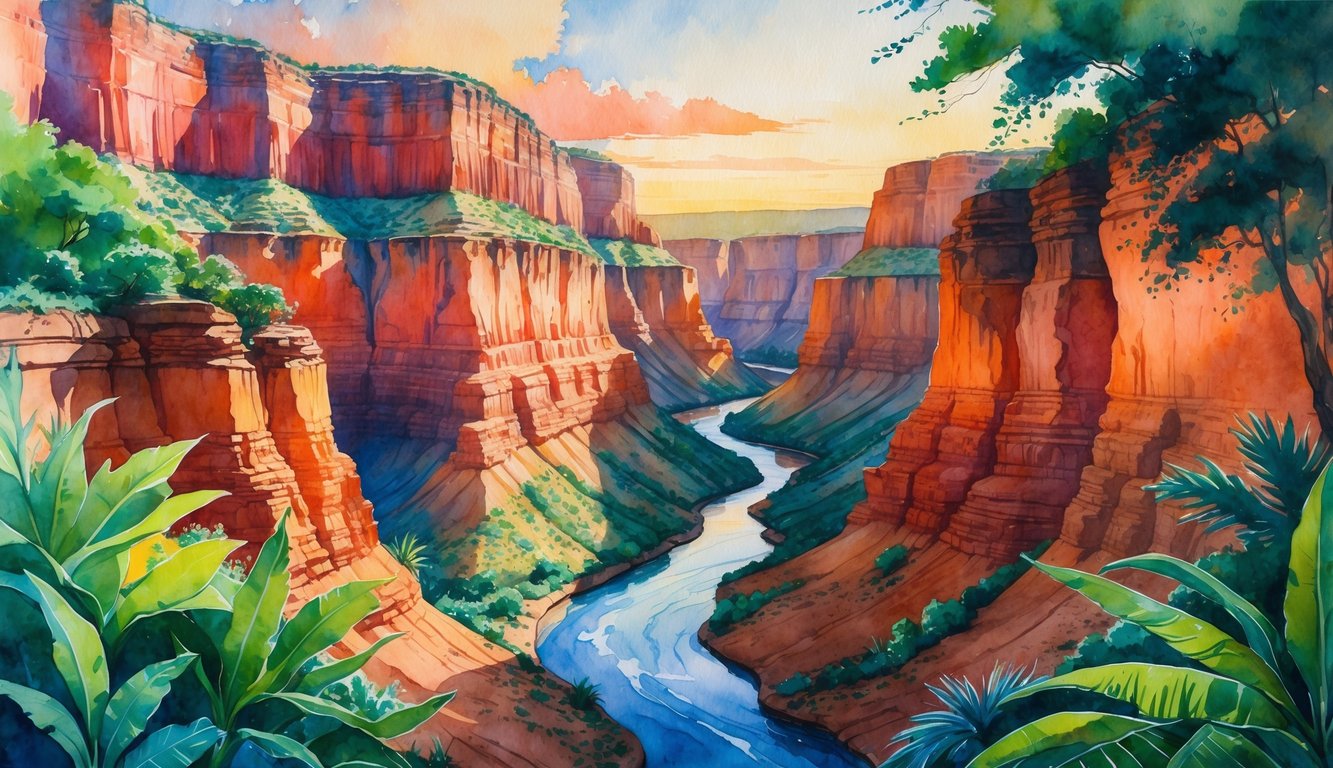
You can take in the scenery from several lookouts along Waimea Canyon Drive.
Trails also lead to spots like Waipo‘o Falls.
Each viewpoint gives a unique angle on the canyon’s rugged beauty, shaped over millions of years by the Waimea River and heavy rainfall from Mount Wai‘ale‘ale.
The area around the canyon invites you to explore nearby towns, local food stops, and Kōke‘e State Park.
This mix of nature and culture makes the journey as enjoyable as the destination.
Waimea Canyon: The Grand Canyon of the Pacific
Waimea Canyon on Kauai’s west side runs for about 14 miles and drops more than 3,600 feet deep.
Its cliffs show layers of red, brown, and green, shaped by volcanoes and erosion over millions of years.
Many people visit its lookouts, trails, and cultural sites within Waimea Canyon State Park.
Geological Formation and Features
A volcano collapse created the canyon, and the Waimea River carved it deeper over centuries.
Lava flows left layers of rock, each showing a different part of Kauai’s geological story.
The walls show iron-rich basalt that turned deep red as it oxidized.
Rain and plants add green, making the colors stand out.
The terrain has steep ridges, narrow valleys, and seasonal waterfalls like Waipo‘o Falls.
These features make Waimea Canyon one of the largest and most colorful canyons in the Pacific.
Hikers can spot native trees such as koa and ʻōhiʻa along the trails.
Birds like the ʻapapane and pueo live in the area.
Panoramic Views and Lookouts
Several roadside lookouts let you easily enjoy the canyon’s scenery.
The Waimea Canyon Lookout at mile marker 10 gives a wide view of the canyon’s depth and colors.
Other stops, such as Pu‘u Ka Pele and Pu‘u Hinahina, show different angles and lighting, especially early or late in the day.
You can watch light patterns shift across the cliffs as clouds move overhead.
On clear days, you might see parts of Ni‘ihau Island from high elevations.
Some viewpoints also connect to hiking trails that lead deeper into the park.
These trails bring you closer to waterfalls and native forest.
Cultural and Historical Significance
The name “Waimea” means “reddish water” in Hawaiian, referring to the river’s color from eroded soil.
Native Hawaiians have long valued the canyon for its resources and as part of their ancestral lands.
Archaeological finds show early settlements in nearby valleys, where people grew taro and other crops.
Oral histories link the area to Hawaiian legends and ancient navigation routes.
In the 19th century, sugar plantations changed some of the region, but the canyon itself stayed mostly untouched.
Today, people can learn about Hawaiian history while enjoying the canyon’s natural beauty.
Exploring Waimea Canyon State Park
You can reach Waimea Canyon State Park by driving inland from Waimea or Hanapepe on Kauai’s west side.
The park has scenic viewpoints, hiking access, and basic facilities.
Travelers enjoy the canyon’s red, green, and brown landscapes set against the Pacific Ocean.
Waimea Canyon Drive and Scenic Stops
The main road, Waimea Canyon Drive, winds uphill from Waimea town through changing scenery.
Drivers pass dry lowlands, forested slopes, and open ridges with views of the canyon and the ocean.
Roadside pullouts let drivers stop safely for photos.
The Pu‘u Hinahina Lookout gives a view toward Ni‘ihau, and the Ni‘ihau Lookout shows the island on clear days.
Travelers can also take Kōke‘e Road to reach Kōke‘e State Park.
This route adds cooler forest scenery and trailheads for longer hikes.
Driving from Waimea to the highest viewpoints usually takes 30–45 minutes, but most people spend several hours exploring.
Waimea Canyon Lookout Experience
The first major viewpoint is the Waimea Canyon Lookout at mile marker 10.
This paved area gives a wide, open view of the canyon’s deep valleys and layered cliffs.
From here, you can see Waipo‘o Falls, an 800-foot waterfall.
The colors change with the sunlight, from deep reds to lush greens.
Signs explain the geology and history, and benches offer a spot to rest.
Parking fills up during mid-morning, so arriving early or later in the day can help avoid crowds and catch better lighting.
Visitor Tips and Facilities
You’ll find basic facilities at the Waimea Canyon Lookout, including restrooms and a shaded area.
There are no gas stations inside the park, so fill up in Waimea or Hanapepe before you go.
Weather changes quickly at higher elevations, so bring a light jacket.
Cell service is limited, so download maps ahead of time.
There are no food options inside the park, but Waimea town has restaurants and stores for snacks or meals.
For more information on stops and facilities, check the Waimea Canyon State Park guide.
Hiking and Outdoor Adventures
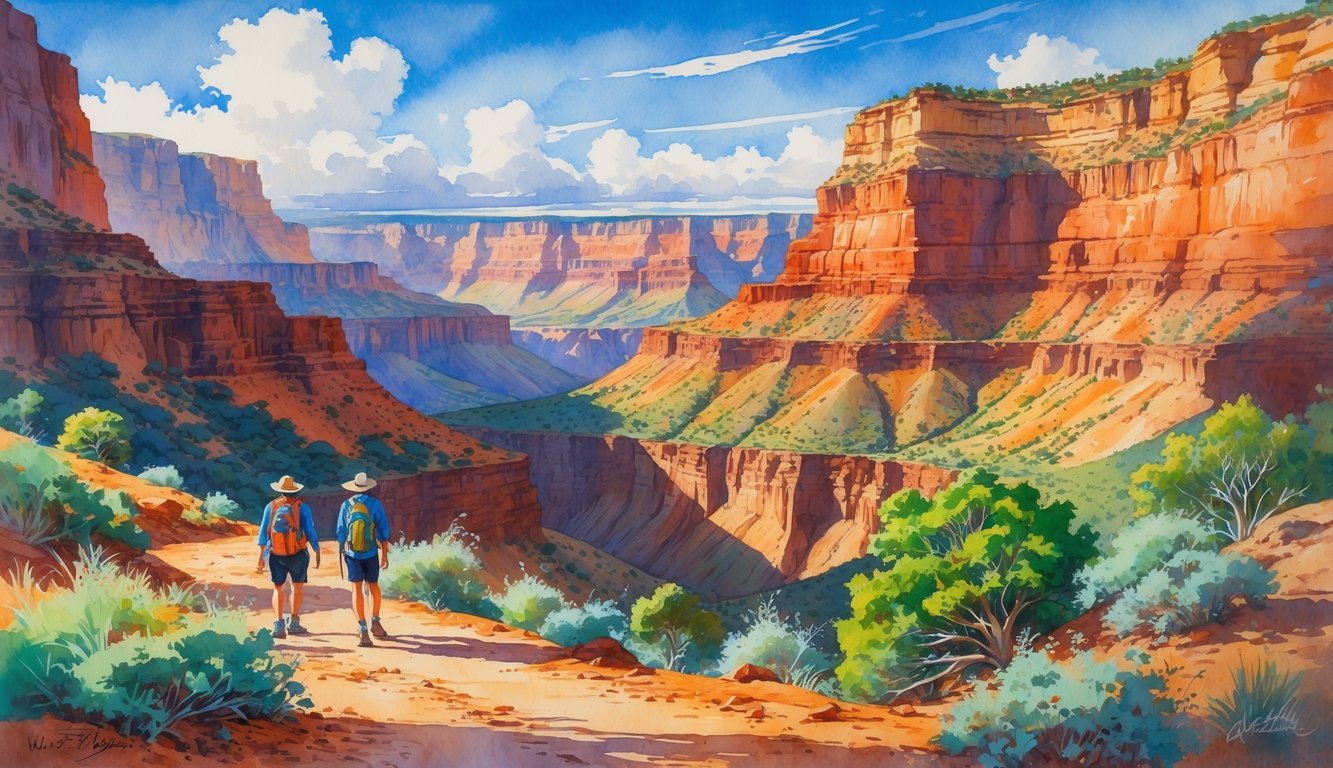
You can hike trails that range from short, easy walks to full-day treks with steep climbs.
Many routes pass through native forests, along canyon rims, and near streams fed by the Waimea River.
Wildlife sightings may include native birds, and the plant life mixes tropical and highland species.
Popular Waimea Canyon Hikes
You can pick from several popular trails.
The Cliff Trail is under a mile and gives quick access to panoramic views, great for beginners.
The Canyon Trail is a moderate 3.4-mile round trip through forested areas, ending at Waipo’o Falls.
Experienced hikers may try the Kukui Trail, which drops steeply into the canyon and has an elevation change of over 2,000 feet.
Connecting trails in Waimea Canyon State Park and Kōkeʻe State Park allow for longer loop hikes.
You can find details on these hikes in the Waimea Canyon hike guide.
Canyon Trail and Cliff Trail Highlights
The Canyon Trail starts near the Pu’u Hinai lookout and leads through koa and ʻōhiʻa forests.
Along the way, you might see ferns, wildflowers, and native birds.
The trail offers spots where the canyon walls drop away, showing off deep red and green layers.
The Cliff Trail branches from the Canyon Trail and is short but rewarding.
It ends at a viewpoint with a wide look at the canyon and the Waimea River below.
Both trails can get muddy after rain, so wear sturdy shoes.
The elevation is over 3,000 feet, so expect cooler temperatures than at sea level.
Waipo’o Falls and Waterfalls
Waipo’o Falls is one of the most photographed spots in Waimea Canyon.
The waterfall drops about 800 feet in two tiers.
You can see the upper falls from several lookouts, and reach the lower falls via the Canyon Trail.
Lush vegetation grows around the falls because of the constant mist.
Hikers may spot ti and hibiscus plants along the trail.
During wetter months, smaller waterfalls appear on the canyon walls.
You can often see these from the Waimea Canyon Overlook, adding to the scenery.
Nearby Towns and Unique Experiences
Travelers can explore historic towns, local art, and coastal views within a short drive of Waimea Canyon.
These spots offer cultural history, small-town charm, and scenic places that connect you to Kauai’s heritage.
Discovering Waimea Town
Waimea Town sits on Kauaʻi’s west side and serves as a gateway to the canyon.
It has a quiet main street with small shops and cafés.
You can stop at Waimea Canyon Drive for supplies before heading uphill.
The town features historic buildings from the sugar plantation era, some over a century old.
Local highlights include the Captain Cook Landing Site and the Waimea Theater.
Farmers markets sell fresh fruit, baked goods, and crafts.
To learn more about the area’s history, you can explore Waimea, which blends culture with outdoor activities.
Exploring Hanapepe
Hanapepe, called “Kauaʻi’s Biggest Little Town,” is about 15 minutes from Waimea.
It is known for its art galleries, restored buildings, and relaxed vibe.
Every Friday night, Hanapepe Art Night brings open galleries and shops, with street vendors selling snacks like poke and grilled skewers.
The Hanapepe Swinging Bridge offers a short walk over the river.
Many people enjoy browsing bookstores and coffee shops.
Hanapepe also has a World War II memorial and murals showing local history.
For more about the town’s attractions, visit Go Hawaii’s Hanapepe guide.
Views of the Forbidden Island
From certain points near Waimea Canyon’s west side, visitors can see Niʻihau. People often call it the Forbidden Island.
A small Native Hawaiian community lives on this privately owned island. The owners generally keep the island closed to the public.
On clear days, visitors have the best chance to see Niʻihau’s outline from lookouts along Kokeʻe Road. Some boat and helicopter tours offer closer views, but they do not allow passengers to land.
The sight of Niʻihau adds something unique to the trip. Travelers can catch a glimpse of one of Hawaiʻi’s most remote inhabited islands.


