
Hiking near Hawaiian volcanoes offers a unique adventure. You get close to some of the most powerful forces on Earth.

Trails wind through lush rainforests, across lava fields, and up the slopes of active volcanoes. The best hiking trails near Hawaiian volcanoes reveal incredible landscapes you can’t find anywhere else.
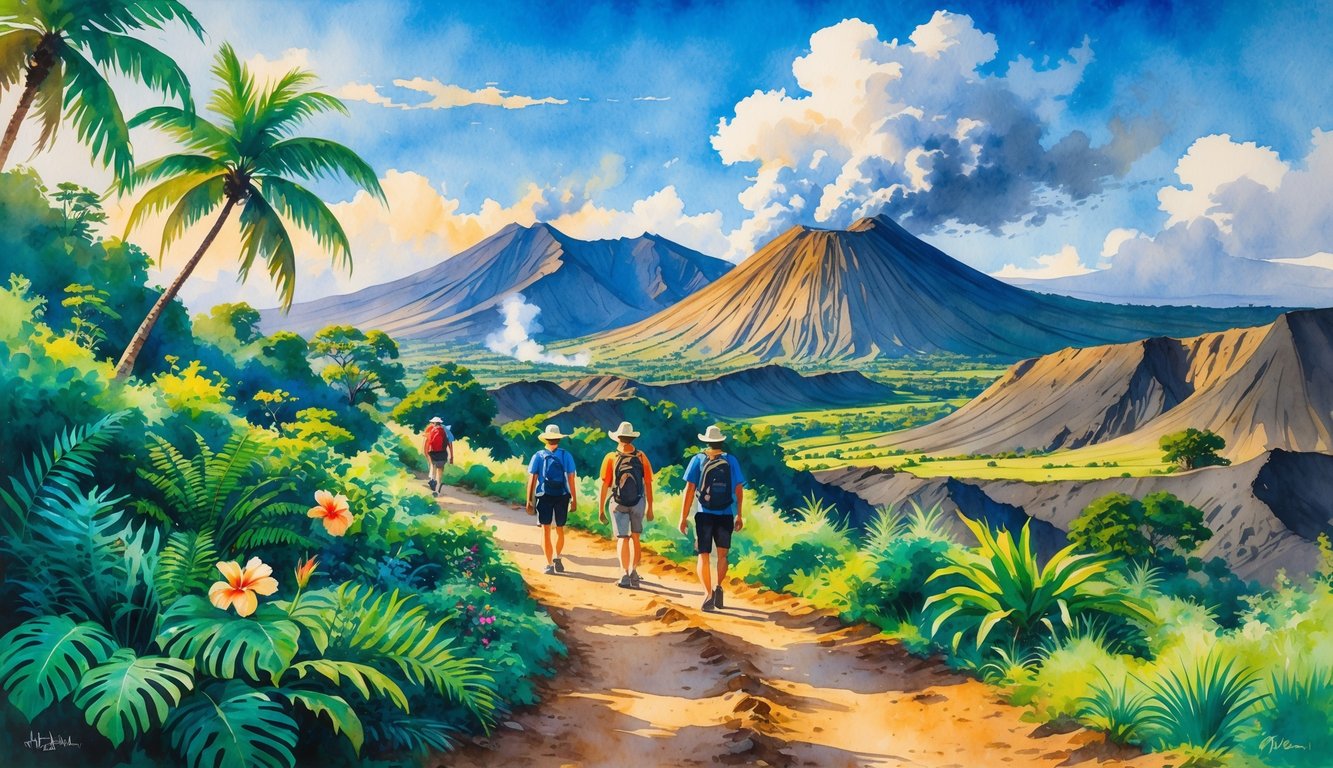
Each trail offers a special kind of excitement. You can take short walks like the scenic Devastation Trail or longer hikes around Kīlauea and Mauna Loa in Hawai’i Volcanoes National Park.
These hikes let you see lava rocks, craters, and sometimes steam vents. Whether you want a short stroll or a full day of adventure, you’ll find something memorable on these volcanic trails.
When you hike near a volcano in Hawaii, you can get close to areas shaped by volcanic activity. The sights, smells, and sounds make it feel like you’re exploring another world.
Overview of Hiking Near Hawaiian Volcanoes
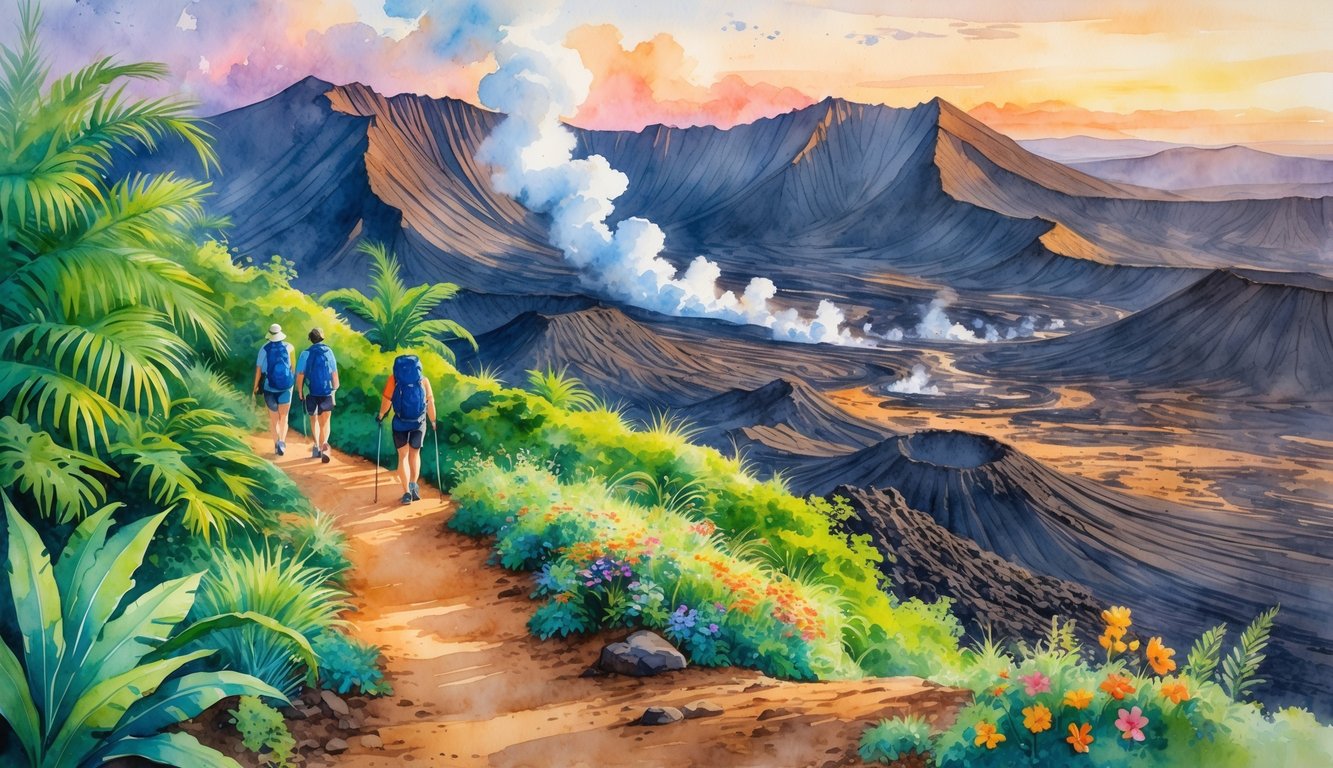
Hiking near the volcanoes on the Big Island is a unique experience. You can explore rare geological formations, walk through lush forests, and see active volcanic features all in one place.
Understanding Hawaii Volcanoes National Park
When you visit Hawaiʻi Volcanoes National Park, you’ll find two of the world’s most famous active volcanoes: Kīlauea and Mauna Loa. The park has a network of trails that let you experience craters, lava tubes, and old lava flows.
Some paths are paved and easy. Others are longer and more rugged.
Walking along the Crater Rim Trail lets you peer into volcanic craters. On trails like Devastation Trail, you trek across the barren landscape of old lava.
The best hikes in the park show how volcanic activity shapes the land. You’ll find both history and natural beauty everywhere you go.
Types of Volcanic Landscapes and Features
When you hike here, you see different volcanic landscapes. You cross fields of solidified black lava, find steam vents hissing from the ground, and spot rainforests that regrew after eruptions.
Sometimes, you pass petroglyphs carved into ancient lava rock. These carvings show the long history people have with these volcanoes.
When you walk near Kīlauea, you’ll notice:
- Crater rims with wide views
- Lava tubes like Thurston Lava Tube, which you can walk through
- Sulfur banks with colorful deposits and strong smells
- Rugged lava fields that stretch for miles
Each trail feels different depending on recent volcanic activity. Some trails may close for safety, while others open new views after an eruption.
You can use detailed guides to each trail to plan your trip.
Safety Considerations and Air Quality
Safety is important when hiking near active volcanoes. Always check for trail closures and updates, as eruptions or earthquakes can change conditions quickly.
Some areas have unstable ground or sharp rocks. Good shoes are essential.
Air quality can change fast. Eruptions sometimes release volcanic gases called vog, which make breathing difficult, especially near Kīlauea.
Signs in the park let you know if the air isn’t safe. Trails might close if volcanic gases rise or if a new eruption starts.
Check official updates at the park’s visitor center or website before you hike. This keeps your adventure safe and enjoyable.
Top Hiking Trails by Major Volcano

Hawaii’s volcanoes offer hiking trails where you can walk across old lava flows, through cool forests, and past ancient petroglyphs. Each volcano has its own scenery, history, and hiking challenges.
Here are the main trails you can explore near the island’s biggest volcanoes.
Kīlauea Region
The Kīlauea area is full of trails that show the raw power of volcanic landscapes. The Kīlauea Iki Trail is a favorite, dropping 400 feet from rainforest down to the crater floor.
You walk across a hardened lava lake, see steam vents, and enjoy amazing views. Crater Rim Trail circles the summit caldera, giving you a mix of lush forest and dramatic views of the massive crater.
Part of the trail runs close to Halemaʻumaʻu Crater, letting you see the edge of the active volcanic vent. This trail shows how quickly the landscape can change.
The Puʻuloa Petroglyphs Trail is another must-do. This short, mostly flat trail leads over a lava field to Hawaii’s largest collection of ancient carvings.
The site is considered sacred, and walking here feels special as you look at the rock art. You can find more details on these trails at the National Park Service website.
Mauna Loa Area
Hiking near Mauna Loa feels different because it is the largest volcano on Earth. The Mauna Loa Trail is the main route, climbing the volcano’s massive slopes.
This trail is challenging due to the high altitude and long distances. The trailhead starts in a shady forest and then moves into rocky lava fields as you climb higher.
You can choose different distances on the Mauna Loa Trail. Some hikers make it a multi-day trip to the summit cabin, while others just hike a shorter section for a day.
On clear days, views from the upper trail stretch across the Big Island to the ocean. Bring plenty of water and dress in layers, as the weather can change quickly.
Mauna Kea Slopes
Mauna Kea is Hawaii’s highest peak and offers a rugged hiking experience. Many trails start near the Mauna Kea Visitor Information Station at 9,200 feet.
The Humuʻula Trail is a unique hike, climbing straight up from the visitor center toward the summit. The summit trail goes above 13,000 feet, so the air gets thin and hiking becomes tough.
You might stop at one of the cinder cones or hike partway for the scenery and rare native plants. On clear days, you can see all the way to Maui.
Special rules protect the environment and sacred sites around Mauna Kea. Always follow posted signs and stay on the main trail.
Take it slow and watch for sudden weather changes. Exploring these slopes reveals a wild side of Hawaii’s volcanoes.
Must-Experience Trails Near Kīlauea
Hiking near Kīlauea brings you up close to volcanic landscapes, crater views, and lush rainforest. These trails offer a mix of natural wonders, eruption history, and easy-to-moderate hikes.
Crater Rim Trail and Highlights
The Crater Rim Trail lets you circle parts of the Kīlauea caldera. You’ll see lookouts with views into Halemaʻumaʻu crater, steam vents, and sometimes volcanic activity.
This trail links main sites in Hawai’i Volcanoes National Park. You can start from the Volcano House or the Kīlauea Visitor Center.
Highlights include the Jaggar Museum overlook, sulfur banks, and easy access to parking lots. The surface changes from paved paths to gravel, so good shoes help.
The elevation is gentle, making it suitable for families. You may spot native birds and local plants along the way.
Some sections may close if volcanic activity increases, so always check park updates before you start. The Crater Rim Trail is a must-see for exploring Kīlauea’s main features.
Kīlauea Iki Trail Adventure
The Kīlauea Iki Trail is a favorite hike, crossing a crater floor left by the 1959 Kīlauea Iki eruption. The trail starts in rainforest and descends to the cooled lava lake.
Walking across the cracked crater, you’ll see steam vents and feel heat in some spots. The loop is about 3 to 4 miles and usually takes 2 to 3 hours with stops.
The climb back up isn’t too steep, but pacing yourself helps, especially on warmer days. The trail mixes jungle, open crater, and cooled lava flows.
If you want more, explore the nearby Thurston Lava Tube. Maps and details on the Kīlauea Iki Trail help with planning.
Carry enough water, as some sections can get hot and have little shade. The trail is well-marked and safe for most hikers.
Byron Ledge and Halemaʻumaʻu Trail
Byron Ledge is a lesser-known path running along the edge above Kīlauea Iki. The Byron Ledge Trail gives dramatic side views into both the main Kīlauea caldera and the smaller Kīlauea Iki crater.
Start from the Devastation Trailhead to link Byron Ledge and Halema‘uma‘u Trail together. This route lets you walk through forests, skirt the rim, and drop down to Halemaʻumaʻu if trails are open.
Halemaʻumaʻu is Kīlauea’s main summit crater. Seeing the massive pit up close is impressive, but access changes depending on volcanic gases or activity.
When conditions allow, Byron Ledge and Halema‘uma‘u Trail offer quiet sections with unique views. This trail is less crowded and good for anyone who likes solitude and dramatic vistas.
Devastation Trail and Eruption History
Devastation Trail shows the effects of Kīlauea’s powerful 1959 eruption. The short, paved path starts at the Devastation Trailhead parking lot and passes through a landscape where lava and cinders buried the forest.
Along the way, you’ll see the damage up close and read signs about the Kīlauea Iki eruption. The ground is still bare in parts, with scorched trees and new plant growth poking through.
At the end, you can look into the Pu‘u Pua‘i cinder cone, formed by lava fountains over 1,900 feet tall. This walk is easy, flat, and has shaded benches.
Devastation Trail is a good option for a short walk with history and scenery. It connects to other routes, so you can build a longer day of hiking if you want to explore more of Kīlauea’s eruption history.
Unforgettable Routes Near Mauna Loa and Mauna Ulu
These trails combine high-elevation views, volcanic landscapes, and pockets of lush forest. I can explore sweeping craters, hardened lava flows, and rare native plants on these hikes.
Mauna Loa Lookout Hikes
The Mauna Loa Lookout trails start near Mauna Loa Road and introduce me to high-elevation hiking. After a short drive from the main park entrance, I park at the lookout, which sits about 6,600 feet above sea level.
The air feels thin, and the views stretch for miles. I enjoy the hike to the Mauna Loa Summit Cabin. The trek is long and strenuous, so I pack layers and plenty of water.
On clear days, I see the volcanic summit and the huge scale of Mauna Loa, the world’s largest active volcano. The top hiking routes near Mauna Loa also include shorter walks through kīpukas, where native plants survive between old lava flows.
Driving up to the lookout feels like an adventure. At the trailhead, I find trail maps, restrooms, and signs that explain the area’s unique geology.
Mauna Ulu Trail to Lava Fields
The Mauna Ulu Trail offers dramatic lava field hikes. I start near the Maunaulu parking area and follow the trail onto newer lava flows from the 1969–1974 Mauna Ulu eruption.
I see huge broken lava slabs, black cinder cones, and steam vents up close. The route crosses hardened flows and includes a short, steep climb up Pu‘u Huluhulu, a forested cinder cone.
From the top, I spot both Mauna Loa and Mauna Kea on clear days, plus wide stretches of black lava below. The raw landscape and the trail’s path through the eruption zone make this hike special.
The rugged surface can get hot and sharp, so I always wear sturdy shoes and bring sun protection. For more details, I check the Maunaulu and Pu‘u Huluhulu day hike guide.
Napau and Maunaiki Trails
For a longer adventure, I hike the Napau and Maunaiki Trails. The Napau Trail covers 7.5 miles through rainforests, past craters, and over ancient lava beds.
I see old and new lava, steam vents, and sometimes wild orchids. The trail leads to Napau Crater, where I can view volcanic activity from a safe distance.
Camping is allowed at designated sites if I want to stay overnight, but I always check weather and volcanic updates first. The Maunaiki Trail on the Mauna Loa side is less traveled but just as rewarding.
It features views of Mauna Loa’s broad slopes and passes through kīpuka forests with native birds. Trails like these offer a quieter way to see Hawaii Volcanoes National Park.
For maps and directions, I use Napau and Maunaiki route info to plan my trip.
Unique Trails Within Hawaiʻi Volcanoes National Park

I’ve explored trails in Hawaiʻi Volcanoes National Park that reveal ancient carvings, rare plants, and grasslands filled with native birds. Each hike feels different—some seem ancient, while others are full of life or offer wide views.
Every trail is easy to find and marked, letting me discover more about the Big Island’s natural history.
Pu‘uloa Petroglyphs Trail
When I walk the Pu‘uloa Petroglyphs Trail, I step back in time. This easy, flat path is about 1.5 miles round trip.
In just half an hour, I stand in front of thousands of petroglyphs carved into lava stone. Pu‘uloa means “long hill” and is the largest petroglyph field in Hawaiʻi Volcanoes National Park.
I spot spirals, circles, and shapes made by Hawaiians centuries ago. They mark important events, such as births and journeys.
The boardwalk lets me get close without harming the site. I always bring water and wear a hat, since the area has little shade.
Visiting in the late afternoon gives me softer light for photos. This ancient art connects me to the people who first lived here.
Learn more at Pu‘uloa Petroglyphs Trail.
Kīpukapuaulu Trail and Rare Plants
The Kīpukapuaulu Trail is a great place for spotting rare plants and native birds. This 1.2-mile loop winds through a kīpuka, an island of old forest surrounded by newer lava.
I often hear honeycreepers singing and see ancient trees. The walk introduces me to special species, like the endangered hāpuʻu tree fern and rare Hawaiian lobelioids.
Signs along the trail teach me about each plant and its importance. The shade and lush growth make the walk comfortable, and I often meet hikers excited about botany.
If I love plants or want a peaceful, green experience, this trail is a perfect choice. More details are at Kīpukapuaulu Trail.
Kahuku Unit and Palm Trail
In the southern Kahuku Unit, the Palm Trail offers wide-open views and grassy fields. This trail is about 2.6 miles round trip and takes me through pasture, old lava flows, and patches of woodland.
I get a mix of sun and shade as I walk. Cows once grazed here, but now native plants and a growing forest fill the land.
I see wild orchids, ohia trees, and sometimes hear native birds in the grass. The Palm Trail is a favorite spot to watch clouds move across Mauna Loa.
Palm Trail is well-marked and rarely crowded. If I want open skies and peaceful walking, I come here.
Read more at this Kahuku Unit hiking guide.
Lava Tubes, Steam Vents, and Volcanic Wonders
When I visit Hawai‘i Volcanoes National Park, I discover some of the most unique volcanic features anywhere. The sights and sensations of lava tubes, colorful sulphur banks, and steamy vents make each trail unforgettable.
Nāhuku (Thurston Lava Tube)
Walking through Nāhuku (Thurston Lava Tube) feels like a journey into the past. The 0.4-mile loop leads me through a lush rainforest before I enter the ancient lava tube, which is about 600 feet long.
Inside, I see smooth walls shaped by fast-moving molten lava. The cool, damp air stands out to me.
I imagine how red-hot lava carved this tunnel hundreds of years ago. The path is well-lit, making it easy to spot unique lava formations and textures along the walls.
Nāhuku is popular for families and anyone wanting a short, easy hike underground. It’s a quick adventure that shows the power and creativity of volcanoes.
Learn more about the Nāhuku Lava Tube.
Sulphur Banks Trail
When I walk the Sulphur Banks Trail, I notice the colorful ground right away. Steam seeps through cracks, and the earth is stained yellow, red, and turquoise.
This short, flat trail lets me smell the strong scent of sulfur while watching gases rise from deep underground.
| Feature | What You’ll See |
|---|---|
| Colorful soil | Yellow and red from minerals |
| Fumaroles | Rising steam vents |
| Scenery | Open views of the caldera and forest |
I always stay on the marked path, since the ground can be unstable and thin here. The Sulphur Banks Trail brings me close to the chemistry of volcanoes, with bright minerals and signs of ongoing volcanic activity.
Steam Vents Exploration
At the steam vents near the caldera rim, hot gases rise from deep underground. As I walk along the paved paths, I see and feel misty plumes from cracks in the earth.
Sometimes, the steam warms the cool morning air, creating a mysterious scene. Getting close to a steam vent lets me sense both the heat and the moisture.
The area around the vents is lush, with native plants that thrive in the warm ground. The Crater Rim Trail is a good spot for viewing steam vents, especially to see how the land changed after eruptions.
Even while I stand safely on a trail, I can feel the power of the volcanic landscape all around me.
Trail Experiences by Difficulty and Day Hikes

No matter my hiking skills, I find something exciting near the Hawaiian volcanoes. Short walks and longer adventures both reveal volcanic craters, lava landscapes, and rainforests shaped by eruptions.
Best Easy Walks around Volcanic Features
When I want a simple stroll, I choose trails near Kīlauea in Hawaiʻi Volcanoes National Park. The Sulphur Banks Trail is flat and just over a mile.
I see steam vents and colorful mineral deposits up close. Another easy walk is the Devastation Trail.
It’s paved, less than a mile long, and gives me wide views of lava fields from past eruptions. Along the way, I spot native plants growing in cracked lava.
If I want to see volcanic craters with little effort, the overlook paths at Kīlauea Iki offer great views without a tough climb. The short loops near the visitor center help me appreciate how volcanoes change the landscape year after year.
These easy trails are perfect for fresh air, bright flowers, and dramatic geology without a long hike. I just need sturdy shoes, a hat, and plenty of water.
Challenging Adventures for Experienced Hikers
For a tougher hike, I take on longer trails with rougher terrain. The Kīlauea Iki Trail lets me hike across a volcanic crater floor.
This loop is about four miles and includes a steep descent through rainforest to the dried lava lake. The views inside the crater are wild—I walk over cracked, steaming rock colored black, silver, and red.
The Mauna Loa Trail is even more challenging. I start in thick forest and climb up the world’s largest shield volcano.
It often takes two days to reach the summit, but I sometimes hike sections as a tough day trip. High elevation, thin air, and changing weather mean I must prepare with food, water, and warm clothes.
I cross streams, rocky sections, and exposed ridges where I see fresh lava flows stretching for miles. These hikes demand fitness and planning, but they reward me with rare sights found nowhere else.
Day Hikes for Families
When I’m out with family or friends, I look for safe, interesting day hikes that are easy to access and full of sights.
The Nāhuku (Thurston Lava Tube) trail is about half a mile. I walk through ancient rainforest and reach a huge underground tunnel made by flowing lava.
Kids and adults get excited by the cool, dark tunnel inside the tube.
On the Puʻuloa Petroglyphs Trail, I walk a flat, two-mile round trip across young lava fields to see thousands of ancient rock carvings.
Boardwalks and signs help kids learn and keep everyone on the path.
Another family-friendly hike is the Kipukapuaulu Trail, a mile-long loop with native birds and old trees.
These trails let everyone enjoy Hawaii’s volcanic wonders in a safe and comfortable way.
For more options, I check the best hiking trails in Hawaii Volcanoes National Park.
Camping and Overnight Adventures
Spending a night near Hawaiian volcanoes feels special. I love waking up in wild nature, breathing fresh air, and hearing birds.
There are great places to camp or backpack, whether you want comfort or adventure.
Best Campsites near the Volcanoes
I look for campgrounds close to trailheads. Near Kīlauea in Hawaiʻi Volcanoes National Park, I often pick Nāmakanipaio Campground.
This campground has grassy tent areas, rustic cabins, picnic tables, and clean restrooms. The cool night air helps me rest after a long hike.
Kulanaokuaiki Campground is another choice. It’s smaller and quieter, deep inside the park.
If I want peace and a sky full of stars, I go there. I always pack rain gear, since the weather can change fast.
I reserve spots when I can, as these campgrounds fill up quickly during vacation times. For more details, check the best campgrounds near Hawaii Volcanoes National Park.
Backcountry Backpacking Routes
For real adventure, I choose backcountry backpacking trails. The Mauna Loa Trail is a tough, 36-mile out-and-back hike across old lava fields up to Mauna Loa’s summit.
I bring enough water, food, and gear because the mountain’s conditions change fast. The marked route is remote, but shelters along the way give me places to rest.
Backpackers need to stay careful and ready for cold winds or hot sun. Permits are needed for overnight stays, so I plan ahead.
You can read more about multi-day backpacking near Hawaii’s volcanoes before you go.
Backpacking here takes me past lava tubes, strange volcanic rocks, and the edge of the Kīlauea caldera. Every step feels like a new adventure.
Wildlife, Birds, and Hawaiian Rainforest Trails

When I hike near Hawaii’s volcanoes, I see a lot of wildlife in the rainforests.
Thick greenery shelters many Hawaiian plants and colorful native birds.
Encountering Native Hawaiian Birds
Some of the best hikes pass through important bird habitats. Hakalau Forest Reserve on the Big Island is famous for its rare native forest birds.
I often spot Hawaiian honeycreepers, like the ʻIʻiwi and ʻApapane, with their bright feathers and high songs.
If I stay quiet and patient, I might see them in ʻōhiʻa trees or sipping nectar from lehua blossoms.
The forests also give me a chance to see birds like the ʻAmakihi or, if I’m lucky, the endangered ʻAkiapolaʻau.
Binoculars help, but sometimes birds come close on quiet trails.
Walking through these rainforests, I usually hear birds before I see them. Early mornings are best for birdwatching.
Many trails in Hawaiʻi Volcanoes National Park let me enjoy the sounds and sights of these unique birds.
Rainforest Exploration and Hawaiian Plants
Rainforest trails twist through groves filled with giant and delicate plants.
Lyon Arboretum near Honolulu has over 8,000 species of tropical and native Hawaiian plants.
On the Big Island, hikes near the volcanoes go through ʻōhiʻa and koa forests with lush understory plants.
I find tree ferns, wild ginger, and native mosses along the paths. Native Hawaiian trees stand out with their gnarled shapes and red blossoms.
Sometimes, I spot tiny insects, shy lizards, or a Hawaiian hoary bat overhead.
Many of these plants have been used in medicine, food, and cultural practices by Native Hawaiians. Walking in these forests, I feel connected to Hawaii’s environment and history.
Cultural and Geological Highlights
When I hike near Hawaii’s volcanoes, I find a mix of natural beauty and cultural stories.
The land shows both Hawaii’s past and the living spirit of Hawaiian legends.
Petroglyphs and Ancient Trailways
I love discovering ancient petroglyphs carved into hardened lava. These carvings are more than art—they record early Hawaiian life.
Many trails, especially in Hawai’i Volcanoes National Park, pass fields with hundreds of symbols on the rock.
Petroglyphs often show:
- People and canoes
- Tools and artifacts
- Spiritual or ceremonial images
Sometimes, I see these carvings on the ground near old footpaths Native Hawaiians once used.
These ancient trailways connected families, villages, and important gathering spots before roads existed.
Walking them helps me feel close to Hawaii’s history and the people who shaped it.
If you want to visit these spots, the Kīpukapuaulu Loop Trail is a good example. Important sites there are protected, and signs explain what you see.
Hawaiian Legends and Pele
Stories about Hawaiian volcanoes always include the goddess Pele. I’ve learned that she is the creator of new land and the force behind eruptions.
Local guides and trail signs often share Pele’s journey across the islands and her deep connection to places like Kīlauea and Mauna Loa.
Key ideas about Pele:
- Pele is respected and sometimes feared in Hawaiian culture.
- She teaches respect for the earth and kindness toward nature.
I see many visitors leave leis or flowers as offerings to Pele, especially near active volcanic areas.
This act honors her and asks for safety during hikes. It reminds me that volcanoes are sacred, living parts of Hawaii’s heritage.
For more on Pele and the volcanoes, this park overview gives a good background on Kīlauea.
Scenic Drives and Overlooks
I always enjoy the drive through Hawaiʻi Volcanoes National Park. These scenic routes give me great viewpoints and easy access to overlooks.
I stop for photos of craters and the Pacific Ocean.
Crater Rim Drive
Crater Rim Drive circles Kīlauea’s summit. The road passes through rainforest and stark volcanic land.
I see steam vents, lava fields, and the famous Halema‘uma‘u Crater.
Several pullouts and parking spots let me safely get out and look over the edge.
The best stops are Kīlauea Overlook and Steam Vents. From here, I see the changing colors and textures of the land.
When the air is clear, I sometimes spot the blue Pacific Ocean in the distance.
Crater Rim Drive lets me experience the park’s most dramatic areas up close.
Find more about this drive at the park’s official trail guide.
Chain of Craters Road
Chain of Craters Road drops from the main park area to the coast.
It’s about 20 miles long, with overlooks and stops that show old lava flows, volcanic craters, and ocean views.
As I drive, signs show where eruptions happened in the past.
Some stops have short walks to craters, natural arches, or dramatic cliffs.
Near the end, I reach the place where lava once flowed into the sea, sometimes still visible.
Parking areas have maps and info boards, which make it easy to plan stops.
The road ends at the rugged coastline, where I hear waves crashing against lava cliffs.
For more details and photos, check this guide to Chain of Craters Road.
Visitor Resources and Planning Tips

I always want to make the most of my time when hiking in Hawaii Volcanoes National Park.
Knowing where to find reliable info, the best season for trails, and what to bring helps me enjoy every mile safely.
Kilauea Visitor Center and Park Info
When I visit the park, I always start at the Kilauea Visitor Center. I talk with rangers about trail conditions and current volcanic activity.
This information helps me choose the safest and most interesting hikes for the day. The visitor center provides maps, brochures, and exhibits about local geology and culture.
Rangers lead talks that teach me about the volcanoes’ history and wildlife. The center usually opens in the early morning and closes in the late afternoon.
I check the website before I go because hours can change. Getting updates here is important since weather and trail conditions can change quickly on the volcano.
I also ask about parking, restrooms, and any safety alerts.
Best Times to Visit
The weather around the volcanoes is unique. Higher elevations feel cooler, while lower areas are warm and sunny.
I prefer hiking during the dry season, from April through October. Trails are less muddy, and I get better views of craters and lava fields.
I avoid hiking at midday on hot days. Starting early helps me enjoy cooler temperatures and fewer crowds.
Weekdays are quieter than weekends. During winter (November to March), trails can get rainy and slippery.
I always check conditions before heading out. Volcanic activity can close certain areas or affect air quality, so I stay flexible with my plans.
Packing Essentials for Hiking
Before I hit the trails, I make a checklist for what to bring.
For day hikes, I always pack:
- At least 4 liters of water per person
- Nutritious snacks and simple meals
- First aid kit (bandages, antiseptic, moleskin)
- Map or GPS
- Sun protection (hat, sunscreen, sunglasses)
- Lightweight layers and rain jacket
- Sturdy hiking shoes with good grip
When I plan to visit areas near volcanic steam vents, I bring a mask or scarf to avoid breathing irritating gases.
I also check that my backpack holds everything comfortably.
These basics help me stay ready for sudden weather changes or unexpected events on the trail.
Before each trip, I review hiking tips for the park to prepare.


