The Big Island of Hawaii covers 4,028 square miles, which makes it larger than all the other Hawaiian Islands combined. Four days will not let you see every corner of it, and that is fine.
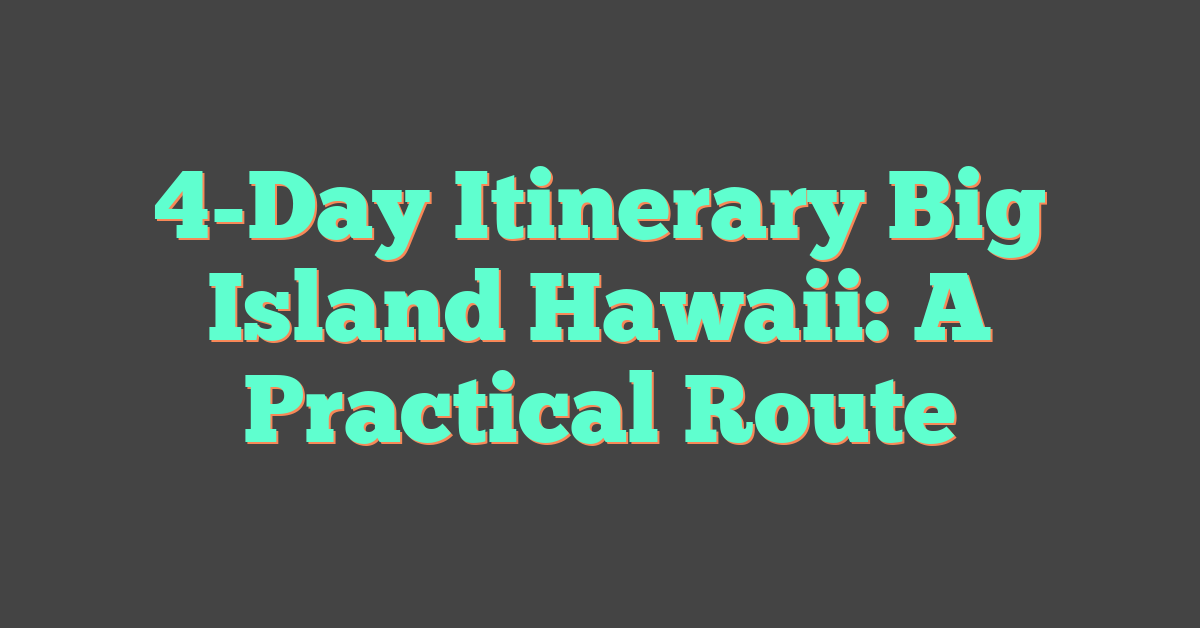
With a smart route, you can snorkel with manta rays, stand on a black sand beach, walk through a lava tube, and chase waterfalls before your flight home.
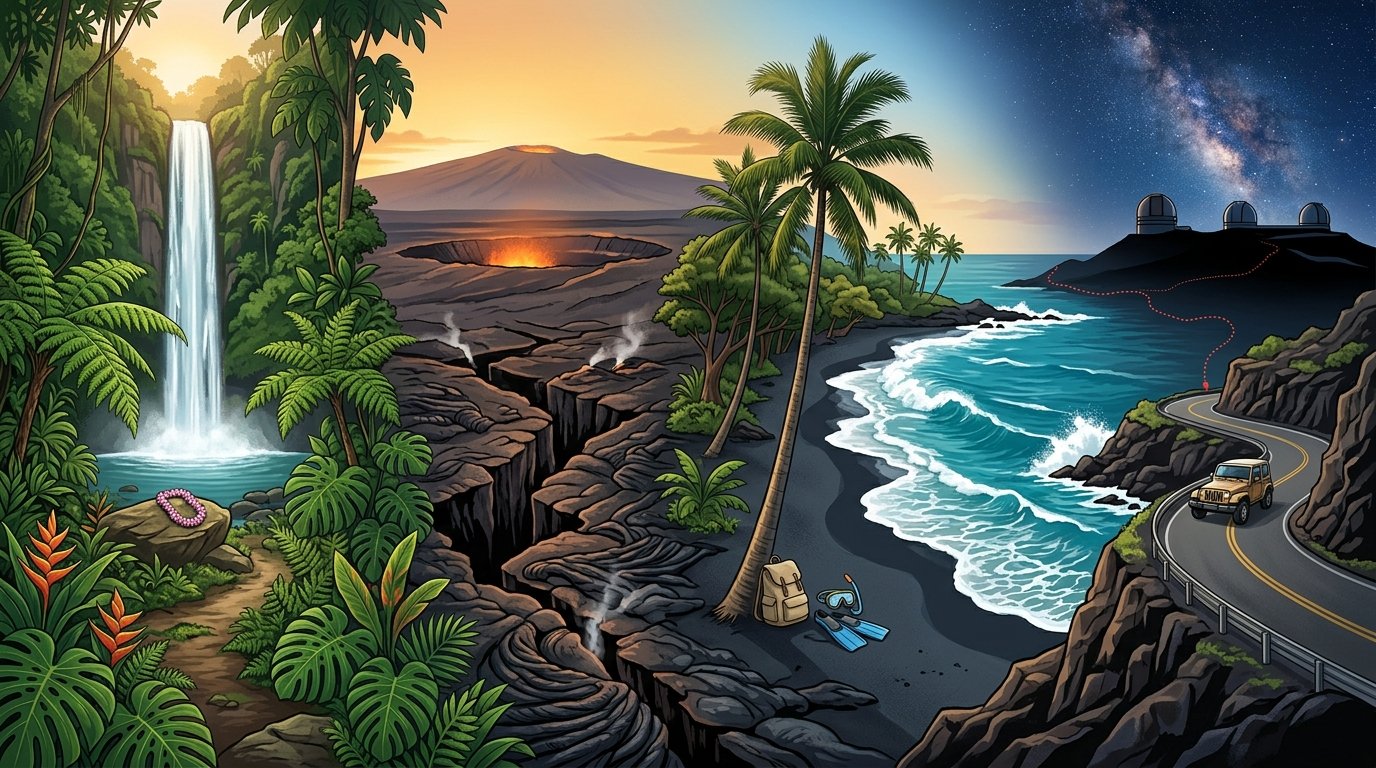
The trick to a good 4 day itinerary Big Island Hawaii travelers can follow without burning out is grouping stops by geography: Kona on day one, the south coast and volcano country on day two, Hilo and the windward side on day three, and the Kona Coast again on day four. That order keeps your longest drive in the middle of the trip and puts easy activities on your arrival and departure days.
Hawaiʻi Island rewards drivers who accept a simple truth: distances here feel like the mainland, not like Maui or Oʻahu. A single loop around the island takes about six hours of pure driving.
Plan fewer stops per day, and you will enjoy each one more. By the end of these four days, you will know which side of the island you want to return to and whether you would rather spend a week in the rainforest near Hilo or on the sunny Kohala Coast.
Day 1: Settle Into Kona, Coffee, Beaches, and Manta Rays
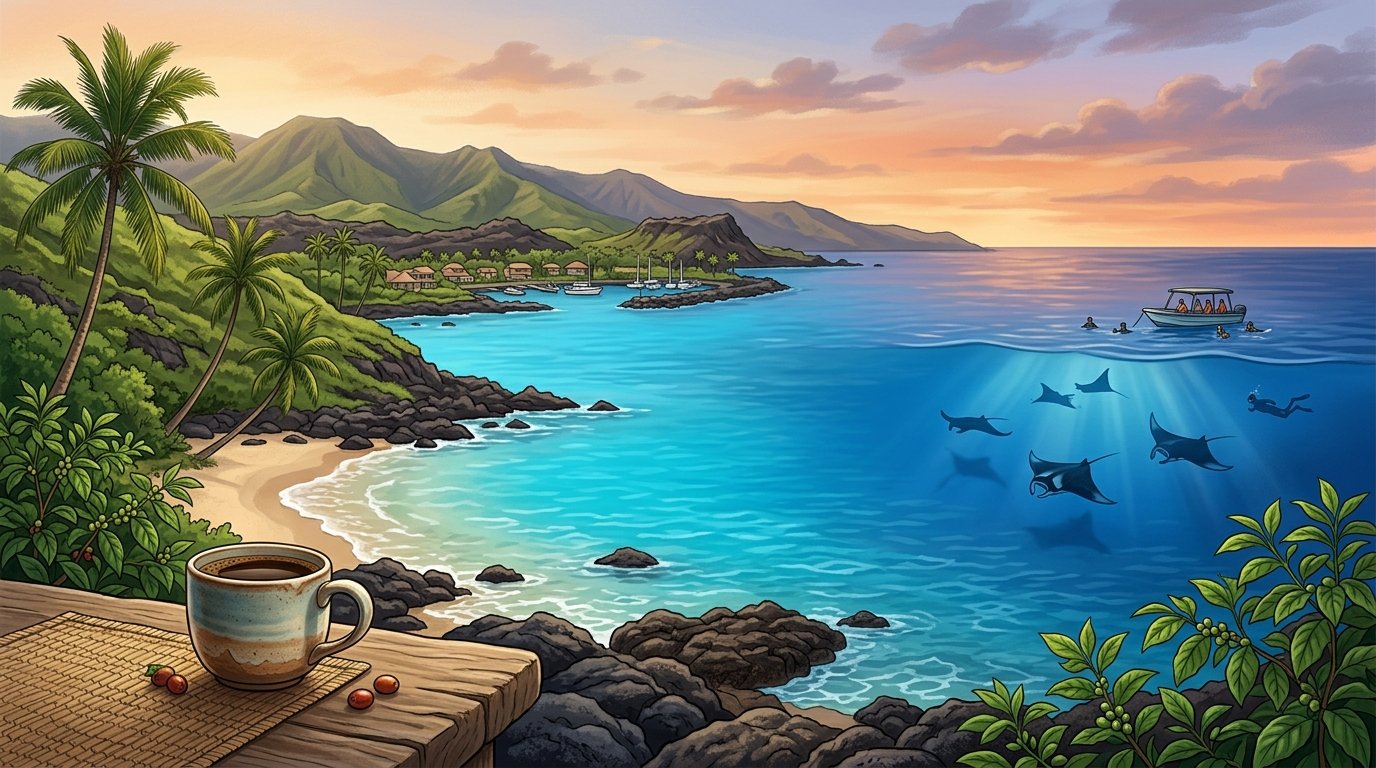
Day one stays close to Kailua-Kona so jet lag does not ruin your first evening. You will pick up a car at the airport, taste coffee in the hills above town, swim at a beach, and finish in the water with manta rays after dark.
Arriving at Kona International Airport and Picking Up a Rental Car
Kona International Airport is an open-air airport, so you step off the plane into warm trade winds and walk to baggage claim outdoors. Rental car counters sit a short shuttle ride away.
Book your Hawaii car rental well before your trip. Prices climb fast during winter and spring break, and the airport can sell out of cars entirely on holiday weekends.
Skip the convertible and get something with decent clearance if you plan to visit beaches with rough access roads. A standard sedan handles every paved stop on this route, including all of the ones ahead.
Tour a Kona Coffee Farm
Drive south from the airport on Highway 11 into the coffee belt above Kealakekua and Captain Cook. The elevation, volcanic soil, and afternoon clouds here create the only place in the United States where Kona coffee legally grows.
Greenwell Farms offers free walking tours and free tastings, which makes it an easy first stop with luggage still in the trunk. Tours run through the orchard, past the drying decks, and end at a tasting bar where you can compare medium roast against peaberry.
A visit takes about an hour. If you want more depth, several smaller Kona coffee farms offering tours and tastings sit within a few miles of each other along the same highway.
Choose a Kona Beach for the Afternoon
Pick one beach based on how much driving you want. Magic Sands Beach sits five minutes south of Kailua-Kona and offers bodyboarding when the sand is in, though winter swells strip it down to bare rock some weeks.
Hapuna Beach, 40 minutes north, gives you a half mile of soft white sand, lifeguards, restrooms, and calm water most mornings. Makalawena Beach requires a rocky 20-minute walk from the parking area, which keeps the crowds thin.
Hapuna is the safest bet for a first afternoon. Add a snorkel mask, and you will spot tropical fish along the rocky edges at either end.
Walk Kailua-Kona and Aliʻi Drive
Aliʻi Drive runs along the water in the center of town with restaurants, shops, and seawalls where locals fish at sunset. Park once and walk the whole strip in under an hour.
Grab a bowl at Da Poke Shack, where the ahi comes cut thick and the lines form by late morning. For dinner and a beer, Kona Brewing Company has a shaded outdoor patio, and Ola Brew pours local ciders and seltzers a few minutes inland.
Finish with shave ice. The Royal Kona Resort sits right on the water if you want a sunset drink with an ocean view before your night snorkel.
End the Night With a Manta Ray Snorkeling Tour
Manta ray tours leave from Keauhou Bay and Honokōhau Harbor after sunset. This is one of the few places on earth where you can float above wild mantas feeding on plankton.
Boats set up bright lights that draw plankton, and mantas with wingspans over 10 feet glide up to within inches of your board. Book ahead because popular boats sell out days in advance, especially in summer, and tours cancel for high surf.
You hold onto a lighted floating board and keep your hands to yourself, so snorkeling with manta rays in Kona works even for weak swimmers. Spinner dolphins sometimes surface near the harbor on the way out.
Day 2: South Point, Black Sand, and Hawaiʻi Volcanoes National Park
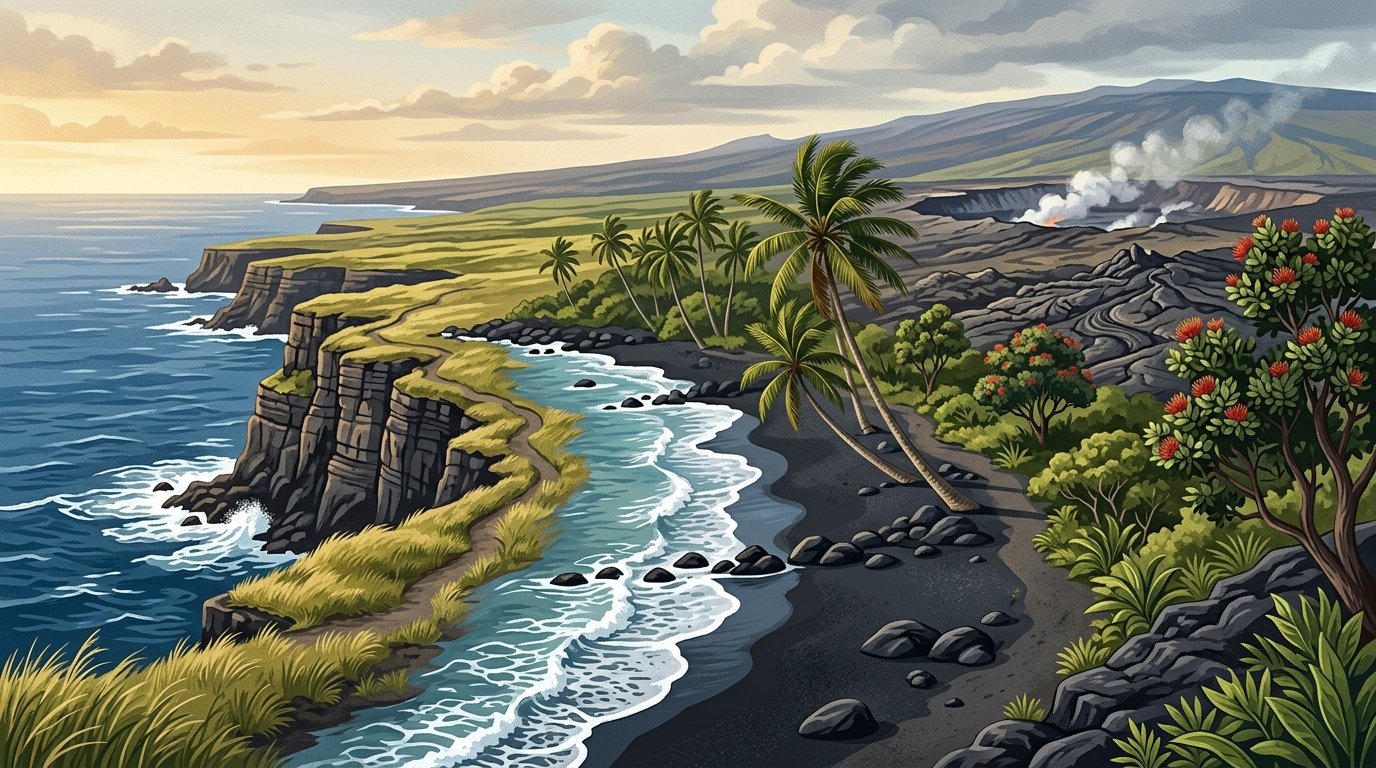
Day two is your longest driving day, covering the roughly 2.5 hours from Kona around the southern tip of the island to Kīlauea. Expect malasadas, sea turtles resting on black sand, steam rising from cracks in the ground, and a walk through a lava tube.
Stop for Malasadas at Punaluʻu Bake Shop
Punaluʻu Bake Shop in Nāʻālehu bills itself as the southernmost bakery in the United States, and the warm malasadas are the reason to stop. These Portuguese doughnuts come plain with sugar or filled with guava, coconut, and other tropical creams.
Grab coffee and a bag to share, then eat outside in the garden. The parking lot fills with tour vans by mid-morning, so an early departure from Kona pays off.
One note for 2026 travel: Nāʻālehu took heavy damage when Hurricane Lala passed south of the island on August 15, and a detailed guide to the South Point area recommends avoiding the Kaʻū District for now and using Saddle Road to reach Volcanoes National Park instead. Check current road and business status before you commit to this leg.
See Sea Turtles at Punaluʻu Black Sand Beach
Punaluʻu Beach is the easiest black sand beach to reach on the island, with a paved parking lot right at the shore. Green sea turtles haul out on the sand here to rest and warm up in the sun.
Stay at least 10 feet back and never touch them. Rangers and volunteers post signs, and honu are protected under federal law.
The water gets rough and the shoreline is rocky, so this is a looking beach more than a swimming beach. Bring a towel to sit and watch, then compare it later with the best black sand beaches on the Big Island if you want a second one.
Decide Whether Papakōlea Green Sand Beach Fits Your Day
Papakōlea Green Sand Beach is one of only four green sand beaches in the world, and reaching it takes a 2.5-mile hike each way across windy, exposed coastal terrain. Round trip runs about three hours on foot.
That time comes straight out of your volcano hours. On a four-day trip, most people are better off skipping it and saving it for a longer visit.
If you go, bring reef-safe sunscreen, sun-protective clothing, and more water than you think you need. Local trucks offer paid rides across the ruts, and the ride is bumpy and unregulated.
Explore Kīlauea’s Crater Rim and Lava Tube
Hawaiʻi Volcanoes National Park is the anchor of this day and deserves at least four hours. Start at the Kīlauea Visitor Center to check the current eruption status and any closures, since conditions shift with volcanic activity.
Walk the Sulphur Banks and Steam Vents trails, where groundwater hits hot rock and rises through cracks in the earth. Then drive to Nāhuku, the Thurston Lava Tube, and walk through a 500-year-old tunnel left behind by draining lava.
Stop at the Kīlauea Overlook and Uēkahuna for views across the caldera toward Mauna Loa. Our full guide to exploring Hawaii Volcanoes National Park covers the trails worth adding when you have extra time.
Drive Chain of Craters Road if Time Allows
Chain of Craters Road drops 3,700 feet over 19 miles from the summit to the coast, and driving out and back takes about 90 minutes with no stops. The road ends where lava buried it in 2003.
Pull off at the Puʻu Loa Petroglyphs for a short boardwalk trail over more than 23,000 carved images. The Hōlei Sea Arch near the end sits above crashing surf.
Skip this stretch if you arrived at the park after 3 p.m. and want to reach Hilo before dark. A helicopter tour from Hilo covers active flow zones you cannot reach on foot, and doors-off flights run most mornings.
Day 3: Hilo Waterfalls, Caves, and an Optional Mauna Kea Sunset
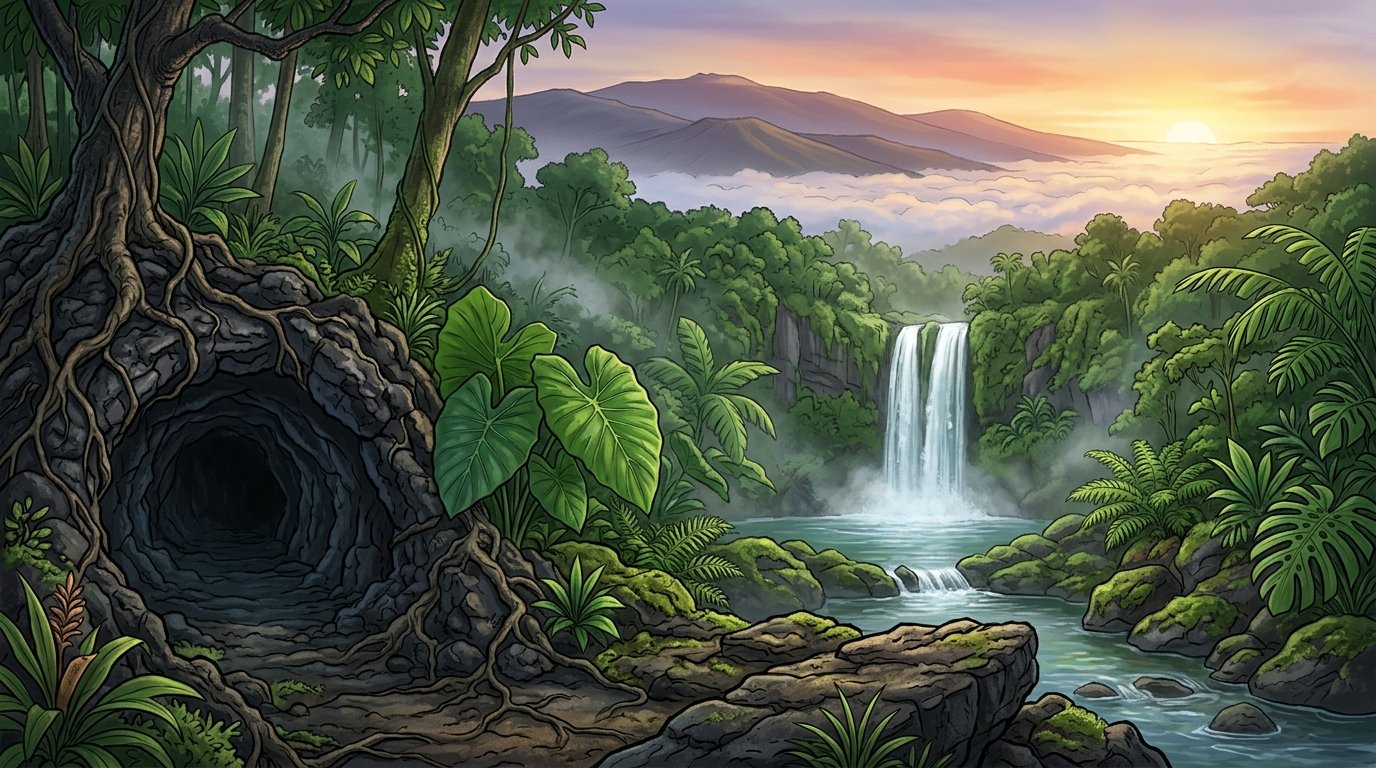
The Hilo side gets over 120 inches of rain a year, which is why the waterfalls run and the rainforest feels a world away from sunny Kona. All of today’s main stops sit within 20 minutes of downtown Hilo, so this is your lightest driving day.
Browse Hilo Farmers Market and Hilo Bay
Hilo Farmers Market runs daily at Mamo Street and Kamehameha Avenue, with the biggest days on Wednesday and Saturday when more than 200 vendors set up. Buy apple bananas, rambutan, lilikoʻi, and hot malasadas for a few dollars.
Bring cash and small bills. Vendors open around 7 a.m., and the best produce goes early.
Walk across the street to Hilo Bay afterward. Local canoe clubs paddle here in the morning, and the seawall gives you a clear view back toward Mauna Kea on clear days.
Follow the Waterfall Route to Rainbow Falls and ʻAkaka Falls
Rainbow Falls sits inside Wailuku River State Park, two minutes from downtown Hilo, with a paved overlook 100 feet from the parking lot. Morning sun creates the rainbow in the mist, so go before 10 a.m.
Drive 20 minutes north to ʻAkaka Falls State Park, where a paved 0.4-mile loop passes Kahūnā Falls and ends at 442-foot ʻAkaka Falls. Parking costs $10 per vehicle for non-residents plus a $5 per-person entry fee.
The loop takes 30 minutes with photo stops and includes stairs. For more options, our roundup of the best waterfalls on the Big Island maps out the ones worth the detour.
Explore Kaumana Caves and Wailuku River State Park
Kaumana Caves sits five miles up Saddle Road from Hilo and lets you climb a metal staircase down into a lava tube formed by an 1881 Mauna Loa flow. Bring a real flashlight, closed shoes, and a light jacket because the floor is wet and uneven.
Go 100 feet in and turn around unless you have caving experience. Past that point, the ceiling drops and the footing gets sharp.
Back in Wailuku River State Park, the Boiling Pots overlook shows a series of pools connected by underground lava tubes, with water churning between them after rain. Peʻepeʻe Falls sits just upstream, and both are viewing-only because swimming here has caused drownings.
Visit Liliʻuokalani Gardens and Banyan Drive
Liliʻuokalani Gardens covers 24 acres on Hilo Bay and is the largest Japanese-style garden outside Japan. Stone bridges, pagodas, and koi ponds make it a quiet 30-minute walk.
Banyan Drive loops around the edge of the same peninsula under enormous banyan trees planted by visiting celebrities starting in 1933. Small plaques name each planter.
Coconut Island sits offshore, connected by a footbridge, with grassy space and jumping rocks. This is the best low-effort hour on the Hilo side.
What to Know Before Going to Mauna Kea
Mauna Kea rises 13,803 feet above sea level, and the visitor information station at 9,200 feet is where most rental car agreements stop. Many contracts ban travel above that point on the unpaved section, so read yours.
Altitude sickness is real here. You go from sea level to nearly 14,000 feet in about two hours, and headaches, nausea, and dizziness can hit fast. The Park Service and observatory both advise spending 30 minutes at the visitor station to adjust. They also warn against going up within 24 hours of scuba diving.
Sunset from the visitor station is free, legal in any car, and still spectacular at 9,200 feet. Temperatures drop into the 30s and 40s after dark, so bring a real jacket, gloves, and a hat.
Day 4: Snorkel the Kona Coast and Visit Places of Refuge
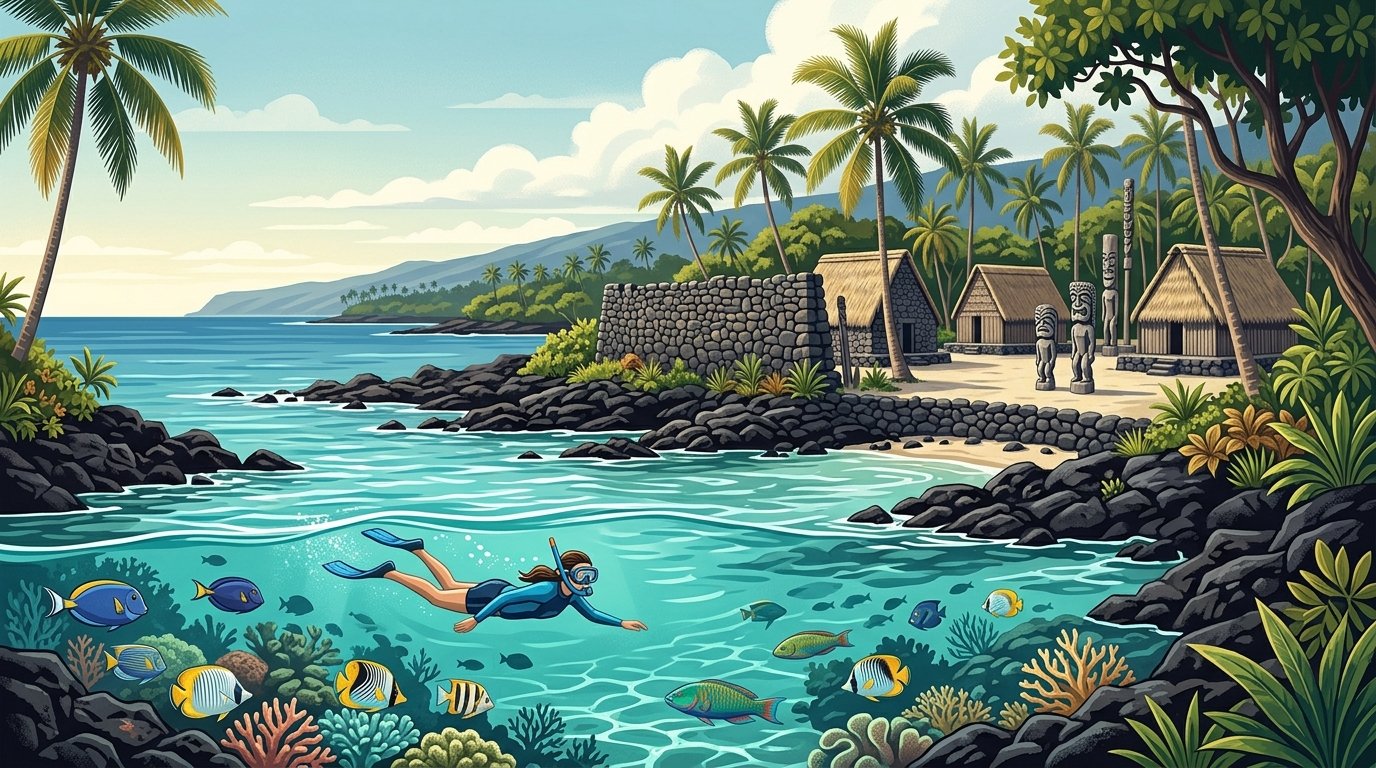
Day four brings you back to the calm, sheltered west side for the best snorkeling in the state. A morning boat trip to Kealakekua Bay pairs well with an afternoon at a national historical park 15 minutes down the coast.
Take a Kealakekua Bay Snorkeling Tour
Kealakekua Bay is a Marine Life Conservation District. On calm mornings, the reef offers 60-foot visibility and holds dense schools of yellow tang and butterflyfish. Spinner dolphins rest in the bay during daylight hours.
Boats leave from Keauhou Bay and Honokōhau Harbor between 7 and 9 a.m., before the trade winds pick up. Trips run two to five hours, and most include gear, snacks, and a naturalist on board.
Small rafts get closer to the cliffs and sea caves, while larger catamarans offer shade, restrooms, and water slides for kids. Our guide to the best excursions on the Big Island of Hawaii compares the boat types in more detail.
Understand the Captain Cook Monument Access Options
Reaching the Captain Cook Monument on foot means taking the Kaʻawaloa Trail, a 3.8-mile round trip that drops and regains about 1,300 feet with no shade. Kayaking requires a state permit, and unpermitted landings draw fines.
A commercial boat tour is the practical option for most visitors on a tight schedule. Tour operators hold the permits and drop you in the water right off the monument.
If you hike, start before 8 a.m. and carry three liters of water per person. The climb back out in afternoon heat sends people to the hospital every year.
Visit Puʻuhonua o Hōnaunau National Historical Park
Puʻuhonua o Hōnaunau was a place of refuge where a Hawaiian who broke a kapu could escape punishment by reaching the sacred grounds. The site includes the Great Wall, standing 10 feet high and 17 feet thick, plus reconstructed temple platforms and carved kiʻi.
Entry costs $20 per vehicle and covers seven days. A self-guided walk takes an hour, and rangers give free talks throughout the day.
Green sea turtles rest on the lava shelf inside the park. The tide pools next door at Two Step offer excellent shore snorkeling, and visiting Puʻuhonua o Hōnaunau National Historical Park works well as a half day when you combine the two.
Build in Time for a Final Beach or Brewery Stop
Leave your last afternoon loose, since flights out of Kona run late and you will want a shower and a meal. Hawaii law requires reef-safe sunscreen, so pack mineral-based zinc or titanium formulas.
From December through April, whale season brings humpbacks close to shore. A whale watching tour out of Honokōhau Harbor runs about three hours. Sightings peak in February and March.
If you have a full extra afternoon, drive north to Waimea for cooler upcountry air, then continue to the Pololū Valley lookout for cliff views. Waipiʻo Valley Road is closed to visitor traffic, so plan on the overlook rather than the beach.
Making Four Days on the Big Island Feel Worthwhile
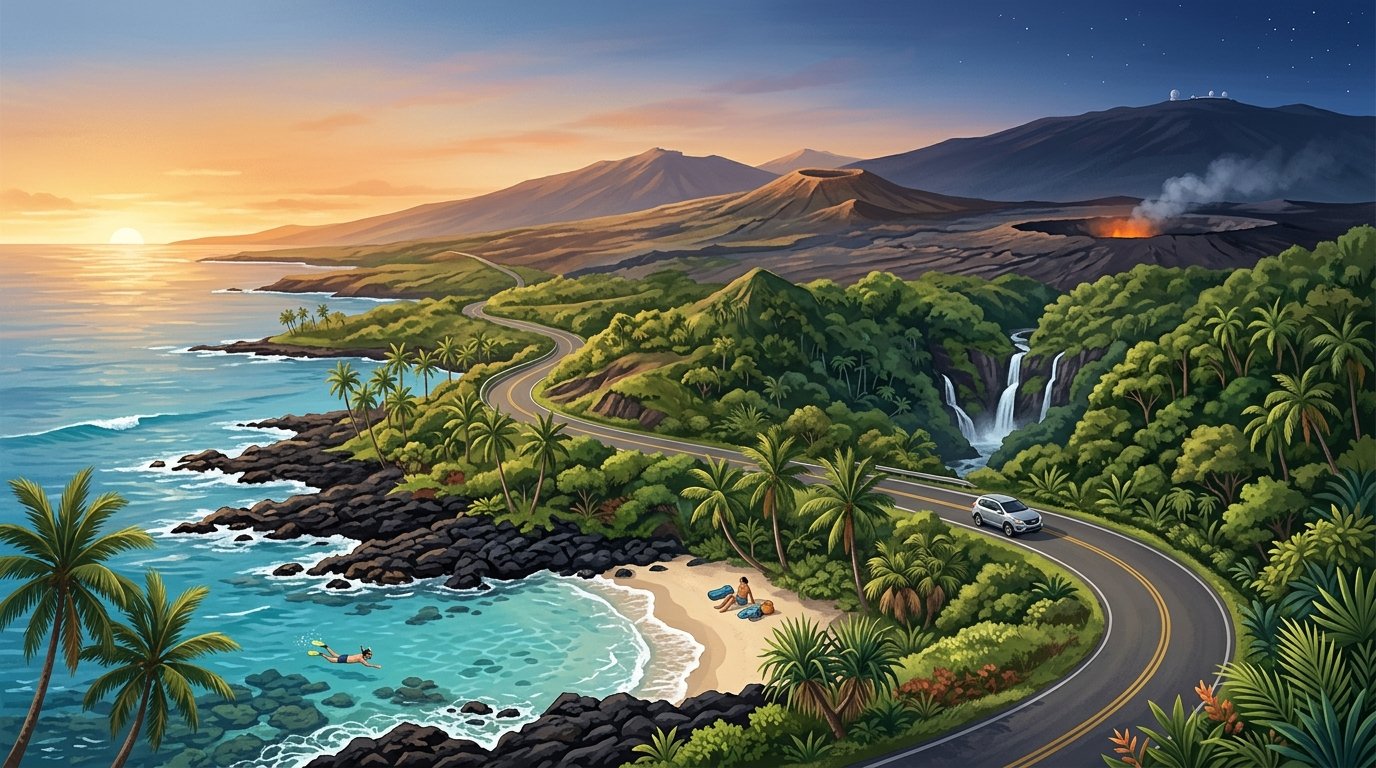
A 4-day Big Island itinerary works when you cut stops instead of shortening them. Four days lets you experience Kona’s coffee country and manta rays, the black sand and craters of the south, Hilo’s waterfalls and caves, and one great snorkel trip on the Kona Coast.
Keep the driving grouped by region and book the manta ray and Kealakekua tours before you land. Both sell out, and both are the kind of thing people fly back for.
Your Hawaii packing list needs more layers than you expect: a fleece and hat for Volcanoes National Park at 4,000 feet, a rain shell for Hilo, and reef-safe sunscreen for the west side. Saddle Road cuts across the middle of the island in about 90 minutes and gives you a shortcut between Kona and Hilo when you need to make up time.
Come back with a week and you can add the Kohala Coast, Waipiʻo, and a real Mauna Kea summit trip. Our guide to how to spend a week on the Big Island picks up where these four days leave off.
Frequently Asked Questions
Is four days enough for the Big Island of Hawaii?
Four days covers the headline experiences: Volcanoes National Park, a manta ray night snorkel, Hilo’s waterfalls, and one Kona Coast reef trip. You will skip the Kohala Coast resorts, Waipiʻo Valley, and most hikes. A week gives you room to breathe on an island of 4,028 square miles.
Should I stay in Kona, Hilo, or split my stay for four days?
Split it: two nights in Kona and one or two nights near Hilo or Volcano Village. Driving back to Kona after a full day at Kīlauea adds 2.5 hours of night driving on a winding highway. One hotel change saves you roughly five hours of car time.
Do I need a rental car for a four-day Big Island itinerary?
Yes. Public transit on Hawaiʻi Island runs limited routes and does not reach the waterfalls, black sand beaches, or park trailheads in this route. Reserve your car months out, since Kona International Airport sells out during winter and holiday weeks.
What should I not miss on the Big Island in four days?
Hawaiʻi Volcanoes National Park and a manta ray night snorkel top the list, since neither exists anywhere else in quite the same form. Add Punaluʻu Black Sand Beach for the sea turtles and ʻAkaka Falls for a 442-foot waterfall reached by a paved half-mile loop.
Can I see Hawaiʻi Volcanoes National Park and Hilo in one day?
You can, but it makes for a rushed 12-hour day. The better plan gives Volcanoes an afternoon and evening on day two, then dedicates day three to Hilo’s market, waterfalls, and gardens. Both areas sit close together, which makes the split easy.
Is Mauna Kea worth adding to a four-day Big Island trip?
The visitor information station at 9,200 feet is worth a sunset visit and works with any rental car. Skip the summit unless you have a 4WD vehicle that permits the unpaved road and time to acclimate for 30 minutes at the station.
Do not go up within 24 hours of scuba diving.