Exploring volcanic caves in Hawaii is a real adventure. Each cave tells a story about how lava and time shaped the islands.

These underground lava tubes and caverns let me see Hawaii’s unique volcanic history up close. I can walk beside frozen rivers of lava, strange rock shapes, and hidden chambers.
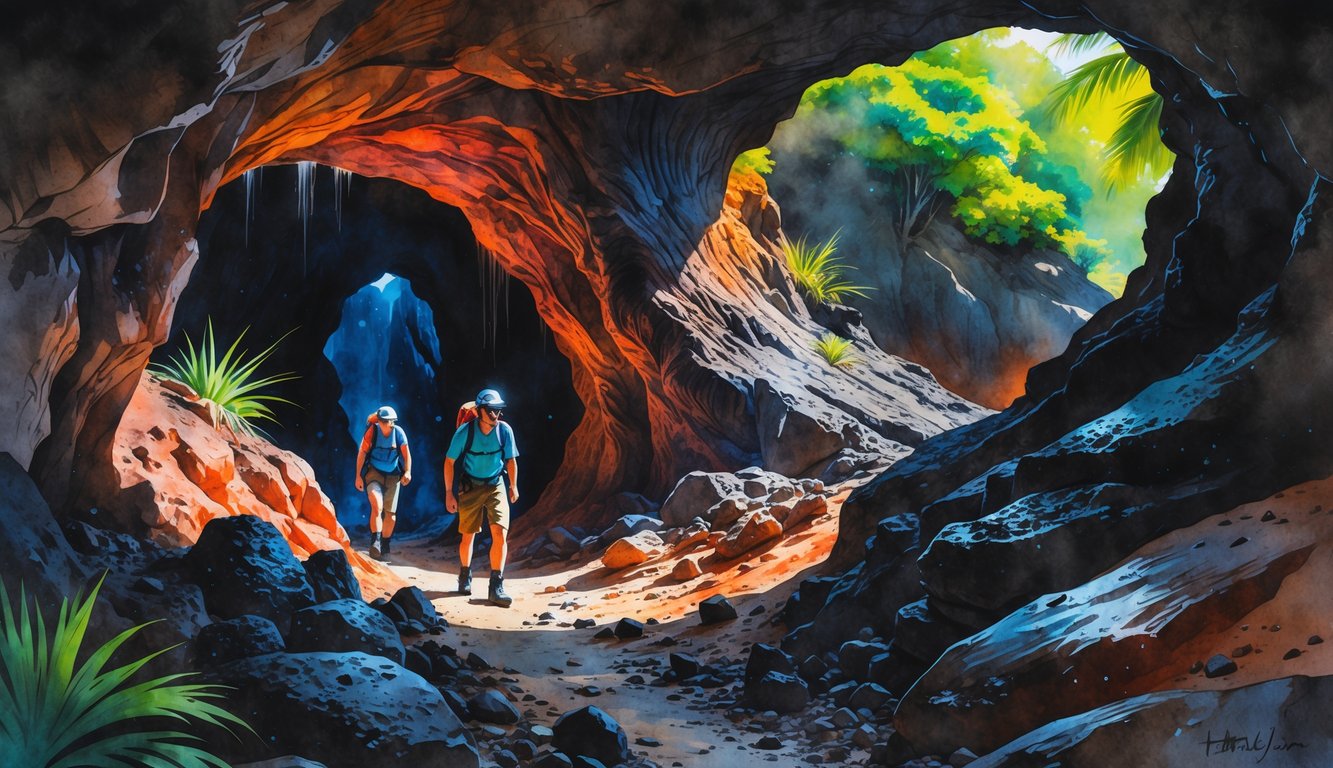
When I walk into one of these caves, I feel like I’m stepping into another world. Some caves are easy to visit, like Nāhuku inside Hawaii Volcanoes National Park.
Others are longer and wilder. Each cave has something special to offer.
If you love exploring, Hawaii’s volcanic caves offer one of the most unforgettable experiences.
The Geological Origins of Volcanic Caves in Hawaii
Hawaii’s volcanic caves reveal its fiery past. Volcanic eruptions create unique underground spaces.
Different types of lava and volcanic activity shape these caves. They carve remarkable features below the ground.
Volcanic Activity and Cave Formation
When I explore volcanic caves in Hawaii, I see the results of intense volcanic activity under my feet. Shield volcanoes like Mauna Loa, Kilauea, and Mauna Kea built the island of Hawaii.
These volcanoes erupt with hot, flowing lava instead of explosive ash. The lava spreads quickly over the land.
As the lava pours out, the surface cools and hardens. This creates hollow channels underground.
Over thousands of years, lava flows have shaped stunning geological wonders. You can’t find these features anywhere else.
Key volcanoes responsible for cave formation:
| Volcano | Type | Notable Feature |
|---|---|---|
| Mauna Loa | Shield volcano | Massive lava flows |
| Kilauea | Shield volcano | Frequent eruptions, lava tubes |
| Mauna Kea | Shield volcano | Tallest point in Hawaii |
Lava Flow and Tube Formation
Lava tubes start forming when the surface of a lava river cools and hardens. Hot lava keeps flowing underneath the crust.
This insulated channel lets lava move for long distances underground. When the eruption stops, the molten lava drains away, leaving empty tubes.
Hawaii has two main types of lava flows: pahoehoe and ‘a‘ā. Pahoehoe lava is smooth and ropy, helping it form long, continuous tubes.
‘A‘ā lava is rough and blocky, which makes tube formation less likely. Some caves stretch for miles and reach sizes you can walk through.
When I visit caves like the Thurston Lava Tube, I see how flowing lava carved the underground landscape. The shape and size of each cave depend on the lava’s amount, speed, and the land’s slope.
You can learn more about lava tubes at National Geographic’s feature.
Unique Rock Formations and Natural Wonders
Inside Hawaii’s lava caves, I see a variety of unique rock formations created by cooling lava. Molten rock leaves marks on the walls and ceilings.
Sometimes I find smooth, glassy surfaces. Other times, I see jagged, twisted shapes.
Some lava tubes hold dripstone formations like stalactites. These are made from tiny mineral droplets or “lava icicles.”
Other spaces have shiny black walls or strange lava benches from multiple flows. Each cave records Hawaii’s powerful volcanic past.
These passages offer a rare chance to explore the dynamic processes that shaped the islands.
Types of Volcanic Caves Across the Hawaiian Islands
Each type of volcanic cave in the Hawaiian Islands forms from unique forces. The location and formation of each cave give it special features.
Lava Tubes and Their Features
Lava tubes are one of Hawaii’s most famous natural formations. When I walk into a lava tube, I notice its long, tunnel-like shape.
These caves form as hot lava flows beneath the surface. The outer layer cools and hardens, leaving empty tunnels.
The Kazamura Cave near the Kilauea Volcano is a good example. It stretches over 40 miles, making it one of the world’s longest lava tubes.
Inside these tubes, I see smooth walls, natural bridges, and even lava stalactites. Some lava tubes have several entry points or chambers.
Many tubes feature skylights—holes in the ceiling that let sunlight in. This creates dramatic lighting inside the cave.
Sea Caves and Coastal Caves
Waves from the Pacific Ocean shape sea caves and coastal caves. You can usually find them along rocky coastlines on islands like Kauai and Maui.
When I visit these caves, I see sharp, sculpted walls made by centuries of pounding surf. Some coastal caves form near sea cliffs and black sand beaches.
In some places, water rushes in and out, filling the cave with the sounds of crashing waves. The air inside is cool and salty.
Exploring these caves can be thrilling but also dangerous. I always check conditions before entering a coastal cave, since safety matters on Hawaii’s rugged shoreline.
Skylights and Natural Formations
Skylights are one of my favorite features in Hawaiian caves. These natural openings form when part of a lava tube’s ceiling collapses.
Sunlight streams in through skylights, lighting up the volcanic rock below. Some skylights are large enough to climb through, while others let in just a shaft of light.
These beams help plants grow at cave entrances. A touch of green brightens the dark tunnels.
I also see lava benches, pillars, and mineral deposits that glitter in the light. Each visit brings new volcanic wonders shaped by Hawaii’s geology.
Famous Volcanic Caves to Explore in Hawaii
Some volcanic caves in Hawaii are easy to access and great for families. Others stretch for miles and offer real underground adventure.
Thurston Lava Tube (Nāhuku)
The Thurston Lava Tube, or Nāhuku, sits in Hawaiʻi Volcanoes National Park on the Big Island. This cave is perfect for a quick and easy lava tube experience.
The path leads through lush rainforest to the cave entrance. The walk inside is short—just a few hundred feet.
Inside, I see smooth rock walls and ceilings shaped by hot, moving lava. Electric lighting in the main section means I don’t need a flashlight.
Sign displays give information about the volcanoes and local geology. The cave is busy most days, but early mornings offer fewer crowds and more space to explore.
Kazumura Cave
Kazumura Cave is one of the world’s longest lava tubes, measuring about 40 miles long and descending over 3,600 feet. It sits near Kilauea Volcano on the eastern side of the Big Island.
Exploring Kazumura Cave means seeing one of the largest underground lava tubes ever found. The cave system runs deep and has several entrances.
Private guides lead tours for safety. Guided tours take me through areas with lava formations, skylights, lava falls, and rare minerals lining the walls.
I learn how lava created this system about 500 years ago. I need to be ready for uneven floors, darkness, and damp air.
Visiting Kazumura Cave gives me a sense of underground adventure and Hawaii’s natural power. More details are available at Only in Your State.
Kaumana Cave and Kaumana Caves
Kaumana Cave is another impressive lava tube, formed by a Mauna Loa eruption in 1881. You can find it just outside Hilo, and it’s easy to reach via a steep staircase from a small park.
When I visit, I can enter from either end and explore two main sections. Inside, I find damp rock, moss, and cool air.
The cave isn’t fully lit, so I bring a flashlight and sturdy shoes. The ground can be slippery and uneven.
Kaumana caves are self-guided, so I explore at my own pace. Some parts are low and narrow, while others open up into wider chambers.
The ceiling features stalactite-shaped formations made from cooled lava. For more cave tips, check the Big Island Guide.
Unique Cave Destinations by Island
Hawaii, also called the Aloha State, is filled with amazing volcanic caves. Each island has its own underground wonders with unique rock shapes, ancient history, and even rare plants or animals.
Big Island: Kula Kai Caverns and Kazumura Cave
On the Big Island, I find two of the most famous lava tube sites. Kula Kai Caverns sits on the southern coast and offers both easy and guided tours.
Guides teach me how lava shaped this land. The cave is dry, with wide halls, sharp rocks, and some fossilized remains of ancient creatures.
I wear sturdy shoes and bring a strong flashlight to move around safely. Kazumura Cave stretches more than 40 miles, making it one of the world’s longest lava tubes.
Guided tours take visitors through tunnels filled with strange rock shapes, ropey lava, and huge chambers. The cave shows the power of volcanoes, and I see how tunnels formed from fast-flowing, melting rock thousands of years ago.
Explore more about Big Island’s cave adventures.
Maui: Hana Lava Tube
The Hana Lava Tube is one of Maui’s best underground stops. It sits near the scenic Hana Highway.
This cave feels cool and mysterious, especially when I walk by dripping stalactites and ancient lava walls. The cave stretches about half a mile and has well-marked trails with handrails.
I spot interesting lava shapes called “lava benches” and old tree root marks left behind in the stone. Signs along the main path share facts about how lava tubes form.
After the tour, I enjoy the small garden outside with red ti plants and tropical flowers.
Oahu: Kaneana Cave and Mermaid Cave
On Oahu’s west side, the Kaneana Cave is full of legends. Local stories say a shark god once lived here.
When I step inside, the cave feels cool and dark, with echoes bouncing off the high ceilings. The main chamber is safe for exploring, but the cave gets tighter deeper inside.
Not far from Oahu’s North Shore, I find the Mermaid Cave. This spot is famous for natural openings in the rocks that lead to spaces carved out by tides.
It feels like a secret hideaway. Getting there takes care because the rocks are sharp and slippery during high surf.
When the tide is low, sunlight shines through the openings and lights up the water. The effect is magical.
Kauai: Makauwahi Cave and Na Pali Coast Caves
Makauwahi Cave is the largest limestone cave in Hawaii. I enjoy exploring its wide, collapsed roof and seeing the ancient fossils inside.
Scientists discovered old bird bones, plant seeds, and animal footprints here. These finds show how life changed after people arrived.
Along the Na Pali Coast, sea caves rise straight from the sea and can only be reached by boat or kayak. Waves and volcanic forces shape these caves.
Some, like the Blue Room, fill with glowing blue water when sunlight shines inside. Each cave feels unique and offers a new view of Kauai’s wild coast.
Natural and Geological Features Inside Hawaiian Caves
Inside Hawaiian volcanic caves, I see nature’s creativity everywhere. Lava tubes, secret alcoves, and dark tunnels reveal amazing stone shapes and even black sand shores.
Stalactites, Stalagmites, and Other Formations
In many caves, lava stalactites hang from the ceilings. Cooling molten rock drips and hardens to form these shapes.
Some caves have stalagmites rising from the ground in the same way. These formations come in all sizes and colors, from thin needles to thick columns.
Sometimes, mineral crystals sparkle on the ceiling. The floors may have benches, rough ridges, and rope-like lava shapes.
Walking through a lava tube, I spot rare lava “curtains” that look like frozen sheets. I can touch detailed patterns and rugged textures up close.
These features make Hawaii’s lava tubes a fascinating place for geology lovers.
Panoramic Views and Hidden Gems
After exploring underground, I step out to panoramic views where the jungle meets old lava flows. Some cave openings reveal rainforest valleys, volcanic craters, or steam rising from vents.
Sometimes, hidden gems wait just inside or nearby. I find secret alcoves, colorful lichens, or small chambers covered with ferns.
I have seen pools of crystal-clear water trapped in rock basins. Sunlight reflects off these pools in surprising ways.
Hidden features I might find include:
- Mini waterfalls after heavy rain
- Glowworms lighting up dark ceilings
- Lava shelves with perfect views
The mix of open scenery and hidden surprises makes exploring these volcanic caves special.
Black Sand Beaches and Ocean Waves
Some caves open right onto the ocean, where black sand beaches stretch along the shore. Hot lava meets the cold sea and shatters, creating this unique dark sand.
I enjoy stepping outside the tunnels to feel the black sand under my feet. The sound of ocean waves echoing into the cave creates a peaceful rhythm.
Sometimes, I watch waves crash through the rocks or see clear water swirling in tide pools at the cave’s entrance. When the tide is right, sunlight shines into the cave and makes the black sand and rocks look glossy and bright.
Visiting these natural wonders reminds me how connected Hawaii’s caves are to both land and sea.
Cultural and Historical Significance of Volcanic Caves
Volcanic caves in Hawaii are more than natural wonders. They play a key role in Hawaii’s history and culture.
Early Hawaiians used caves as homes, sacred spaces, and places to carve ancient stories into stone.
Ancient Hawaiians and Cave Shelters
When I think about ancient Hawaiians, I see how important caves were for survival. Many volcanic caves and lava tubes gave shelter from storms, sun, and rain.
These caves provided cool air in the day and warmth at night. Extended families sometimes camped inside larger caves for safety.
The solid rock protected against high winds and volcanic ash. Inside, people stored tools, water, and food.
Archaeologists have found fire pits and stone tools in many caves. This shows how much ancient Hawaiians relied on these shelters.
Learn more at Hawaii’s Hidden Caves: A Subterranean Adventure.
Spiritual Importance and Burial Sites
Learning about the spiritual meaning of caves in Hawaii always fascinates me. Many caves hold great spiritual importance and served as places for ceremonies, rituals, and burials.
Ancient Hawaiians saw caves as sacred. Some caves became burial sites for chiefs and important people.
Placing remains in caves was a way to safeguard loved ones on their journey to the afterlife. These burial caves are respected and protected today.
Ceremonies often took place at cave entrances. People brought offerings, chanted prayers, or performed dances to honor ancestors.
Visiting these sites lets me connect with Hawaii’s spiritual traditions. Find out more at Nani Hawaii.
Petroglyphs and Hawaiian Culture
Hawaiian caves often display petroglyphs, which are drawings or carvings chipped into the rocks. I find these markings fascinating because they have survived for centuries.
Some petroglyphs show people, animals, or canoes. Many symbols tell stories or mark important events.
Ancient Hawaiians may have used petroglyphs to record births, deaths, or celebrate big achievements. Others were likely made for religious reasons or as part of family traditions.
When I visit caves with petroglyphs, I feel a strong link to Hawaii’s early days. These carvings are more than art—they are a living part of Hawaiian culture.
Each one helps us understand how the first Hawaiians saw their world. Learn more about these cave stories at TouristSecrets.
Adventure Activities in Volcanic Caves
Exploring volcanic caves in Hawaii gives me a sense of adventure. Guided tours, solo exploration, and snorkeling trips reveal hidden parts of these unique caves.
Guided Cave Tours
When I want to learn about Hawaii’s volcanic caves safely, I join a guided cave tour. Expert guides lead these tours and point out special formations and local history.
They provide helmets, flashlights, and other safety gear. On one tour, I hiked into the forest before reaching a lava tube.
The guide explained how lava flows formed the tubes and showed me the difference between smooth and jagged lava features. I also saw rare plants growing at the cave’s entrance.
Many tours suit families and people of most fitness levels. Some tours allow access to caves not open to the public, like those on the Hawaii Forest & Trail – Kona Volcano Hiking Tour.
A table comparing typical features:
| Tour Feature | Details |
|---|---|
| Guide expertise | Local geology and history |
| Equipment provided | Helmet, lights, gloves |
| Group size | Small groups for safety |
| Duration | 2-5 hours, depending on tour |
Spelunking and Cave Exploration
Sometimes I want a more hands-on experience, so I go spelunking, also called caving. This means exploring cave systems on foot, crawling, climbing, and sometimes squeezing through tight spots.
Hawaii’s volcanic caves show many types of lava formations. I notice rope-like smooth areas and sharp, jagged rocks.
Each cave is different, with changing textures and colors. Spelunking here challenges my sense of adventure.
For safety, I always bring a buddy, carry extra lights, and let someone outside know my plans. Many caves are dark and damp, with low ceilings or slippery rocks.
Popular spots for spelunkers and cave explorers include the Kaumana Cave.
A checklist I follow:
- Tell someone my travel plans
- Wear sturdy shoes and a helmet
- Bring at least two flashlights
- Watch my step for uneven ground
Snorkeling and Exploring Hidden Caves
Some volcanic caves are partly underwater and can only be explored by snorkeling. Coastal regions have caves where the ocean carved tunnels into old lava flows.
Snorkeling lets me see underwater caves filled with fish, coral, and unusual rock shapes. The water is clear, and schools of colorful fish swim through the openings.
In these spots, I sometimes find hidden swim-throughs or small chambers just below the surface. I always check local conditions first.
Some caves have strong currents or waves, making them risky on certain days. I snorkel with a buddy, wear a life vest, and carry a waterproof flashlight when exploring darker areas.
Tips for safe snorkeling in caves:
- Check weather and ocean conditions
- Stay close to the cave entrance
- Avoid sharp lava rocks
- Use a life vest when needed
Hawaii Volcanoes National Park: A Premier Cave Destination
Hawaii Volcanoes National Park offers some of the best volcanic cave experiences. Visitors can explore caves and tunnels shaped by the powerful forces of Mauna Loa and Kilauea.
Mauna Loa and Kilauea Volcanoes
Mauna Loa and Kilauea rank among the most active volcanoes on Earth. Both volcanoes sit within the park and cover more than 300,000 acres on the Big Island.
The constant lava flow from these volcanoes creates a landscape filled with caves and lava tubes. When I walk across old lava fields, I often spot openings that formed when the surface cooled while hot lava continued to flow underneath.
This process leaves behind hollow tunnels and caves. Many caves remain closed to protect delicate environments, but you can view some from marked trails.
Because Mauna Loa and Kilauea are still active, the park’s caves change over time. Signs along the trails explain how new caves form during eruptions.
Check the latest park alerts for open cave areas and guided programs before you visit.
Nāhuku and Other Park Caves
Nāhuku, also called the Thurston Lava Tube, is one of the park’s most famous caves. A river of molten lava formed this cave over 500 years ago.
The trail to Nāhuku is just 1.5 miles roundtrip, so most visitors can easily see the inside of a real lava tube. Inside, I see smooth, curved walls and volcanic rock formations left by the lava.
Nāhuku stays cool and damp, with lighting and a simple path for safe exploration. Signs along the trail describe the tube’s history and its connection to Kilauea’s eruptions.
While Nāhuku is the best-known cave, Hawaii Volcanoes National Park has other caves and tubes you can learn about. Many of these remain closed for safety or to protect rare species.
Before visiting, I check park updates because cave access can change due to volcanic activity or conservation work. For trip planning, I find helpful updates on the park’s main page and guides about exploring specific caves.
Tips for Safe and Responsible Exploration
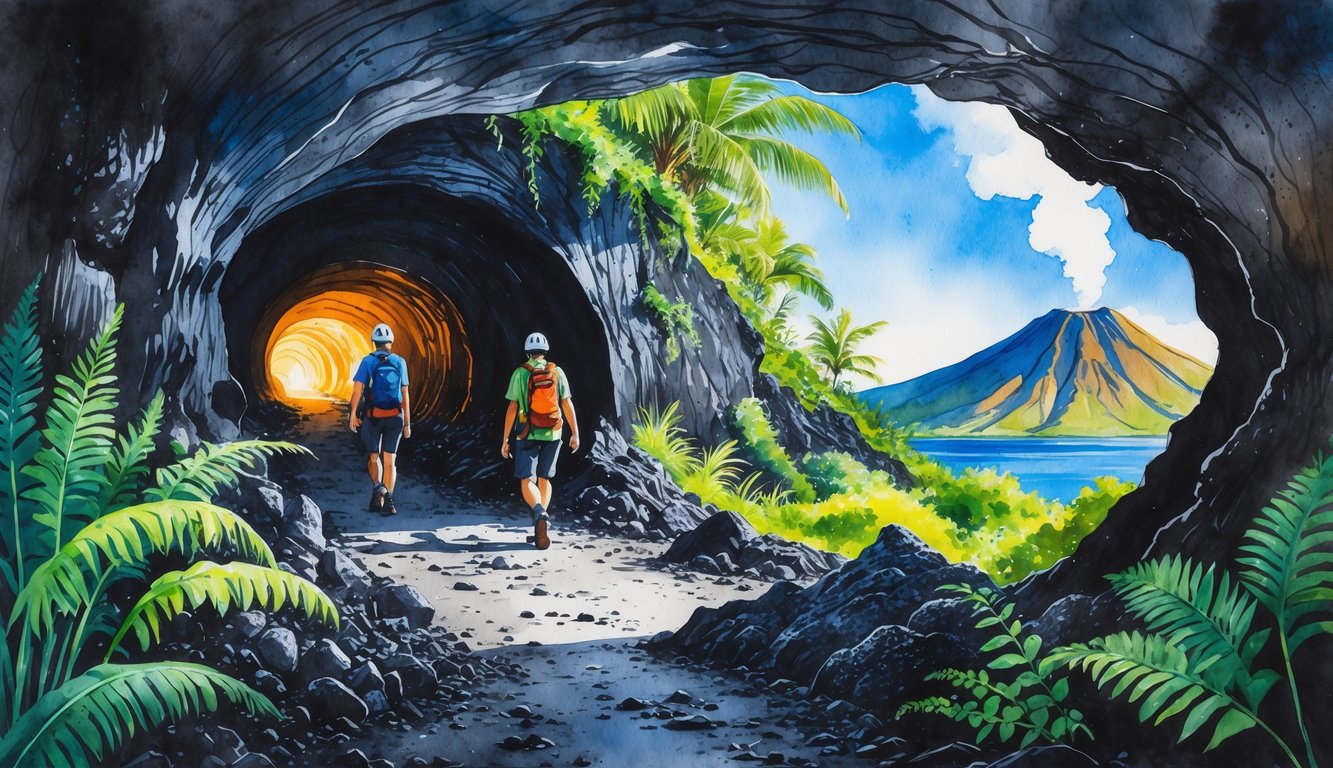
When I explore volcanic caves in Hawaii, I prepare well and act with care. Staying safe helps protect both people and these special places.
Preparation and Safety Tips
Before I go to any cave, I check for updates about the area. Conditions can change quickly due to volcanic activity, so it’s important to know about warnings or closures.
I avoid areas marked as off-limits. I stick to open, marked trails and never wander off the path.
Walking on unmarked ground can be dangerous because of unstable rocks and hidden vents. I pay close attention to signs and obey all barriers around caves and active zones, like those at Hawaii Volcanoes National Park.
Essential items for my trip include a flashlight, sturdy shoes, water, and a first aid kit. I tell a friend or family member where I am going and when I plan to return.
If I join a tour group, I follow the guide’s instructions at all times. If I see steam, cracks, or new lava flows, I move away right away.
It’s important to keep a safe distance from lava and volcanic vents to avoid burns or breathing harmful gases. For hard-to-reach lava, helicopter tours or guided visits offer safer options, as described on this page about lava viewing.
Protecting Geological and Cultural Sites
When I visit caves, I remind myself not to touch or remove rocks, minerals, or formations. Even small changes can harm cave features that took thousands of years to form.
This keeps the cave natural and healthy for everyone.
Many caves in Hawaii have cultural and spiritual meaning. I stay respectful by not touching or disturbing offerings.
I read signs about special sites and learn about the history of each cave before going. This helps me show respect at all times.
I never leave trash or graffiti behind. I pack out everything I bring.
I don’t eat or drink in the cave unless allowed. This protects plants, animals, and cultural artifacts inside.
Some trails or spots may close for protection. I respect these closures to help preserve wildlife and local traditions, as explained in the Volcanoes National Park safety guide.