
Ten days gives you enough room to see three very different Hawaiian islands without spending your whole vacation in airports. Three nights on Oʻahu, three on Maui, and four on Hawaiʻi Island cover city history, a volcano sunrise, a rainforest drive, and an active crater, with two short inter-island flights in between.

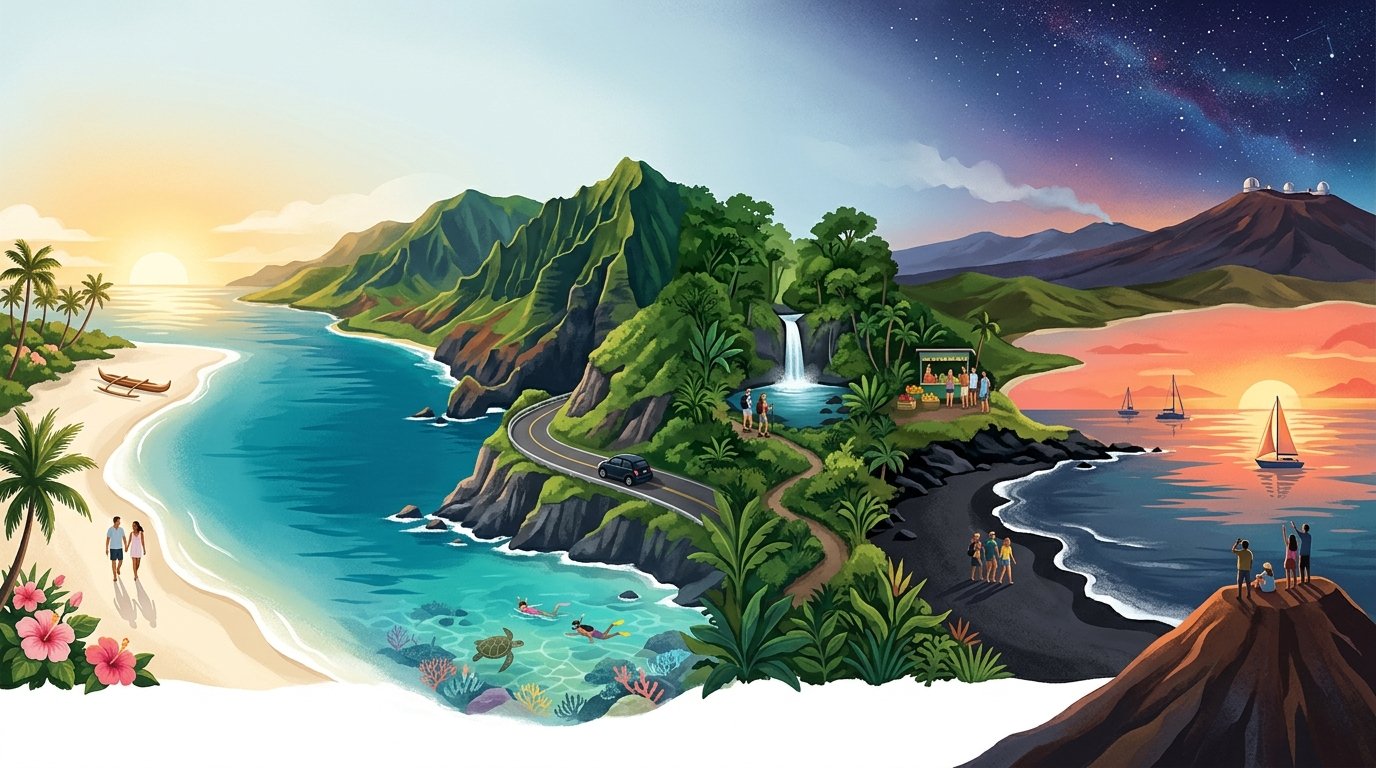
Treat travel days as half days: fly in the morning, pick up the rental car by noon, and plan something easy for the afternoon. Trips that fall apart usually try to squeeze four islands into ten days, which turns two of them into glorified layovers.
Each island here earns its slot. Oʻahu holds Pearl Harbor and ʻIolani Palace. Maui delivers Haleakalā at sunrise and the Road to Hāna.
Hawaiʻi Island is where the land is still being built, with lava fields you can walk across and waterfalls that drop 400 feet into a gorge.
By the end of this plan you will know which islands to book, what order to fly them in, and where to leave the schedule blank so the trip feels like a vacation.
Build a Route That Doesn’t Feel Rushed
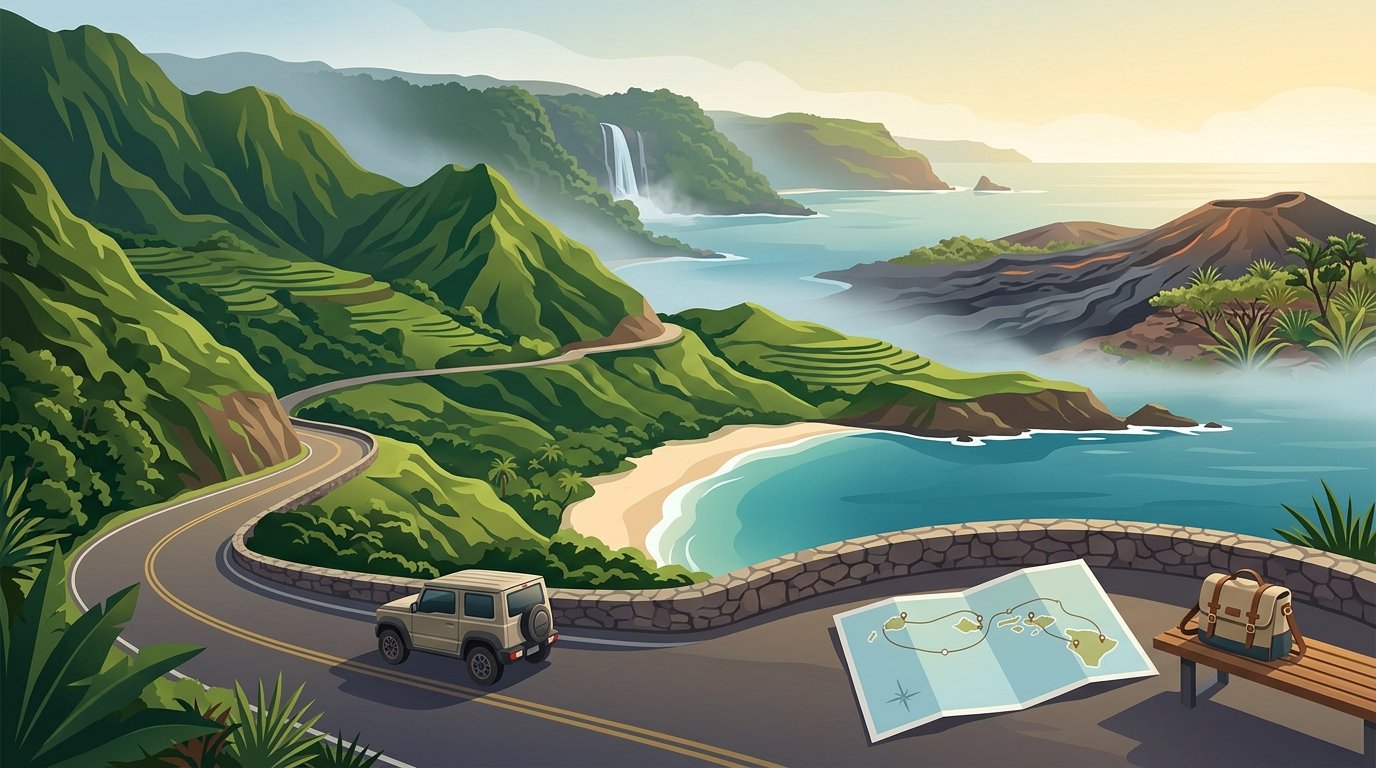
Three islands is the sweet spot for ten days, with a minimum of three nights on each so you never wake up and immediately pack. Flying west to east (Honolulu, then Kahului, then Hilo, out of Kona) keeps every hop short and avoids backtracking.
How Many Islands Should You Visit in 10 Days?
Stick to three. Each island change costs you roughly half a day: checkout, the drive to the airport, security, the flight, baggage, and the rental car counter.
Two islands works beautifully if you like slow mornings. Four islands means two of them get one full day each, and you will spend more time in terminals than on trails.
Here is how the options compare:
| 2 islands | 3 islands | 4 islands | |
|---|---|---|---|
| Nights per island | 5 / 5 | 3 / 3 / 4 | 2 / 3 / 3 / 2 |
| Inter-island flights | 1 | 2 | 3 |
| Rental car pickups | 2 | 3 | 4 |
| Half days lost to travel | 0.5 | 1 | 1.5 |
| Best for | Relaxed, first trip | Variety without a rush | Repeat visitors on a mission |
The Best Flight Route and Arrival Airports
Fly into Honolulu (HNL) and out of Kona (KOA). Most mainland carriers sell this as a multi-city or open-jaw ticket for close to the price of a round trip, and it saves you a wasted flight back to Oʻahu.
Hawaiian Airlines and Southwest run the inter-island hops, and the flights are short: Honolulu to Kahului takes about 35 minutes, and Kahului to Hilo takes about 50. Book the 8 or 9 a.m. departure so you land with the whole afternoon ahead of you.
One note for international readers: Hawaiʻi is a U.S. state, so visitors from visa waiver countries need an approved ESTA before boarding, not a separate Hawaiʻi entry document.
When Should You Swap Hawaiʻi Island for Kauaʻi?
Choose Kauaʻi over Hawaiʻi Island when you want dramatic green cliffs, river kayaking, and quiet beaches instead of volcano country. Lihue (LIH) is the arrival airport, and the Garden Isle is small enough that three nights genuinely covers it.
Pick Hawaiʻi Island when you want Kīlauea, lava tubes, and black sand. An Oʻahu and Kauaʻi itinerary for 10 days works too if you split five nights each and skip Maui entirely.
Molokaʻi and Lānaʻi are day-trip territory on a schedule this tight, and both deserve their own trip.
When to Visit Hawaii for This Route
April through early June and September through mid-November bring the best mix of dry weather, thinner crowds, and softer hotel rates. Winter is peak season on the west-facing coasts, and it also brings the big North Shore surf and humpback whales from December through April.
Hilo is the wettest spot on the route year round, so pack a rain shell no matter your dates. Our guide to the best time to visit each Hawaiian island breaks the seasons down island by island.
Do You Need Rental Cars on Every Island?
Yes on Maui and Hawaiʻi Island, and probably on Oʻahu too. Haleakalā, the Road to Hāna, and Volcanoes National Park are all impossible without your own wheels.
Oʻahu is the one exception. If you stay in Waikīkī and take tours to Pearl Harbor and the North Shore, TheBus and rideshare cover the rest, and you skip $45-a-night hotel parking.
Booking a car for just Day 3 splits the difference nicely. Compare rates before you commit, and see how to travel between islands on a budget for ways to trim the flight costs.
Days 1–3: Oʻahu History, City Energy, and the Coast
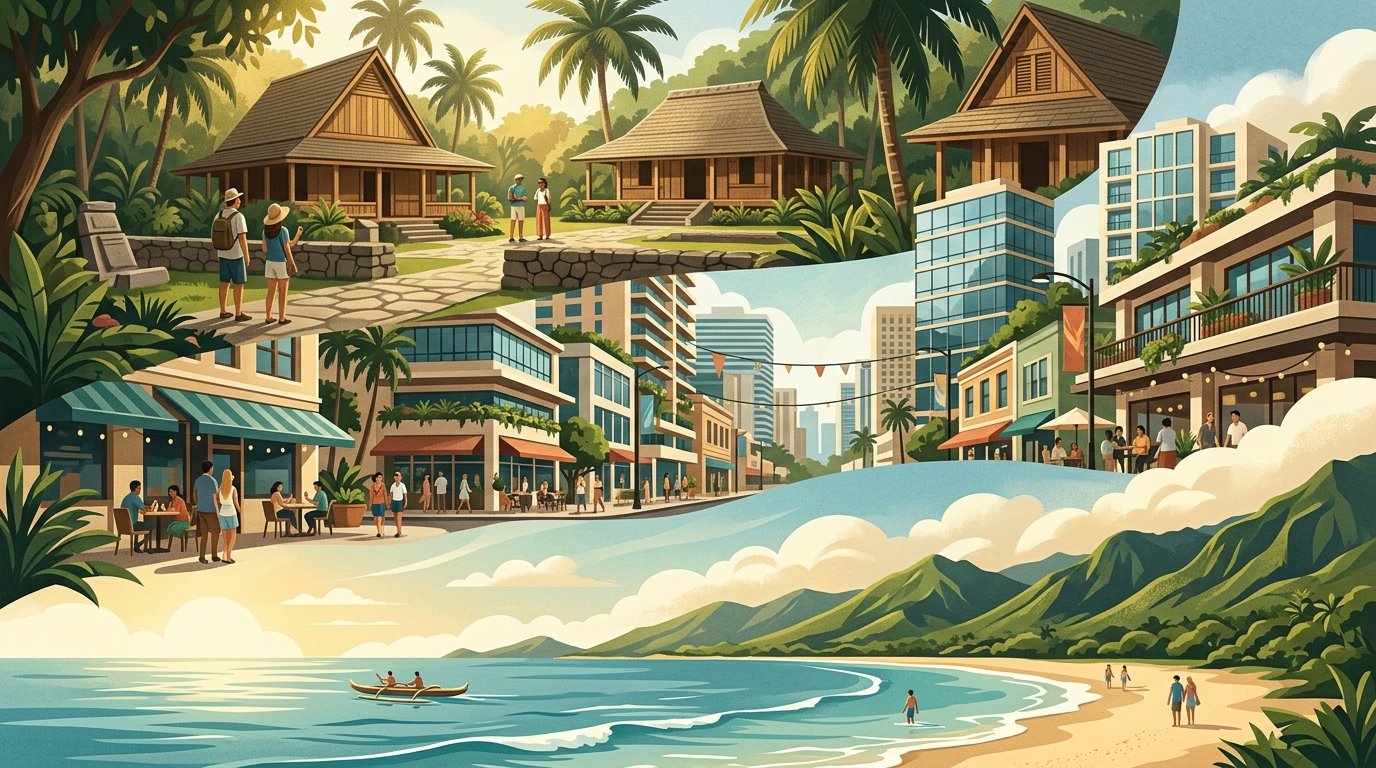
Three days on Oʻahu gives you a beach afternoon in Waikīkī, a morning at Pearl Harbor paired with the Diamond Head climb, and a full loop around the Windward Coast to the North Shore. Base yourself in Waikīkī so you only unpack once.
Day 1: Settle Into Waikīkī and Honolulu
Land, check in, and head straight for Waikīkī Beach. A one-hour beginner surf lesson runs along the gentle break in front of the Duke Kahanamoku statue, and the sandy bottom forgives a lot of falling.
Walk to Kapiʻolani Park in the late afternoon, then eat early. Jet lag from the mainland is real, and a 5:30 dinner beats a 9 p.m. crash.
If you want more ideas for a first-timer’s first afternoon, our list of top things to do in Oʻahu for first-time visitors covers the classics.
Day 2: Pearl Harbor and Diamond Head
Reserve your Pearl Harbor National Memorial tickets ahead. The USS Arizona Memorial boat tours are free but reservation-only, and they release online eight weeks out, plus a second batch 24 hours before. Arrive by 7:30 a.m. for the first boats and the smallest crowds.
Give the site three hours. The visitor center exhibits and the shoreline walk add real context before you board the shuttle to the memorial above the sunken USS Arizona.
Afternoon options split two ways. Tour ʻIolani Palace in downtown Honolulu, the only royal palace on American soil, or drive to Diamond Head State Monument for the 1.6-mile round-trip climb to the crater rim.
Diamond Head requires an advance reservation for out-of-state visitors, and the last entry is 4 p.m.
Day 3: The Windward Coast and North Shore
Start early and drive the loop counterclockwise. Snorkel at Hanauma Bay if you booked a slot (closed Mondays and Tuesdays), watch the shorebreak at Sandy Beach, then cross the Pali to Kailua for lunch and the walk to Lanikai Beach.
Continue north past Kualoa Ranch, where the Jurassic Park valley scenes were filmed, to the North Shore. Stop at Waimea Bay Beach Park, watch the surfers at Banzai Pipeline and Sunset Beach in winter, and end with shave ice in Haleʻiwa.
Read up on the North Shore’s surfing and turtles before you go, and skip the Dole Plantation unless you have kids who want the train.
Days 4–6: Maui’s Beaches, Volcano, and Rainforest
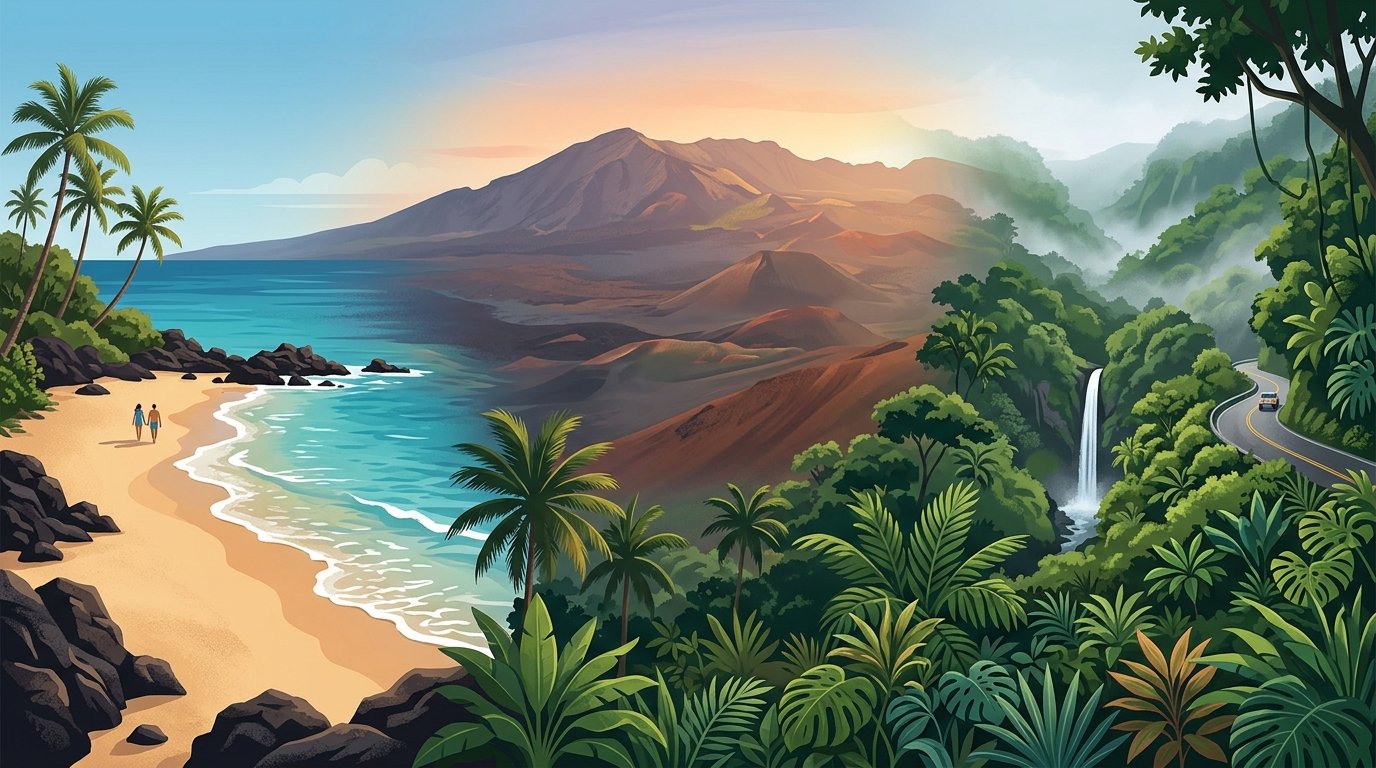
Three days on Maui covers a South or West Maui beach day, a Haleakalā trip paired with Upcountry farm stops, and the Road to Hāna. Stay in Kīhei or Wailea for the shortest drives to both Haleakalā and the Hāna Highway.
Day 4: Arrive in Kahului and Explore South or West Maui
Fly out of Honolulu early, land at Kahului Airport, and grab your car. Kīhei is 20 minutes south, and Kāʻanapali is about 45 minutes west.
South Maui gives you calm swimming beaches and easy access to the Molokini snorkel boats. West Maui has Kāʻanapali Beach, Napili Bay, and Kapalua, plus Lāhainā, which is rebuilding after the 2023 fires and welcomes visitors who spend money at local businesses.
If mornings are your thing, book the Molokini Crater and Turtle Town snorkel trip for today. Boats leave Māʻalaea around 7 a.m., and green sea turtles show up at the second stop with near certainty.
Day 5: See Haleakalā and Upcountry Maui
Haleakalā National Park sunrise entry between 3 and 7 a.m. requires a reservation booked 60 days out, at $1 per car plus the $30 park entrance fee. It is genuinely cold up there at 10,023 feet, often near freezing, so bring a jacket and a blanket.
Sunset needs no reservation and involves far less suffering. Either way, plan on a two-hour drive each way from Kīhei.
Come down through Kula and Makawao for lavender farms, a goat dairy, and paniolo-town storefronts. Paia is the last real town before the Hāna Highway, so buy your snacks there.
Day 6: Drive the Road to Hāna at a Relaxed Pace
Leave by 7 a.m. and pick six stops, not sixteen. The full road runs 64 miles with 620 curves and 59 one-lane bridges, and driving it well takes ten to twelve hours round trip.
Worthwhile stops include the Bamboo Forest hike, Waiʻānapanapa State Park’s black sand beach (reservation required), and Hāna’s red sand beach if you are steady on loose footing. Our Maui travel guide maps out the mile markers worth pulling over for.
Days 7–10: Volcanoes, Waterfalls, and Kona on Hawaiʻi Island
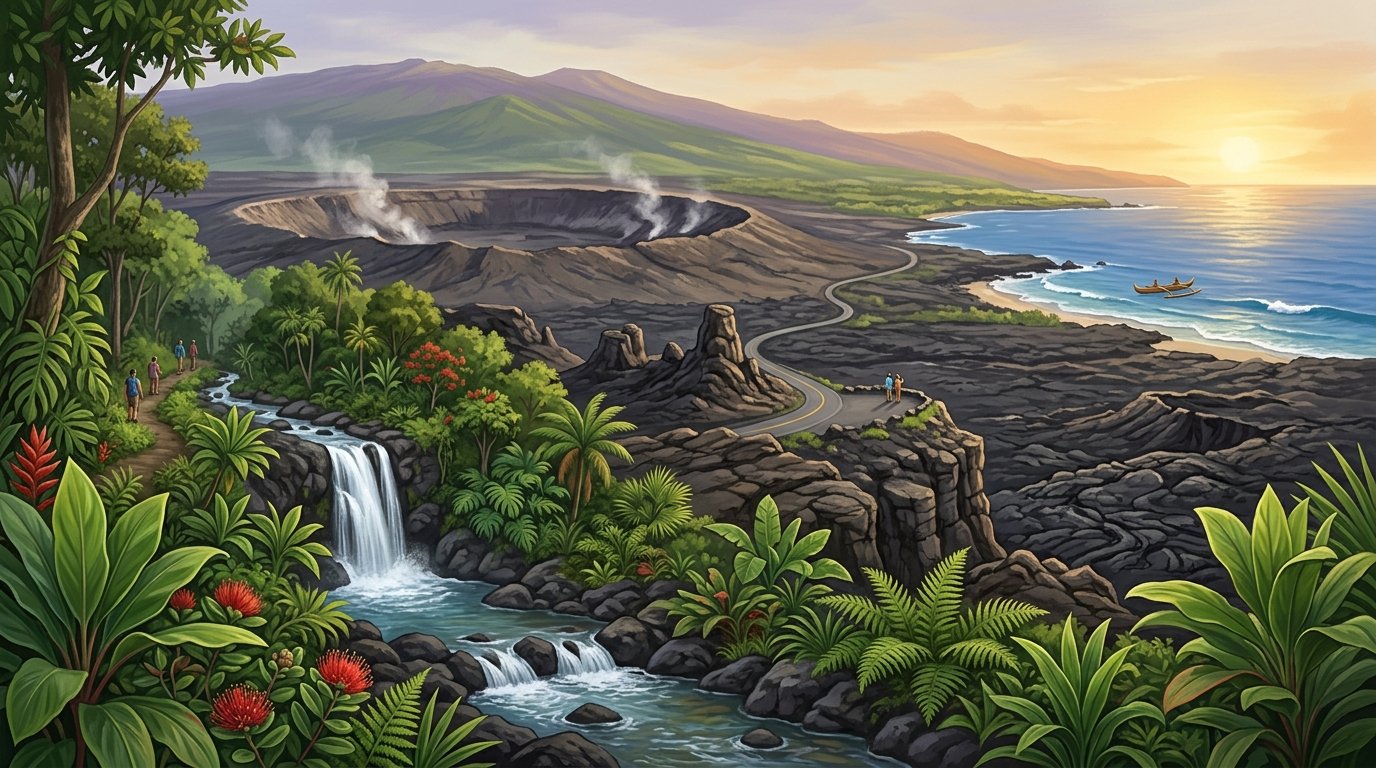
Four days on the Big Island splits neatly into two nights near Hilo or Volcano Village and two nights in Kona. That two-hotel setup cuts your daily driving in half on an island that is 4,028 square miles, bigger than all the other Hawaiian islands combined.
Day 7: Fly to Hilo and Enter Hawaiʻi Volcanoes National Park
Take the morning flight from Kahului to Hilo, pick up the car, and drive 45 minutes south to Hawaiʻi Volcanoes National Park. Entrance is $30 per vehicle, valid seven days.
Do Crater Rim Drive first: the Kīlauea Overlook, the Steam Vents, and the Nāhuku lava tube. Then stay for dark.
When Kīlauea is erupting, the glow off Halemaʻumaʻu after sunset is the single most memorable thing on this itinerary, and the park posts current activity daily.
Sleep in Volcano Village so you are not driving an hour back to Hilo at 10 p.m. Our walkthrough of exploring Hawaii Volcanoes National Park has the trail details.
Day 8: Explore Kīlauea and the Puna Coast
Hike in the morning while it is cool. The Kīlauea Iki Trail is a four-mile loop that drops 400 feet through rainforest onto a crater floor that was a lava lake in 1959, and steam still rises from the cracks.
Afternoon belongs to Puna. Drive the Red Road past Isaac Hale Beach Park to see where the 2018 lava flow buried the highway, and stop at the Kapoho tide pools area to understand how fast this coastline changes.
Day 9: Waterfalls, Waipiʻo Valley, and the Drive to Kona
Head north up the Hāmākua Coast. ʻAkaka Falls drops 442 feet and sits along a paved 0.4-mile loop, making it one of the best effort-to-payoff ratios in the state. Parking costs $10 for non-residents.
Continue to the Waipiʻo Valley Lookout. The road down is restricted to residents, so plan on visiting the overlook or taking a permitted guided tour. See more of the best waterfalls on the Big Island if you want to add a stop.
Then drive through Waimea to Kona, about two hours away, and check in on the west side.
Day 10: Kona Coffee, Snorkeling, and Departure
Snorkel first at Kahaluʻu Beach Park or Two Step near Pu’uhonua o Hōnaunau. Sea turtles graze in waist-deep water by 8 a.m. Rinse off, then tour a Kona coffee farm in Hōlualoa on the way inland.
Kona Airport is open-air, so give yourself two hours. Return the car with a full tank. The last gas station before the terminal is on Queen Kaʻahumanu Highway.
Leave Enough Space to Enjoy Each Island
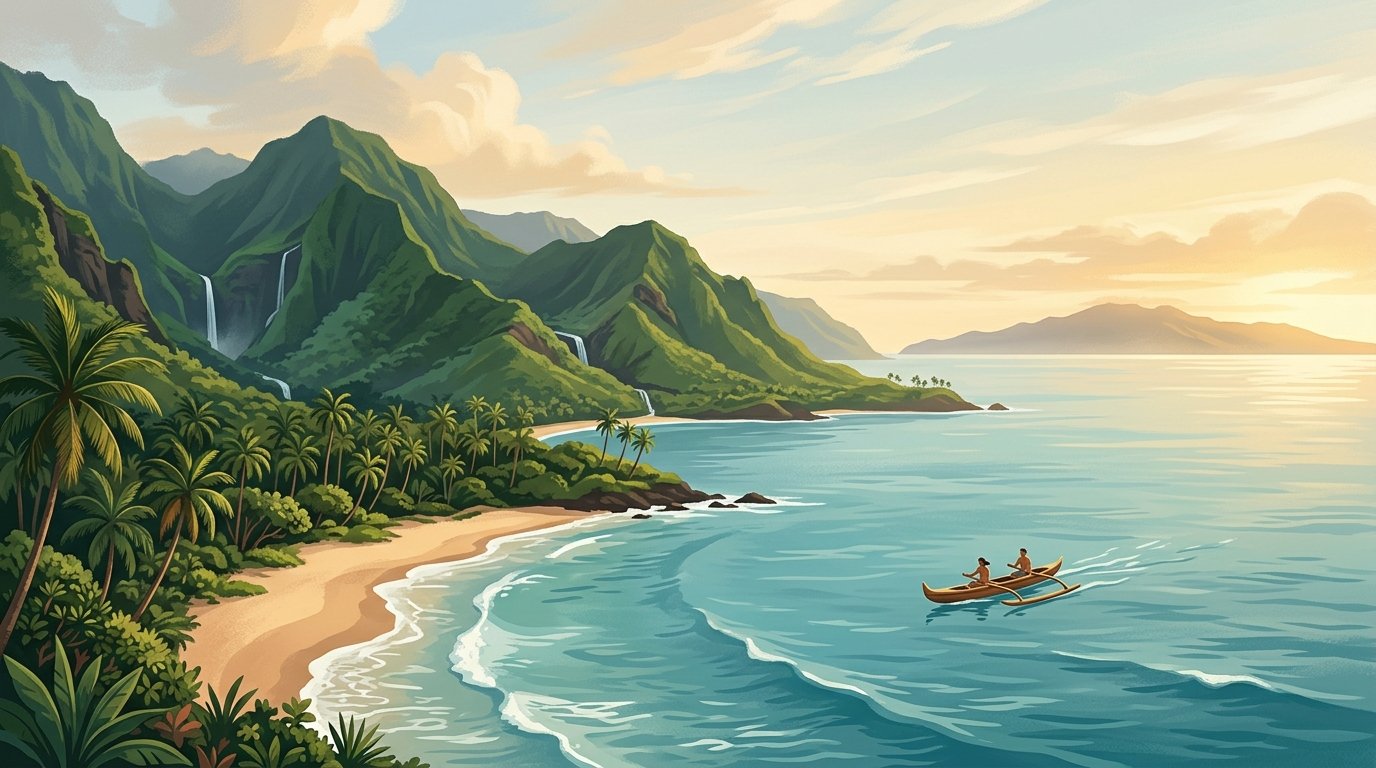
Build one unplanned afternoon into each island, and this Hawaii vacation stops feeling like a checklist. The best hours on the Hawaiian Islands tend to be the ones nobody scheduled: an extra swim, a farmers market you drove past, or a sunset you stayed for.
Three moving parts drive the whole plan. Book the two inter-island flights for morning departures, reserve rental cars on Maui and Hawaiʻi Island well ahead, and lock in the timed entries (Pearl Harbor, Diamond Head, Haleakalā sunrise, Waiʻānapanapa) when reservations open.
If you swap in Kauaʻi, the shape stays the same. Sleep in Poʻipū or Princeville, spend a morning at Waimea Canyon State Park (the Grand Canyon of the Pacific, 3,600 feet deep), and give a full day to the North Shore between Hanalei Bay and Kīlauea Point.
A boat trip along the Nā Pali Coast or the first two miles of the Kalalau Trail covers the cliffs. Wailua Falls, Hanapēpē’s Friday art night, and Shipwreck Beach near Kōloa fill the south and east sides. Kayaking the Wailua River is the easy win; our notes on visiting the Kīlauea Lighthouse and wildlife refuge explain the seabird viewing hours.
Whichever three islands you pick, the pacing rule holds: three nights minimum, morning flights, and one day per island with nothing on the calendar.
Frequently Asked Questions
Is 10 days long enough for a Hawaii vacation?
Ten days is enough for two or three islands with real time on each. It gives you room for a volcano day, a full-day scenic drive, and several beach afternoons without packing every other morning.
Is it better to visit two or three Hawaiian islands in 10 days?
Three islands works when you keep each stay at three nights or more and fly in the mornings. Two islands suit travelers who want longer beach days and only one hotel change, and they save you a flight plus a rental car pickup.
What is the best 10-day Hawaii itinerary for a first trip?
Oʻahu for three nights, Maui for three, and Hawaiʻi Island for four covers history, beaches, and active volcanoes in one loop. Fly into Honolulu and out of Kona so you never repeat a route.
How much does a 10-day trip to Hawaii cost?
Two travelers should plan on roughly $5,000 to $8,000, including mainland airfare, mid-range hotels, three rental cars, food, and park fees. Hotels are the biggest lever: Waikīkī and Kona condos run well below Wailea resort rates.
Do I need a rental car for an Oʻahu, Maui, and Hawaiʻi Island trip?
You need a car on Maui and Hawaiʻi Island because Haleakalā, the Road to Hāna, and Volcanoes National Park have no transit service. On Oʻahu, you can rely on TheBus, rideshare, and tours if you stay in Waikīkī, then rent a car for your North Shore day.


