
Seven days in Hawaii is enough time to fall into island rhythm, as long as you stop trying to see everything. The single best move for a one-week trip is to pick one island and go deep, or split the week between exactly two islands with a morning flight in the middle. Three islands in seven days turns your vacation into an airport tour.

Most first-timers land on Oʻahu, and for good reason. You get Waikīkī, Pearl Harbor, the North Shore, and the Windward Coast within a 90-minute drive of each other. That compactness makes a 7 days Hawaii itinerary work so well there.
If volcanoes and stargazing top your list, the Big Island earns a spot. Just know it is bigger than all the other Hawaiian Islands combined, so a split week means real driving. By the end of this, you will know which route fits your week, what to book ahead, and where to spend your rental car budget.
Choose the Right Island Plan for Your Week
Your island choice sets the entire tone of the trip: Oʻahu for variety and history, Maui for beaches and one legendary road, Kauaʻi for cliffs and green valleys, and the Big Island for lava and telescopes. Each one delivers a different version of Hawaii travel, and mixing two of them costs you roughly half a day.
Should You Stay on One Island or Split Your Time?
One island wins for most seven-day trips. Hopping between islands means a hotel checkout, a rental car return, an airport, a flight, another rental counter, and another check-in. That process takes four to six hours.
Frequent visitors say the same thing in travel forums: with only a week, pick one island and skip the transit day, because losing half a day breaks the mood of the trip.
Split the week only when the two islands offer things you cannot get in one place. Honolulu plus active volcanoes is the classic example.
Oʻahu, Maui, Kauaʻi, or the Big Island: Which Fits Your Travel Style?
| Oʻahu | Maui | Kauaʻi | Big Island | |
|---|---|---|---|---|
| Best for | First-timers, history | Beaches, resorts | Hiking, scenery | Volcanoes, science |
| Driving | Light | Moderate | Light | Heavy |
| Nightlife | Yes | Some | Little | Little |
| Budget options | Many | Few | Few | Some |
| Signature draw | Pearl Harbor | Road to Hāna | Nā Pali Coast | Kīlauea |
Oʻahu has the most hotels, the best public transit, and the widest food scene. Maui, the Valley Isle, feels like the postcard version of Hawaii and has the strongest resort inventory. Kauaʻi, the Garden Isle, rewards hikers with Waimea Canyon and coastal trails. Our side-by-side look at the main Hawaiian Islands breaks the differences down further.
When a Maui or Kauaʻi Itinerary Is a Better Choice
Choose Maui when your week is about slowing down. You can spend three days between Wailea and Kapalua, give one full day to the Road to Hāna, and still have time for Haleakalā sunrise.
Kauaʻi suits repeat visitors and anyone whose Hawaii bucket list is mostly trails and viewpoints. It is quieter, greener, and has fewer restaurants after 9 p.m.
Timing shifts things too. Winter brings big North Shore surf and whales off Maui, while summer flattens the water for snorkeling. Check the best time to visit each Hawaiian island before you lock dates.
Seven Days on Oʻahu: The Best First-Time Route
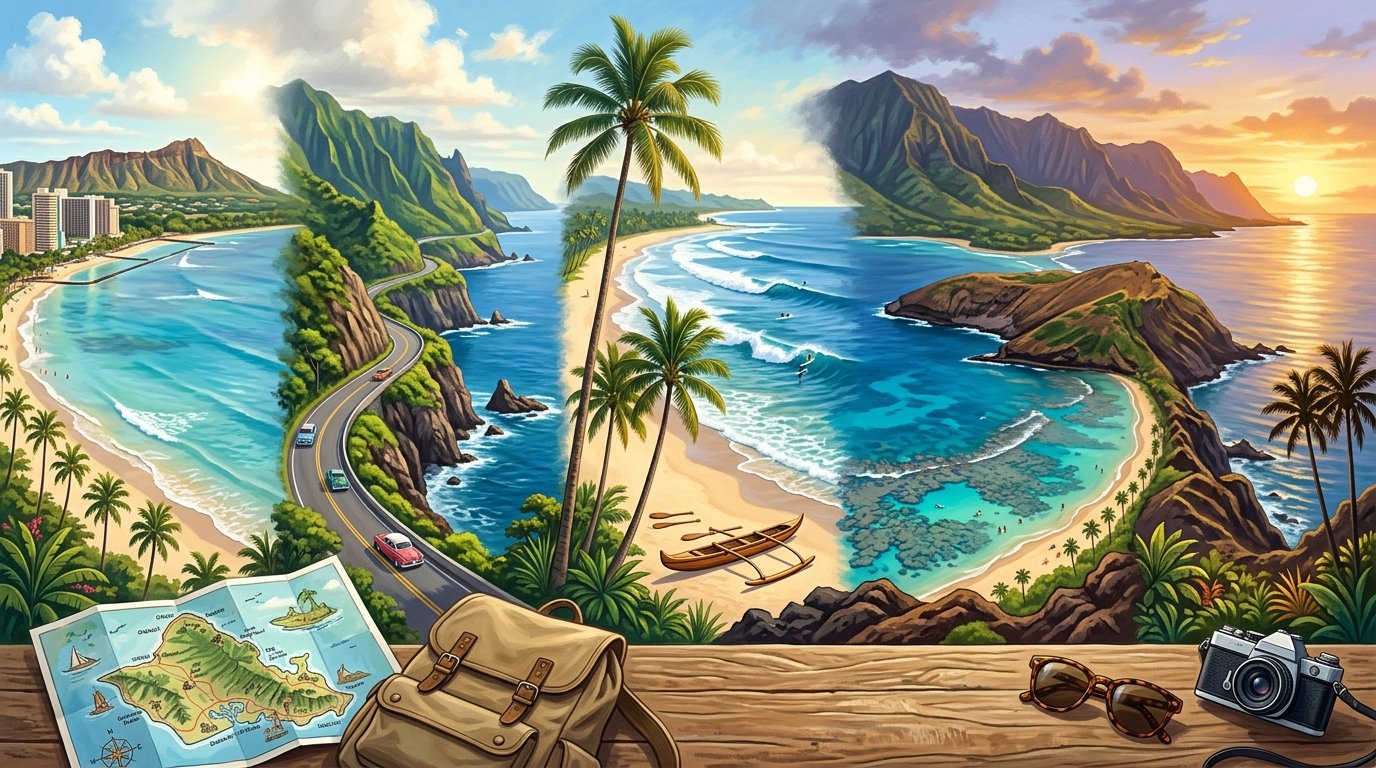
This Oʻahu itinerary uses two bases: Waikīkī for the first half of the week, then either the North Shore or a second Honolulu stretch with day trips. You cover Diamond Head, Pearl Harbor, Hanauma Bay, Kailua, and Waimea Bay without doubling back on the same highway every morning.
Days 1–2: Waikīkī, Diamond Head, and Honolulu
Land, drop your bags, and walk straight to Waikīkī Beach. A first-day surf lesson from one of the beachboy stands runs about an hour and gets you standing up on the small, forgiving waves off Kūhiō Beach.
Start day two at Diamond Head before 8 a.m. The crater trail takes about 45 minutes up, and out-of-state visitors need a reservation plus an entry fee. Spend the afternoon at Ala Moana Beach Park, which has calmer water and shade that Waikīkī lacks.
Book Hanauma Bay for a separate early morning. It closes Mondays and Tuesdays, and reservation slots open online 48 hours ahead at 7 a.m. Hawaii time. They vanish in minutes.
Our guide to Waikīkī Beach covers where the sand is widest and which stretches stay calm at high tide.
Day 3: Pearl Harbor and Downtown Hawaiian History
Reserve your USS Arizona Memorial tickets eight weeks out, or grab one of the next-day releases at 3 p.m. The program is free, boat shuttles run on a strict schedule, and no bags are allowed past the gate. Arrive by 7:30 a.m. and you will be done by noon.
Spend the afternoon downtown at ʻIolani Palace, the only royal palace on U.S. soil. The guided tour runs about an hour and explains the 1893 overthrow better than any plaque.
Eat in Chinatown afterward. It is a ten-minute walk and the best value lunch in Honolulu.
Days 4–5: Kailua, Kualoa Ranch, and the Windward Coast
Cross the Koʻolau range through the Pali Lookout on your way to Kailua. The wind at the lookout is strong enough to push you backward, and the view over the Windward Coast is the best free stop on the island.
Kailua Beach and Lanikai deliver the turquoise water people picture when they think of Hawaii. Parking is residential and tight, so get there before 9 a.m.
On day five, book a Kualoa Ranch tour. The movie sites tour, the UTV run, and the horseback ride all cross the same valleys where dozens of films shot. Add Kāneʻohe Bay sandbar time if the weather holds. More options live in our roundup of day trips from Honolulu.
Days 6–7: North Shore Beaches, Surf Culture, and the West Side
Drive north through Haleʻiwa and give the whole day to the coast. In summer, Waimea Bay is a swimming pool and Shark’s Cove is the best shore snorkeling on Oʻahu. From November through February, both turn into pounding surf that you watch from the sand.
Sunset Beach hosts big-wave contests in winter. Even on a flat day, the sand there is worth an hour.
Fit the Polynesian Cultural Center in on one of these days if hula, canoe pageantry, and Pacific island traditions interest you. Plan for six hours, including the evening show.
Save the last morning for the West Side: Koʻolina lagoons for easy swimming, or Makaha if you want fewer people. Then head to the airport with wet hair, which is the correct way to leave.
A Fast-Paced Oʻahu and Big Island Route
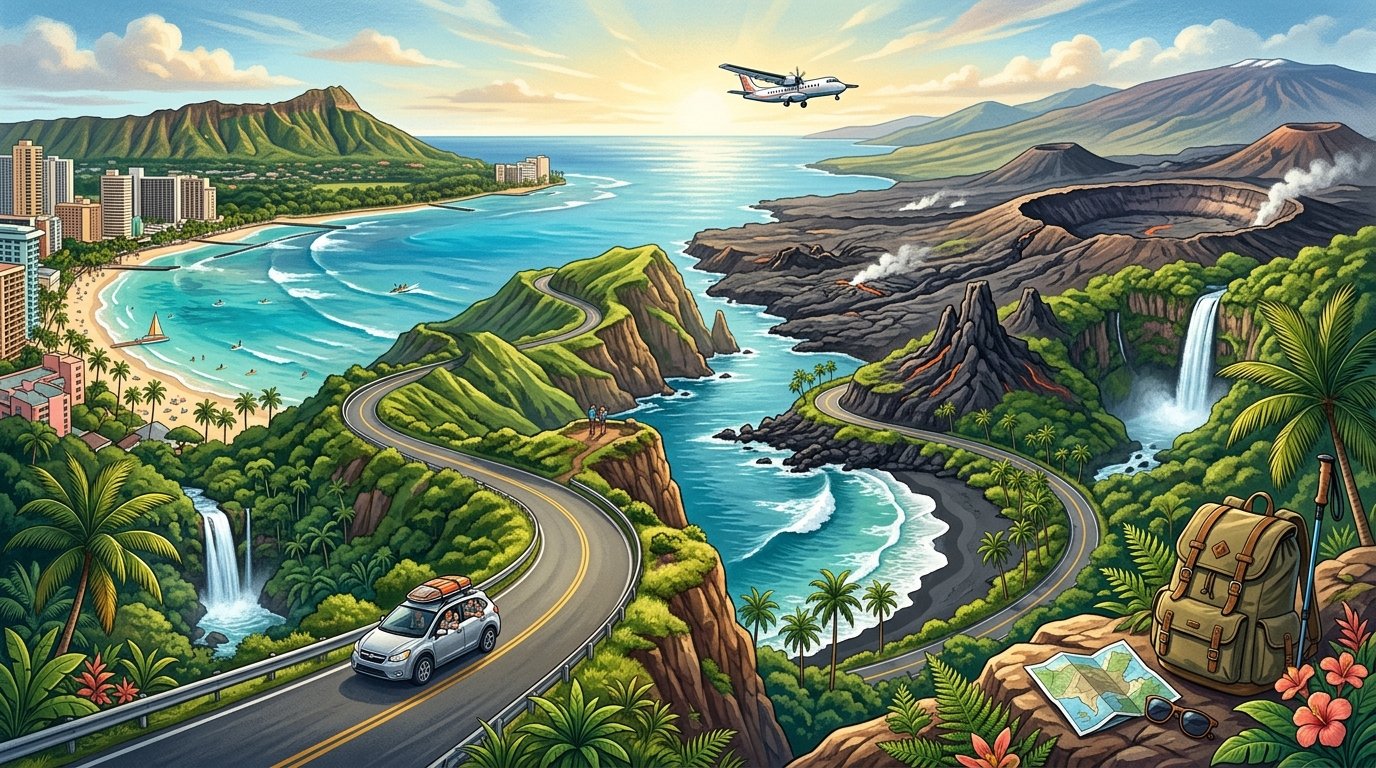
This route trades some beach time for lava fields and telescopes. You get three full days on Oʻahu, then four on Hawaiʻi Island covering Kīlauea, Hilo waterfalls, and the Kohala Coast, with one morning flight in between.
Days 1–3: Honolulu, Waikīkī, and Pearl Harbor
Compress the Oʻahu highlights into three days: Waikīkī and Diamond Head on day one, Pearl Harbor and downtown on day two, then a Windward Coast loop on day three that hits the Pali Lookout, Kailua, and Kualoa.
Skip the North Shore on this version unless you are willing to give up the Windward day. Trying to do both leaves you driving in the dark. Our 48-hour Oʻahu plan works well as a tighter template if your flight lands late.
Day 4: Take an Inter-Island Flight to Kona
Book the earliest flight you can. Hawaiian Airlines and Southwest fly Honolulu to Kona in about 55 minutes, and Mokulele Airlines serves smaller routes with turboprops.
Return your Oʻahu rental the night before if your hotel is near the airport. Pick up the Big Island car at Kona, and you are on the road by 10 a.m.
Spend the afternoon on a Kona coffee farm tour in Hōlualoa, then snorkel or dive with manta rays after dark. The manta night trip is the most memorable ocean activity on the island. Tips for keeping the hop cheap are in our notes on traveling between islands on a budget.
Days 5–6: Hawaiʻi Volcanoes National Park and Hilo
Drive to Hawaiʻi Volcanoes National Park and stay overnight in Volcano Village. That way, you see Kīlauea’s crater in daylight and again after dark, when any glow shows up best. Chain of Craters Road drops 3,700 feet to the coast through old lava fields and takes about 90 minutes round trip without stops.
Sleeping in Volcano also gets you a sky nearly as clear as Maunakea without the cold. Our walkthrough of Hawaiʻi Volcanoes National Park covers which trails stay open when vents are active.
On day six, head to Hilo for Rainbow Falls in the morning light and ʻAkaka Falls, a 442-foot drop reached by a short paved loop. Punaluʻu black sand beach sits on the drive back and often has green sea turtles resting on shore. Keep 20 feet away.
Day 7: Kohala Coast Beaches or Mauna Kea Stargazing
End on the dry Kohala Coast. Hāpuna Beach has wide white sand and gentle surf in summer, and the reefs at Kahaluʻu bring sea turtles close enough to see without swimming far.
Prefer stars? Drive to the Mauna Kea Visitor Information Station at 9,200 feet for sunset and stargazing. Bring a winter jacket, because temperatures drop near freezing. Four-wheel drive is required past that point, and most rental contracts forbid the summit road.
Mauna Loa fills the horizon to the south the whole drive up. For more route ideas, see our Big Island road trip planning guide.
Book Smart and Make the Most of Your Time
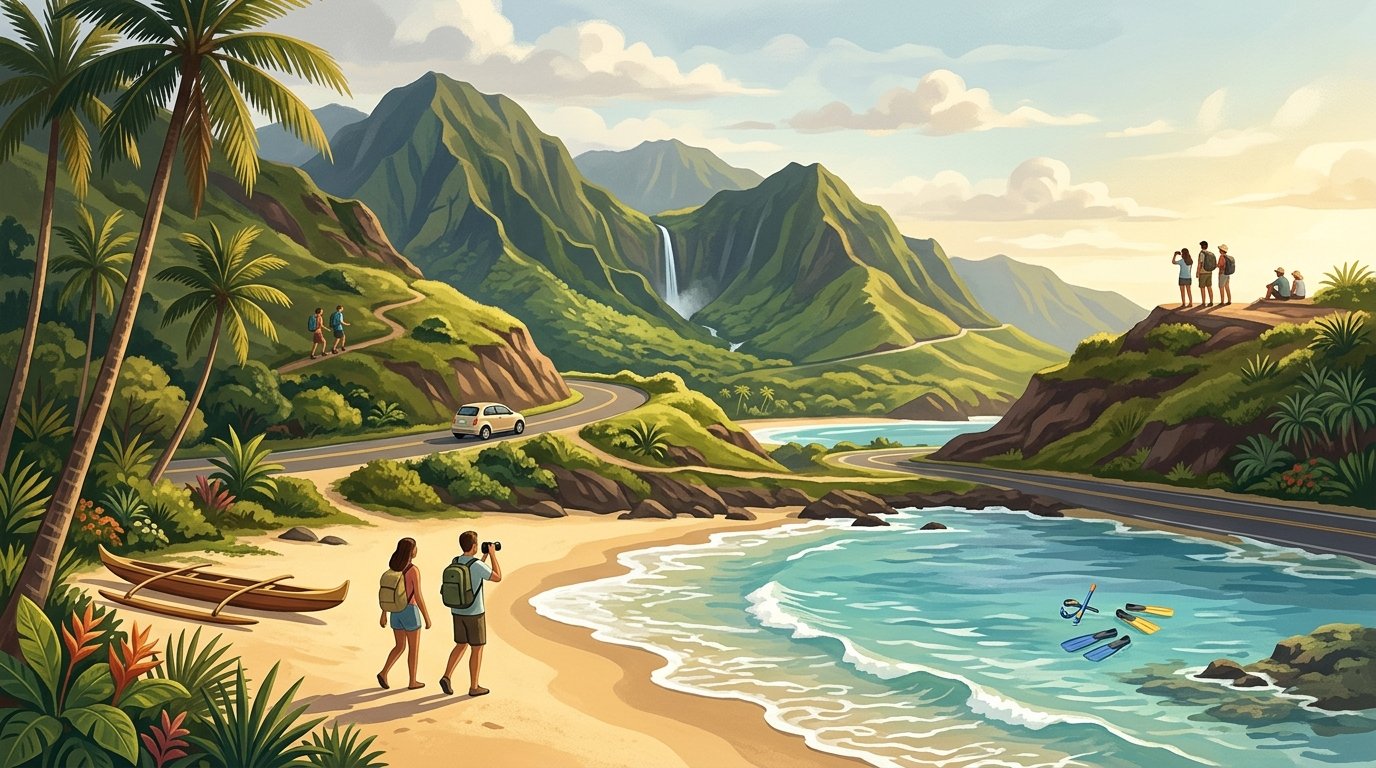
Reservations now gate several of Hawaii’s biggest attractions, and ocean conditions change fast enough to rewrite a day’s plan. Sorting out lodging zones, car rentals, and a few advance bookings before you fly saves the most vacation time.
Where to Stay and When to Rent a Car
Pick a base by what you plan to do most. On Oʻahu, Waikīkī puts you within walking distance of food and beaches, so you can skip the car for two or three days.
On Maui, split your stay between West Maui (Kapalua, Nāpili, Kahana) and Wailea if you want to visit both sides. On Kauaʻi, Hanalei serves the north and Poʻipū the south. On the Big Island, three nights in Kona or Waikoloa plus one or two in Volcano Village works well.
Rent a car everywhere except for a Waikīkī-only trip. Book it when you book your flights because Hawaii inventory sells out. Parking in Waikīkī costs $35 to $60 a night at most hotels, so schedule your pickup for the day you leave town. Compare options in our rundown of ways to get around Oʻahu.
Reservations, Road Conditions, and Changing Ocean Conditions
Reserve these before you leave home:
- USS Arizona Memorial tickets
- Diamond Head entry and parking
- Hanauma Bay snorkeling slots
- Haleakalā sunrise permits
- Waiʻānapanapa State Park on the Road to Hāna
- Kualoa Ranch tours and any luau
The Road to Hāna is 64 miles with 620 curves and 59 one-lane bridges. Start by 7 a.m., yield on the bridges, and let locals pass. Our complete Road to Hāna driving guide has the stop-by-stop version.
Ocean conditions change by season and shore. North shores rage in winter and calm in summer, while south shores do the reverse. Check the daily surf forecast, and never turn your back on the water at Sandy Beach or Hāpuna.
What to Eat Between Island Adventures
Eat plate lunches. Two scoops of rice, macaroni salad, and kālua pig or chicken katsu cost $12 to $18 and feed most people twice.
Other things to hunt down:
- Poke bowls from a grocery store fish counter, cheaper and often better than restaurants
- Loco moco, a rice, burger patty, egg, and gravy stack built for post-hike hunger
- Shave ice with ice cream on the bottom and haupia cream on top
- Shrimp trucks on Oʻahu’s North Shore, garlic butter style
- Poi, worth trying fresh with kālua pig rather than plain
How to Keep a Hawaii Trip Within Budget
Groceries are your biggest lever. A hotel with a fridge and a $70 Costco run covers breakfast and beach lunches for a week.
Free activities fill most days: beaches, hikes, the Pali Lookout, Kona coffee farm samples, and tidepools. Paid tours are worth it for manta rays, Kualoa, and a good luau.
Travel in late April, May, September, or early October for the lowest rates. More tactics live in our guide to affording a Hawaii vacation on a budget. Packing light also saves bag fees, and our Hawaii packing list can help.
Build the Week Around What You Want Most
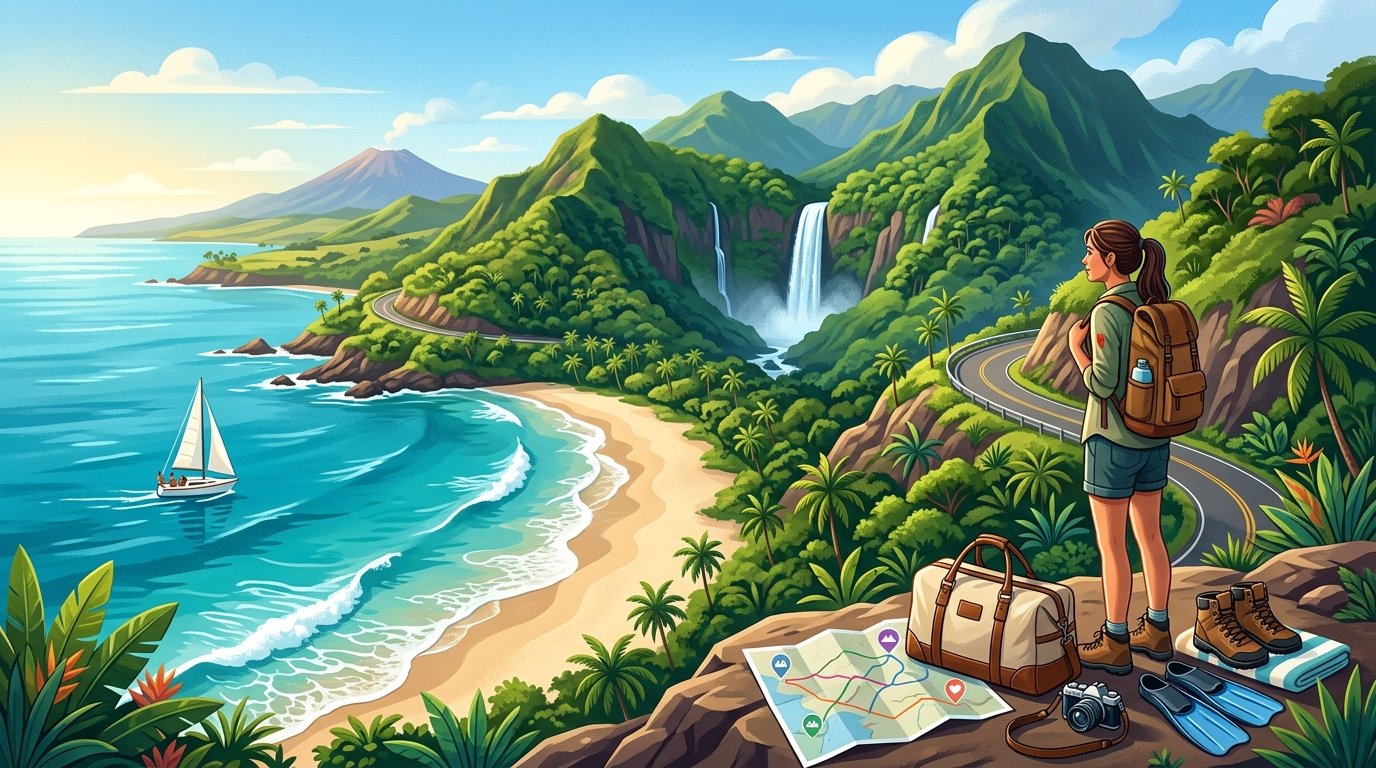
Your best 7 days in Hawaii itinerary comes down to one honest question: do you want variety or depth? Oʻahu alone gives you history, city food, world-class surf beaches, and green cliffs within an hour of each other. It also costs you zero transit days.
Add the Big Island only if seeing Kīlauea and stargazing near Mauna Kea would define the trip for you. That version works with an early day-four flight and a night in Volcano Village.
Maui suits couples and anyone who wants resort mornings with one big road day. Kauaʻi belongs on your second or third Hawaii trip, when trails and quiet matter more than checklists.
Whichever way you go, lock in Pearl Harbor, Diamond Head, Hanauma Bay, and Haleakalā reservations early. Rent a car for every island except a Waikīkī-only stay, and leave two afternoons completely unplanned. Those are the ones where you find a beach park with no name, order poi and kālua pig from a roadside stand, and stay until the sun drops.
Frequently Asked Questions
Is 7 days enough time in Hawaii?
Seven days is plenty for one island and works for two if you plan an early morning flight between them. You will see the major sights on Oʻahu, Maui, or Kauaʻi with room for two unstructured beach days. Trying to add a third island turns the week into a series of check-ins.
Is it better to visit one or two Hawaiian islands in a week?
One island is the stronger choice for most travelers because each hop costs four to six hours of hotel checkouts, car returns, and airport time. Split the week only when the second island offers something the first cannot, like Kīlauea on the Big Island. Repeat visitors on travel forums consistently recommend staying put for a seven-day trip.
What is the best 7-day Oahu itinerary for first-time visitors?
Base in Waikīkī for four nights, then move to the North Shore or stay put with day trips. Cover Diamond Head and Waikīkī on days one and two, Pearl Harbor and ʻIolani Palace on day three, Kailua and Kualoa Ranch on days four and five, then North Shore beaches and the West Side to close.
How much does a 7-day trip to Hawaii cost?
Costs swing widely by season, island, and lodging style, and there is no single published average. Your biggest line items are airfare, hotel, and the rental car. Waikīkī hotel parking alone runs $35 to $60 per night. Cooking two meals a day and traveling in May or September cuts the total noticeably.
Can you visit Hawaii for a week without renting a car?
Yes, if you stay in Waikīkī on Oʻahu. TheBus covers Honolulu, Pearl Harbor, and the North Shore, and tour shuttles reach Kualoa and the Polynesian Cultural Center. On Maui, Kauaʻi, or the Big Island, a car is close to essential because transit does not reach the trailheads and beaches you came for.
Which Hawaiian island is best for couples on a 7-day trip?
Maui fits couples best, with Wailea and Kapalua resorts, the Road to Hāna, and Haleakalā sunrise in one compact week. Kauaʻi suits couples who prefer hiking and quiet over restaurants and nightlife. Oʻahu works when you want dinner options and live music alongside the beach.


