
When I think about Hawaii, amazing food always comes to mind. The islands offer much more than beautiful beaches.
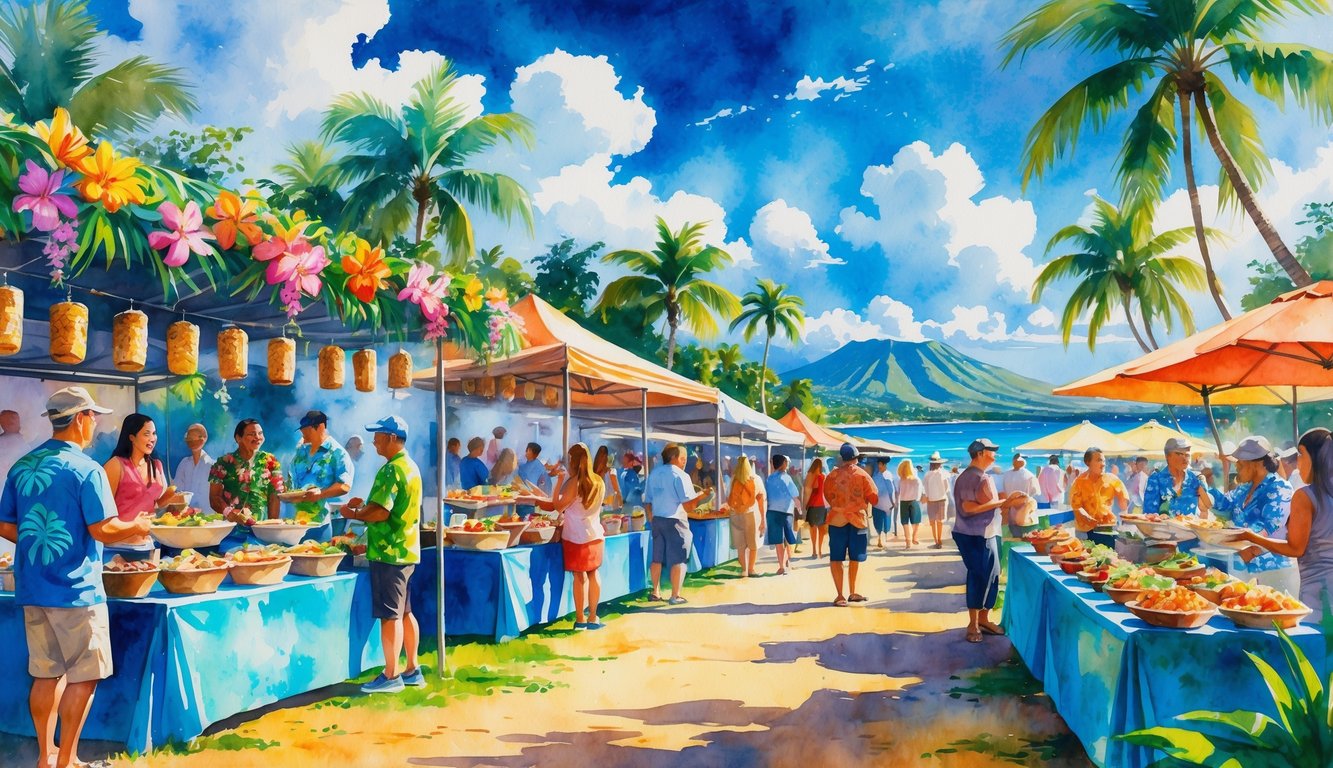
They host a variety of fun and unique food festivals that celebrate everything from local ingredients to global flavors. If you want to taste the best of Hawaii, food festivals let you try authentic dishes and meet talented local chefs.
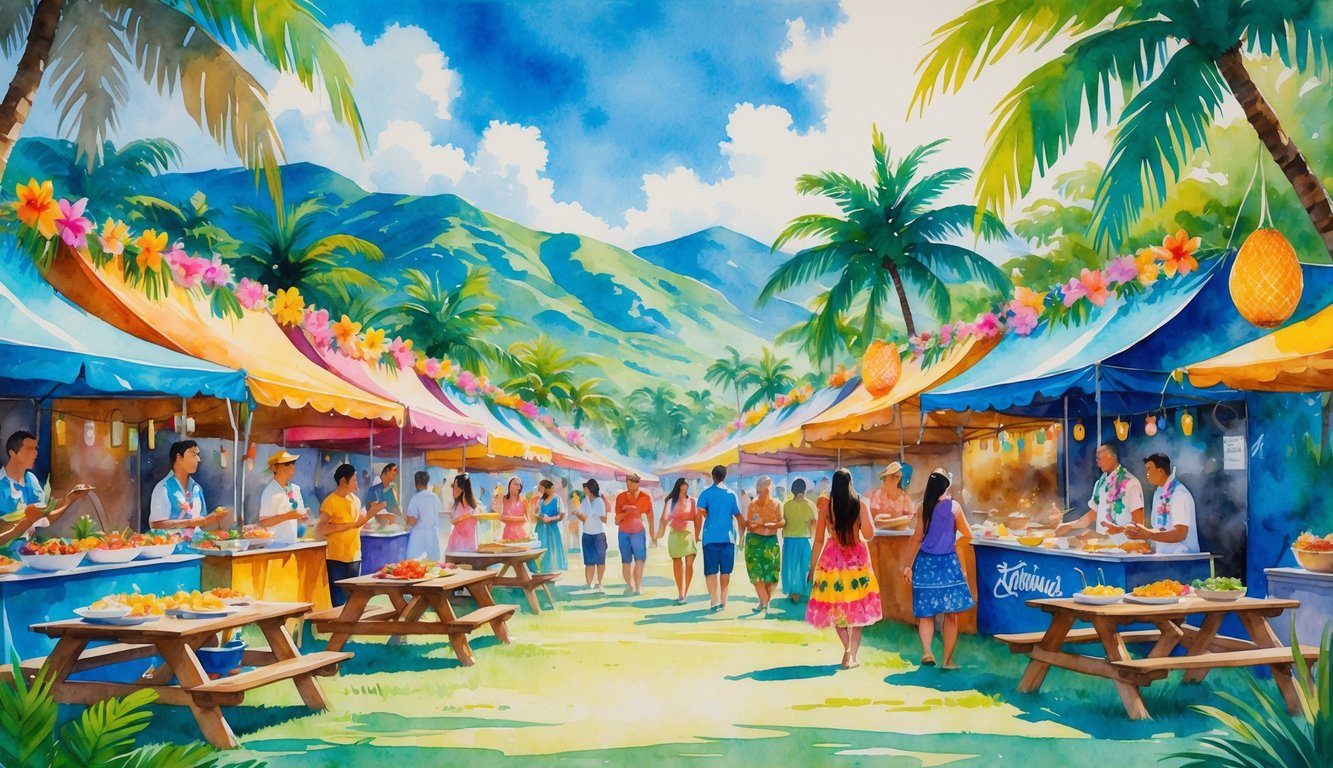
Each island hosts its own special events. The Hawaii Beer Festival features Hawaiian-style plates, while the historic Kona Coffee Cultural Festival invites you to tour farms and taste world-famous coffee.
Some festivals, like Waikiki’s SPAM celebration, highlight foods that are part of daily life for locals. Whether you love sweet treats, bold flavors, or learning about new cultures, you’ll find a festival that feels made for you.
Overview of Hawaii’s Food Festival Scene
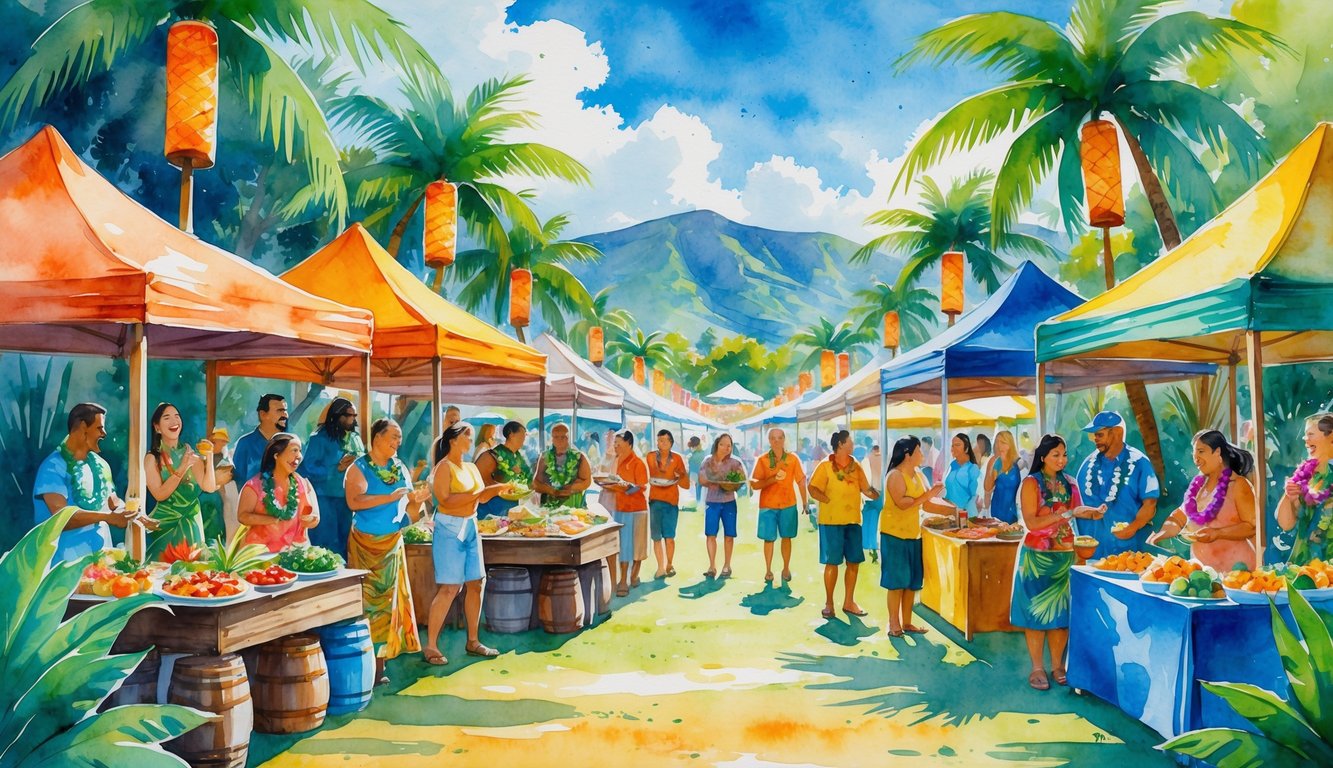
Hawaii’s food festivals give you a true taste of the islands. Local flavors, family traditions, and the warm spirit of aloha shape each event.
These gatherings invite me and other food lovers to explore Hawaiian cuisine and connect with vibrant culture. You can meet people, try new dishes, and enjoy the energy of island celebrations.
A Legacy of Culinary Celebration
Hawaii’s food festivals mix decades of tradition with excitement for new tastes. The islands have hosted culinary events for years, with many festivals highlighting foods grown and made locally.
Long-standing events like the Hawaii State Farm Fair bring farmers, ranchers, and chefs together to support local agriculture and share their bounty. I can walk through rows of fresh produce, try new foods, and learn about the importance of farming in Hawaii.
Some festivals focus on dishes that are part of daily island life. There’s even a big street party for SPAM, where locals and visitors come together to celebrate this unique menu item.
Diversity of Hawaiian Cuisine
Every Hawaii food festival shows the variety in Hawaiian food. Dishes range from poke bowls and laulau to modern fusions mixing Asian, American, and Hawaiian flavors.
Local chefs use ingredients like taro, fresh fish, and tropical fruits in creative ways. At some events, more than 100 different craft beers, ciders, and seltzers are available, showing how much the beverage scene has grown.
You can find everything from simple plate lunches to gourmet meals by well-known chefs. Each festival takes pride in food made with care, highlighting the best and most creative parts of Hawaiian cuisine.
You can learn about major festivals and their food offerings at the Best Food and Drink Festivals in Hawaii and Guide to Unique Food Events.
How Food Festivals Reflect Hawaiian Culture
Hawaii’s food festivals reflect the spirit of aloha. These gatherings blend food, music, and art to create a space where everyone feels welcome.
Different communities come together to share stories, songs, and recipes passed down through generations. The events go beyond eating good food—they help you connect with the people who made it and learn the meaning behind each dish.
Through hands-on workshops, live entertainment, and local crafters, I see how important family, respect, and sharing are in Hawaiian culture. Events like the Hawaii Food & Wine Festival bring chefs and food lovers together, turning a meal into a full cultural experience filled with fun and genuine aloha.
Top Signature Food Festivals in Hawaii
Hawaii’s food festivals bring lively crowds, talented chefs, and flavors that blend local farming with multicultural traditions. I get to meet incredible people and taste amazing dishes.
Hawaii Food and Wine Festival
The Hawaii Food and Wine Festival is one of the most famous food events in Hawaii. Organizers hold the festival on multiple islands, including Oahu, Maui, and the Big Island.
Over several weeks, chefs, winemakers, and mixologists create exciting tastings, dinners, and food experiences. I enjoy watching live cooking demonstrations where chefs use fresh, local ingredients from Hawaii’s farmers.
Each event offers something unique, from wine tastings to beachfront dinners. International and local chefs join in, so you can try a wide range of cuisine.
Highlights include sushi made with Hawaiian fish and creative farm-to-table dishes. If you want to explore the flavors of Hawaii, this festival is a must.
More information is available at Hawaii Food and Wine Festival.
Waikiki Spam Jam
Waikiki Spam Jam is a street festival that celebrates Hawaii’s love for Spam. The event takes over Kalakaua Avenue in Waikiki every spring.
Restaurants and local chefs serve Spam in dishes like fried rice, burgers, tacos, and even sushi. The festival includes live music, hula shows, and family-friendly activities.
Crowds of locals and visitors enjoy the lively atmosphere and try new takes on the iconic canned meat. Many vendors donate part of their profits to local charities, supporting the community.
It’s one of the most cheerful events I’ve attended.
Kona Coffee Cultural Festival
Every November, the Kona Coffee Cultural Festival celebrates over 200 years of coffee growing in Kona. Local farmers and coffee producers open their farms for tours, tastings, and demonstrations.
Coffee workshops teach me how beans are grown, roasted, and brewed. The festival hosts coffee tastings, so I can sample some of the best coffee anywhere.
I enjoy meeting the farmers who grow and harvest the beans. The festival also features music, parades, and arts and crafts that showcase Kona’s local culture.
Find details on Kona Coffee Cultural Festival.
Iconic Local and Cultural Festivals
Hawaii hosts lively events that bring people together through music, dance, food, and tradition. These festivals let me learn about Hawaiʻi’s past and enjoy authentic local flavors.
Merrie Monarch Festival
The Merrie Monarch Festival in Hilo is Hawaiʻi’s most famous hula competition and cultural event. The festival honors King David Kalākaua, called the “Merrie Monarch,” who helped revive hula and other Hawaiian arts.
At this weeklong festival, world-class hula dancers compete in different styles, from ancient kahiko to modern ʻauana. Every performance features colorful costumes, live Hawaiian music, and chants.
While hula is the main focus, the event also offers local food vendors, arts and crafts, and a parade. Even if I’m not a dancer, the festival shows how important hula is to Hawaiian identity.
Waimea Town Celebration
The Waimea Town Celebration on Kauaʻi is the island’s largest and oldest festival. It happens every February and lasts for nine days.
Families gather to celebrate the island’s cowboy, or “paniolo,” roots. Rodeo events, canoe races, and a parade through historic Waimea town are some highlights.
Live music concerts and traditional Hawaiian games invite participation from kids and adults. Food stands serve local favorites like smoked meats cooked in an underground oven called an imu.
I enjoy tasting specialties like poke, shave ice, and laulau while exploring craft booths and art displays. The festival feels like a true community celebration.
East Maui Taro Festival
The East Maui Taro Festival in Hāna focuses on taro, or kalo, a key part of Hawaiian food and culture. Each April, local farmers and families gather to share dishes and traditions with visitors.
Cooking demos show how to use taro in recipes like poi, kulolo, and taro chips. I get to sample different dishes and see how taro is grown and harvested.
Live Hawaiian music and hula performances fill the air, and craft booths sell handmade goods. Workshops teach about taro’s history and cultural importance.
It’s a great place to connect with local farmers and learn how kalo supports families and the land.
Aloha Festivals
Aloha Festivals is a statewide cultural celebration that began in 1946. The event is known for colorful parades, music, food, and royal court ceremonies across different Hawaiian islands.
Oʻahu’s Parade of Floats stands out, with paʻu riders (women in traditional dress) and flower-covered floats moving through Waikīkī. I get to taste local treats from food booths and try lei-making or hula lessons.
Street parties and concerts showcase Hawaiian music and dance. The festivals help me understand the blend of cultures that shape life in Hawaiʻi.
For more information about cultural celebrations like this, see the guide on unique food events and festivals in Hawaii.
Festivals Showcasing Local Ingredients
Hawaii’s food festivals highlight the islands’ farm-fresh ingredients and celebrate traditional flavors. These events show how local foods like fish, taro, pineapple, and chocolate become incredible dishes.
Celebrating Poke and Poke Bowls
Poke is one of the most famous Hawaiian dishes. It features cubes of seasoned raw fish—usually ahi tuna—served over rice or salad.
At many food festivals, I try several versions, from classic shoyu poke to modern poke bowls with avocado, spicy mayo, or crunchy toppings. Some festivals host poke-making contests where local chefs and everyday people compete for the tastiest recipe.
I enjoy interactive workshops where poké masters show how to season and mix the perfect bowl. These events highlight fresh, local fish and sustainable fishing practices.
For more information about events celebrating poke, check the lineups at larger food and drink festivals in Hawaii.
The Importance of Taro and Poi
Taro and poi sit at the center of Native Hawaiian diets. People make poi by pounding steamed taro root until it’s smooth, and usually eat it with meats or fish.
Many food festivals honor taro’s importance. These events include poi pounding demonstrations and hands-on workshops, where I try making poi myself.
Local taro farmers often join these festivals. Visitors can sample taro chips, taro pancakes, and other creative dishes.
I enjoy tasting different varieties of poi. I also learn about taro’s role in Hawaiian agriculture and sustainability.
Some spring festivals on Kaua‘i spotlight taro-based foods. These events often feature cultural performances and music, deepening my appreciation for taro’s roots.
Pineapple and Chocolate Delights
Hawaii’s volcanic soil helps pineapples and cacao thrive. Many festivals highlight treats made with these local crops.
I try fresh pineapple smoothies and visit chocolate tasting stations at these events. They offer sweet and tangy flavors unique to the islands.
Chocolate festivals feature artisan makers who use locally grown cacao. I sample dark chocolate bars, truffles with passion fruit, and pineapple-infused treats.
Pineapple-themed contests add excitement, like fastest pineapple cutting or best pineapple dessert. Exploring these Waikiki food festivals shows how local produce becomes desserts and snacks.
Festival Focus on Local Produce
Hawaii’s festivals celebrate a wide range of local fruits, vegetables, and herbs. Farmers’ markets and produce showcases let me meet local farmers and try fresh fruits like lilikoi, mangoes, and dragon fruit.
I find food trucks and stands with produce-driven menu items, from veggie poke bowls to taro burgers. Some events work with small farms to highlight organic practices and encourage support for local agriculture.
I look for unique food events and festivals in Hawaii that focus on the farm-to-table movement.
Popular Festival Experiences and Activities
Festivals in Hawaii offer much more than food. I find live performances, chef demos, and creative family activities at every event.
These experiences help me connect with local culture. I enjoy the islands in a hands-on way.
Live Hawaiian Music and Dance
Live Hawaiian music always stands out at food festivals. The ukulele and pahu drum create a special atmosphere across the festival grounds.
Hula dancers perform both traditional and modern dances. Their performances show the skill and spirit of the islands.
I watch local musicians and groups perform. Some of these groups support nonprofits that keep native culture alive.
Cultural events usually take place on outdoor stages. Picnic areas nearby let me enjoy great food while I watch the show.
Sometimes, visitors can join a hula lesson or try simple instruments. It’s a welcoming way to learn more about Hawaiian culture, whether in Kona, Maui, or Oahu.
Some festivals include concerts and eating contests, as seen at Kaua’i’s long-running festival. Find more about these events in this guide to unique food events in Hawaii.
Cooking Demonstrations by Renowned Chefs
Cooking demonstrations draw many food lovers. I have watched local and celebrity chefs prepare popular Hawaiian dishes in front of crowds.
Chefs use fresh island ingredients like fish, tropical fruit, and taro. They explain their techniques step by step and answer questions.
At the Made in Hawaii Festival, some demonstrations invite the audience to participate. I enjoy learning new cooking tips and tasting samples after each show.
These events bring chefs from all over the islands. The styles and flavors often range from traditional to fusion cuisine.
Most demonstrations take place under tents or inside event spaces. Popular chefs attract large crowds, so spots fill up fast.
Some festivals offer meet-and-greets with chefs. If you’re interested in culinary experiences, check out this list of Hawaii’s food and drink festivals.
Family-Friendly Events and Hands-On Activities
Families find plenty to do together at Hawaiian food festivals. Many events set up special areas for kids, including crafts with local artisans and supervised games.
I’ve seen kids try lei-making, taste mini poke bowls, and learn traditional crafts with Hawaiian crafters.
Teachers and volunteers from nonprofits often lead these hands-on activities. They share stories behind the crafts and foods, making activities both fun and educational.
Some festivals feature cooking classes for children. Others offer scavenger hunts, bouncy houses, or pineapple eating contests.
At larger events, a schedule lists activities running throughout the day. More details about these family experiences are in this roundup of festivals in Hawaii.
Sustainability and Community in Hawaiian Food Festivals
Hawaiian food festivals highlight sustainability and a strong sense of community. Many local events work to protect natural resources and support the people who live on the islands.
Supporting Local and Sustainable Agriculture
When I visit food festivals in Hawaii, I see a clear focus on supporting local farmers and making sustainable choices. Many events partner with small farms to feature fresh fruits, seafood, and vegetables grown in Hawaii.
The Hawaii Food & Wine Festival has donated millions to organizations that promote agricultural education and eco-friendly practices. This work helps keep traditional farming methods alive and protects the land for future generations.
Festivals often feature “farm-to-table” dishes that use local ingredients. This approach guarantees fresher meals and reduces the energy used for transportation.
The Kona Brewers Festival runs a “trash fashion show” to promote recycling and waste reduction. This event combines fun and education for everyone.
Celebrating Community Spirit
The spirit of aloha shines when the community gathers at these festivals. Local chefs, artisans, and musicians come together to share their talents and celebrate Hawaiian culture.
Many events raise funds for community projects, support schools, and offer scholarships. These efforts strengthen connections between neighbors and create opportunities for local families.
Volunteers help set up and run the festivals, making every visitor feel welcome. The Hawaii Food & Wine Festival shows how events can connect people, food, and traditions while caring for the environment and each other.
Notable Festival Locations Across the Islands
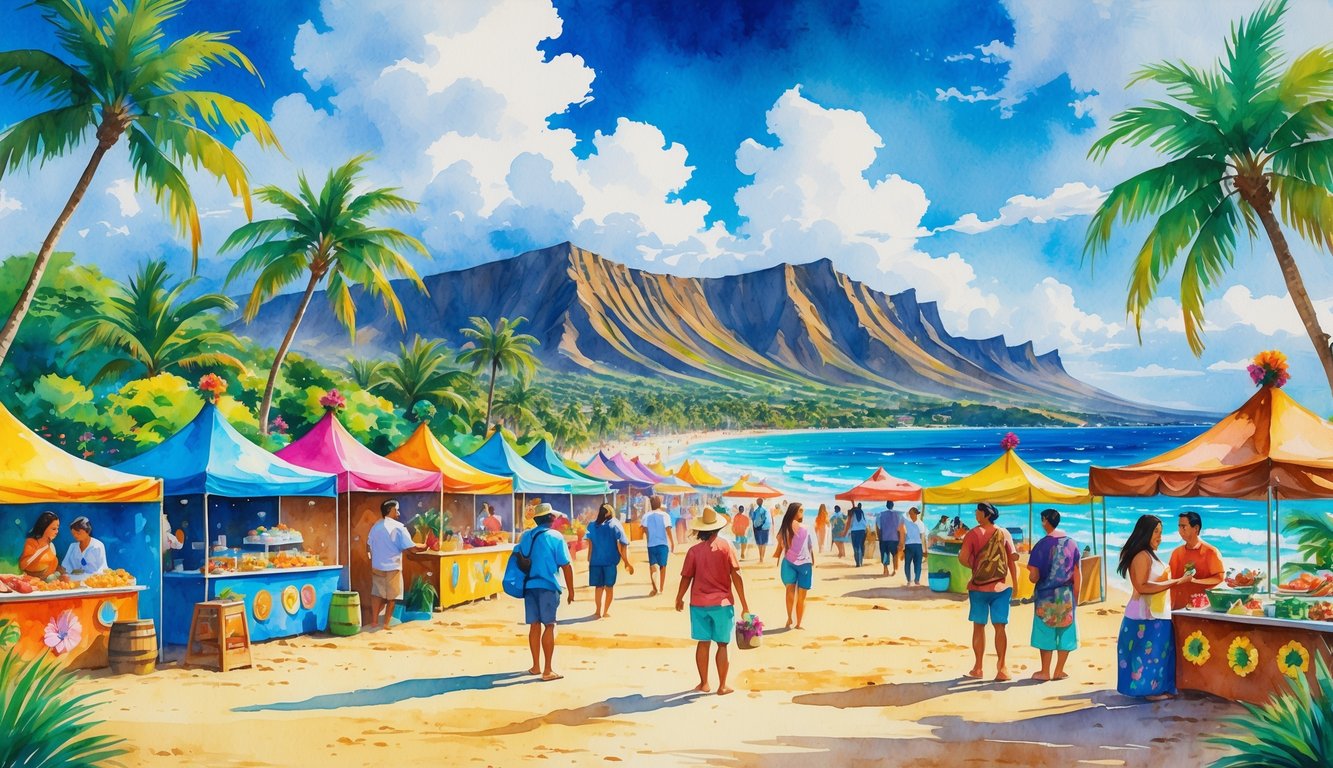
Hawaii hosts food festivals in scenic and culturally rich spots. Festivals often feature beautiful views, easy access to local foods, and a strong sense of community.
Kapiolani Park in Honolulu
Kapiolani Park stands out as a festival hotspot in Honolulu. Located at the edge of Waikiki and next to Diamond Head, this spacious park draws crowds for events all year.
It serves as the main venue for the popular Honolulu Festival, which includes food stalls, cooking demonstrations, and live performances. Kapiolani Park is easy to reach from Waikiki’s hotels and beaches.
Families enjoy grassy picnic spots, playgrounds, and room for kids to run. During festivals, booths line the paths with local favorites like poke, malasadas, and tropical fruit.
When the Hawaii Food & Wine Festival sets up here, celebrity chefs give live cooking shows. People bring chairs or blankets and spend the day sampling different foods.
With views of Diamond Head and the Pacific, Kapiolani Park remains one of my favorite festival spots.
Festival Venues on Maui, Big Island, and Kauai
Each island offers its own setting for food festivals. On Maui, the Hawaii Food & Wine Festival takes place at beach resorts and lush gardens.
Many chefs and foodies visit the events at resorts in Wailea, where tasting booths overlook the ocean. The Big Island’s Kona Coffee Cultural Festival happens in the historic coffee district, near small farms and old buildings.
Coffee tastings, farm tours, and live music bring excitement. The festival blends food with local history and the unique flavors of Kona coffee.
You can learn more about its 200-year legacy by visiting the Kona Coffee Cultural Festival.
On Kauai, local food events often take place at community parks and outdoor spaces. These festivals let me sample island-grown produce, fresh seafood, and Hawaiian dishes in a relaxed setting.
Smaller crowds, live music, and green mountain backdrops make these gatherings friendly and close-knit. Each island festival offers its own slice of Hawaii’s rich food heritage.
Planning Your Visit to Hawaii’s Food Festivals
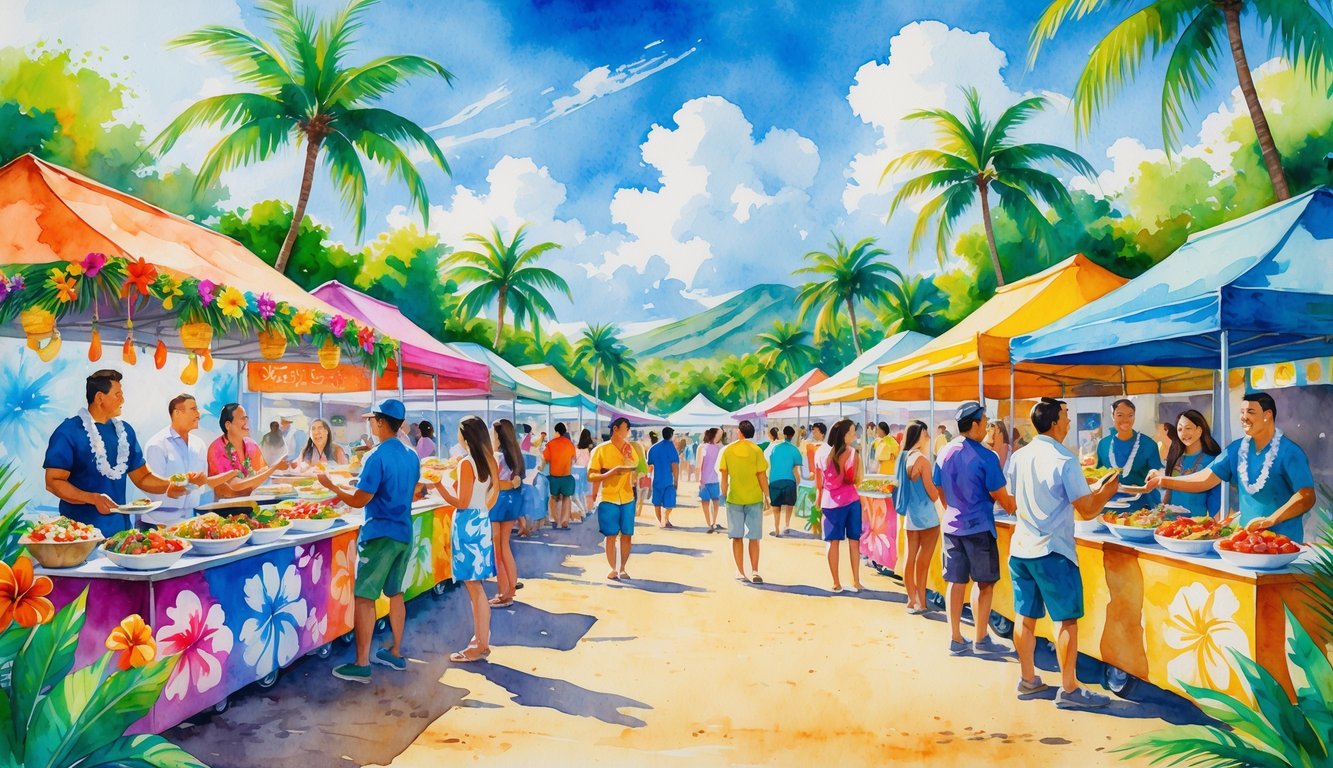
When I plan a trip around a food festival in Hawaii, I check the timing, type of festival, and tips for a smooth visit. Knowing the highlights helps me get the most out of my experience.
Best Times to Experience Food Festivals
Food festivals in Hawaii happen all year, but the biggest events take place in spring and fall. October is especially lively, with the Hawaii Food and Wine Festival running for weeks across several islands.
March is another great month, thanks to the Kona Brewers Festival.
Here’s a quick table of popular festival months:
| Festival | Month | Location |
|---|---|---|
| Hawaii Food & Wine | October | Statewide |
| Kona Brewers | March | Big Island |
| Kona Coffee Festival | November | Big Island |
I check the festival’s official site for exact dates and locations, since they can change each year. Planning ahead helps me book flights and hotels before they sell out.
Tips for First-Time Attendees
When I attend a festival for the first time, I pack for both sun and rain, since Hawaii’s weather can change fast.
I bring sunscreen, a hat, and a reusable water bottle.
Most events take place outdoors. Comfortable shoes help a lot.
To avoid crowds, I arrive when events start, especially if there are tastings or classes.
I buy tickets early, since popular festivals like the Kona Coffee Cultural Festival or food and wine events sell out quickly.
Here’s my essential checklist:
- Buy tickets early
- Bring cash and cards
- Arrive early or late to avoid peak crowds
- Try local foods and talk with chefs and vendors
- Respect local customs and festival rules


