
When I want to capture the magic of Hawaii at night, I look for places where the stars shine brightest and city lights sparkle.

The best spots for night photography in Hawaii are mountain tops, quiet beaches, and scenic parks. Each spot gives a unique view of the islands after dark.
These locations let me shoot colorful sunsets, clear starry skies, and dramatic landscapes.
I find my favorite shots in areas with little light pollution, like Mauna Kea and Mauna Loa on the Big Island.
The quiet shores near Dillingham Airfield on Oahu also have dark skies perfect for stargazing. Many photographers and astronomy fans visit these spots.
If I want a city vibe, I go to Magic Island at Ala Moana Beach Park in Honolulu. Here, I can capture glowing city lights against the night sky.
Why Hawaii Is Perfect for Night Photography
Hawaii gives me great opportunities for night photography because of its natural beauty and clear skies.
The islands have a mix of landscapes, low light pollution, and beautiful starry nights.
Diverse Landscapes
On each island, I see volcanoes, beaches, rainforests, and mountains.
This variety lets me choose many backgrounds for night shots. The Big Island has lava fields and tall volcanoes like Mauna Kea, while Maui has steep cliffs and long coastlines.
I take pictures at the top of a volcano, along a black sand beach, or deep in the rainforest.
Each scene gives a different mood at night. I see the silhouette of palm trees, glowing lava, or waves shining in the moonlight.
These landscapes make my nighttime photos in Hawaii look fresh and exciting.
Table: Popular Night Photography Landscapes in Hawaii
| Landscape Type | Location Example | Unique Features |
|---|---|---|
| Volcano | Mauna Kea | High altitude, star views |
| Beach | Punaluʻu Black Sand | Black sand, palm trees |
| Rainforest | Hilo | Dense trees, mist |
| Cliff/Coastline | Nā Pali Coast | Sharp cliffs, ocean views |
Rich Night Skies
Hawaii’s night sky is clear and bright.
The high mountains, like Mauna Kea, rise above most clouds and offer great views of the Milky Way.
Many areas are far from big cities, so the sky is full of stars.
On some nights, I see planets, constellations, and even shooting stars without special equipment.
World-famous observatories sit on the Mauna Kea summit because scientists chose this spot for its clear skies.
I like how the stars reflect on ocean waves and light up the shapes of distant mountains. This makes each night photo feel magical and real.
Low Light Pollution
Most of Hawaii’s islands have little city light, especially places like Volcanoes National Park, Haleakalā, and remote parts of Kauai.
Because there is so little light pollution, the stars and Milky Way stand out more in my photos.
Ways Light Pollution Is Reduced in Hawaii:
- Small population on several islands
- Protected parks and reserves
- Strict lighting laws near observatories
At night, I don’t have to deal with streetlights or glowing buildings like on the mainland.
The dark Hawaiʻian sky lets me capture clearer, sharper images.
Even beginners can take good night photos because the conditions are so helpful.
Unique Hawaiian Culture
Hawaiian culture makes my night photography more interesting.
When I’m out late, I sometimes see traditional chants, hula, or celebrations under the stars during cultural events.
Some historic places in Hawaii are sacred.
I see how the night connects local people to their traditions and nature.
The stars played an important role in Hawaiian navigation, called wayfinding, and this inspires me to include these stories in my photos.
Local landmarks, petroglyphs, and historic sites add meaning to night pictures.
When I photograph these scenes, I remember that the night sky in Hawaii is not just beautiful, but important to the island’s identity.
Essential Tips for Night Photography in Hawaii
Night photography in Hawaii means I deal with very dark skies, changing temperatures, and natural hazards.
I stay prepared and use the right tools to get sharp photos and stay safe.
Camera Settings for Low Light
When I shoot at night, I use manual mode on my camera.
I start with a wide aperture like f/2.8 to let in more light.
For ISO, I set it between 1600 and 3200. This helps me get clear images with less noise.
If it’s very dark, I may go higher, but I avoid going above 6400.
For shutter speed, I choose 15 to 25 seconds for stars or landscapes.
Longer exposures can blur the stars unless I want star trails.
I turn off the flash and set my focus manually, usually to infinity, to keep photos sharp.
Quick Reference Table:
| Setting | Common Choice |
|---|---|
| Aperture | f/2.8 |
| ISO | 1600–3200 |
| Shutter Speed | 15–25 sec |
| Focus | Manual (Infinity) |
Using a Tripod Effectively
A tripod is a must-have for night photography.
I always use a sturdy tripod to keep my camera still during long exposures.
Even small shakes can ruin a night shot.
I set up my tripod on a flat surface.
On rough ground, I extend the thicker legs first for extra support.
Sometimes, I hang my backpack from the tripod’s center hook for more stability.
I use a remote shutter release or the timer on my camera to prevent any shake when I press the button.
I avoid using the center column unless I need extra height, since it can make the tripod wobbly in the wind.
Safety Precautions After Dark
After dark, I always put safety first.
Before I go out, I tell someone where I’ll be.
Hawaii’s remote photo spots can be cold and dark, especially on Mauna Kea or near volcanoes.
I pack a flashlight or headlamp, and I prefer one with a red light mode to keep my eyes adjusted to the dark.
Wearing layers helps me stay warm at higher elevations.
I bring extra batteries because cold weather drains them faster.
I avoid isolated areas alone and watch my step on tough terrain.
I never leave valuables visible in my car, and I stay near marked paths when possible.
Shooting Techniques for Long Exposures
For long exposures, I use a remote shutter or my camera’s self-timer to keep the camera perfectly still.
I turn on long exposure noise reduction if my camera has it.
For star shots, I use the “500 Rule:” I divide 500 by my lens’s focal length to find the longest shutter speed without streaking the stars.
For example, with a 24mm lens, I use about 20 seconds.
I shoot in RAW so I can adjust details later.
I check my histogram and review every photo, zooming in to check sharpness.
Sometimes, I take several shots at different settings to make sure I get the best result if the lighting changes.
Best Spots on Oahu for Night Photography
On Oahu, I find several places for beautiful night photos.
Each spot offers something different, like glowing city lights, starry skies, unique landscapes, or calm ocean views.
Waikiki Beach at Night
Waikiki Beach changes after sunset.
City lights from hotels reflect on the water, and palm trees glow softly.
The beach walk shines and makes photos look magical.
I focus on the contrast between the dark ocean and the warm lights from the shore.
The sand is less crowded at night, so I can set up a tripod easily.
Sometimes, I catch surfers or beachgoers as blurred figures, which adds motion.
I also turn my camera toward Diamond Head to catch its dark shape against the sky.
By moving closer to the water, I capture the lights reflecting in the waves for dramatic shots.
For more details about the best photography spots in Honolulu, I check this Oahu guide.
Diamond Head Crater Viewpoints
At night, Diamond Head Crater gives clear views of Honolulu lit up below.
From the summit or nearby lookouts, I see the city stretching toward the ocean with twinkling lights.
The dark outline of the crater makes a bold subject.
It’s good for wide-angle photos that show both the crater and city skyline.
On clear nights, I sometimes catch stars or the moon rising over Waikiki.
I bring a flashlight or headlamp because some trails are dark and rocky after sunset.
Long exposure shots bring out details in both the sky and the glowing city.
Sometimes, I catch light trails from cars on the roads around the crater. These lines add movement and energy to my nighttime photos.
Tantalus Lookout and Magic Island
Tantalus Lookout, or Pu’u Ualaka’a State Park, is one of my favorite high points on Oahu.
From here, I see Honolulu, Waikiki, and Diamond Head all at once.
The city lights look like a sea of stars.
When I take photos from Tantalus at night, I use a telephoto lens to zoom in on buildings or Diamond Head’s outline.
The lookout is popular with visitors and local photographers.
There’s plenty of space for my tripod, and I always feel safe.
Magic Island is a man-made peninsula near Ala Moana Beach Park.
I go here for open night views of the Honolulu skyline and Diamond Head.
The water in the foreground lets me capture reflections of the tall buildings and city lights.
Sometimes, I see fireworks from Magic Island during holidays or celebrations, which makes photos extra special.
For more details and photo tips, I use this local photo location list.
Hanauma Bay after Sunset
Most people visit Hanauma Bay for snorkeling during the day. I find the area peaceful and beautiful after sunset.
The bay curves around and faces east. It’s a great spot for moonrise or night sky photos when the moon is up.
At night, I capture photos of the deep blue water and the bay’s rocky edge. Sometimes, I see glowing lights from the coastline in the distance.
I stay near the parking lot or top lookout because those areas are safest. The beach itself closes after certain hours to protect wildlife.
Hanauma Bay is away from the city, so there’s less light pollution. On clear nights, I see more stars or even the Milky Way.
It’s important to check the bay schedule before visiting at night since the gates may close early. I always respect the area rules to help keep this unique beach safe for nature and visitors.
I also check out more about moonrise and starry nights at this spot in the Oahu night photography guide.
Captivating Night Photography Locations on Maui
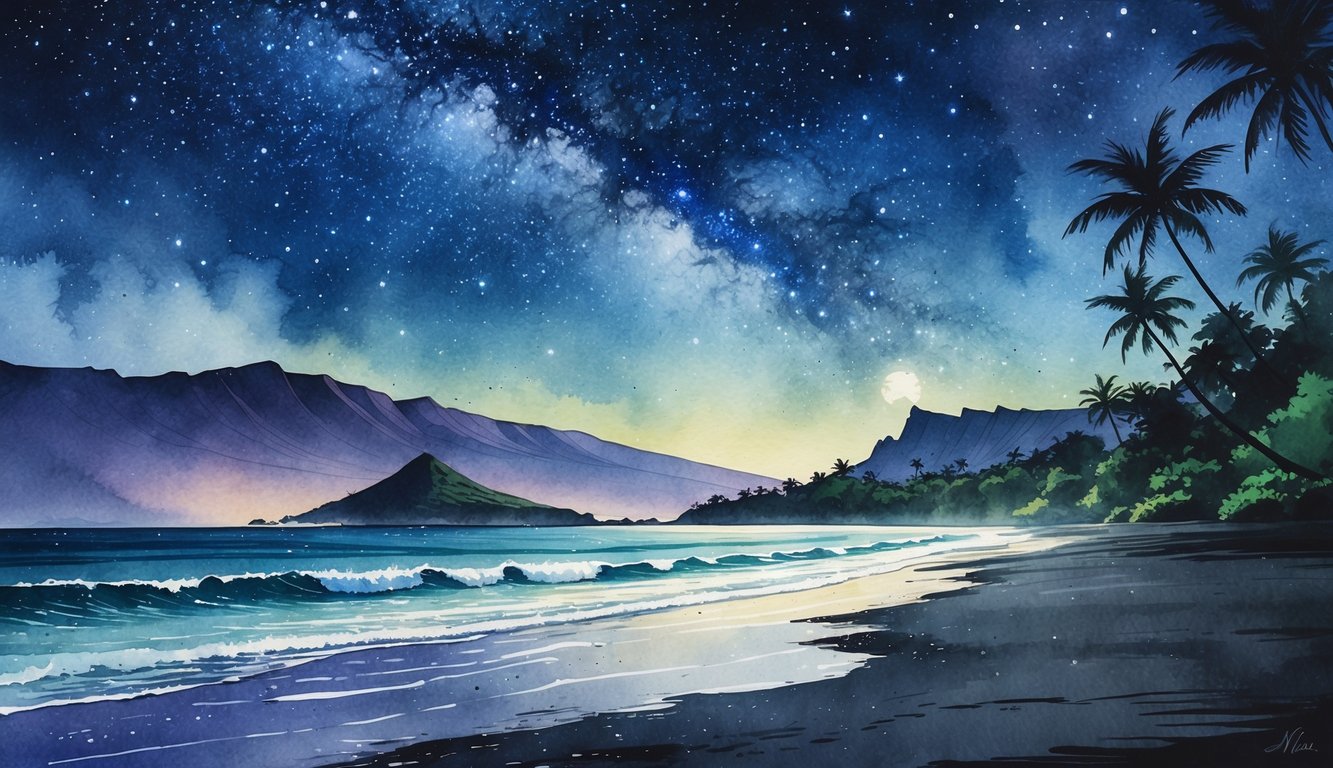
Maui has gorgeous spots for night photography. I’ve found places that offer clear views of the stars and peaceful beaches for capturing the night sky.
Haleakalā Summit for Stargazing
When I think of stargazing in Maui, I always start with the summit of Haleakalā. At over 10,000 feet above sea level, I escape city lights and find dark, clear skies.
The air is crisp and thin, so I bring a warm jacket and a sturdy tripod. Haleakalā features stunning craters and a wide open landscape.
These features add great foreground elements to shots of the Milky Way or a moonlit sky. Most nights, I spot constellations and even shooting stars.
I plan my visit when the moon is new or small so the stars shine brightest. Entry to Haleakalā National Park is open 24 hours for those with a reservation before sunrise or after sunset.
Parking fills up quickly, so I check the park guidelines before I go.
La Perouse Bay after Dusk
La Perouse Bay sits at the end of Makena Alanui Road and feels remote at night. The bay features old lava fields and rugged coastline.
I like how the dark rock contrasts with the sky and surf in my long exposure shots. Right after dusk, the water calms down and the sky turns deep blue.
With less light pollution compared to central Maui, stars appear vivid. Sometimes, I catch the moon rising over the lava fields.
Parking can be tricky after dark, and the rocky ground is uneven. Sturdy shoes and a flashlight really help.
On clear nights, I frame the ocean and dark rocks under the stars for dramatic images. The Tripadvisor forum recommends this area for peaceful night photography.
Road to Hana Night Views
The winding Road to Hana is famous for waterfalls and rainforests by day. At night, I find it less crowded and peaceful.
Some pullouts along the way offer open views of the ocean and sky. I often stop around the early mile markers for a safe spot to set up my camera.
With the sound of waves and a canopy of stars, the views are beautiful. I sometimes spot the glow from distant towns, but most stretches are very dark.
I make sure my car is parked safely and that I’m not blocking the road. A headlamp, bug spray, and warm clothes make a big difference for night shoots here.
The Hana Highway gives me diverse scenes for night photography, from beaches to cliffs.
Makena Cove and Beaches
Makena Cove, also called “Secret Beach,” is one of my favorite coastal spots for low-light photos. Palm trees, lava rocks, and fine sand frame the shoreline, offering a range of foregrounds for night sky shots.
The cove is small but feels cozy and private in the dark. When clouds are light and the moon is out, I love how the waves shimmer.
I usually bring a wide-angle lens since there’s room to get the whole cove in the shot. Even nearby beaches like Big Beach are great for catching the stars over the horizon or watching the moon reflect on water.
Parking can be limited at night in this area, so I try to arrive before sunset. I pack a flashlight for walking back.
Makena Cove is often mentioned as a must-see for photographers visiting Maui’s best beaches and night locations.
Big Island’s Most Incredible Night Photography Sites
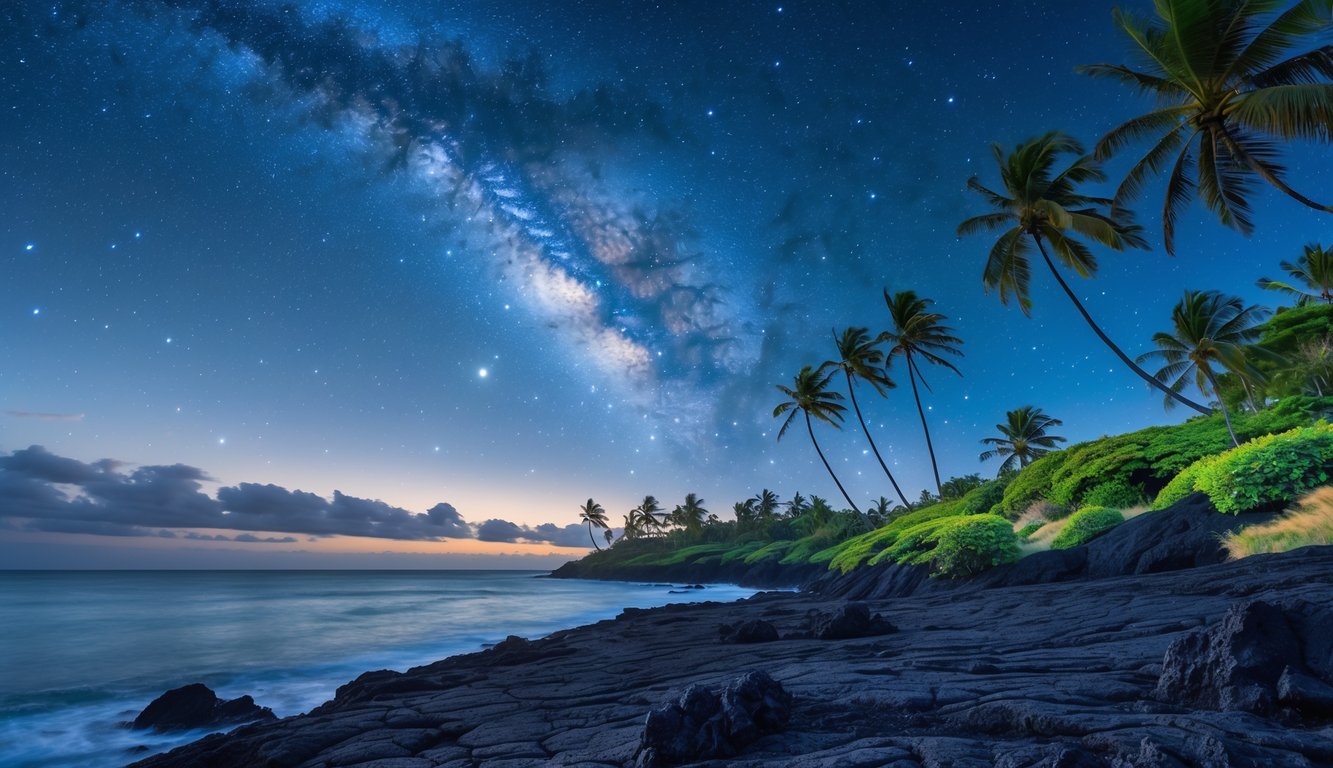
The Big Island gives me a chance to capture the night sky in totally different environments. Volcanic lands, remote beaches, and lively harbors all offer unique experiences.
Mauna Kea Summit Stargazing
When I stand near the summit of Mauna Kea, I see some of the clearest night skies in Hawaii. The summit rises over 13,000 feet above sea level, putting me above most clouds and pollution.
Astronomical observatories dot the area. I arrive before sunset to set up my gear safely and adjust to the thin air.
There’s a gravel access road, and I strongly recommend a four-wheel drive vehicle. Temperatures can drop below freezing at night, even if it’s warm at sea level.
Mauna Kea offers brilliant starscapes and clear views of the Milky Way. I respect local rules and the cultural significance of the mountain.
Permits may be required for nighttime visits, and some areas can be off-limits. I check the weather before heading up, since summit conditions can change quickly.
Hawaii Volcanoes National Park
Hawaii Volcanoes National Park is special for night photos because the glow of lava sometimes lights up the sky. When vents are active, I photograph illuminated clouds and glowing ground.
Even when eruptions pause, steam, craters, and darkness combine for dramatic shots. Some of my favorite places to shoot are the Kīlauea caldera viewpoint and Devastation Trail.
Tripods keep my shots steady during long exposures. I always use marked trails and keep away from hazardous areas.
The park requires an entrance fee. I check current conditions on the official site before visiting at night.
Green Sand Beach under the Stars
Green Sand Beach, also called Papakōlea, is one of only a handful of green sand beaches in the world. It sits at the southern edge of the Big Island, and getting there usually means a long hike or ride in a 4WD vehicle.
At night, I find the beach peaceful and free from city lights and noise. The unusual green sand comes from olivine crystals.
The view of the night sky over the ocean here is wide and uninterrupted. I often capture star trails or time-lapse photography.
I always plan ahead, bring water, and have a good flashlight. There are no facilities, so I’m careful to leave no trace.
Because it’s so remote, I visit this beach with friends for safety. I avoid going during big surf or high winds.
Hilo Harbor and Waterfront
Hilo Harbor offers a different side of night photography on the Big Island. City lights reflect off the water, and ships and boats add interest to my shots.
The waterfront area is easily accessible from downtown Hilo and has a safe walking path. I photograph from Banyan Drive or near the Liliuokalani Gardens for a mix of city lights and tropical scenery.
When cruise ships dock, their lights create colorful patterns on the water. Street lamps and palm trees also add depth to night photos.
This is one of the few Big Island spots where I can shoot the night sky and urban scenes together. I watch for rain, as Hilo gets a lot of showers, but brief clearings make for dramatic skies.
Readers can learn about other cool Big Island photo spots if they want to explore more options.
Exploring Kauai After Dark: Top Night Photo Spots
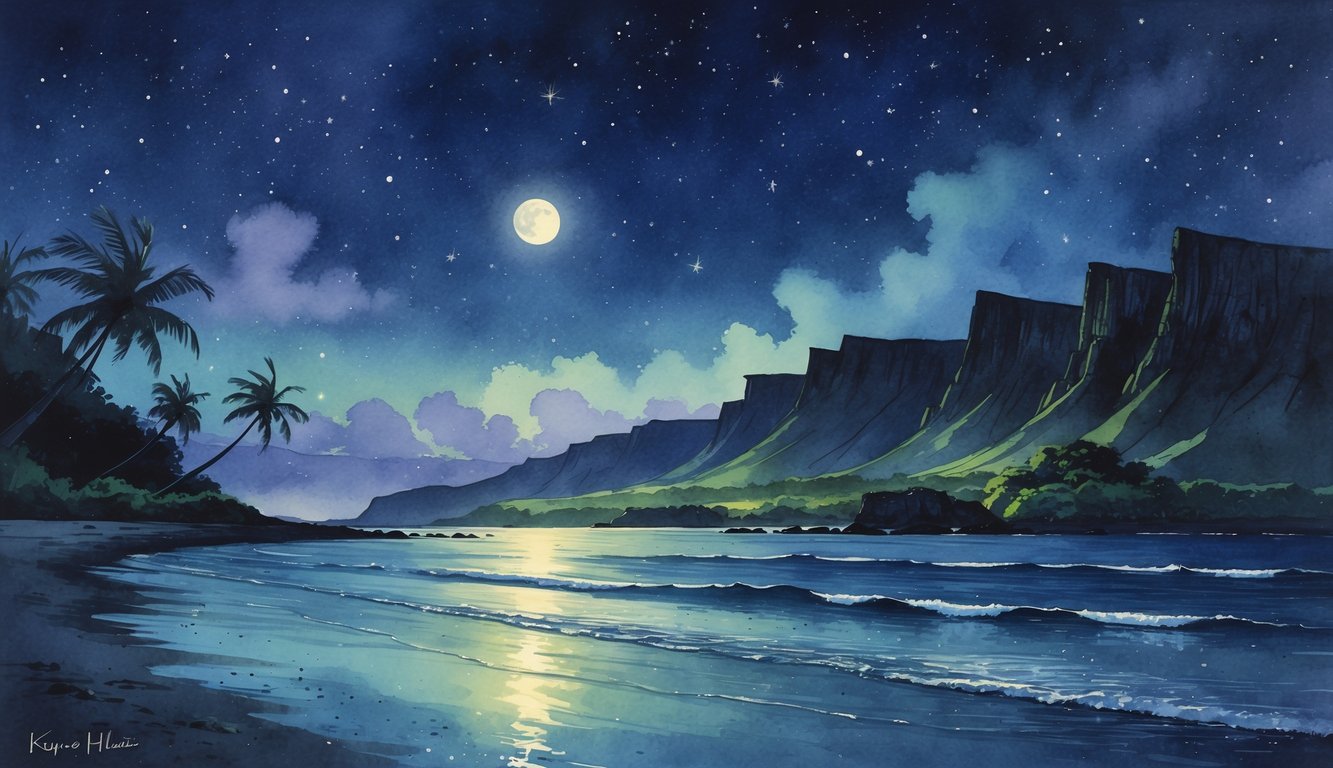
Kauai offers some of the best places to capture stunning night landscapes in Hawaii. Dark skies, dramatic terrain, and natural beauty make this island a favorite for stargazers and night photographers.
Na Pali Coast Night Views
Photographing the Na Pali Coast at night feels like stepping onto another planet. The dramatic cliffs rise sharply from the ocean, creating strong silhouettes under the stars.
I shoot from high vantage points along the coast where the rugged shapes contrast with the dark sky. The best time for photos is a clear night with very little moon or during a new moon.
The isolated location means little light pollution. Sometimes, I capture the Milky Way arching above the sharp peaks.
Packing light but warm clothing is important here because the wind along the coast can feel chilly. When planning a shot, I look for unique rock formations or trees to frame the sky.
For more information or tips on the best spots along this coastline, I recommend using the guide to Kauai photography locations.
Wailua Falls in Moonlight
Wailua Falls is one of Kauai’s most famous waterfalls and looks magical under moonlight. I often visit just after sundown or late at night when crowds have left.
The bright moon makes the mist above the falls glow. On cloudless nights, a faint lunar rainbow sometimes appears.
I set up my tripod downstream to include the pool and surrounding rocks in the frame. Long exposure settings help me capture the smooth, misty water against the backdrop of stars.
If the moon is bright enough, I don’t need to rely on artificial light. The landscape glows on its own.
Safety is key near the falls at night. I never go alone and make sure my footing is solid before shooting from any slippery spots.
With the falls’ dramatic drop and lush jungle, I always get shots that feel full of energy and depth.
Polihale State Park
Polihale State Park is one of the most remote beaches on Kauai. The park is known for its incredibly dark skies.
Because there are no nearby towns or resorts, stargazing here is some of the best on the island. It’s the perfect place for capturing the Milky Way or even meteor showers.
I double-check my gear before heading to Polihale because it is a long drive down a bumpy dirt road. Once I’m there, I set up away from the small camping area for the darkest sky possible.
Why I love Polihale for night photography:
- Very little light pollution
- Wide, open beach for unobstructed sky views
- Strong foreground options like sand dunes and beach grasses
Most of my favorite Kauai night sky shots come from Polihale. For more about stargazing at this spot, I use this Polihale State Park stargazing resource.
Waimea Canyon and Grand Canyon of the Pacific
Waimea Canyon, often called the Grand Canyon of the Pacific, draws visitors with its colorful cliffs and deep valleys. At night, I love photographing the landscape under moonlight or clear stars.
The overlooks along the canyon road let me set up my tripod safely and easily. I usually arrive before dark to find the best angle and wait for the stars.
If there’s a bright moon, the canyon glows and shadows stretch across the land, adding drama to my pictures. The mix of bright rock layers and dark sky creates photos you can’t get during the day.
Nighttime wind can be strong, so I bring a sturdy tripod. Waimea Canyon’s sweeping views and high elevation make it a favorite for landscape photographers.
To learn more about visiting this beautiful location for night photography, I read about the breathtaking Waimea Canyon.
Lesser-Known Night Photography Gems
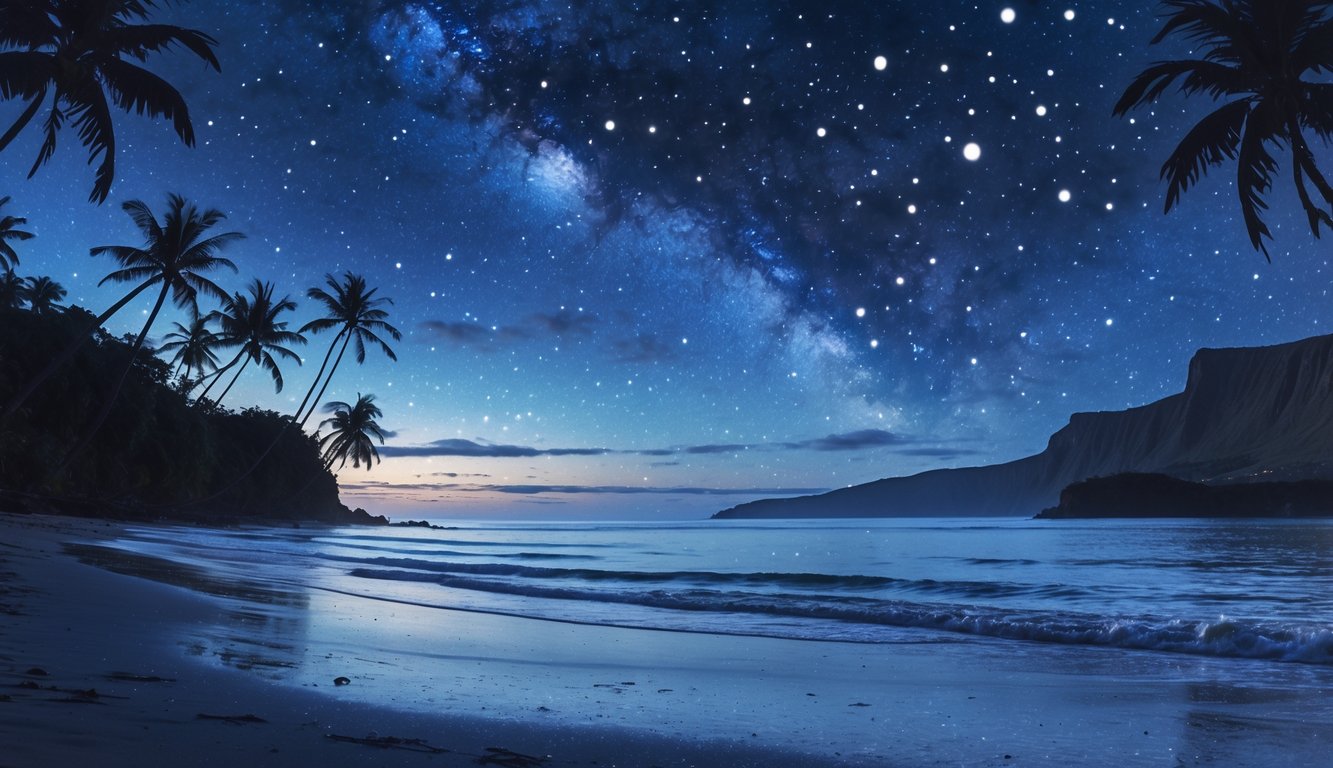
Some of the best spots for night photography in Hawaii often go unnoticed by visitors. Each place offers a unique scene, from reflections on calm water to mountain silhouettes.
Lanikai Beach and Mokulua Islands
I find that Lanikai Beach feels especially peaceful late at night with its fine white sand and clear views. The Mokulua Islands sit just offshore and make a striking subject under a starry sky.
The east-facing beach is perfect for catching the rising moon or the Milky Way in the early morning. There’s little light pollution here, so the stars look brighter than in busier places.
During a new moon, I can see the islands’ shapes in silhouette against the stars. Sometimes I catch reflections of stars or moonlight on the gentle ocean, which makes for stunning long exposure shots.
To get the best results, I bring a tripod and a wide-angle lens to capture more of the night sky. I like to arrive early to find a good spot before it gets too dark.
Ho’omaluhia Botanical Gardens
Ho’omaluhia Botanical Gardens is one of Oahu’s quietest night photography spots. The gates close in the evening, but special events sometimes allow night access.
Whenever I get the chance, I’m amazed by the garden’s open fields and the huge mountains behind them. The gardens have little artificial light, so the sky stands out against the shadows of tropical trees and the tall Koolau Mountains.
This spot is great for testing lighting at dusk and then capturing deep blues and star fields later. If the pond is clear, I photograph stars reflected on the water.
I always check the weather before going. Light clouds can add interest to long exposure shots, but too many clouds will block the stars.
Byodo-in Temple after Hours
Byodo-in Temple sits in the Valley of the Temples, surrounded by lush plants and koi ponds. After hours, the grounds become one of the most peaceful places for night photography.
Though the temple itself closes at night, the grounds sometimes host special evening events that let visitors photograph the temple lit up against the night sky. The temple’s reflection in the pond looks beautiful under soft lighting and moonlight.
My best shots come from low angles, with the temple and bridge framed by dark trees and, if I’m lucky, some stars overhead. I recommend using a sturdy tripod and trying different shutter speeds to capture both the architecture and the faint glow of the landscape.
Kualoa Ranch and Kualoa Regional Park
Kualoa Ranch and nearby Kualoa Regional Park sit beneath dramatic cliffs and wide grassy fields facing the ocean. The ranch sometimes hosts private stargazing or nighttime activities, giving unique photo opportunities.
The park, open to the public, has fewer lights than most Oahu beaches, making it easier to see stars. From the shoreline, I like to photograph the dark outline of Mokoli’i Island (Chinaman’s Hat) in the distance, with the Koolau Mountains behind me.
When clouds are low, they catch the city’s glow far away, adding depth to my images. A wide lens helps me fit the mountains and ocean into one scene.
For safety, I always bring a flashlight and watch the tides if I’m close to the water. For more tips, check out guides on night photography in Hawaii.
Incorporating Wildlife and Nature in Night Photography
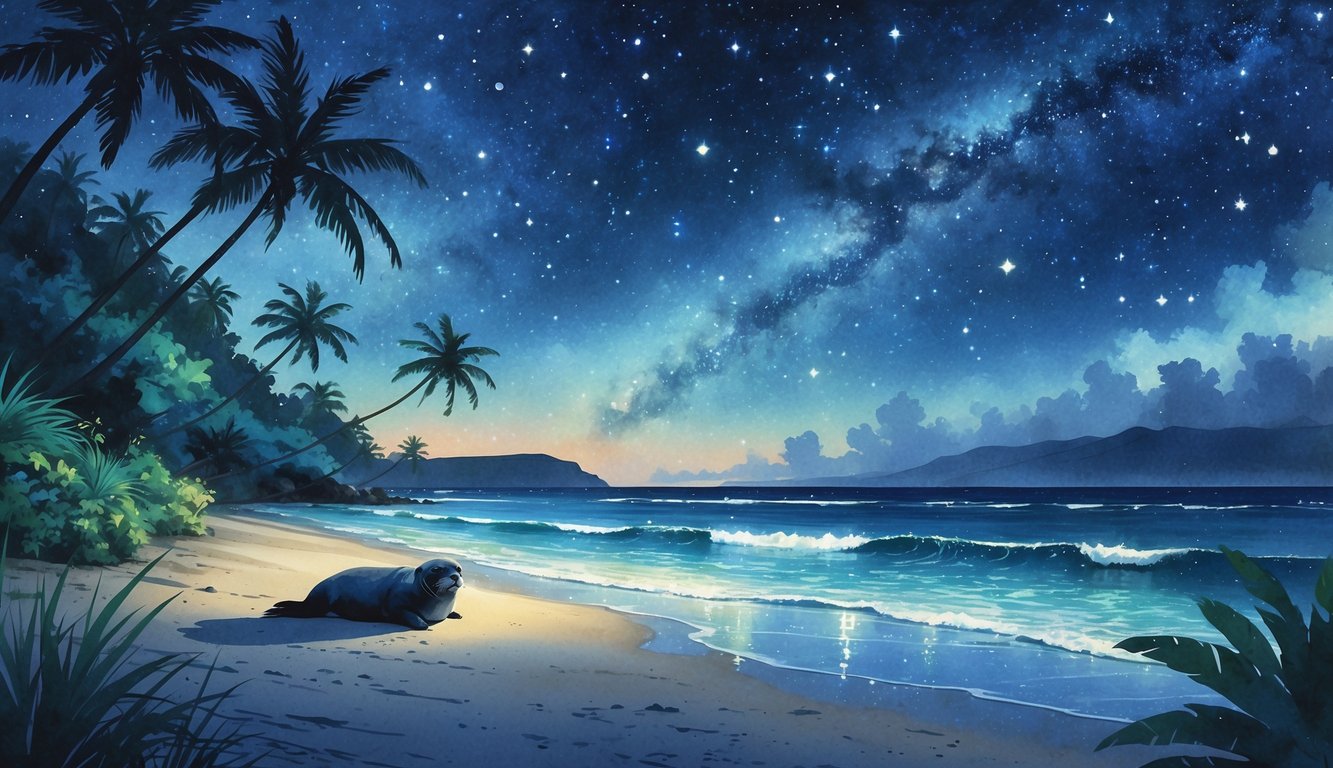
When I take photos in Hawaii at night, I find that wildlife and native plants add unique character to my images. Focusing on details in the landscape helps my photos stand out and captures Hawaii’s special nighttime environment.
Capturing Hawaiian Wildlife at Night
I often look for nocturnal animals like Hawaiian tree snails, moths, and birds such as the Hawaiian owl (pueo). Many of these creatures are more active after dark, making night a great time to spot them.
Tips for photographing wildlife at night:
- I move slowly and watch for quiet rustling or glowing eyes.
- I use a red flashlight or a diffuser for my camera flash to avoid startling animals.
I try to learn about each species’ habits, favorite spots, and active times before heading out. Knowing when owls hunt or where snails hide at night helps me get better shots.
For more advice, I read guides on night wildlife photography techniques so I don’t miss important moments.
Photographing Native Plants
Hawaii’s native plants, like tree ferns, hibiscus, and ʻōhiʻa lehua, look magical under moonlight or with soft lighting. I use a tripod to keep my camera steady since the light is low.
Sometimes I use a small LED light to highlight a flower or leaf. This helps me capture details and natural colors even when it’s dark.
I look for dew or rain on leaves, which can reflect starlight or city lights and add a sparkle to my photos. I avoid picking or disturbing plants so they stay natural for everyone.
Careful planning and respect for nature help me get better pictures without causing harm.
Best Practices for Nighttime Landscape Shots
When I photograph landscapes at night, I always plan ahead. I check the moon cycle first, since a full moon lights up the scenery but a new moon makes stars brighter.
I bring a sturdy tripod and use longer shutter speeds to let in more light. This helps me capture volcano silhouettes, ocean shorelines, or misty rainforests.
Here’s a quick checklist I use:
| Must-Have Gear | Tips |
|---|---|
| Tripod | Use long exposures |
| Remote Shutter | Reduce camera shake |
| Headlamp | See where I’m walking |
For more landscape tips, I follow advice on night landscape photography.
Tips for Sharing Your Night Photography from Hawaii
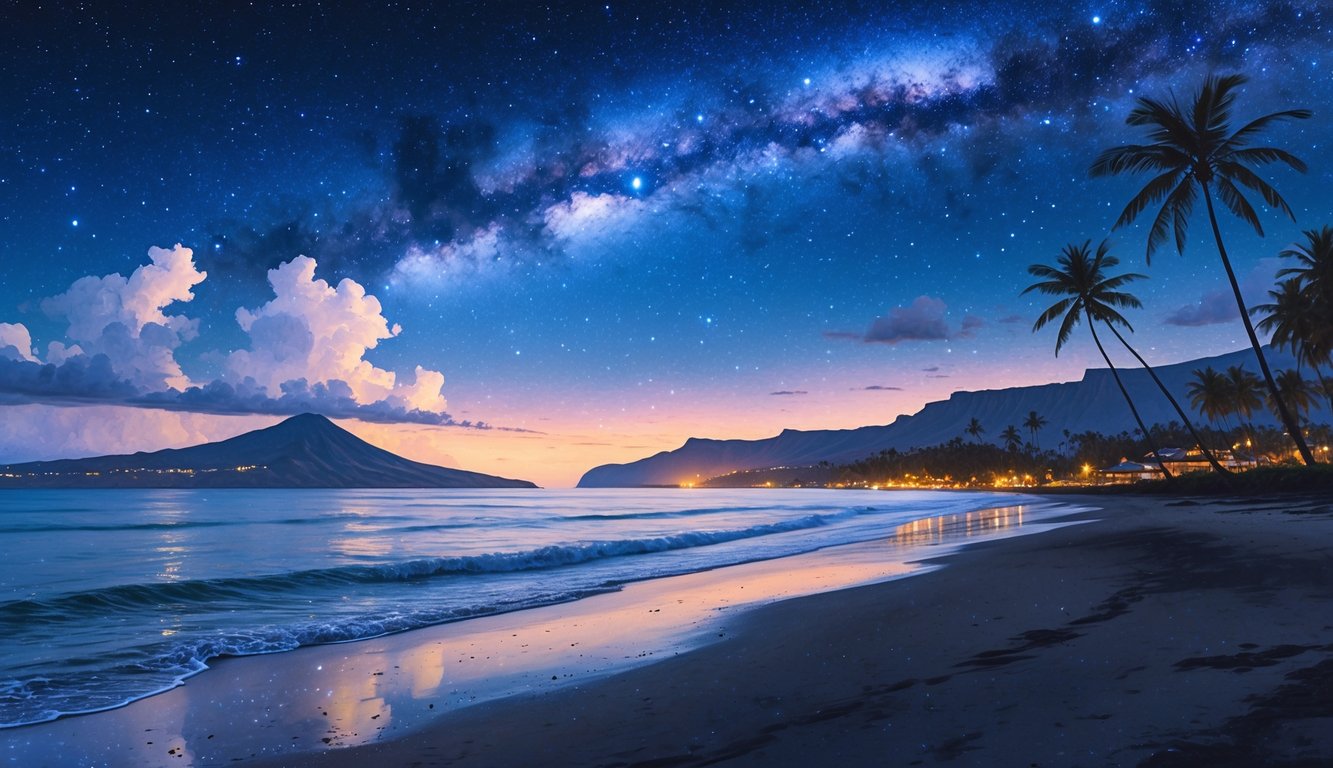
When I return from an evening shoot at one of Hawaii’s best beaches, I want my work to stand out online. Great editing, smart sharing, and building a unique portfolio help my night photos get noticed.
Editing for Social Media
My first step is to choose my best shots. I use apps like Lightroom or Snapseed to adjust brightness, contrast, and sharpness.
I make the stars and Milky Way stand out, but I avoid over-editing. Too much editing can ruin the natural beauty of night skies.
I crop my photos for each platform. Instagram works best with square (1:1) and vertical (4:5) images, while Facebook supports wider formats.
Here’s a quick guide I use:
| Platform | Best Aspect Ratio |
|---|---|
| 1:1 or 4:5 | |
| 16:9 or 4:5 | |
| Twitter/X | 16:9 |
I double-check color balance and remove distracting tints. When I shoot at top night photography spots in Hawaii, I tag the location for extra impact.
Instagram Inspiration
When I post to Instagram, I focus on storytelling. I write short captions about the location, the moment, and what I saw as I photographed the night sky.
Sharing behind-the-scenes details, like which beaches or mountain summits I visited, gets people more interested. I use hashtags for reach and discovery.
Here’s my usual set:
- #HawaiiNightPhotography
- #HawaiiStars
- #MilkyWayHawaii
- #BestBeachesInHawaii
- #[ExactLocation] (for example, #Haleakala)
Following other Hawaii-based photographers and engaging with their posts inspires me. Sometimes, I share their work in my Stories with credit, which builds new connections and ideas for future shoots.
Building Your Hawaii Night Photography Portfolio
To build my portfolio, I collect my favorite night photos in albums on my phone and computer. I use folders labeled by location, such as “Mauna Kea” or “Makapu’u Point,” so I can find my best shots quickly.
I create an online gallery using free sites like Adobe Portfolio or Instagram. I label each picture with camera settings, the exact photography spot, and any weather details that made the photo special.
Whenever I do photoshoots at the best beaches in Hawaii, I include a mix of wide shots and close-ups. If someone wants to hire me for prints or collaborations, my portfolio shows my skill in capturing Hawaii’s night sky.
Planning Your Night Photography Adventure
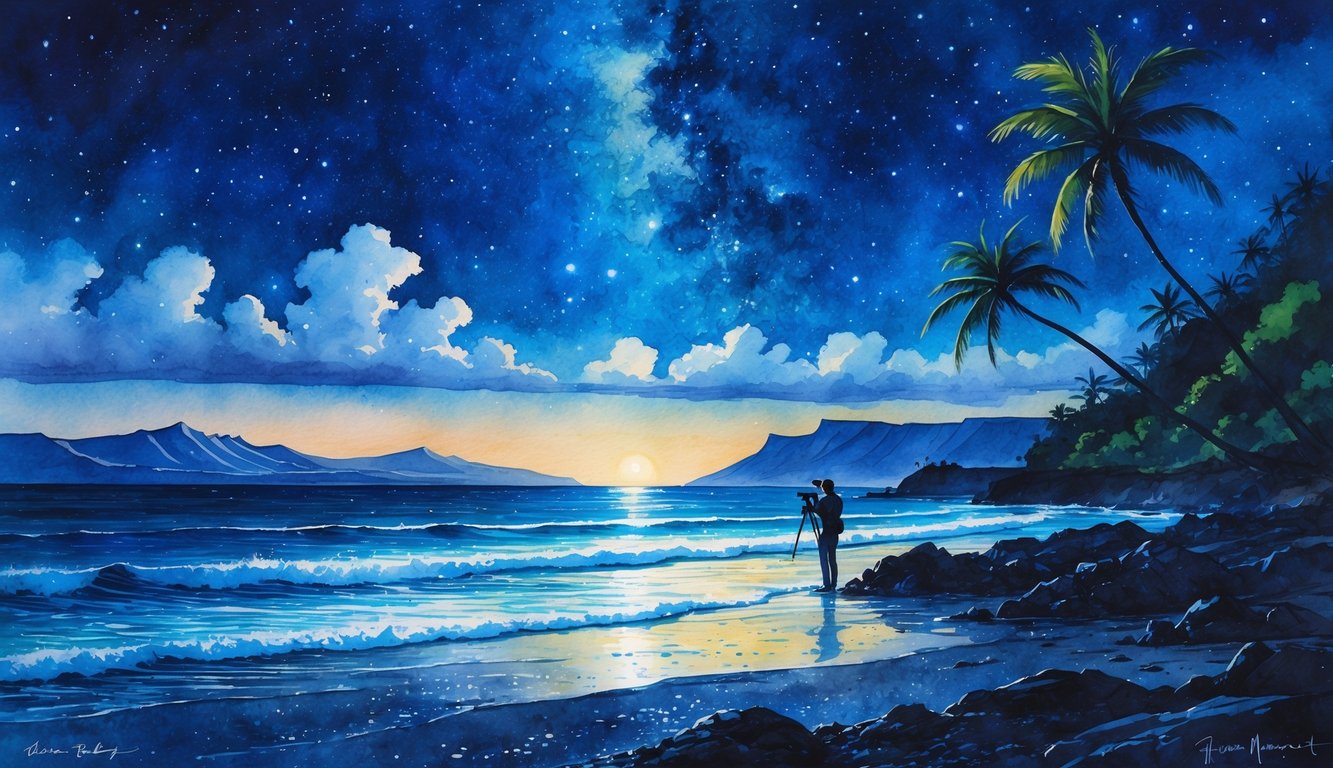
Before I head out to capture Hawaii’s night sky, I always prepare. Night photography in Hawaii means thinking about the weather, the land’s shape, and how hiking fits into the trip.
Checking Weather and Conditions
For night photography, I look for clear skies. I always check the weather forecast before leaving.
Clouds and rain can ruin star photos, so I watch for a high chance of clear skies and low humidity. Wind speed matters too, since strong winds make it hard to keep my camera still, even on a tripod.
I avoid nights with a bright moon because moonlight can hide most stars. Light pollution is often worse near cities and resorts, so I use online maps to find darker areas away from towns.
When in doubt, I pick higher elevations for cleaner, clearer air.
Quick Checklist:
- Clear skies forecast
- Low humidity
- Little or no moonlight
- Low wind speed
Navigating Elevation and Terrain
Many of Hawaii’s best night photography spots sit at high elevation. Mauna Kea attracts stargazers because of its clear skies.
Higher spots have less air pollution. This helps me capture sharper photos.
Steep trails and rough terrain appear often. I wear sturdy shoes and bring layers of clothes.
Temperatures drop quickly as I climb. I watch for loose rocks or slippery ground and stay alert for safety in the dark.
I always pack a headlamp with a red light option. Bright white lights can ruin my night vision and disturb others.
The red light helps my eyes adjust so I can see faint stars.
What I Pack for Elevation:
- Warm clothes
- Boots or sturdy shoes
- Water and snacks
- Headlamp (red light setting)
Combining Hiking with Night Photography
Some of my favorite spots require a short hike, sometimes over uneven ground. I always plan my route early and start hiking before sunset to get familiar with the area while it’s still light.
I use maps and GPS on my phone to guide me along the trail. I also tell a friend where I’m going and when I plan to return.
In Hawaii, I enjoy night photography hikes on trails at Haleakalā National Park and near volcanoes or lava fields.
When I hike after dark, I pack light but always bring extra camera batteries and a backup flashlight. I stop along the way to photograph silhouettes of trees or lava rocks, which make my star photos more interesting.
Hiking Tips for Night Photography:
- Hike out before sunset
- Mark the trail on GPS
- Bring extra camera batteries
- Snap foregrounds like lava rocks or palm trees
If you want to learn about some of the top locations, check out the guide to the best spots for night photography in Hawaii.


