When I think about Hawaiian printmaking, I picture bold patterns and rich history coming together. Hawaiian printmaking started in 1822 when the first printing press arrived, and people printed the Hawaiian language for the first time.
This event helped the islands shift from an oral tradition to one with books, newspapers, and printed art. People could now share these materials across Hawaii.
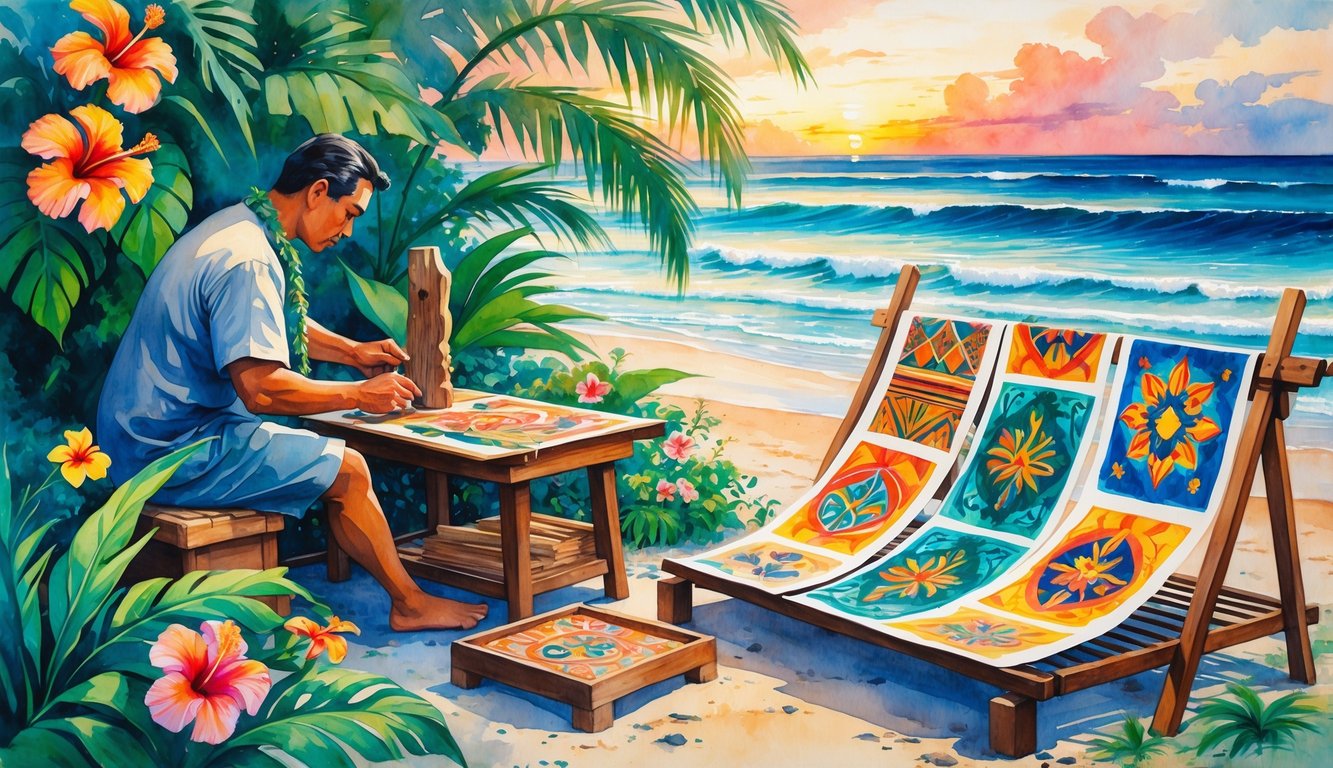
As I learned more, I saw how these prints became an important part of daily life and culture. Today, traditional designs appear in clothes, art, and public spaces.
The stories, patterns, and colors connect me to the past. They show how Hawaiian creativity continues to grow.
If you want to know more about key moments and the people behind Hawaii’s printing history, check the Historic Hawaii Foundation’s overview or the Bishop Museum’s discussion.
Origins of Hawaiian Printmaking
Hawaiian printmaking began after foreign visitors brought written language and printing presses to the islands. Early printmaking closely connected to educational, religious, and cultural change.
Early Influences and Techniques
Before Western printing arrived, Hawaiians did not have a written alphabet. They shared stories, history, and genealogy through oral traditions like oli (chants) and mele (songs).
Missionaries came to Hawaiʻi in the early 1800s and worked with local leaders to create an alphabet for the Hawaiian language. This new alphabet used only a few letters, making it easy to learn and use.
At first, people recorded Hawaiian language by hand. Missionaries and students made simple books and spelling guides.
Traditional ink and paper arrived with outside groups. This change started printed material in the islands and changed how Hawaiians kept and shared knowledge.
Arrival of Printing in the Islands
The first printing press arrived in Hawaiʻi in 1820 with the Hawaiian Mission. Missionaries saw the need for printed materials to teach and spread the new written language.
On January 7, 1822, people printed Hawaiian words for the first time. They created a simple spelling book for schools.
Printing made it possible to share religious texts, primers, and educational books quickly across the islands. This helped improve literacy and communication in Hawaiʻi.
By the mid-1800s, literacy rates rose, and newspapers and books in Hawaiian became common. Early printing in Hawaiʻi shaped the islands’ future and the way people shared information.
Print also helped preserve the Hawaiian language for future generations.
The Role of the Hawaiian Mission and Lahainaluna Seminary
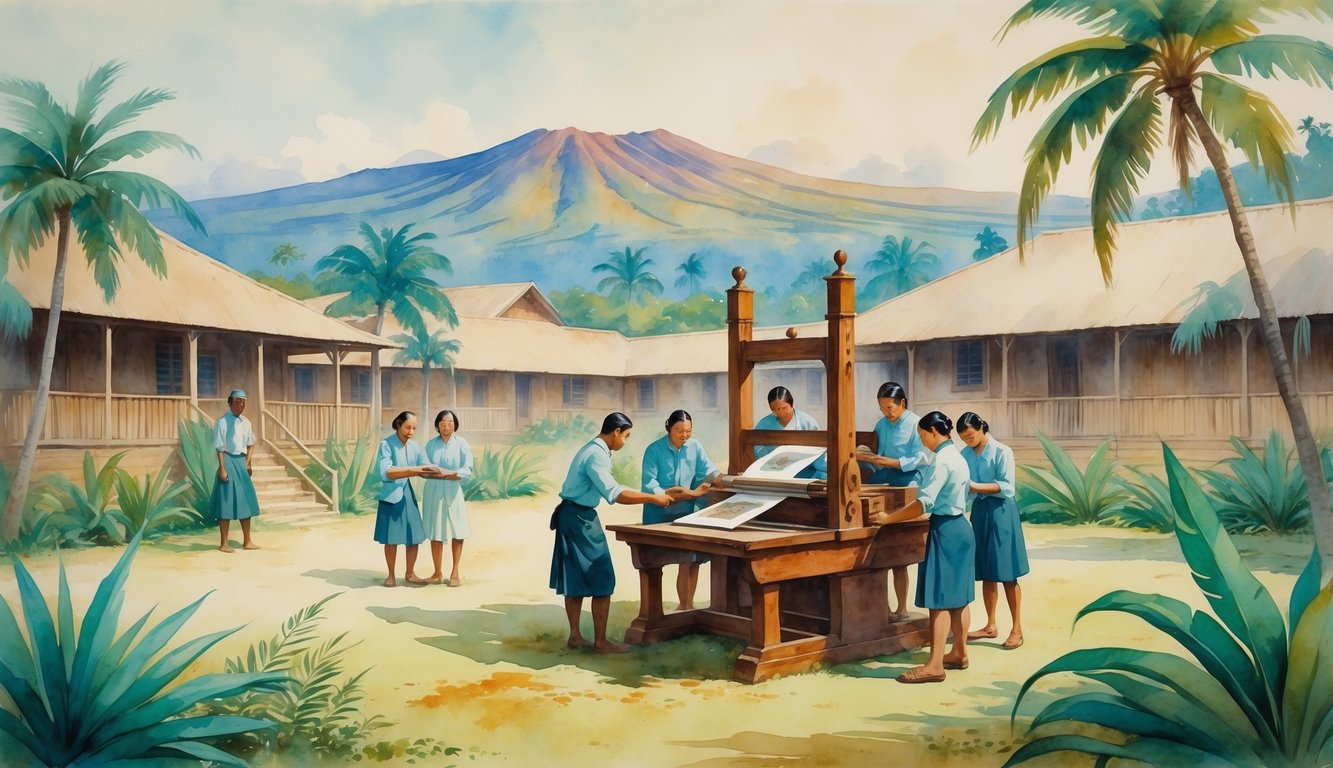
The Hawaiian Mission set up important sites for printing and learning. Lahainaluna Seminary became known for early Hawaiian publications, printing studios, and its work in engraving and publishing in Hawaiian.
Establishment of Lahainaluna Seminary
When I look at Hawaiian printmaking, Lahainaluna Seminary stands out as an important place. American missionaries founded it in 1831 to educate young Hawaiian men who showed promise and piety.
At first, the seminary trained future leaders and teachers for the Hawaiian community. Over time, Lahainaluna became a center for cultural and language preservation.
Students helped write down Hawaiian history, customs, and language. They worked with missionaries to create textbooks, dictionaries, and bibles in Hawaiian.
Many future Hawaiian scholars came from this school. Today, Lahainaluna is the oldest high school west of the Rockies and holds a special place in Hawaiian educational history.
For more, see this article about the history of Lahainaluna and its legacy.
Development of Printing Studios
The printing press arrived at Lahainaluna soon after the seminary opened. The seminary received its own printing studio, called Hale Pa‘i, which became well known across the islands.
In 1834, the studio published Ka Lama Hawai‘i, Hawaii’s first newspaper, using a Ramage press from Honolulu.
Missionaries and students printed large amounts of material, including textbooks, newspapers, and religious works. Reports say the print shops at Lahainaluna produced millions of pages for Hawaiian schools and readers.
Most of this work was in the Hawaiian language, which helped improve literacy. The printing studio served the whole community, not just the seminary.
Families and other schools relied on its printed materials. This made Hale Pa‘i a central hub for information.
Details about the Hale Pa‘i Printing Press show how important it was to early Hawaiian printmaking.
Engraving and Publishing at Lahainaluna
Lahainaluna Seminary led the way in engraving in Hawaii. Students learned to carve images and text into plates, which they used to make prints and illustrations.
This made it possible to publish books with pictures, maps, and other graphics. One well-known project was the Mo‘olelo Hawai‘i (Hawaiian History), written by Native Hawaiian scholar David Malo.
The seminary also published hymnals and dictionaries, some with beautiful engravings. These works are among the earliest examples of Hawaiian print culture.
They combined Western technology with local traditions. Lahainaluna’s students and teachers continue to inspire others.
Events like “Engraved at Lahainaluna” celebrate these early achievements. You can read more at Lahainaluna Printing-Engraving.
19th Century Advances in Hawaiian Printmaking
During the 1800s, Hawaiian printmaking improved in skill and importance. People used it to share news, record history, and show art in new ways.
Copperplate Engraving and Mapmaking
Copperplate engraving in Hawaii during the 19th century stands out as an important technique. Artists used copper plates to make detailed prints and images.
People at Lahainaluna Seminary led this art form. Students learned engraving and printing, producing some of the first images made by Native Hawaiians.
Mapmaking became a major use for copperplate engraving. Detailed maps helped travelers and showed landmarks across the Hawaiian Islands.
These early maps recorded important locations and routes before photography was common. The images and charts from Lahainaluna remain a vital record of this era.
You can learn more about history of printmaking by Hawaiians.
Portraiture and Art Prints
Portraits and art prints became highlights of this period in Hawaii. Artists worked to show the faces and lives of Native Hawaiians, missionaries, and scenes from daily life.
These images helped people in Hawaii and abroad understand each other. Many prints from this time show careful attention to detail.
Printmaking allowed people to share cultural stories and customs through art. The prints and engravings from this period give us a window into life in 19th century Hawaii.
The Emergence of Hawaiian Art and Culture Through Print
Printmaking in Hawaii shaped local art and culture in many ways. It brought people together, spread new ideas, and helped preserve stories and language.
Community Engagement with Print Media
When printmaking arrived in Hawaii, it became a tool for the community. It allowed artists and families to express themselves.
Local artists created images of landscapes, plants, and daily life in Hawaii. Newspapers and prints helped news and stories reach more people.
People who rarely got their voices heard could now share their thoughts and art. Museums and organizations like the Bishop Museum help keep traditional prints safe and teach about their history.
Art shows, workshops, and school programs helped people understand printmaking. Workshops gave people a chance to try printmaking themselves.
Printmaking brought different people together and let everyone celebrate Hawaiian culture side by side.
Impact on Hawaiian Art and Language
Printmaking played a key role in supporting Hawaiian art and language. Artists printed images of local legends and important events, keeping traditions alive.
These prints helped newcomers and island-born people connect with old stories and beliefs. Printing also helped teach and write the Hawaiian language.
Books and newspapers in Hawaiian began to appear. Print materials gave students and families a chance to read and write in their own language.
Jean Charlot and other artists used printmaking to honor Hawaiian culture, myths, and history. By making Hawaiian stories and language visible in prints, artists and teachers inspired more people to learn about their roots.
Key Figures in Hawaiian Printmaking

Printmaking in Hawaiʻi grew with the help of skilled historians and key media outlets. Some individuals documented early works, and newspapers helped spread the cultural impact of printed materials across the islands.
Contributions of David W. Forbes
I often come across the name David W. Forbes when I study Hawaiian printmaking history. He devoted much of his life to cataloging and publishing detailed records on early Hawaiian prints, books, and other printed works.
Many people respect Forbes for the accuracy and depth of his research. He wrote several well-known reference books that collectors and libraries still use.
These publications help people today find authentic early Hawaiian imprints. When I want to look up information about rare Hawaiian books, his work is usually at the top of my list.
Forbes created lasting records of items that might have disappeared. He paid close attention to small details, like publication dates and publisher names.
This careful work makes it easier to piece together the basics of printmaking history on the islands.
Influence of Honolulu Star-Bulletin
The Honolulu Star-Bulletin played a major part in spreading print culture in Hawaiʻi. As one of the oldest daily newspapers in the state, it started publishing in the late 19th century.
The paper delivered news to homes and businesses for over a century. It covered everything from daily events to large historical moments.
The Star-Bulletin shaped public opinion and kept residents informed. It printed stories, advertisements, and local art, which all helped nurture a strong sense of Hawaiian identity.
The newspaper embraced new printing methods and technology over the years. Its wide circulation let more people access information quickly and supported literacy.
The Star-Bulletin connected various communities throughout Hawaiʻi.
Contemporary Hawaiian Printmaking Scene
Today, Hawaiian printmaking blends tradition with new ideas. This makes art more accessible and exciting for everyone.
In Honolulu and Maui, print artists work in community studios. These studios offer classes, group exhibits, and strong support.
Honolulu Printmakers and Modern Studios
The Honolulu Printmakers group plays a big role in local printmaking. Founded in 1928, they support both new and experienced artists with workshops and annual exhibitions.
Their main studio in Honolulu gives access to tools like etching presses and screens. Many modern studios in Honolulu focus on teaching.
I’ve seen classes on woodblock printing, lithography, and digital methods. These studios encourage people to try new techniques or mix Hawaiian symbols with personal stories.
Community shows connect artists and the public. They help me understand how printmaking reflects life in the islands.
Many artists work together, share techniques, and display art that explores Hawaiian culture and land. You can read more about the Honolulu art community and studios at Art in Hawaiʻi.
Regional Centers: Maui’s Artistic Community
In Maui, the printmaking scene feels close-knit and hands-on. Small studios there often host workshops so I can learn from artists in person.
Maui’s community centers also offer affordable printmaking classes several times a year. Local artists in Maui focus on island landscapes, native plants, and wildlife.
Their art often shows a strong connection to nature and community life. Galleries in Lahaina and Wailuku display prints that blend traditional designs with new methods.
I enjoy the open studio events where artists invite the public to watch their process. This makes printmaking feel like a true part of daily life in Maui and helps celebrate local talent.
For a glimpse of Maui’s creative energy, I often check sites with Hawaii contemporary art.
Exhibitions and Legacy of Hawaiian Printmaking
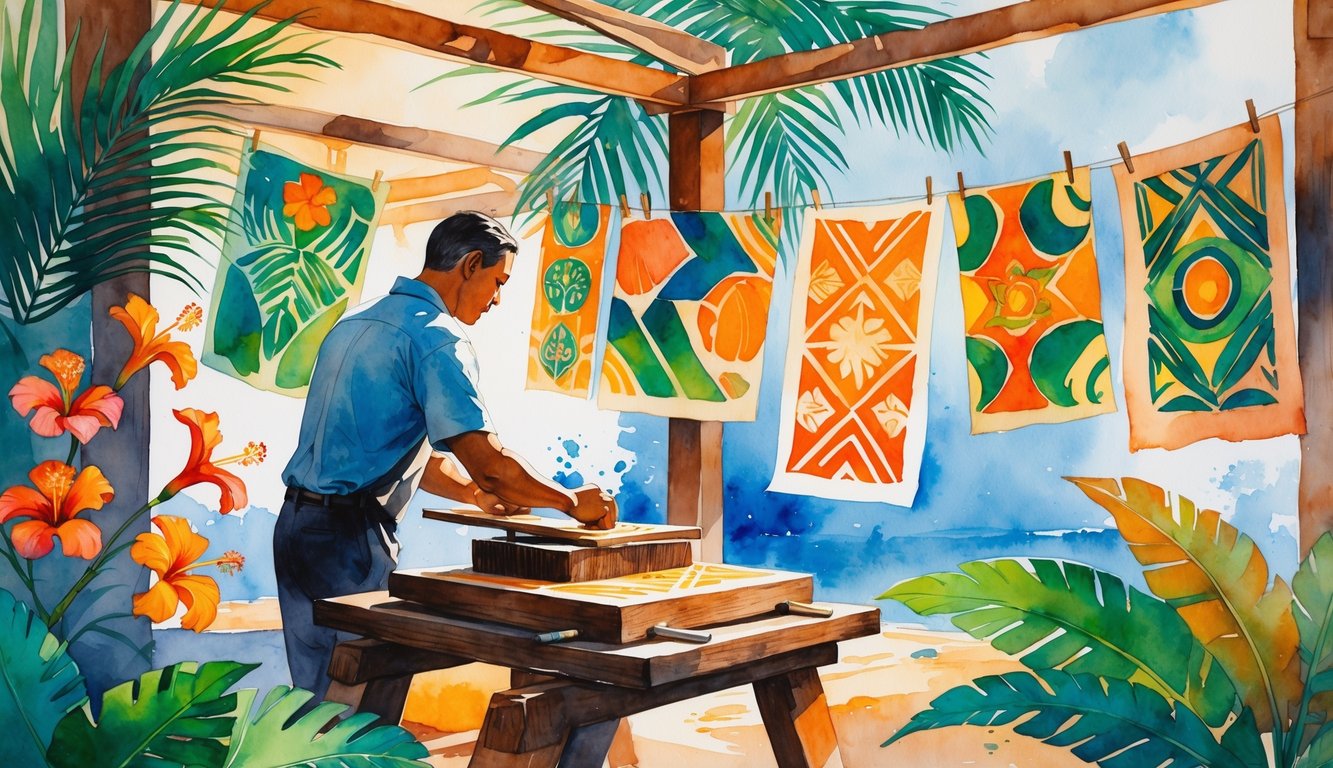
Vibrant exhibitions and careful preservation projects keep Hawaiian printmaking alive. Many unique art prints are on display as people continue to study and protect important works.
Major Exhibitions and Collections
I often look forward to the annual Honolulu Printmakers Exhibition. This juried event highlights a wide range of printmaking techniques and brings together both new and established artists.
The nonprofit Honolulu Printmakers hosts the show, which started in 1928 and remains a celebrated tradition. Another key exhibition is the Pacific States Biennial North American Print Exhibition at the University of Hawaiʻi at Hilo.
This event is open to artists from all over North America. It helps connect the Hawaiian art community with the wider region.
Many local museums and galleries collect and display historic prints. This makes it easier for the public to enjoy and learn from these works.
Preservation and Study of Historical Prints
Preserving the history of Hawaiian printmaking requires both skill and care. Institutions and passionate collectors focus on protecting early prints, some of which date back to the early 1800s when printing first arrived in Hawaiʻi.
The Hawaiian language was once mainly spoken rather than written. Early printed materials, like language primers and hymnals, helped record Hawaiʻi’s stories and culture.
Historians and students can now study the evolution of printmaking in the islands thanks to efforts to document and digitize these prints. Archival projects and educational outreach help keep this past alive for future generations.