
When I look at Hawaiian sculpture, I see much more than art; I see stories carved in wood and stone, passed down through many generations.
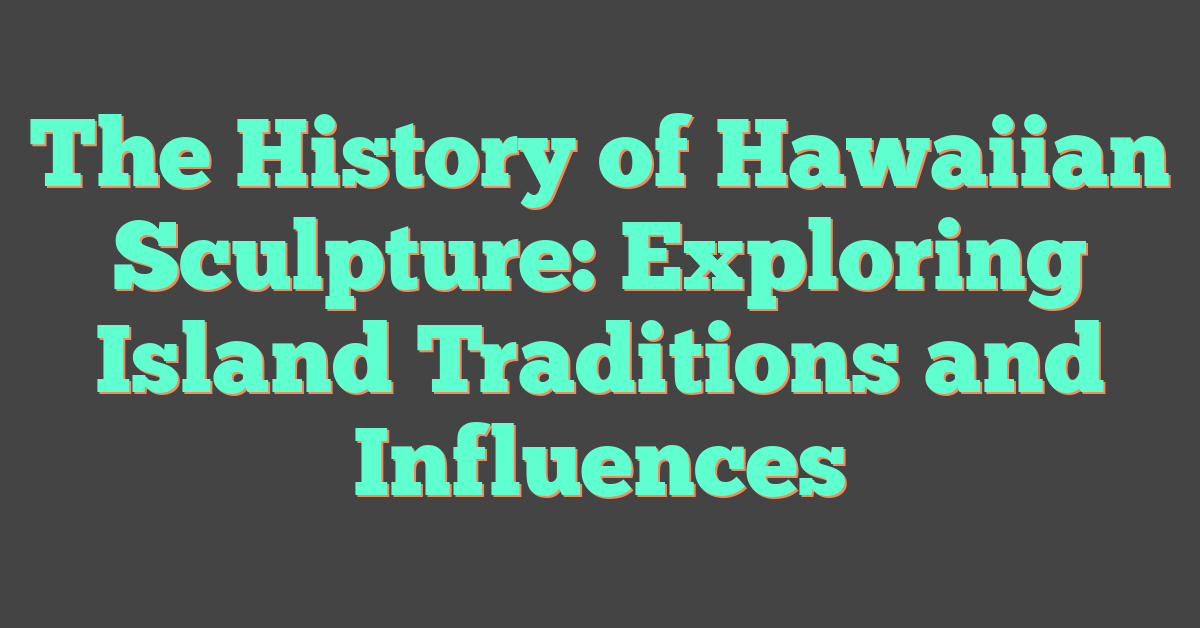
Deep beliefs, skilled hands, and the unique history of the islands shape Hawaiian sculpture.
From symbolic statues called ki‘i that represent gods and honor ancestors, to beautiful wooden carvings used in daily island life, every piece connects past and present.
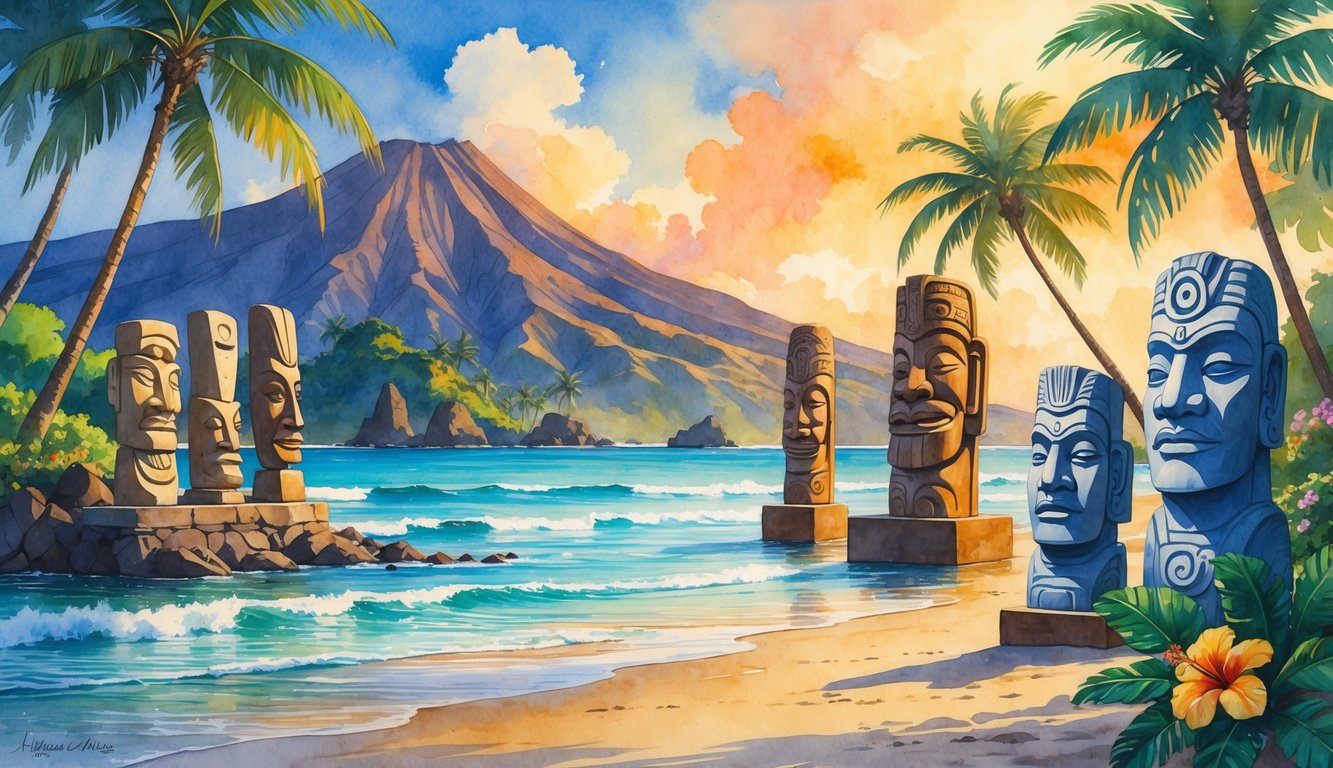
Hawaiian sculpture tells us about ancient traditions and community life.
Artists created shapes and figures with strong meaning, making their carvings both beautiful and sacred.
Special carvers made some pieces, adding mystery and respect to these works.
As I’ve learned about these carvings, I discovered their uniqueness comes from Hawaii’s isolation and rich blend of culture and spirituality.
Exploring this history shows me how each sculpture is a piece of living heritage.
If you want to dive deeper, you can read more about Hawaiian sculpture and its roots in tradition at the Honolulu Museum of Art and Britannica’s section on Oceanic art and architecture.
Origins of Hawaiian Sculpture
Hawaiian sculpture began long before Hawaii’s first contact with outsiders.
Ancestry, daily life, spiritual beliefs, and the environment all influenced the roots of this art form.
Ancestral Roots and Polynesian Culture
The first Polynesian settlers arrived by canoe and brought styles and customs of Oceanic art from other Pacific islands.
Early Hawaiians adapted traditional practices and designs to fit the unique plants, animals, and climate of the Hawaiian Islands.
People crafted artwork that reflected both their heritage and their changing world.
Sculptures often showed links to Polynesian gods and ancient legends, connecting people to their past and ancestors.
Hawaii’s isolation led the style to evolve over time.
Distinct Hawaiian forms developed, but deep similarities remained with other Polynesian cultures, especially in honoring ancestry and nature.
Many pieces held cultural value in Hawaiian life, marking important places or honoring important people in the community.
Early Materials and Techniques
Artists in Hawaii used what they found in their environment.
Wood from native trees such as koa, ‘ohi’a, and breadfruit was popular for carving because of its strength and appearance.
People also worked with basalt, coral, and bone, depending on the sculpture’s purpose.
Common tools and materials:
- Stone adzes
- Shark teeth
- Bones
- Plant fibers
Artists followed traditional methods passed down from generation to generation.
They worked slowly and with patience, as each chisel or cut required intention and care.
Designs were often simple but meaningful, letting the features of the wood or stone stand out.
These traditional practices made every piece special to Hawaiian life and culture.
Symbolism and Spiritual Significance
Sculpture in Hawaii was more than decoration.
These works held deep spiritual meaning.
Many carvings represented gods, known as akua or ki’i, and people placed them in temples called heiau.
Each figure held mana, or spiritual power, which protected and guided the people.
Sculptures of gods like Kū, Kāne, Lono, and Kanaloa were the most important.
They showed the connection between people and their ancestry, linking daily life and the spiritual world.
Priests or chiefs could use certain images and symbols, showing a close tie to social order.
Carvers carefully chose special plants and stones to give these pieces even more power.
Everything from the carving process to the final placement followed beliefs about the sacred in nature and community.
For more information, you can read about Hawaiian Tiki statues and their Polynesian origins in this overview.
Traditional Forms and Materials
Hawaiian sculpture features a range of natural materials.
Each was chosen for a special reason.
I see the deep connection to nature and Hawaiian beliefs through these traditional art forms.
Wooden Carvings and Ki’i
Carving wood played a major role in Hawaiian sculpture.
Artisans used types of wood such as koa, milo, and ulu for their beauty and strength.
Ki’i are important wooden forms, carved as images or figures.
They often represent deities or important ancestors.
People placed these sculptures in heiau, or temples, where they played a key role in religious ceremonies.
Some ki’i look like tiki statues, with stylized faces and bodies.
Carving a ki’i required skill and spiritual focus.
Carvers often asked for spiritual permission before cutting a tree.
Details like facial features or poses showed each figure’s power or purpose.
Wooden carvings were not just art, but objects of protection and respect.
Learn more about Hawaiian wood carving traditions.
Stone and Shell Artifacts
Stone was another important material for Hawaiian sculpture.
Ancient Hawaiians shaped pahoa (daggers), adzes, and small idols from volcanic rock.
The hardness of basalt made carving detailed figures slow and difficult, but these objects could last for centuries.
Stone petroglyphs—carvings into rock surfaces—still appear on many islands.
They show people, animals, and symbols from daily life.
Many believe these carvings recorded important events or guided travelers.
Shells were also shaped into tools and jewelry.
Artists used small shell pieces decoratively on sculptures or as pendants.
Combining stone and shell sometimes gave special meaning, blending the land and the sea.
More about Hawaiian stone and shell artifacts.
Featherwork and Lei Niho Palaoa
Featherwork dazzled with bright colors and delicate skill.
Hawaiians used small, vibrant feathers from native birds, like the ‘i’iwi or ‘ō‘ō, to cover capes, helmets, and standards called kahili.
High-ranking chiefs and royalty wore these feathered items to show their status.
The lei niho palaoa is a striking necklace made from whale tooth and braided human hair.
Only chiefs could wear it.
The pendant often has a curved shape and hangs from thick, dark strands.
It symbolized both social rank and a spiritual connection.
Feather artists spent years gathering feathers and assembling each piece by hand.
Feathers, bone, and hair were all considered sacred.
Bark Cloth and Kapa Creations
Kapa, or bark cloth, was made by beating the inner bark of certain trees, such as wauke (paper mulberry), into sheets.
Artisans used wooden tools, called hohoa and iʻe kuku, to pound and smooth the bark.
After drying, they decorated kapa with natural dyes and geometric designs.
Tapa (another term for bark cloth in other Pacific cultures) could be used for clothing, bedding, or ceremonial displays.
The designs sometimes told stories or showed a person’s family background.
Kapa making mixed strength and beauty, turning plants into soft, patterned textiles.
Creating kapa required knowledge of trees, natural dyes, and skillful handwork.
You can read more on how bark cloth and kapa art is an essential part of Hawaiian culture.
Themes and Iconography in Hawaiian Sculpture

Hawaiian sculpture centers on deep spiritual beliefs and cultural traditions.
Many pieces highlight the connection between people, deities, and the natural world by using bold symbols and unique patterns.
Depiction of Hawaiian Deities
Hawaiian sculptures often represent important gods like Ku, Kane, and Lono.
Ku, the god of war, is usually shown with a strong, oversized head and flexed knees, symbolizing power and readiness for combat.
Kane, linked to creation and sunlight, often appears with open gestures that suggest life-giving energy.
Lono’s images include signs of peace and agriculture, such as rounded forms or objects related to fertility.
Sculptures of these deities played a role in rituals and were placed in sacred spaces.
Each deity figure tells a story about the people’s beliefs and hopes for protection or good harvests, as described by the Honolulu Museum of Art.
Human Figure Representation
The human figure stands out in Hawaiian sculpture.
Male forms are more common, but there are also sculptures of female figures, sometimes showing the important role of women in society.
The typical stance—legs bent, head lifted, and arms curved at the sides—represents strength, readiness, and the classic Polynesian “power posture.”
Muscular bodies, carved with bold lines, express the connection to warfare, dance, and athletic contests.
Some figures are asexual, showing only general human qualities.
These statues display cultural values like courage and community.
Their forms help me understand the importance of movement and ceremony in Hawaiian life, as explored in Hawaiian sculpture studies.
Symbolic Motifs and Intricate Patterns
Hawaiian sculptors filled their work with symbolism and detail.
I see geometric designs, repeated triangles, and curving shapes that can point to things like waves, fish, or the flow of life.
Feathers, bark cloth, and wood were common materials, and every line often has a meaning.
Patterns on a god’s helmet might stand for clouds or warrior’s tattoos.
Intricate carvings show respect for ancestors or signal a person’s rank in society.
These symbols keep cultural identity alive and pass on stories through generations, as mentioned in Oceanic art resources.
Tables or lists of recurring motifs help me see how these everyday symbols connect spiritual beliefs with daily life.
Cultural Role and Everyday Practices
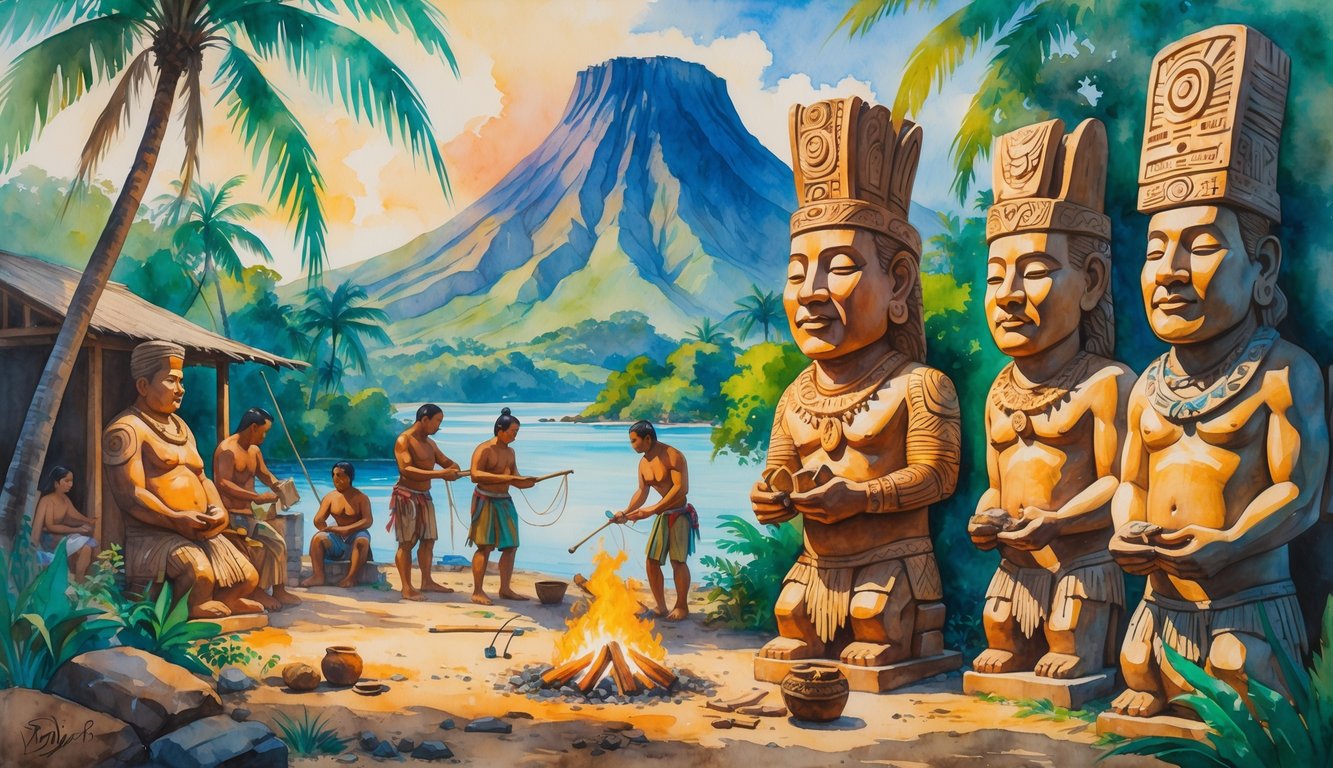
Hawaiian sculpture shapes how I see the islands’ spiritual significance and cultural heritage.
These art forms connect me to my ancestors, the land, and the daily traditions of Hawaiian life.
Ceremonial and Spiritual Uses
For me, Hawaiian sculptures made for ceremonies and spiritual practices are the most powerful. Tiki statues, for example, represent gods and protectors.
Carvers place these wooden forms at temples and sacred sites. The shapes and faces show protection, strength, or wisdom, depending on the figure.
Hawaiian sculptors use materials like koa wood and stone. They choose these materials carefully.
Artists often perform rituals before carving. They ask for permission from the land and their ancestors.
This practice shows deep respect for both the art and the spirits. In villages, sculptures help me remember important myths and legends.
They teach lessons about respect, honor, and ethics. During feasts or big gatherings, people set up sculptures as central pieces.
These sculptures are not just decorations. They play an important role in spiritual life and community events, reflecting the spiritual importance of Hawaiian art.
Connections to Hawaiian Life and Ancestry
Sculpture helps me feel close to my roots. Every carving and stone work connects me to those who lived on the Hawaiian Islands before me.
I often see sculptures that show everyday life, like fishing, farming, or canoe building. These artworks keep stories alive and help me understand where I come from.
Some sculptures are simple tools. Others are grand markers placed in special places.
Families sometimes pass down smaller carvings as heirlooms. Holding one in my hand reminds me how Hawaiian art shapes my sense of cultural identity.
Art like this also preserves ancient language and traditions. These sculptures continue to share the voices of the past and build unity across generations.
Sculpture in Dance and Tattooing
Hawaiian sculpture is part of many artistic expressions, not just statues or carvings. In hula dance, wooden instruments like pahu drums are carved by hand.
Artists decorate these instruments with traditional symbols. Playing them brings together music, movement, and art to celebrate the islands’ spiritual roots.
Tattooing, or kakau, also connects sculpture and art. Artists carve tools to apply traditional tattoos, adding cultural meaning to every mark.
The patterns often match designs found on ancient carvings and stones. Both dance and tattooing use art to express history and honor ancestors.
They help mark important moments in life. When I see these forms, I notice how sculpture, movement, and body art tell Hawaii’s story.
They keep the spirit and heritage of the Hawaiian sculptural tradition alive and visible.
Historical Influences and Transformations
Events that changed the islands forever have shaped Hawaiian sculpture. Moments like the arrival of Europeans and the rise of powerful Hawaiian leaders affected the materials and techniques artists used.
Impact of Captain James Cook and European Contact
When Captain James Cook sailed into the Pacific Ocean and landed in Hawaiʻi in 1778, life changed for Native Hawaiians. Europeans brought new tools and trade goods such as metal, beads, and cloth.
These items made carving and decorating sculptures easier. Some styles and ideas slowly mixed with European influence.
Artists began to reflect new materials and changing spiritual beliefs in religious carvings and god figures, like ki‘i. Many artists continued old customs but adapted them for a world where contact with foreigners had become common.
To learn more on this topic, I recommend visiting this article about European influences on Hawaiian art.
The Era of King Kamehameha I
Kamehameha I was a legendary king who unified the Hawaiian Islands during the late 1700s and early 1800s. During his reign, sculpture played a key role, especially in honoring chiefs, gods, and ancestors.
Carvers created sculptures of Kamehameha himself, as well as depictions of chiefs and warriors. Public works and temples featured stone and wood sculptures that celebrated Hawaiian power and tradition.
Kamehameha’s rule protected and encouraged the craft. The royal court supported important artists.
Statues of Kamehameha remain some of the best-known works of Hawaiian sculpture today, as described in the article on Hawaiian art movements.
Shifts in Materials and Techniques
After European contact and throughout the 19th century, Hawaiian artists began to use different materials. Before contact, most sculptures were carved from native wood, bone, or stone.
The introduction of iron tools and imported woods made it easier to carve fine details. Artists experimented with new dyes and paints brought by foreigners.
New techniques mixed with old ways, so the look and feel of Hawaiian sculpture started to shift. Although artists kept their own style and purpose, many pieces show a blend of native and outside influences.
A helpful overview of these changes in materials and techniques is available online.
Notable Hawaiian Sculptors and Artists
Hawaii’s art history includes many talented sculptors and artists. Each era brought new styles, from classic figures to modern expressions, and crafts that celebrate the islands’ heritage.
William H. Davenport and Madge Tennent
William H. Davenport was one of the earliest well-known sculptors in Hawaii. He often featured local people and scenes from island life in his work.
Davenport used a careful, realistic style that documented Hawaiian culture in his time. Madge Tennent, born in England, became known for painting and sculpting strong, graceful Hawaiian women.
Her bold colors and rounded forms make her work easy to recognize. Though Tennent is often called a painter, she also created murals and sculptural pieces.
Both Davenport and Tennent brought attention to Hawaiian art in private collections and museums. Their pieces show respect for local traditions and the beauty of the islands.
Contemporary Hawaiian Artists
Today, many Hawaiian sculptors explore new ideas while honoring the past. Artists such as Solomon Enos and Charlene Teters bring a fresh look to sculpture, often mixing traditional materials with modern concepts.
Some artists focus on Native Hawaiian themes, telling stories through wood, stone, and metal. These contemporary artists use their work to talk about identity, community, and history.
Some exhibitions bring together notable Native Hawaiian sculptors who use different materials but share a commitment to the culture of Hawaii. Their work appears in galleries, public spaces, and major museums.
Collectors and museums seek out these pieces for their artistic value and for what they say about living in Hawaii today.
Traditional Hawaiian Craftspeople
Traditional Hawaiian sculpture focused on tools, weapons, and everyday objects. Skilled craftspeople made wooden statues called ki‘i for religious ceremonies.
These figures carried special meanings and showed the community’s beliefs. Other crafts included feather work, kapa (bark cloth), and carved bowls.
Craftspeople learned their skills from family members and passed down styles for generations. Their work was both functional and beautiful, such as wooden vessels and feather capes seen in museum collections.
I see these traditional pieces as important foundations for today’s Hawaiian art. They remind me of the creativity and dedication found in every generation of Hawaiian artists.
Preservation and Legacy
Museums, artists, and cultural groups work together to protect Hawaiian sculptures and continue traditional Hawaiian art. Many organizations and individuals help preserve these works.
Museum Collections and Exhibitions
I often visit the Bishop Museum because it holds the largest collection of Native Hawaiian artifacts, including traditional sculptures made from wood, stone, and bone. Here, carved kiʻi (images) and other historic pieces help tell the story of old Hawaiʻi.
The museum uses special storage and climate controls to protect these important works from damage. The Honolulu Museum of Art also shows how Hawaiian sculpture fits within Pacific and worldwide art by featuring both classic and modern Hawaiian pieces.
Many private collectors have loaned rare objects to these exhibitions, making it possible for more people to see original carvings up close. Exhibition spaces often use labels, guided tours, and hands-on stations to help visitors understand the meaning behind each sculpture.
Seeing these artworks in person lets me appreciate their unique designs. I learn how they connect to legends and daily life in Hawaiʻi.
Revival and Continuation of Traditions
Many Hawaiian artists today work to revive and continue traditional arts. They study old techniques, like wood carving and the use of natural pigments, and share this knowledge in workshops and community programs.
I see these artists working side by side with elders, learning the stories and skills passed down through generations. Cultural organizations, such as the Office of Hawaiian Affairs, support these efforts by funding teaching programs and exhibitions.
These groups encourage the younger generation to take part and organize community events where new sculptures are created and displayed. Hawaiian sculpture appears on social media and in collaborative art shows, making it easier for people everywhere to learn about and appreciate native traditions.
Regional Variations Across the Hawaiian Islands
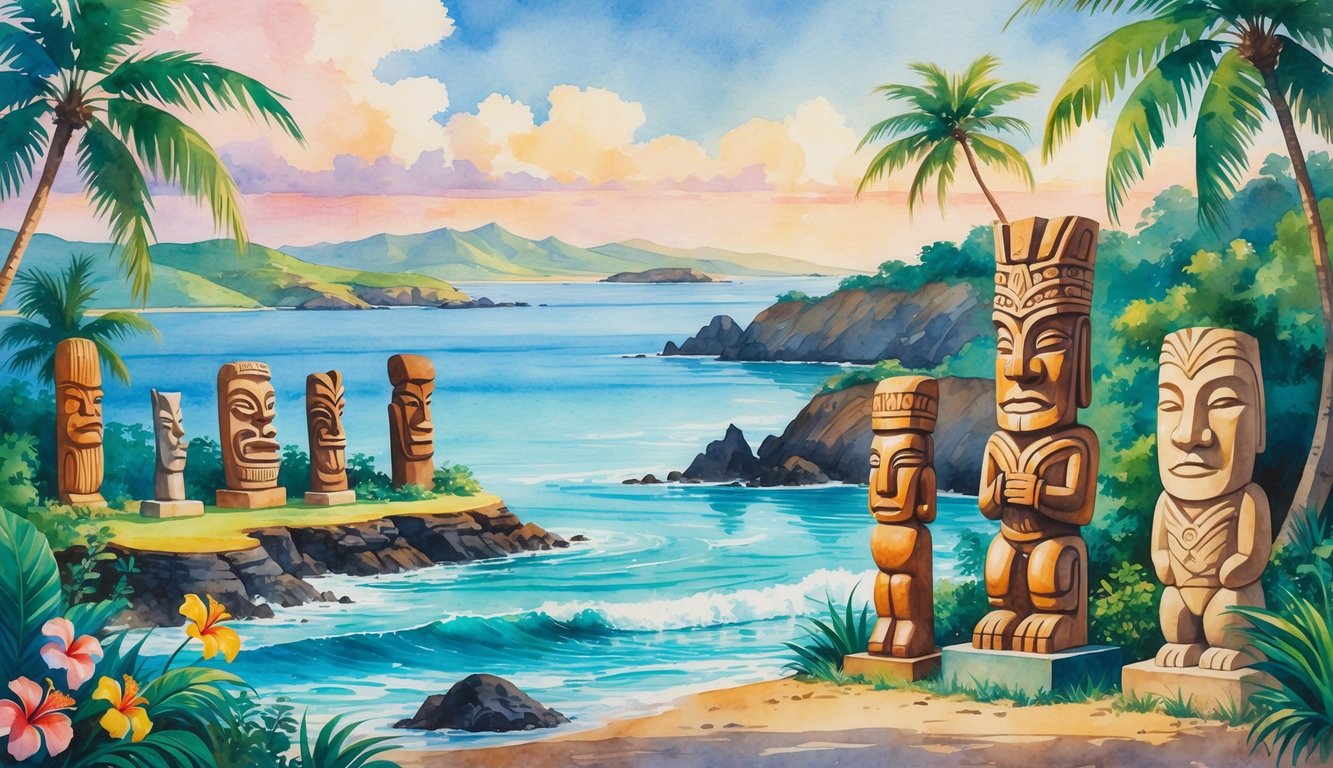
Sculpture in the Hawaiian Islands varies by region. Local materials and customs shape these differences.
Tiki art and religious carvings look different depending on which island they come from.
Big Island and Its Distinct Styles
On the Big Island, artists often use local hardwoods like koa and ‘ōhi‘a. The styles here can be bold, with large tiki figures that show strong facial features and deep carving.
Many sculptures from the Big Island focus on ancestral spirits and gods. Tiki statues, also called ki‘i, stand guard outside temples, or heiau.
These statues usually have a fierce look meant to protect and impress. The size of the Big Island allows for a wide range of styles.
Carvers in East Hawai‘i sometimes create taller and slimmer figures. Those in Kona may have more rounded and compact forms.
The Big Island’s unique lava landscape also influences the design of some works. Some sculptors use stone as well as wood, adding variety to their pieces.
More details about these traditions can be found in the history of Hawaiian sculptural sites.
Art of Other Hawaiian Islands
When I look at sculpture from Maui, O‘ahu, Kaua‘i, and the other islands, I notice that each island’s culture and resources shape its traditions. Maui artists often use darker woods and carve smaller tiki figures with delicate details.
On O‘ahu, many carvers drew inspiration from contact with visitors. They sometimes add new styles or try different decorative patterns.
Kaua‘i and Moloka‘i sculptors use local stones more often, especially for religious images. These islands feature regional symbols and motifs in their art.
For example, Kaua‘i figures sometimes have more pronounced eyes or angular bodies. Local materials and beliefs guide each island’s forms.
Artists create sculptures that show both shared history and the unique identity of each island’s people.
Related Hawaiian Arts and Their Influence
Many traditional Hawaiian arts connect closely with sculpture. Each art form adds its own voice to Hawaii’s cultural history.
Artists use unique materials and techniques. These arts reflect the islands’ values, beliefs, and environment.
Painting and Paintings
When I look at Hawaiian painting, I see both ancient and modern influences. Early paintings often used natural earth pigments and plant-based dyes.
Artists decorated kapa (bark cloth) and wood for ceremonies or storytelling. Paintings brought legends, gods, and daily life to the surface.
In recent years, local painters have used canvas, acrylics, and oils to celebrate Hawaii’s landscapes and history. You can find these works in museums and galleries across the islands.
Many contemporary paintings still draw on traditional stories. They use bright colors and scenes that reflect Hawaii’s natural beauty and traditions.
Weaving and Crafts
Weaving is one of the oldest Hawaiian art forms. Native Hawaiians use lauhala (pandanus leaves), coconut fiber, and grasses.
They create baskets, mats, hats, and more by weaving these materials with skill. Weavers pass down their techniques through generations.
Feather work is another respected craft. Warriors and chiefs wore feather cloaks and helmets, which showed status and used thousands of colorful feathers.
Today, artists continue to make feather lei and other items. These crafts link modern work to ancient customs.
Woven and feather creations appear in homes, ceremonies, and museums. They represent both function and artistry.
Petroglyphs and Carving Traditions
Petroglyphs, or stone carvings, are some of the oldest forms of Hawaiian art. I find these carvings across the islands, etched into lava rock with stone tools.
They show human figures, animals, and symbols from daily life and religion. Wood carving is another key tradition.
Hawaiians carved kiʻi (images of gods), canoe paddles, bowls, and weapons from native woods like koa or milo. These carvings played roles in ceremonies, storytelling, and daily life.
You’ll see these practices and objects in museums and sacred sites today. Carving traditions reflect both the practical and spiritual lives of Hawaiian people.
Whale Ivory Pendants and Jewelry
Chiefs once wore whale ivory pendants called lei niho palaoa. Artists carve these pendants from whale tooth and string them on braided hair or fiber.
Each pendant has a unique shape. Some are plain, while others are more ornate.
Hawaiian jewelry also features shells and bone. Later, metals became part of the tradition through trade.
Many pieces have symbolic meaning or show status. Artists today continue these jewelry traditions with both traditional and modern methods.
You can find whale ivory pendants and jewelry in galleries and at special events. Wearers connect to their heritage through these items.


