
Mauna Kea has some of the clearest night skies in the world because of its high elevation, dry air, and low light pollution.

Most people find the best stargazing at the Mauna Kea Visitor Information Station, which sits about halfway up the mountain at 9,200 feet.
From here, you can see thousands of stars, bright planets, and even the Milky Way without special equipment.
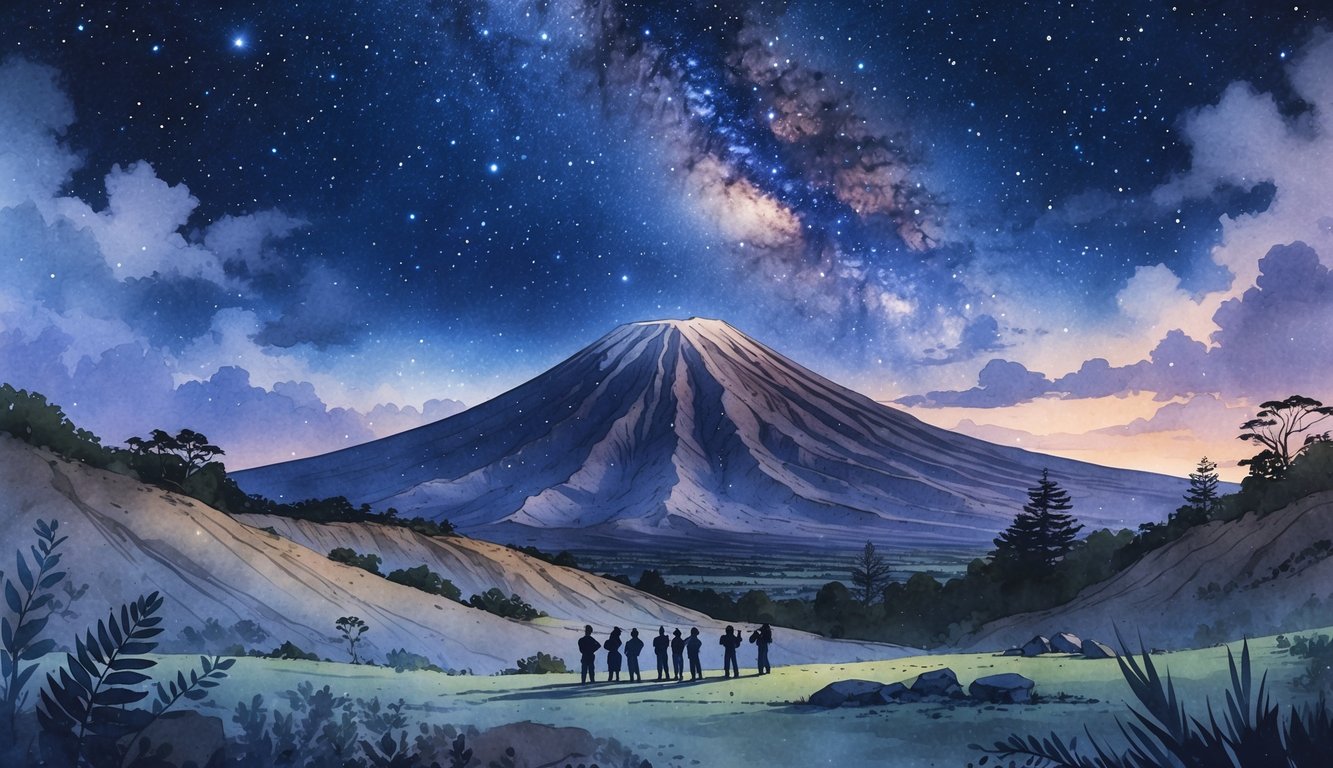
If you want to go higher, you can join a guided summit tour for a broader view.
At nearly 14,000 feet, the summit gives unmatched visibility but also brings cold temperatures, thin air, and strict access rules.
The Mauna Kea Visitor Information Station helps most people enjoy the night sky without the summit’s challenges.
You can choose between casual night visits or guided trips, so stargazing on Mauna Kea suits many interests and comfort levels.
Knowing where to go and how to prepare will help you have a safe and memorable experience.
Top Stargazing Locations on Mauna Kea
Clear skies, high elevation, and low light pollution make Mauna Kea one of Hawaii’s best places for night sky viewing.
You can pick from several spots that offer different experiences, from casual viewing to high-altitude observation.
Mauna Kea Visitor Information Station
The Mauna Kea Visitor Information Station (VIS) is at about 9,200 feet above sea level.
This spot is easier to reach than the summit and does not need a 4×4 vehicle.
In the evenings, staff and volunteers often set up telescopes for stargazing events.
These programs are free, but weather can affect what you see.
Temperatures drop quickly after sunset, so bring warm clothing.
The thinner air at this height can cause mild altitude effects, so take your time.
Parking is limited, so arrive early to get a spot.
You can find more details in this Mauna Kea stargazing guide.
Mauna Kea Summit
The Mauna Kea summit rises to nearly 14,000 feet, making it Hawaii’s highest point.
The altitude gives some of the clearest skies on Earth, which is why several Mauna Kea observatories are here.
You need a 4×4 vehicle to reach the summit, and drivers should be comfortable with steep, unpaved roads.
Many people join guided tours that handle transportation and safety.
At this elevation, oxygen levels are about 40% lower than at sea level.
People with certain health conditions should not go to the summit.
Sunset is a popular time to visit, followed by stargazing after dark.
Learn more from this summit stargazing overview.
Onizuka Center for International Astronomy
The Onizuka Center for International Astronomy is near the VIS and serves as a hub for visitor orientation and education.
It is named after astronaut Ellison S. Onizuka, a Hawaii native.
The center has exhibits about astronomy and the cultural importance of Mauna Kea.
You can also find information about the Mauna Kea observatories and their research.
Many visitors stop here to acclimate before going to the summit.
Taking a short break helps reduce the risk of altitude sickness.
Sometimes, the center offers educational talks and small telescope setups in the evening.
You can find program details on the Mauna Kea stargazing guide.
Saddle Road Viewing Areas
Saddle Road connects Hilo and Kona, passing between Mauna Kea and Mauna Loa.
Several pullouts and parking areas along this road give good night sky views without climbing high.
These spots are convenient if you want a shorter drive or want to avoid steep mountain roads.
They are also good for quick stops to photograph the Milky Way.
Light pollution is low in many places, but headlights from passing cars can briefly affect your night vision.
Some people combine Saddle Road viewing with a visit to the Mauna Kea Visitor Center earlier in the evening.
This DIY stargazing guide offers more tips on safe and accessible locations.
Planning Your Stargazing Experience
Clear skies, low light, and the right gear can turn a good night on Mauna Kea into a great one.
If you prepare for timing, conditions, and equipment, you will have a better chance of seeing faint objects like galaxies and nebulae.
Best Time to Stargaze
Mauna Kea usually has the clearest skies between April and October, when there is less rain and humidity.
These months often bring stable weather conditions and fewer clouds.
For the darkest skies, visit during the new moon phase.
With less moonlight, the Milky Way, constellations, and distant galaxies are easier to see.
Stargazing is best after astronomical twilight, when the Sun is at least 18° below the horizon.
This lets the night sky reach its darkest, making faint objects easier to spot.
Some people arrive before sunset to watch the light fade and adjust their eyes to the dark.
This also gives time to set up telescopes or tripods for astrophotography without rushing.
Weather and Moon Phase Considerations
Mauna Kea’s high elevation means it can get below freezing at night, even in summer.
Check the forecast for wind, clouds, and humidity before heading up.
Clouds can block stars and planets, so look for clear-sky forecasts.
Websites and apps for astronomy weather help predict visibility.
The moon phase affects what you can see.
A full moon washes out faint stars and nebulae, while a new moon gives the darkest sky.
Try to plan your trip around the new moon for the best stargazing, as suggested in this Mauna Kea stargazing guide.
Even with good conditions, thin clouds or sudden weather changes can happen.
A flexible schedule helps avoid disappointment.
What to Bring for Stargazing
Warm clothing is a must because it gets cold at high altitude.
Wear layers, gloves, and hats to stay comfortable during long observation periods.
A tripod helps you take steady astrophotography shots, especially for the Milky Way or long exposures.
If you have a telescope, make sure it’s portable and easy to set up.
Other useful items include:
- Red-light flashlight (to preserve night vision)
- Binoculars for wide views of star clusters
- Camera with manual settings for astrophotography
- Snacks and water for longer stays
Many visitors bring printed star maps or astronomy apps to help identify what they see.
For a comfortable outing, the Mauna Kea Visitor Information Station is a good starting point before heading higher.
Guided Tours vs. DIY Stargazing
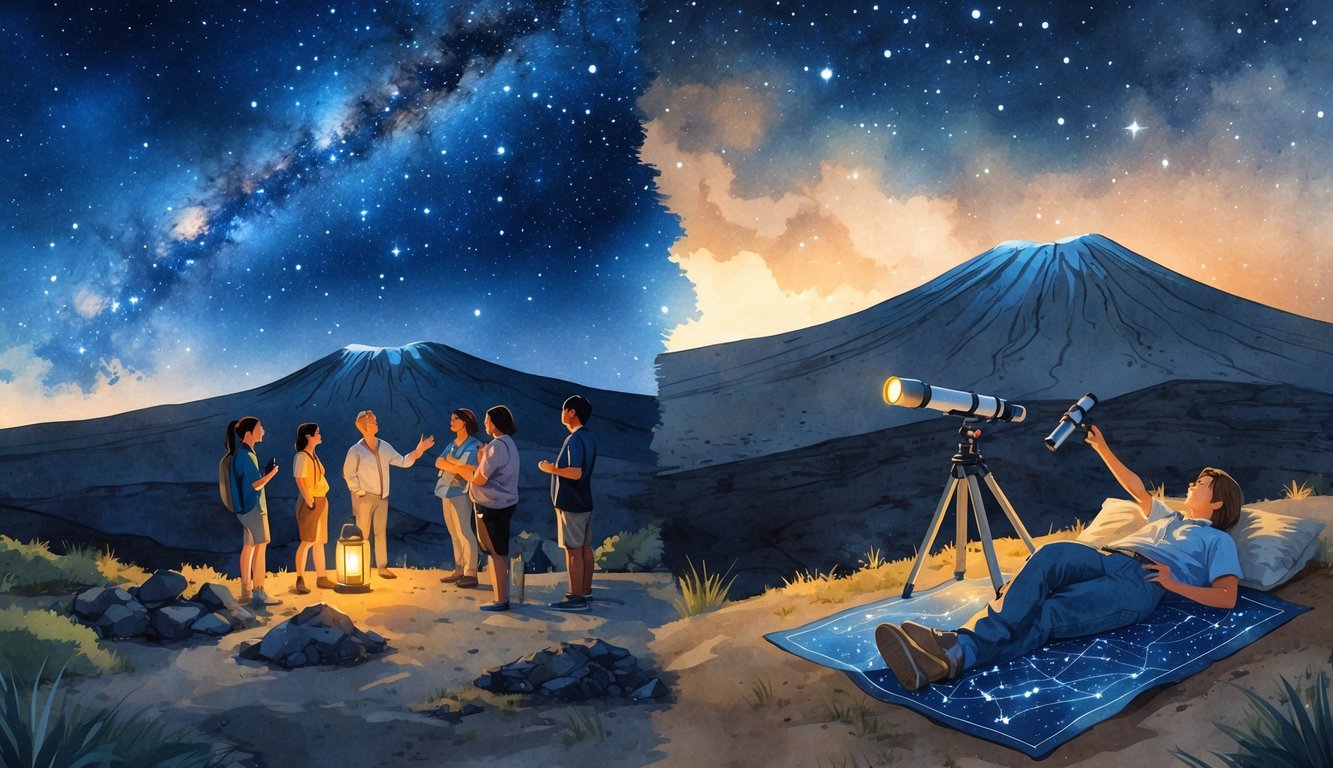
You can join a guided astronomy tour or explore the night sky on your own from Mauna Kea.
Each option gives different access, equipment, and comfort, which shapes your experience.
Benefits of Guided Stargazing Tours
Guided tours usually include transportation in 4WD vehicles, which are needed for the summit.
This means you don’t have to rent special vehicles or drive on steep, high-altitude roads.
Many tours, such as those from Hawaii Forest & Trail, provide high-quality telescopes and professional guides.
These guides explain constellations, planets, and deep-sky objects in simple terms.
Some tours also give you warm parkas, hot drinks, and photography tips.
This makes the experience more comfortable, especially in cold summit conditions.
Self-Guided Stargazing Tips
If you want more independence, you can drive to the Mauna Kea Visitor Information Station (VIS) at 9,200 feet.
The summit closes to private vehicles after dark, so the VIS is the highest spot for DIY stargazing without a tour.
Bring your own binoculars or a small telescope for better views.
Wear warm layers, as it can get near freezing even in summer.
Arrive before sunset to adjust to the altitude and find a good viewing spot.
The area around the VIS is dark enough to see the Milky Way and planets without much light pollution.
Recommended Tour Operators
Several companies run well-reviewed Mauna Kea stargazing trips.
Hawaii Forest & Trail is one of the most established, offering summit access, telescopes, and expert guides.
Mauna Kea Summit Adventures focuses on small-group tours with detailed astronomy explanations.
They also provide warm gear and hot drinks.
For a shorter experience, the Mauna Kea Visitor Information Station offers free public stargazing on select nights, using portable telescopes set up by staff and volunteers.
These options vary in price, length, and amenities, so you can choose based on budget, interest, and comfort.
Safety, Culture, and Respect on Mauna Kea
Mauna Kea’s high elevation, sensitive cultural sites, and fragile environment bring unique challenges.
Knowing about health risks, local traditions, and conservation helps protect both visitors and the mountain.
Altitude Sickness and Health Precautions
At nearly 14,000 feet, Mauna Kea’s summit has about 40% less oxygen than sea level.
This can cause altitude sickness, including headache, dizziness, nausea, and shortness of breath.
People with heart or lung conditions should talk to a doctor before visiting.
Even healthy visitors should spend at least 30 minutes at the Visitor Information Station at 9,200 feet to acclimate.
Tips to reduce risk:
- Drink plenty of water
- Avoid alcohol before and during the trip
- Ascend slowly and limit time at the summit
- Dress in warm layers for sudden temperature drops
Children under 13 and pregnant individuals should not visit the summit because of the low oxygen levels.
Respecting Native Hawaiian Culture
Mauna Kea holds deep spiritual and ancestral importance for many Native Hawaiians. The summit area includes cultural sites such as shrines and altars.
People should not disturb these sacred places. Visitors can learn about the mountain’s significance before their trip.
Guides often explain both astronomy and cultural history during tours. This helps travelers understand why certain areas are off-limits.
Ways to show respect:
- Stay on designated paths and roads
- Do not touch or move stones or offerings
- Avoid loud behavior near cultural sites
- Follow posted rules at the summit and mid-level facilities
Environmental Stewardship
Mauna Kea’s environment is fragile. Rare plants and animals live here, and many exist only in Hawaii.
The volcanic slopes and summit support species that have adapted to cold, dry conditions. These species differ from those on nearby Mauna Loa.
Visitors should pack out all trash, including food waste. This prevents harm to wildlife.
Driving off-road damages delicate habitats. The area does not allow off-road driving.
Simple conservation steps:
- Use restrooms at designated facilities.
- Keep food sealed to avoid attracting animals.
- Do not pick plants or collect rocks.
- Limit vehicle idling to reduce emissions.


