
For over a century, sugar plantations shaped Maui’s landscape and communities. These plantations changed the island’s economy, attracted workers from around the world, and left a cultural legacy that remains visible today.

Sugar played a central role in daily life, from the first commercial fields in the mid-1800s to the closing of the last mill in 2016.
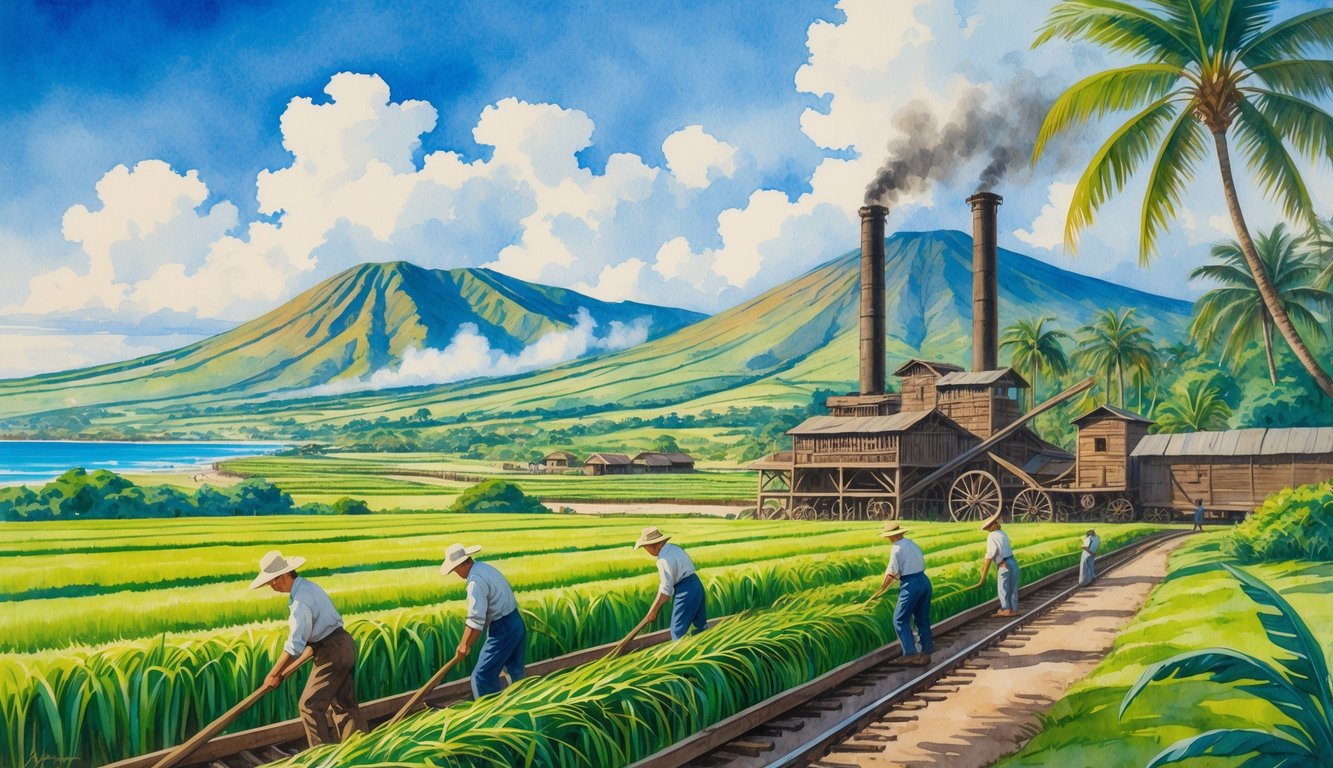
Fertile volcanic soil, a warm climate, and access to water helped sugarcane thrive. Entrepreneurs quickly saw opportunity and planted vast fields across central Maui.
As plantations grew, towns developed around them. People from Asia, Europe, and other Pacific islands settled in these new communities.
This cultural mix shaped Maui’s traditions, food, and community bonds.
Remnants of the sugar era remain in historic plantation towns, old mill sites, and the Alexander & Baldwin Sugar Museum.
Origins of Sugar Plantations in Maui
Maui’s sugar industry started with small-scale farming. The introduction of sugarcane led to large plantations in the 19th century.
Changes in crops, tools, and labor shaped both the land and the communities.
Early Hawaiian Agriculture Before Sugarcane
Before sugarcane, Native Hawaiians used the ahupua‘a system. This method divided land from mountain to sea, allowing for a variety of crops.
They grew taro, sweet potatoes, breadfruit, and coconuts. Irrigation systems brought water to wetland taro fields, while dry areas supported other crops.
Fishing and gathering added to their diet, creating a balanced food system. Communities worked together, sharing labor and resources.
This approach helped maintain soil fertility and supported stable populations.
Arrival of Sugarcane to Maui
Polynesian settlers likely brought sugarcane to Maui around 600 AD. They grew it in small plots for food, medicine, and cultural uses.
People chewed early varieties for sweetness or used them in ceremonies. The plant thrived in Maui’s climate, especially in areas with steady rainfall.
By the late 18th century, Western visitors like Captain Cook saw sugarcane in Hawaiian gardens. Increased contact with traders and whalers led to larger plantings.
Interest in sugar as an export crop grew, paving the way for commercial farming.
Establishment of the First Sugar Plantations
Entrepreneurs started the first commercial sugar plantations in Maui in the early 1800s. They recognized the island’s fertile plains and steady weather as ideal for large-scale crops.
As whaling and trading increased in the 1830s, demand for sugar rose. Plantations appeared in places like Wailuku, Hana, and Lahaina.
Plantation owners brought in workers from China, Japan, Portugal, and other countries. Mills processed cane into sugar for export.
By the mid-19th century, sugar dominated Maui’s economy and landscape. The plantation system replaced traditional farming and connected Maui to global trade.
Expansion and Economic Impact
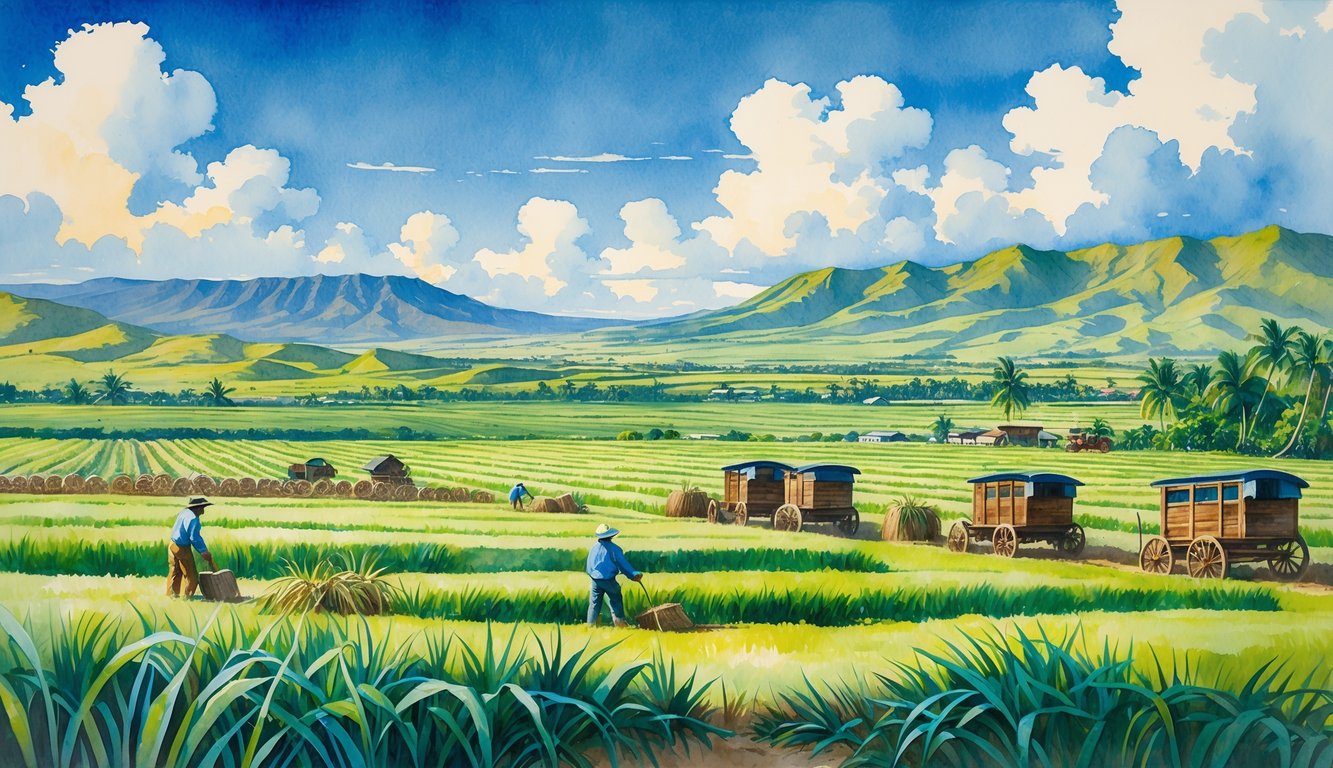
In the late 1800s, sugar plantations became a driving force in Maui’s economy. Large land purchases, favorable trade policies, and investments in processing and transport helped the industry grow.
Rise of Sugar Barons and Major Companies
Wealthy landowners and investors began merging small farms into large plantations. Claus Spreckels and companies like the Hawaiian Commercial & Sugar Company (HC&S) led Maui’s sugar trade.
HC&S, founded in 1870, became the island’s largest producer, running vast fields in Puʻunene. Alexander & Baldwin grew quickly after taking control of HC&S in the early 1900s.
These companies managed fields, mills, shipping, and labor recruitment. Their influence shaped Maui’s politics, land use, and infrastructure.
The Role of the Reciprocity Treaty
The 1875 Reciprocity Treaty between the Kingdom of Hawaii and the United States removed tariffs on Hawaiian sugar exports. This gave Maui’s plantations direct access to U.S. markets.
With increased profits, plantation owners expanded their fields and upgraded equipment. Production and exports grew rapidly.
The treaty attracted more foreign investment to Hawaii’s sugar sector. Investors saw Maui as a promising location for agriculture.
Growth of Sugar Mills and Infrastructure
As production rose, companies built new sugar mills in Wailuku, Lahaina, and Hana. Mills turned cane into raw sugar for shipment abroad.
Key developments included rail systems connecting fields to mills and harbors. Irrigation projects diverted water from East Maui streams, and new port facilities handled larger export volumes.
Railroads made transport faster and cheaper. Irrigation allowed year-round cultivation in dry areas.
Improvements in shipping linked Maui’s sugar industry to global markets.
For more on major producers like HC&S, see the history of sugar cane on Maui.
Life on the Plantations and Cultural Legacy
Sugar plantations in Maui brought together people from many parts of the world. Their skills, traditions, and labor shaped daily routines and influenced Maui’s culture.
Plantation Workers and Immigration Waves
In the mid-1800s, plantation owners needed more workers. They recruited people from China, Japan, Portugal, Puerto Rico, Korea, and the Philippines.
Each group brought its own language, food, and customs. Japanese workers introduced bento meals, while Portuguese immigrants brought sweet bread and malasadas.
Many workers arrived under contracts and spent long hours in the fields. These agreements often lasted several years before workers could move on or return home.
Some workers settled in Maui, starting families and small businesses. Their communities became part of Maui’s social and economic life.
Plantation Camps and Everyday Life
Plantation workers often lived in company-owned camps near the fields. Homes were small, wooden, and had tin roofs.
Camps were usually organized by ethnicity, which helped people keep their native languages and traditions. This also limited interaction between groups outside of work.
Workers followed the plantation schedule. They rose before sunrise, worked in the fields or mills, and returned home in the evening.
Meals often combined ingredients from different cultures. Some camps had stores, schools, and churches.
The Alexander & Baldwin Sugar Museum preserves artifacts from these communities, such as tools and photographs of daily life.
Multicultural Communities and Social Change
Over time, ethnic divisions faded. Children attended the same schools, learned English, and celebrated both Hawaiian and immigrant traditions.
Festivals and food became central to Maui’s blended culture. Plantation gatherings might include Japanese mochi, Portuguese sausage, and Hawaiian hula.
Shared labor struggles also united workers. Strikes in the early 1900s brought people together to demand better pay and conditions.
Today, the story of sugar in Maui lives on through old mill sites, oral histories, and family traditions that reflect this cultural mix.
Decline and Lasting Influence
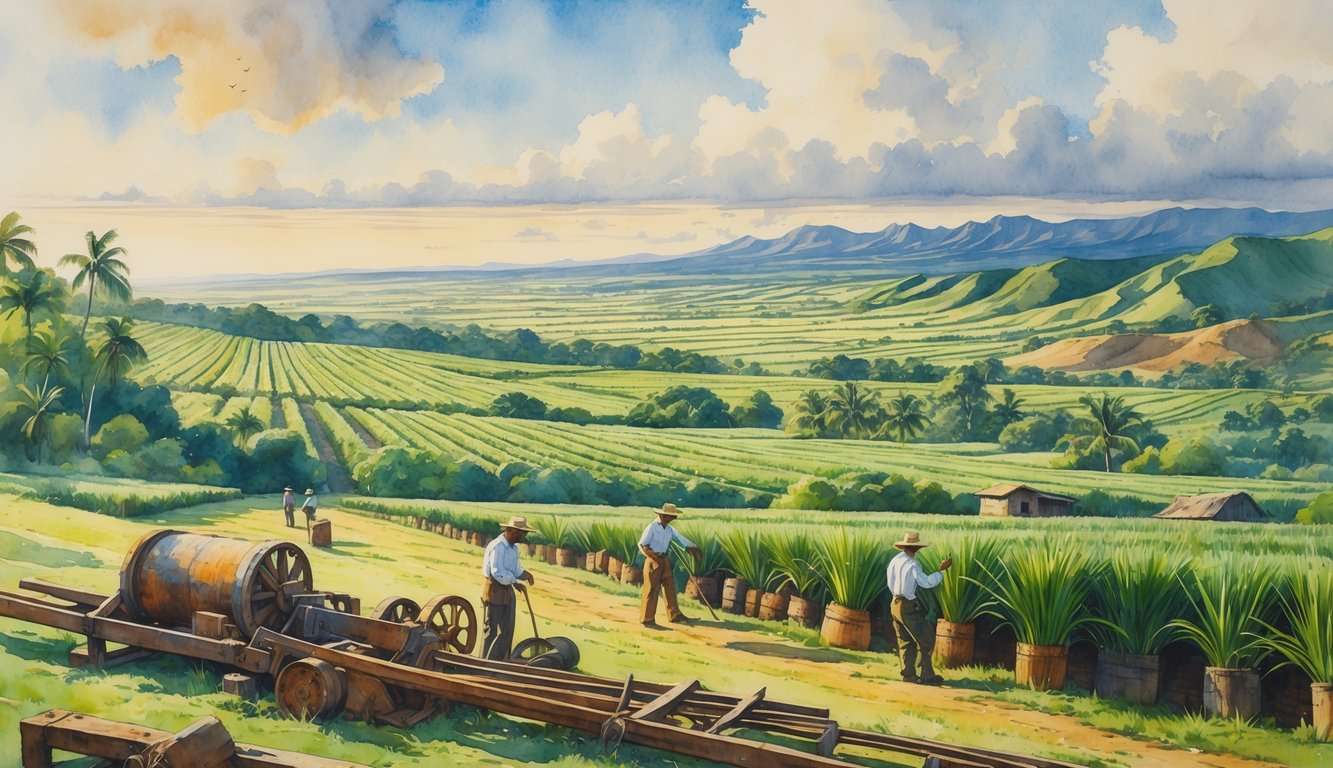
Sugar plantations once dominated Maui’s economy and shaped its communities. Changing markets, environmental concerns, and new land uses ended large-scale sugar production.
Factors Leading to the Industry’s Decline
By the late 20th century, global sugar prices dropped as cheaper producers entered the market. Maui’s plantations faced higher labor costs and more competition.
Environmental issues also affected the industry. Water diversion for irrigation drew public criticism and legal challenges.
Cane burning created health and air quality concerns. The Hawaiian Commercial & Sugar Company (HC&S), Maui’s last major producer, closed in 2016 after 146 years.
This closure ended large-scale sugar farming in Hawaiʻi and left thousands of acres of farmland unused.
| Key Decline Factors | Impact |
|---|---|
| Global price competition | Lower profits |
| High labor costs | Reduced competitiveness |
| Environmental regulations | Increased operational limits |
| Public opposition to practices | Pressure to change methods |
Preserving Maui’s Sugar Heritage Today
Even though plantations no longer operate, Maui still honors its sugar history. Historic plantation towns like Paia and Puʻunene display old mill buildings and workers’ housing.
Museums and cultural sites, such as the Alexander & Baldwin Sugar Museum, tell stories of immigrant laborers from Japan, China, Portugal, and the Philippines. These workers helped shape the sugar industry.
Historians and community groups actively preserve Maui’s sugar legacy through archives, photographs, and oral histories.
Festivals, guided tours, and educational programs show how sugar plantations influenced Maui’s economy, culture, and landscape. Many former cane fields now serve as sites for diversified agriculture, renewable energy, or conservation.


