
Seven days on Maui gives you enough room to see the big three (sunrise on a volcano, a full day on the Road to Hana, and a snorkel trip to a sunken crater) without spending every morning in the car. You’ll still have three or four days left for beaches, farm stands, and long dinners.

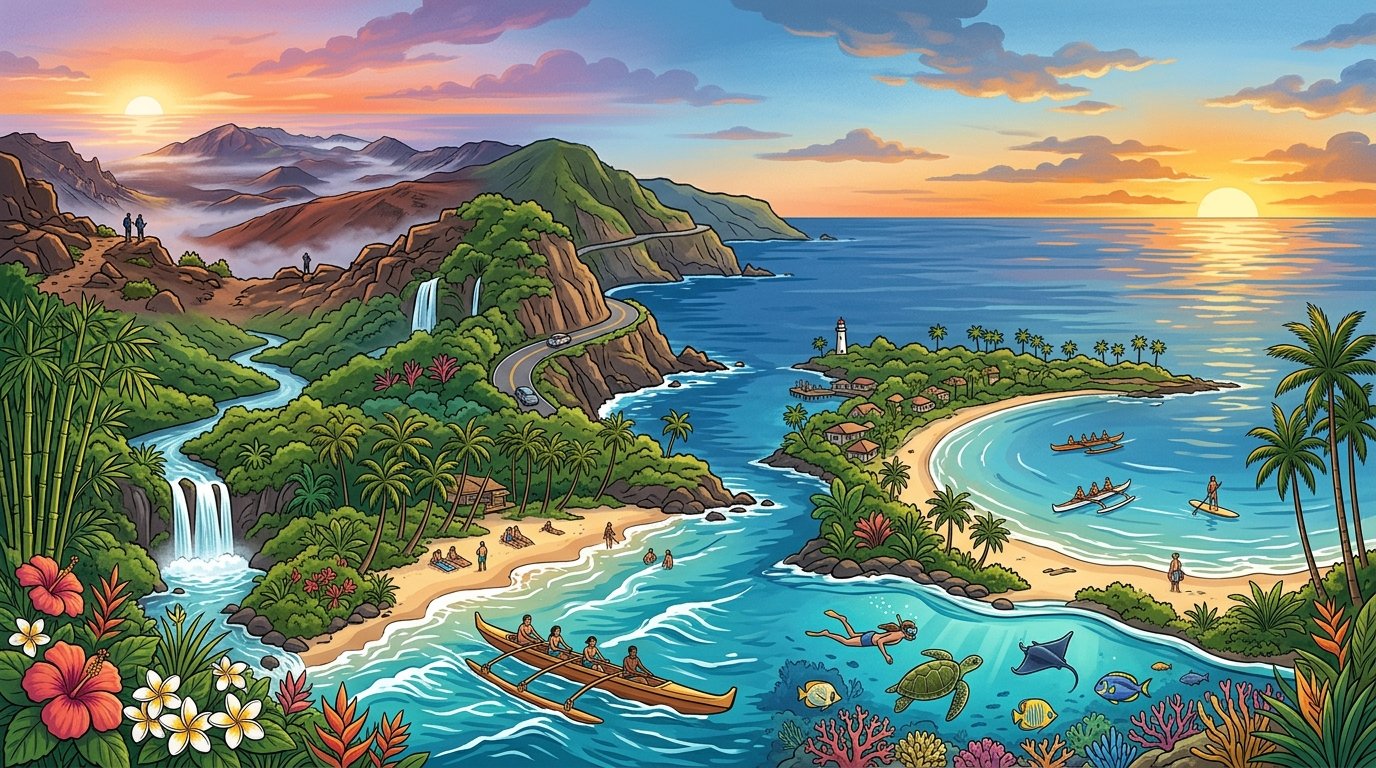
The mistake first-timers make is treating the island as small. Maui is only 48 miles across, yet the drive from Kapalua to Hana takes over four hours on a road with 620 curves and 59 bridges.
Plan by region, and the week feels easy.
This maui itinerary 7 days plan uses two home bases: five nights on the leeward side (South or West Maui) and one night in Hana. The longest drive happens once, and the rest of the week stays within 30 minutes of your room.
By the end, you’ll know which days to lock in with reservations, which ones to leave loose, and where to sleep so you’re not backtracking across the Valley Isle every morning.
Your Seven-Day Plan at a Glance
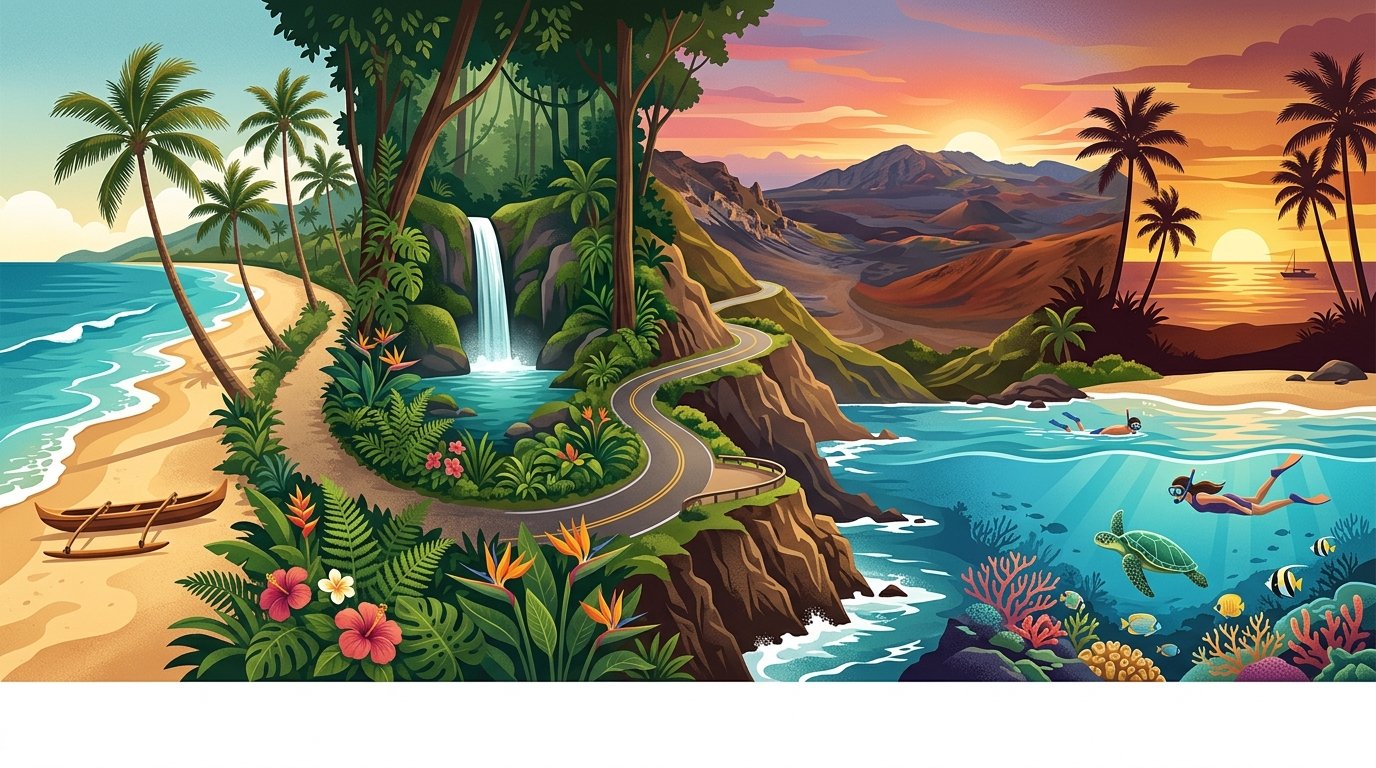
This 7-day Maui itinerary alternates hard days with soft ones: two long drives (Hana and Haleakalā), one boat morning, and four days built around beaches, food, and short walks.
You’ll touch all five regions of the island (South Maui, West Maui, East Maui, Upcountry Maui, and Central Maui) without moving hotels more than once.
How This Route Balances Sightseeing and Beach Time
Big-ticket days come with early alarms. The Road to Hana, the Molokini crater boat, and the Haleakalā sunrise all start before most people eat breakfast.
So each of those days is followed by, or paired with, a low-effort afternoon. After Hana you swim at a black sand beach. After Haleakalā you eat pastries in Upcountry and nap.
| Day | Region | Effort |
|---|---|---|
| 1 | South Maui | Easy |
| 2 | West Maui | Moderate |
| 3 | Ocean + Wailea | Moderate (early start) |
| 4 | East Maui | Hard (long drive) |
| 5 | Kipahulu to South Maui | Hard |
| 6 | Haleakalā + Upcountry | Moderate (3 a.m. alarm) |
| 7 | Your choice | Easy |
Day 1: Settle Into South Maui
Land at Kahului, get the rental car, hit a grocery store, and check in. Watch your first sunset from Keawakapu or Kamaole III.
Day 2: Explore West Maui’s Beaches and Coast
Head up the coast for snorkeling at Black Rock, the Kapalua Coastal Trail, and a slow drive north.
Day 3: Snorkel Molokini and Enjoy a Cultural Evening
Take a morning boat from Maalaea to Molokini Crater and Turtle Town. Then attend a luau or enjoy a sunset dinner.
Day 4: Drive the Road to Hana and Stay in East Maui
Have breakfast in Paia, then visit waterfalls and fruit stands all morning. Spend the night in Hana so tomorrow starts fresh.
Day 5: See Kipahulu and Return via the Hana Highway
Hike the Pipiwai Trail early, then drive back with a stop at Waiʻānapanapa State Park.
Day 6: Experience Haleakalā and Upcountry Maui
Watch sunrise at the summit (reservation required), then visit lavender farms, a pineapple farm, and Makawao town.
Day 7: Choose a Flexible Farewell Day
Visit Iao Valley, enjoy one more beach, or take a surf lesson before your flight.
Day-by-Day Stops, Meals, and Alternatives
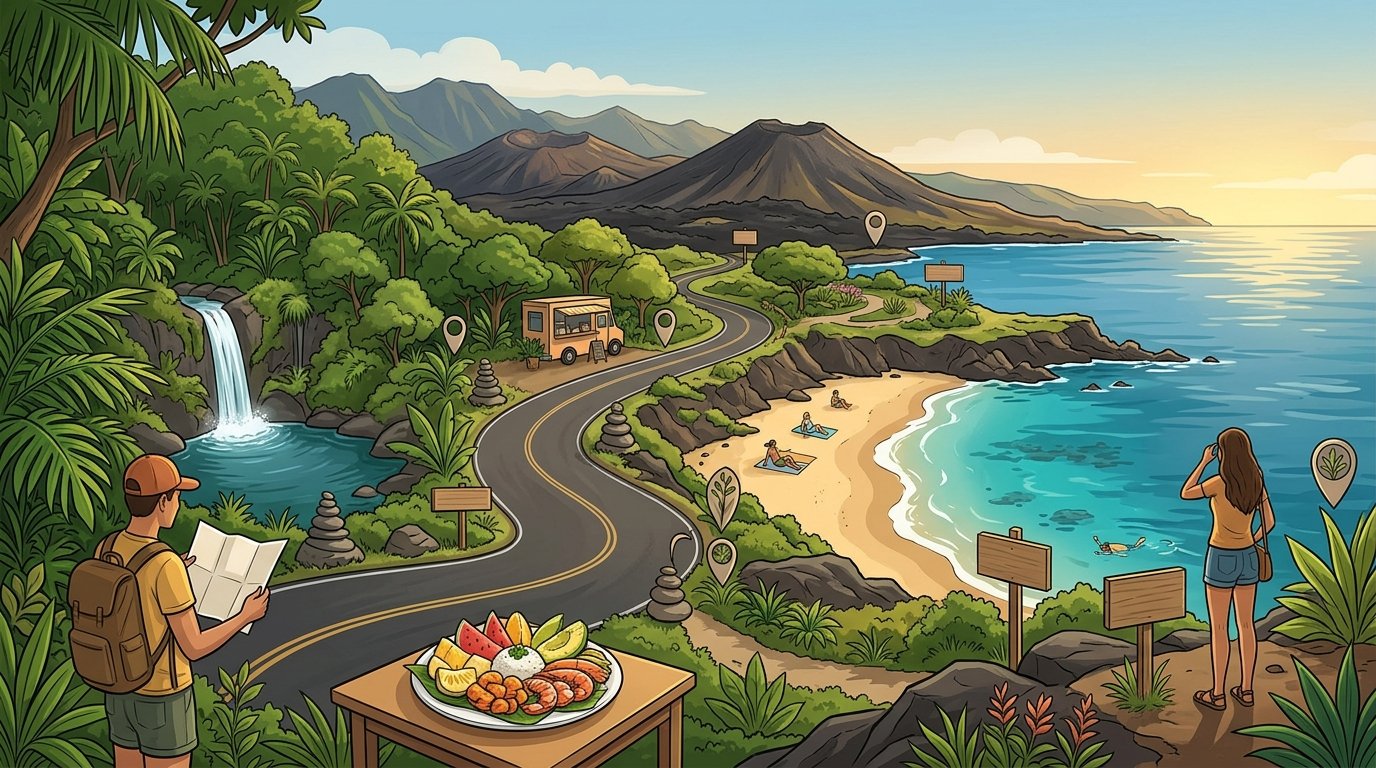
Each day below lists a realistic number of stops, a place to eat nearby, and a swap if the weather turns or the kids melt down. Skip half of any day and you’ll still have a great one.
Day 1: Kihei, Wailea, and the Kamaole Beaches
Your body is on mainland time, so keep this day short. Pick up groceries in Kihei, then walk out to Kamaole Beach Park II or III for a first swim.
The Kamaole beaches have lifeguards, restrooms, and gentle shorebreak, which makes them the easiest first stop with kids. Wailea Beach and the paved Wailea Beach Path are a five-minute drive south if you want smoother sand and calmer water.
Push farther to Makena if you have energy left. Big Beach (Oneloa) is stunning and has a punishing shorebreak. Maluaka Beach, sometimes called Turtle Town beach, is the friendlier swim.
Dinner: Kihei Caffe does breakfast only, so save it for morning. Night one, grab poke or fish tacos and eat on your lanai.
Swap: If your flight lands late, skip the beach and drive straight to a sunset spot.
Day 2: Ka’anapali, Kapalua, and the West Maui Coast
Drive Honoapiilani Highway north early to beat traffic and afternoon wind. Snorkel Black Rock at the north end of Ka’anapali Beach, where the reef drops off within 30 feet of shore.
Mid-morning, walk the Kapalua Coastal Trail between Kapalua Bay and Napili. Kapalua Bay is a protected crescent and one of the most reliable snorkel spots on the island when the surf is small.
If the water is flat, add Honolua Bay. The entry is over rocks, but the reef is worth the ankle bruises. Nakalele Blowhole sits farther north, and the walk down is steeper and sharper than it looks.
Lunch: The Gazebo in Napili (expect a line) or Leoda’s Kitchen and Pie Shop in Olowalu on the way back.
Swap: North swell in winter shuts down Honolua. Trade it for the Waihee Ridge Trail on a clear morning, or a lazy afternoon at Olowalu Beach.
Day 3: Molokini Crater, Turtle Town, and a Luau
Book the earliest boat you can. Molokini Crater sits three miles off Makena, and wind picks up by late morning, so the 7 a.m. departures get the glassy water.
Most trips pair Molokini with a second stop at Turtle Town off Maluaka, where Hawaiian green sea turtles graze on the reef. Stay five to ten feet back and let them surface on their own.
A guide to snorkeling at Molokini Crater covers what conditions to expect and how to pick a boat.
You’ll be back on land by early afternoon with salt in your hair and nothing scheduled. Nap, then get ready for the evening.
Evening: Old Lahaina Luau is the classic Hawaiian luau on this coast and sells out weeks ahead. Book it before you leave home.
Swap: Prone to seasickness? Snorkel from shore at Ulua or Maluaka instead and put the money toward dinner at Monkeypod Kitchen in Wailea.
Day 4: Paia to Hana With Meaningful Road to Hana Stops
Leave your hotel by 7 a.m. and eat breakfast in Paia. From there, the Hana Highway runs 52 miles with 620 curves, and you want the whole day for it.
Pick five or six Road to Hana stops instead of twenty. These earn their time:
- Twin Falls (mile 2): easy walk, fruit stand at the entrance, gets crowded by 9 a.m.
- Rainbow eucalyptus grove (mile 7): pull off at Ke’anae Road for the painted trunks.
- Ke’anae Peninsula: black lava coast, pounding surf, and banana bread at Aunty Sandy’s.
- Upper Waikani Falls (mile 19): the “Three Bears,” visible from the bridge.
- Wailua Falls (past Hana, mile 45): roadside and 80 feet tall.
Check in to your Hana lodging before dark. Dining in Hana is limited, so eat when you find food open.
Swap: Nervous about the curves? A complete Road to Hana driving guide explains the one-lane bridge etiquette, or you can book a van tour and let someone else drive.
Day 5: Pipiwai Trail, Waimoku Falls, and Waiʻānapanapa
Start at Kipahulu, the coastal district of Haleakalā National Park, about 30 minutes past Hana town. Hike the Pipiwai Trail first, before tour vans arrive.
The trail runs 4 miles round trip and climbs 800 feet through a bamboo forest to 400-foot Waimoku Falls. Boardwalks cover the muddiest sections. Give yourself 2.5 to 3 hours.
Oheo Gulch (often called the Seven Sacred Pools) sits at the trailhead. The pools often close to swimming because of flash flood risk, so check the ranger board rather than your expectations.
Drive back mid-afternoon and stop at Waiʻānapanapa State Park. Its black sand beach requires a parking and entry reservation with a set time window, and rangers do check.
Lunch: Hana Farms or a roadside stand. Options thin out fast on this stretch.
Swap: If rain is heavy, skip Pipiwai (the bamboo forest gets slick) and use the whole day for Waiʻānapanapa and a slow return.
Day 6: Haleakalā Summit, Makawao, and Upcountry Farms
Set the alarm for 2:30 a.m. The summit sits at 10,023 feet, the drive from Kihei takes about two hours, and gates require a sunrise reservation for entry between 3 a.m. and 7 a.m.
Dress for 35°F with wind. This is a dormant volcano, and the crater rim is genuinely cold in shorts. Bring a hat, gloves, and a blanket.
After sunrise, walk 10 minutes down Sliding Sands for the view into the crater, then descend to warmer air. Upcountry Maui is where the day gets pleasant.
- Ali’i Kula Lavender Farm: garden paths, lavender scones, cool air at 4,000 feet.
- Maui Gold Pineapple: field tour, and you take a pineapple home.
- Surfing Goat Dairy: cheese tasting and goats, a hit with kids.
- Makawao: old paniolo town, galleries, and cream puffs at the bakery.
Swap: Sunrise reservations gone? Go for sunset instead. No reservation needed, and the crater colors are just as good. Consider a downhill Maui bike tour from the summit if you’d rather coast than drive.
Day 7: Iao Valley or a Beach Day Based on Your Interests
Match this day to your flight time. Iao Valley State Monument in Central Maui sits 15 minutes from Kahului Airport, which makes it the smartest last stop.
The paved walk to the Iao Needle lookout takes 20 minutes, and the valley holds deep significance as the site of the 1790 Battle of Kepaniwai. Parking requires a reservation for non-residents.
Prefer sand? Head back to a favorite beach and swim until checkout. Our roundup of Maui beaches best for relaxing can help you pick a calm one.
Other good closers include a beginner surf lesson in Lahaina or Kihei, a Wailuku farmers market run, or a kayak paddle out of Makena.
Last meal: Mama’s Fish House in Kuau, if you booked months ago. Otherwise, get shave ice from Ululani’s Hawaiian Shave Ice and a plate lunch near the airport.
Where to Stay and How to Get Around Maui
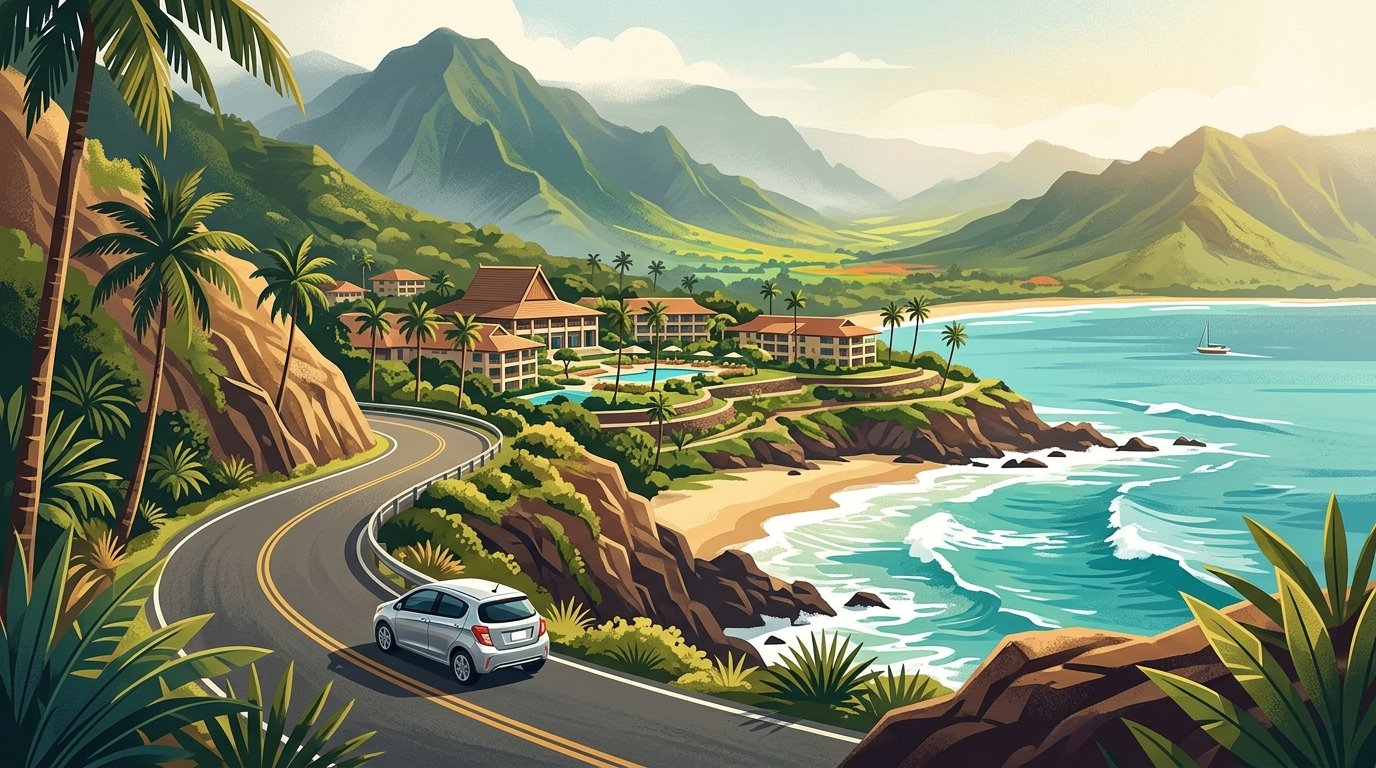
Book five nights on the leeward side and one night in Hana, and you cut hours of backtracking out of the week. Leeward Maui (Kihei, Wailea, Ka’anapali, Napili, Kapalua) gets the sunshine and calm swimming beaches, while windward East Maui brings the rain and waterfalls.
Where to Stay on Maui for This Route
South Maui and West Maui both work as your main base. South Maui puts you closer to Haleakalā, Molokini boats out of Maalaea, and the Hana Highway. West Maui puts you closer to the best shore snorkeling and the luau.
Pick one. Splitting five nights between both sides costs you an afternoon of packing and check-in for very little gain. Our breakdown of the best cities to stay on Maui compares the towns in more detail.
Kihei vs. Wailea for a South Maui Base
Kihei and Wailea sit ten minutes apart and feel nothing alike.
| Kihei | Wailea | |
|---|---|---|
| Lodging | Condos, older complexes | Luxury resorts |
| Price | Lower | High |
| Kitchen | Almost always | Sometimes |
| Beaches | Kamaole I, II, III | Wailea, Ulua, Polo |
| Dining | Casual, food trucks | Upscale restaurants |
| Best for | Families, longer stays | Couples, honeymoons |
Kihei condos with kitchens save real money on a week-long trip since you’ll eat breakfast in most mornings. Wailea offers polished resorts and quieter sand.
Ka’anapali, Napili, and Kapalua on the West Side
Ka’anapali Beach is the classic first-timer choice: three miles of sand, big resorts, snorkeling at Black Rock, and a walkable boardwalk. It can feel crowded in peak season.
Napili is smaller and calmer, with a protected bay that suits young kids in winter. Kapalua is quieter and more upscale, with luxury rooms starting around $600 per night and a rugged coastline. However, an area-by-area Maui lodging guide notes that it sits far from Iao Valley and Haleakalā. Kahana falls between Napili and Ka’anapali on both price and vibe.
Why an Overnight in Hana Can Improve the Itinerary
Driving to Hana and back in one day means five to six hours behind the wheel plus every stop. You arrive at the best sights tired and leave the last ones out.
Sleeping in Hana splits the drive in half. You get the Pipiwai Trail and Waiʻānapanapa in morning light with almost nobody there, and you see Hana town after the day-trippers leave. Lodging is limited, so book early.
Do You Need a Rental Car on Maui?
Yes, for this itinerary. Maui’s public bus does not reach Haleakalā, Hana, or most trailheads, and rideshare gets expensive and unreliable outside the resort corridors.
You can skip the car if you stay at a Ka’anapali or Wailea resort and book tours with hotel pickup. There are ways to navigate Maui without a car that work for a resort-focused trip, though you’ll trade flexibility for convenience.
Reserve the car when you book flights. Maui runs out of inventory during holidays, and walk-up rates at Kahului Airport climb fast.
Reservations, Timing, and Responsible Travel
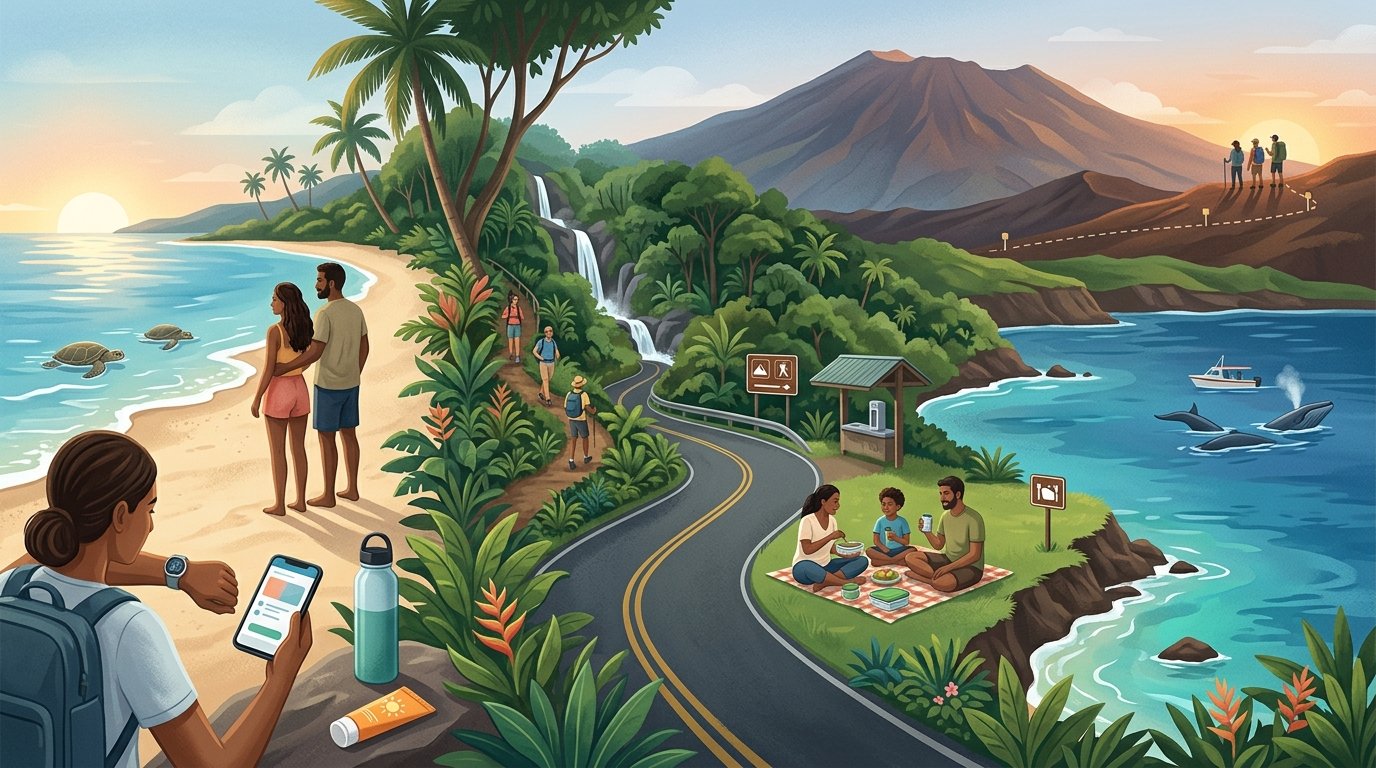
Four things on this route require advance reservations, and two of them sell out fast. Weather and ocean conditions shift by side of the island, so a rainy morning in Hana often means blue sky in Kihei.
When Is the Best Time to Visit Maui?
April, May, September, and early October give you the best mix of weather, crowds, and price. Water is warm, trade winds are steady, and rates drop between school breaks.
Winter (December through March) brings humpback whales close to shore and bigger north swells that shut down some snorkel spots. Summer runs hot and busy. Late September has the softest crowds of the year.
What to Reserve Before You Arrive
Handle these before your flight:
- Haleakalā sunrise entry: reservations open 60 days out at 7 a.m. Hawaii time and go in minutes. A second batch releases two days ahead.
- Waiʻānapanapa State Park: timed parking and entry slot, needed for the black sand beach.
- Iao Valley State Monument: parking reservation for non-residents.
- Molokini snorkel boat: early departures fill first.
- Luau and Mama’s Fish House: weeks to months ahead.
Haleakalā National Park entry costs a separate fee from the sunrise reservation, and the pass is good for three days. Browsing the best guided tours on Maui helps if you’d rather have an operator handle the logistics.
Road, Weather, and Water-Safety Realities
The Road to Hana has one-lane bridges where uphill traffic yields, and locals commute this road daily. Pull over and let them pass.
Never swim in a stream or pool after heavy rain upstream. Flash floods on the windward side arrive with no warning, which causes Oheo Gulch to close so often.
Check surf reports before shore snorkeling. Winter north swells make Honolua Bay and parts of Kapalua unsafe, and rip currents at Big Beach send people to the hospital every year.
Visiting Lahaina Respectfully During Recovery
Lahaina is rebuilding after the 2023 wildfire, and much of the historic town remains closed to visitors. Do not drive through burned residential areas or photograph home sites.
Support the businesses that reopened in West Maui, tip well, and book with local operators. Tourism dollars matter to the workers here, and how you spend them shows.
How to Protect Reefs and Respect Wildlife
Use mineral reef-safe sunscreen with zinc oxide or titanium dioxide, or wear a rash guard. Hawaii banned oxybenzone and octinoxate sunscreens in 2021.
Stay 10 feet from Hawaiian green sea turtles and 50 yards from monk seals. Federal law protects both. Never stand on coral, and stay on marked trails in the rainforests so you don’t spread invasive seeds.
Make the Week Feel Like a Maui Vacation
Seven days works when you build it around two long drives and one boat morning, then let the other four days stay loose. Hana and Haleakalā earn the early alarms; Kapalua Bay, Black Rock, and the Kamaole beaches fill the rest without a plan.
Lock in the reservations that sell out (Haleakalā sunrise, Waiʻānapanapa, your Molokini boat, the luau) and leave everything else flexible. Eat your way through Kihei Caffe in the morning, Leoda’s Kitchen and Pie Shop on the highway, Monkeypod Kitchen at sunset, and Ululani’s Hawaiian Shave Ice whenever it’s hot. Try poi and kalua pork at a luau, and grab craft beer from Maui Brewing Co. on a slow afternoon.
Trade a hike for a swim when your legs are done. Skip Nakalele Blowhole if the day is already full. The Kapalua Coastal Trail, the Waihee Ridge Trail, and Olowalu Beach will all still be there next trip, and most first-timers come back. For more ideas to swap in, our list of best things to do on Maui covers the options this week leaves out.
Frequently Asked Questions
Is seven days enough time for a first trip to Maui?
Yes. Seven days covers Haleakalā, the Road to Hana, Molokini, and several beaches with room to rest. Five days forces you to cut one major day, and ten days lets you add Lanai or a slow Upcountry stretch.
Should I stay overnight in Hana on a seven-day Maui trip?
Yes, one night in Hana turns a 12-hour driving marathon into two comfortable days. You get the Pipiwai Trail and Waiʻānapanapa State Park before the tour vans arrive. Book lodging early since options are few.
What is the best month for a seven-day Maui vacation?
April, May, and September deliver warm water, steady trade winds, and lower rates. February brings peak whale watching but higher prices and bigger surf. Late September has the fewest crowds all year.
Can families follow this Maui itinerary with young children?
Yes, with two adjustments. Swap the 2:30 a.m. Haleakalā sunrise for a sunset visit, and choose a shorter snorkel cruise or shore snorkeling at Maluaka Beach. The Kamaole beaches, Napili Bay, and Surfing Goat Dairy all work well with little kids.
What should I skip if I want a slower-paced week on Maui?
Drop the Molokini boat and snorkel from shore instead, and cut the number of Road to Hana stops to four. Skipping Nakalele Blowhole and Honolua Bay on Day 2 gives you a full beach afternoon in West Maui.
Do I need to book Haleakalā sunrise and Molokini snorkeling in advance?
Yes to both. Haleakalā sunrise reservations open 60 days ahead at 7 a.m. Hawaii time and disappear within minutes. A smaller batch is released two days before.
Early Molokini departures book out weeks ahead in peak season.


