
Molokai, one of the quieter Hawaiian Islands, gives you a rare chance to see wildlife in its natural setting. From coastal waters to lush mountain forests, the island has species found nowhere else.

You can spot native birds, marine life, and unique plants while exploring Molokai’s diverse landscapes.

You might see Hawaiian monk seals resting on the sand at untouched beaches. Offshore waters bring humpback whales during their season.
Inland, places like the Kamakou Preserve shelter endangered birds and rare plants. Nature lovers find this a special place.
Molokai’s wildlife connects closely to the island’s culture and history. Ancient fishponds attract native fish, and traditional practices protect delicate ecosystems.
This bond between people and nature makes every encounter feel meaningful.
Iconic Wildlife of Molokai
Molokai’s coasts, forests, and mountains give homes to marine mammals, rare birds, and native plants. You often see species important to Hawaii’s culture and ecology.
Each species plays a part in the island’s natural balance.
Hawaiian Monk Seals and Marine Life
The Hawaiian monk seal is one of the rarest marine mammals in the world. Small groups rest and nurse pups on Molokai’s quiet beaches.
Federal law protects these seals, so people must keep a safe distance.
Offshore, green sea turtles, spinner dolphins, and humpback whales appear during the winter months. Humpbacks migrate here from December to April to breed and give birth.
Tide pools and coral reefs hold colorful fish like parrotfish, butterflyfish, and the state fish, the humuhumunukunukuāpuaʻa. Snorkelers often see these fish in shallow reef areas.
For more on marine habitats, the Molokai Visitors Guide gives seasonal tips for safe viewing.
Endemic Birds and Rare Species
Molokai’s forests once had several bird species now extinct, but some native birds still live here. The vivid green ‘amakihi and the red-feathered ‘apapane are common in higher elevations.
The Hawaiian owl, or pueo, hunts over grasslands and open fields.
The Nature Conservancy manages the Kamakou Preserve as a stronghold for native bird habitat. You may hear rare honeycreepers calling while walking its boardwalk trail.
Molokai also supports wintering grounds for the kioea, a rare shorebird. Local biologists study the kioea through tagging projects to track movements and population numbers, as shown in Molokai’s rare shorebirds research.
Native Hawaiian Plants
Molokai’s native plants grow in many places, from coastal dunes to wet mountain plateaus. The hala tree, koa, and `ōhiʻa lehua form the core of native forests.
These plants support insects, which feed native birds.
The Puʻu Aliʻi reserve in northern Molokai protects wet forests and shrublands. It also safeguards stream communities important for watershed health.
Some plants grow only in Hawaii and have adapted to Molokai’s unique climate. Conservation programs remove invasive plants so native species can thrive.
Best Places to Experience Wildlife
Molokai’s lush valleys, historic landmarks, towering cliffs, and quiet beaches let native plants and animals flourish. You can spot rare birds, see unique coastal views, and explore areas that protect both wildlife and cultural history.
Halawa Valley and Hike Adventures
Halawa Valley is one of Hawaii’s oldest settled areas, known for green landscapes and cultural traditions. The Halawa Valley Cultural Hike gives guided access to native plants, taro patches, and historical sites.
Along the trail, hikers hear native birds and may spot colorful species in the treetops. The path leads to Hipuapua Falls, a tall waterfall surrounded by dense vegetation that shelters small wildlife.
Guides share details about local ecology and traditional Hawaiian land use.
Kalaupapa National Historic Park
Kalaupapa National Historic Park sits on the remote Kalaupapa Peninsula, bordered by some of the tallest sea cliffs in the world. The park protects both cultural heritage and natural habitats.
You may see monk seals resting on the shore or seabirds nesting along the cliffs. Green sea turtles and reef fish often swim in the surrounding waters.
Access to the park is limited to preserve its environment and history.
Molokai Sea Cliffs and Scenic Spots
The Molokai sea cliffs rise over 3,000 feet and rank among the tallest on Earth. These cliffs give nesting areas for seabirds like tropicbirds and frigatebirds.
Boat tours and flights along the coast show the best views of the cliffs and their wildlife. From the water, you may also spot dolphins and humpback whales during migration season.
The steep cliffs, ocean spray, and remote coves create a dramatic setting for watching marine and bird life.
Secluded Beaches and Kepuhi Beach
Molokai’s secluded beaches are quiet places where you can see wildlife without crowds. Shorebirds feed along the waterline, and tide pools hold small fish and crabs.
Kepuhi Beach has a wide sandy stretch and seasonal surf. In calmer months, you might watch sea turtles in the shallows.
Early mornings and late afternoons are the best times to see wildlife here. The beach is less busy, and animals are more active.
Wildlife Encounters and Tours
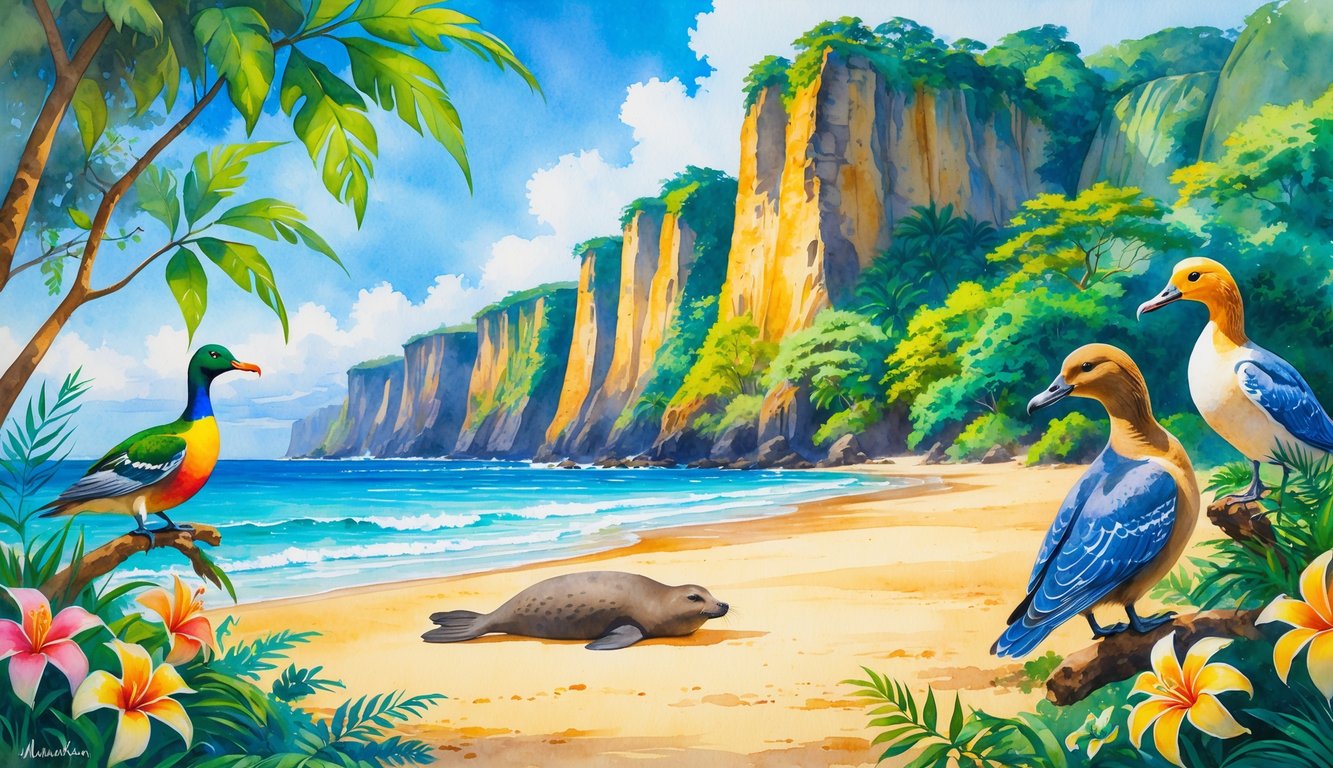
Molokai lets you see native plants, rare birds, and marine animals in their natural habitats. You can explore on foot, from the air, or with local guides who know the best spots for safe viewing.
Guided Tours and Molokai Tours
Guided tours help you find wildlife that might be hard to spot alone. Local guides know where to see species like the Hawaiian monk seal or the endangered nēnē goose.
Some Molokai tours focus on areas such as Kamakou Preserve, where native forests shelter rare plants and birds. Others visit Halawa Valley’s rainforests, home to streams, waterfalls, and native flora.
Many tours use small groups, making it easier to ask questions and move quietly. Operators share information on conservation and cultural history.
Helicopter and Aerial Wildlife Views
A helicopter tour gives you a view of Molokai’s wildlife habitats from above. You can see remote sea cliffs, hidden waterfalls, and coastal areas where seabirds nest.
These flights pass over places not reachable by road or trail. You might spot turtles or schools of fish in the water below.
Some aerial tours also show how different habitats connect. This view helps you understand the scale of Molokai’s natural environment.
Responsible Wildlife Watching
Responsible wildlife watching protects animals and their homes. You should keep a safe distance, avoid feeding animals, and follow local rules.
Eco-focused Molokai tours teach these practices. Guides explain how to notice signs of stress in wildlife and when to move away.
Simple steps—like staying on marked trails, using quiet voices, and not leaving trash—keep Molokai’s environment healthy. These habits help future visitors enjoy the same natural beauty and wildlife.
Cultural and Historical Connections to Nature
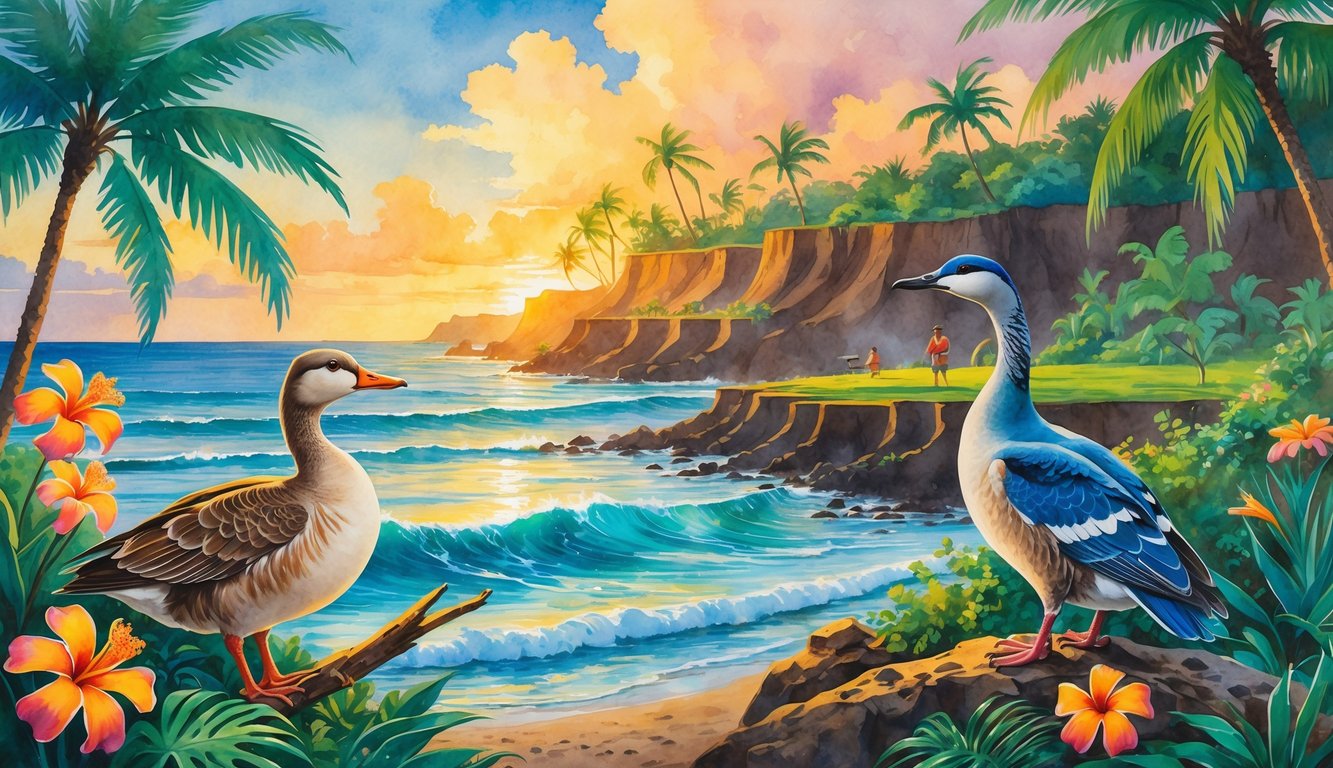
Molokai’s landscapes connect to events, people, and traditions that shaped its identity. Native plants, coastal areas, and valleys are habitats for wildlife and places where history happened.
Kalaupapa’s History and Hansen’s Disease
The Kalaupapa Peninsula is known for its remote beauty, steep sea cliffs, and deep history. In the late 1800s, the Hawaiian government sent people with Hansen’s disease here to prevent the illness from spreading.
This separation created a self-contained community. Residents fished, farmed, and used native plants for survival.
The surrounding environment served as both a refuge and a boundary.
Today, Kalaupapa National Historical Park protects this site. You can see coastal vegetation, such as loulu palms and hinahina groundcover, much as it was over a century ago.
Guided tours share stories of daily life, blending natural history with human history.
Father Damien’s Legacy
Father Damien, a Belgian priest, arrived in Kalaupapa in 1873 to serve residents with Hansen’s disease. He built homes, repaired water systems, and improved farming to help the settlement become more self-sufficient.
He also worked to restore dignity for the patients, advocating for better living conditions and medical care. He later became known worldwide and was canonized as Saint Damien.
The land around Kalaupapa still shows his work. You can see gardens he planted, churches he built, and paths he walked.
These sites are surrounded by native plants and ocean views, showing how his mission tied closely to the natural setting.
You can learn about his life through guided walks and historical displays that connect his work to Molokai’s cultural and environmental heritage.
Old Hawaii and Traditional Practices
Many parts of Molokai still look like Old Hawaii. The island’s rural nature and small-town feel, especially in Kaunakakai, help keep traditional practices alive in daily life.
People fish from the shore, gather medicinal plants, and farm taro. Locals use their knowledge of tides, seasons, and native species for these activities.
Guides lead cultural tours of places like Halawa Valley. They show visitors how nature supports Hawaiian traditions.
Guides explain how people use plants for food, tools, and ceremonies. This connects the land to the island’s history.
Visitors can show respect by asking permission before entering sacred areas. This helps them experience Molokai while honoring its people and environment.


