
Seven days on Oʻahu gives you time to do the big-ticket stuff and still have a morning where your only job is finding a good malasada. The island is about 44 miles across at its widest, so you can drive from Waikīkī to the North Shore in roughly an hour. Trying to do that every day will wear you out fast.
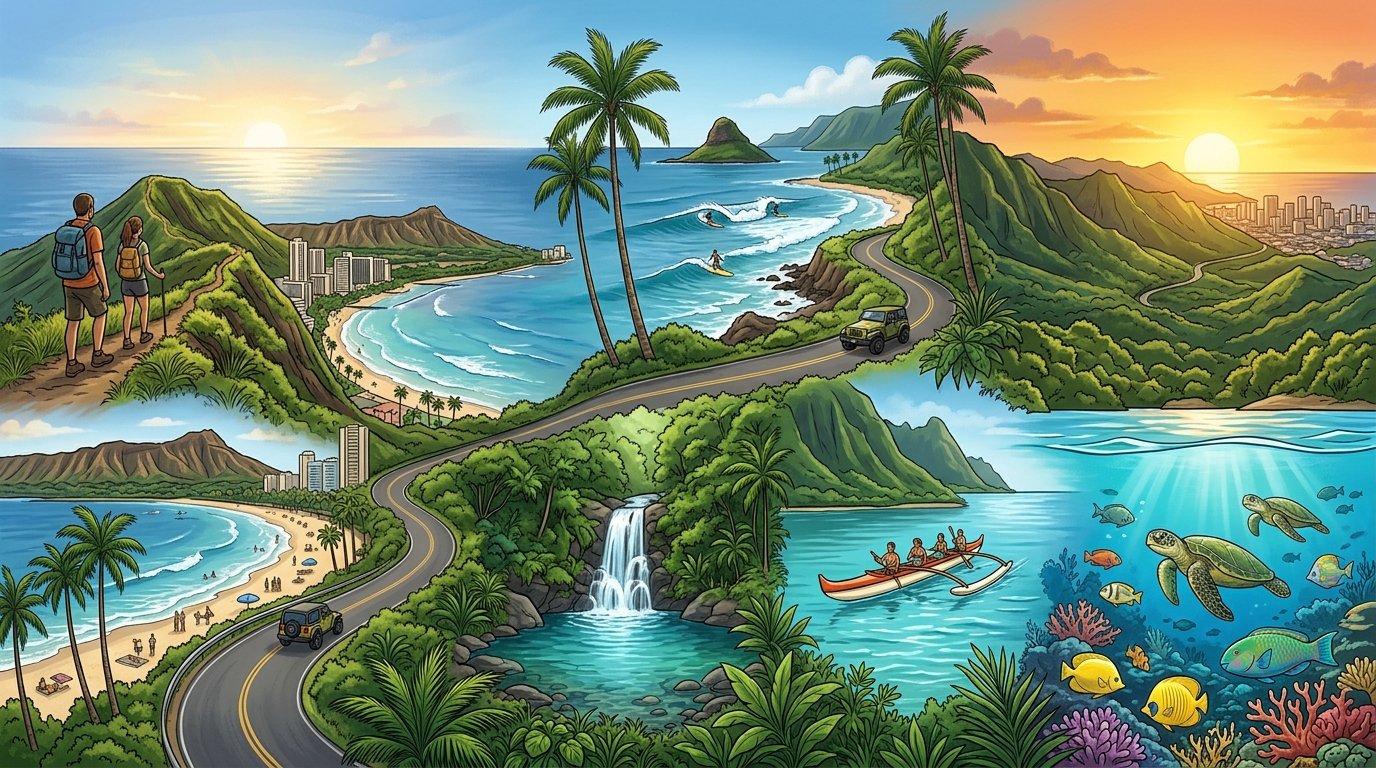
The smartest oahu itinerary 7 days plan groups your days by region: two days in Honolulu and Waikīkī, two days on the southeast and windward coasts, and three days working north and west. That way, you never cross the island twice in one day, and you spend your time in the water instead of on the H-1.
This route works whether you’re a first-timer chasing Diamond Head and Pearl Harbor or a repeat visitor who wants more time in Kailua and Haleʻiwa. You’ll also find honest notes on what to book ahead, what you can skip, and how to swap days when the surf comes up or the rain rolls in.
Your Seven-Day Route at a Glance
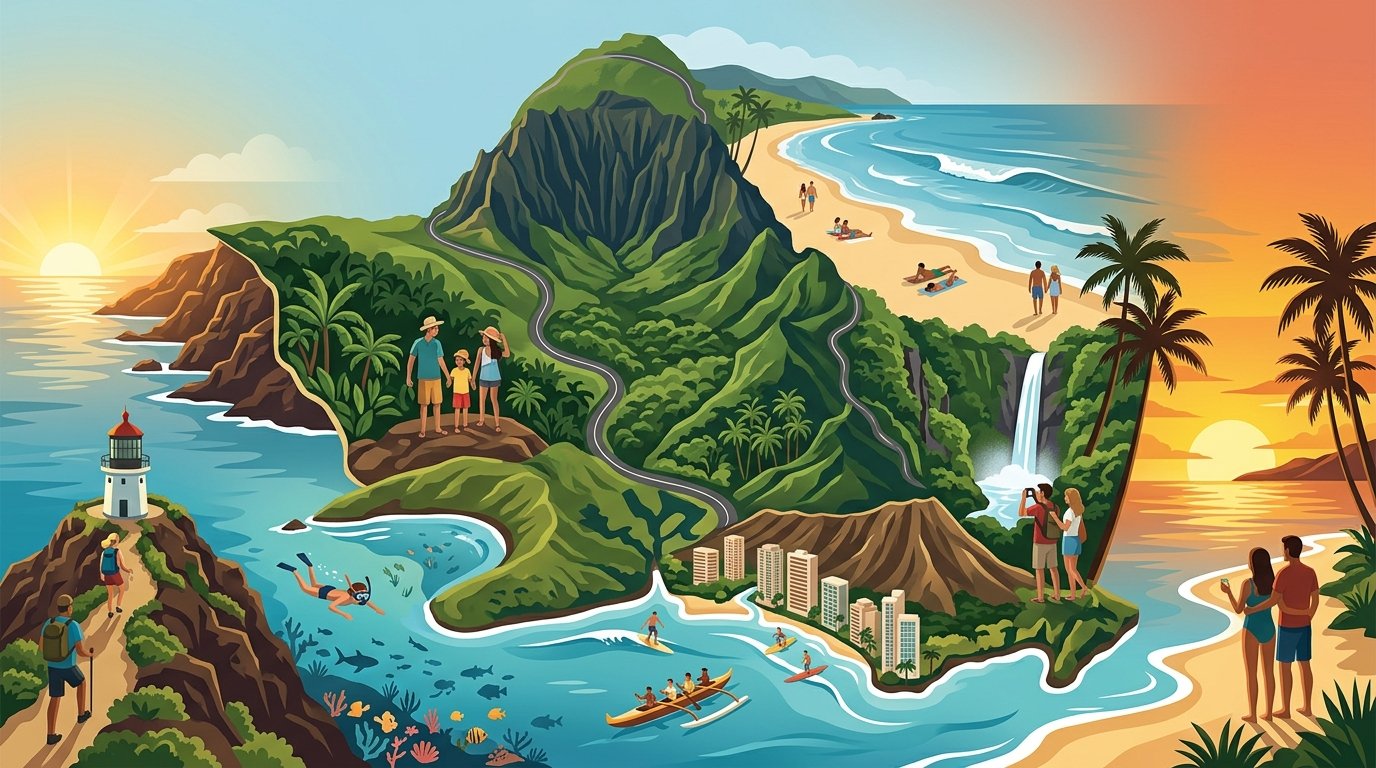
This 7 day Oahu itinerary moves clockwise around the island in a loose loop, starting in town and finishing on the west side. Each day sticks to one region, which keeps daily driving under about 90 minutes total.
| Day | Region | Main stops |
|---|---|---|
| 1 | Waikīkī | Waikīkī Beach, Diamond Head, Kalākaua Avenue |
| 2 | Honolulu | Pearl Harbor, ʻIolani Palace, Bishop Museum |
| 3 | Southeast shore | Hanauma Bay, Halona Blowhole, Makapuʻu |
| 4 | Windward coast | Kailua, Lanikai, Hoʻomaluhia Botanical Garden |
| 5 | Kāneʻohe to Lāʻie | Kualoa Ranch, Kualoa Regional Park, coastal drive |
| 6 | North Shore | Waimea Bay, Waimea Valley, Haleʻiwa |
| 7 | West side or central | Ko Olina, Dole Plantation, sunset |
How This Route Reduces Backtracking and Traffic
Traffic on Oʻahu runs in predictable directions. Mornings jam heading into Honolulu, and afternoons jam heading out, so a plan that pushes you away from town in the morning skips most of it.
Days 3 through 6 all move counterclockwise up the eastern side, so you’re never doubling back through the Pali or the H-3. Save the west side for last since Ko Olina sits closest to the airport for a smooth departure.
What to Reserve Before You Arrive
A handful of Oʻahu experiences sell out days or weeks ahead. Book these first, then build the rest around them:
- Hanauma Bay Nature Preserve reservations, released online two days in advance at 7 a.m. Hawaiʻi time
- Pearl Harbor National Memorial USS Arizona Memorial tickets through Recreation.gov
- Diamond Head State Monument entry, which requires a timed reservation for out-of-state visitors
- Kualoa Ranch tours, especially the movie sites and ATV options
- Any luau, sunset sail, or guided tour on Oʻahu you have your heart set on
Pack reef-safe sunscreen before you fly. Hawaiʻi bans the sale of sunscreens with oxybenzone and octinoxate, and mineral options cost more at island convenience stores.
How to Adjust the Plan for Rain, Surf, and Energy Levels
Windward showers pass in 20 minutes most days, so a gray sky in Kailua doesn’t mean canceling. Keep Bishop Museum, ʻIolani Palace, and Waimea Valley in your back pocket when rain changes your plans.
Winter surf changes everything on the North Shore. From November through March, waves at Waimea and Pipeline can top 20 feet, which turns Day 6 into a watching day instead of a swimming day. Flip your beach swim to Kailua or Waikīkī and enjoy the show.
If you’re still picking dates, the best time to visit Hawaii for fewer crowds lands in the shoulder months of April through early June and September through mid-November.
Days 1–2: Waikīkī, Diamond Head, and Honolulu History
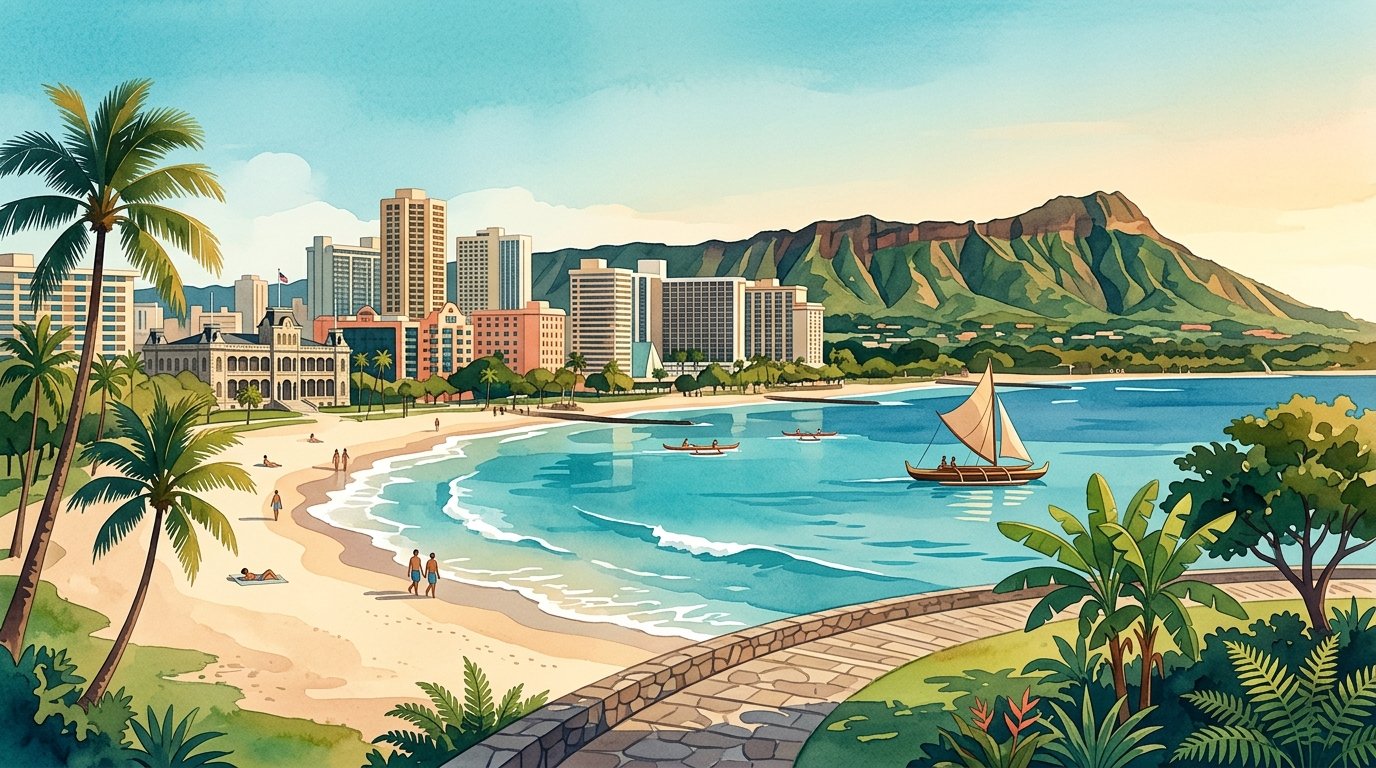
Your first two days keep you close to Honolulu, where the beach, the crater hike, and the island’s most important historic sites all sit within a short drive of each other. You won’t need a rental car for either day.
Day 1: Settle Into Waikīkī and Hike Diamond Head
Start slow. Drop your bags, walk to Waikīkī Beach, and get in the water before jet lag catches you. The stretch near the Duke Kahanamoku statue has gentle, rolling waves that make it one of the best places anywhere to take your first surf lessons.
Hike Diamond Head in the late afternoon if you arrived early, or push it to the next morning. The Diamond Head hike runs about 1.6 miles round trip with 560 feet of elevation gain, plus stairs and a tunnel near the top. Bring water; there’s no shade on the way up.
Wrap the evening on Kalākaua Avenue with shave ice and a walk to the beach for sunset. Waikīkī has more than a century of resort history behind those hotel towers, and the beachfront torch lighting is a nice, free ritual to catch.
Day 2: Pearl Harbor and Historic Honolulu
Get to Pearl Harbor National Memorial early. The USS Arizona Memorial boat program books out fast, and the visitor center opens at 7 a.m. Tickets are free but carry a small reservation fee, and bags aren’t allowed inside, so leave everything in the car.
Spend the afternoon in Downtown Honolulu. ʻIolani Palace is the only royal palace on U.S. soil, and a guided tour there explains the overthrow of the Hawaiian Kingdom better than any plaque can. The Bishop Museum, which has deep ties to Hawaiian culture, holds the world’s largest collection of Hawaiian artifacts and is worth two hours on its own.
If you have energy left, drive up to Punchbowl Crater for a quiet overlook of the city. Reading a brief history of the Hawaiian Islands before you go makes both stops land harder.
Where to Eat, Swim, and Spend the Evening in Town
Skip the resort buffets at least once. A poke bowl from a neighborhood market or a plate lunch with two scoops rice and mac salad costs a fraction of a hotel entrée and tastes better.
Kakaʻako has the city’s best cluster of casual restaurants and murals, and it’s a short rideshare from Waikīkī. For swimming without the crowds, Ala Moana Beach Park has a protected, flat lagoon that’s calmer than Waikīkī Beach and popular with local families in the evening.
Days 3–4: Snorkeling and the Windward Coast
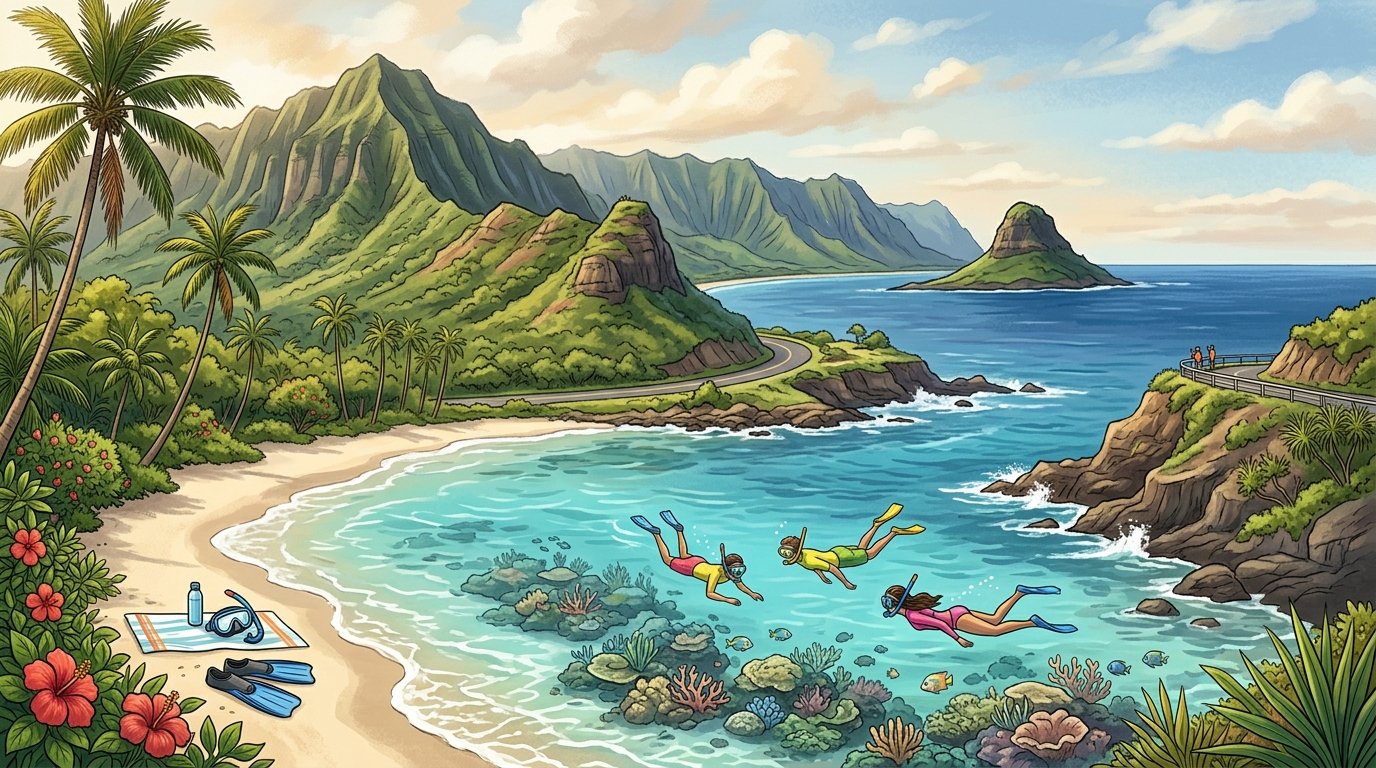
These two days cover the southeast lookouts and the windward side, where the Koʻolau Range drops almost straight into turquoise water. Both days start early to beat parking problems.
Day 3: Hanauma Bay, Koko Head, and the Southeast Shore
Hanauma Bay is the snorkeling anchor of this day, and it’s closed Mondays and Tuesdays. The preserve caps daily entry, requires a short conservation video, and charges non-residents $25 plus parking. Get a reservation and arrive at your slot.
Drive east along Kalanianaʻole Highway afterward. The stops come one after another:
- Halona Blowhole Lookout, where surf shoots through a lava tube on the right swell
- Halona Beach Cove, the tiny beach below the lookout
- Sandy Beach, famous shorebreak that’s for watching, not swimming
- Makapuʻu Point Lighthouse Trail, a paved 2-mile round trip with whale watching from December to April
Koko Head Crater Trail sits nearby if you want a brutal workout. It’s 1,048 railroad ties straight up an old tramway, and there’s no shade at all. Go at sunrise or skip it.
Day 4: Kailua, Lanikai, and Kāneʻohe Bay
Head over the Pali Highway and stop at the Pali Lookout, where trade winds funnel through a gap in the Koʻolau Mountains hard enough to knock your hat off. Entry runs $7 per vehicle for non-residents.
Kailua Beach and Lanikai Beach are the payoff. Kailua has restrooms, parking, and rentals; Lanikai has no facilities and street parking only in a residential neighborhood, so be respectful about where you leave the car.
Kayaking out to the Mokulua Islands from Kailua Beach Park takes about 30 minutes each way, and paddling Hawaii’s bays is one of the better ways to see this coast from the water.
The Lanikai Pillbox hike gives you the classic view of the Mokes in under a mile of climbing. Finish the day at Hoʻomaluhia Botanical Garden in Kāneʻohe, where the Koʻolau cliffs rise behind a free 400-acre park.
Choose a Beach Day or an Active Adventure
Not every day needs a hike. If you’d rather do one thing well, pick Waimānalo Beach for the softest sand on the island and a three-mile stretch that rarely feels crowded.
The active version of this day swaps in a kayak trip plus the pillbox hike and skips the garden. Families with young kids do better with the beach-only plan; Hawaii family vacation activities on the windward side lean heavily toward calm, shallow water.
Days 5–7: Kualoa, the North Shore, and the West Side
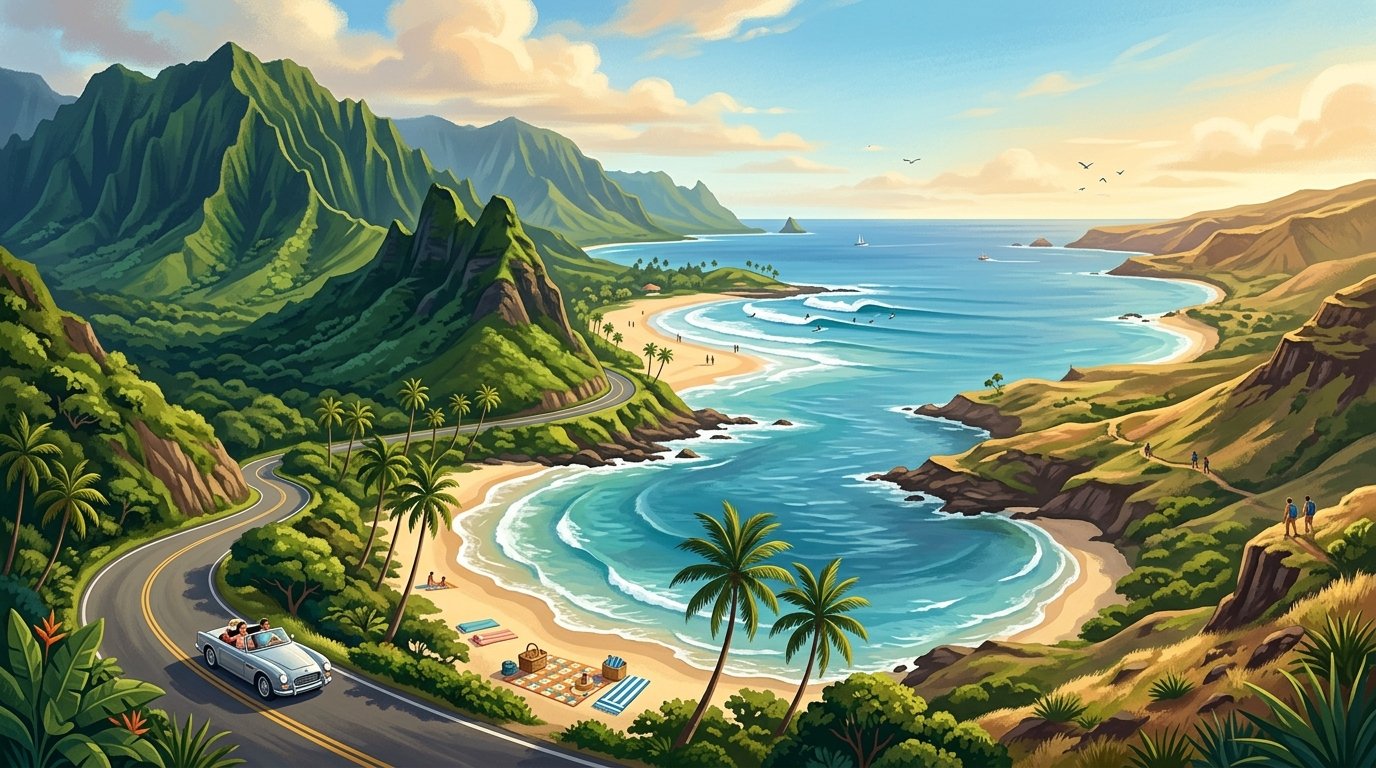
The last three days take you up the windward coast past Kualoa, around the North Shore, and back down the west side. This is the stretch where a rental car earns its keep.
Day 5: Kualoa Ranch, Laie, and a Scenic Coast Drive
Kualoa Ranch fills a morning. The 4,000-acre working ranch has appeared in Jurassic Park, Lost, and dozens of other productions, and the movie sites tour is the most popular option. Book weeks ahead in summer.
Cross the highway to Kualoa Regional Park for the free view of Mokoliʻi, the small cone islet most people call Chinaman’s Hat. Keep driving north through Kahana Bay, one of the prettiest and least busy bays on the island.
The Polynesian Cultural Center in Lāʻie runs afternoon village demonstrations and an evening luau, and a full visit takes six hours or more. It’s a real commitment of time and money, so decide before you go whether you want a full day of Polynesian culture or a shorter museum-style experience back in Honolulu.
Day 6: Waimea Bay, Haleʻiwa, and North Shore Beaches
North Shore day works best going west to east, or the other way, depending on where you sleep. Waimea Bay in summer is a calm, deep swimming beach with a jumping rock; in winter it’s a big wave surfing arena where you stay on the sand.
Waimea Valley next door has a paved 3/4-mile walk through botanical gardens to a 45-foot waterfall. You can swim in it with a provided life vest. Admission runs about $25 for adults.
The beach lineup north of there:
- Sharks Cove in Pupukea, tide-pool snorkeling in summer only
- Ehukai Beach Park, the sand fronting Banzai Pipeline
- Sunset Beach, wide sand and the best sunsets on this coast
- Laniakea Beach, where Hawaiian green sea turtles haul out; stay 10 feet back
Eat at the garlic shrimp trucks in Kahuku, then poke around Haleʻiwa town for shave ice. There’s a lot more to unpack in the North Shore’s surf and turtle scene if you want a second day here.
Day 7: Choose Ko Olina Relaxation or a Central Oʻahu Finale
Ko Olina on the west side has four man-made lagoons with calm, protected water and easy parking. That makes it the low-effort choice for a last day. Electric Beach across from the power plant offers surprisingly good snorkeling when the water’s clear.
The central route runs up through pineapple fields to Dole Plantation, then loops back down. Turtle Bay Resort on the north tip is the third option if you’d rather end with a horseback ride and a quiet beach walk. Any of these three keeps you within easy reach of the airport.
Plan the Week Around Your Travel Style
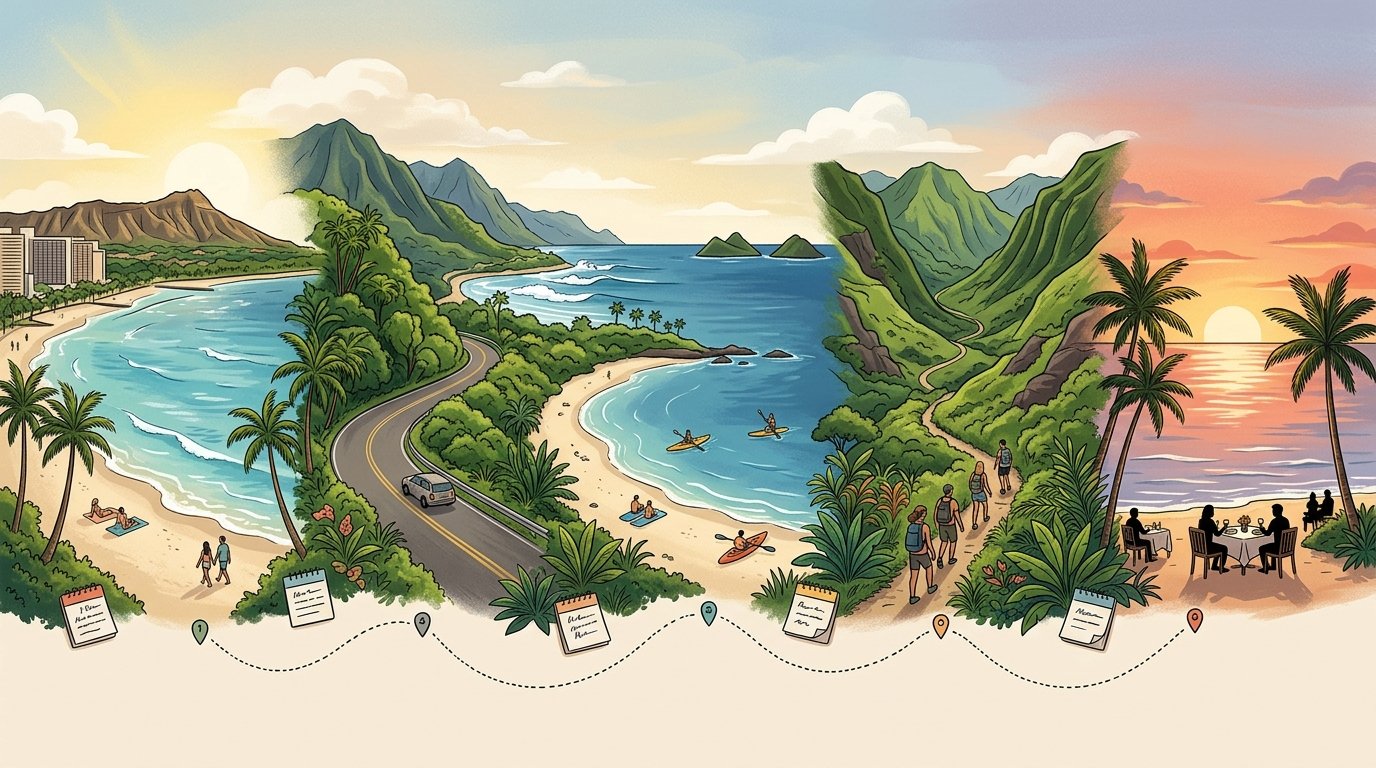
Your lodging and transportation choices shape how well this route flows. A single base in Waikīkī keeps things simple; splitting the week cuts driving on the back half.
Where to Stay in Oʻahu for This Route
Waikīkī works as a single base for all seven days. You’ll have the widest range of hotels, restaurants, and rideshare availability. The drive to the North Shore is about an hour each way.
The split-base version puts you in Waikīkī for nights 1 through 4, then Turtle Bay or a North Shore rental for nights 5 through 7. That saves roughly two hours of driving on your final days and lets you catch a North Shore sunrise.
Ko Olina suits travelers who want resort quiet and a shorter airport run, though it adds 30 to 40 minutes to every east-side day.
Do You Need a Rental Car on Oʻahu?
You need a car for four of these seven days. Days 1, 2, and any Waikīkī beach day run fine on TheBus, Biki bikeshare, and rideshare. Skipping the car those days saves you $35 to $60 per night in hotel parking.
Pick the car up the morning of Day 3 and return it after Day 6 or 7. If you’d rather not drive at all, guided day trips from Honolulu cover Kualoa, the North Shore, and the windward coast on set schedules.
How to Make This Itinerary Work for Couples, Families, or Car-Free Travelers
Couples can compress Days 1 and 2, then add a sunset sail or a second North Shore day. Kailua and Lanikai reward a slower pace.
Families should cut one hike per day and build in pool time. Swap Koko Head for Makapuʻu, and trade the Lanikai Pillbox for a lazy morning at Kailua Beach Park.
Car-free travelers can reach Hanauma Bay, Pearl Harbor, and Diamond Head by bus or shuttle. Book a circle-island tour for the Kualoa and North Shore days instead of forcing it on public transit.
Ocean Safety, Wildlife Distance, and Respectful Travel
Check surf and hazard reports before every beach stop. Conditions on the North Shore in winter and at Sandy Beach year-round can injure strong swimmers. Lifeguarded beaches are the safe default.
Federal guidelines ask you to stay 10 feet from sea turtles and 50 yards from Hawaiian monk seals. Whale watching season runs December through April, and boats must keep 100 yards from humpbacks.
Wear reef-safe mineral sunscreen, park only in legal spots in residential neighborhoods like Lanikai, and pack out everything you bring.
A Week That Lets You Experience Oʻahu Without Rushing
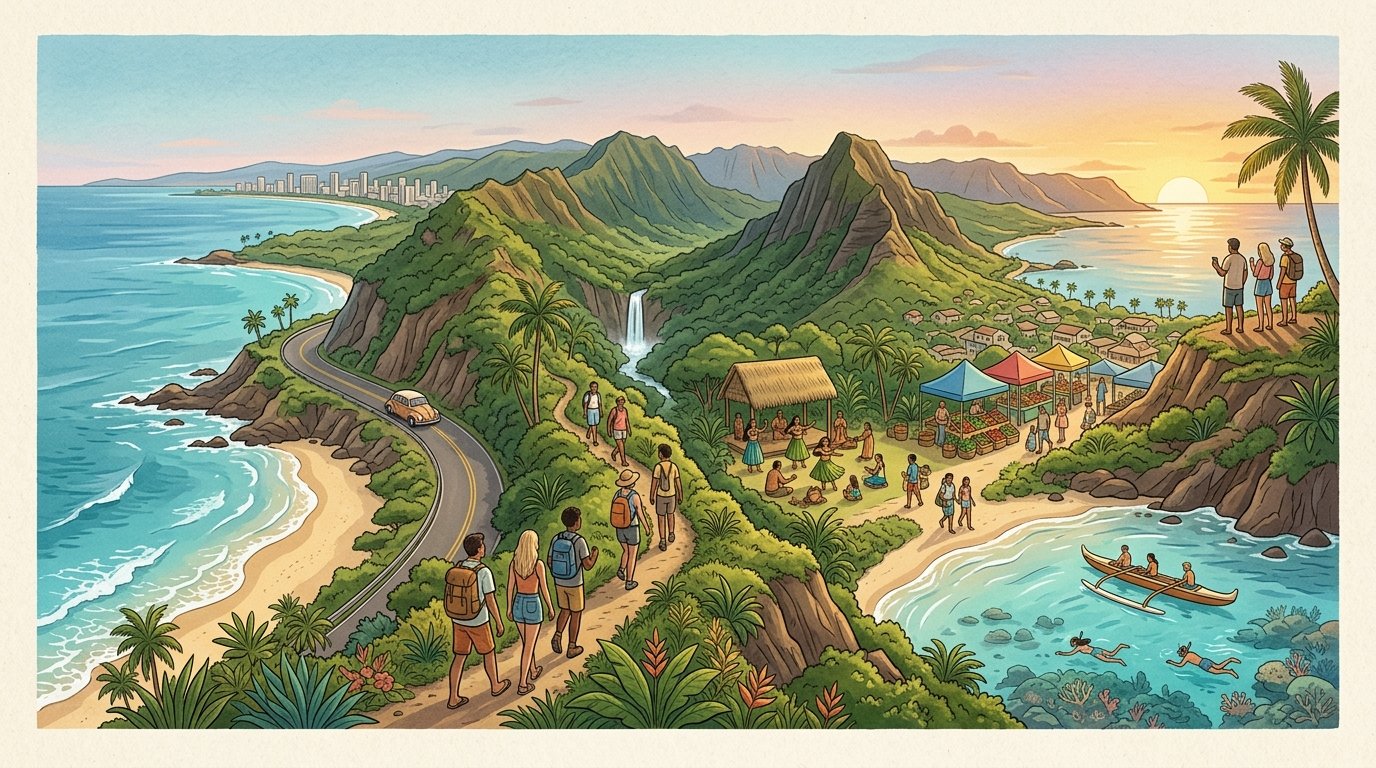
Seven days on Oʻahu covers the island’s history, its snorkeling, its mountains, and its surf without a single frantic day. Grouping your stops by region makes that possible: town first, then the southeast shore, then the windward coast, then north and west.
Book Hanauma Bay, Pearl Harbor, Diamond Head, and Kualoa Ranch before you fly. Rent the car for the middle of the week, leave a day open for weather, and let one afternoon go completely unplanned.
Some of the best moments here come cheap. A Hawaiian sunset from Sunset Beach, a plate lunch eaten on a seawall, and turtles resting at Laniakea cost nothing and stick with you longer than the tours. Our Oʻahu travel guide has more detail on individual stops when you’re ready to fill in the gaps.
Frequently Asked Questions
Is there enough to do on Oʻahu for 7 days?
Yes, and most visitors run out of days before they run out of things to do. A week lets you cover Honolulu’s historic sites, four distinct coastlines, and several hikes while still keeping two or three unstructured beach afternoons.
What is the best area to stay in for a 7-day Oʻahu trip?
Waikīkī is the best single base because of its hotel range, walkability, and rideshare access. Splitting the week between Waikīkī for four nights and the North Shore or Turtle Bay for three cuts your driving noticeably on the back half of the trip.
Can you follow a 7-day Oʻahu itinerary without a car?
Yes, with some adjustments. Waikīkī, Diamond Head, Pearl Harbor, and Downtown Honolulu are all reachable by TheBus, Biki, and rideshare. Guided circle-island or Kualoa tours handle the North Shore and windward days.
How many days should I spend in Waikīkī versus the North Shore?
Give Waikīkī and Honolulu two to three days and the North Shore one to two. The town days cover history, dining, and your first swims; the North Shore days center on beaches, Waimea Valley, and Haleʻiwa.
What should I book in advance for a week on Oʻahu?
Reserve Hanauma Bay two days out. Book Pearl Harbor’s USS Arizona boat tickets as soon as they are released, and reserve a timed entry for Diamond Head. Kualoa Ranch tours, luaus, and sunset sails sell out during summer and holiday weeks, so lock them in when you book your flights.


