
Maui’s north shore gets steady trade winds almost every afternoon, which is why so many people book their first kite surfing lesson here. You will spend your first hour on the sand with a small kite, learning to steer it before your feet ever leave the beach.

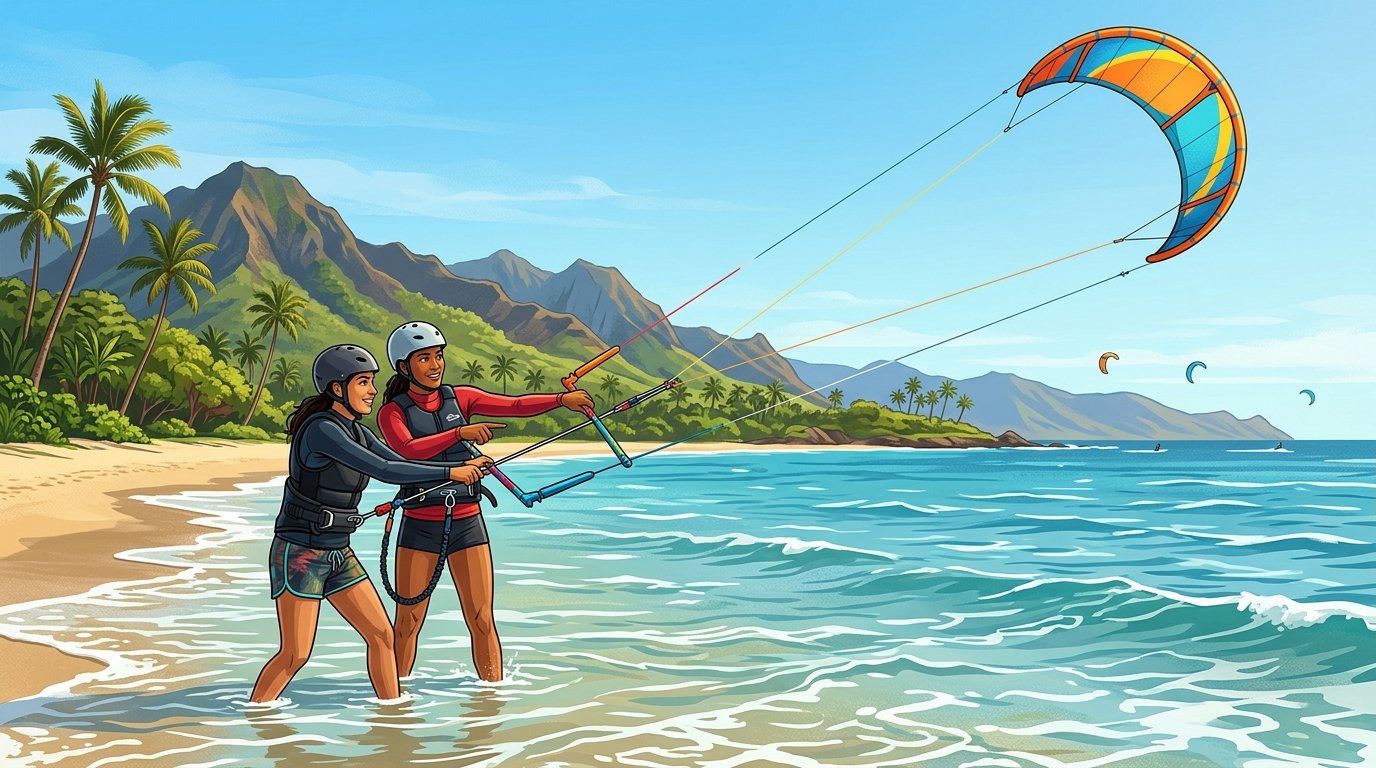
Most beginners need between 9 and 20 hours of instruction before they can ride on their own, usually spread across three to five days. That timeline surprises people who expect to learn in a single afternoon. Kiteboarding rewards patience more than raw athletic talent. The sport is closer to learning to paraglide than to renting a stand-up paddleboard for the day.
The good news: Maui’s shallow, sandy launch spots and reliable side-shore wind make learning easier than in most places on earth. You will finish your first session tired, sandy, and grinning, even if you never touch a board.
What Happens in Your First Maui Kiteboarding Lesson?
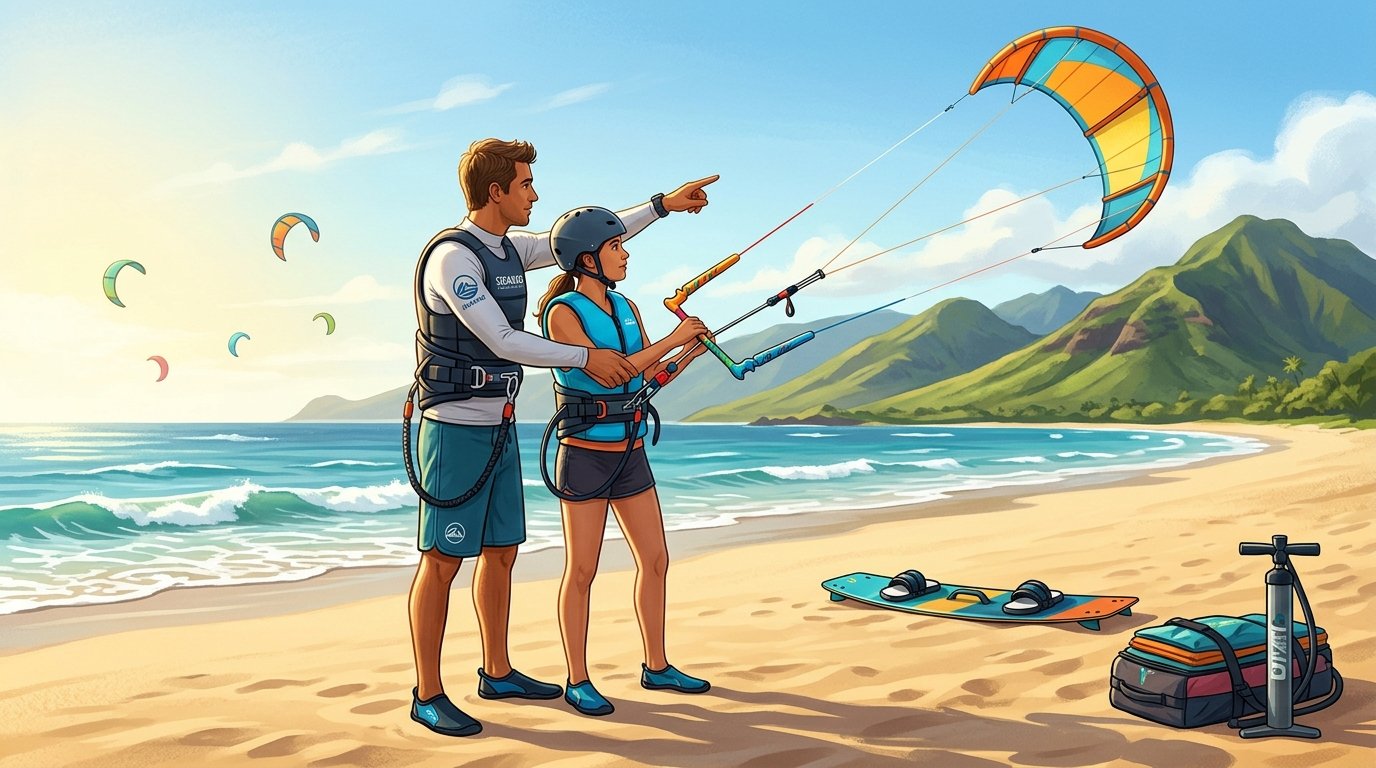
Your first lesson starts on dry sand and stays there for a while. You will learn to read the wind, clip into a harness, practice pulling your safety release, and fly a small trainer kite through the wind window before anyone hands you a kiteboard.
Beach Setup, Wind Awareness, and Safety Systems
Expect your instructor to walk you through the gear piece by piece. You will learn where the wind is coming from, what “downwind” means for your safety, and how the lines connect to the bar.
Your instructor will drill the safety systems. You will pull the quick release over and over until it stops feeling like a decision and starts feeling like a reflex.
Next, your instructor will fit your harness. A properly set harness sits on your hips, not your ribs. A bad fit can bruise you within twenty minutes.
Learning Controlled Kite Flight
Kite control forms the foundation of the sport. You will steer a small trainer kite in figure eights, park it at the edge of the wind window, and learn to keep it there while looking somewhere else.
That last part matters more than it sounds. Beginners constantly stare at the kite, and that habit causes crashes once a board enters the picture.
A good instructor will not move you to the water until you can hold the kite steady while walking, turning, and talking.
Body Dragging and First Water Skills
Body dragging means using the kite’s pull to move through the water without a board. It looks awkward, but it is the most useful skill you will learn. It teaches you how to retrieve a board you dropped fifty yards upwind.
Waterstarting comes next. You will get the board on your feet, dive the kite, and pop up out of the water, usually failing a dozen times before something clicks.
Most students reach their first short ride during the second or third session.
How Many Lessons Does It Take to Ride Independently?
Plan on 10 to 20 hours of lessons across three to six sessions. Athletic students with wakeboarding or surfing backgrounds sometimes get there in 6 to 8 hours. A first-time board sports student may need closer to 15 to 20.
The Progression From Kite Control to Board Starts
The learning path is predictable. Knowing the stages keeps you from panicking in the middle of one.
| Stage | Typical hours | What you are doing |
|---|---|---|
| Kite control on land | 1 to 3 | Steering, launching, landing, safety release |
| Body dragging | 2 to 4 | Moving through water, board recovery |
| Water starts | 3 to 6 | Getting up on the board |
| Riding upwind | 4 to 8 | Both directions, stopping, returning to your launch |
Waterstarting takes the most time. A stage-by-stage look at how long kitesurfing takes to learn puts most riders at 10 to 20 hours total, with water starts as the biggest bottleneck.
Why Private Coaching Can Accelerate Learning
One-on-one time gives you real-time corrections. A kiteboarding instructor standing ten feet away can fix a bar grip or kite position in one sentence, saving you an hour of repeating the same mistake.
Group lessons cost less and work well for the sand-based portion. Once you enter the water, the ratio changes how many attempts you get per hour.
Booking consecutive days works better than spacing lessons out. Coordination fades fast, and a two-week gap will cost you part of a session in review.
Skills to Have Before Riding Without an Instructor
You are ready to ride alone when you can self-launch and land your kite, body drag upwind to fetch your board, water start on both sides, ride upwind well enough to return to your starting point, and execute your safety release without thinking about it.
If you are missing any one of those skills, you are not independent yet. Riding downwind until you are a mile from your car is how beginners end up hitchhiking home in a wetsuit.
How to Choose a Safe Kiteboarding School on Maui
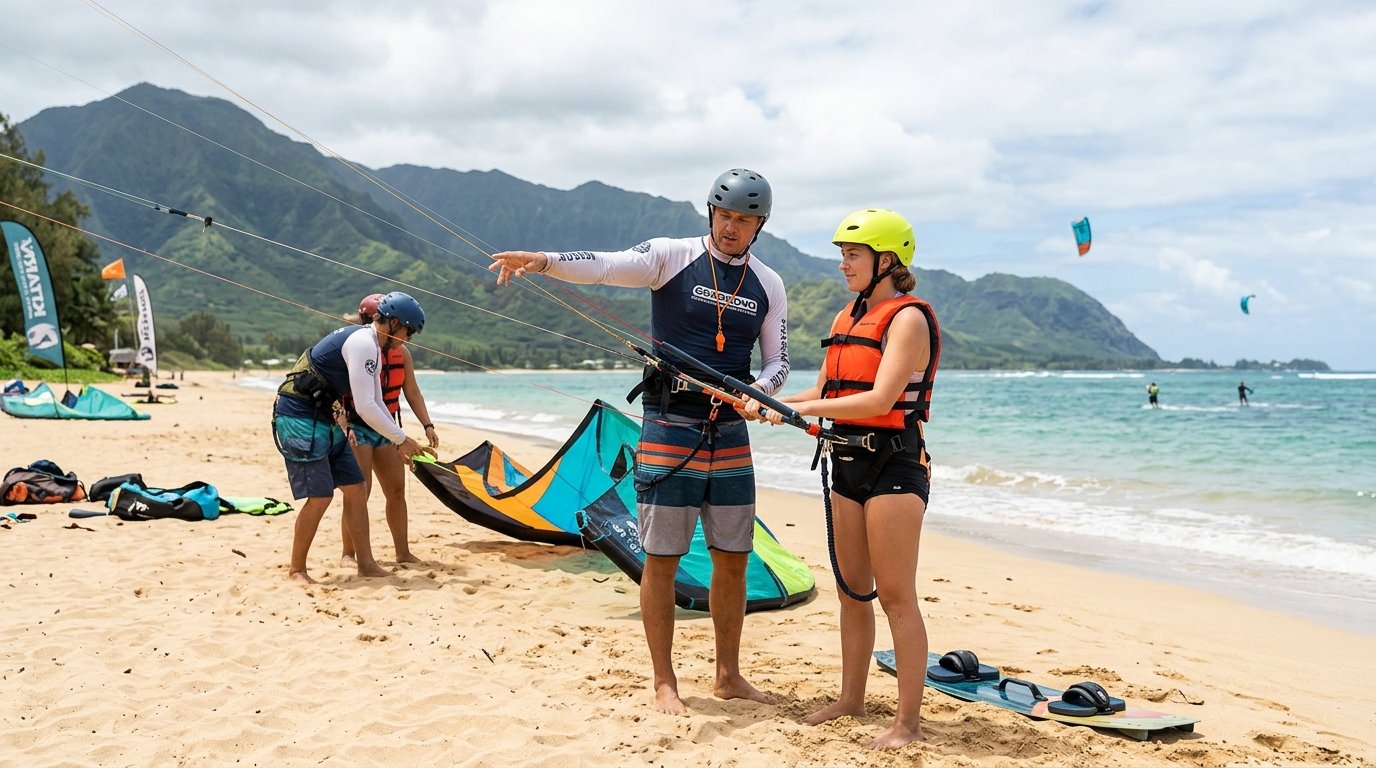
Look for certified instructors, county permits, and a school that puts a coach in the water with you. Maui has plenty of options, and the differences show in how much hands-on time you get once you leave the sand.
Credentials, Experience, and Local Knowledge
IKO certification is the common standard. County permitting also matters on Maui because lesson beaches are regulated. Ask about both before you pay.
Local knowledge counts for a lot here. Maui’s shorebreak, reef, and afternoon wind patterns are specific. Action Sports Maui style programs note that even experienced riders from elsewhere benefit from a session that helps them adapt to these conditions.
Ask how long the school has operated on this island. Years spent on Kanaha or Kite Beach help instructors know where the sandbar is on any given tide.
In-Water Coaching and Waterproof Radio Communication
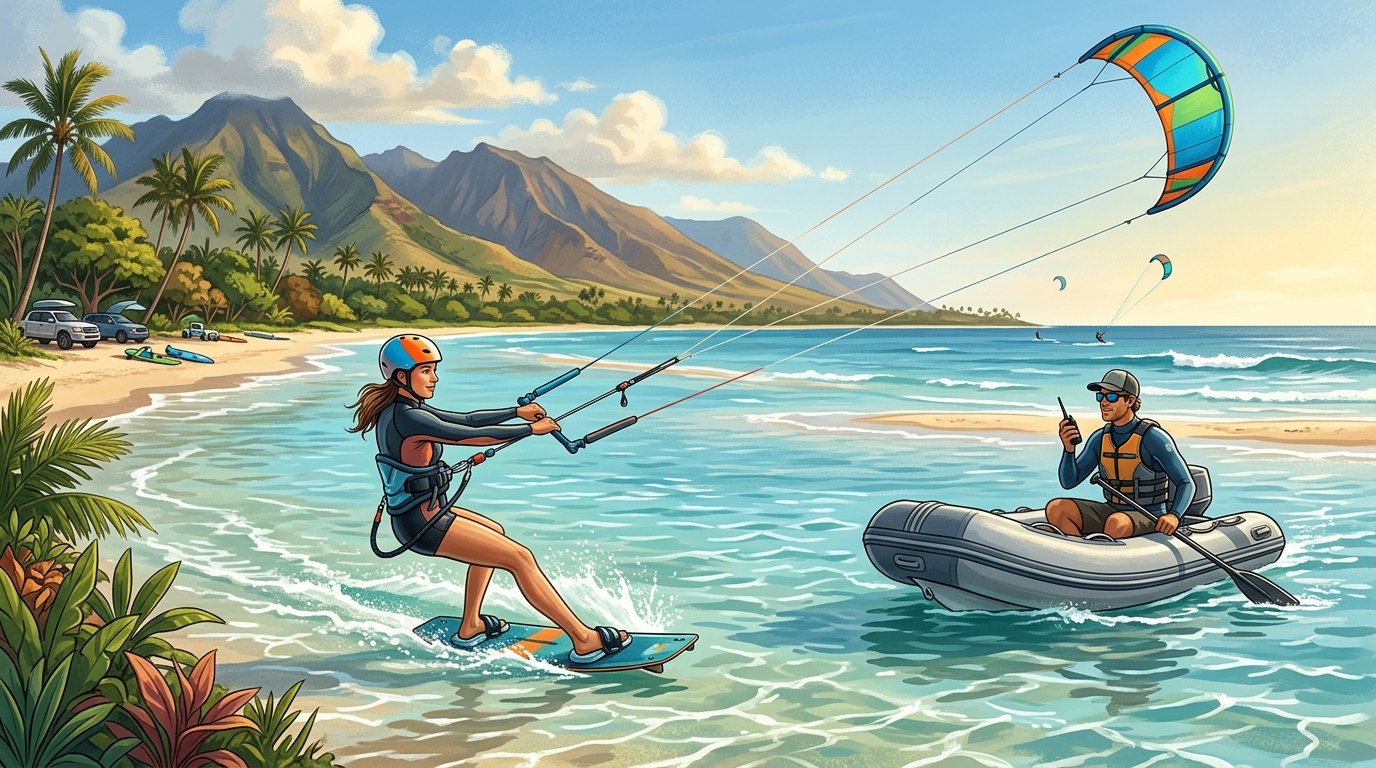
The best setups put your instructor beside you in the water. HST Windsurfing & Kitesurfing School builds its approach around having an instructor with you through every stage of the learning curve.
Waterproof radio helmets provide another major upgrade. Hearing a calm voice say “kite up, kite up” while you are underwater beats trying to read hand signals from shore.
Ask specifically whether radio communication comes included or costs extra.
Gear, Helmets, and the Right Student-to-Instructor Ratio
Schools supply the kite, board, harness, and impact vest. You bring a swimsuit and reef-safe sunscreen.
A helmet should come standard, not as an option. Kites drop, boards bounce, and heads are not replaceable.
For water time, a 1-to-1 ratio is the gold standard. Some schools use a 2-to-1 ratio on the beach and switch to private coaching in the water. That setup is a reasonable compromise if the price reflects it.
Maui Conditions, Locations, and the Best Time to Learn
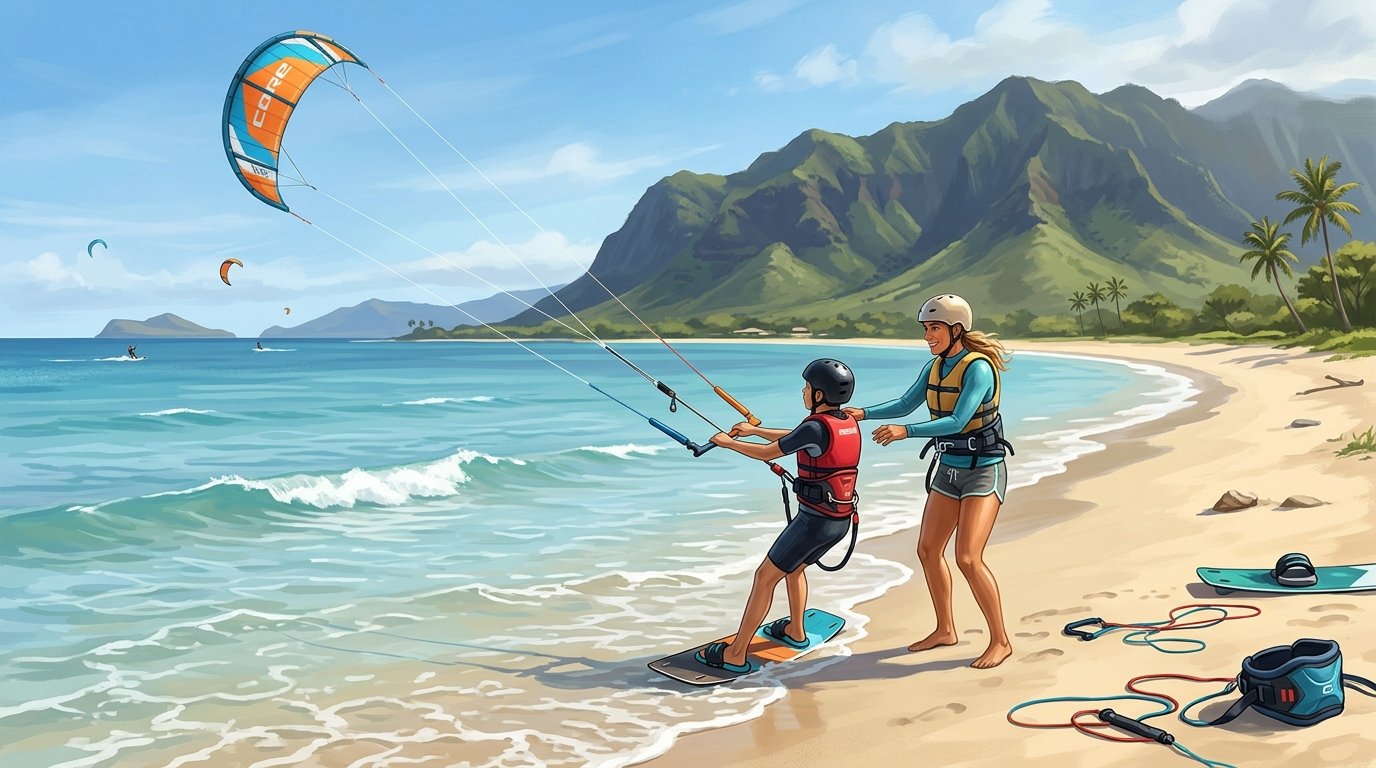
Maui’s north shore delivers trade winds most afternoons from roughly April through September. Kanaha Beach Park and Kite Beach serve as the main teaching zones. Winter still gets wind, though the weather varies more.
What Makes Maui’s Wind Conditions Different
The trades blow side-shore at Kanaha, creating a friendly angle for learning. Side-shore wind pushes you along the beach rather than out to sea or into the sand.
The wind also builds through the day. Mornings are often light, afternoons fill in hard, and by 3 p.m. the water can become busy and powered up.
That daily rhythm is why most beginner sessions take place in late morning or early afternoon. This timing catches usable wind before it gets strong.
How Schools Select a Suitable Lesson Site
Instructors pick a spot based on the tide, wind strength, and launch crowds. Shallow, sandy, waist-deep water is ideal because standing between attempts saves energy.
Kanaha’s inner reef area provides that shallow zone. On days when the swell rises or the wind swings, schools shift downwind or move to another beach.
If you are also planning windsurfing on Maui, you will notice that many of the same beaches serve both sports.
Why Weather Flexibility Matters for Beginners
Book a window, not a single day. Three or four days on the island gives your school room to move your session when the wind fails to show.
Ask about the reschedule policy before booking. Reputable schools do not charge you for a no-wind day.
Building extra days into your Maui trip planning is the cheapest insurance against a flat afternoon.
Choosing the Right Maui Water-Sports Lesson for Your Goals
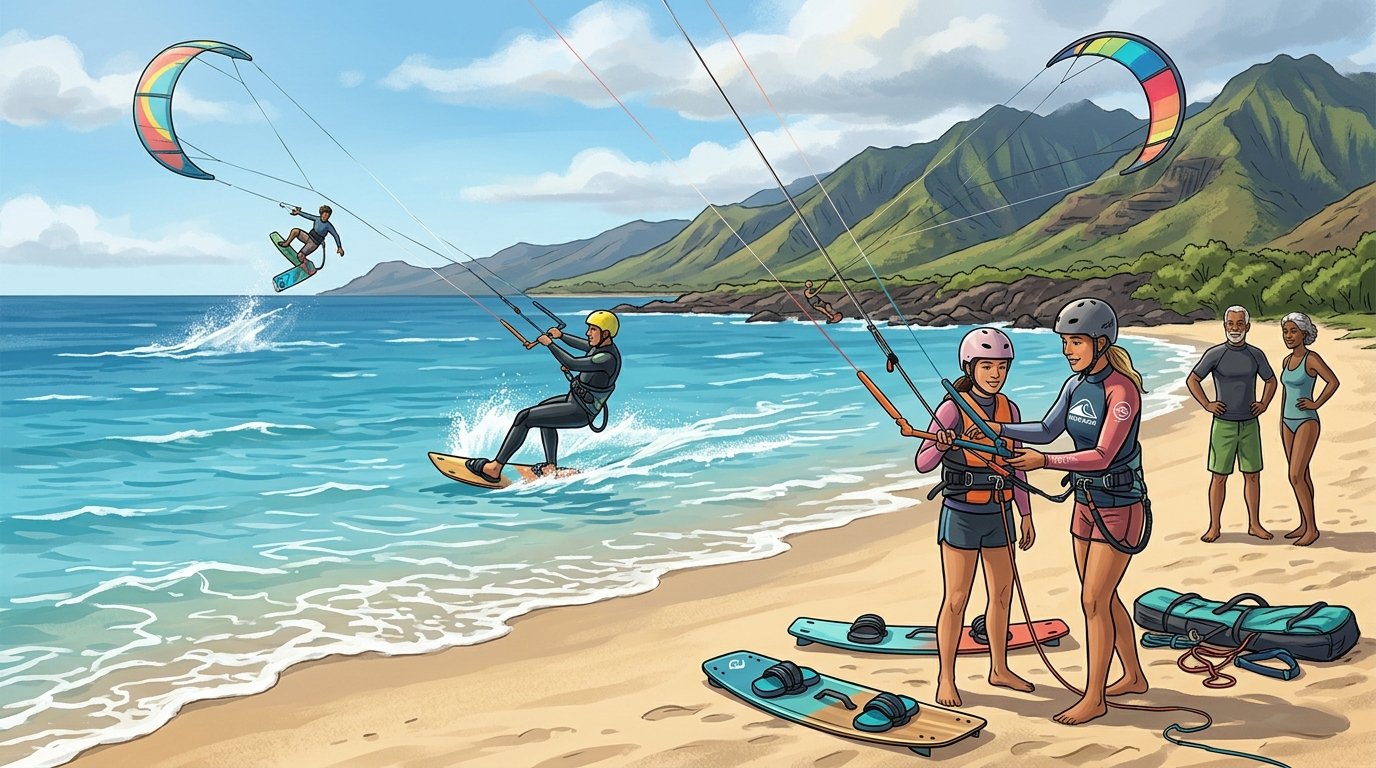
Kiteboarding takes multiple days to become fun on your own, while a surfing lesson can have you standing on a wave in ninety minutes. Pick based on how much time you have and what kind of satisfaction you want from the week.
Kiteboarding vs. Surfing Lessons
| Kiteboarding | Surfing | |
|---|---|---|
| First success | Day 2 to 3 | First lesson |
| Hours to independence | 10 to 20 | 5 to 10 |
| Gear supplied | Yes | Yes |
| Wind required | Yes | No |
| Best Maui side | North shore | South and west |
If you have one free afternoon, book a surf lesson. Several Maui surfing lesson spots offer gentle beginner breaks that work regardless of wind.
If you have four or five days, kiteboarding offers more long-term satisfaction.
When Windsurfing or Wingsurfing May Be a Better Fit
Windsurfing lessons get you sailing across flat water in a single session. The board floats under you, so you do not have to wait for a water start to click.
Wingsurfing sits between the two. You hold a handheld inflatable wing, so there are no lines to tangle, and the safety picture is simpler than with a kite on 25-meter lines.
Nervous about a powered kite pulling you around? Start with a wing.
When to Progress to Foiling or Foil Boarding
Foiling comes after you can ride upwind comfortably on a regular board. The hydrofoil lifts you above the surface and lets you ride in lighter wind, which extends your season on Maui.
Most schools want you riding independently before adding a foil. A foil under your feet is fast, quiet, and genuinely sharp, so use it only after your kite skills become automatic.
Book the Lesson That Matches Your Experience and Goals
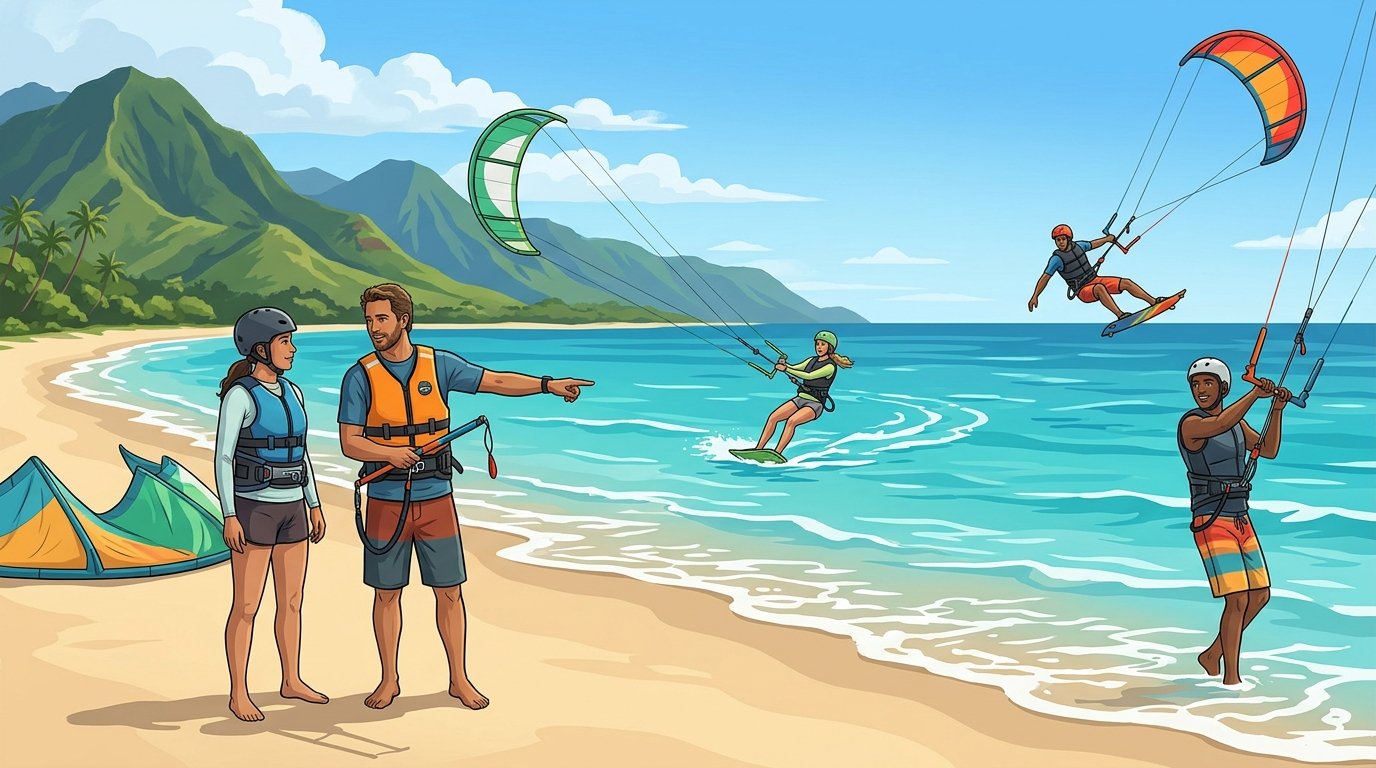
Kite surfing on Maui is learnable for almost anyone willing to commit three to five days and 10 to 20 hours of coached time. The stages are predictable: kite control on sand, body dragging, water starts, then riding upwind.
Pick a school with certified instructors, county permitting, in-water coaching, and helmets with radio communication. Ask about the student-to-instructor ratio in the water specifically, and confirm the no-wind reschedule policy before you pay.
Schedule your sessions on consecutive days, keep spare afternoons in your itinerary, and bring reef-safe sunscreen plus a swimsuit that stays put. If a multi-day commitment does not fit your trip, a surf, windsurf, or wing lesson gets you on the water the same afternoon.
Frequently Asked Questions
How much do kite surfing lessons in Maui cost?
Maui kiteboarding schools price by the hour or by multi-hour package. Rates vary by school and by whether the lesson is private or a small group. Private one-on-one instruction costs noticeably more per hour than a shared session. Contact schools directly for current rates, since most publish package pricing rather than a flat number.
How many kiteboarding lessons do beginners usually need?
Plan on three to six sessions totaling 10 to 20 hours. Students with wakeboarding, snowboarding, or sailing experience often reach independent riding closer to the 9 to 12 hour range, while those new to board sports may need 15 to 20 hours.
Is Maui a good place to learn kitesurfing?
Yes. The north shore combines steady side-shore trade winds, shallow, sandy launch areas at Kanaha Beach, and a deep bench of certified local instructors. Warm water year-round means you need no thick wetsuit and can enjoy longer, comfortable sessions.
What should I wear for a kiteboarding lesson in Maui?
Wear a swimsuit that stays on during hard falls, plus reef-safe sunscreen. Schools supply the kite, board, harness, impact vest, and helmet.
Board shorts with a drawstring or a snug one-piece work best. A rash guard protects your shoulders from harness rub.
Can I take a kiteboarding lesson if I have never done board sports before?
Absolutely. Complete beginners start every day on Maui beaches, and the sand-based kite control stage requires no board skills at all. Expect to land at the longer end of the hour range, roughly 15 to 20 hours, before you ride independently.
What is the difference between kiteboarding and kitesurfing?
The two terms describe the same sport, and Maui schools use them interchangeably. Some riders reserve “kitesurfing” for riding a directional surfboard in waves and “kiteboarding” for riding a twin-tip board. However, a lesson booking under either name teaches the same fundamentals.


