I’ve always been amazed at how much Hawaii’s rich soil and unique climate shape what we grow and share with the world.
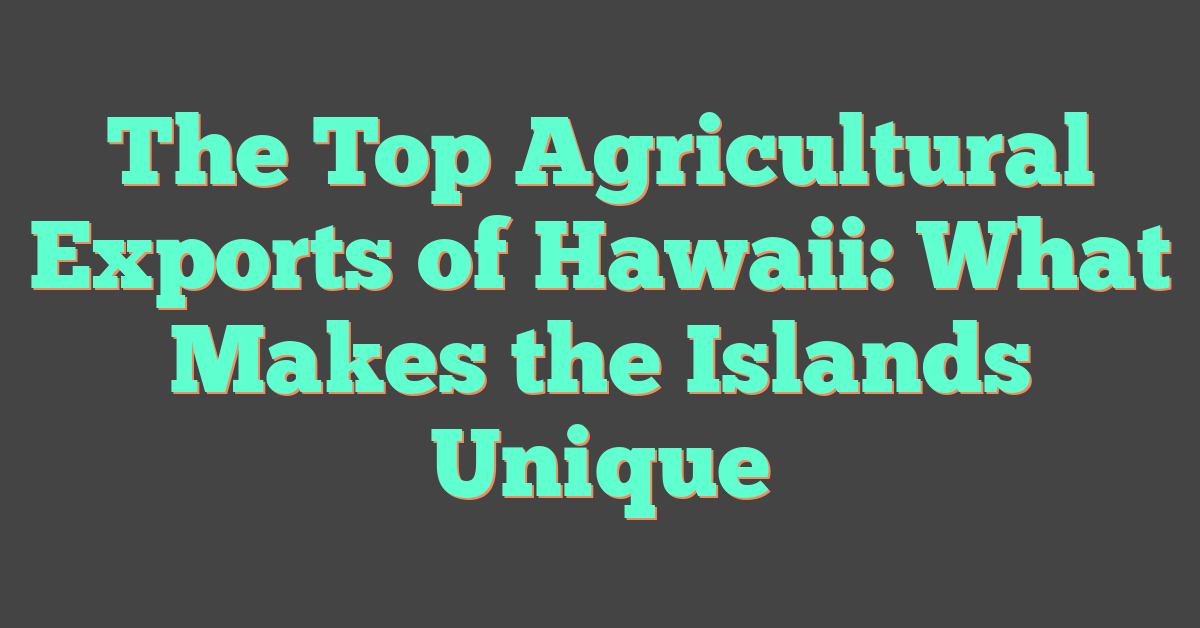
Hawaii’s top agricultural exports include coffee, macadamia nuts, tropical fruits, and nursery products. Agriculture is a key part of the islands’ economy.
Every time I see coffee beans from Kona or a box of sweet pineapple, I’m reminded of how important these crops are to the Aloha State.
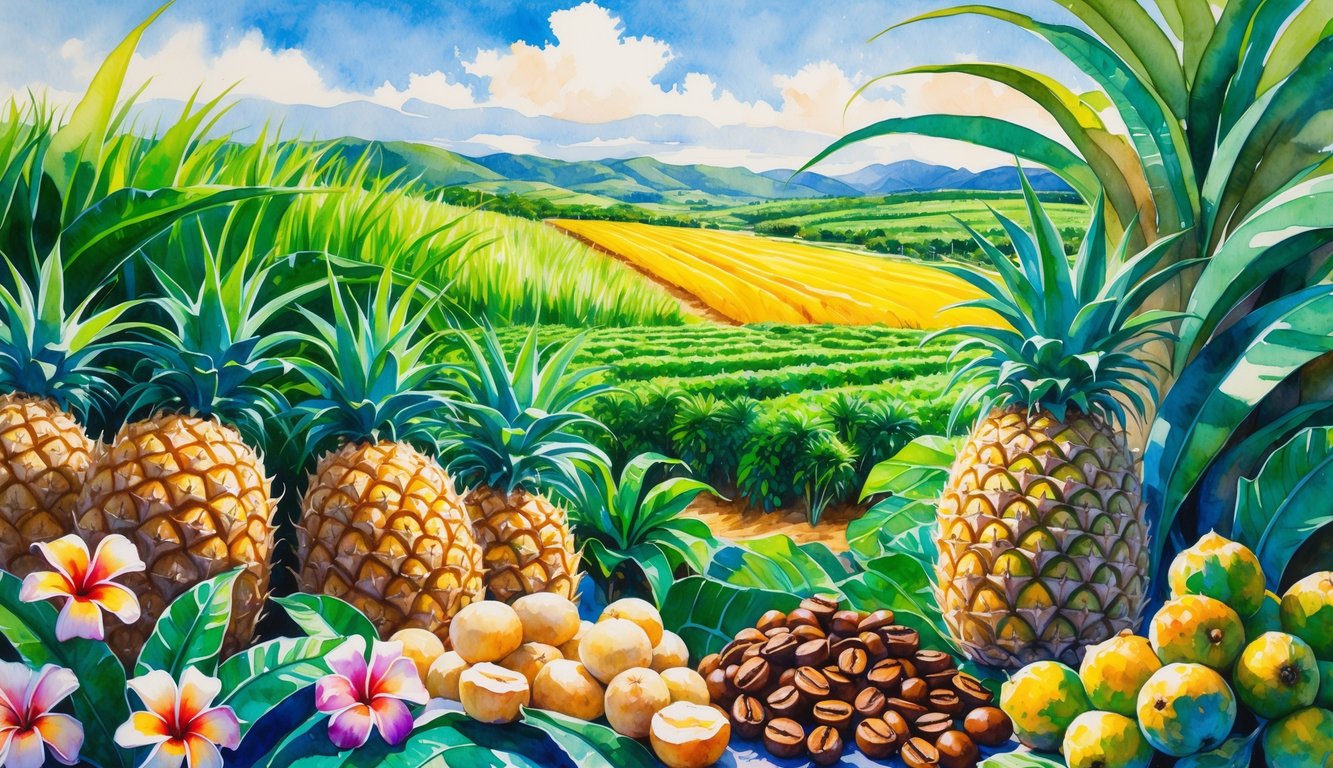
Living here, I see how agriculture touches many lives.
Farmers plant and harvest crops, and companies ship these products overseas. Hawaii’s exports reach well beyond the islands.
The USDA lists other major products like cattle, sugar cane, and greenhouse plants. This industry supports local businesses and worldwide markets.
I find it fascinating that crops like macadamia nuts and tropical fruits have become favorites in many countries.
If you’re interested in learning which products help define Hawaii’s farming legacy, keep reading to discover the top agricultural exports growing under the island sun.
Overview of Hawaii’s Agricultural Industry
Hawaii’s agriculture supports both the local economy and global trade.
Diverse crops, a warm climate, and a long agricultural history shape today’s industry.
Historical Significance of Agriculture
When I look back at Hawaii’s history, agriculture stands out as a foundation of the islands’ growth.
Sugarcane and pineapple were once the main crops, providing jobs and helping the population thrive.
These crops attracted workers from Asia, Europe, and other regions. As a result, Hawaii developed its distinct culture.
Large plantations dominated agriculture in the past.
Companies processed these crops for export to the mainland and abroad.
Over time, changes in world markets and local needs shifted the focus away from big plantations.
Now, many smaller farms contribute to Hawaii’s agriculture.
Current Trends and Economic Impact
Today, Hawaii’s agricultural industry is more diverse than ever.
I see farms producing both traditional crops and new specialty items.
There are over 6,500 farms in Hawaii, according to recent USDA data.
Together, these farms generate over $673 million in annual sales.
Agriculture now makes up about 1.1% of Hawaii’s total Gross Domestic Product.
Even though the percentage may seem small, it is important for local communities and job creation.
Agricultural dollars circulate within the islands, helping keep the economy strong.
Exports to the mainland and other countries play a key role in sustaining farm income and supporting families.
Key Agricultural Commodities
Some crops and products stand out as the top agricultural exports from Hawaii.
The main commodities are macadamia nuts, coffee, and tropical flowers.
Other exports include papayas, bananas, and specialty fruits like lychee and rambutan.
These products benefit from Hawaii’s year-round mild climate and rich soils.
Here’s a short list of key export products:
- Macadamia nuts
- Kona coffee
- Pineapples
- Tropical flowers (like orchids and anthuriums)
- Papayas
- Bananas
Besides plants, Hawaii also produces livestock and honey.
These goods reach local markets, the mainland U.S., and international destinations.
Major Exported Crops from Hawaii
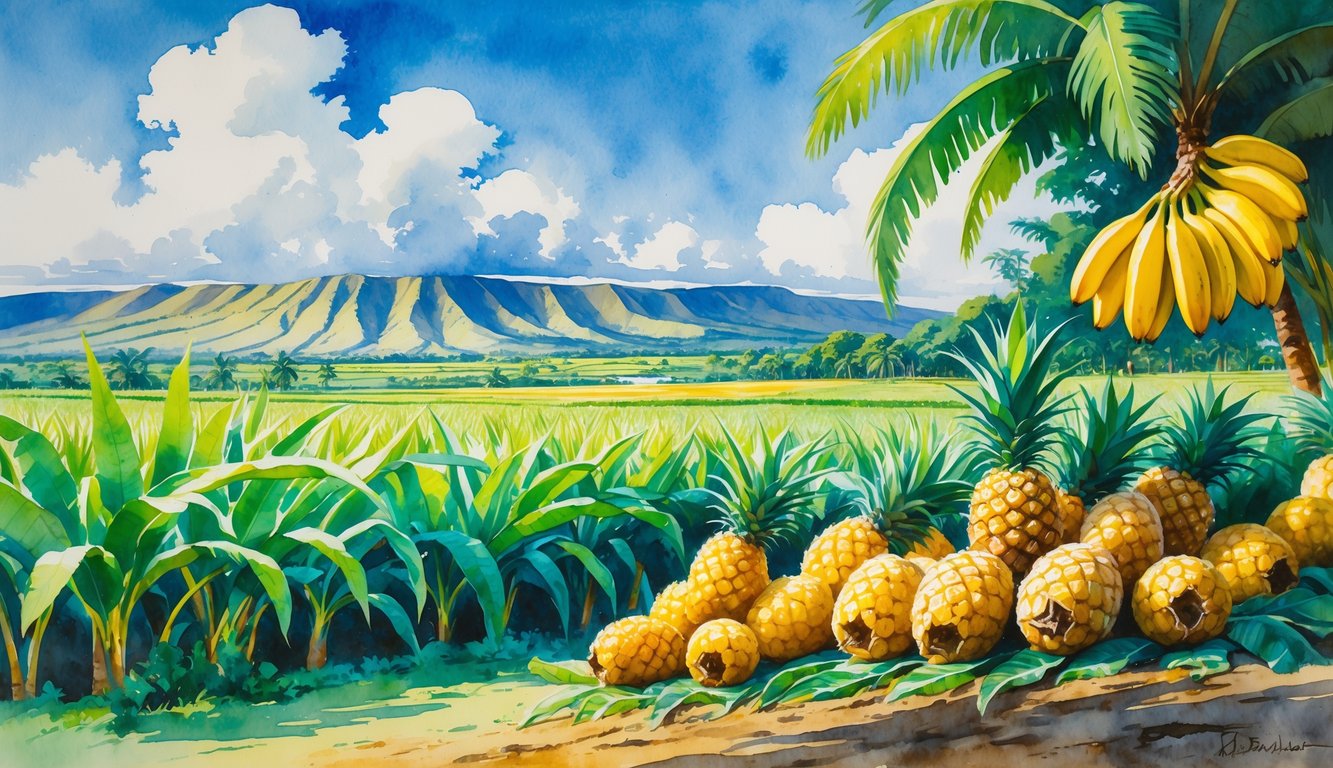
Hawaii grows unique crops that thrive in the island’s tropical climate.
Many important foods grown here are shipped across the world, especially to the mainland United States.
Coffee
I have noticed that coffee is one of Hawaii’s most famous crops.
Farmers grow Kona coffee on the slopes of Mauna Loa.
The rich volcanic soil and tropical weather give these coffee beans their unique flavor.
Hawaii is the only U.S. state that grows coffee commercially.
Local farmers harvest the beans by hand, which helps create high-quality coffee.
They sun-dry and roast the beans on the islands before exporting them.
Most of this coffee goes to the mainland United States, where stores and cafes sell it.
Specialty blends, like 100% Kona coffee, are especially popular and can be expensive because of limited supply.
Smaller amounts also go to other countries.
Macadamia Nuts
Macadamia nuts are another major export.
The trees thrive in Hawaii’s climate.
Workers harvest the nuts from the shells, dry them, and either roast them or process them for oil.
I often see these nuts in bags or chocolate-covered at shops around the islands.
Macadamia nuts became a significant commercial crop in the mid-20th century.
Today, Hawaii leads the U.S. in tree nut production, with macadamias making up the biggest share.
Most large farms are on the Big Island and are owned by both local families and larger companies.
After processing, most nuts go to the mainland United States.
People favor them for their buttery taste and use them in snacks, candies, and baking products.
Pineapple
Pineapple is one of Hawaii’s most well-known exports.
Farmers grow the fruit mostly on Oahu and Maui, where the soil drains well and the weather is sunny.
Many farms grow different pineapple varieties, but the ‘Smooth Cayenne’ is the most common.
I often see these golden pineapples shipped to the mainland United States.
They are sold fresh, canned, or juiced.
In the twentieth century, Hawaii led the world in pineapple production.
Competition from Asia and South America has changed the market.
However, Hawaiian pineapples remain popular for their sweet flavor and high quality.
Farmers pick pineapples when they are fully ripe to make sure they are juicy when they reach stores or canneries.
Many tourists and mainland buyers consider Hawaii pineapples a special treat, often linked to vacations and Hawaiian culture.
More details on top products can be found with this Hawaii agricultural overview.
Significant Fruit Exports
Hawaii grows and exports many tropical fruits.
These fruits are important for jobs and help share Hawaii’s identity worldwide.
Papaya
I have found that papaya is one of Hawaii’s main fruit exports, especially the Solo variety.
Most of Hawaii’s papaya comes from the Big Island, where rich volcanic soil helps the fruit grow well.
Farmers ship papaya to the mainland United States and some international markets.
People prize the fruit for its sweet taste and year-round availability.
Hawaiian papayas are often seen as fresher and tastier than imported fruits, making them popular with health-focused buyers.
Farmers follow strict quality control and quarantine rules to prevent pests before shipping.
Most export papayas are genetically modified to resist the ringspot virus, which saved the industry in the 1990s.
This allows growers to keep a steady supply and maintain fruit quality.
The table below gives a quick look at some papaya export facts:
| Fact | Detail |
|---|---|
| Main Variety | Solo Papaya |
| Main Destinations | Mainland U.S., Canada |
| Season | All year |
| Key Challenge | Pest control, virus |
Bananas
Bananas are another important fruit crop grown and exported in Hawaii.
While not as large as the papaya industry, banana production still makes a big impact.
Most bananas come from small family farms instead of large plantations.
Hawaii grows several types of bananas, but the apple banana is especially famous for its sweet flavor.
Bananas are sold locally and sent to the mainland United States.
In 2018, bananas had a farm gate value of over $5 million, which shows their economic value to the state.
Banana farmers must watch out for disease outbreaks and pests.
Careful harvesting and packing keep the fruit fresh for shipping.
Hawaiian bananas, especially apple bananas, stand out because of their unique taste and small size.
These features set them apart from the more common Cavendish bananas found elsewhere.
For more on the value and production of bananas in Hawaii, the USDA offers detailed annual estimates.
Livestock and Animal Products
Hawaii’s agricultural sector includes important livestock such as cattle and hogs.
These animals support local food needs and add value to Hawaiian exports through products like beef and pork.
Cattle Production
Cattle farming is a major part of Hawaii’s livestock industry.
Ranchers raise most cattle on ranches, where green pastures and mild weather support healthy herds.
The state has thousands of acres dedicated to grazing, making cattle one of Hawaii’s key agricultural commodities.
Calves are born and raised on Hawaiian ranches.
Ranchers then export them to the mainland United States, where most finishing and processing happens.
Hawaiian beef includes both fresh meat exports and processed goods for local markets.
The export of live cattle brings millions of dollars to Hawaii’s economy.
Some ranches focus on producing premium grass-fed beef, which is popular for its taste and quality.
In markets and restaurants, Hawaiian beef is used in many local dishes.
Cattle production helps keep pastures open and supports jobs on the islands.
Many ranches in Hawaii have operated for more than a hundred years.
Hogs
Hog farming in Hawaii is smaller but still important.
Farmers raise local hogs mainly for pork, which is a staple in many Hawaiian foods.
Pork products like sausages and fresh cuts provide a local source of meat for residents.
Some pork also goes to the export market, though in smaller amounts than cattle.
Farms raise hogs using both traditional and modern methods, often feeding them food scraps from local businesses.
A few farms operate on a larger scale, but many are family-run and supply fresh pork to stores and restaurants.
These farms support agricultural diversity in Hawaii and add value to the state’s economy.
Hogs and pork products are featured in Hawaiian celebrations and are part of the islands’ food culture.
To learn more about Hawaii’s top agricultural exports, including livestock and animal products, see this list of top agricultural commodities.
Other Notable Agricultural Exports
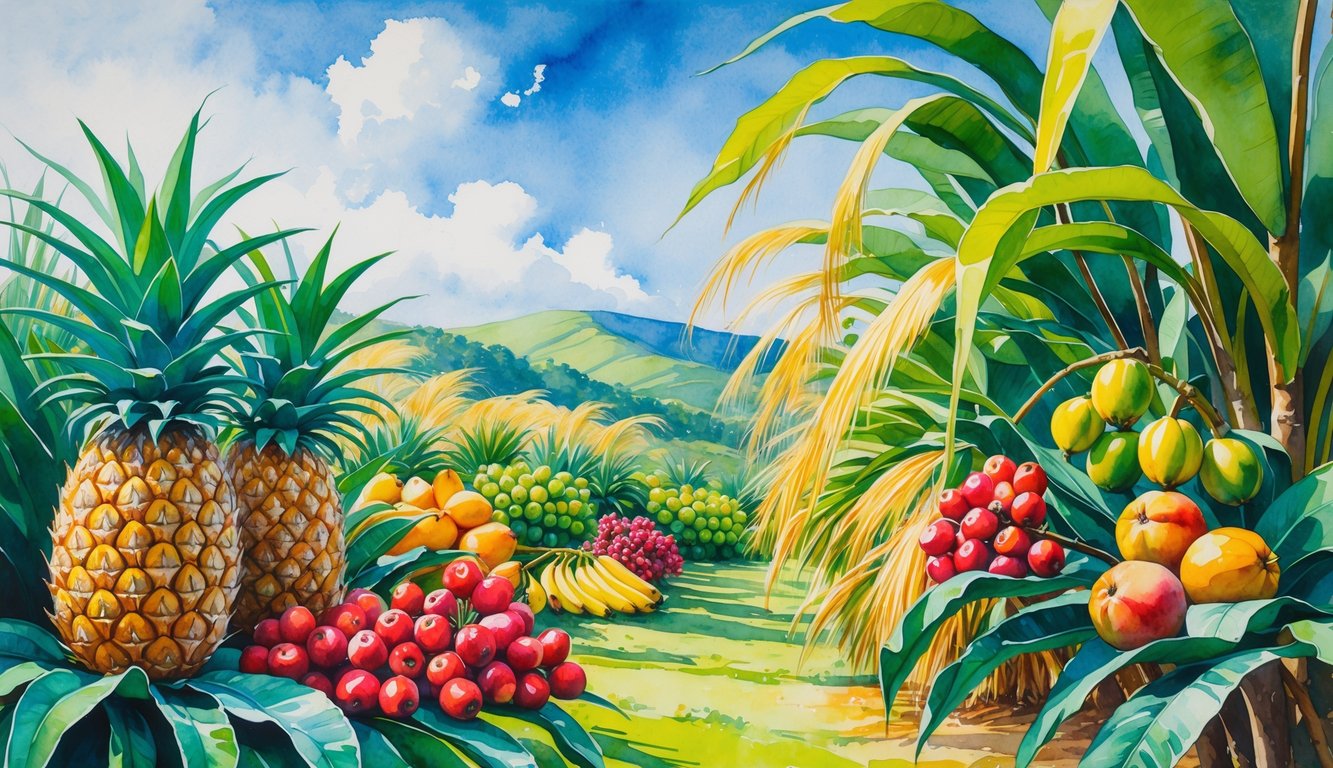
Hawaii grows a variety of agricultural products beyond the well-known crops. These exports help keep agriculture diverse and support local jobs.
Nursery Products
Nursery products play a key role in Hawaii’s agricultural sector. These products include potted plants, palms, tropical foliage, and landscape trees.
Buyers in the mainland U.S. and other Pacific regions value Hawaii’s nursery items because they grow well all year. Warm weather allows nurseries to produce plants in every season.
Popular plants from Hawaii include tropical ferns, orchids, and palms. Homes, hotels, and landscaping projects use many of these plants.
Here are common nursery products sent out of state:
- Potted palms
- Flowering shrubs
- Landscape trees
- Decorative ferns
Nursery product sales add millions to Hawaii’s economy. The industry supports both large commercial growers and small family businesses.
These plants meet steady demand in warm and cooler regions.
Floriculture
Floriculture is another important export. This area focuses on flowers and decorative plants, including cut flowers and leis.
Hawaii is famous for orchids, anthuriums, and tropical bouquets. These flowers go to the U.S. mainland, Canada, and parts of Asia.
The mild, humid climate helps flowers bloom with bright colors and unique shapes. Local growers use greenhouses to grow flowers under controlled conditions.
Main floriculture products include:
- Dendrobium orchids
- Anthurium stems
- Other Hawaiian tropicals
Cut flowers and lei materials from Hawaii are used at weddings, hotels, and cultural events. Floriculture exports showcase Hawaii’s rich plant life and bring a taste of the islands to people worldwide.
These flowers are among Hawaii’s top unique agricultural exports, as shown by state agricultural statistics.
Hawaii’s Sugarcane and Its Export Decline

Sugarcane once formed the backbone of Hawaii’s agriculture and economy. Over the past few decades, sugar exports dropped sharply.
The state now explores other crops and new uses for its farmland.
Historical Role in Economy
Sugarcane shaped Hawaii’s economy for over a century. By the 1800s, sugar plantations became some of the biggest businesses in the islands.
Workers from China, Japan, and the Philippines came to work on plantations. This changed both agriculture and the culture of Hawaii.
At one point, Hawaii sent millions of pounds of sugar to the mainland United States each year. Jobs in sugarcane depended on global prices and demand.
Over time, foreign competition and rising costs made Hawaii’s sugar less profitable. By the 2010s, the state’s last major sugar mill closed, ending a long era.
Read more about this shift on the AP News Hawaii sugar plantations have disappeared.
Transition to Alternative Crops
After sugarcane production declined, Hawaiian agriculture changed. Farmers shifted to crops like coffee, macadamia nuts, and tropical fruits.
These crops fit local markets and bring higher prices. Some old sugarcane fields now grow renewable energy crops, such as biofuel plants.
There are also solar farms on former plantation land. The move away from sugarcane encourages innovation and sustainability in Hawaii’s agriculture.
Aquaculture and Fish Exports
Aquaculture plays a big role in Hawaii’s agriculture. Fish and seafood farming in Hawaii is growing fast and making bigger profits each year.
In 2022, aquaculture sales in Hawaii reached $89.6 million. Algae made up about $45.4 million, which is over half the total sales.
Other important products included ornamentals and different kinds of seafood.
A table of main aquaculture exports:
| Product | Value (2022) | Percentage of Total Sales |
|---|---|---|
| Algae | $45.4 million | 51% |
| Ornamentals | $3.89 million | 4% |
| Other Seafood | $40.31 million | 45% |
Algae is used for food, nutritional supplements, and research. Both local and overseas buyers want algae.
Shrimp broodstock is another Hawaii specialty. Farmers breed these shrimp for export to commercial hatcheries, especially in Asia.
In 2018, Hawaii exported more than 467,000 shrimp to Asia. This shows Hawaii’s importance in emerging markets for aquaculture.
Fish and aquaculture products from Hawaii reach new markets each year. As demand for seafood rises, Hawaii’s aquaculture industry continues to grow and bring new opportunities for local farmers and exporters.
Export Logistics and Trade Partners
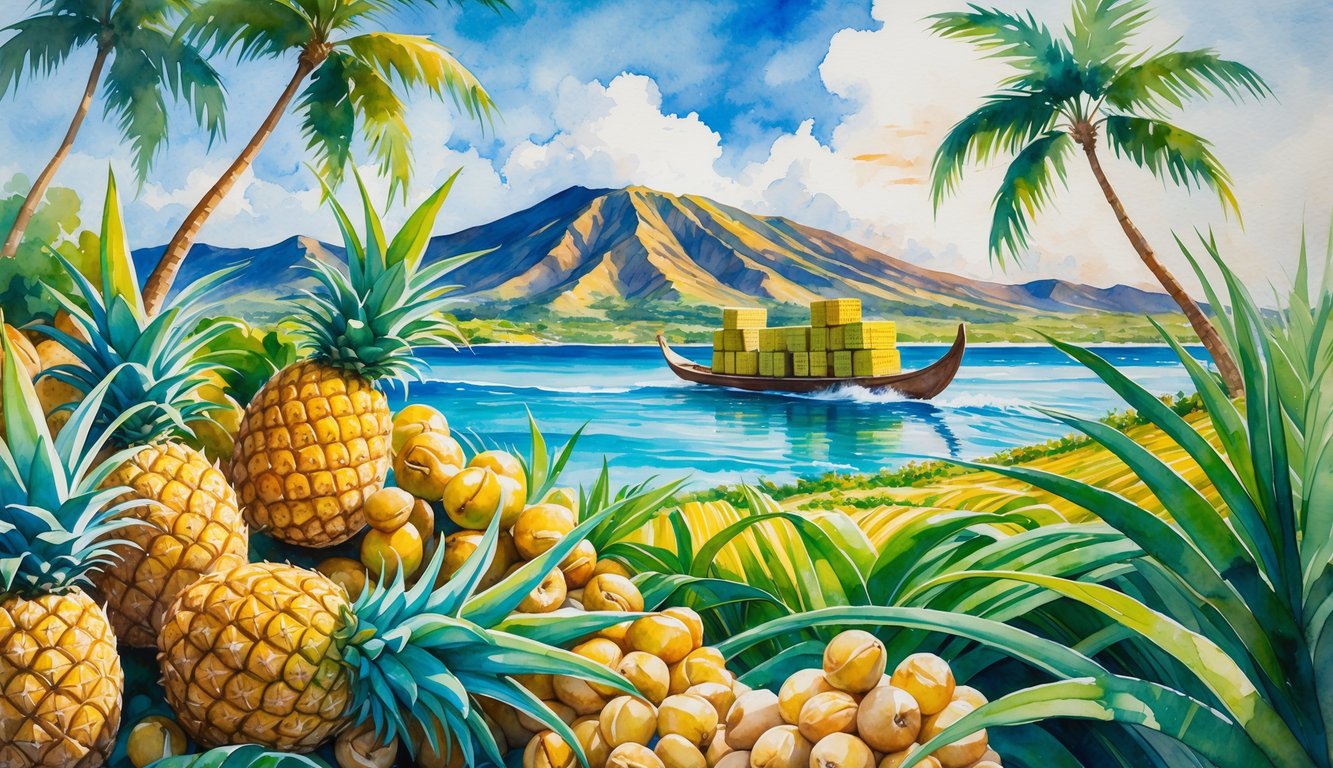
Hawaii’s farm goods travel by sea and air, often covering thousands of miles to reach buyers. Both traditional and new trade partners help move these exports beyond the islands.
Mainland United States
Most of Hawaii’s agricultural exports go to the mainland United States. Shipping logistics are a big factor because of the state’s remote location.
Main port facilities in Honolulu and Hilo handle much of the cargo. Fresh products usually leave by air for faster delivery, while larger shipments go by ship.
Shipping times can be several days to a week, and costs are higher than shipping within the continental US. The demand for island-grown crops is strong in places like California and the Pacific Northwest.
Mainland supermarkets, coffee roasters, and specialty stores offer a steady market for Hawaiian goods. Established transportation networks and regular freight schedules help trade.
Emerging Export Markets
In recent years, Hawaii has sent more agricultural products to emerging markets, especially in Asia. Japan, South Korea, India, mainland China, and the Philippines now buy nearly half of Hawaii’s exports.
Shipping to these countries takes longer and relies mostly on ocean freight. Hawaii’s trade logistics include temperature-controlled containers for perishable goods and close tracking of cargo.
These regions appreciate specialty items like Kona coffee, tropical fruits, and processed foods. Local producers build trust with new buyers and meet international standards to reach new customers.
As these markets grow, Hawaii focuses on improving logistics and tailoring products for overseas tastes.
Non-Agricultural Exports Related to Hawaii
Hawaii exports more than just agricultural goods. Several non-agricultural products also contribute to Hawaii’s economy and trade.
Civilian Aircraft
One of Hawaii’s significant non-agricultural exports is civilian aircraft and related parts. These exports include complete airplanes, engines, assemblies, and small aircraft components.
Repair, maintenance, and servicing of aircraft are crucial in Hawaii due to its Pacific location. Many airlines serving Asia and the U.S. mainland use Hawaiian facilities for repairs or parts distribution.
This increases demand for both local labor and imported technology. Shipping aircraft parts and equipment requires strict safety checks and high-quality standards.
This focus on precision helps Hawaii maintain good relationships with trading partners in the aviation industry. Civilian aircraft exports provide a steady source of income and jobs.
Transportation Equipment
Transportation equipment forms another important sector for Hawaiian exports. This group includes products like boats, ships, and specialty vehicles.
Hawaii’s location in the Pacific Ocean encourages shipbuilding and maritime repair. Local companies build and service smaller boats and support vessels used in fishing, tourism, and local transport.
Hawaii’s strategic location lets it serve as a hub for equipment moving between Asia, the mainland U.S., and other Pacific islands. Some companies in Hawaii also export vehicle parts and service equipment.
While these items are less valuable than aircraft exports, they help diversify Hawaii’s export market. For a detailed list of Hawaii’s major exports, including non-agricultural products, visit this overview of Hawaii’s top exports.